
In my extensive research on power supply systems for large-scale petrochemical plants, I have observed a growing need for reliable and efficient energy storage solutions. As petrochemical facilities expand, with the proliferation of 220 kV, 110 kV main substations, and 35 kV regional substations, the demand for robust direct current (DC) power sources, uninterruptible power supplies (UPS), and emergency power systems (EPS) has intensified. Traditionally, valve-regulated sealed lead-acid (VRLA) batteries have been the standard choice in these applications. However, adherence to stringent national and industry standards for VRLA batteries often complicates engineering design, particularly regarding safety and environmental concerns. In recent years, lithium iron phosphate (LiFePO4) batteries have emerged as a mature technology, playing a pivotal role in national new energy strategies. Through my analysis comparing these two battery types in terms of safety, environmental impact, memory effect, discharge performance, and economic viability, I aim to elucidate the promising application prospects of LiFePO4 batteries in petrochemical power supply equipment. This article delves into the technical principles, regulatory challenges, and comparative advantages, utilizing tables and formulas to provide a comprehensive overview.
The fundamental operation of VRLA batteries revolves around electrochemical reactions involving lead-based materials. The positive electrode consists of a lead-antimony-calcium alloy grid with lead oxide (PbO2) as the active material, while the negative electrode uses a similar grid with spongy lead (Pb) as the active material. The electrolyte is sulfuric acid (H2SO4), and the separator is made of non-woven ultra-fine glass fiber. During discharge, the overall reaction can be summarized as:
$$ \text{Pb} + \text{PbO}_2 + 2\text{H}_2\text{SO}_4 \rightarrow 2\text{PbSO}_4 + 2\text{H}_2\text{O} $$
This process involves separate but simultaneous reactions at the electrodes. At the negative electrode, lead loses electrons to form lead ions:
$$ \text{Pb} + \text{H}_2\text{SO}_4 – 2e^- \rightarrow \text{PbSO}_4 + 2\text{H}^+ + 2\text{H}_2\text{O} $$
At the positive electrode, lead dioxide gains electrons:
$$ \text{PbO}_2 + \text{H}_2\text{SO}_4 + 2\text{H}^+ + 2e^- \rightarrow \text{PbSO}_4 + 2\text{H}_2\text{O} $$
During charging, these reactions reverse. However, a critical issue arises when the state of charge exceeds approximately 70%. At this point, oxygen evolution occurs at the positive electrode due to water decomposition:
$$ 2\text{H}_2\text{O} \rightarrow \text{O}_2 + 4\text{H}^+ + 4e^- $$
The oxygen diffuses to the negative electrode, where it is reduced back to water in a recombination process. Yet, upon reaching near-full charge (around 92-95%), hydrogen evolution begins at the negative electrode:
$$ 2\text{H}^+ + 2e^- \rightarrow \text{H}_2 $$
This hydrogen generation, along with potential oxygen release, classifies VRLA batteries as sources of flammable gases. According to standards like GB/T 19638.1-2014, the gas emission rate under float conditions is limited, but even minimal release necessitates careful handling. This inherent characteristic leads to stringent regulatory requirements in petrochemical settings.
In my review of international and national codes, I found that VRLA batteries impose significant design constraints. For instance, standards such as GB 50058-2014 and API RP 505 classify batteries as potential release sources for explosive atmospheres. Specifically, VRLA batteries are considered to have venting mechanisms (i.e., the pressure relief valves), which treat them as ventilation points. This classification mandates that enclosed spaces housing such batteries must be evaluated for hazardous area划分. Key requirements include:
| Standard | Key Requirement | Implication for Petrochemical Design |
|---|---|---|
| GB 50058-2014 | Batteries classified as IIC group release sources; ventilation conditions dictate zone classification. | Enclosed battery rooms may require Division 1 or 2 classifications unless ventilation is excellent. |
| DL/T 5044-2014 | VRLA batteries with capacity ≥300 Ah require dedicated battery rooms, preferably on ground floor. | Increases space and layout complexity for large power supply systems. |
| GB 50172-2012 | Mandates explosion-proof lighting and ventilation motors in battery rooms; no switches or sockets indoors. | Raises installation costs and requires specialized electrical fittings. |
| GB 50059-2011 | Specifies minimum ventilation rates (e.g., 3 air changes per hour) and explosion-proof equipment for maintenance-free batteries. | Demands robust HVAC systems with backup fans to ensure continuous ventilation. |
| GB 50229-2019 | Requires explosion-proof ventilation fans interlocked with hydrogen detectors; continuous operation or alarm-based activation. | Adds complexity with safety interlocks and monitoring systems. |
These regulations imply that for petrochemical power supply装置, designers must incorporate ventilation systems capable of maintaining at least 6 air changes per hour, with redundancy to handle fan failures. This reliance on mechanical ventilation introduces points of failure and complicates engineering, as the entire area’s safety hinges on ventilation performance. Consequently, I have explored alternatives that offer intrinsic safety, leading me to focus on LiFePO4 batteries.
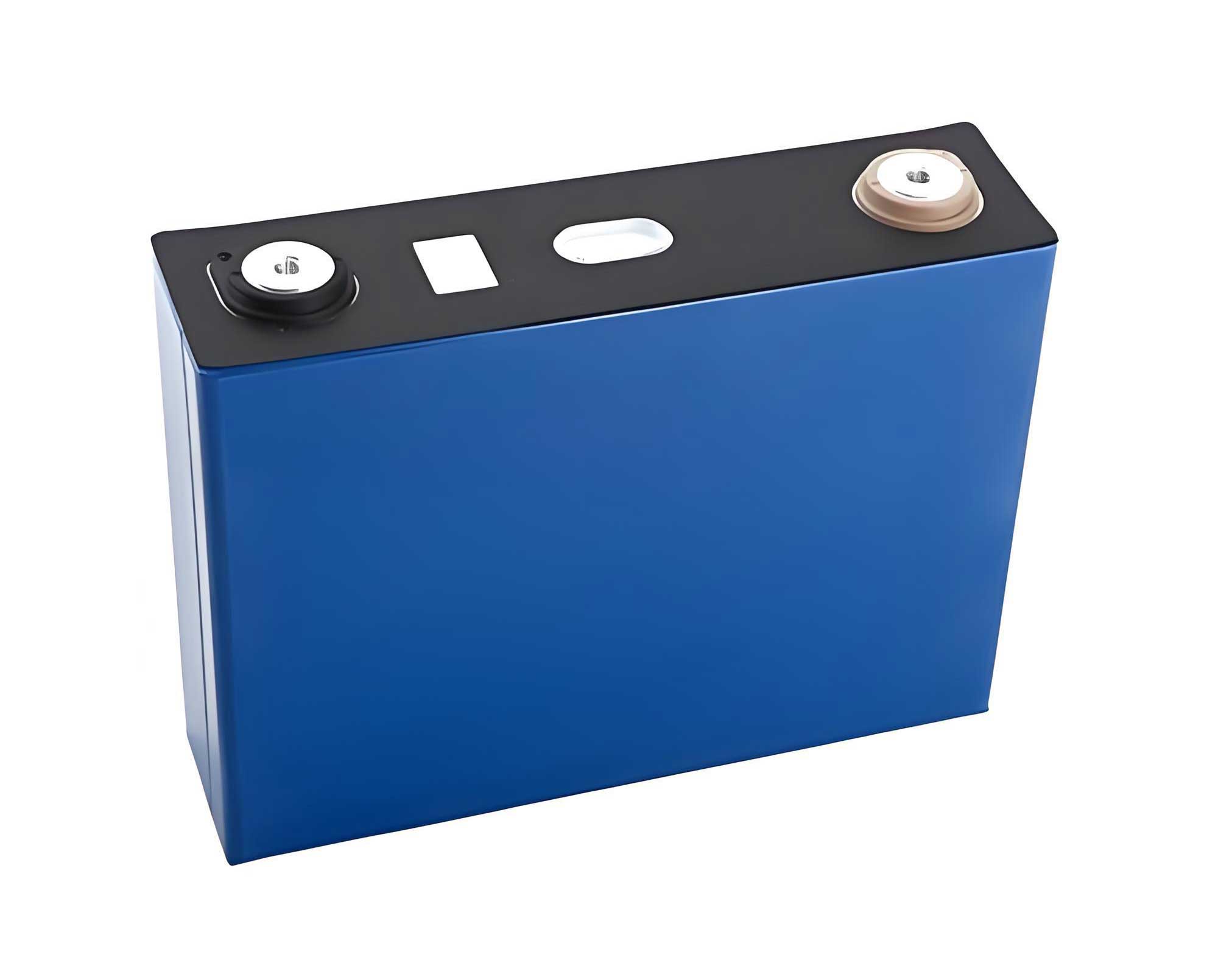
The LiFePO4 battery represents a significant advancement in lithium-ion technology. Its positive electrode material is lithium iron phosphate (LiFePO4) with an olivine structure, the negative electrode is graphite (carbon), the electrolyte is typically lithium hexafluorophosphate (LiPF6), and the separator is a polymer membrane. The overall structure is sealed in a metal casing or aluminum-plastic composite film. During charging and discharging, lithium ions (Li+) move between the electrodes without causing structural damage, as described by the reactions:
Charging: $$ \text{LiFePO}_4 \rightarrow \text{FePO}_4 + \text{Li}^+ + e^- \quad \text{(at positive electrode)} $$ $$ \text{Li}^+ + e^- + \text{C} \rightarrow \text{LiC}_6 \quad \text{(at negative electrode)} $$
Discharging: $$ \text{FePO}_4 + \text{Li}^+ + e^- \rightarrow \text{LiFePO}_4 \quad \text{(at positive electrode)} $$ $$ \text{LiC}_6 \rightarrow \text{Li}^+ + e^- + \text{C} \quad \text{(at negative electrode)} $$
These reactions are highly reversible, contributing to the long cycle life of LiFePO4 batteries. Moreover, the absence of gaseous byproducts during normal operation eliminates risks associated with hydrogen evolution. To illustrate the internal arrangement, consider the following diagram, which shows the movement of lithium ions through the separator:
In my comparative analysis, I have quantified the advantages of LiFePO4 batteries over VRLA batteries across multiple parameters. The energy density and specific energy are notably higher, allowing for compact and lightweight designs. For instance, the energy density of LiFePO4 batteries is approximately 210 W·h/L, compared to 70 W·h/L for VRLA batteries. Similarly, the specific energy ranges from 120 to 165 W·h/kg for LiFePO4, versus 30 to 45 W·h/kg for VRLA. This means that for the same capacity, a LiFePO4 battery system can be about one-third the weight and volume, facilitating easier installation and space savings in crowded petrochemical plants.
Discharge performance is another critical factor. LiFePO4 batteries support high-rate discharges, typically at 2C to 5C (where C is the discharge rate relative to capacity), and can even reach 10C in some configurations, making them ideal for short-duration, high-current applications like UPS and EPS. In contrast, VRLA batteries usually operate at 0.1C to 0.2C, limiting their responsiveness. Additionally, LiFePO4 batteries can be fully discharged without significant degradation, whereas VRLA batteries are often limited to 70-80% depth of discharge to prolong lifespan.
To summarize the technical disparities, I have compiled the following comprehensive table:
| Parameter | VRLA Battery | LiFePO4 Battery |
|---|---|---|
| Energy Density (W·h/L) | 70 | 210 |
| Specific Energy (W·h/kg) | 30–45 | 120–165 |
| Typical Discharge Rate | 0.1C–0.2C | 2C–5C (up to 10C possible) |
| Cycle Life (cycles) | 300–400 | >2000 |
| Operating Temperature Range | -20°C to 50°C (performance degrades with temperature extremes) | -40°C to 60°C (stable performance; >90% capacity at -40°C) |
| Temperature Compensation | Required (capacity drops ~1% per °C below 20°C) | Not required (minimal impact on performance) |
| Memory Effect | Present (sulfation occurs during float charging) | Absent (can be charged/discharged arbitrarily) |
| Safety | Moderate (risk of H2 emission and acid leakage) | High (no gas emission; passes abuse tests like nail penetration) |
| Environmental Impact | Toxic (contains lead, antimony, and sulfuric acid) | Benign (RoHS compliant; no heavy metals) |
| Maintenance | Regular check-ups and equalization charges needed | Virtually maintenance-free |
| Intelligence | Requires external monitoring systems | Integrated battery management system (BMS) |
The safety aspect of LiFePO4 batteries cannot be overstated. In my evaluation, I have considered various abuse scenarios. Unlike VRLA batteries, which can release hydrogen and potentially lead to explosions, LiFePO4 batteries exhibit exceptional thermal and chemical stability. The olivine structure of LiFePO4 prevents oxygen release, and the electrolyte is less prone to combustion. This intrinsic safety aligns perfectly with petrochemical environments, where flammable gases and vapors may be present. By eliminating the need for explosion-proof ventilation and hazardous area classifications, the LiFePO4 battery simplifies design and reduces capital expenditure.
From an environmental perspective, the LiFePO4 battery offers a green alternative. VRLA batteries contain lead and sulfuric acid, posing disposal challenges and health risks during recycling. In contrast, LiFePO4 batteries use non-toxic materials, aligning with global sustainability goals. This is particularly relevant as petrochemical industries face increasing pressure to adopt eco-friendly practices.
In terms of economic viability, while the initial cost of LiFePO4 batteries may be higher than VRLA batteries, the total cost of ownership is often lower. The extended cycle life (over 2000 cycles compared to 300-400 for VRLA) reduces replacement frequency. Additionally, the minimal maintenance requirements—no need for regular equalization charges or electrolyte topping—cut operational costs. The high efficiency of LiFePO4 batteries, with charge-discharge efficiencies exceeding 95%, further enhances energy savings. I have derived a simple cost model to illustrate this:
Let \( C_{\text{initial}} \) be the initial cost, \( N_{\text{cycles}} \) the cycle life, and \( E_{\text{output}} \) the energy output per cycle. The cost per cycle can be approximated as:
$$ \text{Cost per cycle} = \frac{C_{\text{initial}}}{N_{\text{cycles}}} $$
For a VRLA battery with \( C_{\text{initial}} = \$1000 \) and \( N_{\text{cycles}} = 350 \), the cost per cycle is about \$2.86. For a LiFePO4 battery with \( C_{\text{initial}} = \$1500 \) and \( N_{\text{cycles}} = 2000 \), it drops to \$0.75. Over time, the LiFePO4 battery proves more economical, especially when factoring in reduced downtime and maintenance.
The application of LiFePO4 batteries in petrochemical power supply systems is highly flexible. These batteries can be configured in series and parallel to achieve desired voltage levels and capacities, typically ranging from 10 Ah to 600 Ah per module. A key enabler is the integrated battery management system (BMS), which oversees critical functions such as state-of-charge (SOC) estimation, cell balancing, and protection against overcharge, over-discharge, short circuits, and temperature extremes. The BMS typically includes a master control unit (CMU), data acquisition units (BMU), and interface communication units (ICU), enabling seamless integration with existing plant control systems via protocols like Modbus, IEC 61850, or DCS interfaces.
For example, in a DC power system for a substation, a LiFePO4 battery bank can provide high-rate discharge for breaker operation, while in UPS applications, it ensures seamless transition during power outages. The wide operating temperature range (-40°C to 60°C) makes LiFePO4 batteries suitable for outdoor installations or unheated rooms, unlike VRLA batteries that require controlled environments. Moreover, the absence of memory effect allows for partial charging without capacity loss, which is beneficial in float-charge scenarios common in petrochemical power supplies.
To further highlight the advantages, I have analyzed the discharge characteristics using a simplified model. The discharge voltage of a LiFePO4 cell can be expressed as:
$$ V(t) = V_0 – I \cdot R_{\text{internal}} – k \cdot t $$
where \( V_0 \) is the open-circuit voltage, \( I \) is the discharge current, \( R_{\text{internal}} \) is the internal resistance, and \( k \) is a time-dependent decay factor. Due to low internal resistance, LiFePO4 batteries maintain a flatter discharge curve compared to VRLA batteries, ensuring stable voltage output even under high loads. This is crucial for sensitive electronic equipment in petrochemical plants.
In conclusion, my research demonstrates that LiFePO4 batteries represent a transformative technology for petrochemical power supply装置. By offering superior energy density, safety, environmental friendliness, and economic benefits, they address the limitations of traditional VRLA batteries. The elimination of hydrogen emission risks simplifies regulatory compliance and reduces design complexity, while the long lifespan and low maintenance enhance operational reliability. As the petrochemical industry evolves towards larger and more automated facilities, adopting LiFePO4 batteries can future-proof power systems, align with sustainability initiatives, and ultimately drive down lifecycle costs. I am confident that widespread integration of LiFePO4 batteries will become standard practice, fostering a safer and more efficient energy infrastructure in petrochemical plants worldwide.