
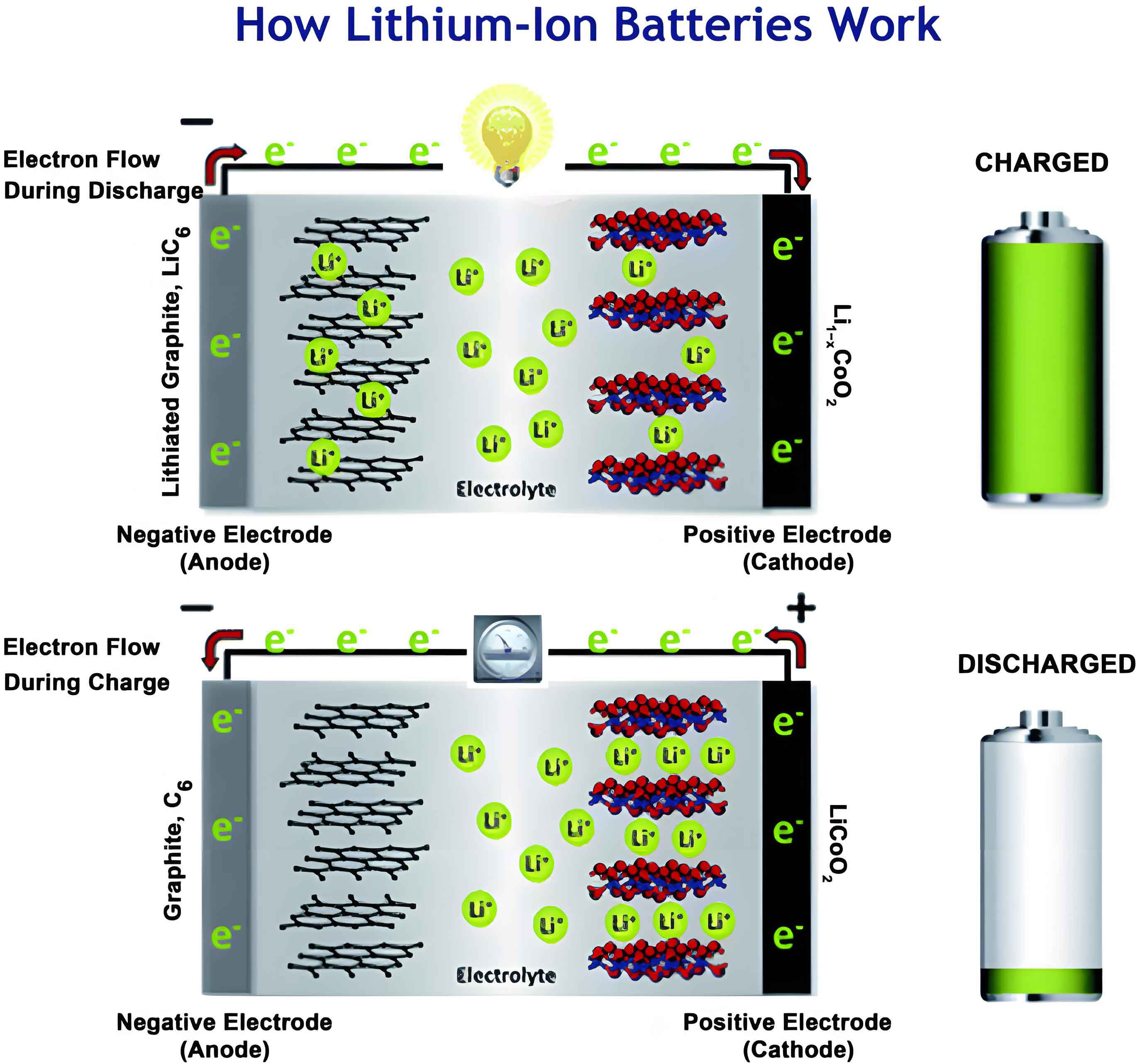
The relentless pursuit of higher energy density, longer cycle life, and improved safety continues to drive innovation in lithium-ion battery technology. As the demand for efficient energy storage solutions grows for applications ranging from portable electronics to electric vehicles and grid storage, the search for advanced electrode materials becomes increasingly critical. The anode, in particular, plays a pivotal role in determining key battery metrics. While graphite remains the commercial standard, its theoretical capacity is limited to 372 mAh/g, spurring research into alternative materials that can store more lithium ions. Among the most promising candidates are two-dimensional (2D) MXenes and sustainable biocarbon derivatives, whose synergistic combination offers a compelling pathway to next-generation lithium-ion battery anodes.
The Rise of MXenes in Electrochemical Energy Storage
MXenes represent a rapidly expanding family of 2D transition metal carbides, nitrides, and carbonitrides, with the general formula $$M_{n+1}X_nT_x$$, where M is an early transition metal (e.g., Ti, V, Nb, Mo), X is carbon and/or nitrogen, and Tx denotes surface functional groups (e.g., -O, -OH, -F). These materials are typically synthesized by selectively etching the “A” layer (often Al or Si) from their parent MAX phase precursors. The resulting 2D sheets exhibit a unique combination of metallic conductivity, hydrophilic surfaces, rich surface chemistry, and excellent mechanical properties. For lithium-ion battery applications, MXenes like Ti3C2Tx offer several advantages: high electronic conductivity facilitating fast electron transfer, layered structure providing pathways for ion intercalation, and functional groups that can participate in redox reactions. However, a significant challenge for pure MXene anodes is their tendency to restack due to strong van der Waals forces, which reduces accessible surface area and ion diffusion kinetics. Furthermore, while they offer good rate capability, their practical specific capacity often falls short of the requirements for high-energy-density lithium-ion battery systems. The search for stable, high-capacity partners to combine with MXenes is therefore a major research focus.
| MXene Composition | Synthesis Method | Initial Discharge Capacity (mAh/g) | Current Density (A/g) | Key Feature |
|---|---|---|---|---|
| Ti3C2Tx | HF Etching | ~410 | 0.1 | Good rate performance |
| V2CTx | LiF/HCl Etching | ~260 | 0.05 | Higher voltage plateau |
| Mo2CTx | Thermal Annealing | ~350 | 0.1 | Excellent cycling stability |
| Nb2CTx | Electrochemical Etching | ~300 | 0.2 | Good low-temperature performance |
Biocarbon: A Sustainable and Versatile Carbon Material
Parallel to the development of synthetic 2D materials, there is a growing emphasis on sustainable and low-cost carbon materials derived from biomass. Biocarbon, produced via the pyrolysis of organic precursors under an inert atmosphere, is an attractive candidate for lithium-ion battery anodes. Its appeal lies in its natural abundance, low cost, environmental friendliness, and tunable properties based on the precursor and pyrolysis conditions. Materials like cotton-derived biocarbon often inherit a fibrous or porous microstructure from their biological origin, which can provide a large specific surface area, shortened ion diffusion paths, and ample space to accommodate volume changes during lithium cycling. The lithium storage mechanism in disordered biocarbons typically involves a combination of diffusion-controlled intercalation into graphitic-like domains and surface-driven capacitive processes (both electric double-layer and pseudocapacitive) on defects and functional groups. The capacity can be significantly higher than that of graphite, but pure biocarbon often suffers from relatively low electronic conductivity and irreversible capacity loss in the first cycle due to solid electrolyte interphase (SEI) formation. The challenge is to harness its high capacity while improving its conductivity and cycle stability—a goal perfectly addressed by forming composites with conductive MXenes.
| Biomass Precursor | Carbonization Temp. (°C) | Specific Surface Area (m2/g) | Typical Capacity (mAh/g) | Advantage |
|---|---|---|---|---|
| Cotton | 800-1000 | 500-1500 | 1000-1500 | Fibrous, high surface area |
| Wood | 700-900 | 200-800 | 400-800 | Low-cost, abundant |
| Rice Husk | 600-800 | 800-2000 | 600-1000 | High silica content (can be removed) |
| Bamboo | 800-1000 | 300-700 | 500-900 | Fast-growing, mechanical strength |
Rational Design of MXene/Biocarbon Composites
The integration of MXenes and biocarbon is not merely a physical mixture but a strategic material design aimed at achieving synergistic effects. The core principle is to create a heterogeneous structure where the strengths of one component compensate for the weaknesses of the other, leading to superior overall performance in the lithium-ion battery. The highly conductive and mechanically robust MXene sheets can act as both a conductive scaffold and a buffer matrix. They prevent the restacking of other MXene sheets and the aggregation of biocarbon particles, ensuring electrolyte accessibility to all active surfaces. Simultaneously, the porous biocarbon spacers mitigate the restacking of MXene layers, maintaining a high electrochemically active area. Furthermore, the abundant functional groups on both materials can facilitate strong interfacial bonding, promoting efficient electron transfer across the composite. This intimate contact is crucial for rapid charge/discharge kinetics. The lithium storage in such a composite is multifaceted, involving intercalation into MXene interlayers, adsorption/insertion into the porous biocarbon, and possible faradaic reactions at surface functional sites, which can be described in a simplified form by combined equations:
$$MXene + xLi^+ + xe^- \rightleftharpoons Li_xMXene$$
$$Biocarbon + yLi^+ + ye^- \rightleftharpoons Li_yBiocarbon$$
The total capacity is thus a contribution from both mechanisms, often exceeding the arithmetic sum due to enhanced interface activity.
Synthesis, Characterization, and Electrochemical Analysis of MXene/Cotton Biocarbon Composites
In the referenced work, Ti3C2Tx MXene was prepared via a modified minimally intensive layer delamination (MILD) method using LiF/HCl, which is safer and yields more uniform flakes compared to concentrated HF etching. Cotton-derived biocarbon was obtained through a two-step pyrolysis process in an inert atmosphere. The composites, denoted as M@CC with varying mass ratios (1:1, 1:2, 1:3 of MXene to biocarbon), were synthesized using a surfactant-assisted (CTAB) self-assembly method, promoting uniform mixing and adhesion.
Structural characterization confirmed the successful hybridization. X-ray diffraction (XRD) patterns for the composite showed the characteristic (002) peak of MXene around 10°, and the broad peak around 25° from the disordered carbon structure of the biocarbon. Scanning electron microscopy (SEM) revealed the MXene’s accordion-like morphology adhering to the smooth, fibrous biocarbon strands, creating an open and interconnected network crucial for electrolyte penetration in a lithium-ion battery.
The electrochemical evaluation provided clear evidence of synergy. While pure MXene delivered an initial discharge capacity of 434.3 mAh/g at 0.1 A/g, and pure cotton biocarbon showed 1384.2 mAh/g, the optimal composite M@CC (1:3) achieved a remarkable initial discharge capacity of 1486.6 mAh/g at the same current density. This significant enhancement can be attributed to several factors: 1) The biocarbon’s high capacity is fully utilized due to improved electrical connection via the MXene network. 2) The MXene sheets are effectively prevented from restacking by the biocarbon spacers, exposing more active sites for lithium-ion interaction. 3) The stable composite structure buffers mechanical stress during lithiation/delithiation.
The rate capability, a critical metric for high-power lithium-ion battery applications, was also superior for the composite. The M@CC (1:3) electrode retained reasonable capacities at increasingly higher current densities (0.1 to 2 A/g), demonstrating robust kinetics. This is quantitatively supported by electrochemical impedance spectroscopy (EIS). The Nyquist plot for the composite featured a significantly smaller semicircle in the high-medium frequency region compared to the individual components. This semicircle corresponds to the charge-transfer resistance (Rct) at the electrode/electrolyte interface. The reduced Rct value indicates faster kinetics for the faradaic reaction $$Li^+ + e^- + \text{Active Site} \rightleftharpoons Li-\text{Adduct}$$. The slope of the low-frequency Warburg region was steeper for the composite, signifying faster solid-state diffusion of lithium ions within the electrode material, governed by the diffusion coefficient DLi+ which can be approximated from EIS data.
Cyclic voltammetry (CV) curves further elucidated the electrochemical behavior. The composite showed a pair of broad redox peaks, indicative of a combined intercalation and surface-controlled process. The peak current (ip) scales with the scan rate (v) according to the power law: $$i_p = a v^b$$, where the b-value close to 0.5 suggests diffusion control and close to 1.0 suggests capacitive behavior. Analysis of the composite’s CV data typically reveals a mix of both, confirming the hybrid storage mechanism that benefits both energy and power density in a lithium-ion battery.
| Material | Initial Discharge Capacity @ 0.1 A/g (mAh/g) | Reversible Capacity @ 0.1 A/g after 50 cycles (mAh/g) | Capacity Retention @ 2 A/g (relative to 0.1 A/g) | Approx. Charge Transfer Resistance (Rct) |
|---|---|---|---|---|
| MXene (Ti3C2Tx) | 434.3 | ~300 | ~25% | High |
| Cotton Biocarbon (CC) | 1384.2 | ~600 | ~15% | Very High |
| M@CC (1:1) | ~1100 | ~500 | ~20% | Medium |
| M@CC (1:3) | 1486.6 | ~800 | ~35% | Low |
Conclusion and Future Perspectives
The strategic combination of 2D MXenes and sustainable biocarbons represents a highly promising direction for developing advanced anode materials for lithium-ion battery technology. The composite material leverages the high conductivity and structural stability of MXenes with the high specific capacity and porous architecture of biocarbons. This synergy results in electrodes that exhibit enhanced specific capacity, superior rate performance, and improved cycling stability—key attributes needed for the next generation of energy-dense and fast-charging lithium-ion battery systems. The optimization of the mass ratio, as demonstrated, is critical to maximizing interface interactions and achieving the best electrochemical performance.
Future research should explore several avenues to further advance this materials platform. First, the surface functional groups on both MXene and biocarbon can be chemically tuned to create stronger covalent linkages, improving mechanical integrity and charge transfer. Second, pre-lithiation or doping strategies could be employed to reduce first-cycle irreversible capacity loss. Third, exploring other MXene compositions (e.g., V2C, Mo2C) and other biomass sources could unlock different combinations of voltage profiles and capacities. Finally, scaling up the synthesis of these composites in a cost-effective and environmentally benign manner is essential for their eventual commercialization in lithium-ion battery manufacturing. As the global push for renewable energy and electrified transportation intensifies, such innovative material solutions will be at the forefront of enabling safer, more powerful, and longer-lasting energy storage devices.