
The global imperative to transition towards sustainable and green energy systems has placed electrochemical energy storage at the forefront of technological innovation. Among the various candidates, lithium-ion batteries (LIBs) have emerged as the dominant solution for applications ranging from electric vehicles (EVs) to grid-scale energy storage, largely due to their favorable balance of energy density, cycle life, and cost. Within the LIB family, the lithium iron phosphate (LiFePO4 or LFP) battery has garnered significant attention and widespread adoption. Its appeal lies in its exceptional safety profile derived from stable olivine structure, long cycle life, environmental friendliness due to the absence of cobalt, and relatively low cost. These attributes make the lifepo4 battery a cornerstone for the new energy ecosystem, supporting the integration of intermittent renewable sources like wind and solar power.
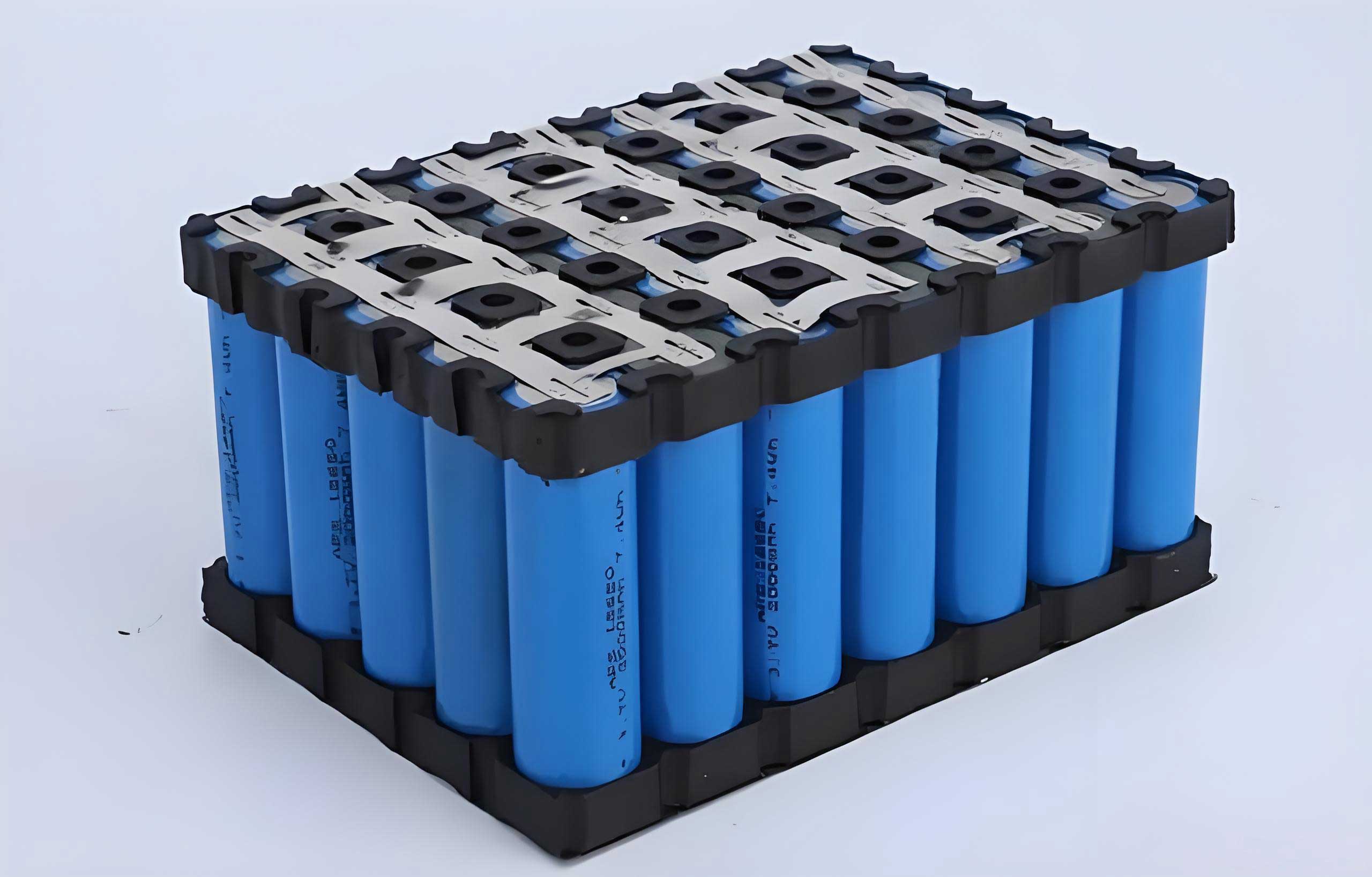
However, the practical deployment of lifepo4 battery technology faces a formidable challenge in low-temperature environments. Operations in cold winters, high-altitude regions, aerospace applications, and polar explorations demand reliable energy storage that can function efficiently under sub-zero conditions. Unfortunately, the electrochemical performance of a standard lifepo4 battery degrades markedly as temperature decreases. Severe capacity loss, power fade, increased polarization, and heightened safety risks due to lithium plating become pronounced, typically limiting effective operation to temperatures above -20°C. This performance bottleneck restricts the geographical and operational scope of EVs and energy storage systems, necessitating urgent and effective solutions. This article, from a first-person perspective as a researcher in the field, delves into the fundamental mechanisms behind this low-temperature failure, comprehensively reviews the recent research dynamics focused on performance optimization, and provides an outlook on future development directions. The discussion is structured around three primary intervention strategies: electrode material modification, electrolyte engineering, and battery preheating technologies.
1. Understanding the Roots of Performance Decay: Low-Temperature Mechanisms
The drastic performance decline of a lifepo4 battery at low temperatures is not attributable to a single cause but is a consequence of synchronized slowdowns and parasitic reactions across multiple battery components. The overall cell resistance ($R_{total}$) can be conceptualized as a sum of several contributors that are strongly temperature ($T$) dependent:
$$R_{total}(T) = R_{ohm}(T) + R_{sei}(T) + R_{ct}(T) + R_{diff}(T)$$
Where $R_{ohm}$ is the ohmic resistance from electrolytes and contacts, $R_{sei}$ is the resistance of the Solid Electrolyte Interphase (SEI) on the anode, $R_{ct}$ is the charge-transfer resistance at electrode-electrolyte interfaces, and $R_{diff}$ is the resistance from solid-state diffusion within active materials. The Arrhenius relationship often describes the temperature dependence of these kinetic processes:
$$k = A \exp\left(-\frac{E_a}{RT}\right)$$
where $k$ is the rate constant (for ion conductivity, charge transfer, etc.), $A$ is the pre-exponential factor, $E_a$ is the activation energy, $R$ is the gas constant, and $T$ is the absolute temperature. A decrease in $T$ leads to an exponential decrease in $k$, crippling the battery’s dynamics.
a) Electrolyte Viscosity and Ionic Conductivity: The liquid electrolyte, responsible for ionic transport, undergoes significant physical changes. Its viscosity ($\eta$) increases dramatically with decreasing temperature, while its ionic conductivity ($\sigma$) plummets. This increase in $R_{ohm}$ slows down the mass transport of Li+ ions, leading to severe concentration polarization during operation.
b) Anode Challenges: The graphite anode is particularly vulnerable. The SEI layer, a passivating film formed during initial cycles, becomes less conductive and more resistive ($R_{sei} \uparrow$). More critically, the charge-transfer kinetics for Li+ intercalation into graphite slows down ($R_{ct} \uparrow$). When the Li+ reduction (or de-solvation) reaction at the anode surface is slower than the Li+ supply from the electrolyte, the potential can drop below 0 V vs. Li/Li+, leading to the reduction of Li+ ions directly to metallic lithium. This phenomenon, known as lithium plating, is a primary failure mode. The plated lithium can form dendrites, irreversibly react with the electrolyte to form a thicker, more resistive SEI (consuming active Li+), and even puncture the separator, causing internal short circuits. The net effect is rapid capacity fade and a grave safety hazard.
c) Cathode Limitations: The LiFePO4 cathode has intrinsically low electronic and ionic conductivity. At low temperatures, the two-phase (FePO4/LiFePO4) reaction mechanism encounters increased barriers for phase nucleation and growth, and the solid-state Li+ diffusion coefficient drops ($R_{diff} \uparrow$). This results in a large polarization overpotential, limiting the accessible capacity, especially at moderate to high discharge/charge rates.
The synergistic effect of these factors leads to the characteristic poor performance of a standard lifepo4 battery in the cold. Addressing these issues requires targeted strategies at the material, component, and system levels.
2. Electrode Material Engineering: Enhancing Bulk and Interface Kinetics
Modifying the electrode materials aims to directly improve the ionic and electronic transport pathways within the electrodes, thereby reducing $R_{diff}$ and overall polarization. For the lifepo4 battery, this involves strategies for both the graphite anode and the LFP cathode.
2.1 Anode Material Design
The goal is to facilitate faster Li+ insertion kinetics and suppress lithium plating. Common approaches include:
- Surface Modification and Coating: Coating graphite particles with a thin, ionically conductive layer (e.g., amorphous carbon, metals, or metal oxides) can enhance surface conductivity, stabilize the SEI, and provide more active sites for Li+ transfer, lowering $R_{ct}$.
- Structural Engineering: Creating porous or hierarchical structures shortens the Li+ diffusion path within the particle. For instance, graphite with designed macropores allows electrolyte penetration and facilitates Li+ access to internal surfaces, significantly improving rate capability at low temperatures.
- Elemental Doping: Introducing heteroatoms like nitrogen (N) or phosphorus (P) into the carbon lattice of graphite can modify its electronic structure, increase surface defects (active sites), and enhance the binding energy with Li atoms, thus improving both electronic conductivity and Li+ adsorption/desorption kinetics.
2.2 Cathode Material Optimization
The primary focus for LFP is overcoming its poor intrinsic conductivity.
- Particle Size Reduction: Nanosizing LFP particles dramatically reduces the absolute distance for Li+ solid-state diffusion ($R_{diff} \propto L^2$, where L is diffusion length), mitigating polarization at low temperatures. However, excessively small nanoparticles can lead to reduced tap density and increased side reactions with the electrolyte.
- Conductive Coating: This is the most established and effective method. Coating LFP particles with a uniform layer of carbon (from sucrose, glucose, polymers, or graphene) creates a percolating electronic network. This coating drastically improves the electronic conductivity of the composite electrode, ensuring all particles are electrochemically active even under high-rate or low-temperature conditions.
- Lattice Doping: Doping the LFP crystal lattice with supervalent cations (e.g., Mg2+, Al3+, Zr4+, Nb5+) at the Li-site or Fe-site can increase the concentration of electronic charge carriers (polarons), thereby enhancing the intrinsic electronic conductivity of the bulk material.
The effectiveness of material modifications is often quantified by measuring the apparent Li+ diffusion coefficient ($D_{Li^+}$) using techniques like Galvanostatic Intermittent Titration Technique (GITT) or Electrochemical Impedance Spectroscopy (EIS). A higher $D_{Li^+}$ at low temperature correlates directly with better performance.
| Electrode | Strategy | Mechanism of Action | Key Performance Indicator |
|---|---|---|---|
| Graphite Anode | Surface Coating | Reduces $R_{ct}$, stabilizes SEI | Lower charge-transfer resistance from EIS |
| Macroporous Structure | Shortens Li+ transport path, improves wetting | High capacity retention at high C-rate, low T | |
| Nitrogen Doping | Enhances electronic conductivity & Li+ affinity | Improved low-T reversible capacity | |
| LFP Cathode | Carbon Coating | Provides electronic percolation network | High electronic conductivity, reduced polarization |
| Particle Nanosizing | Reduces solid-state diffusion length ($R_{diff}$) | Higher $D_{Li^+}$ measured by GITT | |
| Metal-ion Doping | Increases intrinsic electronic conductivity | Improved bulk conductivity measurement |
3. Electrolyte Engineering: The Core of Low-Temperature Innovation
Electrolyte optimization is arguably the most potent and economically viable strategy to improve lifepo4 battery low-temperature performance. It directly addresses the issues of high viscosity, low conductivity, and unstable interfaces. The design philosophy revolves around three components: solvents, lithium salts, and additives.
3.1 Solvent Selection: Balancing Physical Properties
The solvent mixture determines the fundamental low-temperature fluidity and ion-solvating power. An ideal low-temperature solvent system requires a low melting point, low viscosity, and adequate dielectric constant to dissolve lithium salts.
| Solvent Type | Example | Melting Point (°C) | Viscosity (cP, 25°C) | Dielectric Constant (25°C) | Role in Low-T Formulation |
|---|---|---|---|---|---|
| Cyclic Carbonate | Ethylene Carbonate (EC) | 36.4 | 1.90 (40°C) | ~89.8 | Essential for graphite SEI formation, but high mp. |
| Linear Carbonate | Dimethyl Carbonate (DMC) | 4.6 | 0.59 | ~3.1 | Lowers viscosity & freezing point; co-solvent. |
| Linear Carbonate | Ethyl Methyl Carbonate (EMC) | -53 | 0.65 | ~2.9 | Excellent low mp; main low-T co-solvent. |
| Linear Ester | Methyl Acetate (MA) | -98 | 0.37 | ~6.7 | Very low viscosity & mp; poor SEI former. |
| Ether | 1,2-Dimethoxyethane (DME) | -58 | 0.46 | ~7.2 | Superb low-T properties; but co-intercalates into graphite. |
| Fluorinated Solvent | Trifluoromethyl Acetate (TFA) | < -70 | Low | Moderate | Low mp, high stability, weak solvation. |
The state-of-the-art baseline electrolyte for a standard lifepo4 battery is ~1.0 M LiPF6 in EC/EMC or EC/DMC/EMC mixtures. Increasing the proportion of linear carbonate (EMC, DMC) or introducing linear esters (MA, EA) pushes down the freezing point. A critical advancement is the use of weakly-solvating solvents (like fluorinated esters/ethers). These solvents have a lower binding energy with Li+, which significantly reduces the de-solvation energy barrier ($\Delta G_{desolv}$) at the anode interface, a major component of $R_{ct}$ at low T. The de-solvation energy can be conceptually linked to the performance:
$$R_{ct} \propto \exp\left(\frac{\Delta G_{desolv} + \Delta G_{other}}{RT}\right)$$
By minimizing $\Delta G_{desolv}$ through solvent design, $R_{ct}$ can be dramatically reduced even at low temperatures.
3.2 Lithium Salts and Solvation Structure Engineering
Beyond LiPF6, alternative salts like LiBF4 offer lower $R_{ct}$ at low T, though with trade-offs in SEI stability and conductivity. More importantly, the concept of localized high-concentration electrolytes (LHCEs) has revolutionized low-temperature electrolyte design. A typical LHCE consists of a high concentration of a salt like LiFSI in a solvating solvent (e.g., DME), diluted with a non-co-solvent (e.g., Bis(2,2,2-trifluoroethyl) ether, BTFE). This structure maintains the beneficial anion-rich solvation sheath of a high-concentration electrolyte (leading to inorganic-rich, stable SEI) while retaining the low viscosity and good wettability of a dilute electrolyte. The LHCE formula can be represented by its composition ratio:
$$\text{LHCE} = \text{LiSalt} : \text{Solvating Solvent} : \text{Diluent} \quad (\text{e.g., } 1:1.2:3 \text{ molar ratio})$$
This design simultaneously addresses bulk transport ($R_{ohm}$) and interface stability ($R_{sei}$, $R_{ct}$).
3.3 Functional Additives
Additives (<1-5 wt%) are pivotal for forming a robust, ionically conductive SEI/CEI. For low-temperature lifepo4 battery applications:
- Fluoroethylene Carbonate (FEC): A ubiquitous additive that decomposes prior to EC, forming a flexible, LiF-rich SEI with higher ionic conductivity at low temperatures.
- Lithium Difluorophosphate (LiDFP): A dual-function additive (salt/additive) that contributes to forming a protective interface layer containing LixPOyFz species, enhancing stability.
- Film-Forming Additives (e.g., Vinylene Carbonate, Sulfur-containing agents): These preferentially reduce to form a stable base layer for the SEI, preventing continuous electrolyte decomposition and thickening of the interface layer during low-temperature cycling.
| Component | Strategy | Target Mechanism | Expected Outcome |
|---|---|---|---|
| Solvent | High linear carbonate/ester ratio | Lower freezing point & viscosity | Higher ionic conductivity at low T |
| Use of fluorinated/weakly-solvating solvents | Reduce Li+ de-solvation energy ($\Delta G_{desolv}$) | Lower charge-transfer resistance ($R_{ct}$) | |
| Localized High-Concentration Electrolyte (LHCE) | Combine stable interface (inorganic SEI) with low viscosity | Simultaneously improve bulk transport and interface kinetics | |
| Lithium Salt | LiBF4 as co-salt | Lower $R_{ct}$ at electrode interface | Reduced polarization at low T |
| Salts with low LUMO anions (LiDFOB, LiBOB) | Promote formation of stable SEI/CEI | Suppresses parasitic reactions, maintains low $R_{sei}$ | |
| Additives | FEC, VC | Form conductive, stable SEI base layer | Prevents SEI thickening, reduces $R_{sei}$ growth |
| LiDFP, LiNO3 | Modify SEI/CEI composition (add LiF, Li3N, etc.) | Enhances interfacial ion transport and stability |
4. Battery Preheating Technologies: A System-Level Solution
When material-level modifications reach practical or economic limits, system-level thermal management, specifically preheating, provides a direct and highly effective solution. The principle is to raise the lifepo4 battery‘s core temperature to a suitable operating range (e.g., >0°C or >10°C) before charging or high-power discharging. Preheating technologies are broadly classified into external and internal methods.
4.1 External Heating
Heat is applied from outside the cell, requiring additional components. Key methods include:
- Fluid-Based Heating: Using air or liquid (coolant) at an elevated temperature to circulate around the battery module. While simple, it often suffers from slow heating rates and large temperature gradients within the pack.
- Integrated Heating Elements: Embedding flexible electric heaters (e.g., Polyimide film heaters, Positive Temperature Coefficient – PTC materials) onto the cell surface. This allows for more uniform and faster heating but adds weight and cost.
- Phase Change Material (PCM) Assisted Heating: Using PCMs with a melting point slightly above the target low temperature. The PCM solidifies in the cold, storing latent heat. During preheating, this latent heat is released to warm the battery. This is often a passive, slow method used in conjunction with others.
4.2 Internal Heating
This approach generates heat directly inside the cell through Joule heating, offering higher efficiency and uniformity. The most promising techniques are:
- Alternating Current (AC) Heating: Applying a low-frequency AC signal to the battery terminals. The internal impedance ($Z_{int}$) of the battery, which is high at low temperatures, generates heat ($Q_{ac}$) according to:
$$Q_{ac} = I_{ac}^2 \cdot Re(Z_{int}) \cdot t$$
where $I_{ac}$ is the AC current amplitude and $t$ is time. This method is efficient but requires careful control to avoid lithium plating from any DC offset. - Mutual Pulse Heating: For a battery pack, pulse currents are circulated between different modules or cells in a controlled sequence. One subset of cells is discharged (generating heat) while another is charged (absorbing energy from the discharging cells), with minimal net energy loss from the pack. This method self-balances state-of-charge (SOC) and temperature.
- Self-Heating Battery Structure: An innovative design where a thin nickel foil with a switching mechanism is embedded inside the cell. When activated, the foil creates an internal short circuit for a very brief moment, generating intense Joule heating to rapidly raise the cell temperature within seconds. This method is extremely fast but places stringent demands on control precision and safety.
The choice of preheating strategy involves a trade-off between heating rate, energy efficiency, temperature uniformity, system complexity, and cost. The optimal solution often depends on the specific application of the lifepo4 battery system.
| Preheating Method | Heating Principle | Advantages | Disadvantages | Typical Heating Rate |
|---|---|---|---|---|
| External: Fluid (Air) | Convection | Simple, low cost, integrated with cooling system | Slow, non-uniform temperature, bulky | 0.1 – 0.5 °C/min |
| External: Electric Heater | Conduction | Faster than air, more uniform, controllable | Adds weight/cost, external heat loss | 1 – 3 °C/min |
| Internal: AC Heating | Joule Heating (Internal Impedance) | High efficiency, uniform, no external components | Complex control, risk of Li plating if not optimized | 2 – 8 °C/min |
| Internal: Mutual Pulse | Joule Heating & Internal Energy Transfer | Energy-efficient, self-balancing (SOC/T), uniform | Very complex control logic for pack management | 3 – 10 °C/min |
| Internal: Self-Heating Structure | Internal Short-Circuit Joule Heating | Extremely rapid, minimal energy consumption | Requires specialized cell design, safety concerns | > 30 °C/min |
5. Summary and Future Perspectives
The quest to enable robust low-temperature operation for the lifepo4 battery is a multi-faceted endeavor spanning materials science, electrochemistry, and thermal systems engineering. The performance decay is rooted in the thermally activated nature of all kinetic processes within the cell—ionic transport, charge transfer, and solid-state diffusion. While electrode modifications like carbon coating and nanostructuring provide foundational improvements in electronic and ionic conductivity, the most dynamic progress is occurring in electrolyte engineering and intelligent preheating.
Electrolyte design has evolved from simple solvent mixing to sophisticated architecture of solvation structures. The emergence of weakly-solvating solvents and Localized High-Concentration Electrolytes represents a paradigm shift, directly targeting the critical de-solvation energy barrier and enabling the formation of highly conductive, stable interphases. Concurrently, advanced preheating technologies, particularly internal AC and mutual pulse methods, offer system-level solutions that can rapidly and efficiently bring a lifepo4 battery pack into its optimal temperature window without permanent material changes.
Looking forward, the development trajectory points toward integration and intelligence:
- Holistic Electrolyte Design: Future electrolytes will likely be “tailor-made” for specific low-temperature scenarios (e.g., -40°C storage vs. -20°C fast-charging). This involves the rational design of new fluorinated solvents, multi-salt systems, and synergistic additive packages, guided by computational screening and advanced in-situ characterization of interface dynamics.
- Hybrid Thermal Management Systems: The most efficient solution will combine internal preheating (for speed and uniformity) with external insulation or PCMs (for temperature maintenance). Smart battery management systems (BMS) will use algorithms to predict thermal needs based on ambient conditions and driving/storage schedules, activating the optimal combination of heating strategies with minimal energy penalty.
- Beyond Conventional LFP/Graphite: While this review focuses on the mainstream lifepo4 battery, exploring alternative anodes with lower lithium plating propensity (e.g., lithium titanate – LTO) or advanced cathode derivatives (e.g., doped/coated high-voltage LFP) for low-temperature applications remains an important parallel path.
- Standardization and Validation: As new solutions emerge, establishing standardized testing protocols for low-temperature performance (covering capacity, power, cycle life, and safety under varied conditions) is crucial for fair comparison and guiding commercial development.
In conclusion, the limitations of the lifepo4 battery in cold environments are being vigorously challenged on multiple fronts. Through continued innovation in electrode interfaces, revolutionary electrolyte formulations, and intelligent thermal management, the vision of a high-performance, all-climate lifepo4 battery is steadily transitioning from a research ambition to an impending reality, promising to significantly broaden the impact of electrification and renewable energy storage across the globe.