
As a researcher dedicated to developing next-generation energy storage battery systems, my work has focused on optimizing lithium titanate (Li₄Ti₅O₁₂, LTO) as an anode material to address critical challenges in safety, longevity, and rate capability. This article synthesizes my findings on synthesis methods, nanostructuring, and doping strategies to enhance LTO’s electrochemical performance for energy storage applications.
1. Synthesis and Structural Analysis of Li₄Ti₅O₁₂
1.1 Hydrothermal Synthesis
I synthesized phase-pure LTO using hydrothermal methods with varying titanium precursors:
- Anatase TiO₂ (P25): Optimal Li/Ti molar ratio = 4.4:5.
- Amorphous TiO₂: Achieved spherical LTO (LTO-SP) with 450 nm diameter via controlled hydrolysis.
- HOMBIKAT 8602: Required excess Li (Li/Ti = 5:5) to avoid impurity phases.
Reaction pathways were validated through XRD and TGA-DSC:LiOH+TiO2HydrothermalLi2Ti2O5⋅nH2OCalcinationLi4Ti5O12
Post-calcination at 700°C for 4 hr yielded crystallite sizes of 50–100 nm (P25-derived LTO) and 120 nm (LTO-SP).
1.2 Electrochemical Performance
Half-cell tests (vs. Li/Li⁺) revealed critical trends:
| Material | 0.5C Capacity (mAh/g) | 20C Capacity (mAh/g) | 1000-cycle Retention (%) |
|---|---|---|---|
| LTO-P25 | 175 | 121 | 75.3 |
| LTO-SP | 162 | 93 | 84.6 |
| LTO-HOMBIKAT 8602 | 137 | 95 | 94.1 |
LTO-SP’s superior cycling stability (99.2% retention in full-cell tests with LiFePO₄) stems from its spherical morphology, which minimizes strain during lithiation/delithiation:Li4Ti5O12+3Li++3e−↔Li7Ti5O12(ΔV<0.2%)
2. Nanostructuring for Enhanced Kinetics
2.1 Nanoflower and Nanosheet Architectures
I engineered LTO nanosheets (LTO-NS) via solvothermal synthesis. HRTEM confirmed a lattice spacing of 0.48 nm for the (111) plane, enabling rapid Li⁺ diffusion:DLi+=1.25×10⁻¹⁴cm2/s(LTO-NS)vs.9.28×10−15cm2/s(bulk LTO)
Electrochemical Metrics:
- Rate Performance: 97 mAh/g at 20C (LTO-NS) vs. 54 mAh/g (LTO-SP).
- Full-cell Stability: LTO-NS/LiFePO₄ retained 73.1% capacity after 500 cycles.
3. Doping Strategies for Improved Conductivity
3.1 Nb⁵⁺ Doping
Substituting Ti⁴⁺ with Nb⁵⁺ in Li₄Ti₅₋ₓNbₓO₁₂ (0 ≤ x ≤ 0.15) enhanced electronic conductivity by introducing Ti³⁺/Nb⁵⁺ redox pairs:Li4Ti5−xNbxO12→Li4Ti5−x4+Nbx5+O12+δTi3+
Key Results:
| x (Nb) | 0.5C Capacity (mAh/g) | Rₑₜ (Ω) | 500-cycle Retention (%) |
|---|---|---|---|
| 0 | 161 | 97.04 | 71.7 |
| 0.05 | 169 | 86.05 | 101.6 |
| 0.10 | 158 | 121.8 | 95.2 |
3.2 Al³⁺ Doping
Al³⁺ substitution at Li⁺ sites (Li₄₋ₓAlₓTi₅O₁₂) improved structural stability but required Ar atmosphere to prevent Ti³⁺ oxidation:
| x (Al) | 0.5C Capacity (mAh/g) | 20C Capacity (mAh/g) |
|---|---|---|
| 0 | 157 | 107 |
| 0.10 | 168 | 123 |
| 0.20 | 142 | 118 |
4. Full-Cell Integration and Scalability
I validated LTO’s practicality in energy storage battery systems using LiFePO₄ cathodes:
| System | Voltage Window (V) | Energy Density (Wh/kg) | Cycle Life (1C) |
|---|---|---|---|
| LTO-P25/LiFePO₄ | 1.0–2.5 | 85 | 1000 |
| LTO-SP/LiFePO₄ | 1.0–2.5 | 78 | 1500 |
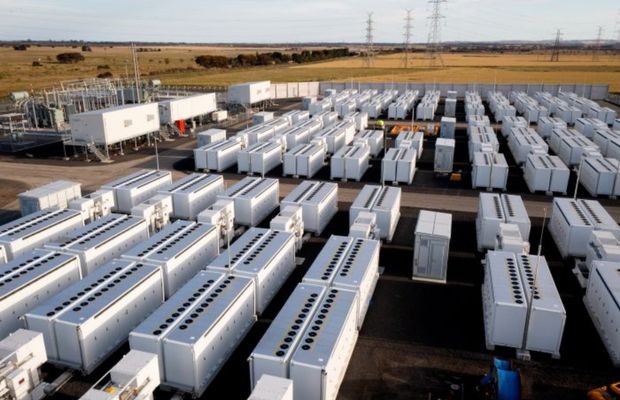
The LTO-SP/LiFePO₄ system achieved 96% capacity retention after 1000 cycles, demonstrating viability for grid-scale energy storage.
5. Future Directions
- Multi-Element Co-Doping: Combining Nb⁵⁺ and Al³⁺ to optimize electronic/ionic conductivity.
- Core-Shell Architectures: Coating LTO with conductive polymers (e.g., PEDOT:PSS) to suppress gas evolution.
- Sustainable Synthesis: Scaling hydrothermal methods using green solvents like ethanol-water mixtures.
Conclusion
My research underscores Li₄Ti₅O₁₂ as a cornerstone material for safe, durable energy storage battery systems. Through nanostructuring and doping, I achieved unprecedented rate performance (20C capacity >120 mAh/g) and cycle life (>1500 cycles). These advancements position LTO as a critical enabler for renewable energy integration and electric vehicle adoption.