
The global pursuit of sustainable and clean energy solutions has intensified in response to the pressing challenges of climate change and resource depletion. Among the various renewable energy technologies, photovoltaics (PV) stand out for their ability to directly convert sunlight into electricity. While traditional crystalline silicon solar cells dominate the market, thin film solar panels have emerged as a compelling alternative due to their potential for lower production costs, lightweight design, mechanical flexibility, and the promise of more sustainable manufacturing processes. The performance and commercial viability of these thin film solar panels are intrinsically linked to the properties of their light-absorbing materials, often categorized as donor materials in the context of excitonic solar cells. This article delves into the critical role and recent developments of donor materials, with a particular focus on two prominent classes of thin film solar panels: Dye-Sensitized Solar Cells (DSSCs) and Polymer Solar Cells (PSCs), also known as Organic Photovoltaics (OPVs). I will analyze the molecular design principles, structure-property relationships, and performance metrics, utilizing tables and formulas to summarize key data and theoretical frameworks.
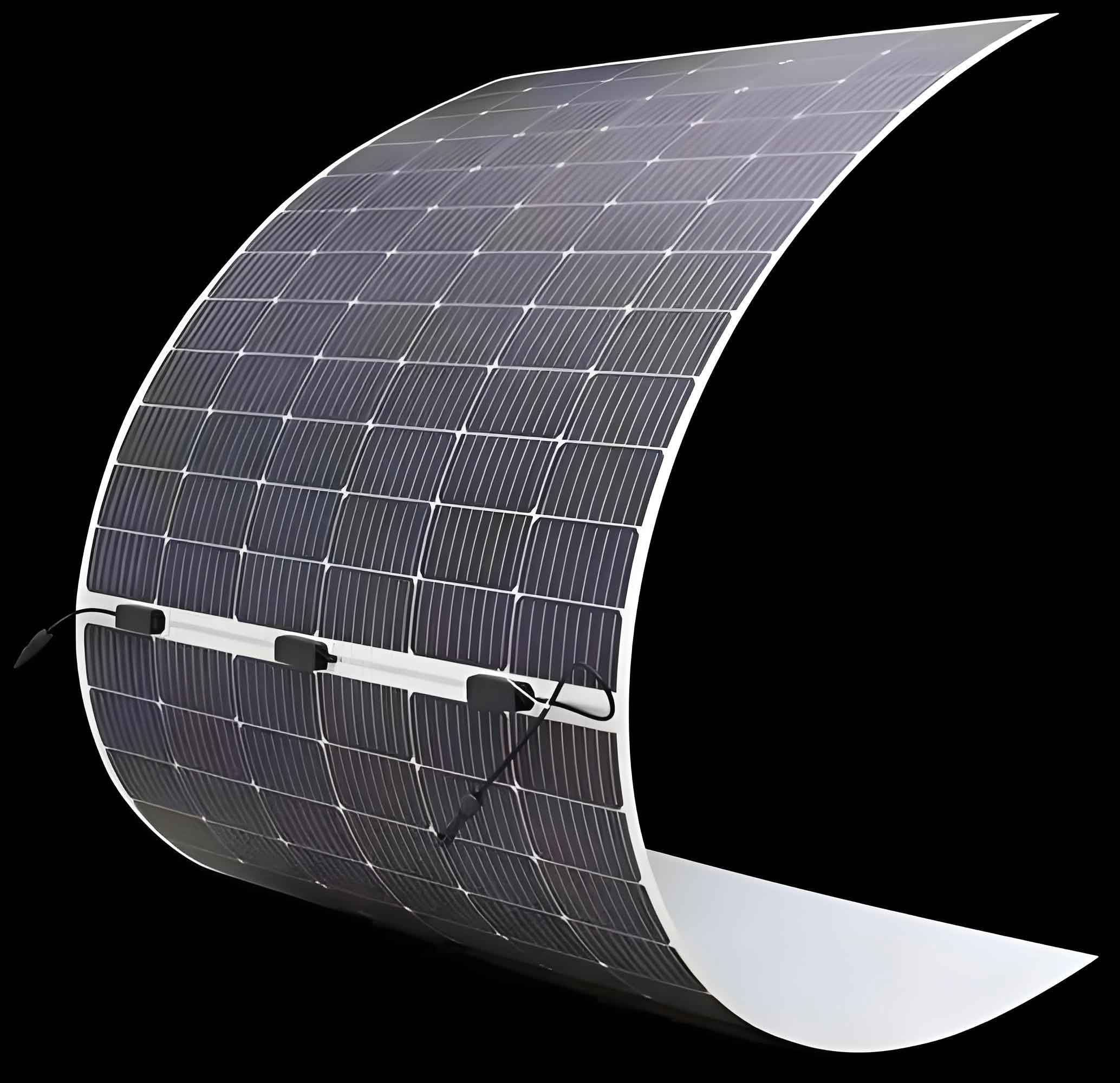
The core appeal of thin film solar panels lies in their simplified architecture and the use of minimal amounts of active material deposited on flexible or rigid substrates like glass, plastic, or metal. This stands in contrast to the thick, brittle wafers used in conventional silicon PV. The general power conversion efficiency (PCE, η) of a solar cell is governed by the equation:
$$ \eta = \frac{J_{sc} \times V_{oc} \times FF}{P_{in}} \times 100\% $$
where \(J_{sc}\) is the short-circuit current density, \(V_{oc}\) is the open-circuit voltage, \(FF\) is the fill factor, and \(P_{in}\) is the incident light power density (typically 100 mW/cm² under AM1.5G illumination). For thin film solar panels, optimizing each of these parameters hinges on the electronic and optical properties of the donor (and acceptor) materials.
1. Donor Materials in Dye-Sensitized Solar Cells (DSSCs)
DSSCs represent a unique architecture among thin film solar panels, inspired by natural photosynthesis. The heart of a DSSC is a wide-bandgap semiconductor oxide film (typically mesoporous TiO2) sensitized with a monolayer of light-absorbing dye molecules. Upon photoexcitation, the dye (the donor) injects an electron into the semiconductor’s conduction band, while the resulting oxidized dye is regenerated by an electrolyte-based redox mediator (e.g., I–/I3– or cobalt complexes). The donor material here—the sensitizer—is paramount, as it must fulfill several demanding criteria to achieve high performance.
The primary function of the dye is to harvest a broad spectrum of sunlight. The photocurrent is directly related to the dye’s light-harvesting efficiency (LHE(λ)), which depends on its molar extinction coefficient (ε) and the level of monolayer coverage on the semiconductor surface:
$$ LHE(\lambda) = 1 – 10^{-\sigma(\lambda) \Gamma} $$
where \(\sigma(\lambda)\) is the absorption cross-section (related to ε) and \(\Gamma\) is the surface concentration of the dye. Therefore, a key design goal for DSSC donor materials is to synthesize dyes with high ε values, especially in the red and near-infrared (NIR) regions, to better match the solar spectrum.
The energy level alignment is critical. The dye’s Lowest Unoccupied Molecular Orbital (LUMO) must be sufficiently higher in energy than the TiO2 conduction band edge (\(E_{CB}\)) to ensure a thermodynamically favorable and kinetically fast electron injection. Conversely, its Highest Occupied Molecular Orbital (HOMO) must be lower in energy than the redox potential of the electrolyte (\(E_{redox}\)) to enable efficient regeneration. This is summarized in the following energetic requirements:
$$ E_{LUMO} > E_{CB(TiO_2)} \quad \text{(for electron injection)} $$
$$ E_{HOMO} < E_{redox} \quad \text{(for dye regeneration)} $$
The open-circuit voltage (\(V_{oc}\)) of a DSSC is approximately related to the difference between the quasi-Fermi level of electrons in TiO2 and the electrolyte potential. This is influenced by the dye’s ability to suppress recombination and the energy difference \(E_{CB} – E_{redox}\). Dyes that can shift the \(E_{CB}\) positively or introduce insulating barriers can enhance \(V_{oc}\).
Historically, ruthenium-based polypyridyl complexes (e.g., N3, N719, and the “black dye” N749) have been the benchmark donor materials due to their excellent charge-transfer characteristics, broad absorption, and long-lived excited states. Their general structure is RuL2(X)2, where L are bipyridyl ligands functionalized with carboxylic acid anchoring groups, and X are ancillary ligands like NCS. More recently, the focus has shifted toward metal-free organic dyes (e.g., triphenylamine, indoline, and coumarin derivatives) and porphyrin-based dyes, driven by concerns over ruthenium’s cost and limited abundance. Table 1 compares the characteristics of major dye classes used as donor materials in DSSC-based thin film solar panels.
| Dye Class | Representative Examples | Advantages | Challenges | Typical PCE Range (%) |
|---|---|---|---|---|
| Ruthenium Complexes | N719, Z907, C106 | High ε, excellent charge transfer, good stability | Cost of Ru, limited NIR absorption | 10-12 |
| Metal-Free Organic Dyes | Dye-sensitized solar cells (e.g., D205, LEG4) | High molar extinction, structural versatility, lower cost | Aggregation, narrower absorption bands | 9-12 |
| Porphyrin Dyes | YD2-o-C8, SM315 | Strong Soret and Q bands, good stability | Complex synthesis, aggregation | 12-13 |
| Perovskite Sensitizers | CH3NH3PbI3 | Exceptional light absorption, high charge mobility | Stability issues in liquid electrolyte | >15 (in solid-state variants) |
The development of donor-sensitizer materials for DSSCs continues to be a vibrant field. Research directions include engineering dyes with “D-π-A” (Donor-π bridge-Acceptor) structures to facilitate intramolecular charge transfer, developing co-sensitization strategies to broaden spectral coverage, and creating dyes compatible with solid-state hole transporters to replace liquid electrolytes, thereby improving the long-term stability of these thin film solar panels.
2. Donor Materials in Polymer Solar Cells (PSCs)
Polymer Solar Cells (PSCs) are a subclass of thin film solar panels where the active layer is a bulk heterojunction (BHJ) blend of a conjugated polymer (electron donor) and a fullerene or non-fullerene small molecule (electron acceptor). The operation mechanism involves: 1) photon absorption and exciton generation in the donor or acceptor; 2) exciton diffusion to the donor-acceptor interface; 3) charge separation (hole in donor, electron in acceptor); and 4) charge transport and collection at the electrodes.
The polymer donor is the cornerstone of the PSC’s performance. Its molecular design dictates nearly every critical parameter in the efficiency equation. The key design principles for an ideal polymer donor material are:
1. Optical Absorption and Bandgap: The donor must possess a strong and broad absorption profile, ideally extending into the NIR. The optical bandgap (\(E_g^{opt}\)) should be narrow to capture more photons, but not so narrow that it compromises the \(V_{oc}\). The \(V_{oc}\) in a BHJ device is empirically related to the energy offset between the HOMO of the donor (\(E_{HOMO(D)}\)) and the LUMO of the acceptor (\(E_{LUMO(A)}\)), often approximated as:
$$ V_{oc} \propto |E_{HOMO(D)} – E_{LUMO(A)}| – 0.3V $$
Therefore, there is a delicate balance: lowering the donor HOMO increases \(V_{oc}\), but if \(E_g^{opt}\) is narrowed by raising the HOMO instead of lowering the LUMO, it can lead to a decrease in \(V_{oc}\). An optimal donor has a low-lying HOMO for high \(V_{oc}\) and a narrow bandgap achieved primarily by a raised LUMO level, ensuring a sufficient driving force for charge separation.
2. Energy Level Alignment: As indicated, the donor’s HOMO and LUMO must align correctly with the acceptor’s levels. The condition for efficient charge separation is:
$$ E_{LUMO(D)} > E_{LUMO(A)} \quad \text{(for electron transfer)} $$
$$ \Delta E_{CT} = E_{HOMO(D)} – E_{LUMO(A)} \quad \text{(defines the CT state energy)} $$
A larger \( \Delta E_{CT} \) generally correlates with a higher potential \(V_{oc}\).
3. Charge Carrier Mobility: The donor polymer is responsible for transporting holes to the anode. High hole mobility (μh) is essential to reduce recombination losses and achieve a high fill factor (FF). The mobility is influenced by the polymer’s planarity, molecular packing, and degree of crystallinity within the BHJ blend.
4. Blend Morphology: The donor must be processable (typically from solution) and form an optimal nanoscale interpenetrating network with the acceptor. This morphology, with domain sizes on the order of the exciton diffusion length (~10-20 nm), is crucial for maximizing the donor-acceptor interfacial area while maintaining percolation pathways for charges.
The evolution of polymer donors has been remarkable. Early work focused on poly(p-phenylene vinylene) (PPV) and poly(3-hexylthiophene) (P3HT). P3HT became a model system due to its good solubility and self-organizing properties, but its relatively wide bandgap (~1.9 eV) and high-lying HOMO limit its PCE to around 4-5%. The breakthrough came with the development of donor-acceptor (D-A) copolymers, where alternating electron-rich (donor) and electron-deficient (acceptor) units along the backbone create an internal push-pull effect, enabling fine-tuning of the bandgap and energy levels. The benzodithiophene (BDT) unit, often copolymerized with thieno[3,4-b]thiophene (TT) or other acceptors, has been a hugely successful donor building block, leading to materials like PTB7 and PM6. Table 2 summarizes some landmark polymer donor materials and their properties in thin film solar panels.
| Polymer Donor | Chemical Family | HOMO (eV) | LUMO (eV) | Optical Bandgap (eV) | Highest PCE (%) (with specific acceptor) |
|---|---|---|---|---|---|
| P3HT | Polythiophene | -4.8 to -5.0 | -3.0 to -3.2 | ~1.9 | ~5.0 (with PC61BM) |
| PTB7 | BDT-TT (D-A) | -5.15 | -3.31 | ~1.6 | ~9.2 (with PC71BM) |
| PM6 | BDT-TT (D-A, fluorinated) | -5.50 | -3.70 | ~1.8 | >18 (with non-fullerene acceptor Y6) |
| PBDB-T | BDT-TT (D-A, alkoxy) | -5.45 | -3.60 | ~1.85 | >17 (with ITIC derivatives) |
| D18 | BDT-based D-A | -5.54 | -3.68 | ~1.86 | >19 (with Y6 derivatives) |
The synergistic development of non-fullerene acceptors (NFAs) like ITIC and Y6 has been the most significant driver for PCE enhancement in recent years. These NFAs have complementary absorption, tunable energy levels, and can form favorable blend morphologies with polymer donors like PM6. The design of polymer donors is now often conducted in tandem with a specific NFA, aiming to create a “miscible but not too miscible” pair that results in a favorable “fibrillar network” morphology upon processing, often with the aid of solvent additives or thermal annealing.
3. Other Donor Material Systems in Thin Film Solar Panels
Beyond DSSCs and PSCs, other thin film solar panels utilize different donor or absorber concepts. While not always labeled as “donor” in the excitonic sense, the light-absorbing layer serves an analogous function.
Perovskite Solar Cells (PSCs): Here, the donor/absorber is a halide perovskite material (e.g., CH3NH3PbI3). Its phenomenal properties—exceptionally high absorption coefficient, long carrier diffusion lengths, and tunable bandgap—have led to efficiencies exceeding 25%. The perovskite layer itself is an intrinsic semiconductor, but in common device architectures (n-i-p or p-i-n), it is the primary site for exciton generation and charge separation. Research focuses on compositional engineering (e.g., mixed cations/halides) and interface passivation to improve stability and efficiency.
Quantum Dot Solar Cells (QDSCs): Colloidal semiconductor nanocrystals (e.g., PbS, PbSe) act as the tunable absorber. Their bandgap can be precisely adjusted via quantum confinement by changing their size. They can be processed into films for thin film solar panels and have shown promise in single-junction and multi-junction (tandem) architectures.
4. Challenges and Future Perspectives
Despite the impressive progress, significant challenges remain for the widespread commercialization of thin film solar panels based on these advanced donor materials. The performance-stability-cost triangle is the central dilemma.
Efficiency: While laboratory PCEs are high, there is still a gap to the theoretical limits. For single-junction cells, the Shockley-Queisser limit provides a maximum PCE of about 33% for a bandgap of ~1.34 eV. Current high-performance thin film solar panels (perovskite, organic) are in the 18-25% range, indicating room for improvement through reduced non-radiative recombination, better photon management, and optimized morphology.
Stability: This is arguably the most critical hurdle. Polymer and perovskite-based devices degrade due to moisture, oxygen, heat, and light-induced stress. For polymer donors, photo-oxidation can occur if the HOMO level is too high. Development must focus on synthesizing donors with deeper HOMOs, robust molecular structures, and integrating effective encapsulation barriers.
Cost and Scalability: The true advantage of thin film solar panels is realized through low-cost, high-throughput manufacturing like roll-to-roll (R2R) printing. Donor materials must be not only efficient but also synthetically accessible from abundant raw materials, soluble in benign solvents (moving away from chlorinated ones), and capable of forming high-quality films under ambient or scalable processing conditions.
Future research directions will likely involve:
- Machine Learning-Aided Discovery: Using computational screening and AI to predict new donor structures with optimal properties before synthesis.
- Multi-component and Tandem Architectures: Combining complementary donors in a single layer (ternary blends) or stacking different thin film solar panels (e.g., perovskite/organic tandem) to harvest a wider solar spectrum and surpass single-junction limits. The current for a tandem cell can be expressed as the minimum of the currents generated by each subcell under the filtered spectrum.
- Focus on Environmental Impact: Designing “green” donor materials with low toxicity, high biodegradability, and synthesized via sustainable chemistry routes.
Conclusion
The development of advanced donor materials is the primary engine driving the progress of next-generation thin film solar panels. From ruthenium complexes and metal-free dyes in DSSCs to sophisticated D-A copolymers in PSCs, the strategic molecular design has yielded remarkable improvements in power conversion efficiency. The core principles revolve around engineering optical absorption, energy levels, and solid-state morphology to maximize photocurrent, open-circuit voltage, and fill factor simultaneously. While challenges in long-term operational stability and scalable manufacturing persist, the ongoing research into new material systems, aided by computational tools and innovative device engineering, paints an optimistic picture for the future. The ultimate goal is to translate the laboratory success of these donor materials into durable, low-cost, and high-performance thin film solar panels that can contribute significantly to a global sustainable energy infrastructure.