
The escalating global energy demand, coupled with the urgent need to mitigate climate change, has intensified the search for sustainable and cost-effective energy storage solutions. While fossil fuels remain predominant, their environmental impact necessitates a rapid transition to renewable energy sources like wind and solar. However, the intermittent nature of these sources requires efficient, large-scale energy storage systems to ensure a stable and reliable power grid. For decades, lithium-ion batteries (LIBs) have been the cornerstone of rechargeable battery technology, powering everything from portable electronics to electric vehicles. Yet, the growing strain on lithium resources—characterized by limited geographical distribution and rising costs—highlights a critical vulnerability in our energy storage infrastructure. This scenario has catalyzed the exploration of alternative battery chemistries based on more abundant and evenly distributed elements.
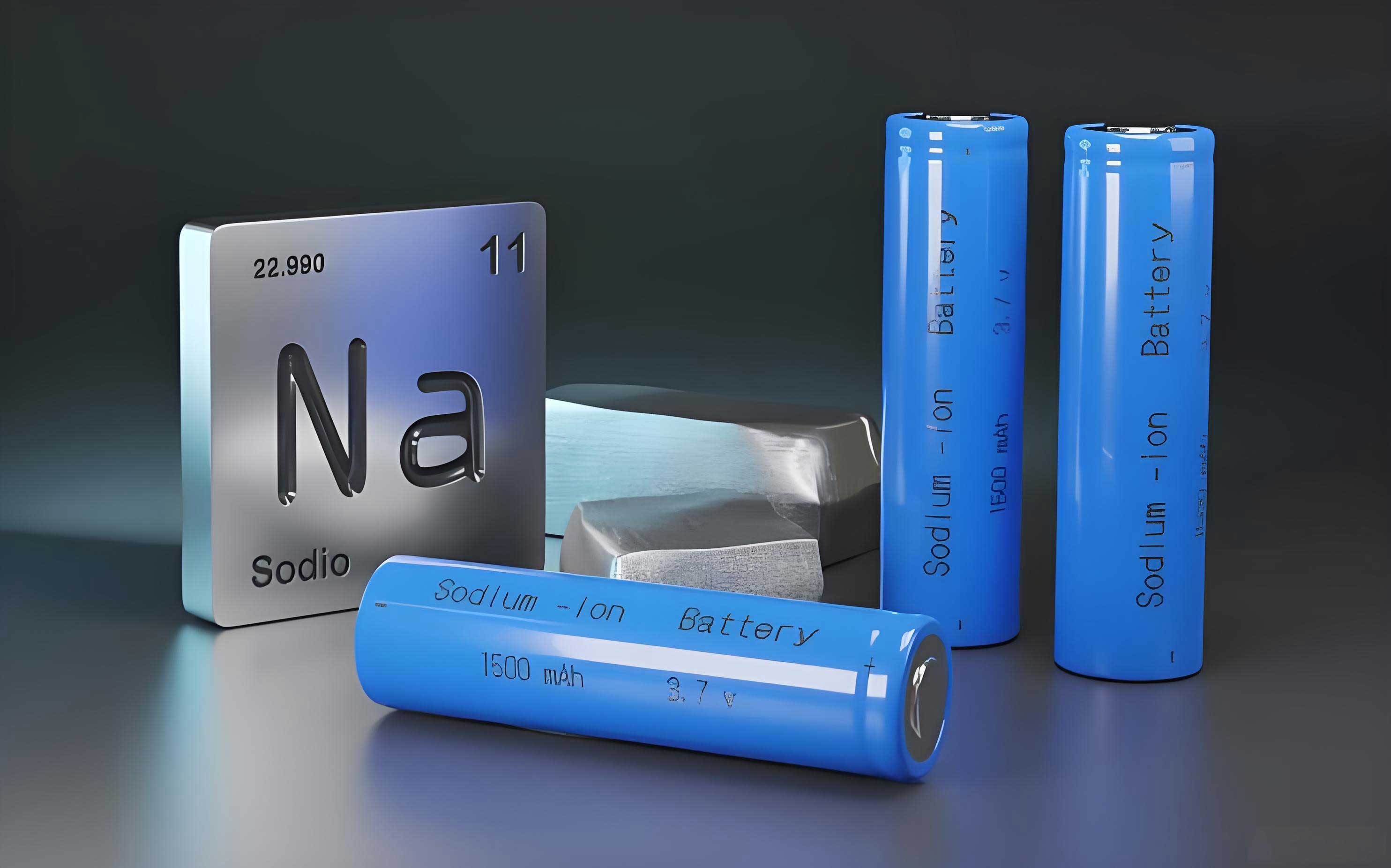
Sodium-ion batteries (SIBs) have emerged as one of the most promising successors to LIBs. Sodium shares similar electrochemical properties with lithium, such as a comparable standard electrode potential, but boasts superior natural abundance and lower cost. The fundamental working principle parallels that of LIBs, involving the shuttling of ions between a cathode and an anode through an electrolyte during charge and discharge cycles. The overall cell voltage ($V_{cell}$) and capacity are determined by the electrode materials’ properties, governed by equations such as:
$$ V_{cell} = |E_{cathode} – E_{anode}| $$
$$ C_{specific} = \frac{nF}{3.6 M} $$
where $E$ represents the electrode potential, $n$ is the number of electrons transferred per formula unit, $F$ is Faraday’s constant, and $M$ is the molar mass of the active material. The energy density ($E_d$) is then a product of capacity and voltage: $E_d = C_{specific} \times V_{cell}$.
Despite their promise, the practical application of sodium-ion battery technology faces significant hurdles. The larger ionic radius of Na$^+$ (1.02 Å) compared to Li$^+$ (0.76 Å) leads to slower diffusion kinetics and substantial volumetric expansion/contraction within electrode materials during sodiation/desodiation. This often results in rapid capacity fade, poor rate capability, and mechanical degradation of the electrode. Therefore, the design and fabrication of robust, high-performance anode materials are paramount for realizing high-energy-density sodium-ion batteries.
Traditional electrode manufacturing, such as slurry casting, offers limited control over microarchitecture. This is where additive manufacturing, or 3D printing, presents a transformative opportunity. 3D printing enables the layer-by-layer construction of objects with precisely controlled geometry, porosity, and composition directly from digital models. For energy storage, this technology allows for the creation of bespoke electrode architectures that can: (i) provide short ion diffusion pathways, (ii) accommodate volume changes, (iii) facilitate electrolyte infiltration, and (iv) create lightweight, binder-free, and current-collector-free structures. This review delves into the application of 3D printing for fabricating advanced anode materials for sodium-ion batteries. We will overview relevant 3D printing techniques, detail the progress in printing anodes based on graphene oxide, MXenes, and transition metal chalcogenides, and discuss the ensuing challenges and future perspectives.
An Overview of 3D Printing Technologies for Electrodes
3D printing encompasses a suite of technologies suited for different material systems and resolution requirements. For electrode fabrication in sodium-ion batteries, extrusion-based methods are particularly prominent due to their versatility and relative simplicity.
Direct Ink Writing (DIW): Also known as robocasting, DIW involves the extrusion of a viscous ink or paste through a fine nozzle to create continuous filaments. The ink must possess specific rheological properties (shear-thinning behavior and a high yield stress) to maintain shape fidelity after deposition. DIW is excellent for creating complex 3D lattice, grid, or porous structures with feature sizes typically in the range of 100 µm to several millimeters. It is highly compatible with a wide variety of material inks, including graphene oxide suspensions, MXene gels, and composite pastes containing active materials.
Fused Deposition Modeling (FDM): FDM uses a thermoplastic filament that is heated, extruded, and deposited layer-by-layer. For conductive electrodes, the filament is compounded with conductive fillers (e.g., graphene, carbon black) and sometimes active material powders. While resolution is lower than DIW (∼200 µm), FDM is advantageous for rapid prototyping and creating fully integrated, multi-material devices. Post-processing may be required to enhance conductivity or electrochemical activity.
Vat Photopolymerization (e.g., Stereolithography – SLA, Digital Light Processing – DLP): These techniques use a light source (laser or projector) to selectively cure a liquid photopolymer resin layer-by-layer. For functional electrodes, the resin is loaded with solid particles of active material and conductive agents. The challenge lies in formulating a homogeneous, stable resin with high solid loading that remains photocurable. Vat polymerization offers very high resolution (down to ∼10 µm) and smooth surface finishes.
Inkjet Printing: This method propels tiny droplets of a low-viscosity ink onto a substrate. It is suitable for depositing thin, precise patterns but is generally not used for creating thick, free-standing 3D structures required for high-mass-loading electrodes. It can be useful for creating interdigitated or patterned current collectors.
The choice of printing technique dictates the achievable electrode architecture, which in turn directly influences the electrochemical performance. A key parameter is the effective diffusion coefficient ($D_{eff}$) of Na$^+$ within the electrode, which is enhanced by designed porosity ($\epsilon$) and tortuosity ($\tau$):
$$ D_{eff} = D_0 \frac{\epsilon}{\tau} $$
where $D_0$ is the bulk diffusion coefficient. 3D printing allows for the rational design of structures to maximize $\epsilon$ and minimize $\tau$, thereby improving rate performance.
3D-Printed Anode Materials for Sodium-Ion Batteries
The success of a sodium-ion battery hinges on the anode material’s ability to store Na$^+$ reversibly at a low potential with high capacity. 3D printing offers a powerful tool to engineer materials like graphene derivatives, MXenes, and transition metal chalcogenides into architectures that overcome their inherent limitations.
Graphene Oxide-Based Architectures
Graphene oxide (GO) and its reduced form (rGO) are ideal building blocks for 3D-printed inks. GO sheets, decorated with oxygen-containing functional groups, form stable aqueous dispersions with excellent viscoelastic properties for DIW. Upon printing and reduction (thermal, chemical, or hydrothermal), the resulting rGO scaffolds form lightweight, conductive, and porous monoliths.
The 3D interconnected network provides a continuous pathway for electron transport, while the macro- and meso-pores facilitate electrolyte access. When used directly as an anode, the capacity primarily stems from Na$^+$ adsorption on defect sites and interlayer storage, which can be expressed in a simplified capacitive contribution model:
$$ i = a v^b $$
where the parameter $b$ approaches 1 for surface-controlled capacitive behavior. 3D-printed rGO lattices have demonstrated stable, albeit moderate, capacity for sodium-ion battery anodes with excellent cycling stability due to their robust and elastic framework that buffers mechanical stress.
A more impactful application is using 3D-printed rGO structures as a host or current collector for other active materials or for sodium metal. The large surface area and sodiophilic functional groups help lower the nucleation overpotential ($\eta_{nuc}$) for Na plating, described by:
$$ \eta_{nuc} = \frac{\Delta G_{nuc}}{zF} $$
where $\Delta G_{nuc}$ is the nucleation energy barrier. By providing abundant nucleation sites, 3D rGO hosts promote uniform Na deposition, suppressing dendrite growth and leading to highly stable cycling in sodium metal batteries, a counterpart to the sodium-ion battery technology.
Furthermore, hybridization enhances performance. Incorporating carbon nanotubes (CNTs) into the GO ink creates an rGO/CNT hybrid aerogel with improved mechanical strength and electrical conductivity. Nitrogen-doping of the graphene lattice introduces defects and active sites, further increasing reactivity towards Na and improving capacity.
| Material/Architecture | 3D Printing Method | Key Feature | Electrochemical Performance (Half-cell vs. Na/Na+) |
|---|---|---|---|
| rGO Lattice | DIW | Free-standing, porous grid | ~80 mAh/g, stable for 150 cycles |
| rGO/CNT Micro-Lattice | DIW | Enhanced conductivity & strength | Stable Na plating/stripping for >1200h at high capacity |
| N-doped Graphene Aerogel | DIW | Sodiophilic N-sites, low nucleation barrier | Average CE of 99.9% over 3000 cycles (Na metal host) |
| NVP-rGO Composite Frame | DIW | Integrated active material & conductive frame | Symmetrical full cell capacity of 0.39 mAh/cm² at 1C |
MXene-Based Frameworks
MXenes, a family of 2D transition metal carbides/nitrides/carbonitrides (e.g., Ti3C2Tx, V2CTx), are renowned for their metallic conductivity, hydrophilicity, and rich surface chemistry. Their colloidal solutions can be formulated into printable inks for DIW. 3D printing of MXenes creates architectures that prevent the restacking of nanosheets, fully utilizing their surface area for charge storage.
As anodes for sodium-ion batteries, MXenes primarily store charge via intercalation and surface redox reactions. The volumetric expansion is relatively low compared to alloying materials. 3D-printed porous Ti3C2Tx scaffolds, especially when doped with nitrogen, show enhanced Na$^+$ storage capacity and rate performance due to improved ion accessibility and electronic conductivity. The capacity can be a combination of diffusion-controlled and capacitive processes.
MXenes also excel as sodiophilic hosts for sodium metal anodes. For instance, 3D-printed V2CTx/rGO-CNT microgrid aerogels combine the high conductivity and Na affinity of MXenes with the structural robustness of carbon networks. The porous structure reduces local current density ($J_{local}$), which is critical for stable plating:
$$ J_{local} = \frac{I}{A_{true}} $$
where $I$ is the applied current and $A_{true}$ is the effective electroactive surface area. By maximizing $A_{true}$ through 3D design, $J_{local}$ is minimized, leading to uniform Na flux and exceptional long-term cycling stability, a principle directly transferable to composite anodes in sodium-ion batteries.
| Material/Architecture | 3D Printing Method | Key Feature | Electrochemical Performance |
|---|---|---|---|
| Porous N-doped Ti3C2Tx | DIW | Hierarchical pores, N-functionalization | Enhanced capacity & rate capability for Na-ion storage |
| V2CTx/rGO-CNT Microgrid | DIW | Hybrid conductive/sodiophilic host | Na metal cycling >3000h, high CE (99.54%) |
| Full cell (Na@MXene host // NVP@C) | DIW | All-3D printed configuration | 86.27 mAh/g at 0.1 A/g after 400 cycles |
Transition Metal Chalcogenide Composites
Transition metal oxides, sulfides, and selenides (e.g., TiO2, MoS2, Cu2S, Sb2S3) offer high theoretical capacities via conversion or alloying reactions. However, their severe volume expansion and poor conductivity are major drawbacks. 3D printing integrates these active materials into conductive, porous matrices that address these issues.
For example, DIW can be used with an ink containing MoS2 precursors and GO, which after freeze-drying and annealing yields a 3D MoS2-rGO hybrid aerogel. The rGO backbone provides electrical connection and buffers the volume change of MoS2 during cycling. The sodiation of MoS2 can involve intercalation followed by conversion:
$$ \text{MoS}_2 + x\text{Na}^+ + x e^- \rightarrow \text{Na}_x\text{MoS}_2 $$
$$ \text{Na}_x\text{MoS}_2 + (4-x)\text{Na}^+ + (4-x)e^- \rightarrow \text{Mo} + 2\text{Na}_2\text{S} $$
The 3D porous architecture ensures electrolyte penetration to all active material surfaces, sustaining the reaction kinetics even at high mass loadings.
Vat photopolymerization has been used to print TiO2-based composite electrodes. The challenge is achieving a high loading of active material in the photocurable resin. The printed green body is then thermally treated to pyrolyze the polymer binder, leaving a porous TiO2/carbon composite. TiO2 stores Na$^+$ via intercalation, a process with limited volume change, making it compatible with various printed structures.
Hybrid materials like heterostructured Cu2S@ZnS/C take advantage of synergistic effects. 3D printing these nanocomposites into tailored architectures optimizes ion/electron transport. The improved kinetics can be reflected in a lower charge-transfer resistance ($R_{ct}$) in electrochemical impedance spectroscopy, leading to superior rate performance for the sodium-ion battery anode.
| Material/Architecture | 3D Printing Method | Key Feature | Electrochemical Performance (Half-cell) |
|---|---|---|---|
| MoS2-rGO Aerogel | DIW + Freeze-casting | Macro/micro-porous, buffered expansion | High initial capacity (~800 mAh/g), stabilizing at ~429 mAh/g |
| TiO2/Polymer Composite | Vat Photopolymerization | Precise 3D geometry, high resolution | Functioning Na-ion electrode, capacity dependent on design |
| Cu2S@ZnS/C Nanocomposite | DIW | Heterostructure for fast kinetics | 352 mAh/g at 10 A/g, 94.7% capacity retention after 1000 cycles |
| MoO3-MoS2 Heterostructure | DIW | In-situ phase transformation, enhanced sites | High areal capacity electrodes, stable full-cell performance |
Conclusions and Future Perspectives
3D printing has unequivocally established itself as a revolutionary fabrication paradigm for next-generation electrodes in sodium-ion batteries. As detailed in this review, the technology enables the creation of free-standing, architecturally optimized anodes from materials like graphene oxide, MXenes, and transition metal chalcogenides. The key advantages are multifaceted: (i) Enhanced Mass Transport: Designed porosity and channeled structures reduce tortuosity, facilitating rapid ion diffusion crucial for high-rate performance in sodium-ion batteries. (ii) Mechanical Robustness: 3D interconnected networks, particularly with carbonaceous supports, effectively buffer the large volume strains associated with sodiation, drastically improving cycling longevity. (iii) High Mass Loading: The ability to build thick, porous electrodes directly addresses the challenge of achieving high areal capacity without compromising ion transport. (iv) Material Efficiency and Integration: It allows for the creation of binder-free, current-collector-free electrodes and paves the way for monolithic, fully 3D-printed sodium-ion battery cells with interdigitated or customized geometries.
However, the journey from laboratory innovation to widespread commercial application is fraught with challenges that must be rigorously addressed:
1. Ink Formulation and Material Library: The development of printable inks with optimal rheology, high solid content of active materials, and desirable post-processing characteristics remains a core challenge. The library of materials readily adaptable to high-performance 3D printing for sodium-ion batteries needs expansion, particularly for high-capacity alloying and conversion materials.
2. Resolution vs. Throughput Trade-off: High-resolution techniques like vat photopolymerization offer exquisite control but are often slow and limited in build volume. Extrusion-based methods are faster and scalable but have lower feature resolution. Developing new printing modalities or hybrid approaches that balance speed, resolution, and scalability is essential.
3. Long-Term Stability and Safety: While 3D-printed electrodes show excellent performance in hundreds of cycles, data over thousands of cycles under realistic conditions (including varied temperature and pressure) is still emerging. The long-term structural integrity of intricate 3D scaffolds, especially under continuous volume change, and their safety implications need exhaustive validation.
4. Cost and Scale-up: The cost of printers, tailored inks, and post-processing must decrease for the technology to be competitive with roll-to-roll manufacturing. Scaling up the printing process to produce electrodes at the square-meter scale with consistent quality is a significant engineering hurdle.
Future Outlook: The future of 3D printing in sodium-ion battery technology is exceptionally promising. Research will likely focus on:
• Multi-material and Gradient Printing: Co-printing anodes, solid electrolytes, and cathodes in a single process to create fully integrated, solid-state sodium-ion batteries with optimized interfacial contact.
• AI-Driven Design: Using machine learning algorithms to inversely design optimal 3D electrode architectures based on target performance parameters (e.g., energy density, power density, cycle life).
• In-situ Characterization: Integrating sensors within 3D-printed batteries to monitor strain, temperature, and potential in real-time, enabling smart battery management.
• Sustainable Materials: Developing inks from bio-derived or recycled sources to improve the environmental footprint of the manufacturing process.
In conclusion, 3D printing is not merely a novel manufacturing tool but a foundational technology that redefines the design space for electrochemical energy storage. By providing unprecedented control over electrode architecture from the nanoscale to the macroscale, it offers a viable path to overcome the intrinsic limitations of sodium-ion chemistries. As the technology matures, overcoming the current challenges in materials, processing, and scaling, it holds the potential to accelerate the development of high-performance, safe, and cost-effective sodium-ion batteries, ultimately contributing to a more sustainable energy future.