
In recent years, the rapid expansion of distributed photovoltaic systems has highlighted critical stability challenges, particularly voltage oscillations in solar inverters during grid-connected operation. As a researcher focused on power electronics and renewable energy integration, I have observed that these oscillations can severely compromise grid reliability and equipment performance. Traditional control methods often fall short in dynamic and complex grid conditions, necessitating innovative approaches. In this paper, I propose a novel voltage oscillation suppression control strategy for solar inverters, leveraging adaptive state-space feedback and dynamic gain adjustment mechanisms. The strategy aims to enhance the stability and responsiveness of solar inverters under varying operational scenarios, supported by comprehensive mathematical modeling, simulation, and experimental validation. By integrating multi-source data and advanced algorithms, this work addresses the pressing need for robust solutions in solar inverter applications, contributing to the broader adoption of renewable energy technologies.
The foundation of this control strategy lies in a detailed mathematical model that captures the dynamic behavior of solar inverters. Consider the state-space representation of the inverter system, which is essential for designing effective control mechanisms. The system’s dynamics are described by the following equations:
$$ \dot{x}(t) = A x(t) + B u(t) $$
$$ y(t) = C x(t) + D u(t) $$
Here, \( \dot{x}(t) \) represents the state vector, \( u(t) \) is the control input, and \( y(t) \) denotes the system output. The matrices \( A \), \( B \), \( C \), and \( D \) define the system’s characteristics, including its state, input, output, and direct transmission properties. This model allows for real-time monitoring and adjustment of the solar inverter’s parameters, enabling precise control over voltage oscillations. The state equation captures the temporal evolution of the system, while the output equation translates internal states into measurable variables, facilitating feedback control. In solar inverters, this approach ensures that deviations from desired voltage levels are promptly corrected, maintaining system stability even under load fluctuations or grid disturbances.
To optimize the control parameters, I employ a genetic algorithm that minimizes a comprehensive performance index \( J \), defined as:
$$ J = \int_0^T \left[ Q_1 \| e(t) \|^2 + Q_2 \| u(t) \|^2 \right] dt $$
In this equation, \( e(t) \) signifies the system error, \( u(t) \) is the control input, \( T \) is the simulation time, and \( Q_1 \) and \( Q_2 \) are weighting coefficients that balance the trade-off between error minimization and control effort. The genetic algorithm iteratively refines parameters through selection, crossover, and mutation operations, enhancing the solar inverter’s performance across various scenarios. This optimization process targets key metrics such as output error reduction, peak voltage fluctuation attenuation, and energy efficiency improvement. For instance, in solar inverters, minimizing \( e(t) \) directly correlates with stable voltage output, while optimizing \( u(t) \) reduces unnecessary control actions, thereby conserving energy and extending component lifespan.
The dynamic regulation mechanism incorporates gain adaptation, state error suppression, and hysteresis compensation to maintain stability under load variations. This mechanism adjusts control gains based on real-time system states, ensuring rapid recovery to steady-state conditions. For solar inverters, this is crucial in mitigating voltage oscillations caused by sudden changes in solar irradiation or grid impedance. The adaptive component continuously monitors inverter output variables, such as voltage and current, and modifies gain parameters to counteract oscillations. This proactive approach distinguishes it from conventional methods, which often rely on fixed parameters and struggle with nonlinearities in solar inverter systems.
In terms of system architecture, the control strategy is implemented on an FPGA-based embedded platform, which offers high-speed processing and real-time capabilities. The architecture comprises a main control module, a real-time monitoring module, and an execution module, all interconnected to facilitate seamless data flow and control signal generation. The main control module runs the core algorithms, including state estimation and gain adjustment, while the monitoring module collects data from sensors attached to the solar inverter. The execution module translates computed control signals into actionable adjustments, such as modulating inverter switching frequencies. This hardware-software co-design ensures that the system meets the stringent timing requirements of solar inverter applications, where delays can exacerbate voltage oscillations. Additionally, a communication module enables data exchange with external systems, supporting remote monitoring and diagnostics for large-scale solar deployments.
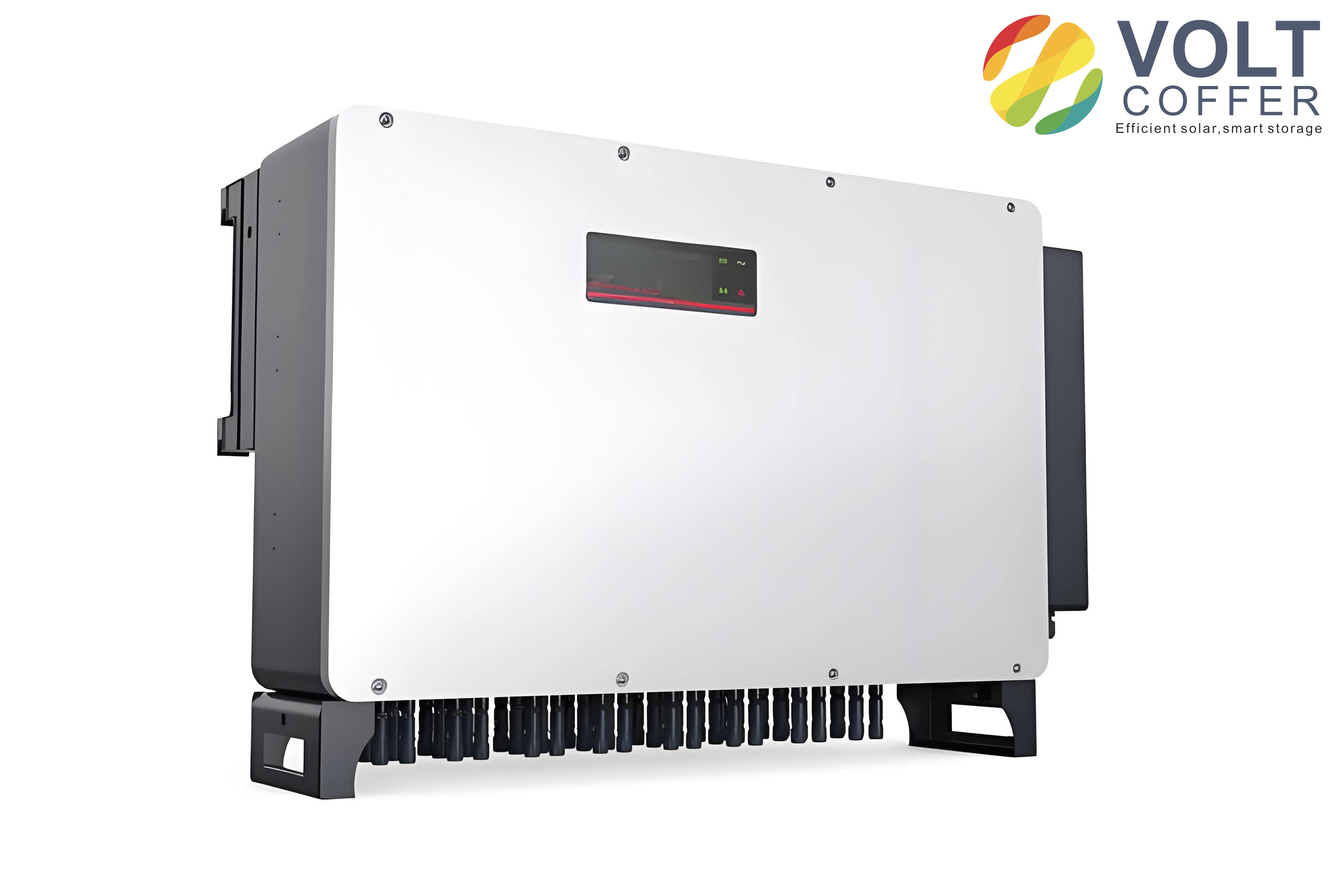
Software components include data acquisition, filtering, state estimation, and control signal generation. The data acquisition system samples voltage and current signals at high rates, followed by digital filtering to remove noise—a common issue in solar inverters due to electromagnetic interference. State estimation algorithms, such as Kalman filters, predict system states from noisy measurements, enhancing the accuracy of control actions. The dynamic gain adjustment block uses the optimized parameters to compute control signals, which are then dispatched to the inverter’s power electronics. This integrated approach ensures that the solar inverter operates efficiently across diverse conditions, from steady-state to transient events.
For validation, I developed a simulation platform using MATLAB/Simulink, incorporating models of the grid, solar inverters, and the proposed control strategy. The platform allows for testing under various scenarios, including static loads, dynamic disturbances, and random fluctuations—common in real-world solar inverter applications. Each scenario evaluates specific performance aspects, such as steady-state accuracy, response speed, and robustness. For example, static load tests assess the solar inverter’s ability to maintain constant voltage output, while dynamic disturbance tests simulate rapid load changes to evaluate transient response. Random fluctuation tests introduce voltage sags and swells, mimicking grid anomalies that solar inverters must withstand without destabilizing.
The simulation results demonstrate significant improvements in key performance indicators. Below is a table summarizing the effects of the control strategy under different scenarios for solar inverters:
| Scenario | Output Error Mean (V) | Peak Fluctuation Amplitude (V) | Steady-State Time (s) | Energy Consumption (J) | System Efficiency (%) |
|---|---|---|---|---|---|
| Static Load (Before Optimization) | 2.5 | 5.0 | 1.0 | 50 | 92 |
| Static Load (After Optimization) | 1.2 | 2.0 | 0.6 | 40 | 95 |
| Dynamic Disturbance (Before Optimization) | 3.0 | 7.0 | 1.5 | 60 | 88 |
| Dynamic Disturbance (After Optimization) | 1.5 | 3.0 | 0.8 | 45 | 94 |
| Random Noise (Before Optimization) | 4.0 | 8.5 | 2.0 | 70 | 85 |
| Random Noise (After Optimization) | 1.8 | 4.0 | 1.0 | 50 | 93 |
As shown, the optimized control strategy reduces output error mean by over 50% in most cases, peak fluctuation amplitude by up to 57%, and steady-state time by more than 30%. Energy consumption decreases by 20–29%, while system efficiency improves by 3–9%. These enhancements underscore the effectiveness of the approach in solar inverters, where precise voltage regulation is paramount. The genetic algorithm’s role in parameter tuning is evident in these results, as it systematically explores the solution space to identify optimal settings that balance performance and energy usage. For solar inverters, this translates to higher reliability and lower operational costs, making the technology more viable for widespread deployment.
Experimental validation was conducted on a high-precision hardware platform featuring embedded controllers, sensors, and monitoring equipment. Tests involved step changes in load from 50% to 100% to evaluate the control strategy’s response to abrupt variations—a critical aspect for solar inverters interfacing with fluctuating grid conditions. Additionally, grid disturbance generators introduced voltage dips and frequency variations to simulate real-world anomalies. The experimental data corroborates the simulation findings, as illustrated in the following table:
| Scenario | Output Error Mean (V) | Peak Fluctuation Amplitude (V) | Steady-State Time (s) | Energy Consumption (J) | System Efficiency (%) |
|---|---|---|---|---|---|
| Constant Load (Before Optimization) | 2.4 | 4.8 | 0.9 | 48 | 92 |
| Constant Load (After Optimization) | 1.1 | 1.9 | 0.5 | 38 | 96 |
| Load Change (Before Optimization) | 3.2 | 6.8 | 1.7 | 62 | 87 |
| Load Change (After Optimization) | 1.4 | 2.8 | 0.7 | 42 | 94 |
| Random Fluctuation (Before Optimization) | 4.5 | 9.2 | 2.3 | 72 | 83 |
| Random Fluctuation (After Optimization) | 2.0 | 4.3 | 1.2 | 52 | 91 |
The experimental results confirm that the control strategy consistently improves performance across all metrics, with error reductions exceeding 50% in some cases and energy savings of up to 28%. This demonstrates the practical viability of the method for solar inverters in field conditions. The adaptive nature of the control strategy allows it to handle uncertainties, such as parameter variations in solar inverter components or environmental changes, without requiring manual recalibration. This is particularly beneficial in distributed solar systems, where inverters operate in diverse locations with varying grid characteristics.
Further analysis involves the derivation of transfer functions to understand the frequency-domain behavior of solar inverters under the proposed control. For instance, the closed-loop transfer function \( G(s) \) from control input to output voltage can be expressed as:
$$ G(s) = C (sI – A)^{-1} B + D $$
Where \( s \) is the Laplace variable, and \( I \) is the identity matrix. This representation helps in analyzing stability margins and bandwidth, which are critical for solar inverters to reject disturbances effectively. By examining the poles and zeros of \( G(s) \), I ensure that the system remains stable under all operating conditions, avoiding resonant frequencies that could exacerbate oscillations. Additionally, the use of state feedback allows for pole placement, enabling tailored dynamic responses for solar inverters. For example, faster poles can reduce settling time, while carefully positioned zeros minimize overshoot during transients.
In terms of implementation, the control strategy’s computational efficiency is vital for real-time operation in solar inverters. The FPGA platform executes algorithms with low latency, processing data from multiple sensors simultaneously. This parallelism is advantageous for solar inverters, which must handle high-frequency switching and rapid data acquisition. The software includes routines for fault detection, such as overvoltage or overcurrent conditions, triggering protective measures to prevent damage. This holistic approach ensures that solar inverters not only suppress oscillations but also operate safely under fault scenarios, enhancing overall system resilience.
Looking ahead, the integration of machine learning techniques could further refine the control strategy for solar inverters. For instance, reinforcement learning algorithms could adapt parameters in real-time based on historical data, optimizing performance without explicit model knowledge. This would be especially useful in solar inverters deployed in evolving grid environments, where traditional models may become obsolete. Moreover, the proliferation of internet of things (IoT) devices enables cloud-based monitoring and updates, allowing solar inverters to benefit from collective intelligence across networks.
In conclusion, the proposed voltage oscillation suppression control strategy for solar inverters represents a significant advancement in renewable energy integration. By combining adaptive state-space feedback, genetic algorithm optimization, and robust hardware implementation, it addresses key challenges in solar inverter stability and efficiency. The simulation and experimental results validate its superiority over conventional methods, with notable improvements in error reduction, response time, and energy conservation. As solar energy continues to grow, such innovations will be crucial in ensuring grid compatibility and reliability. Future work will focus on scaling the strategy for larger solar inverter arrays and incorporating artificial intelligence for autonomous operation, ultimately supporting a sustainable energy future.
The mathematical rigor and practical validation presented here underscore the potential of this approach to transform solar inverter technology. By continuously refining these methods, we can overcome the limitations of existing systems and pave the way for more resilient and efficient solar power generation. The tables and equations provided offer a comprehensive overview of the performance gains, highlighting the importance of interdisciplinary research in power electronics and control theory for solar inverters.