
As we face escalating global energy demands and environmental degradation, the development of efficient solar power systems has become a cornerstone of sustainable energy strategies. Solar energy, derived from the sun’s immense power, offers a virtually limitless and clean resource. In this article, I will explore the principles, technologies, and future prospects of solar power systems, with a focus on both terrestrial and space-based applications. The integration of advanced materials, wireless energy transmission, and innovative storage solutions is pivotal to harnessing solar energy effectively. Throughout this discussion, the term ‘solar power system’ will be emphasized to underscore its significance in addressing energy challenges.
The foundation of solar energy lies in nuclear fusion processes within the sun. The core reactions, such as deuterium-deuterium and deuterium-tritium fusion, release substantial energy. For instance, the reaction $$ D + D \rightarrow ^3\text{He} + n $$ releases approximately $$ 5.12 \times 10^{-12} \, \text{J} $$, while $$ D + T \rightarrow ^4\text{He} + n $$ yields about $$ 2.82 \times 10^{-12} \, \text{J} $$. These processes highlight the potential of fusion-based energy, which can be analogized to advanced solar power systems that convert sunlight into usable electricity. The energy output from just one gram of deuterium, if fully utilized, could equal the energy from 12,000 tons of coal, demonstrating the efficiency gains possible in modern solar power systems.
Solar power systems are broadly categorized into solar thermal and photovoltaic (PV) technologies. Solar thermal systems convert sunlight into heat, which then drives turbines to generate electricity. The basic efficiency of such a system can be represented by the formula: $$ \eta_{\text{thermal}} = \frac{P_{\text{electrical}}}{P_{\text{solar}}} $$, where $$ P_{\text{solar}} $$ is the incident solar power. In contrast, photovoltaic systems directly convert light into electricity using the photoelectric effect, with efficiency given by $$ \eta_{\text{PV}} = \frac{I \cdot V}{P_{\text{solar}}} $$, where I and V are the current and voltage output. The following table summarizes key characteristics of these solar power system types:
| Type | Working Principle | Typical Efficiency | Applications |
|---|---|---|---|
| Solar Thermal | Heat conversion to steam for turbines | 15-20% | Large-scale power plants, remote areas |
| Photovoltaic | Direct light to electricity via semiconductors | 10-25% (up to 60% with advanced cells) | Residential, commercial, space missions |
In solar thermal power systems, concentrated solar power (CSP) technologies, such as parabolic troughs, towers, and dish systems, enhance efficiency by focusing sunlight. The power density achieved in these systems can be modeled as $$ P_{\text{density}} = \frac{\eta_{\text{optical}} \cdot I_{\text{solar}} \cdot A_{\text{collector}}}{A_{\text{receiver}}} $$, where $$ \eta_{\text{optical}} $$ is the optical efficiency, and A represents area. For example, tower systems can reach temperatures up to 1200°C, making them suitable for high-power solar power system implementations. Similarly, dish systems using Stirling engines achieve efficiencies around 30%, showcasing the versatility of solar power systems in diverse environments.
Photovoltaic solar power systems rely on various materials to optimize energy conversion. Silicon-based cells, including monocrystalline and polycrystalline types, dominate the market due to their reliability. The energy conversion in these cells follows the diode equation: $$ I = I_0 \left( e^{\frac{qV}{nkT}} – 1 \right) – I_{\text{ph}} $$, where $$ I_{\text{ph}} $$ is the photocurrent. Advances in thin-film and multi-junction cells have pushed efficiencies beyond 40%, as shown in the table below for different photovoltaic materials used in solar power systems:
| Material | Type | Laboratory Efficiency | Commercial Efficiency |
|---|---|---|---|
| Monocrystalline Si | Single-junction | 26.7% | 20-22% |
| GaAs | Multi-junction | 35% | 28-30% |
| CdTe | Thin-film | 22% | 15-18% |
| Perovskite | Emerging | 25% | 10-15% |
Despite these advancements, terrestrial solar power systems face limitations like intermittent sunlight and weather dependencies. To overcome this, space-based solar power systems are being developed. These systems collect solar energy in orbit, where sunlight is 8-10 times more intense and available 24/7. The power generated can be transmitted wirelessly to Earth, enabling a continuous energy supply. The conceptual design of such a solar power system involves large solar arrays in geostationary orbit, with power outputs reaching gigawatts. The energy balance for a space solar power system can be expressed as $$ P_{\text{generated}} = \eta_{\text{PV}} \cdot I_{\text{space}} \cdot A_{\text{array}} $$, where $$ I_{\text{space}} $$ is the solar irradiance in space, typically 1366 W/m².
Wireless energy transmission is a critical component of space-based solar power systems. Two primary methods are microwave and laser transmission. In microwave systems, the efficiency of power transmission can be described by the Friis transmission equation: $$ \frac{P_r}{P_t} = G_t G_r \left( \frac{\lambda}{4 \pi d} \right)^2 $$, where $$ P_r $$ and $$ P_t $$ are received and transmitted power, G is antenna gain, λ is wavelength, and d is distance. For a solar power system in geostationary orbit (36,000 km), this requires large antennas but offers high penetration through atmosphere. Laser-based transmission, on the other hand, uses focused beams with efficiency modeled as $$ \eta_{\text{laser}} = \eta_{\text{electrical-to-optical}} \cdot \eta_{\text{atmospheric}} \cdot \eta_{\text{optical-to-electrical}} $$. The table below compares these wireless methods for solar power systems:
| Transmission Method | Efficiency Range | Advantages | Disadvantages |
|---|---|---|---|
| Microwave | 50-70% | Good atmospheric penetration, mature technology | Large antenna size, potential biological effects |
| Laser | 40-60% | Compact antennas, high precision | Atmospheric absorption, alignment sensitivity |
In laser wireless transmission for solar power systems, the choice of laser wavelength is crucial to minimize atmospheric losses. For instance, lasers around 800 nm exhibit low absorption, and the power conversion efficiency at the receiver depends on the photovoltaic material. The relationship is given by $$ \eta_{\text{conversion}} = \frac{P_{\text{electrical}}}{P_{\text{laser}}} $$, where values can exceed 60% for GaAs-based cells. Experimental data for different photovoltaic devices in solar power systems are summarized below:
| Wavelength (nm) | Photovoltaic Material | Power Conversion Efficiency (%) |
|---|---|---|
| 830 | GaAs | 56.00 |
| 808 | GaAs | 61.20 |
| 980 | Si | 26.40 |
| 793 | GaAs | 48.00 |
Energy storage is another vital aspect of solar power systems, ensuring stability and reliability. Superconducting magnetic energy storage (SMES) systems offer high efficiency and rapid response, making them ideal for space applications. The energy stored in a superconducting coil is given by $$ E = \frac{1}{2} L I^2 $$, where L is inductance and I is current. With zero resistance, SMES can achieve energy densities up to $$ 10^8 \, \text{J/m}^3 $$, and the power output can be regulated as $$ P_{\text{out}} = \frac{dE}{dt} $$. This technology helps mitigate fluctuations in solar power system output, especially in space environments with extreme temperature variations.
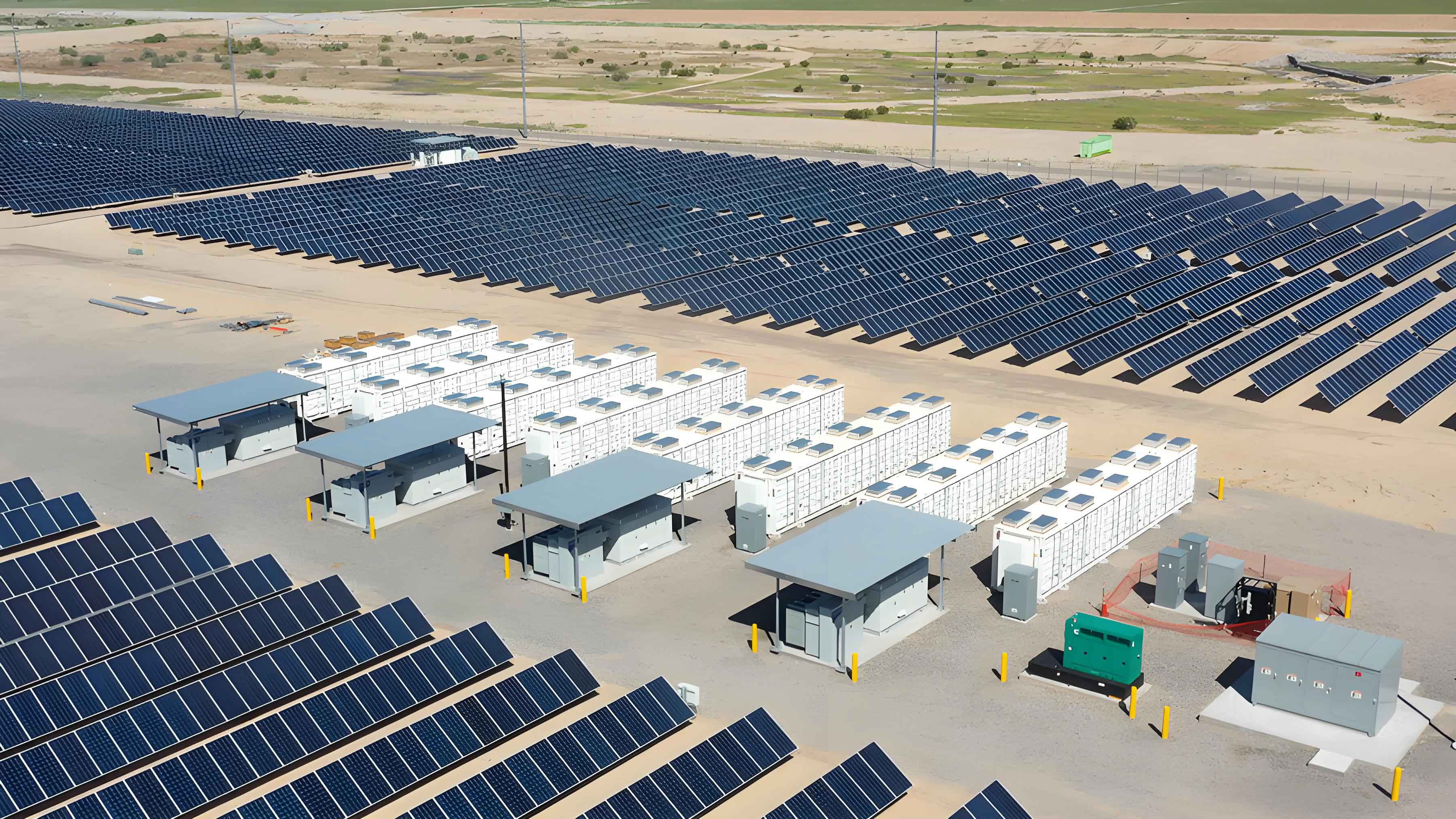
In conclusion, the evolution of solar power systems is driving a transition to renewable energy. From terrestrial thermal and photovoltaic installations to ambitious space-based platforms, these systems leverage cutting-edge technologies to maximize efficiency and reliability. Wireless transmission and advanced storage solutions, such as superconductors, are key to unlocking the full potential of solar energy. As research progresses, the integration of these elements will make solar power systems a dominant force in global energy markets, providing sustainable power for generations to come. The continuous innovation in this field underscores the importance of investing in solar power system development to achieve energy independence and environmental preservation.