
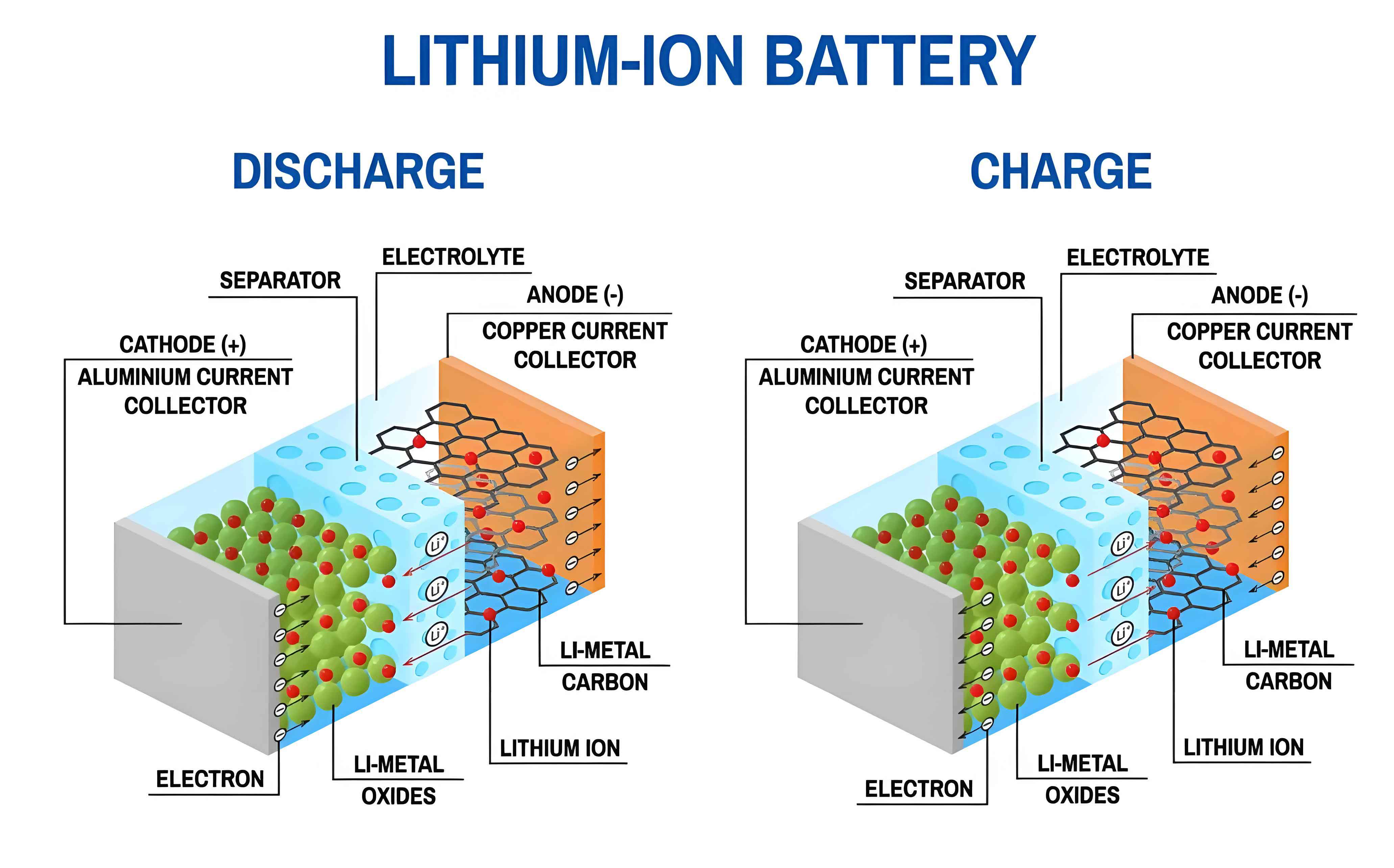
The relentless pursuit of higher energy density, faster charging capabilities, and extended cycle life has positioned the lithium-ion battery as the cornerstone of modern electrification, powering everything from portable electronics to electric vehicles (EVs) and grid-scale energy storage systems. However, this technological advancement is intrinsically linked to a critical challenge: thermal management. The electrochemical processes within a lithium-ion battery, especially under high load or extreme ambient conditions, generate significant heat. Inadequate dissipation of this heat leads to elevated temperatures, accelerated degradation, reduced efficiency, and in severe cases, thermal runaway—a catastrophic failure mode with safety implications. Therefore, the development of efficient, reliable, and scalable Battery Thermal Management Systems (BTMS) is paramount for unlocking the full potential and ensuring the safe operation of lithium-ion battery packs.
Traditional thermal management strategies primarily revolve around three core methodologies: air cooling, liquid cooling, and phase change material (PCM) cooling. Air cooling, utilizing forced or natural convection, is appreciated for its simplicity, low cost, and minimal maintenance. Liquid cooling, employing a circulating coolant, excels in its high heat transfer coefficient and precise temperature control. PCM cooling leverages the latent heat absorption during phase transition to provide passive, isothermal cooling. While each has its niche, the demands of high-power applications like electric vehicles and large-scale stationary storage have propelled liquid cooling to the forefront. Its superior heat extraction capacity and ability to maintain temperature uniformity across large battery packs make it the preferred choice for scenarios where performance, safety, and longevity are non-negotiable. This review delves into the research progress, influential factors, and future directions of liquid cooling technology for lithium-ion battery systems.
Comparative Analysis of Primary Cooling Techniques
To contextualize the prominence of liquid cooling, a systematic comparison of the primary BTMS technologies is essential. The performance of a lithium-ion battery pack is highly sensitive to its operating temperature window, typically between 15°C and 35°C, and the maximum temperature differential between cells, ideally kept below 5°C. Different cooling approaches offer varying degrees of effectiveness in meeting these criteria, each with associated trade-offs in complexity, cost, and energy consumption.
| Thermal Management Technology | Cooling Efficiency / Maximum Temperature Rise | Temperature Uniformity (Max ΔT) | System Complexity & Maintenance | Energy Consumption (Parasitic Load) | Typical Application Scope |
|---|---|---|---|---|---|
| Natural Air Cooling | Low / High | Poor (>10°C) | Very Low / Very Easy | None | Low-power devices, mild climates |
| Forced Air Cooling | Moderate / Moderate | Poor to Fair (8-12°C) | Low / Easy | Low to Moderate | Consumer electronics, some early EVs |
| Liquid Cooling (Cold Plate) | High / Low | Good (3-6°C) | High / Moderate | Moderate (Pump) | Electric Vehicles, High-performance Packs |
| Liquid Cooling (Direct/Immersion) | Very High / Very Low | Excellent (1-3°C) | Very High / Difficult | Moderate to High (Pump + Chiller) | High-density stationary storage, racing EVs |
| Phase Change Material (PCM) Cooling | Time-Limited / Depends on PCM mass | Excellent (<2°C during phase change) | Low (Passive) / Replacement Needed | None | Aerospace, portable packs, peak shaving |
| Heat Pipe Cooling | High (Localized) / Low | Fair to Good (4-8°C) | Moderate / Low | None (Passive) | Supplementary cooling, specific module layouts |
The table above highlights the compelling advantages of liquid-based systems. The fundamental reason lies in the thermophysical properties of coolants compared to air. The heat removal capability can be broadly assessed by the convective heat transfer rate, governed by Newton’s law of cooling:
$$ q = h A (T_{battery} – T_{coolant}) $$
where \( q \) is the heat transfer rate, \( h \) is the convective heat transfer coefficient, \( A \) is the contact area, and \( T \) represents temperature. Liquids, such as water-glycol mixtures, have inherently higher thermal conductivity and specific heat capacity than air, leading to convection coefficients (\( h \)) that are orders of magnitude larger. For instance, while forced air might achieve \( h \) values around 50-100 W/m²K, liquid cooling in microchannels can readily exceed 5000 W/m²K. This directly translates to a much higher \( q \) for a given temperature difference and area, enabling effective management of the high heat fluxes generated by modern lithium-ion battery cells.
Furthermore, the specific heat capacity \( C_p \) determines the temperature rise of the coolant itself as it absorbs heat:
$$ \Delta T_{coolant} = \frac{q}{\dot{m} C_p} $$
where \( \dot{m} \) is the mass flow rate. A high \( C_p \) fluid like water minimizes its own temperature increase, allowing it to remain effective over longer flow paths within a battery pack, thereby promoting better temperature uniformity. From a holistic standpoint considering performance, scalability, and industrial practicality, liquid cooling emerges as the most viable solution for demanding, large-scale lithium-ion battery applications.
Critical Factors Influencing Liquid Cooling Performance
The efficacy of a liquid-cooled BTMS is not merely a function of the coolant choice; it is a complex interplay of cell-level design, module-level architecture, and the thermophysical properties of the dielectric fluid. Optimizing this system requires a deep understanding of how these factors interact.
1. Cell-Level and External Contact Structure
The point of heat transfer initiation is the interface between the lithium-ion battery cell casing and the cooling system. Research has extensively explored how to enhance this interface. For cylindrical cells (e.g., 18650, 21700), common approaches involve designing conformal jackets or sleeves with integrated flow channels. One innovative design features an aluminum block contoured to the cell’s curvature, with a liquid channel machined through it. The high thermal conductivity of aluminum efficiently transfers heat from the cell wall to the flowing coolant. The performance is highly sensitive to the contact area and thermal interface resistance. Studies comparing constant-contact-area designs with variable-contact-area designs (e.g., using thermally conductive pads that compress differentially) show the latter can significantly improve temperature uniformity by allowing more heat transfer from hotter spots.
For prismatic or pouch lithium-ion battery cells, the primary method is cold plate attachment. The design of the flow channel geometry on the plate adjacent to the cell’s large face is critical. Comparative simulations of open, straight, serpentine, and wavy (sinusoidal) channels reveal distinct performance trade-offs. While a multi-pass serpentine channel might offer excellent cooling, it comes at the cost of a high pressure drop \( \Delta P \), which scales with flow length and complexity, demanding more pump power. The pressure drop in a channel can be approximated by the Darcy-Weisbach equation:
$$ \Delta P = f \frac{L}{D_h} \frac{\rho v^2}{2} $$
where \( f \) is the friction factor, \( L \) is channel length, \( D_h \) is the hydraulic diameter, \( \rho \) is fluid density, and \( v \) is flow velocity. Wavy or tapered channels can enhance mixing and heat transfer coefficient \( h \) by promoting turbulence, often expressed via the Nusselt number \( Nu \) correlation:
$$ Nu = \frac{h D_h}{k} = C Re^m Pr^n $$
where \( k \) is fluid thermal conductivity, \( Re \) is Reynolds number, \( Pr \) is Prandtl number, and \( C, m, n \) are constants dependent on channel geometry. An optimized wavy channel can achieve a better balance between high \( Nu \) (good cooling) and manageable \( \Delta P \).
2. Module-Level Structural Design
Beyond a single cell, the arrangement of cells within a module and the overarching cooling manifold structure dictate the pack’s thermal landscape. Key parameters include cell spacing, flow path configuration (parallel vs. series), and the design of the cooling plates themselves.
A critical finding is that increasing coolant flow rate does not indefinitely improve cooling. There exists a point of diminishing returns. Initially, higher flow increases the Reynolds number \( Re \), enhancing the convection coefficient \( h \). However, as the flow becomes highly turbulent, further increases in \( h \) are marginal. More importantly, the coolant residence time becomes so short that its temperature rise \( \Delta T_{coolant} \) becomes negligible, meaning it leaves the system without absorbing much more heat energy per unit mass. Simultaneously, the required pump power, proportional to \( \Delta P \times \dot{V} \) (where \( \dot{V} \) is volumetric flow rate), increases dramatically, reducing overall system efficiency. An optimal flow rate must be determined for a specific design.
Advanced cold plate designs are a major research focus. Innovations like double-layered I-shaped or U-shaped channels aim to distribute flow more evenly and reduce pressure drop compared to traditional serpentine plates. Studies use multi-objective optimization, treating geometric parameters (channel width ratio \( W_c/W_p \), length ratio \( L_c/L_p \), spacing) as variables to minimize both maximum temperature \( T_{max} \) and temperature standard deviation \( \sigma_T \) while constraining \( \Delta P \). Computational Fluid Dynamics (CFD) results for such an optimized plate can show a \( T_{max} \) reduction of 15% and a \( \Delta P \) reduction of over 70% compared to a baseline serpentine design, demonstrating the profound impact of modular architecture on lithium-ion battery thermal management.
3. Dielectric Coolant Properties
In direct contact or immersion cooling, the coolant’s dielectric properties are as crucial as its thermal properties. The fluid must be electrically insulating to prevent short circuits while possessing excellent heat transfer characteristics. The selection landscape includes several classes of fluids, each with distinct advantages.
| Coolant Class | Examples | Thermal Conductivity (W/m·K) | Specific Heat (kJ/kg·K) | Dielectric Strength (kV/mm) | Viscosity (cP @25°C) | Key Advantages/Disadvantages |
|---|---|---|---|---|---|---|
| Fluorinated Liquids | Novec™, Fluorinert™ | 0.05 – 0.08 | 1.0 – 1.3 | >15 | + Non-flammable, chemically inert – Low thermal performance, high cost |
|
| Hydrocarbons | Mineral Oil, PAO | 0.10 – 0.15 | 1.8 – 2.2 | 10 – 15 | 10 – 50 | + Good dielectric, moderate cost – Flammable, higher viscosity |
| Esters | Natural/Synthetic Esters | 0.15 – 0.17 | 1.9 – 2.3 | >20 | 25 – 45 | + High flash point, biodegradable – Hydrolytic sensitivity, viscosity |
| Silicones | Dimethyl Silicone Oil | 0.10 – 0.16 | 1.5 – 1.6 | 12 – 15 | 5 – 1000 | + Wide temp range, stable – Moderate performance, potential creep |
| Water-Glycol (Indirect) | 50/50 Ethylene Glycol/Water | ~0.4 | ~3.4 | N/A (Conductive) | ~3.5 | + Exceptional thermal properties, low cost – Electrically conductive, requires sealed plates |
The ideal coolant maximizes the Figure of Merit (FOM) for convective heat transfer, which often combines conductivity (\( k \)), specific heat (\( C_p \)), and density (\( \rho \)), while minimizing viscosity (\( \mu \)) to reduce pumping power. A simplified FOM can be \( k \cdot C_p \cdot \rho / \mu \). Water-glycol scores exceptionally high on this FOM, explaining its dominance in indirect cooling systems. For direct immersion, engineers must balance a sufficiently high FOM with dielectric safety, material compatibility, and fire resistance. Esters and engineered hydrocarbons are currently strong candidates for next-generation immersion-cooled lithium-ion battery systems for stationary storage.
Hybrid Cooling Systems: Enhancing the Liquid Cooling Core
Recognizing that single-mode cooling may have limitations under extreme scenarios, research has evolved towards hybrid systems that combine the strengths of multiple techniques. The central tenet, however, remains that liquid cooling forms the indispensable, active core of these advanced BTMS due to its high capacity and controllability.
Air-Liquid Hybrid Cooling
This approach integrates a liquid cold plate with an air-cooling fin stack and a fan. The liquid system handles the base load, maintaining the average temperature, while the air system activates dynamically during high load transients or to mitigate hotspots. Control strategies are key. A model-predictive controller might use real-time temperature sensor data and load forecasts to optimally switch or modulate the fan and pump. While this can lower peak temperatures by an additional 5-10% compared to liquid-only cooling, it introduces complexity: additional components, control software, and potential failure points. The air subsystem also consumes extra energy and requires maintenance. For most commercial EV and储能 applications, the marginal gain in cooling performance often does not justify the added cost and complexity over a well-optimized, single-mode liquid system.
Phase Change Material (PCM) – Liquid Hybrid Cooling
This passive-active hybrid is a particularly promising area. Here, a PCM matrix (e.g., paraffin wax blended with conductive graphite or metal foam) surrounds or is integrated into the lithium-ion battery module. The liquid cooling loops are embedded within or adjacent to this PCM. During normal operation or moderate pulses, the PCM absorbs heat, melting at its phase change temperature and effectively damping temperature rises. The latent heat absorption \( Q \) is given by:
$$ Q = m_{PCM} \cdot L $$
where \( m_{PCM} \) is the mass of PCM and \( L \) is its latent heat of fusion. This keeps the pack in a tight, isothermal range. The liquid system’s role is twofold: (1) to actively reject heat from the PCM during prolonged operation, solidifying it for reuse, and (2) to act as a critical safety backup, providing intense cooling power if temperatures threaten to exceed the PCM’s melting point, such as during incipient thermal runaway.
Simulations of such hybrid systems show remarkable performance. For example, under a high 3C continuous discharge, a PCM-liquid hybrid can maintain the maximum cell temperature below 40°C with a gradient under 2.5°C, whereas a liquid-only system might reach 45°C with a 5°C gradient. More importantly, in thermal runaway propagation tests, the PCM acts as a thermal barrier, delaying heat transfer to adjacent cells, while the liquid system aggressively cools the runaway cell’s vicinity, potentially preventing cascade failure. The major challenges for PCM-liquid hybrids are the added weight and volume of the PCM, long-term stability of the PCM over thousands of cycles, and the system integration design. Despite these hurdles, this hybrid represents a frontier in high-safety, high-performance BTMS for mission-critical lithium-ion battery applications.
Future Perspectives and Intelligent Thermal Management
The evolution of liquid cooling for lithium-ion battery systems is converging with trends in digitalization and advanced control. Future BTMS will not be static hardware but intelligent, adaptive systems. Key directions include:
1. Algorithm-Driven Dynamic Control: Moving beyond simple thermostat-based pump control, future systems will employ model-based or AI-driven algorithms. These controllers will use inputs from distributed temperature sensors, current/voltage data, and even external weather forecasts to predict thermal loads. They will dynamically optimize coolant flow rates, pump speeds, and chiller setpoints in real-time to minimize energy consumption (parasitic load) while strictly adhering to thermal constraints. This is crucial for improving the overall energy efficiency of an electric vehicle or储能 facility.
2. Integration with Battery State Estimation: The BTMS will be deeply integrated with the Battery Management System (BMS). Understanding the cell’s internal state, such as State of Health (SOH) and internal resistance (which generates heat), will allow the thermal controller to pre-emptively adjust cooling strategies. A cell with increased degradation might be cooled more aggressively to prolong its life.
3. Advanced Materials and Manufacturing: Research into new coolants with nano-additives (nanofluids) to enhance thermal conductivity continues. Additive manufacturing (3D printing) enables the creation of previously impossible, topology-optimized cold plate structures with conformal cooling channels that perfectly match the heat generation map of a lithium-ion battery pack, maximizing efficiency and uniformity.
4. System-Level Standardization: As the industry matures, there will be a push towards standardizing liquid cooling interfaces, connector types, and coolant specifications to reduce costs and improve reliability across different lithium-ion battery pack manufacturers and integrators.
Conclusion
Liquid cooling has firmly established itself as the most effective and commercially viable thermal management solution for high-performance and large-scale lithium-ion battery systems. Its superiority stems from the fundamental thermophysical advantages of liquids over air, enabling the management of high heat fluxes while maintaining excellent temperature uniformity. The performance of a liquid-cooled BTMS is a multi-variable optimization problem, influenced by cell interface design, module flow architecture, and coolant properties. While hybrid systems incorporating air cooling or PCMs offer performance enhancements in specific scenarios, they universally rely on a liquid cooling core as the primary workhorse.
The future trajectory points towards smarter, more integrated, and materials-advanced liquid cooling systems. By leveraging real-time data, predictive algorithms, and innovative manufacturing, the next generation of BTMS will not only ensure the safety and longevity of lithium-ion battery packs but will do so with unprecedented energy efficiency. This continuous advancement in thermal management is a critical enabler, ensuring that lithium-ion battery technology can reliably meet the escalating demands of global electrification across the transportation and energy sectors.