
The relentless pursuit of higher energy density, longer cycle life, and enhanced safety continues to drive innovation in li ion battery technology. While commercial graphite anodes have served reliably, their limited theoretical capacity (approximately 372 mAh g−1) is becoming a bottleneck for next-generation applications, from electric vehicles to grid-scale storage. Consequently, the search for alternative anode materials with superior capacity is a central focus of modern electrochemistry research.
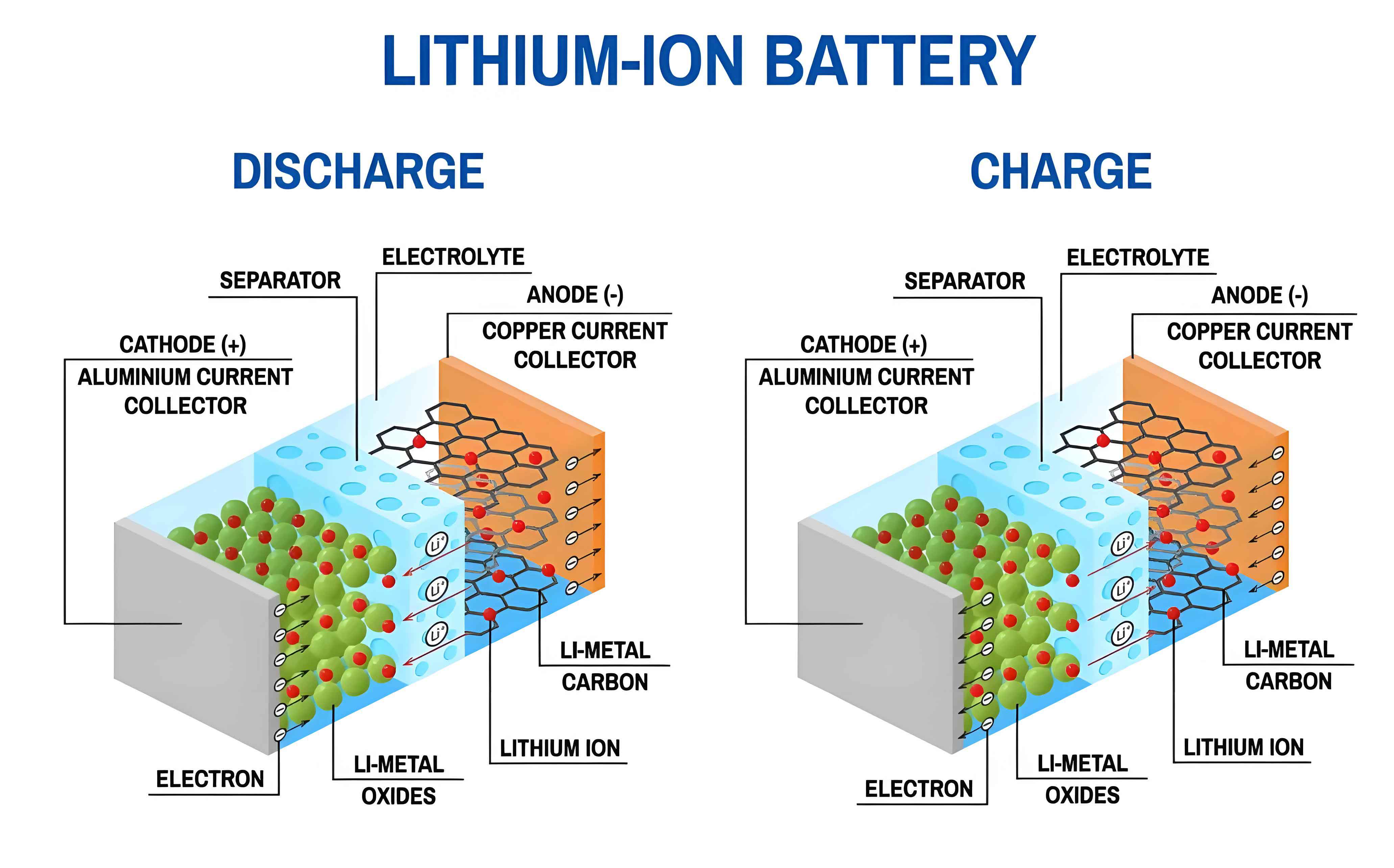
Among the plethora of candidates, two-dimensional (2D) transition metal dichalcogenides (TMDs) present a highly attractive option. Their distinctive layered structure, characterized by weak van der Waals forces between adjacent layers, provides spacious channels for the rapid insertion and extraction of lithium ions. Molybdenum disulfide (MoS2) stands out in this family due to its high theoretical lithium storage capacity (approximately 662 mAh g−1, based on a four-electron conversion reaction) and its relatively large interlayer spacing of about 0.62 nm. These intrinsic properties position MoS2 as a promising high-capacity anode material for li ion battery systems.
However, the practical deployment of MoS2 anodes in commercial li ion battery cells is impeded by several persistent challenges. Firstly, its inherently low electronic conductivity and sluggish ionic diffusion kinetics lead to poor rate capability. Secondly, the significant volumetric expansion and contraction (exceeding 100%) associated with the conversion reaction during cycling induces severe mechanical strain. This strain results in the pulverization of active material particles, electrical contact loss with the current collector, and continuous breakage and reformation of the solid-electrolyte interphase (SEI). These detrimental processes collectively manifest as rapid capacity fading and poor cycling stability, effectively hindering the material’s widespread adoption.
To overcome these limitations, a multi-faceted strategy integrating structural engineering, conductive hybridization, and compositional design is essential. My research focuses on the rational design and synthesis of a novel hierarchical heterostructure to synergistically address these issues. In this work, I present a sophisticated anode material: one-dimensional (1D) carbon-coated tin sulfide/molybdenum disulfide (C/SnS/MoS2) hierarchical nanotubes, ingeniously constructed using a tin-based metal-organic framework (Sn-MOF) as a versatile precursor. This design leverages the unique advantages of each component and their mutual interactions to achieve exceptional electrochemical performance in a li ion battery.
Design Rationale and Synthetic Strategy
The synthesis of the C/SnS/MoS2 hierarchical nanotubes is a multi-step, carefully orchestrated process that ensures precise control over the final architecture. The overarching goal is to create a 1D conductive scaffold decorated with synergistic active materials. The synthesis pathway can be summarized in three key stages, as illustrated in the conceptual flowchart below, and detailed in the subsequent sections.
The foundation of the structure is a 1D MoO3 nanoribbon template. Under an ice bath, 1.2 g of molybdenum powder (99.5%) was gradually added to 10 mL of a 30% hydrogen peroxide solution. After the vigorous reaction subsided, 50 mL of deionized water was introduced, and stirring continued for 30 minutes. The resulting solution was transferred to a 100 mL Teflon-lined autoclave and subjected to hydrothermal treatment at 180°C for 36 hours. The product was collected by centrifugation, washed thoroughly with deionized water and ethanol, and dried at 60°C for 12 hours. This procedure yields high-aspect-ratio MoO3 nanoribbons with a smooth surface, typically around 200 nm in width.
The next critical step involves the conformal coating of a Sn-MOF layer onto the MoO3 nanoribbons. First, 0.359 g of SnCl2·H2O was dissolved in 5 mL of N,N-Dimethylformamide (DMF) to form Solution A. Separately, 0.143 g of terephthalic acid (PTA, the organic linker) was dissolved in another 5 mL of DMF to form Solution B. In a separate vessel, 4 g of polyvinylpyrrolidone (PVP, K29-K32) was dissolved in 20 mL of DMF by stirring for 30 minutes. Subsequently, 1 mmol (0.144 g) of the as-prepared MoO3 nanoribbons were dispersed into the PVP/DMF solution and stirred vigorously for 6 hours. PVP acts as a surface modifier, providing abundant nucleation sites for the Sn2+ ions. Solution A was then added to this dispersion and stirred for 30 minutes, followed by the addition of Solution B and further stirring for 1 hour. The final mixture was sealed in a 50 mL Teflon autoclave and heated at 170°C for 10 hours. The obtained Sn-MOF/MoO3 composite was washed and dried at 70°C. For comparison, pure Sn-MOF was also synthesized under identical conditions but without the addition of PVP and MoO3.
The final transformation involves a simultaneous sulfidation and carbonization process to convert the core-shell precursor into the target heterostructure. In a typical procedure, 0.15 g of the Sn-MOF/MoO3 composite and 0.6 g of thioacetamide (TAA, serving as the sulfur source) were dispersed in 30 mL of anhydrous ethanol. After 1 hour of stirring, the solution was transferred to a 50 mL autoclave and heated at 160°C for 12 hours. This hydrothermal sulfidation step partially converts MoO3 to MoS2 and Sn-MOF to SnS. The collected product was then annealed in a tube furnace under an argon atmosphere. The temperature was ramped at 5°C min−1 to 600°C and held for 3 hours. This annealing step completes the crystallization of MoS2 and SnS, while the organic components of the MOF (the PTA linker) are pyrolyzed into a thin, conformal layer of amorphous carbon coating the structure, resulting in the final C/SnS/MoS2 hierarchical nanotubes.
For controlled electrochemical comparisons, two reference samples were prepared: pure MoS2 nanorods (by sulfidation of MoO3 nanoribbons alone) and C/SnS nanosheets (by sulfidation and annealing of pure Sn-MOF).
Structural and Compositional Characterization
The successful formation of the intermediate and final products was confirmed through a suite of characterization techniques. Fourier-transform infrared (FTIR) spectroscopy of the pure Sn-MOF precursor showed characteristic peaks corresponding to Sn–O stretching (571 cm−1), aromatic C–H bending (1018 cm−1), and carboxylate group vibrations from the PTA linker (υasym(COO−) at 1629 cm−1 and υsym(COO−) at 1349 cm−1). The X-ray diffraction (XRD) pattern of the Sn-MOF/MoO3 intermediate matched well with that of pure Sn-MOF, confirming its successful coating on the MoO3 surface, with diffraction peaks attributable to a Sn-based oxide phase.
Morphological evolution was tracked using electron microscopy. The pristine MoO3 appeared as smooth nanoribbons. After the MOF growth step, the surface became uniformly rough, coated with a 10-20 nm thick layer of Sn-MOF nanoparticles, confirming the core-shell structure. The final C/SnS/MoS2 product revealed a dramatic morphological transformation. The 1D morphology was preserved, but it evolved into a hierarchical nanotube structure. The outer surface was densely and uniformly decorated with vertically aligned SnS nanosheets, while the inner core consisted of interconnected MoS2 nanosheets, creating an open tubular architecture. High-resolution transmission electron microscopy (HRTEM) provided clear evidence of the heterostructure, showing distinct lattice fringes corresponding to the (111) plane of orthorhombic SnS (d = 0.286 nm) and the (002) plane of hexagonal 2H-MoS2 (d = 0.647 nm). A thin, amorphous carbon layer was also observable on the surface. Elemental mapping via energy-dispersive X-ray spectroscopy (EDX) confirmed the homogeneous distribution of carbon (C), tin (Sn), molybdenum (Mo), and sulfur (S) throughout the nanotube architecture.
The XRD pattern of the final composite clearly showed diffraction peaks belonging to both crystalline SnS (JCPDS No. 39-0354) and MoS2 (JCPDS No. 87-2416), with no residual oxide phases, indicating complete sulfidation. Raman spectroscopy further validated the composition, revealing characteristic peaks for SnS (~278 cm−1) and MoS2 (in-plane E12g mode at ~376 cm−1 and out-of-plane A1g mode at ~404 cm−1). The carbon coating was evidenced by the prominent D and G bands at ~1350 cm−1 and ~1590 cm−1, respectively. The intensity ratio ID/IG was close to 1, indicating the presence of defect-rich, amorphous carbon, which is highly beneficial for enhancing electrical conductivity in the li ion battery anode.
X-ray photoelectron spectroscopy (XPS) was employed to probe the chemical states. The survey scan confirmed the presence of C, O, Sn, Mo, and S elements. The high-resolution Mo 3d spectrum could be deconvoluted into doublets for Mo4+ in MoS2 (3d5/2 at 229.4 eV, 3d3/2 at 232.6 eV) and a minor peak for Mo6+ due to slight surface oxidation. The Sn 3d spectrum displayed peaks for Sn2+ in SnS (3d5/2 at 486.9 eV, 3d3/2 at 495.3 eV) along with a small contribution from Sn4+. The S 2p spectrum showed the characteristic doublet for S2− in metal sulfides. The C 1s spectrum indicated the presence of C–C/C=C and C–O bonds from the carbonized MOF.
Nitrogen adsorption-desorption analysis revealed that the hierarchical nanotube structure possesses a high specific surface area of approximately 125 m2 g−1 and a mesoporous pore size distribution centered around 6.7 nm. This porous, high-surface-area architecture is crucial for a li ion battery anode as it facilitates extensive electrode-electrolyte contact, shortens Li+ diffusion paths, and provides void space to accommodate volumetric changes during cycling.
Electrochemical Performance in Li-Ion Battery Half-Cells
The electrochemical properties of the C/SnS/MoS2 hierarchical nanotubes as an anode material were systematically evaluated in CR2032 coin-type half-cells against lithium metal. The performance was benchmarked against the pure MoS2 and C/SnS control samples.
Cyclic voltammetry (CV) was first conducted at a scan rate of 0.5 mV s−1 within a voltage window of 0.01-3.0 V vs. Li/Li+. The first cathodic scan exhibited a broad peak around 1.2 V, attributed to the intercalation of Li+ into the MoS2 interlayers to form LixMoS2, concurrent with electrolyte decomposition and the initial formation of a stable SEI layer. A sharp reduction peak near 0.25 V corresponded to the complete conversion of LixMoS2 and SnS to metallic Mo and Sn nanoparticles embedded in a Li2S matrix, along with the alloying reaction of Li with Sn to form various LixSn alloys. In the subsequent anodic scan, oxidation peaks at approximately 0.7 V and 0.85 V are ascribed to the de-alloying of LixSn. Peaks at 1.75 V and 2.35 V correspond to the reversible oxidation of Mo and Sn metals back to MoS2 and SnS, respectively. From the second cycle onward, the CV curves almost overlapped, indicating excellent reversibility and structural stability of the C/SnS/MoS2 electrode. The series of electrochemical reactions can be summarized as follows:
Intercalation & Conversion:
$$ \text{MoS}_2 + x\text{Li}^+ + x e^- \rightleftharpoons \text{Li}_x\text{MoS}_2 $$
$$ \text{Li}_x\text{MoS}_2 + (4-x)\text{Li}^+ + (4-x)e^- \rightleftharpoons \text{Mo} + 2\text{Li}_2\text{S} $$
Conversion of SnS:
$$ \text{SnS} + 2\text{Li}^+ + 2e^- \rightleftharpoons \text{Sn} + \text{Li}_2\text{S} $$
Alloying/De-alloying:
$$ \text{Sn} + y\text{Li}^+ + y e^- \rightleftharpoons \text{Li}_y\text{Sn} \quad (y \leq 4.4) $$
The galvanostatic charge-discharge profiles were consistent with the CV analysis. The initial discharge (lithiation) capacity was very high, partly due to SEI formation. More importantly, the composite demonstrated exceptional cycling stability. At a moderate current density of 0.1 A g−1, the C/SnS/MoS2 electrode delivered a remarkable discharge capacity of 1110.2 mAh g−1 after 80 cycles, significantly outperforming the pure components. Even more impressive was the long-term cycling performance at a high current density of 2 A g−1. The electrode retained a high reversible capacity of 801.7 mAh g−1 after 860 cycles, demonstrating an extremely low capacity decay rate and outstanding structural integrity. The rate capability test further highlighted the superior kinetics. The electrode delivered average discharge capacities of approximately 1202, 965, 689, 493, 318, and 120 mAh g−1 at current densities of 0.1, 0.2, 0.5, 1, 2, and 5 A g−1, respectively. When the current density was switched back to 0.1 A g−1, the capacity recovered to ~942 mAh g−1, illustrating remarkable electrochemical reversibility and resilience.
The performance of the C/SnS/MoS2 hierarchical nanotubes is compared with other recently reported MoS2– and SnS-based anodes in the table below, underscoring its competitive advantages, especially in long-term, high-rate cycling for li ion battery applications.
| Electrode Material | Current Density | Cycle Number | Capacity (mAh g-1) |
|---|---|---|---|
| MoS2@C/MoS2 Core-Sheath | 0.1 A g-1 | 150 | 838 |
| Bowl-like C@MoS2 | 1 A g-1 | 200 | 526 |
| MoS2/Carbon Sandwich | 0.1 A g-1 | 100 | 1079 |
| MoS2@SnO2-SnS/C Nanosheets | 0.5 A g-1 | 200 | 741 |
| MoS2@SnS-QDs/3D Carbon | 2 A g-1 | 1000 | 713 |
| C/SnS/MoS2 Hierarchical Nanotubes (This Work) | 0.1 A g-1 | 80 | 1110.2 |
| C/SnS/MoS2 Hierarchical Nanotubes (This Work) | 2 A g-1 | 860 | 801.7 |
Kinetic Analysis and Charge Storage Mechanism
To gain deeper insight into the enhanced rate performance, the lithium storage kinetics of the C/SnS/MoS2 electrode were investigated through CV measurements at various scan rates (ν). The current (i) obeys a power-law relationship with the scan rate:
$$ i = a\nu^b $$
where both \(a\) and \(b\) are adjustable parameters. A \(b\)-value of 0.5 indicates a diffusion-controlled process (semi-infinite linear diffusion), while a \(b\)-value of 1.0 signifies a surface-controlled capacitive process. By plotting log(i) vs. log(ν) for the anodic and cathodic peaks, the calculated \(b\)-values for the C/SnS/MoS2 electrode ranged from 0.64 to 0.81, suggesting a mixed charge storage mechanism with a substantial contribution from capacitive effects.
The contribution ratio of the capacitive process can be quantified by separating the current response at a fixed potential:
$$ i(V) = k_1 \nu + k_2 \nu^{1/2} $$
where \(k_1 \nu\) represents the capacitive contribution and \(k_2 \nu^{1/2}\) represents the diffusion-controlled contribution. The calculated capacitive contributions increased from ~45.5% at 0.1 mV s−1 to ~74.9% at 1.0 mV s−1. This high pseudocapacitive contribution is a direct consequence of the hierarchical nanotube design: the ultrathin SnS and MoS2 nanosheets, the conductive carbon coating, and the abundant mesopores all facilitate fast surface-driven charge transfer reactions, which are less limited by solid-state diffusion. This accounts for the exceptional rate capability observed in the li ion battery tests.
Discussion: Synergistic Mechanisms for Enhanced Performance
The outstanding electrochemical performance of the C/SnS/MoS2 hierarchical nanotubes as a li ion battery anode stems from the synergistic interplay of its multi-scale architectural and compositional features:
1. 1D Hierarchical Nanotube Structure: The one-dimensional tubular morphology serves as a robust mechanical backbone. It effectively buffers the large anisotropic volume changes during lithiation/delithiation by providing internal void space, minimizing overall strain, and preventing the aggregation of active materials. This is a key factor in achieving long-term cyclability.
2. Conductive and Protective Carbon Matrix: The in-situ derived amorphous carbon coating from the Sn-MOF precursor performs multiple critical functions. It significantly enhances the overall electronic conductivity of the electrode, ensuring efficient electron transport to every active site. It also acts as a flexible yet strong protective layer, preventing direct exposure of SnS and MoS2 to the electrolyte, thus suppressing detrimental side reactions and stabilizing the SEI layer.
3. SnS/MoS2 Heterojunction Synergy: The intimate contact between SnS and MoS2 at the nanoscale creates built-in electric fields at their hetero-interfaces. This internal field promotes charge transfer, lowers the energy barrier for Li+ ion diffusion, and accelerates reaction kinetics. Furthermore, the two sulfides can work in a complementary manner, potentially mitigating the individual volume changes and providing a more continuous conductive network for both electrons and ions.
4. High Surface Area and Porosity: The preserved nanosheet morphology on the nanotube surface creates a highly accessible area for electrolyte infiltration. The mesoporous structure shortens the diffusion length for Li+ ions and provides ample active sites for charge storage, contributing to both high capacity and the observed pseudocapacitive behavior.
The combination of these effects—mechanical stability from the 1D tube, enhanced conductivity from the carbon sheath, and fast kinetics from the heterojunction and porous morphology—culminates in an anode material that successfully overcomes the classic limitations of MoS2 and SnS, delivering high capacity, remarkable rate performance, and unprecedented long-cycle life in a li ion battery configuration.
Conclusion and Outlook
In summary, a novel hierarchical C/SnS/MoS2 nanotube heterostructure has been successfully designed and synthesized via a Sn-MOF-mediated templating and sulfidation strategy. This rationally engineered anode material integrates the benefits of a 1D conductive scaffold, a protective carbon coating, and synergistic bimetallic sulfide heterojunctions. When evaluated as an anode for li ion battery applications, the composite exhibits exceptional electrochemical properties, including a high reversible capacity of 1110.2 mAh g−1 at 0.1 A g−1 and outstanding long-term cycling stability with 801.7 mAh g−1 retained after 860 cycles at a high current density of 2 A g−1. The kinetic analysis confirms a significant pseudocapacitive contribution, enabled by the unique nanoarchitecture, which is responsible for the superior rate capability.
This work underscores the immense potential of MOF-derived synthesis routes for constructing complex, multi-component nanostructures with tailored properties for energy storage. The hierarchical design principles demonstrated here—combining dimensional control, conductive hybridization, and hetero-interface engineering—provide a versatile blueprint for developing next-generation high-performance electrode materials not only for li ion battery systems but also for emerging technologies such as sodium-ion and potassium-ion batteries. Future work may focus on optimizing the carbon content, exploring different MOF precursors to introduce heteroatom doping (e.g., N, P), and scaling up the synthesis process toward practical application in high-energy-density li ion battery packs.