
As we delve into the realm of advanced energy storage solutions, the lithium iron phosphate (LiFePO4) battery emerges as a pivotal technology. Since the inception of lithium-ion battery concepts, the global research fervor has been unwavering, driven by the quest for efficient, safe, and sustainable power sources. In this comprehensive study, we explore the multifaceted aspects of LiFePO4 batteries, from their fundamental characteristics to their transformative applications in modern energy systems. Our focus is to elucidate why this battery chemistry stands out, emphasizing its role in shaping a greener and more resilient energy future.
The journey begins with understanding the intrinsic properties of the LiFePO4 battery. Unlike conventional lithium-ion variants that rely on cobalt or nickel-based cathodes, the LiFePO4 battery leverages an olivine-structured cathode material, which imparts exceptional stability and safety. We will dissect its architecture, operational mechanics, and performance metrics, employing tables and formulas to encapsulate key data. Furthermore, we will investigate how these batteries integrate into larger energy storage systems and their profound impact across mobile and stationary domains, particularly in the context of smart grid evolution.
Structural Composition and Electrochemical Fundamentals of LiFePO4 Batteries
The LiFePO4 battery is a marvel of material science, characterized by a robust and safe design. At its core, the battery comprises a positive electrode made of LiFePO4 coated on an aluminum foil current collector, a negative electrode typically consisting of graphite on a copper foil, a polymer separator that permits lithium-ion passage while blocking electrons, and an electrolyte that facilitates ion mobility. All these components are housed within a sealed metal casing, ensuring integrity and longevity.
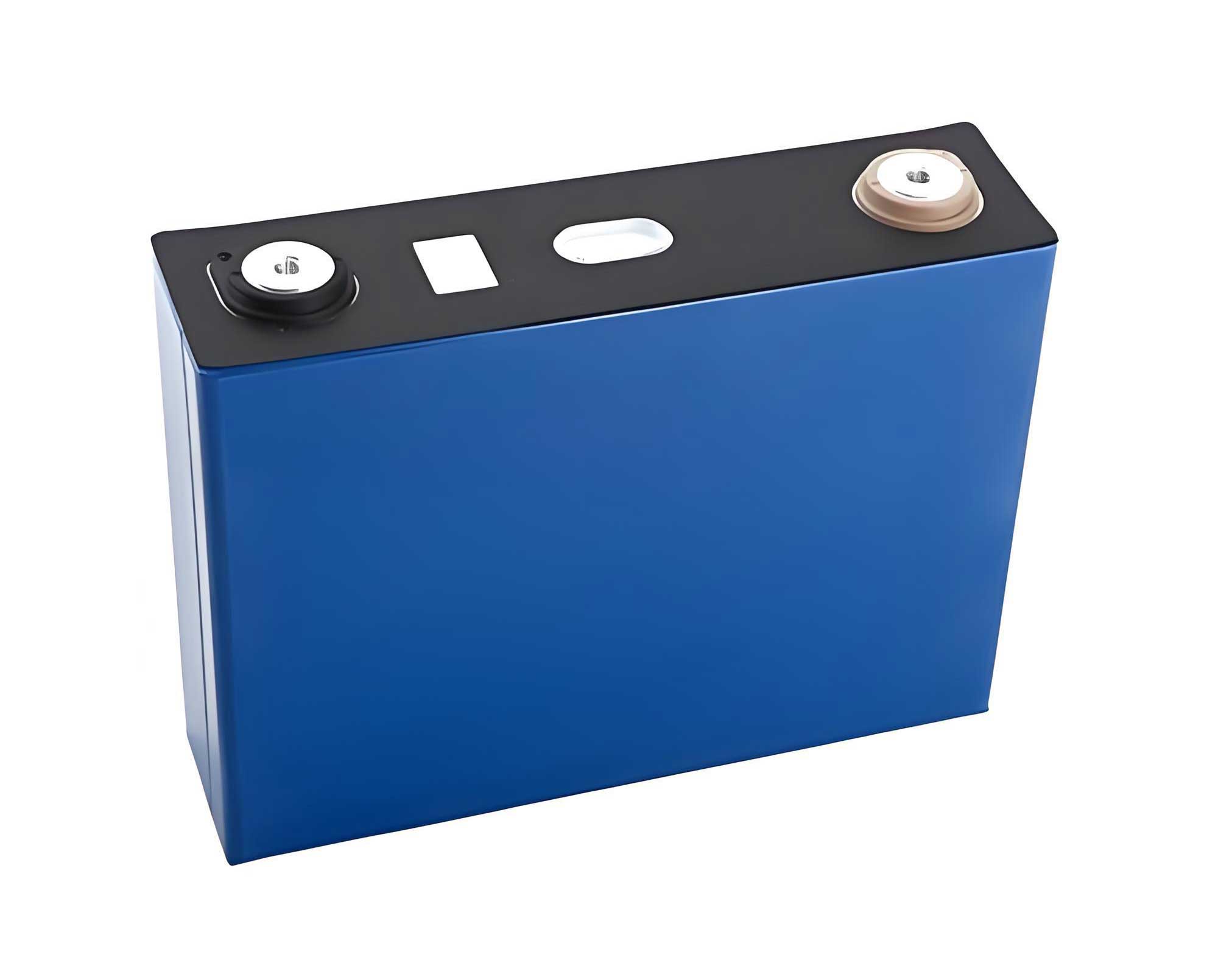
To appreciate the efficiency of the LiFePO4 battery, one must grasp its charge-discharge mechanism, which is a reversible two-phase reaction between LiFePO4 and FePO4. During charging, lithium ions de-intercalate from the LiFePO4 lattice, migrate through the electrolyte, traverse the separator, and embed into the graphite anode. Concurrently, electrons flow through the external circuit, maintaining charge balance. The reaction can be represented as:
$$ \text{LiFePO}_4 \rightarrow \text{FePO}_4 + \text{Li}^+ + e^- $$
Conversely, during discharge, lithium ions de-intercalate from the graphite, journey back through the electrolyte and separator, and re-intercalate into the FePO4 structure, reconstituting LiFePO4. The accompanying electron flow powers the external load. This process is encapsulated by:
$$ \text{FePO}_4 + \text{Li}^+ + e^- \rightarrow \text{LiFePO}_4 $$
These reactions underscore the stability of the LiFePO4 battery, as the olivine framework minimizes structural degradation, thereby enhancing cycle life. The voltage profile remains flat during most of the charge-discharge cycle, typically around 3.2-3.3 V, which is advantageous for consistent power delivery. We can model the cell potential using the Nernst equation, adapted for this system:
$$ E = E^0 – \frac{RT}{F} \ln \left( \frac{[\text{LiFePO}_4]}{[\text{FePO}_4][\text{Li}^+]} \right) $$
where \(E\) is the cell potential, \(E^0\) is the standard potential, \(R\) is the gas constant, \(T\) is temperature, \(F\) is Faraday’s constant, and the concentrations reflect the active materials. This formula highlights the thermodynamic consistency of the LiFePO4 battery during operation.
Performance Characteristics: A Quantitative Analysis
The LiFePO4 battery boasts a suite of superior attributes that distinguish it from other energy storage technologies. To quantify these, we present a comparative analysis in Table 1, which contrasts key parameters of LiFePO4 batteries with other common battery chemistries. This underscores why the LiFePO4 battery is increasingly favored for demanding applications.
| Battery Type | Energy Density (Wh/kg) | Cycle Life (at 80% DOD) | Safety Profile | Operating Voltage (V) | Self-Discharge Rate (% per month) | Environmental Impact |
|---|---|---|---|---|---|---|
| LiFePO4 Battery | 90-160 | 2000-5000 | Excellent (Thermally stable) | 3.2-3.3 | 2-3 | Low (Phosphate-based, non-toxic) |
| Lithium Cobalt Oxide (LiCoO2) | 150-200 | 500-1000 | Moderate (Prone to thermal runaway) | 3.6-3.7 | 5-10 | High (Cobalt is toxic and scarce) |
| Lithium Nickel Manganese Cobalt (NMC) | 140-220 | 1000-2000 | Good | 3.6-3.8 | 3-5 | Moderate |
| Lead-Acid | 30-50 | 300-500 | Good (but corrosive) | 2.0 | 3-20 | High (Lead pollution) |
| Nickel-Metal Hydride (NiMH) | 60-120 | 500-1000 | Good | 1.2 | 20-30 | Moderate |
From this table, it is evident that the LiFePO4 battery offers a compelling balance of safety, longevity, and environmental benignity, albeit with a slightly lower energy density than some lithium-ion variants. This trade-off is often acceptable given the enhanced reliability. Additionally, the LiFePO4 battery exhibits negligible memory effect, allowing for partial charging without capacity degradation, a feature we quantify via the capacity retention formula:
$$ C_n = C_0 \times e^{-k n} $$
where \(C_n\) is the capacity after \(n\) cycles, \(C_0\) is the initial capacity, and \(k\) is the degradation coefficient, which is remarkably low for LiFePO4 batteries (typically \(k \approx 0.0001\) per cycle). This equation underscores the extended service life of the LiFePO4 battery, making it cost-effective over its lifespan.
Thermal stability is another hallmark of the LiFePO4 battery. The strong P-O bonds in the phosphate cathode resist exothermic reactions even under abuse conditions. We can express the heat generation rate during operation using:
$$ Q = I^2 R + \Delta H \frac{dSOC}{dt} $$
where \(Q\) is heat generation, \(I\) is current, \(R\) is internal resistance, \(\Delta H\) is enthalpy change, and \(dSOC/dt\) is the rate of state-of-charge change. For LiFePO4 batteries, both \(R\) and \(\Delta H\) are optimized to minimize \(Q\), enhancing safety.
Architecture of LiFePO4 Battery Energy Storage Systems
Scaling up individual LiFePO4 batteries into integrated energy storage systems (ESS) unlocks their potential for grid-scale and industrial applications. A typical LiFePO4 battery-based ESS is a sophisticated assemblage comprising multiple modules, each managed by a battery management system (BMS), power conversion systems (PCS) like rectifiers and inverters, a central monitoring unit, and transformers. This configuration ensures efficient energy dispatch and system health.
The energy conversion principle within such an ESS is bidirectional. During charging, AC power from the grid or renewable sources is rectified to DC, which charges the LiFePO4 battery bank. The process can be modeled as:
$$ P_{\text{charge}} = V_{\text{dc}} I_{\text{charge}} \eta_r $$
where \(P_{\text{charge}}\) is the charging power, \(V_{\text{dc}}\) is the DC bus voltage, \(I_{\text{charge}}\) is the charging current, and \(\eta_r\) is the rectifier efficiency (typically >95%). Conversely, during discharging, the DC power from the LiFePO4 battery is inverted to AC for grid or load supply:
$$ P_{\text{discharge}} = V_{\text{dc}} I_{\text{discharge}} \eta_i $$
with \(P_{\text{discharge}}\) as discharging power, \(I_{\text{discharge}}\) as discharging current, and \(\eta_i\) as inverter efficiency (also >95%). The overall system efficiency \(\eta_{\text{ESS}}\) is the product of these stages and the BMS efficiency, often exceeding 90% for modern LiFePO4 battery systems.
We summarize the key components and their functions in Table 2, highlighting how each contributes to the robust performance of a LiFePO4 battery ESS.
| Component | Primary Function | Key Specifications |
|---|---|---|
| LiFePO4 Battery Bank | Energy storage via electrochemical reactions | Voltage: 48V to 800V+; Capacity: 10 kWh to MWh scale; Cycle life: >2000 cycles |
| Battery Management System (BMS) | Monitors voltage, temperature, current; ensures cell balancing and safety | Communication: CAN/Modbus; Protection: Overcharge, over-discharge, short-circuit |
| Power Conversion System (PCS) | Converts AC to DC (rectification) and DC to AC (inversion) | Efficiency: >95%; Power rating: 10 kW to MW; THD: <3% |
| Central Monitoring System | Supervises overall operation, logs data, enables remote control | Software interfaces: SCADA, IoT platforms; Real-time analytics |
| Transformer | Steps up/down voltage for grid integration | Rating: Matches system power; Isolation: Galvanic separation |
The scalability of LiFePO4 battery systems is a key advantage. By connecting modules in series and parallel, capacities can be tailored from kilowatt-hours to megawatt-hours. The total energy \(E_{\text{total}}\) stored is given by:
$$ E_{\text{total}} = N_s \times N_p \times V_{\text{cell}} \times C_{\text{cell}} $$
where \(N_s\) is the number of series cells, \(N_p\) is the number of parallel strings, \(V_{\text{cell}}\) is the nominal cell voltage (3.2 V for LiFePO4), and \(C_{\text{cell}}\) is the cell capacity in ampere-hours. This modularity makes LiFePO4 battery ESS ideal for diverse applications, from home backups to utility-scale installations.
Diverse Applications: From Mobility to Grid Stability
The versatility of the LiFePO4 battery is evidenced by its widespread adoption across mobile and stationary sectors. We explore these domains in detail, emphasizing how the unique properties of the LiFePO4 battery address specific challenges.
Mobile Applications: Electrifying Transportation and Tools
In the realm of electric mobility, the LiFePO4 battery is a cornerstone for electric vehicles (EVs), including cars, buses, and marine vessels. Its high cycle life and safety are critical for automotive applications, where reliability is paramount. The energy demand for an EV can be approximated by:
$$ E_{\text{EV}} = \frac{F_{\text{total}} \times d}{\eta_{\text{drivetrain}}} $$
where \(F_{\text{total}}\) is the total resistive force (aerodynamic, rolling, grading), \(d\) is distance, and \(\eta_{\text{drivetrain}}\) is drivetrain efficiency. A LiFePO4 battery pack with high specific energy (Wh/kg) helps minimize weight, extending range. For instance, a typical EV battery pack using LiFePO4 might have a specific energy of 120 Wh/kg, enabling ranges of 150-200 km per charge.
Moreover, the LiFePO4 battery is gaining traction in portable power tools, where its light weight and rapid charge capability enhance user experience. Table 3 contrasts the performance of LiFePO4 batteries with other types in mobile applications.
| Application | Preferred Battery | Reason | LiFePO4 Battery Advantage |
|---|---|---|---|
| Electric Cars | LiFePO4, NMC | Safety and cycle life | Non-flammable, 2000+ cycles |
| Electric Buses | LiFePO4 | High power and durability | Stable under frequent charging |
| Marine Propulsion | LiFePO4 | Resistance to vibration and humidity | Robust packaging, waterproof |
| Power Tools | LiFePO4, Li-ion | Lightweight, fast charge | No memory effect, 2C charge rate |
| Drones | LiFePO4 (for endurance) | Long flight time | High energy density per weight |
Stationary Applications: Enabling a Resilient Energy Infrastructure
Stationary applications of LiFePO4 battery systems are perhaps even more transformative, particularly as the world shifts towards renewable energy and smart grids. We categorize these into four key areas.
Renewable Energy Integration: Wind and solar power generation are inherently intermittent, posing challenges for grid stability. A LiFePO4 battery ESS can smooth output fluctuations, store excess energy, and dispatch it during lulls. The power smoothing effect can be quantified using a low-pass filter model:
$$ P_{\text{out}}(t) = \alpha P_{\text{in}}(t) + (1-\alpha) P_{\text{battery}}(t) $$
where \(P_{\text{in}}(t)\) is the renewable power input, \(P_{\text{battery}}(t)\) is the battery power (positive for discharge, negative for charge), and \(\alpha\) is a smoothing factor (0<\(\alpha\)<1). By optimizing \(\alpha\), the LiFePO4 battery system reduces ramp rates, enhancing grid compatibility.
Grid Peak Shaving: Utilities face demand peaks that strain infrastructure. LiFePO4 battery systems can discharge during peak hours, reducing the need for costly peaker plants. The economic benefit is calculated as:
$$ \text{Savings} = (P_{\text{peak}} – P_{\text{avg}}) \times \Delta t \times C_{\text{electricity}} $$
where \(P_{\text{peak}}\) is peak power demand, \(P_{\text{avg}}\) is average demand, \(\Delta t\) is peak duration, and \(C_{\text{electricity}}\) is electricity price. With a LiFePO4 battery ESS, \(P_{\text{peak}}\) is curtailed, yielding substantial savings over time.
Distributed Generation and Microgrids: For critical facilities like hospitals or data centers, LiFePO4 battery systems provide backup power and enable islanded operation. In a microgrid, the battery balances supply and demand autonomously. The power balance equation is:
$$ \sum P_{\text{gen}} + P_{\text{battery}} = \sum P_{\text{load}} + P_{\text{loss}} $$
where \(P_{\text{gen}}\) is generation from renewables or gensets, \(P_{\text{load}}\) is load demand, and \(P_{\text{loss}}\) is system losses. The LiFePO4 battery’s fast response (milliseconds) ensures seamless transitions during grid outages.
Uninterruptible Power Supply (UPS): Replacing traditional lead-acid batteries, LiFePO4 batteries in UPS systems offer longer lifespan, reduced maintenance, and smaller footprint. The runtime \(t_{\text{UPS}}\) is given by:
$$ t_{\text{UPS}} = \frac{E_{\text{battery}}}{P_{\text{load}}} $$
where \(E_{\text{battery}}\) is the usable energy of the LiFePO4 battery bank. Given its high cycle life, a LiFePO4 battery UPS can endure frequent discharges without degradation, ideal for environments with unstable grids.
To encapsulate these stationary applications, we present Table 4, which outlines specific use cases and the role of LiFePO4 battery systems.
| Application | Primary Function | Typical System Size | Key Benefit of LiFePO4 Battery |
|---|---|---|---|
| Wind Farm Integration | Fluctuation smoothing, energy time-shift | 1-50 MW / 2-100 MWh | Long cycle life handles daily cycles |
| Solar PV Coupling | Store daytime excess for night use | 10 kW-10 MW scale | High efficiency maximizes solar utilization |
| Commercial Peak Shaving | Reduce demand charges | 100 kW-2 MW | Fast response captures short peaks |
| Residential Energy Storage | Self-consumption optimization, backup | 5-20 kWh | Safety suitable for homes |
| Industrial UPS | Protect sensitive processes | 50 kW-5 MW | Reliable performance over years |
| Remote Microgrids | Stabilize isolated grids | 100 kW-10 MW | Wide operating temperature range |
The Convergence with Smart Grid Initiatives
The evolution of smart grids is inextricably linked to advanced storage solutions like the LiFePO4 battery. As nations, including China, embark on ambitious smart grid rollouts, the LiFePO4 battery ESS is poised to play a multifaceted role. Smart grids aim to enhance efficiency, reliability, and sustainability by leveraging digital communication, automation, and distributed resources.
In this context, LiFePO4 battery systems contribute through several mechanisms. First, they provide ancillary services such as frequency regulation and voltage support. The frequency regulation capability can be modeled as a proportional control:
$$ P_{\text{reg}} = K_p (f_{\text{ref}} – f_{\text{grid}}) $$
where \(P_{\text{reg}}\) is the regulation power from the LiFePO4 battery, \(K_p\) is a gain constant, \(f_{\text{ref}}\) is reference frequency (e.g., 50 Hz), and \(f_{\text{grid}}\) is actual grid frequency. The rapid response of LiFePO4 batteries (within seconds) makes them ideal for this service.
Second, LiFePO4 battery ESS facilitates demand response by storing energy during off-peak periods and releasing it during high demand, aligning with time-of-use pricing. The economic optimization involves solving:
$$ \max \sum_{t} (R_{\text{discharge}}(t) – C_{\text{charge}}(t)) $$
subject to battery constraints like state-of-charge limits, where \(R_{\text{discharge}}(t)\) is revenue from discharge and \(C_{\text{charge}}(t)\) is cost of charging. The longevity of LiFePO4 batteries ensures this arbitrage remains viable for thousands of cycles.
Moreover, as electric vehicle adoption grows, LiFePO4 battery-based vehicle-to-grid (V2G) technology could allow EVs to feed power back to the grid, turning fleets into distributed storage assets. The aggregate power from a fleet of EVs with LiFePO4 batteries is:
$$ P_{\text{fleet}} = \sum_{i=1}^{N_{\text{EV}}} \eta_i P_{\text{EV},i} $$
where \(\eta_i\) is the participation factor and \(P_{\text{EV},i}\) is the power of the i-th EV. This exemplifies the synergistic potential of LiFePO4 batteries in a smart grid ecosystem.
Future Trajectories and Concluding Remarks
Looking ahead, the trajectory for LiFePO4 battery technology is one of continuous refinement and expansion. Research is focused on enhancing energy density through nanostructuring of cathode materials, improving low-temperature performance via electrolyte additives, and reducing costs via scaled manufacturing. Innovations such as silicon-doped anodes paired with LiFePO4 cathodes could push specific energies beyond 200 Wh/kg while retaining safety.
In the broader energy landscape, the LiFePO4 battery is set to become a linchpin in achieving carbon neutrality goals. Its application in renewable integration directly cuts fossil fuel dependence, while its use in EVs reduces transportation emissions. We can project the environmental impact using a simplified carbon savings formula:
$$ \Delta CO_2 = E_{\text{storage}} \times \text{CF} \times (I_{\text{grid}} – I_{\text{renewable}}) \times T $$
where \(E_{\text{storage}}\) is the energy throughput of the LiFePO4 battery system, CF is capacity factor, \(I_{\text{grid}}\) is grid carbon intensity, \(I_{\text{renewable}}\) is renewable carbon intensity (near zero), and \(T\) is system lifetime. Over decades, a single large-scale LiFePO4 battery ESS can mitigate thousands of tons of CO2.
In conclusion, our exploration underscores that the LiFePO4 battery is not merely an energy storage device but a transformative technology with ripple effects across mobility, electricity networks, and environmental stewardship. Its unique blend of safety, longevity, and performance positions it as a cornerstone for the sustainable energy systems of tomorrow. As we advance, the synergy between LiFePO4 battery innovations and smart grid frameworks will undoubtedly accelerate the transition to a cleaner, more resilient world.