
In the face of escalating global climate change and the urgent need to reduce carbon emissions, the automotive industry is undergoing a transformative shift toward sustainable energy solutions. As a researcher deeply involved in this field, I have focused on developing an innovative solar power system that leverages advanced gallium arsenide (GaAs) technology to power pure solar-powered intelligent connected vehicles. This solar power system represents a significant leap forward in efficiency, reliability, and environmental sustainability, addressing the limitations of traditional silicon-based systems. In this article, I will delve into the technical breakthroughs, design methodologies, and performance outcomes of this GaAs-based solar power system, which has been engineered to meet the rigorous demands of modern automotive applications while maximizing energy harvest from limited surface areas.
The core of this solar power system lies in its ability to integrate seamlessly with vehicle surfaces, thanks to its flexible and lightweight design. Traditional solar power systems for vehicles often suffer from low efficiency and high mass, which can compromise vehicle performance and aesthetics. Our approach utilizes flexible thin-film GaAs solar cells, which boast a conversion efficiency exceeding 31% and an areal density of no more than 1.6 kg/m². This solar power system is designed to conform to curved surfaces, such as vehicle roofs, and withstand harsh environmental conditions, including temperature extremes, humidity, dust, and rain. With a total laying area of 8.1 m², this solar power system achieves an average daily energy output of 7.6 kWh, supporting a driving range of up to 79.2 km and reducing carbon emissions by approximately 25 kg per 100 km compared to conventional fossil fuel vehicles. These achievements underscore the potential of this solar power system to revolutionize the solar automotive industry.
The solar power system comprises two main components: the solar cell modules and the photovoltaic controller. The modules are constructed from individual GaAs solar cells interconnected through a sophisticated circuit design that includes bypass and isolation diodes for fault protection. The photovoltaic controller employs maximum power point tracking (MPPT) technology to optimize energy extraction and charge the vehicle’s energy storage system. This integrated solar power system ensures high reliability and efficiency under varying operating conditions. Key design requirements for this solar power system included a minimum effective发电 area of 6.5 m², a total mass under 28 kg (including the controller), and robust environmental adaptability. To meet these goals, we implemented several innovative technologies, such as high-efficiency flexible GaAs cells, a double-layer folding structure for expanded surface area during stationary periods, and ultra-thin, high-reliability circuitry encapsulated with durable materials.
One of the pivotal advancements in this solar power system is the development of flexible thin-film GaAs solar cells. These cells are based on an inverted metamorphic (IMM) structure, featuring a triple-junction design with bandgap combinations of 1.9 eV, 1.4 eV, and 1.0 eV for the subcells. This configuration allows for superior light absorption and conversion efficiency under standard AM1.5 ground-level solar spectrum conditions. Each cell measures 20.8 mm × 40.8 mm × 0.025 mm, with a bending radius of less than 10 cm, making them ideal for conformal applications on vehicle surfaces. Through precise control of epitaxial growth and electrode thinning processes, we achieved a cell efficiency of over 31% and reduced mass by approximately 11% compared to earlier versions. The performance parameters of these cells are summarized in Table 1, highlighting their exceptional electrical characteristics.
| Parameter | Value |
|---|---|
| Short-circuit current (Isc) | 0.102 A |
| Open-circuit voltage (Voc) | 3.039 V |
| Maximum power current (Imp) | 0.099 A |
| Maximum power voltage (Vmp) | 2.659 V |
| Fill factor (FF) | 0.85 |
| Conversion efficiency (η) | 33.1% |
| Solar absorptance (αs) | 0.90 ± 0.02 |
| Temperature coefficient (voltage) | -0.236%/°C |
The efficiency of a solar cell can be expressed using the formula for conversion efficiency: $$\eta = \frac{P_{\text{max}}}{P_{\text{in}}} \times 100\%$$ where \( P_{\text{max}} \) is the maximum power output and \( P_{\text{in}} \) is the incident solar power. For our GaAs cells, under standard test conditions, \( P_{\text{max}} \) is derived from the product of \( I_{\text{mp}} \) and \( V_{\text{mp}} \), resulting in high values that underscore the superiority of this solar power system. Additionally, the fill factor, defined as $$FF = \frac{I_{\text{mp}} \times V_{\text{mp}}}{I_{\text{sc}} \times V_{\text{oc}}}$$ reaches 0.85, indicating minimal energy losses and optimal performance.
In terms of circuit design, this solar power system incorporates a large-area, ultra-thin layout that enhances reliability and power density. Individual solar cells are arranged in series along the vehicle’s transverse direction, forming strings that are then connected in parallel via busbars. This configuration maximizes voltage and current output while minimizing resistive losses. To address potential issues like shading or cell failure, we integrated bypass diodes in parallel with each cell and isolation diodes in series with each string. The bypass diodes prevent hot-spot effects by providing alternative current paths, while the isolation diodes isolate faulty strings to maintain overall system integrity. These diodes are ultra-thin silicon devices embedded directly into the module during encapsulation, ensuring a compact and robust solar power system. The largest module in this solar power system covers 0.7 m² and contains 780 cells, demonstrating the scalability of our automated assembly processes, which include precision welding and lamination.
The encapsulation technology for this solar power system is tailored for automotive applications, emphasizing flexibility, durability, and weather resistance. We employed a multi-layer lamination process using materials such as polyethylene octene (POE) elastomer and polyethylene terephthalate (PET) films. The front layer consists of a 150 μm thick磨砂PET film with high transmittance (92% ± 2%) and excellent barrier properties against water vapor and oxygen. The back layer uses a 316 μm thick PET film with a waterproof coating, further enhancing mechanical strength and environmental protection. The entire encapsulated module has a thickness of only 1 mm and a面 density of ≤1.6 kg/m², which is significantly lighter than commercial silicon modules. The encapsulation structure not only ensures conformability to curved surfaces but also provides resistance to impact, abrasion, and chemical exposure, making this solar power system ideal for demanding ground environments.
To quantify the performance and reliability of this solar power system, we conducted extensive testing under various environmental conditions. Efficiency measurements under standard AM1.5 illumination confirmed encapsulated module efficiencies of 31.689% and 31.952%, which are substantially higher than those reported for silicon-based systems in similar applications. Environmental tests, including high and low temperature operation, frost and ice formation, vibration, humidity, sand and dust exposure, and rain, showed minimal degradation, with average power attenuation rates within ±2%. These results validate the robustness of this solar power system and its suitability for real-world automotive use. The test outcomes are summarized in Table 2, illustrating the system’s resilience.
| Test Condition | Description | Average Attenuation Rate |
|---|---|---|
| High-Temperature Operation | 50°C for 4 hours | +0.11% |
| Low-Temperature Operation | -40°C for 4 hours | -0.51% |
| High-Temperature Storage | 100°C for 8 hours, then 25°C for 2 hours | +0.70% |
| Low-Temperature Storage | -40°C for 8 hours, then 25°C for 2 hours | -0.93% |
| Frost Test | Cycles between -10°C and 25°C with high humidity, 3 cycles | +1.31% |
| Ice Test | Cycles between -10°C and 30°C with 95% humidity, 3 cycles | -0.66% |
| Vibration Test | Random vibration with RMS acceleration of 3.15 g for 1 hour | +0.53% |
| Humidity Test | 10 cycles between -10°C and 65°C with 95% relative humidity | +1.17% |
| Sand and Dust Test | 30°C, low humidity, with red clay particles at 10.6 g/m³ for 6 hours | +0.72% |
| Rain Test | Rainfall at 1.7 mm/min with 18 m/s wind for 10 minutes | -1.38% |
The attenuation rate is calculated as: $$\text{Attenuation Rate} = \left(1 – \frac{P_{\text{post-test}}}{P_{\text{pre-test}}}\right) \times 100\%$$ where \( P_{\text{pre-test}} \) and \( P_{\text{post-test}} \) are the power outputs before and after testing, respectively. Negative values indicate a performance improvement, which in some cases may be due to measurement variability or conditioning effects. Overall, these tests demonstrate that this solar power system maintains stable operation under extreme conditions, ensuring long-term reliability.
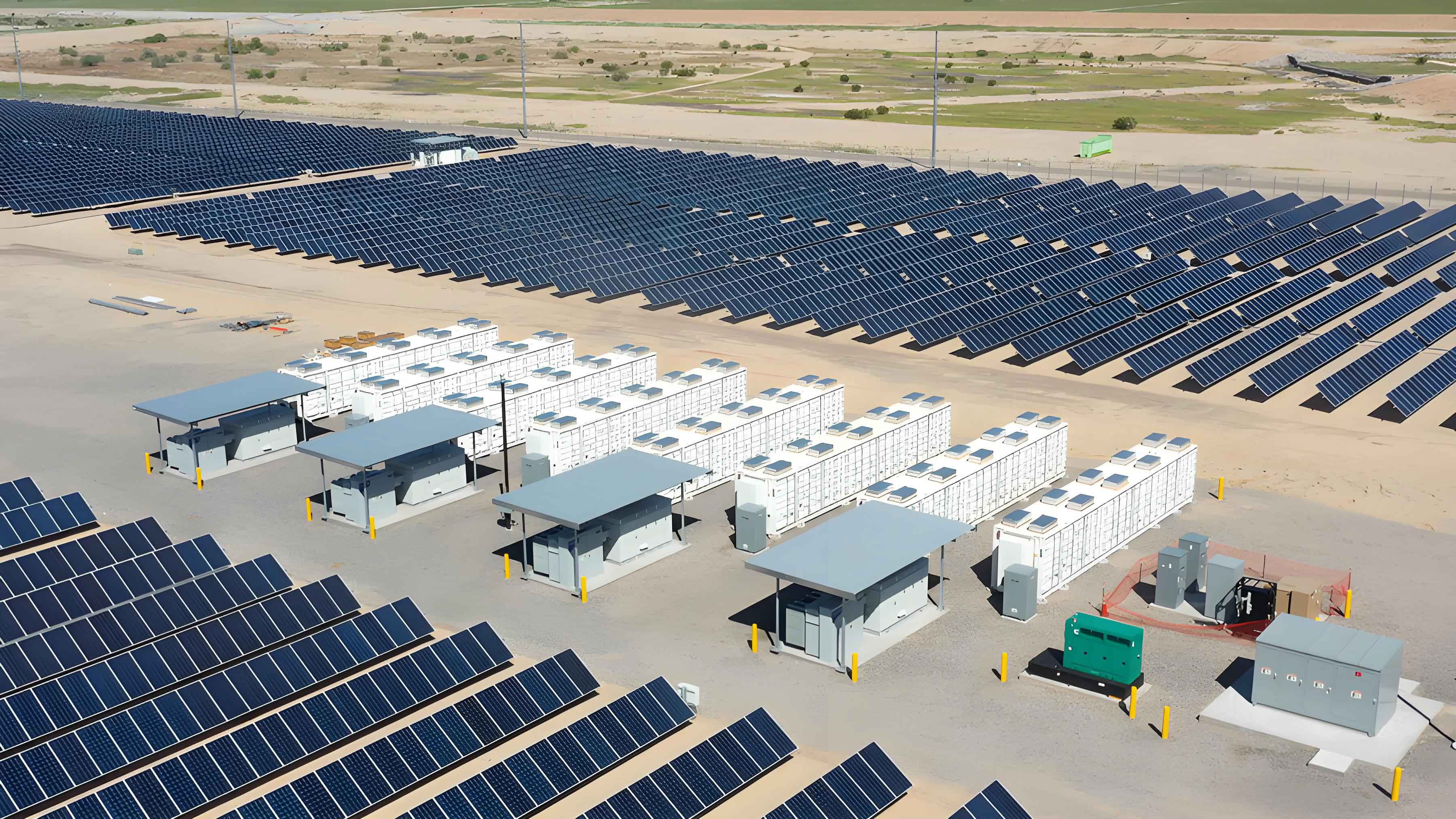
In practical applications, this solar power system was integrated into a pure solar-powered intelligent connected vehicle, where it demonstrated exceptional performance. The system’s folding design allows for an expanded surface area when the vehicle is stationary, increasing energy capture by up to 20%. During a full-day test under clear weather conditions, the solar power system generated 7.62 kWh of energy from 7:05 to 17:05, with a peak power output observed around midday. The daily energy yield per unit area was 0.938 kWh/m², which is more than double that of typical ground-mounted photovoltaic systems. This high efficiency is attributed to the advanced GaAs technology and optimal system design. The following figure illustrates the energy storage and generation concept relevant to this solar power system, highlighting its integration with vehicle dynamics.
The power output of the solar power system over time can be modeled using the equation: $$P(t) = \eta_{\text{system}} \times A \times G(t) \times \cos(\theta(t))$$ where \( \eta_{\text{system}} \) is the overall system efficiency, \( A \) is the effective area, \( G(t) \) is the solar irradiance, and \( \theta(t) \) is the angle of incidence. For our system, with an average efficiency of 31.5% and an area of 6.5 m², the theoretical daily energy output aligns closely with measured values, confirming the accuracy of our design calculations. This solar power system not only supports vehicle propulsion but also reduces reliance on grid charging, contributing to lower carbon footprints and enhanced energy independence.
Looking ahead, the development of this GaAs-based solar power system opens new avenues for sustainable transportation. By achieving high efficiency, lightweight design, and environmental resilience, this solar power system addresses key challenges in solar automotive technology. Future work will focus on further cost reduction, scalability for mass production, and integration with smart grid technologies. As the world moves toward decarbonization, innovations like this solar power system will play a crucial role in shaping a cleaner, more efficient future for mobility.
In conclusion, the gallium arsenide solar power system described herein represents a groundbreaking advancement in the field of solar-powered vehicles. Through meticulous design, advanced materials, and rigorous testing, we have created a solar power system that delivers superior performance, reliability, and sustainability. This solar power system not only meets the stringent requirements of modern automotive applications but also sets a new benchmark for energy efficiency and environmental stewardship. As we continue to refine and deploy this technology, I am confident that it will accelerate the adoption of solar energy in transportation, driving us toward a greener planet.