
In recent years, the global energy demand has surged, coupled with stringent environmental requirements for clean energy adoption, making solar energy a highly promising renewable resource. Among various photovoltaic technologies, perovskite solar cells (PSCs) have garnered significant attention due to their exceptional optoelectronic properties and potential for low-cost manufacturing. However, challenges such as performance limitations and instability hinder the widespread commercialization of perovskite solar cells. The quality of the perovskite thin film, which serves as the light-absorbing layer, plays a pivotal role in determining the power conversion efficiency (PCE) and long-term stability of perovskite solar cells. Issues like morphological defects, grain boundaries, and small grain sizes directly impact charge recombination and defect density, thereby affecting the overall performance of perovskite solar cells. To address these challenges, additive engineering has emerged as a powerful strategy to enhance the crystallization process, passivate defects, and improve the structural integrity of perovskite films. This article delves into the various aspects of additive engineering in perovskite solar cells, focusing on the use of organic, inorganic, and multifunctional additives to overcome the inherent limitations and boost the efficiency and stability of perovskite solar cells.
The fundamental structure of perovskite solar cells consists of an ABX3 perovskite material, where A is a cation (e.g., methylammonium, formamidinium, or cesium), B is a metal ion (typically lead), and X is a halide anion (e.g., iodide, bromide). The crystallization of perovskite films is critical, as it influences grain size, morphology, and defect states. Additives are introduced into the perovskite precursor solution or at interfaces to modulate the nucleation and growth mechanisms. For instance, inorganic additives like alkali metals can incorporate into the lattice or segregate at grain boundaries, while organic additives often functionalize through coordination bonds or hydrogen bonding. Multifunctional additives, such as metal-organic frameworks (MOFs), offer a combination of morphological control and defect passivation. Throughout this discussion, we will explore how these additives contribute to the advancement of perovskite solar cells, with an emphasis on their roles in enhancing PCE, reducing lead leakage, and improving environmental adaptability. The integration of additives not only optimizes the film quality but also aligns with the goal of developing sustainable and efficient perovskite solar cells.
To provide a comprehensive overview, we will categorize additives into three main groups: inorganic additives, organic additives, and multifunctional additives. Each category will be examined in terms of their mechanisms, effects on perovskite solar cell performance, and potential applications. Tables and mathematical formulations will be used to summarize key findings and illustrate the underlying principles. For example, the impact of additives on defect density can be described using equations related to trap-assisted recombination, while energy level adjustments can be modeled with bandgap equations. Additionally, we will incorporate a visual element to aid in understanding the structural modifications induced by additives, as shown below:
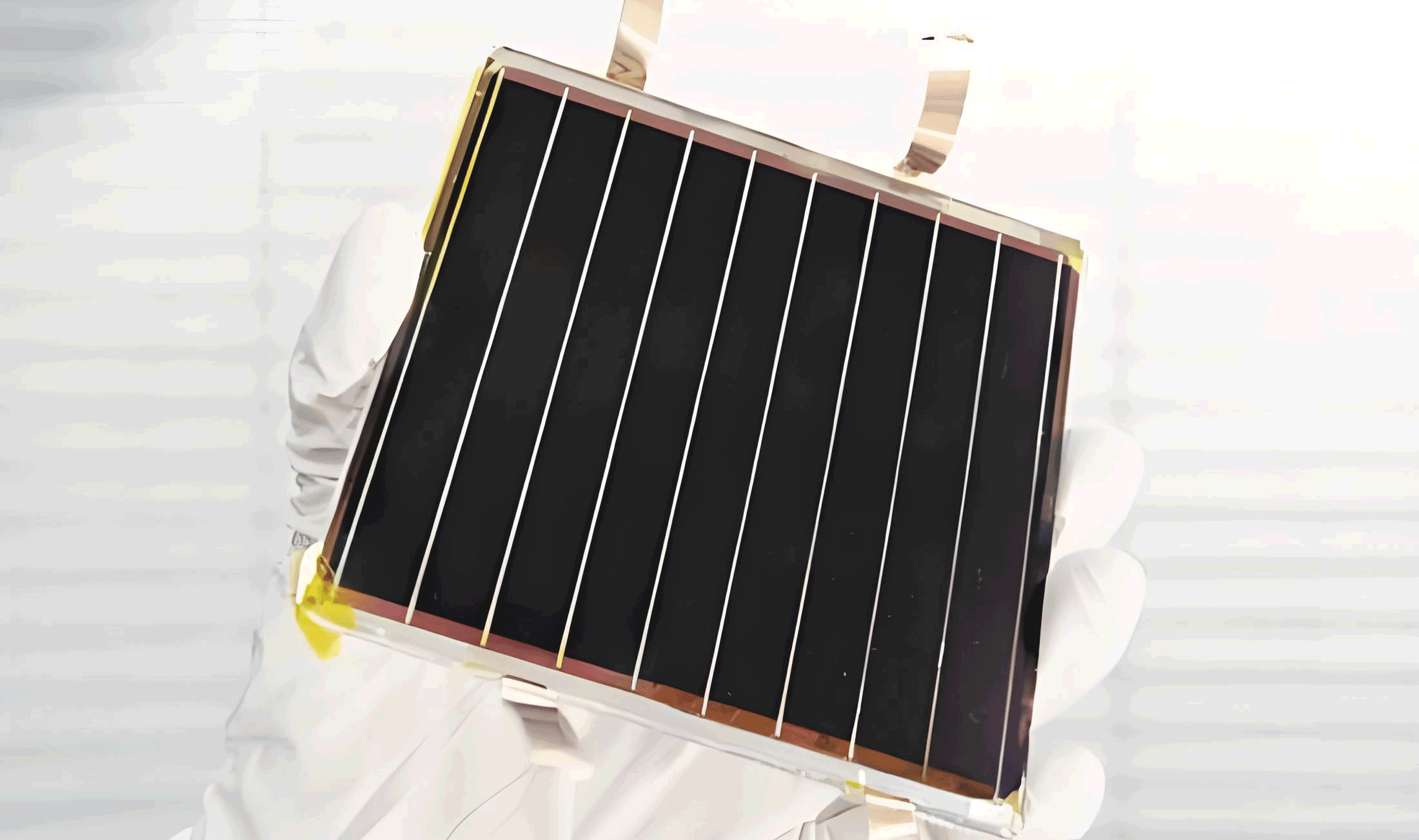
This image exemplifies the typical structure and interface engineering in perovskite solar cells, highlighting how additives can influence film morphology and device architecture. As we proceed, we will delve into specific additive types, their interactions with perovskite materials, and the resulting enhancements in perovskite solar cell performance.
Inorganic Additives in Perovskite Solar Cells
Inorganic additives are widely employed in perovskite solar cells to modify the crystal structure, passivate defects, and enhance charge transport. These additives typically include alkali metals and transition metals, which can incorporate into the perovskite lattice or form secondary phases that improve film quality. The incorporation mechanism often involves ion exchange or doping, leading to changes in the optical and electronic properties of perovskite solar cells.
Alkali Metal Additives
Alkali metals, such as potassium (K+), have been extensively studied for their role in enhancing the performance of perovskite solar cells. The addition of K+ ions can influence the crystallization process by reducing the formation of secondary phases and enlarging grain sizes. For instance, in CsFAPbI3-based perovskite solar cells, the introduction of K+ at optimal concentrations (e.g., 3% by mass) prevents the deposition of unreacted PbI2 and promotes the absorption of by-products at the film surface. This dual effect—morphological control and surface passivation—results in reduced non-radiative recombination and improved open-circuit voltage (Voc) in perovskite solar cells. The lattice expansion induced by K+ incorporation can be described by the Bragg’s law equation:
$$ n\lambda = 2d\sin\theta $$
where d is the interplanar spacing, θ is the diffraction angle, and λ is the wavelength of X-rays. A shift in diffraction peaks to lower angles indicates lattice expansion, which correlates with enhanced stability in perovskite solar cells. However, the exact role of K+ in the A-site of the perovskite structure remains debated. Some studies suggest that K+ does not occupy the A-site but instead forms segregated phases that passivate grain boundaries. The following table summarizes the effects of K+ addition on perovskite solar cell parameters:
| Additive Type | Concentration | Effect on Grain Size | PCE Improvement | Stability Enhancement |
|---|---|---|---|---|
| K+ (as KI) | 3% mass | Increased by ~20% | From 17.7% to 19.39% | Improved under continuous operation |
| K+ (as KBr) | 5% mass | Moderate increase | ~18.5% | Slight degradation over time |
Moreover, the addition of K+ can alter the charge carrier dynamics in perovskite solar cells. The recombination lifetime (τrec) can be modeled using the equation:
$$ \frac{1}{\tau_{\text{rec}}} = k_1 n + k_2 n^2 $$
where n is the carrier density, and k1 and k2 are coefficients for Shockley-Read-Hall and bimolecular recombination, respectively. With K+ incorporation, k1 decreases due to defect passivation, leading to longer τrec and higher Voc in perovskite solar cells. This underscores the importance of alkali metal additives in optimizing the electronic properties of perovskite solar cells.
Transition Metal Additives
Transition metals, such as zinc (Zn2+) and copper (Cu2+), are another class of inorganic additives used in perovskite solar cells. These metals can partially substitute Pb2+ in the B-site of the perovskite lattice, thereby passivating defects and enhancing charge transport. For example, the introduction of ZnBr2 at 0.5 mol% into the perovskite precursor solution promotes the formation of dense, large-grained films with superior crystallinity. This results in a PCE increase from 14.45% to 15.64% in carbon-based perovskite solar cells. The defect passivation mechanism can be explained by the formation of coordination bonds between Zn2+ and halide ions, which reduces trap states. The trap density (Nt) can be estimated using the equation:
$$ N_t = \frac{C}{q} \Delta V $$
where C is the capacitance, q is the electron charge, and ΔV is the voltage shift. With Zn2+ doping, Nt decreases, leading to lower non-radiative recombination in perovskite solar cells.
Similarly, Cu2+ doping at 0.01 mol·L−1 enhances grain size and light absorption in perovskite solar cells, while reducing trap-assisted recombination. Density functional theory (DFT) calculations reveal that Cu2+ addition shifts the valence band maximum to lower energies, reducing energy barriers and facilitating charge extraction. The PCE of perovskite solar cells improves from 16.3% to 18.2% with optimized Cu2+ concentration. However, excessive doping can lead to poor grain morphology and increased defects, highlighting the need for precise control in additive engineering for perovskite solar cells. The following table compares the effects of transition metal additives:
| Transition Metal | Optimal Concentration | Defect Density Reduction | PCE | Remarks |
|---|---|---|---|---|
| Zn2+ | 0.5 mol% | ~30% | 15.64% | Improved stability in air |
| Cu2+ | 0.01 mol·L−1 | ~25% | 18.2% | Enhanced charge extraction |
| Ni2+ | 1 mol% | ~20% | 17.5% | Moderate hysteresis |
In summary, inorganic additives play a crucial role in enhancing the morphological and electronic properties of perovskite solar cells. By carefully selecting the type and concentration of these additives, researchers can achieve significant improvements in PCE and stability for perovskite solar cells.
Organic Additives in Perovskite Solar Cells
Organic additives are extensively used in perovskite solar cells to functionalize the perovskite layer through molecular interactions, such as coordination bonding, hydrogen bonding, or electrostatic forces. These additives often contain functional groups like carboxylate, sulfonate, or amine, which can passivate defects and modulate crystallization. The versatility of organic additives allows for tailored improvements in the performance of perovskite solar cells.
Carboxylic Acid-Based Additives
Carboxylic acid groups, such as those in glycine sodium (SG), can effectively passivate defects in perovskite solar cells by forming ionic bonds with uncoordinated Pb2+ ions or coordinating with amino groups. This dual passivation mechanism reduces defect density and enlarges grain sizes, leading to enhanced light absorption and charge transport in perovskite solar cells. For instance, the addition of SG to the perovskite precursor solution results in a PCE of 19.32% under ambient conditions, along with improved operational and storage stability. The passivation energy (Epass) can be described by the equation:
$$ E_{\text{pass}} = -\frac{k}{r} $$
where k is a constant related to the bond strength, and r is the distance between the additive and the defect site. A more negative Epass indicates stronger passivation, which is beneficial for perovskite solar cells.
Another example is the use of 2-phosphonobutane-1,2,4-tricarboxylic sodium salt (PTASS) to modify the buried interface between SnO2 and the perovskite layer. PTASS improves energy level alignment, enhances interface contact, and reduces lead leakage in perovskite solar cells. The optimized devices achieve a PCE of 23.62% with negligible hysteresis and superior stability. The lead leakage prevention mechanism involves the formation of a chelating network with Pb2+ ions, which can be quantified by the leakage rate equation:
$$ \frac{d[Pb^{2+}]}{dt} = -k_l [\text{additive}] [Pb^{2+}] $$
where kl is the leakage rate constant. With PTASS, kl decreases significantly, reducing environmental risks associated with perovskite solar cells. The following table outlines the impact of carboxylic acid-based additives on perovskite solar cells:
| Additive | Functional Groups | PCE | Defect Passivation | Lead Leakage Reduction |
|---|---|---|---|---|
| SG | Carboxylate, amine | 19.32% | Strong | Moderate |
| PTASS | Phosphonate, carboxylate | 23.62% | Very strong | High (~90%) |
| EDTMP | Phosphate | 22.36% | Strong | High |
These results demonstrate the efficacy of carboxylic acid-based additives in enhancing the performance and sustainability of perovskite solar cells.
Sulfonic Acid-Based Additives
Sulfonic acid groups, known for their strong acidity and hydrophilicity, are used as additives in perovskite solar cells to improve interface properties and crystallization. For example, potassium methanesulfonate (KMsO) introduced at the SnO2/perovskite interface passivates surface defects, optimizes energy levels, and enhances carrier extraction in perovskite solar cells. When combined with other sulfonate additives like SP3S, which forms hydrogen bonds with organic ammonium salts and coordinates with Pb2+, the PCE of perovskite solar cells increases from 20.43% to 23.8%. The improved crystallinity and reduced defect density contribute to the high performance of perovskite solar cells.
Another sulfonate-based additive, formamidine methanesulfonate (FAMeSf), at 2 mol% concentration, produces high-quality FAPbI3 films with larger grains and longer carrier lifetimes. The resulting perovskite solar cells achieve a PCE of 21.6% and retain over 90% of their initial efficiency after 3000 hours under realistic conditions. The carrier lifetime (τ) can be modeled using the equation:
$$ \tau = \frac{1}{A + Bn + Cn^2} $$
where A, B, and C are coefficients for monomolecular, bimolecular, and Auger recombination, respectively. With FAMeSf, A decreases due to defect passivation, leading to longer τ in perovskite solar cells. However, excessive concentration (e.g., 5 mol%) can induce hole formation and low-dimensional phases, adversely affecting perovskite solar cell performance. The table below summarizes the effects of sulfonic acid-based additives:
| Additive | Concentration | Grain Size Increase | PCE | Stability (hours) |
|---|---|---|---|---|
| KMsO | Optimal | ~15% | 23.8% | 1000 |
| FAMeSf | 2 mol% | ~25% | 21.6% | 3000 |
| SP3S | 1 mol% | ~20% | 22.5% | 1500 |
Overall, organic additives offer a versatile approach to optimizing perovskite solar cells by leveraging molecular interactions for defect passivation and crystallization control.
Multifunctional Additives in Perovskite Solar Cells
Multifunctional additives combine multiple beneficial properties, such as morphological control, defect passivation, and environmental protection, in perovskite solar cells. These additives often include metal-organic frameworks (MOFs), polymers, and ligands with diverse functional groups. Their integration addresses several challenges simultaneously, leading to significant advancements in perovskite solar cell technology.
Metal-Organic Frameworks (MOFs) as Additives
MOFs are crystalline porous materials composed of metal ions and organic linkers, which can be incorporated into perovskite solar cells to induce ordered crystallization and reduce defect density. For instance, a polyoxometalate-based MOF (POMOF) added to the perovskite layer serves as a heterogeneous nucleation center, promoting the growth of high-quality films with reduced lead-based defects. The POMOF-modified perovskite solar cells achieve a PCE of 23.3% and retain 90% of their initial efficiency after 1600 hours. The defect passivation mechanism involves coordination between functional groups (e.g., =P=O, =C≡N) and uncoordinated Pb2+ ions, which can be described by the coordination number equation:
$$ CN = \sum_{i=1}^{N} \exp\left(-\frac{(r_i – r_0)^2}{2\sigma^2}\right) $$
where ri is the distance to the i-th ligand, r0 is the ideal bond length, and σ is the standard deviation. A higher CN indicates stronger passivation in perovskite solar cells. Additionally, MOFs can prevent lead leakage through chemical anchoring, as demonstrated by the reduction in lead ion concentration from 12 mg·L−1 in control devices to 4 mg·L−1 in MOF-incorporated perovskite solar cells.
Polymer Additives
Polymer additives, such as fluorine-rich polymers (e.g., POF-HDDA), are used in perovskite solar cells to enhance stability and prevent lead leakage. These polymers form crosslinked networks during thermal annealing, with carbonyl groups coordinating to Pb2+ ions and CF2 groups providing hydrophobicity. The resulting perovskite solar cells exhibit PCEs of 24.76% (small area) and 20.66% (large area), along with improved storage, thermal, and operational stability. The lead leakage prevention can be modeled using the adsorption isotherm equation:
$$ \theta = \frac{K[\text{Pb}^{2+}]}{1 + K[\text{Pb}^{2+}]} $$
where θ is the coverage fraction, and K is the adsorption constant. With POF-HDDA, K increases, leading to higher θ and reduced lead leakage in perovskite solar cells.
Multifunctional Ligand Additives
Ligands with multiple functional groups, such as ethylenediamine tetra(methylene phosphonic acid) (EDTMP), act as surface dopants in perovskite solar cells. EDTMP’s phosphate groups chelate Pb2+ ions, passivate defects, and inhibit ion migration. The additive also forms hydrogen bonds with I− ions, further enhancing film quality. Perovskite solar cells with EDTMP achieve a PCE of 22.36% on small areas and 19.16% on modules, with excellent stability. The chelation efficiency can be expressed as:
$$ \eta_{\text{chelation}} = \frac{[\text{Pb}^{2+}]_{\text{bound}}}{[\text{Pb}^{2+}]_{\text{total}}} $$
where ηchelation approaches 1 for effective additives like EDTMP in perovskite solar cells. The following table compares multifunctional additives:
| Additive Type | Key Functions | PCE | Stability Enhancement | Lead Leakage Reduction |
|---|---|---|---|---|
| MOFs (POMOF) | Crystallization control, defect passivation | 23.3% | 1600 hours | ~67% |
| Polymers (POF-HDDA) | Crosslinking, hydrophobicity | 24.76% | Long-term | ~80% |
| Ligands (EDTMP) | Chelation, hydrogen bonding | 22.36% | High | ~85% |
In conclusion, multifunctional additives represent a holistic approach to advancing perovskite solar cells, addressing multiple performance and environmental aspects simultaneously.
Conclusion and Future Perspectives
Additive engineering has proven to be a pivotal strategy in enhancing the performance, stability, and sustainability of perovskite solar cells. By incorporating inorganic, organic, and multifunctional additives, researchers can precisely control the crystallization process, passivate defects, and mitigate lead leakage in perovskite solar cells. The use of alkali and transition metals improves morphological and electronic properties, while organic additives leverage functional groups for molecular-level interactions. Multifunctional additives, such as MOFs and polymers, offer integrated solutions for high-efficiency and environmentally friendly perovskite solar cells.
Looking ahead, the development of novel additives with tailored properties will continue to drive progress in perovskite solar cell technology. Future research should focus on understanding the fundamental mechanisms of additive-perovskite interactions, optimizing additive concentrations for large-scale production, and exploring biodegradable or non-toxic alternatives to further reduce the environmental impact of perovskite solar cells. Additionally, the integration of machine learning and high-throughput screening could accelerate the discovery of optimal additives for perovskite solar cells. As additive engineering evolves, it holds the promise of enabling the commercialization of perovskite solar cells as a reliable and sustainable energy source.
In summary, the strategic application of additives not only addresses current limitations but also opens new avenues for innovation in perovskite solar cells. Through continuous exploration and refinement, additive engineering will play a crucial role in realizing the full potential of perovskite solar cells for global energy solutions.