
In modern power systems, the rapid integration of renewable energy sources has intensified grid volatility, making energy storage batteries a critical component for stabilizing supply and demand. As an energy storage battery serves in diverse applications—from frequency regulation to peak shaving—its ability to operate reliably under varying power demands is paramount. Accurate estimation of the State of Charge (SOC) is essential for optimizing the performance, lifespan, and safety of these energy storage batteries. However, traditional SOC estimation methods often falter in dynamic scenarios due to factors like measurement errors, initial SOC inaccuracies, and, notably, the impact of discharge rate on battery capacity. In this work, we address these challenges by proposing an adaptive SOC estimation method that dynamically corrects battery capacity based on discharge rate and integrates an advanced neural network with Kalman filtering. Our approach aims to enhance the precision and robustness of SOC estimation for energy storage batteries in grid applications, ensuring efficient operation across multiple usage scenarios.
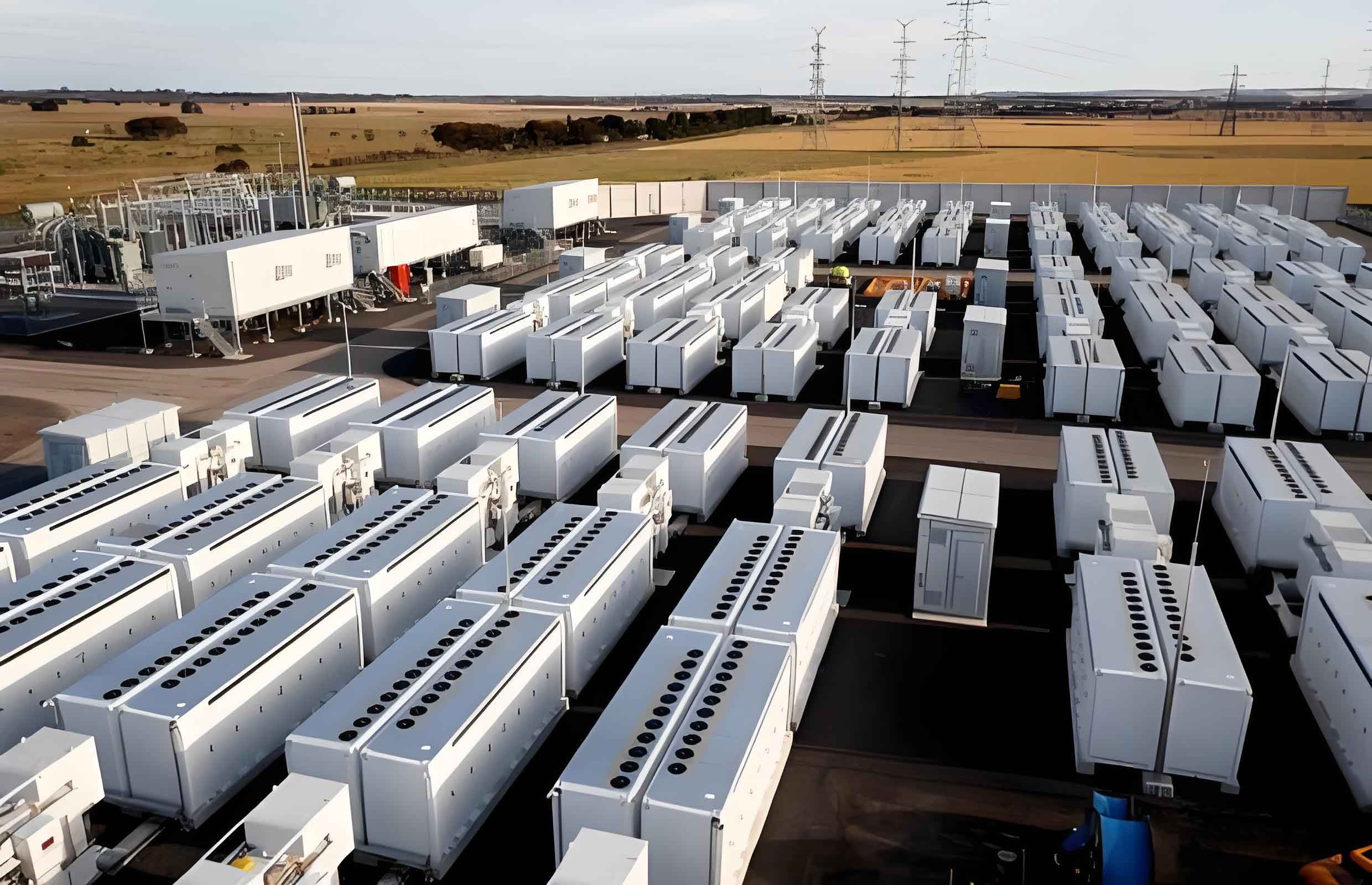
The SOC of an energy storage battery is defined as the ratio of remaining capacity to rated capacity under specific discharge conditions. Mathematically, it is expressed using the ampere-hour integral method:
$$SOC(t) = SOC(0) – \frac{1}{Q_n} \int_0^t I(t) dt$$
where \( SOC(t) \) is the SOC at time \( t \), \( SOC(0) \) is the initial SOC, \( Q_n \) is the nominal battery capacity, and \( I(t) \) is the current (positive for discharge). This formula, while foundational, introduces errors from three primary sources: measurement inaccuracies in current sensing, uncertainty in the initial SOC value, and variability in the actual battery capacity \( Q_n \) due to operational factors like discharge rate and temperature. For energy storage batteries deployed in grid systems, discharge rate fluctuations are particularly significant, as they directly affect the usable capacity and, consequently, SOC estimation accuracy. Most existing methods treat capacity as a fixed or slowly aging parameter, overlooking short-term variations induced by changing discharge rates in multi-scenario operations. This oversight can lead to SOC estimation errors, compromising the consistency and control of distributed energy storage systems.
To overcome these limitations, we first analyze the error mechanisms in SOC estimation. The discharge rate, denoted as C-rate, describes the rate at which an energy storage battery discharges relative to its capacity. Higher discharge rates often reduce the effective capacity due to internal resistance, incomplete electrochemical reactions, and thermal effects. For instance, in grid applications, an energy storage battery might operate at high C-rates for frequency response but at low C-rates for peak shaving, causing its available capacity to vary within short timeframes (e.g., 15-minute control cycles). Ignoring this dynamic leads to SOC estimation inaccuracies, as the nominal capacity \( Q_n \) no longer reflects the true usable capacity. Therefore, we propose a capacity correction model that quantifies the relationship between discharge rate and capacity, enabling real-time adjustments to \( Q_n \) in SOC calculations.
Our experimental investigations reveal that the capacity of an energy storage battery decreases nonlinearly with increasing discharge rate. Under controlled temperature conditions (e.g., 25°C), we measured the capacity at various C-rates, as summarized in Table 1. The data shows a clear trend: as the discharge rate rises, the usable capacity diminishes, highlighting the need for adaptive correction in SOC estimation for energy storage batteries.
| Discharge Rate (C) | Capacity (Ah) |
|---|---|
| 0.5 | 127.91 |
| 0.75 | 127.25 |
| 1.0 | 126.69 |
| 1.5 | 125.49 |
| 2.0 | 123.51 |
Using curve fitting techniques, we derived a polynomial model to represent this relationship:
$$Q(I) = 5.4564 \times 10^{-7} I^3 + 2.0667 \times 10^{-4} I^2 + 0.0433 I + 129.9400$$
where \( Q(I) \) is the dynamic capacity in Ampere-hours (Ah), and \( I \) is the discharge current related to the C-rate. This model allows us to adjust \( Q_n \) in real-time based on the instantaneous discharge rate, thereby reducing capacity-induced errors in SOC estimation for energy storage batteries. The integration of such a model into SOC estimation frameworks is crucial for enhancing accuracy in variable-power grid operations.
Beyond capacity correction, we address measurement and initial value errors by developing a hybrid estimation algorithm that combines deep learning with Kalman filtering. Traditional methods like the Extended Kalman Filter (EKF) offer robustness against noise but may struggle with complex nonlinearities. Conversely, data-driven approaches like neural networks excel at modeling nonlinear relationships but can be sensitive to input disturbances. To leverage the strengths of both, we propose the Convolutional Long Short-Term Memory Attention Neural Network combined with EKF (CLA-EKF). This algorithm uses a CLA network to generate SOC estimates from input features such as voltage, current, and temperature, and then refines these estimates using EKF to account for uncertainties and noise.
The CLA network architecture is designed to capture temporal dependencies and salient features in battery data. It consists of convolutional layers for feature extraction, bidirectional LSTM (Bi-LSTM) layers for learning sequential patterns, and an attention mechanism to weight important time steps. Mathematically, for an input sequence \( \mathbf{x}_k \) at time \( k \), the forward and backward hidden states in Bi-LSTM are computed as:
$$\mathbf{h}_k = \text{LSTM}(\mathbf{x}_k, \mathbf{h}_{k-1})$$
$$\mathbf{h}’_k = \text{LSTM}(\mathbf{x}_k, \mathbf{h}’_{k+1})$$
The output \( \mathbf{y}_k \) is then a weighted combination:
$$\mathbf{y}_k = \mathbf{W}_k \mathbf{h}_k + \mathbf{W}’_k \mathbf{h}’_k + \mathbf{b}_k$$
where \( \mathbf{W}_k \), \( \mathbf{W}’_k \) are weight matrices, and \( \mathbf{b}_k \) is a bias vector. The attention mechanism allocates weights \( \alpha_k \) to each time step, enhancing the model’s focus on critical periods. This CLA network is trained offline on historical data to map inputs to SOC values, providing a preliminary estimate \( SOC_{k,CLA} \).
For online SOC estimation, we integrate CLA with EKF. The state-space model for EKF is defined as:
$$\text{State equation: } SOC_k = SOC_{k-1} – \frac{I_{k-1} \Delta T}{Q_n} + w_{k-1}$$
$$\text{Measurement equation: } SOC_{k,CLA} = SOC_k + v_k$$
where \( \Delta T \) is the sampling interval, \( w_{k-1} \) is process noise, and \( v_k \) is measurement noise. The EKF algorithm iteratively predicts and updates the SOC estimate by fusing the CLA-based measurement with the model-based prediction. The steps include:
- Initialization: \( \hat{x}_0 = E[x_0] \), \( P_0 = E[(x_0 – \hat{x}_0)(x_0 – \hat{x}_0)^T] \).
- Prediction: \( \hat{x}_{k|k-1} = A_{k-1} \hat{x}_{k-1|k-1} + B_{k-1} u_{k-1} \), \( P_{k|k-1} = A_{k-1} P_{k-1|k-1} A_{k-1}^T + Q_k \).
- Kalman Gain: \( K_k = P_{k|k-1} C_k^T (C_k P_{k|k-1} C_k^T + R_k)^{-1} \).
- Update: \( e_k = y_k – C_k \hat{x}_{k|k-1} – D_k u_k \), \( \hat{x}_{k|k} = \hat{x}_{k|k-1} + K_k e_k \), \( P_{k|k} = (I – K_k C_k) P_{k|k-1} \).
Here, \( \hat{x}_{k|k} \) represents the estimated SOC, and matrices \( A, B, C, D \) are derived from linearized battery dynamics. By combining CLA and EKF, our method achieves high accuracy and resilience to disturbances, making it suitable for real-time SOC estimation in energy storage batteries.
To further enhance performance, we incorporate the dynamic capacity correction model into the CLA-EKF framework. Specifically, the nominal capacity \( Q_n \) in the state equation is replaced with the discharge-rate-dependent capacity \( Q(I) \) from our polynomial model. This adaptive adjustment ensures that SOC estimates reflect the actual usable capacity of the energy storage battery under varying operational conditions. The overall workflow of our proposed method is as follows: First, the discharge current is monitored to compute the instantaneous C-rate. Second, the dynamic capacity \( Q(I) \) is calculated using the polynomial model. Third, the CLA network generates a preliminary SOC estimate from input data. Fourth, EKF fuses this estimate with the capacity-corrected ampere-hour integral to produce the final SOC output. This integrated approach addresses all major error sources, providing a robust solution for SOC estimation in grid-connected energy storage batteries.
We validated our method through extensive experiments on lithium-ion energy storage batteries. The test setup included a battery testing system with controlled discharge profiles simulating grid scenarios like peak shaving. We subjected the energy storage battery to variable discharge rates, ranging from 0.5C to 2C, and collected data on voltage, current, and temperature. The battery parameters are listed in Table 2, providing context for our evaluations.
| Parameter | Value |
|---|---|
| Rated Capacity | 125 Ah |
| Charge Cut-off Voltage | 3.65 V |
| Discharge Cut-off Voltage | 2.5 V |
The experimental discharge profile involved step changes in C-rate: 2C for 10 minutes, followed by 1.5C, 1C, 0.75C, and 0.5C, each for 10 minutes, until full discharge. This profile mimics the fluctuating power demands in grid applications, challenging SOC estimation methods. We compared our proposed method (capacity-corrected CLA-EKF) against several benchmarks: traditional EKF without capacity correction, CLA alone, LSTM-EKF, and EKF with capacity correction. The SOC estimation accuracy was assessed using metrics such as Root Mean Square Error (RMSE), Mean Absolute Error (MAE), and Maximum Error (ME).
The results demonstrate the superiority of our approach. As shown in Table 3, our method achieves the lowest error metrics, indicating high precision and stability in SOC estimation for energy storage batteries. The capacity correction component significantly reduces errors compared to methods with fixed capacity, while the CLA-EKF fusion minimizes noise impact.
| Method | RMSE (%) | MAE (%) | ME (%) |
|---|---|---|---|
| Traditional EKF | 2.9937 | 2.8248 | 4.5807 |
| CLA Only | 0.7433 | 0.5523 | 3.9093 |
| LSTM-EKF | 1.1992 | 1.0373 | 3.8048 |
| EKF with Capacity Correction | 1.7728 | 1.5576 | 3.0820 |
| CLA-EKF | 0.4498 | 0.3859 | 1.0796 |
| Proposed Method (Capacity-Corrected CLA-EKF) | 0.2769 | 0.1722 | 0.8908 |
To illustrate the error distributions, we analyzed histograms of SOC estimation errors over time. Our method exhibits a narrow error distribution centered near zero, whereas other methods show broader spreads with occasional peaks. This consistency is vital for reliable battery management in energy storage systems. Furthermore, the time-domain error plots reveal that our method maintains low error levels throughout the discharge cycle, even during C-rate transitions, confirming its adaptability to dynamic conditions.
The effectiveness of capacity correction is evident when comparing EKF with and without it. The RMSE drops from 2.9937% to 1.7728% after incorporating discharge-rate-based capacity adjustment, underscoring the importance of dynamic capacity modeling for energy storage batteries. Similarly, the CLA-EKF algorithm outperforms standalone CLA or EKF, reducing RMSE to 0.4498% by leveraging neural network nonlinearity and Kalman filter robustness. Combining both enhancements yields the best performance, with an RMSE of 0.2769%, which is a substantial improvement for practical SOC estimation in grid energy storage batteries.
We also conducted sensitivity analyses to explore the impact of temperature and aging on our method. While our current focus is on discharge rate, temperature variations can affect battery capacity and SOC estimation. Preliminary tests indicate that our polynomial model can be extended to include temperature terms, e.g., \( Q(I, T) = f(I) + g(T) \), where \( T \) is temperature. For aging, long-term capacity degradation could be integrated via periodic capacity recalibration. These aspects represent future work to enhance the generalizability of our approach for energy storage batteries in diverse environments.
In terms of computational efficiency, our method is feasible for real-time implementation. The CLA network, once trained offline, has low inference latency, and the EKF update steps involve simple matrix operations. The capacity correction model adds minimal overhead, as it requires only polynomial evaluation based on current measurements. Thus, our approach is suitable for embedded battery management systems in energy storage batteries, supporting online SOC estimation without significant resource demands.
The implications of this work are significant for grid energy storage applications. Accurate SOC estimation enables better state-of-health monitoring, optimal charging/discharging strategies, and improved safety protocols for energy storage batteries. By addressing discharge-rate-induced capacity variations, our method helps maintain consistency across distributed energy storage units, facilitating aggregated control for grid services like frequency regulation and renewable integration. This contributes to the stability and efficiency of modern power systems reliant on energy storage batteries.
In conclusion, we have presented an adaptive SOC estimation method for energy storage batteries that dynamically corrects capacity based on discharge rate and integrates a CLA-EKF algorithm. Our contributions include: (1) a quantitative model linking discharge rate to battery capacity, validated experimentally; (2) a hybrid CLA-EKF estimator that combines deep learning for nonlinear mapping with Kalman filtering for noise resilience; and (3) a comprehensive framework that adjusts capacity in real-time to improve SOC accuracy. Experimental results under variable discharge conditions demonstrate that our method reduces RMSE to 0.2769%, outperforming traditional and hybrid benchmarks. This advancement supports the reliable operation of energy storage batteries in multi-scenario grid applications, paving the way for more robust battery management systems.
Future work will expand this approach to incorporate temperature and aging effects, develop more sophisticated neural network architectures, and test on larger-scale energy storage battery packs. Additionally, we plan to explore integration with cloud-based monitoring platforms for fleet management of energy storage batteries. By continuously refining SOC estimation techniques, we aim to enhance the longevity and performance of energy storage batteries, driving the transition toward sustainable energy systems.