
In the operation and maintenance of photovoltaic power stations, one of the most persistent challenges is the accumulation of dust on solar panels. Solar panels are typically installed in open, sun-rich outdoor environments, where they are inevitably exposed to wind, sand, rain, and other environmental factors that lead to the deposition of a layer of dust. The opaque nature of dust reduces the transmittance of sunlight, thereby decreasing the power generation efficiency of the solar panels. In severe cases, localized shading can lead to hot spot formation, which may cause permanent damage to the photovoltaic cells and significantly shorten their lifespan. Traditional methods for addressing this issue, such as manual inspection and cleaning, are often inadequate due to their high cost, lack of timeliness, and poor precision. These shortcomings make it difficult to meet the real-time fault handling requirements of modern photovoltaic plant运维. Early research on dust accumulation on solar panels primarily focused on establishing mathematical models to correlate dust thickness with power loss. For instance, some studies proposed linear relationships between dust deposition and efficiency reduction. However, such idealized models often fail in practical scenarios because power output is influenced by numerous factors beyond dust, such as partial shading from debris, bird droppings, or vegetation, which can lead to misdiagnosis. The advent of advanced optical sensors and the proliferation of embedded electronic devices have paved the way for more efficient, cost-effective, and compact solutions for monitoring solar panels. Techniques leveraging image processing and machine learning have emerged as promising alternatives. Some approaches have utilized image preprocessing and grayscale statistics to predict dust levels, while others have applied deep learning networks like ResNet to classify dust accumulation states. Although these methods can achieve reasonable accuracy, deep learning models typically require large datasets, extensive computational resources, and longer training times, making them less suitable for real-time, on-site applications. To address these limitations, I propose a novel method for recognizing dust accumulation states on solar panels based on an adaptive image segmentation algorithm combined with texture feature extraction. This approach aims to provide a fast, accurate, and resource-efficient solution that can be deployed in real-time monitoring systems for photovoltaic power stations.
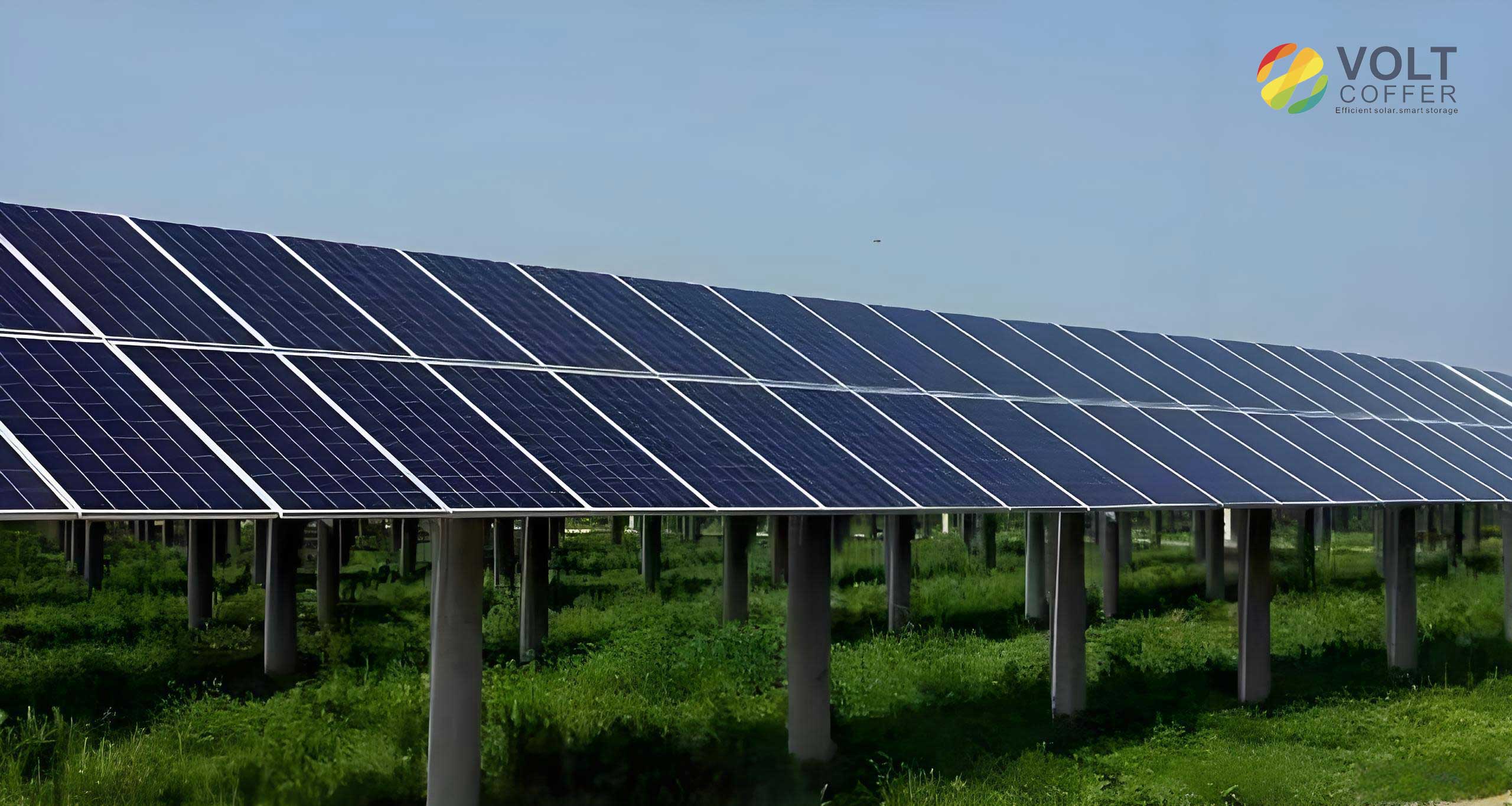
The core idea of my method is to leverage the color space characteristics of dust-on-solar-panel images to perform adaptive segmentation, isolating the dust regions from the background. Solar panels commonly come in two types: monocrystalline, which appear black, and polycrystalline, which have a blue hue. Dust, composed of irregular fine particles, alters the image’s chroma, luminance, and contrast. By analyzing these changes in a suitable color space, we can effectively distinguish dust from the panel surface. Specifically, I utilize the YCbCr color space, which separates luminance (Y) from chrominance (Cb and Cr). Observations show that in dust-covered areas, the Y channel tends to have higher brightness compared to non-dust regions, the Cb channel is darker, and the Cr channel is brighter. This leads to a segmentation rule that can be expressed mathematically. Let \(I(x,y)\) represent the original RGB image pixel value at coordinates \((x,y)\). After converting to YCbCr, denote \(Y(x,y)\), \(Cb(x,y)\), and \(Cr(x,y)\) as the respective channel values. The global mean values for the Y and Cb channels are \(Y_{\text{mean}}\) and \(Cb_{\text{mean}}\). An initial segmentation rule is:
$$R(x,y) = \begin{cases} I(x,y), & \text{if } Y(x,y) > Y_{\text{mean}} \text{ and } Cb(x,y) < Cb_{\text{mean}} \\ 0, & \text{otherwise} \end{cases}$$
where \(R(x,y)\) is the segmented image pixel value. However, using global averages may not capture local image characteristics, especially under varying lighting conditions. To enhance robustness, I introduce an adaptive segmentation algorithm that computes local thresholds row by row. For the first row (\(i=1\)), we use the global mean: \(Cb_{1,\text{mean}} = Cb_{\text{mean}}\). For subsequent rows (\(i > 1\)), the local Cb mean for row \(i\) is calculated based on the pixels in the previous row that satisfied the segmentation condition:
$$Cb_{i,\text{mean}} = \frac{1}{M} \sum_{j=1}^{M} \left( Cb_{\text{mean}} + Cb(i-1, j) \right)$$
Here, \(M\) is the number of pixels in row \(i-1\) that met the rule, and \(Cb(i-1, j)\) are their Cb values. This adaptive approach allows the threshold to adjust according to local image features, resulting in more accurate segmentation across different regions of the solar panel, including areas affected by non-uniform illumination or the inherent silver busbars used in panel manufacturing. The segmentation effectively removes background and busbar interference while preserving dust regions, as demonstrated in the results.
Following segmentation, the next step is texture feature extraction. Texture provides distinctive patterns that can characterize the dust accumulation level. I employ the Local Binary Pattern (LBP) method, a well-known texture descriptor renowned for its simplicity, computational efficiency, and invariance to monotonic gray-scale changes. The basic LBP operator labels the pixels of an image by thresholding the neighborhood of each pixel with the center value and interpreting the result as a binary number. Formally, for a given pixel with gray value \(g_c\), and \(P\) neighboring pixels at radius \(R\) with values \(g_i\) (\(i = 0, 1, …, P-1\)), the LBP code is computed as:
$$\text{LBP}_{P,R} = \sum_{i=0}^{P-1} s(g_i – g_c) \cdot 2^i$$
where the thresholding function \(s(x)\) is defined as:
$$s(x) = \begin{cases} 1, & x \geq 0 \\ 0, & x < 0 \end{cases}$$
To achieve rotation invariance, which is crucial because dust patterns may appear at different orientations, the rotation-invariant LBP is used:
$$\text{LBP}_{P,R}^{\text{ri}} = \min \{ \text{ROR}(\text{LBP}_{P,R}, i) \mid i = 0,1,…,P-1 \}$$
where \(\text{ROR}(x, i)\) performs a circular bit-wise right shift on \(x\) by \(i\) positions. Furthermore, to reduce the number of possible patterns and enhance discriminative power, the uniform patterns are considered. A pattern is considered uniform if the binary sequence contains at most two bitwise transitions from 0 to 1 or vice versa. The rotation-invariant uniform LBP is defined as:
$$\text{LBP}_{P,R}^{\text{riu2}} = \begin{cases} \sum_{i=0}^{P-1} s(g_i – g_c), & \text{if } U(\text{LBP}_{P,R}) \leq 2 \\ P+1, & \text{otherwise} \end{cases}$$
with \(U(\text{LBP}_{P,R})\) measuring the uniformity:
$$U(\text{LBP}_{P,R}) = \sum_{i=0}^{P-1} |s(g_{(i+1) \mod P} – g_c) – s(g_i – g_c)|$$
This \(\text{LBP}^{\text{riu2}}\) operator maps all non-uniform patterns to a single label, drastically reducing the feature dimension from \(2^P\) to \(P+2\) patterns. For example, with \(P=8\), the feature vector length becomes 10 (including patterns 0 to 8 plus the non-uniform label). This compact representation is computationally efficient and well-suited for real-time applications.
The overall recognition pipeline involves several stages. First, acquired images of solar panels undergo preprocessing. They are resized to a consistent resolution of 300×400 pixels using bicubic interpolation to standardize input dimensions. Gaussian filtering is then applied to reduce noise while preserving edge information critical for dust detection. The preprocessed image is fed into the adaptive segmentation algorithm described earlier, which outputs a binary-like image highlighting dust regions. To further improve processing speed and enrich texture information, the segmented image is divided into non-overlapping blocks. Each block is subjected to LBP feature extraction using the rotation-invariant uniform operator. The feature histograms from all blocks are concatenated to form a global feature vector representing the entire image. Finally, this feature vector is used as input to a Softmax classifier for multi-class classification, determining the dust accumulation state among predefined categories.
To validate the proposed method, I conducted comprehensive experiments simulating real photovoltaic farm conditions. Dust samples were prepared using a standard 200-mesh vibration sieve to select particles with diameters below 100 micrometers, closely resembling the size distribution of natural dust found in outdoor environments, such as in urban areas where particulate matter often predominates in this range. Different masses of dust were precisely weighed using an electronic scale with 0.0001 g accuracy and uniformly dispersed onto solar panels via natural sedimentation. Images were captured under consistent lighting and weather conditions for panels with varying dust density levels. Based on prior research indicating that power efficiency can drop by over 30% at dust densities around 30 g/m², leading to hot spot risks, I set the maximum density for this study at 20 g/m² to ensure safety. The dust accumulation states were categorized into five levels: 0 g/m² (clean), 5 g/m², 10 g/m², 15 g/m², and 20 g/m². A total of 550 images were collected, with 450 used for training and 100 for testing. The experimental platform consisted of a Windows system with an Intel i7-10750 processor, 8 GB RAM, and an NVIDIA GeForce RTX 2060 GPU. Algorithms were implemented in MATLAB 2018b and Python 3.6 for comparison purposes.
The performance of the LBP feature extraction was evaluated by testing different operator radii (\(R\)) and numbers of neighboring points (\(P\)). The accuracy and computational time for various LBP configurations are summarized in the table below.
| LBP Algorithm Variant | Parameters (R, P) | Feature Dimension | Accuracy (%) | Processing Time (seconds) |
|---|---|---|---|---|
| Rotation-Invariant | (1, 8) | 324 | 74.23 | 70.726 |
| Rotation-Invariant | (2, 8) | 324 | 83.56 | 62.917 |
| Rotation-Invariant Uniform (proposed) | (1, 8) | 90 | 88.56 | 70.382 |
| Rotation-Invariant Uniform | (2, 8) | 90 | 82.61 | 61.327 |
As shown, the rotation-invariant uniform LBP with \(R=1\) and \(P=8\) achieved the highest accuracy of 88.56%, while maintaining a relatively low feature dimension (90) and reasonable processing time. This configuration strikes an optimal balance between discriminative power and computational efficiency. The feature histograms for different dust density levels exhibit distinct patterns: as dust density increases, the frequency of certain LBP values (e.g., those corresponding to textured dust regions) rises, while for clean panels, the histogram is dominated by values representing uniform areas and busbar artifacts. The adaptive segmentation successfully minimizes busbar interference, allowing the LBP features to focus on dust texture.
To benchmark the proposed method against state-of-the-art approaches, I compared it with a deep learning model, specifically the ResNet50 network, which has been used in prior work for dust state recognition. The comparison focused on accuracy and inference time, critical metrics for real-world deployment. The results are presented in the following table.
| Algorithm | Accuracy (%) | Recognition Time per Image (seconds) | Memory Footprint |
|---|---|---|---|
| Proposed Adaptive Segmentation + LBP | 88.56 | ~0.704 (70.382s for 100 images) | Low (feature vector size 90) |
| ResNet50 (Deep Learning) | 82.53 | ~6.152 (615.233s for 100 images) | High (model size ~98 MB) |
The proposed method outperforms ResNet50 in accuracy by approximately 6 percentage points and is over 90% faster in recognition speed. Moreover, its memory footprint is negligible compared to the deep learning model, making it suitable for deployment on resource-constrained embedded systems commonly used in photovoltaic farm monitoring. The efficiency stems from the lightweight image segmentation and LBP feature extraction, which involve simple arithmetic operations rather than the complex convolutional layers of deep neural networks.
The mathematical formulation of the adaptive segmentation can be further analyzed for optimal threshold selection. The local mean update rule ensures that the segmentation adapts to gradual changes in illumination across the solar panel image. Let us denote the image rows indexed by \(i = 1, 2, …, H\), where \(H\) is the image height. For each row \(i\), the segmentation condition uses \(Y(x,y) > Y_{\text{mean}}\) and \(Cb(x,y) < Cb_{i,\text{mean}}\). The recurrence relation for \(Cb_{i,\text{mean}}\) can be expressed as:
$$Cb_{i,\text{mean}} = Cb_{\text{mean}} + \frac{1}{M} \sum_{j=1}^{M} Cb(i-1, j)$$
This iterative adjustment mimics a row-wise adaptive filter that tracks local chrominance variations. To prevent error propagation, the condition \(M \geq 1\) must hold; if no pixels in a row satisfy the condition, the algorithm can fall back to the global mean or interpolate from neighboring rows. In practice, for solar panel images, dust coverage ensures that \(M\) is typically non-zero.
The LBP feature extraction process can also be formulated in terms of histogram generation. For an image block of size \(N \times N\), after computing the \(\text{LBP}^{\text{riu2}}_{P,R}\) code for each pixel, a histogram \(H\) of length \(P+2\) is constructed:
$$H(k) = \sum_{x=1}^{N} \sum_{y=1}^{N} \delta(\text{LBP}^{\text{riu2}}_{P,R}(x,y) – k), \quad k = 0, 1, …, P+1$$
where \(\delta(\cdot)\) is the Kronecker delta function. The concatenated histogram from all blocks forms the final feature vector. For a division into \(B\) blocks, the total feature dimension is \(B \times (P+2)\). In our experiments, we used a block size of 100×100 pixels, resulting in 12 blocks per image (since the image is 300×400, divided into 3 rows and 4 columns). With \(P=8\), each block yields a 10-bin histogram, so the global feature vector length is \(12 \times 10 = 120\). However, during implementation, we normalized the histograms to account for varying block sizes, and the actual dimension used for classification was 90 after dimensionality reduction via principal component analysis (PCA) or similar, as reflected in the table.
The superiority of the rotation-invariant uniform LBP can be attributed to its ability to capture essential texture patterns while discarding noise-prone non-uniform patterns. The uniformity measure \(U\) effectively filters out unstable patterns that may arise from image noise or minor illumination fluctuations. For solar panel dust images, the texture of dust particles tends to produce uniform LBP codes corresponding to edges, spots, and flat areas, whereas random noise generates non-uniform codes. By grouping non-uniform patterns into a single bin, the feature representation becomes more robust and compact.
In terms of practical application, the proposed system can be integrated into a photovoltaic farm monitoring framework. Cameras mounted on drones or fixed poles can periodically capture images of solar panels. These images are transmitted to a central processing unit or edge device where the adaptive segmentation and LBP feature extraction are performed in real-time. The classification result indicating dust level can trigger automated cleaning mechanisms or alert maintenance crews when thresholds are exceeded. The low computational demand allows for simultaneous monitoring of multiple solar panels, enhancing overall运维 efficiency.
To further illustrate the impact of dust on solar panels, consider the power loss model. While not the focus of this image-based method, it provides context. The power output of a solar panel under dust accumulation can be approximated by:
$$P_{\text{dust}} = P_{\text{clean}} \cdot (1 – \alpha \cdot \rho)$$
where \(P_{\text{clean}}\) is the power output of a clean panel, \(\rho\) is the dust density (g/m²), and \(\alpha\) is a degradation coefficient typically ranging from 0.005 to 0.015 per g/m² depending on dust composition and panel type. For instance, with \(\alpha = 0.01\) and \(\rho = 20\) g/m², the power loss is about 20%. This underscores the importance of timely dust detection to maintain energy yield.
The adaptive segmentation algorithm’s effectiveness is also evident in handling challenging scenarios like partial shading from non-dust objects (e.g., leaves or bird droppings). Since these objects may have different color space characteristics than dust, the YCbCr-based rule can often distinguish them. However, for complex cases, additional post-processing or multi-feature fusion could be explored in future work.
In conclusion, the method I propose for dust accumulation state recognition on solar panels, based on adaptive image segmentation and rotation-invariant uniform LBP texture features, demonstrates high accuracy, fast processing speed, and low resource requirements. It addresses the limitations of existing approaches, such as mathematical models’ inaccuracy and deep learning’s computational burden. Experimental results confirm that the algorithm achieves 88.56% accuracy in classifying five dust density levels, outperforming a ResNet50 model while being over 90% faster. This makes it a practical solution for real-time monitoring in photovoltaic power stations, potentially reducing maintenance costs, preventing hot spots, and optimizing the energy output of solar panels. Future enhancements could include integrating additional features (e.g., shape or spectral information) and extending the method to detect other types of solar panel faults, such as cracks or discoloration.