
The proliferation of renewable energy sources, such as photovoltaics and wind power, has fundamentally altered the characteristics of modern power grids. These distributed generation systems are often connected via power electronic converters, primarily utility interactive inverters, at points that may be geographically remote from strong grid infrastructure. This trend leads to the increasingly common “weak grid” scenario, where the grid impedance at the point of common coupling (PCC) is no longer negligible and can vary significantly over time. The presence of this variable grid impedance presents severe challenges to the control performance and stability of utility interactive inverters.
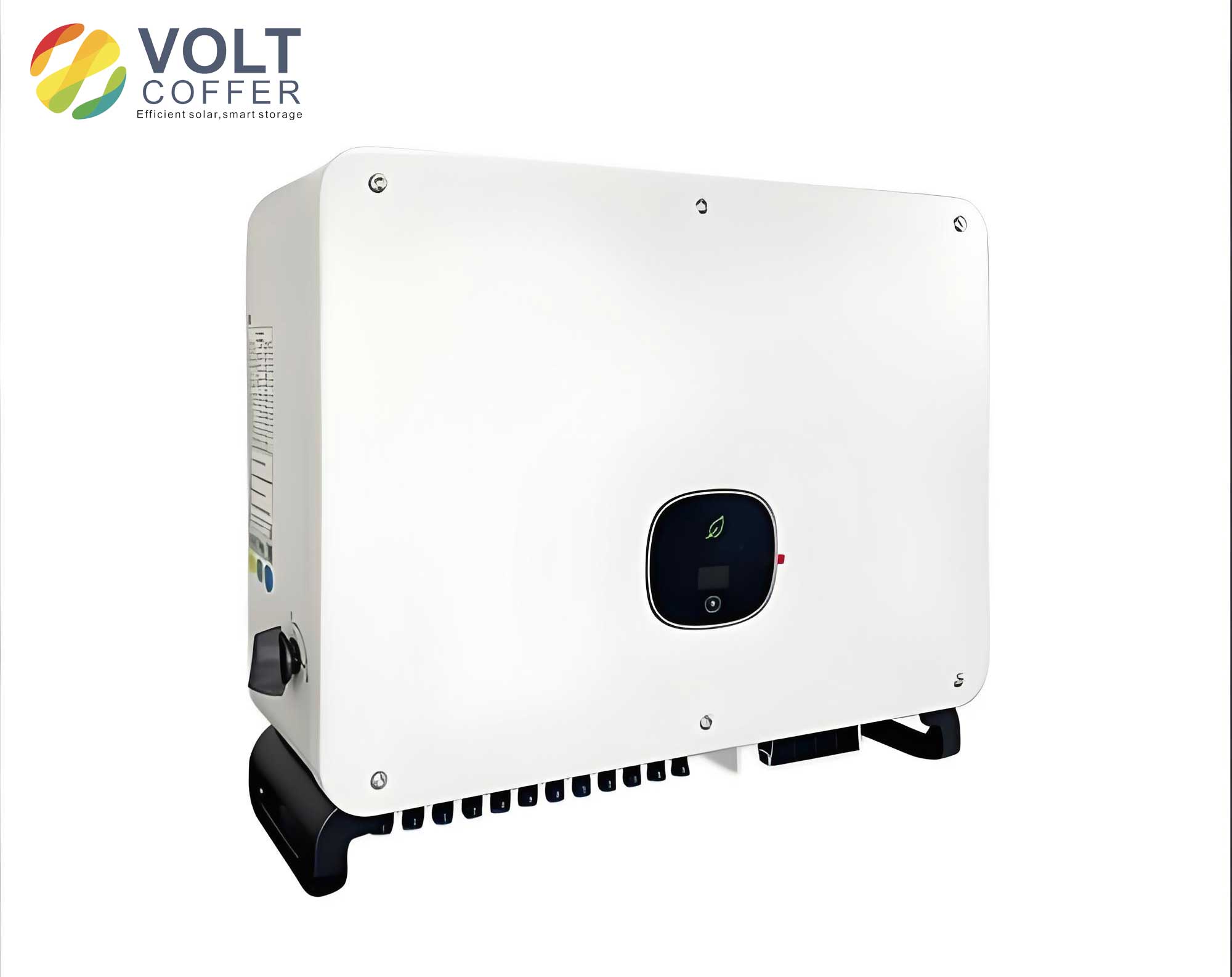
Traditionally, the controller parameters for a utility interactive inverter are designed based on a nominal, strong-grid model where grid impedance is assumed to be zero. However, in a weak grid, the grid impedance directly interacts with the inverter’s output impedance and control loops. This interaction alters the open-loop gain of the current control system, which has two critical detrimental effects: it reduces the system’s phase margin (PM), threatening stability, and decreases the crossover frequency ($f_c$), which is directly related to the control bandwidth and thus degrades dynamic performance (e.g., slower response to reference changes or disturbances). Existing solutions often focus solely on enhancing stability margins, sometimes at the expense of dynamic performance, or rely on pre-set conservative parameters that fail to utilize the inverter’s full capability under varying conditions. Some adaptive schemes based on online grid impedance estimation have been proposed, but they still depend on an accurate theoretical model of the inverter for parameter recalculation, making them vulnerable to inevitable mismatches between theoretical models and practical hardware parameters (e.g., inductance saturation).
This article addresses these intertwined issues by proposing a novel, model-independent adaptive control strategy for utility interactive inverters. The core innovation lies in directly monitoring the key control performance indicators—phase margin and crossover frequency—via online loop gain measurement, and then using these real-time measurements to adaptively tune the controller parameters. This approach ensures that the inverter maintains both a constant, high bandwidth for excellent dynamic response and a sufficient, constant stability margin for robust operation, regardless of grid impedance variations or internal parameter drifts.
Analyzing the Impact of Weak Grids on Inverter Performance
To understand the problem, consider a standard single-phase LCL-type utility interactive inverter. A common and effective control strategy is the multi-loop scheme comprising an inner capacitor voltage loop and an outer grid current loop. The controller for the grid current loop is often a Proportional-Resonant (PR) regulator due to its zero steady-state error at the fundamental frequency without the need for coordinate transformation. The transfer function of a typical PR regulator is:
$$G_{PR}(s) = K_p + \frac{2K_r\omega_i s}{s^2 + 2\omega_i s + \omega_0^2}$$
where $K_p$ is the proportional gain, $K_r$ is the resonant gain, $\omega_0$ is the fundamental angular frequency, and $\omega_i$ is the bandwidth around the resonant frequency to provide tolerance to grid frequency variations.
The open-loop gain $T_{ol}(s)$ of the grid current control loop is a function of the closed inner loop, the inverter output impedance, the LCL filter parameters, and crucially, the grid impedance $Z_g(s) = R_g + sL_g$. The relationship can be conceptually expressed as:
$$T_{ol}(s, Z_g) = G_c(s) \cdot H(s, Z_g)$$
where $G_c(s)$ is the current controller (e.g., the PR regulator) and $H(s, Z_g)$ represents the combined transfer function of the plant (inverter, filter, grid). The grid impedance $Z_g$ is embedded within $H(s, Z_g)$. The two most critical metrics extracted from $T_{ol}(j\omega)$ are:
- Crossover Frequency ($f_c$): The frequency where $|T_{ol}(j2\pi f_c)| = 1$ (0 dB). It is a direct measure of the control bandwidth and speed of response.
- Phase Margin ($\phi_M$): $\phi_M = 180^\circ + \angle T_{ol}(j2\pi f_c)$. It quantifies the relative stability and robustness of the system.
When the grid impedance increases, $T_{ol}(s, Z_g)$ is modified. Typically, an increasing inductive grid impedance ($L_g$) causes the magnitude plot of $T_{ol}$ to attenuate across a wide frequency range, thereby reducing $f_c$. Simultaneously, it can introduce additional phase lag, reducing $\phi_M$. The following table summarizes the qualitative impact of grid impedance components.
| Grid Impedance Component | Effect on Crossover Freq. ($f_c$) | Effect on Phase Margin ($\phi_M$) |
|---|---|---|
| Increase in $R_g$ | Moderate Decrease | Often a slight increase (damping effect) |
| Increase in $L_g$ | Significant Decrease | Significant Decrease |
This degradation is unacceptable for a high-performance utility interactive inverter that must maintain fast current tracking and robust stability under all grid conditions. Therefore, an adaptive mechanism is essential.
Principle of the Proposed Adaptive Control Strategy
The proposed strategy consists of two main functional blocks integrated into the standard inverter control system: the Control Performance Monitor (CPM) and the Auto-Tuner.
1. Real-Time Monitoring via Loop Gain Measurement
Instead of estimating the grid impedance, we directly measure the actual open-loop gain $T_{ol}(s)$. This is achieved using an online frequency response analyzer technique based on the injection of a small, non-disruptive sinusoidal perturbation signal $v_{pert}(t)=V_{pert}\sin(2\pi f_{test} t)$ into the control loop. The principle is derived from Middlebrook’s method. By injecting the signal at a specific point and measuring the resultant signals before ($x_{in}$) and after ($x_{out}$) the injection point at the perturbation frequency $f_{test}$, the loop gain at that frequency can be calculated as:
$$T_{ol}(j2\pi f_{test}) = -\frac{X_{out}(j2\pi f_{test})}{X_{in}(j2\pi f_{test})}$$
To efficiently find the key performance indicators without a full frequency sweep, a “dynamic frequency-seeking” algorithm is employed. The CPM continuously adjusts the perturbation frequency $f_{test}$ based on a simple rule:
- If $|X_{out}| < |X_{in}|$, then $f_{test} > f_c$; decrease $f_{test}$.
- If $|X_{out}| > |X_{in}|$, then $f_{test} < f_c$; increase $f_{test}$.
A Proportional-Integral (PI) controller can be used to drive the magnitude error $e = |X_{out}| – |X_{in}|$ to zero. When $e=0$, it implies $|T_{ol}|=1$, meaning $f_{test}$ has locked onto the actual crossover frequency $\hat{f}_c$. Once locked, the phase margin is instantly available as:
$$\hat{\phi}_M = \angle X_{out} – \angle X_{in} \quad \text{(at } f_{test}=\hat{f}_c\text{)}$$
Critical to this process is the accurate extraction of the signals $X_{in}$ and $X_{out}$ at the noisy perturbation frequency. A modified Second-Order Generalized Integrator (SOGI) structure acting as an adaptive band-pass filter is used for this purpose. It provides excellent rejection of background harmonics and grid fundamental component, ensuring accurate measurement of the perturbation signals’ magnitude and phase.
2. Adaptive Tuning Law Based on Sensitivity Analysis
With real-time estimates $\hat{f}_c$ and $\hat{\phi}_M$ available, the Auto-Tuner adjusts the PR controller parameters ($K_p$, $K_r$) to bring these metrics to their desired reference values ($f_{c,ref}$, $\phi_{M,ref}$). A key challenge is that both $K_p$ and $K_r$ influence both $f_c$ and $\phi_M$, creating a coupled multi-input-multi-output system.
To simplify the design, a sensitivity analysis is performed. The analysis reveals that the crossover frequency $f_c$ is predominantly sensitive to changes in the proportional gain $K_p$, while the phase margin $\phi_M$ is predominantly sensitive to changes in the resonant gain $K_r$. This allows for a decoupled, intuitive tuning law:
- Bandwidth Loop: Adjust $K_p$ based on the error in crossover frequency.
$K_p = K_{p,init} + H_{fc}(s) \cdot (f_{c,ref} – \hat{f}_c)$
If $\hat{f}_c$ is too low, $K_p$ is increased to boost the gain and raise $f_c$ back to $f_{c,ref}$. - Stability Loop: Adjust $K_r$ based on the error in phase margin.
$K_r = K_{r,init} – H_{\phi M}(s) \cdot (\phi_{M,ref} – \hat{\phi}_M)$
If $\hat{\phi}_M$ is too low, $K_r$ is decreased (reducing the resonant peak’s impact on phase) to increase $\phi_M$ back to $\phi_{M,ref}$.
Here, $H_{fc}(s)$ and $H_{\phi M}(s)$ are compensators (typically slow integral controllers), and $K_{p,init}$, $K_{r,init}$ are the nominal controller parameters designed for a strong grid. This decoupled strategy is highly effective for the utility interactive inverter and is also applicable to PI-based controllers.
Design and Implementation Considerations
Parameter Design for the Monitor and Tuner
Successful implementation requires careful parameter selection:
- Perturbation Signal Amplitude ($V_{pert}$): Must be small enough to not distort grid current (typically < 2.5% of rated current) yet large enough for a good signal-to-noise ratio (SNR).
- SOGI Bandwidth Factor ($k$): A value around 0.2 provides a good compromise between filtering effectiveness and dynamic response speed for the measurement loop.
- Auto-Tuner Compensators ($H_{fc}$, $H_{\phi M}$): Their bandwidth must be set significantly lower (e.g., 10-20 times slower) than the bandwidth of the CPM’s frequency-seeking loop to ensure stable, non-interacting adaptation. Simple integral controllers are often sufficient.
Advantages Over Impedance-Based Methods
The proposed loop-gain-based method offers distinct advantages for the utility interactive inverter:
| Feature | Impedance-Estimation-Based Adaptive Control | Proposed Loop-Gain-Based Adaptive Control |
|---|---|---|
| Performance Target | Indirect (relies on model) | Direct (measures $f_c$ and $\phi_M$ directly) |
| Model Dependency | High (needs accurate inverter model to recalculate params) | Low/None (immune to plant parameter drift like $L$ variation) |
| Primary Goal | Often stability only | Stability + Dynamic Performance |
| Applicability | Specific to pre-defined controller structure | General (works with PI, PR, etc.) |
Experimental Verification and Results
The proposed strategy was validated on a 1.5 kVA single-phase LCL-type utility interactive inverter prototype. The desired performance was set to $f_{c,ref}=1$ kHz and $\phi_{M,ref}=45^\circ$.
1. Accuracy and Speed of Monitoring: With a step change in grid impedance from strong grid ($Z_g \approx 0$) to a weak grid ($Z_g = 1\Omega + 0.4$ mH), the CPM accurately tracked the change in performance. The measured $\hat{f}_c$ converged from 1 kHz to 912 Hz (vs. a theoretical 927 Hz) within 52 ms, and $\hat{\phi}_M$ converged from 45° to 35.7° (vs. theoretical 34.3°) within 59 ms, demonstrating high accuracy and satisfactory speed.
2. Effectiveness of Auto-Tuning: Starting from a state with model-plant mismatch, the Auto-Tuner successfully adjusted the PR parameters from $(K_p=3.28, K_r=2071)$ to $(K_p=3.59, K_r=1866)$, bringing the measured performance precisely to the desired $(f_c=1 \text{kHz}, \phi_M=45^\circ)$.
3. Performance Under Grid Impedance Variations: The key result is shown when the grid inductance $L_g$ was varied. The controller parameters adapted continuously, maintaining both $f_c$ and $\phi_M$ constant at their reference values. The system’s dynamic performance (related to $f_c$) and stability margin (related to $\phi_M$) were preserved regardless of the grid condition. The tuning process had a settling time of approximately 300 ms for a step change in $L_g$.
4. Operation Under Non-Ideal Grid Conditions: The adaptive utility interactive inverter was also tested under a grid voltage with significant background harmonics (3rd, 5th, 7th, 9th) and during a low-voltage ride-through (LVRT) event where the grid voltage dropped to zero. In both cases, the inverter remained stable, and the adaptive control continued to maintain the target $f_c$ and $\phi_M$, proving its robustness in challenging weak-grid scenarios.
Conclusion
This article has presented a comprehensive adaptive control solution for utility interactive inverters operating in weak and variable grids. The strategy directly addresses the dual problem of deteriorating stability margins and reduced control bandwidth by implementing a real-time, model-independent feedback loop on the control performance itself. By online measurement of the loop gain’s crossover frequency and phase margin, and by using a decoupled tuning law based on sensitivity analysis, the inverter’s PR (or PI) controller parameters are automatically adjusted. This ensures the utility interactive inverter consistently delivers fast dynamic response (constant bandwidth) and possesses guaranteed robust stability (constant phase margin), irrespective of grid strength variations or internal parameter mismatches. Experimental results confirm the effectiveness, accuracy, and robustness of the approach, making it a highly promising solution for ensuring reliable and high-performance operation of grid-tied inverters in future renewable-rich power systems.