
With the global energy transition and carbon neutrality goals, the proportion of renewable energy sources like photovoltaic and wind power in energy systems has been increasing annually. Parks, as major energy consumption sites, require optimized scheduling of their energy systems to achieve energy savings and emission reductions. However, the intermittency and uncertainty of renewables, along with load fluctuations, pose significant challenges to energy dispatch. To address this, source-grid-load-storage (SGLS) coordinated dispatch has emerged as a key energy management model in parks. By rationally scheduling renewable generation, energy storage system charging/discharging, and grid power purchases, it aims to meet load demands while maximizing renewable utilization and minimizing electricity costs.
Recent research on SGLS dispatch can be categorized into three approaches: single-objective economic optimization, multi-objective协同 optimization, and rule-based artificial intelligence methods. Single-objective methods focus on minimizing economic costs but often neglect factors like battery life, leading to limited strategies. Multi-objective approaches balance economy and reliability using robust optimization and forecasting algorithms, yet they require manual setting of objective weights, making dynamic adaptation to complex conditions difficult. Rule-based AI methods, such as deep reinforcement learning, adapt well but suffer from poor interpretability due to their black-box nature.
Studies on energy storage cell life degradation have deepened, with models based on electrochemical mechanisms quantifying the impact of depth of discharge (DOD) and state of charge (SOC) fluctuations. Some frameworks limit charging/discharging rates and SOC ranges to reduce life loss, while others use rainflow counting for aging analysis. However, existing models often focus on single battery units without fully coupling them into upper-layer energy调度 frameworks. Current research predominantly emphasizes economic optimization, ignoring battery life loss’s long-term impact, and employs simplified single-layer models that fail to balance dispatch economy and battery life.
To overcome these limitations, this paper proposes a two-layer optimization model. The upper layer minimizes economic costs by scheduling power分配 among wind, photovoltaic, grid, and energy storage for loads, while the lower layer minimizes energy storage cell life loss by optimizing the charging/discharging behavior of individual cells using a genetic algorithm. The layers interact iteratively: the upper layer passes energy storage调度 results to the lower layer, which feeds back life changes to adjust upper-layer allocations. This coordination ensures load demand satisfaction while reducing electricity costs and extending energy storage cell lifespan.
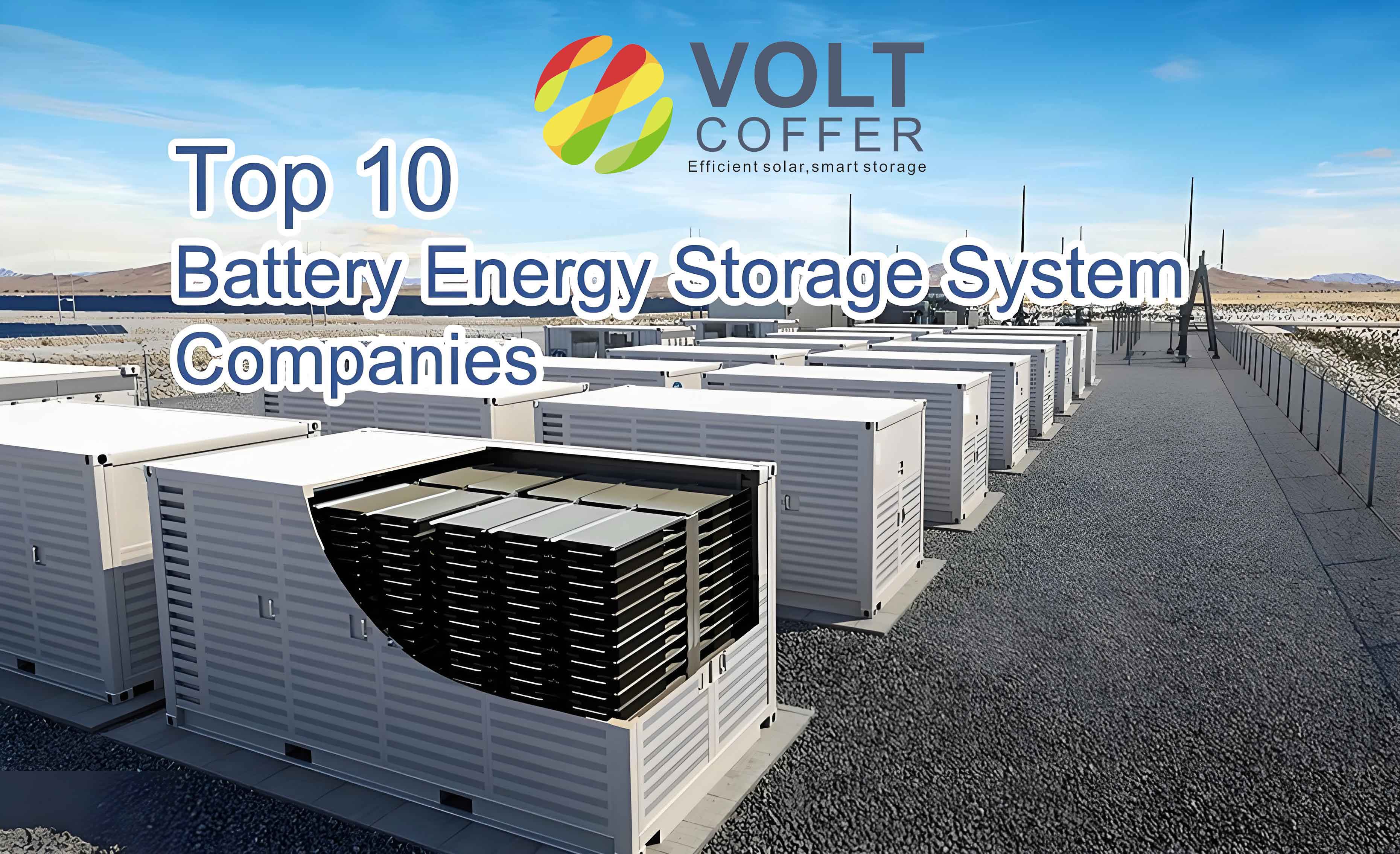
The park’s SGLS system comprises photovoltaic arrays, wind turbines, AC loads, energy storage cabinets, inverters, and a dispatch system. Renewable generation prioritizes load supply, with excess power stored in energy storage cabinets for use during peak grid price periods. If renewables are insufficient, power is purchased from the grid. Energy storage cabinets charge during low-price periods to leverage price differences, saving costs. Each cabinet consists of multiple energy storage cells, where charging/discharging behaviors are independently controlled, but the total cabinet power is the sum of individual cell actions.
Wind power generation converts wind energy into electricity through turbine rotation. The input power is given by:
$$ P_{WT} = \frac{1}{2} \rho A v^3 = \frac{1}{2} \rho \pi R^2 v^3 $$
where $\rho$ is air density, $v$ is wind speed, $R$ is the blade radius, and $A$ is the swept area. The output power is:
$$ P_{WT}^t = C_P P_{WT} = \frac{1}{2} \rho A v^3 C_p $$
where $C_P$ is the power coefficient. Wind power variability affects both upper-layer调度 and lower-layer energy storage cell life by influencing charging/discharging switches.
Photovoltaic generation directly converts solar energy into electricity, influenced by solar irradiance and ambient temperature. The output power is:
$$ P_{PV}^t = P_{STC} \frac{G_{AC}}{G_{STC}} \left[1 + \delta(T_c – T_r)\right] $$
where $P_{STC}$ is the maximum test power under standard conditions ($G_{STC}$, $T_c$), $G_{AC}$ is irradiance, $\delta$ is the temperature coefficient (typically -0.47% K^{-1}), $T_c$ is the panel working temperature, $T_r$ is the reference temperature (25°C), and $G_{STC}$ is 1000 W/m². The working temperature is:
$$ T_c = T_e + 30 \frac{G_{AC}}{1000} $$
where $T_e$ is ambient temperature. PV generation’s diurnal intermittency determines daytime charging possibilities and impacts battery life through discharge depth adjustments.
The energy storage system (ESS) smooths renewable fluctuations, reduces peak-valley gaps, and lowers costs. The charging/discharging power at time $t$ is $P_{ESS}^t$, positive for discharging and negative for charging. The power constraint is:
$$ -P_{ESS}^{max} \leq P_{ESS}^t \leq P_{ESS}^{max} $$
where $P_{ESS}^{max}$ is the maximum power. State of charge (SOC) is a key indicator for energy storage cells, calculated as:
$$ SOC_t = \begin{cases} SOC_{t-1} – \alpha \times P_{ESS}^t \times \eta_{ESS}^{ch} \times \Delta t / S_{ESS}, & P_{ESS}^t \geq 0 \\ SOC_{t-1} – (1-\alpha) \times P_{ESS}^t \times \Delta t / (S_{ESS} \times \eta_{ESS}^{dis}), & P_{ESS}^t < 0 \end{cases} $$
where $\eta_{ESS}^{ch}$ and $\eta_{ESS}^{dis}$ are charging and discharging efficiencies, $S_{ESS}$ is the rated capacity, $\alpha = 1$ for discharging and $\alpha = 0$ for charging, and $\Delta t$ is the duration. SOC must satisfy:
$$ SOC_{min} \leq SOC_t \leq SOC_{max} $$
Depth of discharge (DOD) is the percentage of discharged capacity to rated capacity. Life loss in energy storage cells accelerates due to overcharging, over-discharging, and deep cycles. The life consumption per period is:
$$ \Delta S_t = \begin{cases} 1 \times 10^{-4} \times DOD_t^{50\%} + M_t, & DOD_t \leq 50\%, 30\% \leq SOC_t \leq 80\% \\ 1 \times 10^{-4} \times DOD^{50\%} \times (1 + 5\%) + M_t, & DOD_t \leq 50\%, SOC_t < 30\% \text{ or } SOC_t > 80\% \\ 1 \times 10^{-4} + M_t, & DOD_t > 50\%, 30\% \leq SOC_t \leq 80\% \\ 1 \times 10^{-4} \times (1 + 5\%) + M_t, & DOD_t > 50\%, SOC_t < 30\% \text{ or } SOC_t > 80\% \end{cases} $$
where $M_t$ accounts for additional loss from charging/discharging switches:
$$ M_t = \begin{cases} 1 \times 10^{-6}, & DOD_t > 0, SOC_{t+1} \leq SOC_t, \text{charging at } t \\ 1 \times 10^{-6}, & DOD_t > 0, SOC_{t+1} \geq SOC_t, \text{discharging at } t \\ 0, & \text{otherwise} \end{cases} $$
Assuming initial life is 1, the remaining life after $n$ hours is:
$$ S_n = 1 – \sum_{t=1}^n \Delta S_t $$
The two-layer cooperative optimization method dispatches park energy use. First, mathematical models for SGLS are established with parameters, objectives, and constraints. The upper layer minimizes electricity costs using mixed-integer linear programming (MILP) to optimize power分配 among wind, PV, grid, and energy storage for loads. The lower layer minimizes energy storage cell life loss using a genetic algorithm to optimize individual cell charging/discharging. The upper layer’s output feeds into the lower layer, which feedbacks life changes for continuous optimization. Iterations yield the optimal solution.
The upper-layer objective function minimizes electricity purchase costs:
$$ \min \sum_{t=1}^T C_{MG}^t \times (P_{MG,L}^t + P_{MG,ESS}^t) $$
where $C_{MG}^t$ is the time-of-use electricity price in CNY/kWh. The lower-layer objective minimizes energy storage cell life loss:
$$ \min \sum_{t=1}^T \sum_{i=1}^N \Delta S_{battery}^{(i,t)} $$
where $\Delta S_{battery}^{(i,t)}$ is the life loss of cell $i$ at time $t$, and $N$ is the total number of energy storage cells.
Upper-layer decision variables involve power调度 per period, as summarized in Table 1.
| Decision Variable | Description |
|---|---|
| $P_{PV,L}^t$ | PV power supplied to load |
| $P_{PV,ESS}^t$ | PV power supplied to energy storage |
| $P_{WT,L}^t$ | Wind power supplied to load |
| $P_{WT,ESS}^t$ | Wind power supplied to energy storage |
| $P_{ESS,L}^t$ | Energy storage power supplied to load |
| $P_{MG,L}^t$ | Grid power supplied to load |
| $P_{MG,ESS}^t$ | Grid power supplied to energy storage |
Lower-layer decision variables are the charging/discharging power of each energy storage cell, $P_{battery}(t,i)$, where charging and discharging cannot occur simultaneously:
$$ P_{battery}(t,i) = \begin{cases} > 0, & \text{discharging} \\ = 0, & \text{idle} \\ < 0, & \text{charging} \end{cases} $$
Upper-layer constraints include power balance: load demand $P_L^t$ must be met by PV, wind, energy storage, and grid:
$$ P_{PV,L}^t + P_{WT,L}^t + P_{ESS,L}^t + P_{MG,L}^t = P_L^t, \quad t = 1, 2, \dots, T $$
PV power to load and energy storage cannot exceed total PV generation:
$$ P_{PV,L}^t + P_{PV,ESS}^t \leq P_{PV}^t $$
Wind power to load and energy storage cannot exceed total wind generation:
$$ P_{WT,L}^t + P_{WT,ESS}^t \leq P_{WT}^t $$
Energy storage cabinet power must satisfy charging and discharging limits:
$$ P_{PV,ESS}^t + P_{WT,ESS}^t + P_{MG,ESS}^t = P_{ESS}^t \geq -P_{ESS}^{max} $$
$$ P_{ESS,L}^t = P_{ESS}^t \leq P_{ESS}^{max} $$
SOC update and bounds:
$$ SOC_{t+1} = SOC_t + \Delta t \times (P_{PV,ESS}^t + P_{WT,ESS}^t + P_{MG,ESS}^t – P_{ESS,L}^t) / E_{ESS} $$
$$ SOC_{min} \leq SOC_t \leq SOC_{max} $$
where $E_{ESS}$ is the total energy capacity.
Lower-layer constraints ensure the sum of individual cell powers equals the cabinet’s total power:
$$ \sum_{i=1}^N P_{battery}(t,i) = \begin{cases} P_{ESS,L}^t, & P_{ESS}^t > 0 \\ 0, & P_{ESS}^t = 0 \\ P_{PV,ESS}^t + P_{WT,ESS}^t + P_{MG,ESS}^t, & P_{ESS}^t < 0 \end{cases} $$
Individual cell power and SOC constraints:
$$ -P_{battery}^{max} \leq P_{battery}(t,i) \leq P_{battery}^{max} $$
$$ SOC_{battery}^{min} \leq SOC_{battery}(t,i) \leq SOC_{battery}^{max} $$
The solution process involves: Step 1: Data reading and initialization, processing generation and load data into a valid dataset. Step 2: Upper-layer optimization using MILP to minimize costs, with decision variables and constraints set, solved by CPLEX, passing energy storage调度 to the lower layer. Step 3: Lower-layer optimization using a genetic algorithm to minimize energy storage cell life loss. Step 4: Iterative cycling until convergence, recording the optimal solution.
Experiments are based on a park in Northeast China with a wind turbine capacity of 2 MW and rooftop PV area of 1000 m². Typical daily wind and PV generation profiles show PV’s diurnal intermittency and wind’s volatility due to speed variations. Load power and time-of-use electricity prices indicate higher consumption during peak periods and lower during off-peak, with significant峰谷 differences.
Comparisons between the two-layer optimization and a rule-based single-layer method demonstrate superiority in economy, energy storage cell life management, and renewable utilization. Economically, the two-layer method reduces electricity purchase costs by 8.12%. In a typical day, the two-layer strategy charges energy storage cells during low-price nights to meet daytime peak demands, whereas the single-layer method adheres rigidly to rules, leading to higher grid purchases during expensive peaks when renewables are insufficient and energy storage is depleted.
For energy storage cell life management, assuming initial life is 1 per cell and 120 cells total, initial combined life is 120. Over a 31-day调度 period (744 intervals), life loss is calculated using $\Delta S_t$ and $M_t$. The two-layer method results in a total remaining life of 119.28 (loss of 0.72), compared to 118.78 (loss of 1.22) for the single-layer method, indicating reduced life衰减. The lower layer optimizes individual energy storage cell charging/discharging based on upper-layer cabinet strategies, reducing switch frequency and extending life.
Renewable utilization rates show that in the two-layer method, wind, PV, energy storage, and grid supply 46.34%, 29.59%, and 24.07% to loads, respectively, whereas the single-layer method achieves 40.85%, 31.09%, and 28.06%. The two-layer approach improves renewable utilization by 5.48%, validating its effectiveness.
In conclusion, considering renewable uncertainty and load fluctuations, the two-layer optimization method minimizes economic costs in the upper layer through SGLS调度, ensuring stable load operation and cost savings, while the lower layer minimizes energy storage cell life loss through charging/discharging optimization, extending lifespan. Using real power data and park load data from Northeast China, the model’s stability and reliability are verified. This two-layer approach provides a reliable framework for energy management in industrial parks, balancing economy and sustainability for energy storage cells.