
In modern active distribution networks, the integration of renewable energy sources and diverse load demands has heightened the need for efficient energy management strategies. Cell energy storage systems play a pivotal role in stabilizing power fluctuations, enhancing grid flexibility, and promoting renewable energy absorption. However, uncontrolled usage of these systems can accelerate battery degradation, compromise economic operation, and even pose safety risks. Existing research often focuses on either economic dispatch or real-time control, but rarely addresses both simultaneously. Moreover, centralized management architectures lack resilience, while distributed approaches may incur high costs. To bridge these gaps, we propose a novel two-layer distributed energy negotiation management strategy for cell energy storage systems under circular communication. This strategy harmonizes optimal economic scheduling with flexible real-time control, ensuring synchronized state-of-charge (SOC) across groups and consistency within groups. Through comprehensive cost analysis, Lagrangian duality-based optimization, and a dual-layer control framework, our approach achieves low-latency negotiation and effective peak-shaving and valley-filling. The following sections detail the cost factors, mathematical modeling, control strategy design, and validation via the IEEE 33 system, demonstrating the strategy’s efficacy in balancing economic and operational demands for cell energy storage systems.
The economic viability of cell energy storage systems hinges on a thorough analysis of associated costs, which encompass investment, degradation, and operational aspects. We quantify these costs to establish a foundation for the energy negotiation management model. First, the investment cost for deploying cell energy storage systems includes procurement and construction expenses. For a system with N storage groups, the procurement cost D1 is expressed as:
$$
D_1 = \sum_{n=1}^{N} \left[ k_n E_{n,\text{max}} + a_n (P_{\text{bat}_{n,\text{max}}})^2 + b_n P_{\text{bat}_{n,\text{max}}} \right]
$$
Here, \(E_{n,\text{max}}\) denotes the maximum nominal capacity of the cell energy storage system, and \(P_{\text{bat}_{n,\text{max}}} = \max\{ |P_{n,\text{char}}|, |P_{n,\text{disc}}| \}\) represents the maximum nominal power, with \(P_{n,\text{char}}\) and \(P_{n,\text{disc}}\) as maximum charging and discharging powers. The coefficients \(k_n\), \(a_n\), and \(b_n\) are unit cost factors. Construction cost D2 accounts for labor and fixed project expenses:
$$
D_2 = \sum_{n=1}^{N} \left( d_n T_{n,\text{pro}} + \text{cost}_{n,\text{fix}} \right)
$$
where \(d_n\) is the labor cost per unit time, \(T_{n,\text{pro}}\) is the construction period, and \(\text{cost}_{n,\text{fix}}\) denotes fixed costs. Total investment cost D is \(D = D_1 + D_2\). Second, degradation cost R arises from battery aging during operation, modeled via state-of-health (SOH) decline. Over operation time T, degradation cost is:
$$
R = \sum_{n=1}^{N} Q_n (\text{SOH}_{n,0} – \text{SOH}_{n,T})
$$
with \(\text{SOH}_{n,0}\) and \(\text{SOH}_{n,T}\) as initial and final SOH values, and \(Q_n\) as unit degradation cost. Third, online operational cost C involves energy transactions during peak and off-peak periods. For time intervals t = 1 to T, with K loads, M distributed generators, and N cell energy storage systems, cost is:
$$
C = \sum_{t=1}^{T} C_t \left( \sum_{k=1}^{K} l_{k,t} + \sum_{m=1}^{M} g_{m,t} + \sum_{n=1}^{N} P_{\text{bat}_{n,t}} \right)
$$
where \(C_t\) is the electricity pricing function, \(l_{k,t}\) is load power, \(g_{m,t}\) is generation power, and \(P_{\text{bat}_{n,t}}\) is charging/discharging power of the cell energy storage system. These costs are weighted to form the overall management objective, with weights \(\mu_1\), \(\mu_2\), and \(\mu_3\) for investment, degradation, and operational costs, respectively. Table 1 summarizes key parameters and their descriptions for cell energy storage systems, emphasizing the cost structure.
| Parameter | Symbol | Description |
|---|---|---|
| Maximum Capacity | \(E_{n,\text{max}}\) | Upper limit of energy storage capacity for group n |
| Maximum Power | \(P_{\text{bat}_{n,\text{max}}}\) | Upper limit of charging/discharging power for group n |
| Construction Period | \(T_{n,\text{pro}}\) | Time required to build the cell energy storage system |
| Degradation Coefficient | \(Q_n\) | Cost per unit SOH reduction for group n |
| Electricity Price Function | \(C_t\) | Time-varying price for energy transactions |
To optimize the management of cell energy storage systems, we formulate an energy negotiation model that minimizes the weighted sum of costs subject to operational constraints. The discrete-time nonlinear state model for a cell energy storage system includes SOC and SOH dynamics. For group n at time t, SOC evolves as:
$$
\text{SOC}_{n,t+1} = \text{SOC}_{n,t} + \frac{1}{E_{n,\text{up}}} (P_{\text{bat}_{n,t}})^{\alpha_n}
$$
where \(E_{n,\text{up}}\) is the usable capacity upper limit, and \(\alpha_n\) is a characteristic coefficient. SOH degradation is modeled as:
$$
\text{SOH}_{n,t+1} = \text{SOH}_{n,t} – \beta_n \exp(\psi_n |P_{\text{bat}_{n,t}}| – \theta_n) – \phi_{n,1} \frac{P_{\text{bat}_{n,t}}^{\alpha_n}}{E_{n,\text{up}}} – \phi_{n,2} – \sigma_{n,1} \exp[-\sigma_{n,2}(\sigma_{n,3} |P_{\text{bat}_{n,t}}|)^{-1}]
$$
with coefficients \(\beta_n\), \(\psi_n\), \(\theta_n\), \(\phi_{n,1}\), \(\phi_{n,2}\), \(\sigma_{n,1}\), \(\sigma_{n,2}\), and \(\sigma_{n,3}\) capturing battery characteristics. The optimization problem aims to minimize total cost F:
$$
\min F = \mu_1 D + \mu_2 R + \mu_3 C
$$
subject to constraints on capacity, power, SOH, and SOC. For instance, capacity limits ensure \(E_{n,\text{max}} \leq E_{\text{max}}\), power limits enforce \(P_{\text{bat}_{n,\text{max}}} \leq P_{\text{bat}_{\text{max}}}\), and SOC bounds require \(E_{n,\text{low}} \leq E_{n,\text{up}} \cdot \text{SOC}_{n,t} \leq E_{n,\text{up}}\). To analyze the optimal solution characteristics, we employ Lagrangian duality, focusing on the operational cost component for a daily scheduling horizon (T = 24 hours). The Lagrangian function L incorporates constraints via multipliers:
$$
L = \sum_{t=1}^{T} C_t \left( \sum_{k=1}^{K} l_{k,t} + \sum_{m=1}^{M} g_{m,t} + \sum_{n=1}^{N} P_{\text{bat}_{n,t}} \right) + \sum_{n=1}^{N} \sum_{t=1}^{T} A_{n,t} (E_{n,\text{up}} \text{SOC}_{n,t} – E_{n,\text{up}}) + \sum_{n=1}^{N} \sum_{t=1}^{T} B_{n,t} (E_{n,\text{low}} – E_{n,\text{up}} \text{SOC}_{n,t}) + \sum_{n=1}^{N} \sum_{t=1}^{T} X_{n,t} (P_{\text{bat}_{n,t}} – P_{n,\text{disc}}) + \sum_{n=1}^{N} \sum_{t=1}^{T} Y_{n,t} (P_{n,\text{char}} – P_{\text{bat}_{n,t}})
$$
where \(A_{n,t}\), \(B_{n,t}\), \(X_{n,t}\), and \(Y_{n,t}\) are Lagrange multipliers for maximum capacity, minimum capacity, maximum power, and minimum power constraints, respectively. Applying the Karush-Kuhn-Tucker (KKT) conditions, the optimal solution satisfies:
$$
\frac{\partial C_t}{\partial P_{\text{bat}_{n,t}}} = Z_{n,t} + E_{n,\text{up}} \sum_{t’=1}^{T} \lambda_{n,t’} \frac{\partial \text{SOC}_{n,t’}}{\partial P_{\text{bat}_{n,t}}}
$$
with \(Z_{n,t} = Y_{n,t} – X_{n,t}\) and \(\lambda_{n,t’} = B_{n,t’} – A_{n,t’}\). This leads to the condition that all cell energy storage systems must synchronize their state changes to achieve optimal negotiation. Specifically, by analyzing the differential form, we derive:
$$
\lambda_{n,t} = \frac{C’_{t-1} – Z_{n,t-1}}{E_{n,\text{up}} \text{soc}_{n,t-1}} – \frac{C’_t – Z_{n,t}}{E_{n,\text{up}} \text{soc}_{n,t}} \quad \forall n,t
$$
where \(C’_t\) denotes the incremental cost rate and \(\text{soc}_{n,t} = \partial \text{SOC}_{n,t} / \partial P_{\text{bat}_{n,t}}\). This implies that for minimal cost, the combined Lagrange multipliers \(\lambda_{n,t}\) and \(Z_{n,t}\) must change synchronously across all cell energy storage systems. Thus, optimal energy negotiation requires consistent SOC increments among groups, guiding the design of our control strategy.
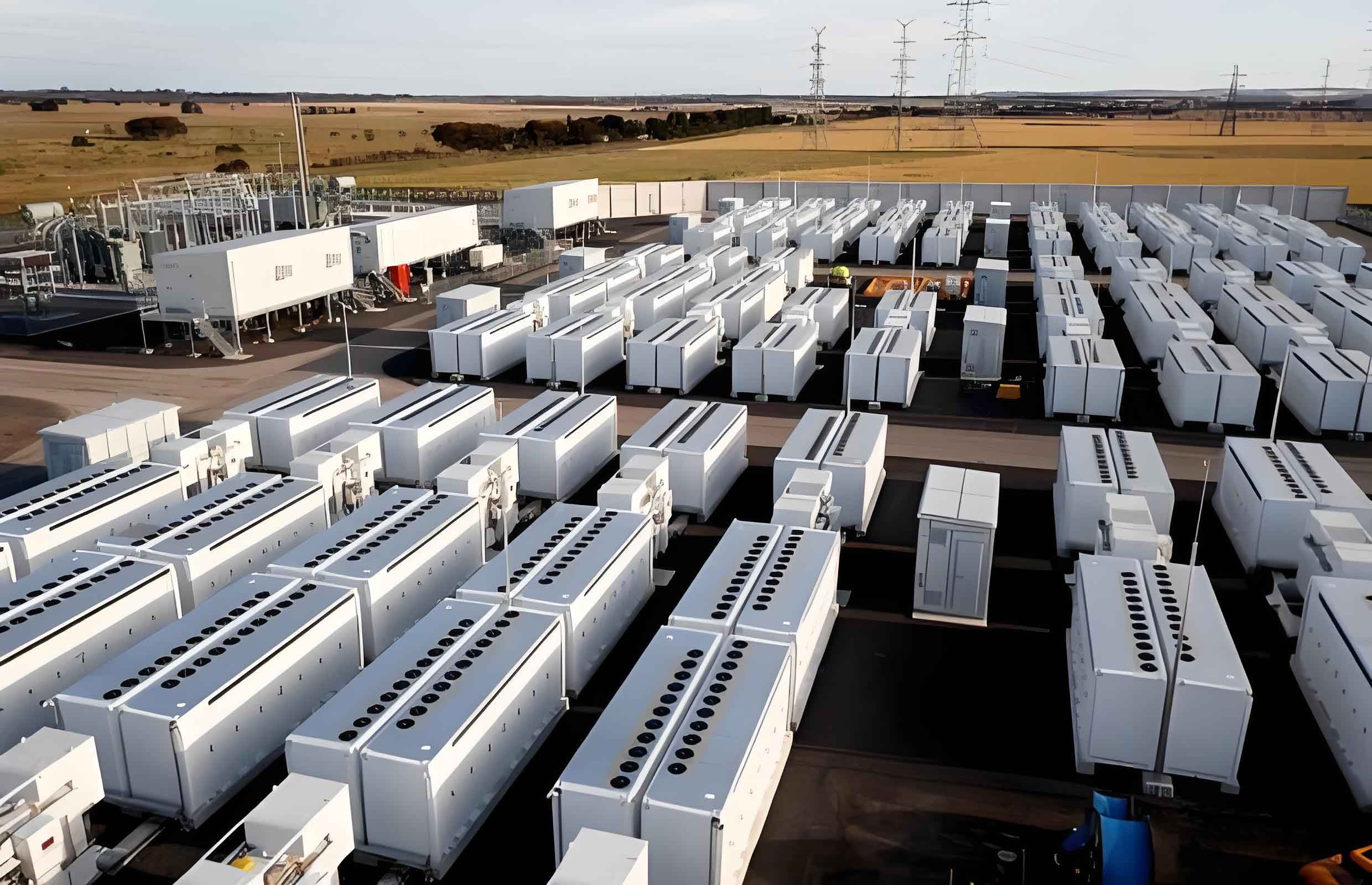
Building on the optimality analysis, we propose a two-layer distributed energy negotiation management strategy for cell energy storage systems. The upper layer achieves group SOC synchronization via circular communication, while the lower layer ensures intra-group SOC consistency using a dual-mode balanced circuit. This architecture balances global coordination with local control, enhancing robustness and efficiency. The upper layer employs a unidirectional ring topology where each cell energy storage system communicates with its neighbors. We define the SOC increment \(\gamma_{n,t}\) for group n at time t as:
$$
\gamma_{n,t} \equiv \text{soc}_{n}(P_{\text{bat}_{n,t}}) = \text{SOC}_{n,t+1} – \text{SOC}_{n,t}
$$
Through iterative negotiation, groups update their SOC increment commands. For iteration τ, the update rule is:
$$
\gamma^{\tau+1}_{1,t} = \gamma^{*}_{1,t} + a_{N,1}(\gamma^{\tau}_{N,t} – \gamma^{\tau}_{1,t}), \quad \gamma^{\tau+1}_{n,t} = \gamma^{\tau}_{n,t} + a_{n-1,n}(\gamma^{\tau}_{n-1,t} – \gamma^{\tau}_{n,t}) \quad \forall n \neq 1
$$
where \(\gamma^{*}_{1,t}\) is the steady-state command for group 1, and \(a_{n-1,n}\) are control parameters. As τ → ∞, all groups converge to \(\gamma_{n,t} = \gamma_{1,t} = \gamma^{*}_{1,t}\), ensuring synchronized SOC increments. The corresponding power command is derived as:
$$
P^{\tau+1}_{\text{bat}_{n,t}} = \left( E_{n,\text{up}} \cdot \text{soc}^{\tau+1}_{n,t} \right)^{1/\alpha_n} = \Gamma(\text{soc}^{\tau+1}_{n,t})
$$
This forms a fixed-point equation for group 1, guaranteeing convergence independent of group count, reliant only on the maximum capacity ratio. For identical \(\alpha_n\), the steady-state power ratio satisfies:
$$
\frac{P_{\text{bat}_m}}{P_{\text{bat}_n}} = \left( \frac{E_{m,\text{up}}}{E_{n,\text{up}}} \right)^{1/\alpha}
$$
thus aligning with optimality conditions. The lower layer implements intra-group SOC consistency control via a dual-mode balanced circuit, which actively transfers energy among battery cells using inductor-based storage and a bridge switch matrix. The circuit operates in two modes: during grid charging, it discharges high-SOC cells to charge low-SOC cells, functioning as a Boost-Buck converter; during grid discharging, it charges low-SOC cells via a Buck converter. An alternating charge-discharge command strategy accelerates consistency achievement and reduces capacity demands on the balancing source. SOC protection modules prevent overcharge or over-discharge by disconnecting circuits when thresholds are breached. This dual-layer approach ensures that cell energy storage systems maintain synchronized global behavior while addressing local imbalances, crucial for prolonged system health and performance.
To validate the proposed strategy, we conduct simulations based on the IEEE 33-node system, configured with 10 cell energy storage system groups, each comprising 4 battery cells. The network includes distributed generators and varied loads, representing a typical active distribution network. Parameters for the cell energy storage systems are detailed in Table 2, covering capacity, power, and characteristic coefficients derived from real-world data. We examine charging and discharging scenarios under varying power commands, assessing negotiation dynamics and SOC consistency.
| Group | \(E_{n,\text{up}}\) (kWh) | \(\alpha_n\) | \(\beta_n\) | \(\psi_n\) | \(\theta_n\) |
|---|---|---|---|---|---|
| 1 | 350 | 1.15 | 31.6 | 0.02 | 19.3 |
| 2 | 385 | 1.15 | 31.8 | 0.02 | 20.9 |
| 3 | 425 | 1.15 | 30.3 | 0.02 | 20.9 |
| 4 | 465 | 1.15 | 31.8 | 0.02 | 19.9 |
| 5 | 515 | 1.15 | 31.2 | 0.02 | 20.6 |
| 6 | 565 | 1.15 | 30.2 | 0.02 | 19.2 |
| 7 | 620 | 1.15 | 30.6 | 0.02 | 19.8 |
| 8 | 685 | 1.15 | 31.1 | 0.02 | 20.8 |
| 9 | 750 | 1.15 | 31.9 | 0.02 | 20.5 |
| 10 | 825 | 1.15 | 31.9 | 0.02 | 20.9 |
In charging scenarios, with total commands of 200 kW and 800 kW, the upper-layer negotiation achieves power allocation proportional to capacity ratios raised to the power of \(1/\alpha_n\), as predicted. Convergence occurs within approximately 15 iterations, with an average communication delay of 4 seconds per group, demonstrating rapid synchronization. SOC increments align across groups, facilitating optimal economic dispatch. For discharging scenarios, similar behavior is observed, validating the strategy’s robustness. The lower-layer control ensures intra-group SOC consistency: in a charging case with initial SOC disparities up to 18%, the alternating command strategy reduces the maximum SOC difference to 0.2% within 600 seconds; in discharging, consistency is achieved in about 760 seconds. This highlights the effectiveness of the dual-mode balanced circuit in managing cell energy storage system imbalances.
We further evaluate economic benefits in active distribution networks using seasonal load data from a regional grid. Time-of-use tiered pricing policies are applied, with electricity cost function \(C_t\) defined for peak and off-peak periods. Three management schemes are compared: Scheme 1 uses empirical charging/discharging plans based on time-of-use pricing; Scheme 2 employs a particle swarm optimization (PSO) algorithm for simplified model solving, combined with our proposed control strategy; Scheme 3 directly solves the full optimization model using advanced algorithms. Table 3 summarizes the results for spring and autumn scenarios, focusing on 24-hour electricity costs and power gradient squares \(\delta = \sum_{t=1}^{T-1} (p_{t+1} – p_t)^2\), where \(p_t\) is net load power.
| Scenario | Scheme | 24-hour Cost (USD) | Gradient Square \(\delta\) (×10^6) |
|---|---|---|---|
| Spring | Original Load | 108,513 | 2.86 |
| Scheme 1 | 107,680 | 2.61 | |
| Scheme 2 (Proposed) | 105,904 | 2.49 | |
| Scheme 3 | 105,829 | 2.69 | |
| Autumn | Original Load | 171,835 | 5.93 |
| Scheme 1 | 171,003 | 6.27 | |
| Scheme 2 (Proposed) | 169,226 | 6.00 | |
| Scheme 3 | 169,151 | 6.23 |
The proposed strategy (Scheme 2) reduces electricity costs significantly—by 2,609 USD in spring and 4,173 USD in autumn—while minimizing power gradients, indicating smoother load profiles. Compared to Scheme 3, our approach achieves comparable cost savings with better smoothing performance, underscoring its ability to balance economic and control objectives. The circular communication topology ensures low latency and robustness, though future work could explore bidirectional or hybrid rings to enhance resilience against data loss. Additionally, market dynamics like price elasticity may further influence cell energy storage system management, warranting investigation in extended studies.
In conclusion, this paper presents a two-layer distributed energy negotiation management strategy for cell energy storage systems under circular communication, effectively harmonizing optimal economic dispatch with real-time flexible control. By analyzing cost factors, deriving optimality conditions via Lagrangian duality, and implementing a dual-layer control framework, we achieve synchronized group SOC increments and consistent intra-group SOC levels. Simulations on the IEEE 33 system validate the strategy’s efficacy in reducing electricity costs, smoothing load curves, and maintaining low latency. The proposed approach offers a scalable solution for active distribution networks, enhancing the operational efficiency and longevity of cell energy storage systems. Future research may integrate market mechanisms and improved communication topologies to address broader applications and uncertainties.