
In modern energy systems, the battery energy storage system plays a critical role in enabling renewable energy integration and electric vehicle propulsion. However, the degradation of electrochemical cells over time poses significant challenges to reliability and safety. Accurately estimating the State of Health (SOH) is essential for optimizing the performance and lifespan of a battery energy storage system. SOH is typically defined as the ratio of current maximum usable capacity to the initial rated capacity, expressed as: $$ \text{SOH} = \frac{Q_{\text{current}}}{Q_{\text{new}}} \times 100\% $$ where $Q_{\text{current}}$ is the present maximum discharge capacity and $Q_{\text{new}}$ is the nominal capacity. When SOH drops below 80%, the battery is often considered at end-of-life. Traditional methods for SOH estimation include model-based approaches, such as equivalent circuit models (ECM) and electrochemical models, but these can be complex and require extensive domain knowledge. In contrast, data-driven methods have gained popularity due to their ability to learn patterns from operational data without deep physical insights. Despite progress, existing data-driven techniques frequently overlook the temporal health information embedded across multiple consecutive charge-discharge cycles, limiting their accuracy and robustness. This paper addresses this gap by proposing a novel deep learning model, termed Multi-Cycle Net (MCNet), which leverages multi-cycle features to enhance SOH estimation for battery energy storage systems.
The core innovation of our approach lies in capturing both intra-cycle and inter-cycle dependencies. Instead of relying on manual feature extraction, MCNet automatically learns relevant health indicators from raw charging current and voltage data over multiple historical cycles. By integrating Gated Recurrent Units (GRU) and Transformer blocks, the model extracts deep features within individual cycles and aggregates sequential information across cycles. This holistic view enables more precise tracking of degradation trends, which is vital for maintaining the efficiency of a battery energy storage system. In the following sections, we detail the model architecture, experimental validation on public datasets, and comparative analyses with other state-of-the-art methods. Our results demonstrate that MCNet achieves superior estimation accuracy, with mean absolute errors below 1% and root mean square errors under 1.5%, underscoring its potential for real-world applications in battery energy storage system management.
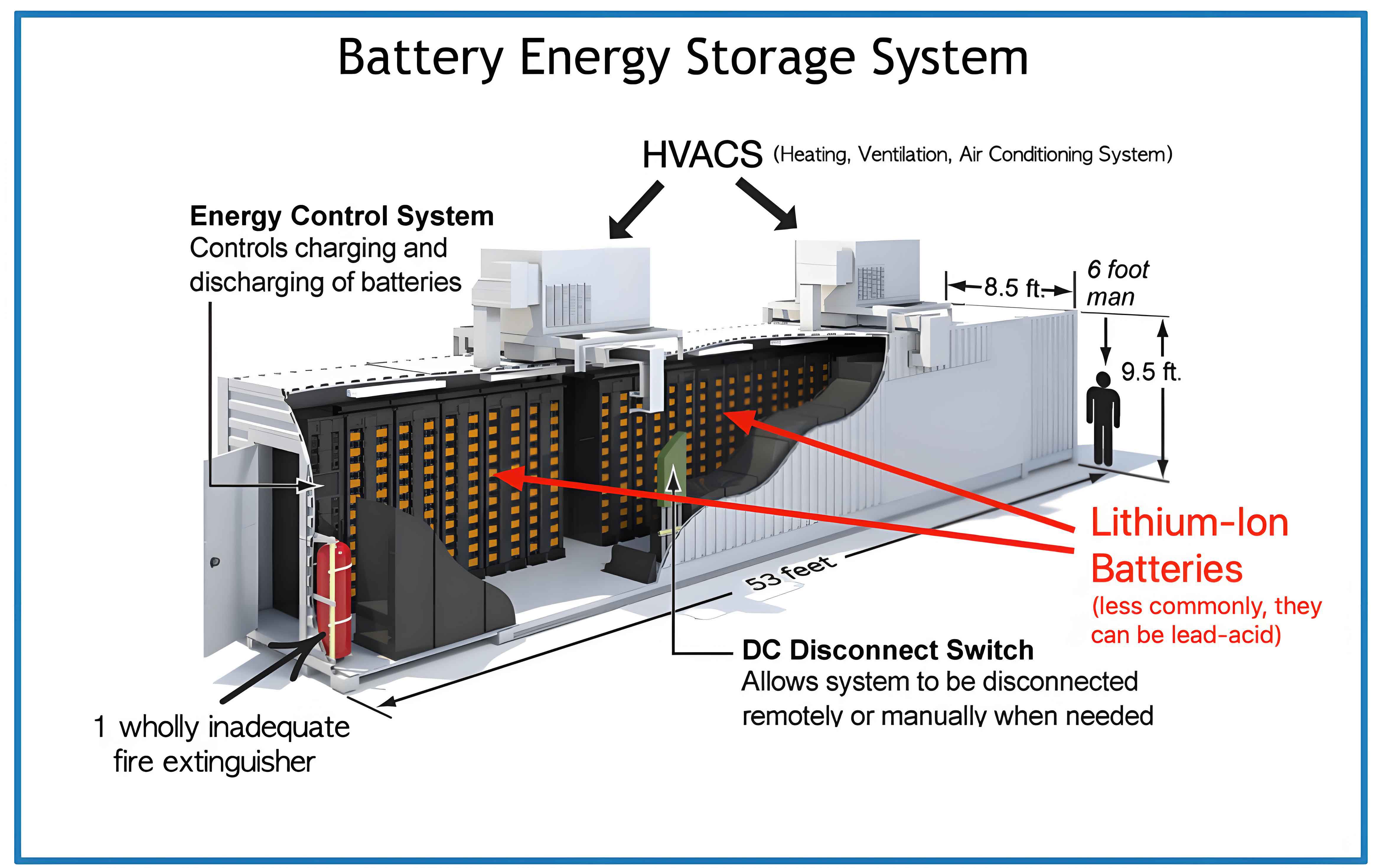
To understand the context, data-driven SOH estimation methods have evolved significantly. Machine learning algorithms like Random Forest (RF), Support Vector Machines (SVM), and neural networks such as Deep Neural Networks (DNN), Long Short-Term Memory (LSTM), and Gated Recurrent Units (GRU) have been widely adopted. However, many of these approaches focus on single-cycle data, neglecting the progressive nature of battery aging. For instance, a battery energy storage system undergoes repeated cycles, and each cycle’s charging profile contains subtle cues about degradation. By considering multiple cycles, we can capture long-term trends and reduce noise from anomalous cycles. Our MCNet model is designed to exploit this multi-cycle perspective, thereby improving the reliability of SOH predictions for battery energy storage systems.
The MCNet architecture comprises three main modules: an intra-cycle feature extraction module, an inter-cycle feature fusion module, and an SOH estimation module. The intra-cycle module processes the current and voltage time-series from a single charging phase. It begins with a GRU-based feature dimension amplification layer that maps input sequences to a higher-dimensional space, enhancing the representation of cycle-specific characteristics. For a given cycle $k$, the input data $u_1, u_2, \ldots, u_L$ (where $u_i \in \mathbb{R}^{2}$ for current and voltage at each time step, and $L$ is the sequence length) is transformed to $u’_1, u’_2, \ldots, u’_L$ with $u’_i \in \mathbb{R}^{N}$, where $N$ is the amplified dimension. This is followed by Transformer blocks that apply self-attention mechanisms to weigh the importance of different time steps. The self-attention operation for queries $Q$, keys $K$, and values $V$ is defined as: $$ \text{Attention}(Q, K, V) = \text{softmax}\left(\frac{QK^T}{\sqrt{d_k}}\right)V $$ where $d_k$ is the dimensionality of $K$. Multiple attention heads are used to capture diverse features, and the output is passed through a feed-forward network. Finally, another GRU layer, termed the cycle information aggregation layer, condenses the sequence into a fixed-dimensional feature vector $F_k$ representing the entire cycle. This process is mathematically expressed as: $$ h_t = \text{GRU}(f_t, h_{t-1}) $$ where $f_t$ is the feature at time $t$ from the Transformer blocks, and $h_t$ is the hidden state. The final hidden state $h_L$ yields $F_k$.
The inter-cycle module then takes multiple such features $F_{k-n}, F_{k-n+1}, \ldots, F_k$ from consecutive cycles as input. Another GRU model processes these in sequence to capture temporal dependencies, producing a fused multi-cycle feature $F_{\text{multicycle}}$. This step is crucial for a battery energy storage system, as degradation evolves over time. The GRU update mechanisms involve reset and update gates: $$ z_t = \sigma(W_{xz} x_t + W_{hz} h_{t-1} + b_z) $$ $$ r_t = \sigma(W_{xr} x_t + W_{hr} h_{t-1} + b_r) $$ $$ \tilde{h}_t = \tanh(W_{xh} x_t + r_t \odot (W_{hh} h_{t-1}) + b_h) $$ $$ h_t = z_t \odot \tilde{h}_t + (1 – z_t) \odot h_{t-1} $$ where $x_t$ is the input feature at step $t$ (e.g., $F_{k-n}$), $h_t$ is the hidden state, $W$ and $b$ are learnable parameters, $\sigma$ is the sigmoid function, and $\odot$ denotes element-wise multiplication. By iterating through cycles, the model learns to integrate historical health information. Finally, the SOH estimation module uses a fully connected neural network to map $F_{\text{multicycle}}$ to an SOH value. This network consists of multiple layers: $$ H^{(l)} = \sigma\left(H^{(l-1)} W_h^{(l)} + b_h^{(l)}\right) $$ $$ \text{SOH}_{\text{pred}} = H^{(L)} W_o + b_o $$ where $H^{(l)}$ are hidden layer activations, and $L$ is the number of layers.
To validate MCNet, we conducted experiments on publicly available battery datasets, emphasizing its application to battery energy storage systems. The data preprocessing pipeline is vital for ensuring model efficacy. First, we obtained charging phase current and voltage data from cycles. Due to varying cycle lengths, we applied length alignment by zero-padding all cycles to match the length of the first cycle, denoted as $L_{\text{align}}$. This ensures consistent input dimensions for parallel processing. Next, we normalized the data using min-max scaling: $$ x_{\text{scaled}} = \frac{x_i – x_{\min}}{x_{\max} – x_{\min}} $$ where $x_i$ is a data point, and $x_{\min}$ and $x_{\max}$ are the minimum and maximum values in the dataset. This step accelerates convergence during training. Finally, we reconstructed input tensors by concatenating multiple consecutive cycles. For cycle $n$, the input tensor is: $$ \text{Input}_n = \left[ \begin{array}{c} I^{(n)}_1, I^{(n)}_2, \ldots, I^{(n)}_{L_{\text{align}}} \\ V^{(n)}_1, V^{(n)}_2, \ldots, V^{(n)}_{L_{\text{align}}} \end{array} \right], \left[ \begin{array}{c} I^{(n-1)}_1, I^{(n-1)}_2, \ldots, I^{(n-1)}_{L_{\text{align}}} \\ V^{(n-1)}_1, V^{(n-1)}_2, \ldots, V^{(n-1)}_{L_{\text{align}}} \end{array} \right], \ldots \in \mathbb{R}^{k \times L_{\text{align}} \times 2} $$ where $k$ is the number of historical cycles, and $I$ and $V$ represent current and voltage vectors. This multi-cycle input enables the model to learn from temporal patterns, which is beneficial for a battery energy storage system experiencing gradual degradation.
We utilized the CALCE battery dataset for primary experiments, which includes LiCoO₂ prismatic cells with a nominal capacity of 1100 mAh. The charging protocol involved constant-current (CC) mode at 0.5 C until reaching 4.2 V, followed by constant-voltage (CV) mode until current dropped to 0.05 A, and discharge at 1 C to 2.7 V. This dataset simulates real-world cycling conditions relevant to battery energy storage systems. Additionally, to test robustness, we employed the Oxford lithium-ion battery dataset, comprising 740 mAh pouch cells aged at 40°C. These datasets provide diverse degradation profiles, allowing comprehensive evaluation. We split the data using leave-one-out cross-validation: for each experiment, one battery served as the test set, while others were used for training. This mimics scenarios where a battery energy storage system may have heterogeneous cells, requiring adaptable models.
The training process involved minimizing the Mean Squared Error (MSE) loss function: $$ \text{MSE} = \frac{1}{N} \sum_{i=1}^N (\text{SOH}_{\text{pred},i} – \text{SOH}_{\text{true},i})^2 $$ with the Adam optimizer at a learning rate of 0.0001. We evaluated performance using Mean Absolute Error (MAE) and Root Mean Square Error (RMSE): $$ \text{MAE} = \frac{1}{N} \sum_{i=1}^N |\text{SOH}_{\text{pred},i} – \text{SOH}_{\text{true},i}| $$ $$ \text{RMSE} = \sqrt{\frac{1}{N} \sum_{i=1}^N (\text{SOH}_{\text{pred},i} – \text{SOH}_{\text{true},i})^2} $$ Lower values indicate better accuracy, which is crucial for reliable monitoring of a battery energy storage system.
Our first experiment compared MCNet using single-cycle versus multi-cycle inputs. We trained MCNet with $k=10$ historical cycles and a baseline variant with $k=1$ (i.e., single-cycle). The results, summarized in Table 1, show that multi-cycle inputs consistently improve estimation accuracy across all test batteries. For instance, on battery CS2_35, MAE decreased from 0.65% to 0.55%, and RMSE from 1.14% to 1.01%. This trend holds for other cells, demonstrating that leveraging multiple cycles reduces noise and captures degradation trends more effectively. Visual analysis of error curves reveals that multi-cycle MCNet maintains lower errors, especially in low-SOH regions where battery degradation accelerates. This is significant for a battery energy storage system, as accurate end-of-life prediction prevents failures.
| Test Battery | Input Type | MAE (%) | RMSE (%) |
|---|---|---|---|
| CS2_35 | Single-Cycle | 0.65 | 1.14 |
| CS2_35 | Multi-Cycle | 0.55 | 1.01 |
| CS2_36 | Single-Cycle | 0.72 | 1.00 |
| CS2_36 | Multi-Cycle | 0.65 | 1.04 |
| CS2_37 | Single-Cycle | 0.85 | 1.26 |
| CS2_37 | Multi-Cycle | 0.60 | 0.86 |
| CS2_38 | Single-Cycle | 1.02 | 1.56 |
| CS2_38 | Multi-Cycle | 0.89 | 1.36 |
To further investigate the impact of cycle count, we varied $k$ from 1 to 20 and recorded RMSE and MAE. As shown in Table 2, increasing $k$ generally reduces errors, with optimal performance around $k=10$ for most batteries. This suggests that incorporating about 10 historical cycles balances information richness and computational efficiency. Beyond that, diminishing returns occur, possibly due to overfitting or irrelevant distant cycles. This insight can guide the design of monitoring systems for battery energy storage systems, where data storage and processing are constrained.
| k | RMSE (%) | MAE (%) |
|---|---|---|
| 1 | 1.26 | 0.85 |
| 2 | 1.20 | 0.80 |
| 3 | 1.15 | 0.78 |
| 4 | 1.10 | 0.75 |
| 5 | 1.05 | 0.72 |
| 6 | 1.00 | 0.70 |
| 7 | 0.95 | 0.68 |
| 8 | 0.92 | 0.65 |
| 9 | 0.89 | 0.63 |
| 10 | 0.86 | 0.60 |
| 15 | 0.88 | 0.62 |
| 20 | 0.90 | 0.64 |
We also compared MCNet against other popular sequence prediction models: LSTM, Bidirectional LSTM (BiLSTM), GRU, and Bidirectional GRU (BiGRU). All models were trained under identical conditions with multi-cycle inputs (k=10). The results, presented in Table 3, highlight MCNet’s superiority. On average, MCNet reduced RMSE by 24.2% and MAE by 28.4% compared to the best-performing baseline. For example, on battery CS2_35, MCNet achieved an RMSE of 1.01%, while LSTM, BiLSTM, GRU, and BiGRU had 1.59%, 1.71%, 1.66%, and 1.72%, respectively. This improvement stems from MCNet’s ability to combine GRU’s temporal modeling with Transformer’s attention mechanism, effectively capturing both local and global dependencies in cycle data. Such capabilities are invaluable for a battery energy storage system, where degradation patterns may be complex and non-linear.
| Model | Test Battery | RMSE (%) | MAE (%) |
|---|---|---|---|
| LSTM | CS2_35 | 1.59 | 0.93 |
| CS2_36 | 1.33 | 0.92 | |
| CS2_37 | 1.09 | 0.81 | |
| CS2_38 | 1.54 | 0.98 | |
| BiLSTM | CS2_35 | 1.71 | 0.91 |
| CS2_36 | 1.49 | 1.06 | |
| CS2_37 | 1.09 | 0.78 | |
| CS2_38 | 1.46 | 0.95 | |
| GRU | CS2_35 | 1.66 | 0.97 |
| CS2_36 | 1.32 | 0.95 | |
| CS2_37 | 1.35 | 1.13 | |
| CS2_38 | 1.81 | 1.15 | |
| BiGRU | CS2_35 | 1.72 | 1.02 |
| CS2_36 | 1.16 | 0.77 | |
| CS2_37 | 1.14 | 0.79 | |
| CS2_38 | 1.37 | 1.02 | |
| MCNet (Proposed) | CS2_35 | 1.01 | 0.55 |
| CS2_36 | 1.04 | 0.65 | |
| CS2_37 | 0.86 | 0.60 | |
| CS2_38 | 1.36 | 0.89 |
To assess robustness, we applied MCNet to the Oxford battery dataset. Using batteries 1, 3, 7, and 8 for training and batteries 2, 4, 5, and 6 for testing, we obtained the results in Table 4. MCNet maintained high accuracy, with MAE below 0.8% and RMSE under 1.5% for all test batteries. This consistency across different datasets underscores MCNet’s generalization ability, making it suitable for diverse battery energy storage system configurations. The model’s performance on Oxford data, which involves higher temperature aging, confirms its resilience to varied operating conditions. For instance, on battery 2, RMSE was 1.39% with multi-cycle inputs, compared to 1.47% with single-cycle inputs. These findings reinforce the value of multi-cycle features in enhancing SOH estimation for battery energy storage systems deployed in real-world environments.
| Test Battery | Input Type | RMSE (%) | MAE (%) |
|---|---|---|---|
| Battery 2 | Single-Cycle | 1.47 | 0.72 |
| Battery 2 | Multi-Cycle (k=10) | 1.39 | 0.73 |
| Battery 4 | Single-Cycle | 0.35 | 0.27 |
| Battery 4 | Multi-Cycle (k=10) | 0.30 | 0.22 |
| Battery 5 | Single-Cycle | 0.59 | 0.54 |
| Battery 5 | Multi-Cycle (k=10) | 0.48 | 0.45 |
| Battery 6 | Single-Cycle | 0.46 | 0.28 |
| Battery 6 | Multi-Cycle (k=10) | 0.47 | 0.25 |
The success of MCNet can be attributed to its architectural design. The intra-cycle feature extraction module, with GRU and Transformer blocks, learns hierarchical representations from raw charging data. The GRU’s gating mechanisms handle long-term dependencies, while Transformer’s self-attention focuses on salient time steps, such as transitions from constant-current to constant-voltage phases, which are indicative of degradation in a battery energy storage system. Mathematically, the Transformer block output for an input $x$ is computed as: $$ \text{Att} = \text{LayerNorm}(\text{MultiHead}(x, x, x) + x) $$ $$ \text{Output} = \text{LayerNorm}(\text{Att} + \text{FFN}(\text{Att})) $$ where $\text{FFN}$ is a feed-forward network. This allows MCNet to adaptively weigh features, reducing the impact of noisy measurements. The inter-cycle module then integrates these features across time, mimicking how a battery energy storage system’s health evolves cyclically. The GRU in this module updates its hidden state based on sequential cycle features, encapsulating degradation trends. This two-level processing is more effective than single-cycle models, which may miss progressive changes.
From a practical standpoint, implementing MCNet in a battery energy storage system involves considerations like computational resources and real-time processing. The model requires historical data from multiple cycles, which can be stored in cloud-based or edge computing platforms. During operation, as new cycling data becomes available, it can be preprocessed and fed into MCNet for online SOH updates. The preprocessing steps—length alignment, normalization, and tensor reconstruction—are lightweight and can be automated. Moreover, MCNet’s accuracy reduces the need for frequent manual calibrations, lowering maintenance costs for battery energy storage systems. For large-scale deployments, such as grid-scale energy storage, MCNet can be deployed on a per-cell basis to monitor individual units, enabling targeted interventions and prolonging system lifespan.
Despite its advantages, MCNet has limitations. The length alignment via zero-padding may introduce artifacts, especially for cycles with significantly shorter charging times. Future work could explore dynamic time warping or interpolation methods to preserve temporal nuances. Additionally, MCNet currently uses only charging data; incorporating discharge profiles or temperature measurements might further improve accuracy for battery energy storage systems operating under diverse conditions. Another avenue is to adapt MCNet for other battery chemistries, such as lithium iron phosphate or flow batteries, by retraining on relevant datasets. Furthermore, explainability techniques could be integrated to interpret which cycle features most influence SOH predictions, aiding diagnostics in battery energy storage systems.
In conclusion, we have presented MCNet, a novel data-driven model for SOH estimation in battery energy storage systems. By leveraging multi-cycle features through a combination of GRU and Transformer architectures, MCNet achieves high estimation accuracy, with MAE consistently below 1% and RMSE under 1.5% on public datasets. Comparative experiments show that MCNet outperforms established sequence models like LSTM and GRU, and using multiple historical cycles enhances robustness against noise and anomalies. The model’s effectiveness is validated on both CALCE and Oxford datasets, demonstrating its applicability to various battery energy storage system scenarios. Our contributions include a detailed methodology for multi-cycle data preprocessing, an innovative neural network design, and comprehensive empirical analysis. As battery energy storage systems become increasingly prevalent in renewable energy and transportation, accurate SOH estimation models like MCNet will be indispensable for ensuring safety, reliability, and economic viability. We believe this work paves the way for more intelligent battery management systems that harness temporal dependencies for superior health monitoring.