
The relentless consumption of fossil fuels over recent decades has precipitated a critical environmental challenge, primarily through the accelerated accumulation of greenhouse gases. This urgent scenario has catalyzed a global shift towards developing sustainable and efficient energy storage solutions. Among these, the lithium-ion battery stands as a cornerstone technology, powering everything from portable electronics to electric vehicles and grid-scale storage systems. The performance, cost, and sustainability of a lithium-ion battery are intrinsically linked to the properties of its electrode materials. Consequently, the quest for novel anode materials with high capacity, exceptional rate capability, and long-term cycling stability remains a central focus in advanced battery research.
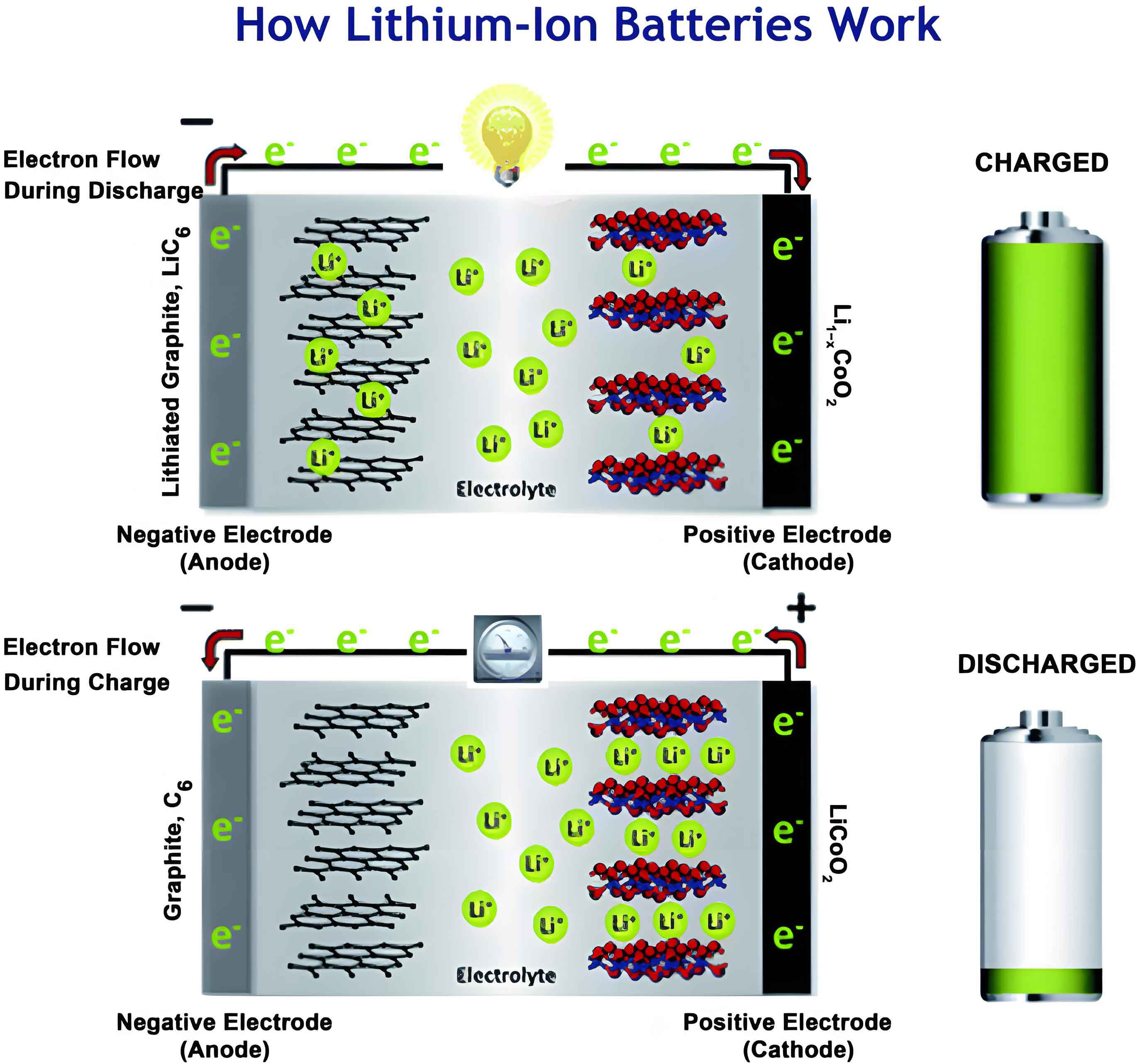
Covalent Organic Frameworks (COFs) have emerged as a promising class of materials for next-generation lithium-ion battery electrodes. Their defining characteristics—high intrinsic porosity, ordered pore structures, and tunable organic building blocks—offer unique advantages. The porous architecture facilitates electrolyte penetration and ion transport, while the customizable organic backbone can be designed to incorporate abundant redox-active sites for lithium storage. However, the practical deployment of bulk COF powders in a lithium-ion battery faces significant hurdles. Their typically limited electronic conductivity and sluggish ion diffusion kinetics result in poor rate performance. Moreover, conventional electrode fabrication requires blending the active COF material with conductive additives (e.g., carbon black) and polymeric binders (e.g., PVDF). This composite structure often suffers from poor interfacial contact, and the binders themselves can undergo volumetric changes during cycling, leading to electrode pulverization, loss of electrical contact, and consequent rapid capacity fading. These issues ultimately compromise the cycle life and reliability of the lithium-ion battery.
To overcome these limitations, a prevalent strategy involves exfoliating bulk COFs into two-dimensional (2D) nanosheets or compositing them with conductive carbon matrices like graphene or carbon nanotubes. While these approaches improve conductivity and accessibility, challenges persist, particularly in maintaining performance under high current densities over extended cycling. Our research explores an alternative, integrative design: the in-situ growth of redox-active COFs directly onto a flexible, freestanding, and conductive substrate. This perspective details our work on synthesizing a poly(triazine-imide) network from pyromellitic dianhydride (PMDA) and melamine (MA), directly onto carbon fiber cloth (CFC), creating a binder-free, integrated electrode denoted as PMBA-MA@CFC. This design philosophy aims to synergistically combine the high lithium-storage capacity of the COF with the mechanical robustness and excellent electron transport pathway provided by the CFC scaffold, thereby enhancing the overall performance metrics of the resulting lithium-ion battery.
Material Design and Synthesis Strategy
The selection of monomers is pivotal for crafting a COF with desirable electrochemical properties for a lithium-ion battery anode. We chose pyromellitic dianhydride (PMDA) and melamine (MA) as the primary building blocks. This combination yields a polyimide-linked framework with embedded triazine (C3N3) rings, formally a poly(triazine-imide). This structure offers two distinct types of potential redox-active sites for lithium-ion interaction: the carbonyl (C=O) groups from the imide linkages and the nitrogen-rich triazine rings. The reaction proceeds via a polycondensation mechanism, forming robust covalent bonds that ensure structural integrity during the repeated lithiation/delithiation processes in a lithium-ion battery.
The synthesis of the pure COF powder (PMBA-MA) involves a solvothermal process in a mixed solvent system. The critical innovation lies in the fabrication of the integrated electrode. Prior to the synthesis, a piece of commercially available carbon fiber cloth is meticulously pre-treated with a piranha solution (a mixture of concentrated sulfuric and nitric acids). This harsh oxidative treatment functionalizes the carbon fiber surfaces with carboxylic acid (-COOH) and hydroxyl (-OH) groups, which can act as nucleation sites. The pre-treated CFC is then immersed in the precursor solution containing the PMDA and MA monomers. During the subsequent solvothermal reaction, the PMBA-MA COF nucleates and grows directly on the surface of the individual carbon fibers. This in-situ growth strategy ensures an intimate chemical and physical connection between the active material and the conductive substrate, eliminating the need for insulating binders. The direct growth also favors the formation of a porous, interconnected COF layer that maximizes the exposure of active sites to the electrolyte—a crucial factor for achieving high performance in a lithium-ion battery.
Structural and Chemical Characterization
Confirming the successful synthesis and understanding the structure of the prepared materials is essential. The powder X-ray diffraction (PXRD) pattern of the synthesized PMBA-MA powder exhibits a strong, characteristic diffraction peak at approximately 27.8°, corresponding to the (001) lattice plane. This peak signifies a predominant stacking direction with strong inter-layer π-π interactions, a feature common in conjugated organic frameworks that can benefit electron delocalization. The presence of this and other minor peaks confirms the crystalline nature of the synthesized COF.
X-ray Photoelectron Spectroscopy (XPS) provides deep insight into the chemical states and bonding environment within the material. The survey spectrum confirms the presence of carbon (C), nitrogen (N), and oxygen (O) as the primary elements. The high-resolution C 1s spectrum can be deconvoluted into three major components:
$$C_{1s}: C-C/C=C (sp^2, ~284.5 eV), C-N (~286.2 eV), C=O (~288.2 eV)$$
The high-resolution N 1s spectrum reveals two main contributions:
$$N_{1s}: C=N-C (~398.8 eV), N-(C)_3 (~400.1 eV)$$
Finally, the O 1s spectrum is dominated by a peak corresponding to the carbonyl oxygen:
$$O_{1s}: C=O (~531.7 eV)$$
These spectral features collectively verify the formation of the expected chemical structure, containing both imide (C=O) and triazine (C=N) functionalities, which are the anticipated active centers for lithium storage in a lithium-ion battery.
Electrochemical Performance Evaluation in a Lithium-Ion Battery
The electrochemical behavior of the PMBA-MA@CFC electrode was evaluated by assembling it directly into a coin cell configuration (CR2032) against a lithium metal counter/reference electrode. The freestanding nature of the electrode allowed for assembly without any additional binder or conductive additive—a significant practical advantage. Cyclic voltammetry (CV) was first employed to investigate the redox processes. The initial cycle shows a reduction peak around 0.6 V, which disappears in subsequent cycles, attributable to the irreversible formation of a solid-electrolyte interphase (SEI) layer on the electrode surface. In the subsequent cycles, two distinct, stable pairs of redox peaks emerge:
$$ \text{Redox Pair 1: } \text{Oxidation at ~1.47 V / Reduction at ~0.71 V} $$
$$ \text{Redox Pair 2: } \text{Oxidation at ~1.84 V / Reduction at ~1.75 V} $$
These reversible peaks are assigned to the sequential lithiation/delithiation reactions occurring at the carbonyl (C=O) groups of the imide and the nitrogen atoms within the triazine rings, respectively. The excellent overlap of the CV curves from the second cycle onward indicates high electrochemical reversibility, a desirable trait for a long-lasting lithium-ion battery anode.
Galvanostatic charge-discharge cycling tests were conducted to quantify performance. The superiority of the integrated PMBA-MA@CFC design becomes starkly evident when compared to a conventional electrode made from pure PMBA-MA powder mixed with carbon black and PVDF binder.
The rate capability, which measures how well a battery maintains capacity as the charge/discharge current is increased, is a critical metric for high-power applications. The PMBA-MA@CFC electrode delivers significantly higher specific capacities across all tested current densities, as summarized in the table below.
| Current Density (A g-1) | PMBA-MA@CFC Discharge Capacity (mAh g-1) | PMBA-MA (with binder) Discharge Capacity (mAh g-1) |
|---|---|---|
| 0.1 | 697.4 | 544.3 |
| 0.2 | 578.7 | 398.3 |
| 0.5 | 480.3 | 305.3 |
| 1.0 | 408.7 | 221.4 |
| 2.0 | 297.3 | 135.7 |
| Return to 0.1 | 692.3 | 501.0 |
Notably, when the current density is returned to 0.1 A g-1 after high-rate testing, the PMBA-MA@CFC electrode recovers nearly all of its initial capacity, demonstrating remarkable structural resilience and kinetic recovery—key attributes for a reliable lithium-ion battery.
Long-term cycling stability is the ultimate test for any prospective lithium-ion battery anode material. At a moderate current density of 0.1 A g-1, the PMBA-MA@CFC electrode maintains a reversible capacity of 575.7 mAh g-1 after 100 cycles, significantly outperforming the conventional electrode (377.8 mAh g-1). More impressively, under a high current density of 2 A g-1, the PMBA-MA@CFC electrode exhibits outstanding stability over 1000 cycles, still delivering a capacity of 331.9 mAh g-1. In stark contrast, the conventional PMBA-MA electrode suffers from severe capacity decay, losing most of its capacity within a few hundred cycles. This dramatic difference underscores the fundamental advantage of the integrated, binder-free design in mitigating the detrimental effects of volume changes and preserving electrical connectivity throughout prolonged operation of the lithium-ion battery.
Electrochemical Impedance Spectroscopy (EIS) was used to probe the interfacial charge transfer kinetics. The Nyquist plots typically consist of a semicircle in the high-medium frequency region (representing charge transfer resistance, Rct) and a sloping line in the low-frequency region (related to Li+ diffusion). The fitted parameters reveal crucial insights:
| Electrode | Charge Transfer Resistance, Rct (Ω) | Li+ Diffusion Coefficient, DLi+ (cm2 s-1) |
|---|---|---|
| PMBA-MA@CFC | 83.8 | 5.6 × 10⁻¹³ |
| PMBA-MA (with binder) | 220.1 | 6.6 × 10⁻¹⁴ |
The PMBA-MA@CFC electrode exhibits a substantially lower Rct and a higher Li+ diffusion coefficient (DLi+). The DLi+ can be estimated from the low-frequency Warburg region using the formula:
$$ D_{Li^+} = \frac{R^2 T^2}{2 A^2 n^4 F^4 C^2 \sigma^2} $$
where R is the gas constant, T is the absolute temperature, A is the electrode area, n is the number of electrons per reaction, F is Faraday’s constant, C is the concentration of Li+ ions, and σ is the Warburg factor obtained from the slope of Z’ vs. ω-1/2. The order-of-magnitude higher DLi+ for the integrated electrode confirms that the in-situ growth on CFC creates a more favorable architecture for rapid ion transport, which is essential for the high-rate performance of a lithium-ion battery.
Mechanistic Insights and Performance Advantages
The enhanced performance of the PMBA-MA@CFC electrode within a lithium-ion battery can be attributed to a confluence of synergistic factors stemming from its integrated design:
1. Binder-Free and Robust Architecture: The direct growth of the active COF material onto the CFC substrate eliminates the need for non-conductive, polymeric binders. This prevents the common failure mechanisms associated with binder swelling, deformation, and detachment during cycling. The CFC itself provides a flexible, mechanically strong, and electrically conductive scaffold that maintains structural integrity, ensuring continuous electron pathways even under mechanical stress from repeated lithium-ion insertion/extraction.
2. Maximized Active Site Utilization and Efficient Ion Transport: The in-situ synthesis promotes the formation of a porous, well-adhered COF layer on the carbon fibers. This morphology prevents the agglomeration of COF particles, keeps the pore structure open, and exposes a vast number of the redox-active carbonyl and triazine sites to the electrolyte. This maximizes the utilization of the active material for lithium storage. The intimate contact with the conductive CFC backbone drastically reduces the electron transport distance within the insulating COF, addressing one of the primary limitations of organic electrode materials in a lithium-ion battery.
3. Enhanced Reaction Kinetics: The combined effect of improved electronic conductivity (low Rct) and facilitated ionic diffusion (high DLi+) leads to superior reaction kinetics. This is quantitatively reflected in the excellent rate capability. The relationship between capacity (C) and current density (i) often follows a power-law behavior indicative of diffusion-controlled processes:
$$ C(i) = C_0 – k \cdot \sqrt{i} $$
where C0 is the capacity at an infinitesimally low current, and k is a constant related to diffusion. The smaller deviation from C0 for the PMBA-MA@CFC electrode at high i values signifies less diffusion limitation.
4. Stable Electrode-Electrolyte Interface: The robust and stable architecture contributes to the formation and maintenance of a more uniform and less resistive SEI layer. This stability minimizes ongoing electrolyte decomposition and active lithium loss during long-term cycling, which is directly evidenced by the high and stable Coulombic efficiency (often >99.5% after the first few cycles) and the exceptional capacity retention over 1000 cycles.
Future Perspectives and Concluding Remarks
This work demonstrates a highly effective strategy for developing high-performance COF-based anodes for lithium-ion batteries. The in-situ growth of a redox-active poly(triazine-imide) COF on a conductive carbon fiber cloth substrate successfully integrates the advantages of both components: the high and multi-site lithium storage capacity of the organic framework and the excellent electronic conductivity and mechanical flexibility of the carbon scaffold. The resulting PMBA-MA@CFC freestanding electrode delivers impressive specific capacity, outstanding rate performance, and remarkable long-term cycling stability, particularly under demanding high-current-density conditions.
The success of this design principle opens several avenues for future research to further advance the field of organic-based electrodes for lithium-ion batteries:
1. Exploration of Diverse COF Architectures: The library of COFs is vast. Future work can focus on designing and synthesizing COFs with even higher theoretical capacities, different pore sizes for optimized ion transport, or incorporating heteroatoms to modify the electronic structure and binding energy with lithium ions.
2. Substrate Engineering: While CFC is effective, other 3D conductive substrates like metal foams, carbon nanotube sponges, or graphene aerogels could be explored to further enhance surface area, reduce overall electrode weight, or introduce additional catalytic properties.
3. Understanding Degradation Mechanisms: Advanced in-situ or operando characterization techniques (e.g., TEM, XRD, Raman) could be employed to gain real-time insights into the structural evolution, SEI formation, and potential degradation pathways of the COF during cycling. This knowledge is crucial for designing even more resilient materials.
4. Full-Cell Evaluation: To assess true practical viability, future studies should integrate the PMBA-MA@CFC anode with commercially viable cathodes (e.g., LiFePO4, NMC) in a full lithium-ion battery configuration. This would provide critical data on energy density, voltage profiles, and long-term cycle life under realistic operating conditions.
In conclusion, the integration of designed organic frameworks with conductive scaffolds via in-situ synthesis represents a powerful paradigm for overcoming the traditional limitations of organic electrode materials. As research continues to refine the materials chemistry and architecture, COF-based composites hold significant promise for contributing to the next generation of high-performance, sustainable, and durable energy storage devices, solidifying the role of advanced lithium-ion batteries in our clean energy future.