
As a researcher deeply engaged in the field of electrochemical energy storage, I find the rapid evolution of battery technology both challenging and exhilarating. The global push for decarbonization and sustainable energy solutions has placed secondary batteries at the forefront of technological innovation. While lithium-ion batteries (LIBs) have dominated the landscape for portable electronics and electric vehicles since their commercialization, concerns regarding lithium’s geographical concentration, long-term supply stability, and cost volatility are driving the search for complementary or alternative chemistries. In this context, the sodium-ion battery emerges as a compelling candidate. Sodium’s crustal abundance of 2.83%—vastly higher than lithium’s—and its uniform global distribution present a clear advantage for large-scale, cost-sensitive applications like grid energy storage. The foundational electrochemistry is promising; the standard redox potential of the Na+/Na couple is -2.71 V vs. SHE, not drastically higher than that of Li+/Li (-3.04 V), suggesting the potential for high-energy-density systems. Furthermore, the ability to use aluminum as an anode current collector, as sodium does not alloy with it, offers both cost and weight benefits compared to the copper required for LIBs.
However, the development of practical sodium-ion battery systems is not a simple matter of substituting lithium with sodium. The larger ionic radius of Na+ (1.02 Å) compared to Li+ (0.76 Å) leads to slower solid-state diffusion kinetics and requires host materials with more open structures or larger interlayer spacings to accommodate reversible insertion. This fundamental difference renders many successful LIB anode materials, most notably graphite, inadequate for sodium storage under conventional conditions. Consequently, the quest for high-performance, cost-effective, and durable anode materials is a central and active frontier in sodium-ion battery research. An ideal anode must exhibit high specific capacity, low and safe operating voltage, excellent rate capability, high initial Coulombic efficiency (ICE) to minimize active sodium loss, and exceptional long-term cycling stability. The storage mechanisms in these anodes can be broadly classified into three categories: insertion/intercalation, alloying, and conversion reactions, each with distinct advantages and intrinsic challenges.
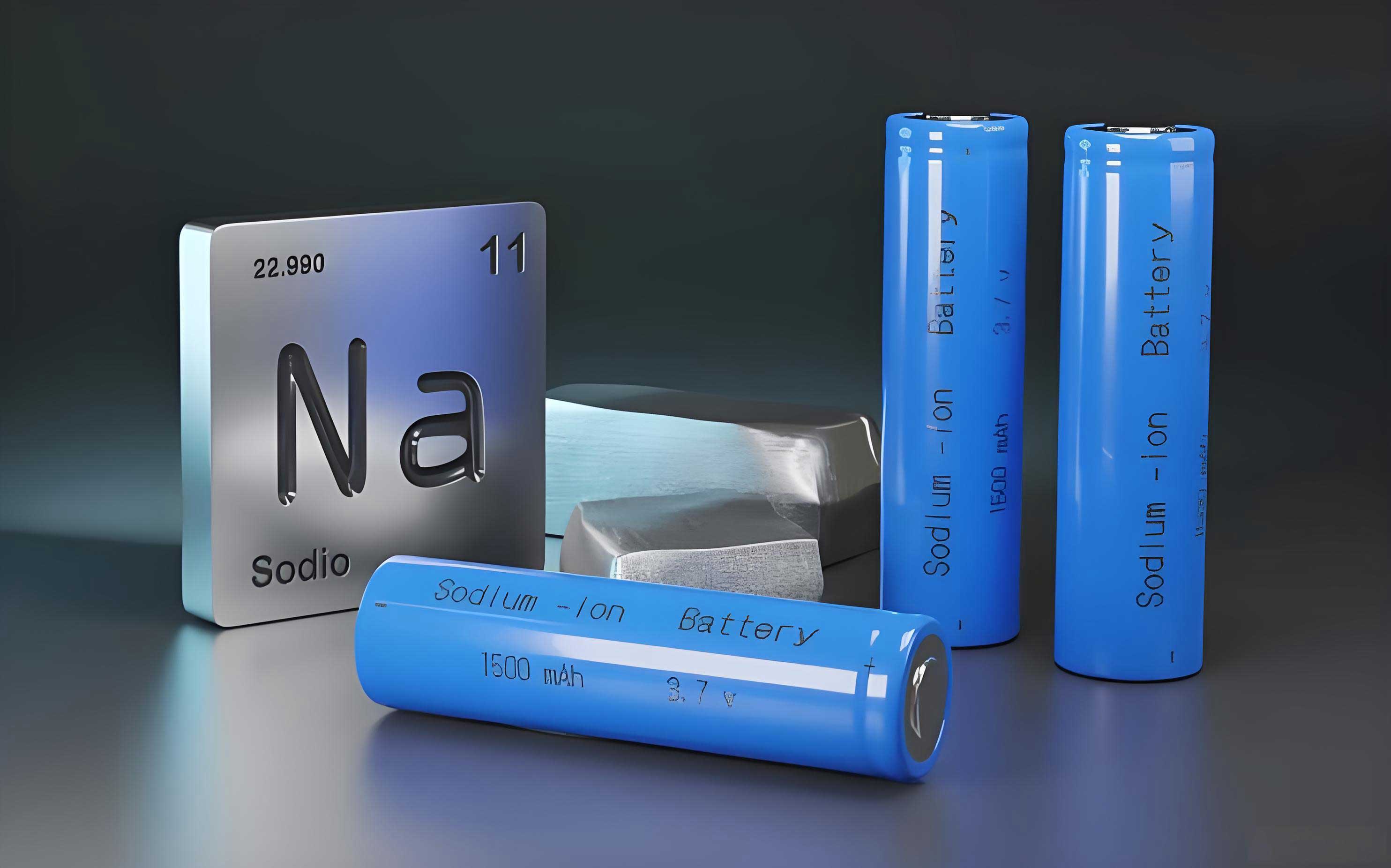
The journey of the sodium-ion battery from a conceptual alternative to a nearing-commercialization technology has been fueled by relentless innovation in anode materials. This article aims to provide a comprehensive, first-person perspective on the state-of-the-art, analyzing the principal families of anode materials—carbonaceous, metallic/alloy-based, and organic compounds. We will delve into their working mechanisms, synthesize key performance metrics, discuss persistent challenges, and evaluate strategic modifications from nanostructuring to electrolyte engineering that are paving the way for the next generation of sodium-ion battery technology.
1. Carbonaceous Anode Materials: The Frontrunner
Carbon-based materials are the most extensively studied and commercially promising anodes for sodium-ion batteries, primarily due to their low cost, structural diversity, and tunable properties. Their sodium storage behavior is highly dependent on the degree of graphitization, microstructure, and heteroatom content.
1.1 Graphite and the Co-Intercalation Phenomenon
Graphite, the cornerstone of LIB anodes, performs poorly in conventional carbonate-based electrolytes in a sodium-ion battery. The interlayer spacing of graphite (~0.335 nm) is theoretically sufficient for Na+ insertion, but thermodynamic instability of binary Na-graphite intercalation compounds (Na-GICs) under typical electrochemical conditions leads to negligible capacity. Interestingly, this limitation can be circumvented through solvent co-intercalation. In ether-based electrolytes (e.g., diglyme, DME), solvated Na+ ions co-intercalate with solvent molecules, forming ternary GICs. This process is highly reversible and exhibits excellent rate capability due to reduced desolvation energy and fast kinetics. The general reaction can be conceptualized as:
$$ C + xNa^+ + xe^- + yS \leftrightarrow Na_x(S)_yC $$
where S represents solvent molecules. While this mechanism provides good power density, the large volume change from solvent co-intercalation and the relatively low specific capacity compared to hard carbon remain significant drawbacks for widespread adoption.
1.2 Hard Carbon (HC): The State-of-the-Art
Non-graphitizable, or hard carbon, is currently the leading anode material for practical sodium-ion battery applications. Derived from the pyrolysis of biomass, resins, or polymers at temperatures typically between 1000-1500°C, HC possesses a highly disordered structure consisting of randomly oriented graphitic domains (nanographenes) and abundant nanopores. Its sodium storage profile is characterized by a sloping region at higher potentials (>0.1 V vs. Na/Na+) and a low-voltage plateau near 0.1 V. The widely accepted “adsorption-insertion” or “house of cards” model describes this behavior:
- Sloping Region: Na+ ions are adsorbed on defect sites, functional groups, and the surfaces of the graphitic nanodomains.
- Low-Voltage Plateau: Na+ ions are quasi-metallically inserted into the graphitic interlayers and/or fill the nanopores.
The theoretical and practical capacities of HC are attractive, often reaching 300-350 mAh g-1. Its key challenges are low initial Coulombic efficiency (ICE, typically 70-85%) due to extensive SEI formation on its large surface area and pore structure, and the potential for sodium plating at the very low plateau voltage. Strategic modifications are crucial for performance enhancement, as summarized below:
| Modification Strategy | Objective & Mechanism | Typical Outcome |
|---|---|---|
| Heteroatom Doping (N, P, S, B) | Increase interlayer spacing, enhance electronic conductivity, create active defects for Na+ adsorption. | Increased reversible capacity (e.g., P-doping boosted capacity from 283 to 359 mAh g-1), improved rate performance. |
| Pore Structure Engineering | Optimize closed vs. open pores to improve ICE (minimizing SEI) and plateau capacity. | High ICE (>90%) and stable plateau capacity through controlled pyrolysis. |
| Surface Coating (Soft Carbon, Metal Oxides) | Form a stable, thin SEI layer, prevent electrolyte decomposition, and mitigate surface side reactions. | Significantly enhanced ICE and cycling stability (e.g., soft carbon coating raised ICE to 94.1%). |
| Electrolyte Optimization | Form a robust, inorganic-rich SEI via FEC additives, concentrated electrolytes, or ether-based formulations. | Improved ICE, cycling stability, and reduced irreversible sodium loss. |
1.3 Soft Carbon and Emerging Carbon Allotropes
Soft carbon (graphitizable carbon) has a more ordered structure than HC but less than graphite. It typically delivers capacity mainly through a sloping voltage profile without a distinct low plateau, which can be safer by avoiding sodium plating but results in lower energy density. It often suffers from lower ICE. Research on novel carbon allotropes like graphdiyne, with its inherent uniform pores and high conductivity, or biphenylene monolayers, predicted to have very high theoretical capacity, offers exciting long-term prospects. However, scalable and cost-effective synthesis of these materials for sodium-ion battery anodes remains a significant hurdle.
2. Metal-Based Anode Materials: Pursuing High Capacity
Metallic compounds, including oxides, sulfides, phosphides, and pure alloying metals, offer much higher theoretical specific and volumetric capacities than carbon materials. However, they are plagued by large volume expansion during sodiation, poor intrinsic conductivity, and unstable solid-electrolyte interphase (SEI), leading to rapid capacity fade.
2.1 Conversion-Type Anodes: Oxides, Sulfides, Phosphides
These materials (MxOy, MxSy, MxPy) store sodium through a conversion reaction, which is often followed by an alloying reaction for certain elements (e.g., Sn, Sb). The general reaction is:
$$ M_xA_y + (ny)Na^+ + (ny)e^- \leftrightarrow xM + yNa_nA \quad \text{(A = O, S, P)} $$
This process typically involves the complete breakdown of the original crystal structure into metallic nanoparticles embedded in a NanA matrix. While capacities can be very high (e.g., SnO2: 1378 mAh g-1, Sb2S3: 946 mAh g-1), the massive volume change and the insulating nature of the product matrix (Na2O, Na2S) lead to pulverization, loss of electrical contact, and continuous SEI growth.
| Material Class | Example | Theoretical Capacity (mAh g-1) | Key Challenges | Common Mitigation Strategies |
|---|---|---|---|---|
| Metal Oxides | SnO2, Fe3O4, TiO2 | ~500-1300 | Low conductivity, large volume change, irreversible Na2O formation. | Nanostructuring, carbon compositing (e.g., graphene wrapping), doping. |
| Metal Sulfides | MoS2, SnS2, FeS2 | ~500-1100 | Polysulfide dissolution/shuttling, volume expansion. | Confinement in carbon matrices, designing heterostructures, electrolyte engineering. |
| Metal Phosphides | Sn4P3, FeP, Ni2P | ~700-1800 | Huge volume expansion, poor cyclability. | Yolk-shell or porous nanostructures, carbon coating, forming composites with active/inactive buffers. |
2.2 Alloy-Type Anodes
Elements from Groups 14 (Si, Ge, Sn, Pb) and 15 (P, As, Sb, Bi) can electrochemically alloy with sodium to form Na-rich compounds, delivering high capacities. For instance:
$$ Sn + 3.75Na^+ + 3.75e^- \leftrightarrow Na_{3.75}Sn \quad (\text{~847 mAh g}^{-1}) $$
$$ Sb + 3Na^+ + 3e^- \leftrightarrow Na_3Sb \quad (\text{660 mAh g}^{-1}) $$
$$ P + 3Na^+ + 3e^- \leftrightarrow Na_3P \quad (\text{2596 mAh g}^{-1}) $$
The primary and often fatal issue is the enormous volume expansion associated with these reactions (e.g., ~420% for Sn, ~250% for Sb), which causes severe mechanical stress, electrode pulverization, and unstable SEI.
2.3 Titanium-Based Oxide Anodes: The Intercalation Safe Haven
Ti-based oxides (e.g., Na2Ti3O7, TiO2 polymorphs, NaTi2(PO4)3) operate via a safe, low-strain insertion mechanism based on the Ti4+/Ti3+ redox couple. Their sodiation potential (~0.3-1.0 V vs. Na/Na+) avoids sodium plating and dendrite formation. While they offer exceptional cycling stability and rate capability, their moderate specific capacity (typically 150-250 mAh g-1) limits the energy density of the full sodium-ion battery cell.
2.4 MXenes
MXenes, a family of 2D transition metal carbides/nitrides (Mn+1XnTx), are promising due to their metallic conductivity, hydrophilic surfaces, and tunable interlayer spacing. They can store sodium via intercalation and surface redox reactions. However, issues like nanosheet restacking, oxidative degradation, and the high cost of synthesis need to be addressed for their practical use in sodium-ion battery anodes.
3. Organic Anode Materials: The Sustainable Alternative
Organic electrodes, derived from abundant elements (C, H, O, N, S), offer the promise of sustainability, structural diversity, and potentially high capacity through multi-electron redox reactions. Common active groups include carbonyl (C=O), imine (C=N), and azo (N=N). Their redox reactions are often accompanied by the coordination of Na+ ions. For a carbonyl-based compound (quinone):
$$ \ce{C=O + Na^+ + e^- <=> C-O^- Na^+} $$
Despite advantages like environmental friendliness and molecular tunability, most organic anodes suffer from low electronic conductivity, dissolution in organic electrolytes, and low volumetric energy density. Strategies to overcome these include polymerization to form insoluble frameworks, compositing with conductive carbons, and designing salts with low solubility.
4. Universal Challenges and Strategic Solutions for Sodium-Ion Battery Anodes
Despite the diversity of materials, several overarching challenges impede the performance of sodium-ion battery anodes. A synergistic application of material design and system engineering strategies is essential for progress.
| Core Challenge | Root Cause | Integrated Solution Strategies |
|---|---|---|
| Low Initial Coulombic Efficiency (ICE) | Irreversible consumption of Na+ to form SEI, electrolyte decomposition, and irreversible reactions with surface functional groups or defects. |
|
| Inadequate Cycling Stability | Mechanical degradation from volume changes, unstable SEI leading to continuous decomposition, and active material dissolution (for organics/sulfides). |
|
| Unsatisfactory Rate Capability | Slow Na+ diffusion kinetics in bulk materials, poor intrinsic electronic conductivity. |
|
5. Conclusion and Future Outlook
The development of anode materials is pivotal for realizing the full potential of the sodium-ion battery as a sustainable and economical energy storage technology. Currently, hard carbon stands as the most viable candidate for near-term commercialization, balancing reasonable capacity, cost, and cyclability, especially when optimized through heteroatom doping and electrolyte engineering. Titanium-based oxides offer a safe and ultra-long-life alternative for applications where energy density is secondary to cycle life. High-capacity alloying and conversion materials hold great promise but require revolutionary solutions to tame their volume expansion before they can be practical.
Looking forward, the research trajectory points toward several key directions. First, a deeper mechanistic understanding using advanced in situ/operando characterization techniques (XRD, TEM, NMR) and multi-scale modeling is crucial to precisely elucidate sodium storage mechanisms and degradation pathways. Second, the paradigm of “materials-by-design” will gain prominence, where anodes are engineered from the atomic to the macroscopic level—combining defect engineering, precise doping, controlled porosity, and smart heterostructuring—to create materials with targeted properties. Third, the importance of a holistic cell-level approach cannot be overstated. The performance of an anode is inseparable from the electrolyte, binder, and cathode with which it is paired. Tailoring electrolytes to form stable, low-impedance interphaces on novel anodes is a co-requisite for success.
Finally, beyond pure performance metrics, the scalability, environmental footprint, and cost of synthesis will ultimately determine which anode materials transition from the laboratory to the gigafactory. Biomass-derived hard carbons and sustainably sourced organic electrodes align well with the overarching green energy ethos. In conclusion, while challenges remain, the innovative strategies being deployed across the globe provide strong grounds for optimism. The continued convergence of materials science, electrochemistry, and engineering will undoubtedly unlock new generations of high-performance sodium-ion battery anodes, accelerating our transition to a more sustainable energy future.