
The relentless pursuit of sustainable energy has positioned solar power as a cornerstone of the global energy transition. As a clean and renewable source, photovoltaic (PV) power generation is experiencing exponential growth. “Solar panel” installations have proliferated across diverse landscapes, from vast utility-scale farms to distributed rooftop systems. However, the operational efficiency and economic viability of these “solar panel” arrays are critically undermined by a persistent and often underestimated challenge: surface soiling. Dust, sand, bird droppings, and industrial pollutants accumulate on the “solar panel” surface, forming a layer that significantly attenuates light transmission to the PV cells. This soiling directly translates into reduced power output, accelerated degradation due to localized heating (hot spots), and substantial revenue loss for operators. Consequently, the development and deployment of effective “solar panel” cleaning systems are not merely maintenance tasks but essential economic and technological imperatives for the sustainability of the solar industry. This article delves into the current state of “solar panel” cleaning devices, analyzing their operational principles, advantages, and shortcomings, and presents a forward-looking perspective on the evolution of this vital field.
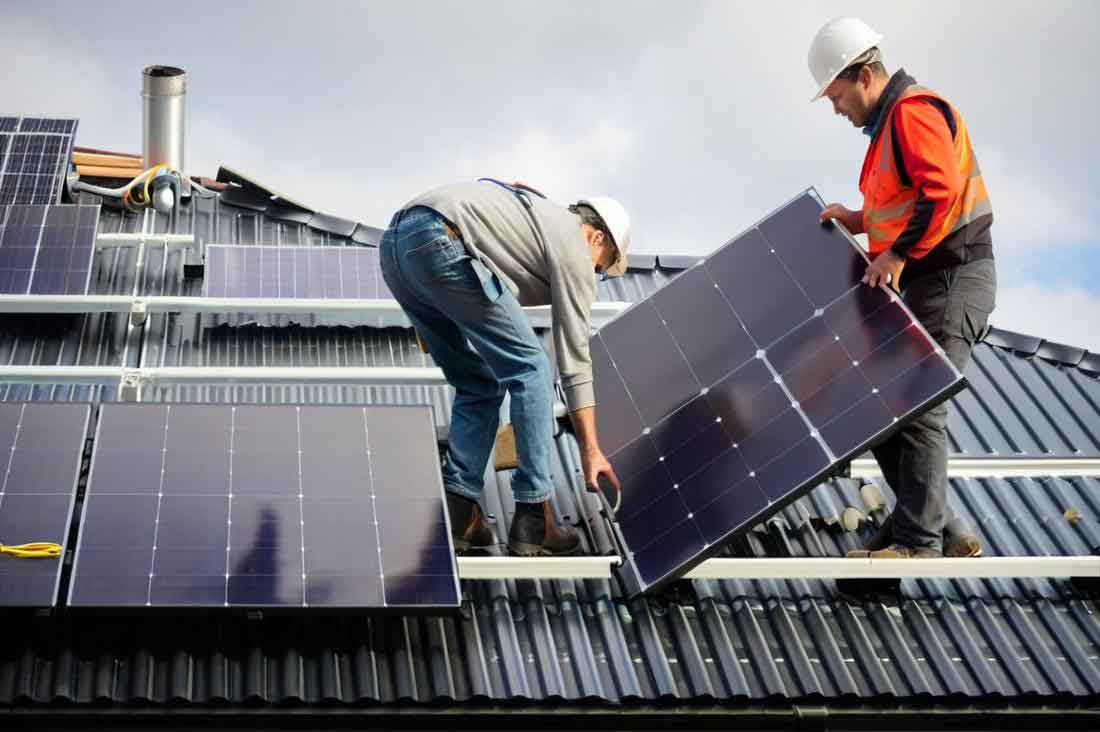
The impact of soiling is quantifiable and severe. Studies have shown that power losses can range from a few percentage points to over 20% depending on the local environment, with arid and desert regions being particularly susceptible. The fundamental relationship between soiling density and transmittance—and thus power output—can be modeled. The transmittance loss $\Delta \tau$ through a “solar panel” cover glass due to a uniform dust layer can be approximated by the Bouguer-Lambert-Beer law for light attenuation:
$$ I = I_0 e^{-\beta d} $$
where $I$ is the light intensity reaching the cell, $I_0$ is the incident light intensity, $\beta$ is the attenuation coefficient of the dust layer (dependent on particle size and composition), and $d$ is the effective thickness or density of the dust layer. Consequently, the relative power loss $P_{loss}$ can be expressed as:
$$ P_{loss} = 1 – e^{-\beta d} \approx \beta d \quad \text{(for small } d\text{)} $$
This simple model underscores the linear-like initial impact of soiling on the performance of a “solar panel”. Regular cleaning is therefore a direct investment in energy yield. The cleaning market has responded with a variety of technologies, broadly categorized by their operational methodology and deployment platform.
Classification and Analysis of Primary Cleaning Methods
The mainstream cleaning solutions can be primarily divided into two families: Mechanical Wet Cleaning and Mechanical Dry Cleaning. Their core characteristics are summarized in the table below.
| Cleaning Method | Core Mechanism | Key Advantages | Primary Disadvantages |
|---|---|---|---|
| Mechanical Wet Cleaning | Motor-driven rotating brushes/sponges combined with water (often with detergents). | High cleaning efficacy, especially for sticky contaminants; mature technology; low initial device cost. | High water consumption; potential for chemical pollution; risk of scratches; not suitable for water-scarce regions; can cause dirt streaks if not dried. |
| Mechanical Dry Cleaning | Motor-driven brushes (e.g., microfiber, nylon) without liquids, sometimes with electrostatic or air-blowing assistance. | Zero water consumption; environmentally friendly; can operate in freezing conditions; no mineral deposits. | Lower efficacy on cemented dirt/bird droppings; risk of electrostatic charge buildup; can redistribute fine dust; may cause abrasion over time. |
Mechanical Wet Cleaning Systems
This is the most prevalent method, particularly for large-scale “solar panel” farms. A typical system involves a mobile unit carrying a water tank and a pump, feeding water to a cleaning head that traverses the “solar panel” surface. The cleaning head employs rotating brushes that scrub the surface, loosening and removing particulates. The efficiency can be high, often above 95% for dust removal. However, its major drawback is its resource intensity. The water requirement is substantial, estimated at 5-10 liters per square meter of “solar panel” per cleaning cycle. In desert locations where many “solar panel” farms are situated, this creates a significant logistical and environmental burden. Furthermore, the use of detergents can lead to soil and water contamination, and improper brushing can microscratch the anti-reflective coating of the “solar panel”, permanently reducing its performance.
Mechanical Dry Cleaning and Advanced Methods
Dry cleaning robots address the water scarcity issue. They rely on advanced brush materials and sometimes incorporate vibration, suction, or controlled air jets to dislodge and capture dust. A well-designed dry-cleaning robot for a “solar panel” can achieve cleaning efficiencies exceeding 90%. The economic calculation is compelling: for a 1 MW plant, a dry-cleaning robotic system can reduce cleaning costs by approximately 85% and shorten the cleaning cycle by several weeks compared to manual methods, offering a rapid return on investment despite higher upfront costs. Other emerging, non-mechanical methods include:
- Electrodynamic Screen (EDS): Transparent electrodes embedded in or placed over the “solar panel” generate a traveling electric wave that repels charged dust particles. It is a passive, low-power solution ideal for preventing dust accumulation but less effective for removing already cemented dirt.
- Superhydrophobic/Nanostructured Coatings: These coatings are applied to the “solar panel” glass to create a surface where water forms beads and rolls off, carrying dust with it (the “self-cleaning” effect). Their durability and long-term performance under harsh UV exposure remain active research areas.
Device Platforms: On-Panel vs. Ground-Based Systems
Beyond the cleaning method, the deployment platform defines the system’s applicability and operational scope.
| Platform Type | Description | Sub-types & Adhesion Methods | Pros and Cons |
|---|---|---|---|
| On-Panel Cleaning Robots | Devices that move directly on the “solar panel” surface. |
1. Track-Mounted: Moves on fixed rails installed along the array. 2. Self-Adhesive: Uses vacuum, magnetic (for framed panels), or wheel traction for adhesion. |
Pros: High precision, excellent cleaning quality, low water pressure needed (if wet), can handle complex array layouts. Cons: High per-unit cost, added weight/stress on panels, requires installation infrastructure (tracks), may struggle on fragile or steep panels. |
| Ground-Based Cleaning Vehicles | Vehicle-mounted or trailer-mounted systems that deploy cleaning arms or booms. |
1. Truck-Mounted: Large water tanks and long-reach arms. 2. Compact Tracked Vehicles: Agile platforms for rough terrain. |
Pros: High throughput, can service large areas quickly, one vehicle can serve multiple rows, easier maintenance. Cons: Requires dedicated access roads (land use), higher water/energy consumption, less effective on densely packed or residential rooftop “solar panel” arrays. |
In-Depth Look at On-Panel Robots
The evolution of on-panel robots is marked by increasing autonomy and specialization. A key challenge is reliable adhesion and mobility. Vacuum adhesion is common but requires continuous energy and fails if the “solar panel” surface is wet or too rough. Magnetic wheels offer a robust solution for aluminum-framed panels but are irrelevant for frameless or composite-framed designs. The most advanced systems integrate multiple sensors—optical for dirt detection, inertial for orientation, and proximity for edge detection—to navigate the array autonomously. Their cleaning efficiency $η_{clean}$ for a standardized dust load can be modeled as a function of brush rotational speed $ω$, traverse speed $v$, and contact pressure $p$:
$$ η_{clean} = k_1 \cdot \ln(ω + 1) – k_2 \cdot v + k_3 \cdot \sqrt{p} $$
where $k_1$, $k_2$, and $k_3$ are constants determined by brush type and dust properties. The trade-off between traverse speed ($v$) and cleaning efficiency is clear. A major operational advantage of distributed on-panel robots is their ability to perform frequent, light cleaning, preventing the buildup of hardened dirt that is more challenging to remove, thereby maintaining a consistently high transmittance $\tau$ for the “solar panel”.
Analysis of Ground-Based Systems
Ground-based systems excel in open, flat terrain typical of utility-scale solar farms. Their productivity is high because a single operator can clean vast areas. Modern systems may use purified water and rotating brushes or even high-pressure pure water jets (which minimize scratching) to clean rows of “solar panel” from the side. The critical limitation is terrain accessibility. In hilly areas, uneven terrain, or distributed generation sites with small, scattered rooftops, these vehicles are impractical. Furthermore, the capital and operational cost of building and maintaining site roads for cleaning vehicles can be significant. The total cost of ownership $C_{total}$ for a ground-based system over N years can be expressed as:
$$ C_{total} = C_{vehicle} + N \cdot (C_{fuel} + C_{water} + C_{labor} + C_{maintenance}) + C_{infrastructure} $$
where $C_{infrastructure}$ represents the cost of access roads. This equation highlights that while the vehicle itself might be less expensive than deploying hundreds of on-panel robots, the long-term operational and indirect infrastructure costs are substantial.
Synthesis of Advantages, Disadvantages, and Key Performance Metrics
Choosing an optimal cleaning solution requires a multi-criteria decision analysis based on site-specific conditions. The following table provides a consolidated technical and economic comparison.
| Performance Criterion | On-Panel Robot (Dry) | On-Panel Robot (Wet) | Ground Vehicle (Wet) | Manual Cleaning |
|---|---|---|---|---|
| Cleaning Efficiency (%) | 85 – 95 | 92 – 98 | 90 – 97 | 70 – 85 |
| Water Consumption (L/m²) | 0 | 0.3 – 1.0 | 5 – 10 | 5 – 15 |
| Energy Autonomy | High (PV-powered) | Medium | Low (Diesel/Gas) | N/A |
| Terrain Flexibility | Very High | High | Low | Medium |
| Initial Capital Cost | Very High | High | Medium-High | Very Low |
| Operational Cost per m² | Very Low | Low | Medium | Very High |
| Risk of Panel Damage | Low-Medium (abrasion) | Medium (scratching, water ingress) | Medium (high-pressure damage) | High (human error) |
The mathematical relationship for the Levelized Cost of Cleaning (LCOC), analogous to the Levelized Cost of Energy, is a useful metric for direct comparison. The LCOC, in currency per unit of recovered energy or per cleaned area, is given by:
$$ LCOC = \frac{\sum_{t=1}^{N} \frac{I_t + M_t + F_t}{(1+r)^t}}{\sum_{t=1}^{N} \frac{E_{rec,t}}{(1+r)^t}} $$
where $I_t$ is the investment cost in year $t$, $M_t$ is the maintenance cost, $F_t$ is the fuel/water cost, $E_{rec,t}$ is the energy recovered due to cleaning in year $t$, $r$ is the discount rate, and $N$ is the lifetime. This formula reveals that while robotic systems have high $I_0$, their low $M_t$ and $F_t$, coupled with high, consistent $E_{rec,t}$ (from frequent cleaning), often result in a lower LCOC over the lifespan of the “solar panel” array compared to sporadic, resource-intensive manual or vehicle-based methods.
Future Outlook and Development Trajectory
The future of “solar panel” cleaning technology is being shaped by several convergent trends: the push for lower LCOE (Levelized Cost of Electricity) from solar, the expansion of PV into more diverse and challenging environments, and advancements in robotics and AI.
- Hyper-Automation and AI Integration: The next generation of cleaners will be fully autonomous, networked systems. Robots will not operate on a fixed schedule but based on real-time data. They will utilize on-board cameras and IoT sensors to assess soiling levels on each individual “solar panel”, weather forecasts, and energy price signals to optimize cleaning schedules for maximum economic return. Machine learning algorithms will predict soiling rates based on historical and meteorological data.
- Multifunctional Robotic Platforms: Future on-panel robots will transcend the single function of cleaning. They will be equipped with thermographic cameras for hot-spot detection, electroluminescence (EL) imagers for crack identification, and IV curve tracers for performance diagnostics. This transforms the cleaning robot into a comprehensive “solar panel” health monitoring and maintenance platform, justifying its capital cost through multiple value streams.
- Advanced Materials and Non-Contact Methods: Research into durable superhydrophobic and photocatalytic coatings continues. If longevity issues are solved, they could drastically reduce the need for active cleaning. Furthermore, non-contact methods like laser cleaning or focused ultrasonic waves are being explored for niche applications, offering the potential for zero abrasion and minimal water use.
- Adaptation to New PV Applications: As building-integrated photovoltaics (BIPV) and floating solar (FPV) gain market share, cleaning solutions must adapt. For floating solar on “solar panel” installations, robots must be waterproof, corrosion-resistant, and possibly amphibious. For vertical BIPV facades, new adhesion and navigation strategies are required.
The fundamental equation driving this innovation is the economic optimization of the solar plant’s output. The net energy gain $\Delta E$ from implementing an automated cleaning system over its lifetime is the difference between the recovered energy and the energy consumed for cleaning:
$$ \Delta E = \sum_{t=1}^{N} \left( P_{rated} \cdot H_{sun} \cdot \Delta \eta_{soiling, t} \cdot A \right) – \sum_{t=1}^{N} \left( n_{cycles,t} \cdot E_{cycle} \right) $$
where $P_{rated}$ is the “solar panel” rated power per unit area, $H_{sun}$ is the annual sunlight hours, $\Delta \eta_{soiling, t}$ is the efficiency improvement from mitigating soiling in year $t$, $A$ is the total area, $n_{cycles,t}$ is the number of cleaning cycles, and $E_{cycle}$ is the energy consumed per cleaning cycle. The goal of future technology is to maximize the first term (through effective, frequent cleaning) while minimizing the second (through energy-efficient, smart robots and passive solutions).
In conclusion, the “solar panel” cleaning industry is transitioning from a manual, resource-intensive service to a high-tech, integral component of PV asset management. The shortcomings of current systems—water dependence, high operational cost, limited adaptability—are clear drivers for innovation. The convergence of robotics, artificial intelligence, and advanced materials promises a future where the cleanliness and thus the full energy-harvesting potential of every “solar panel” is maintained autonomously and optimally. This evolution is critical not just for the profitability of individual solar projects, but for ensuring that solar power remains a reliable and ever-more efficient pillar of the global clean energy infrastructure.