
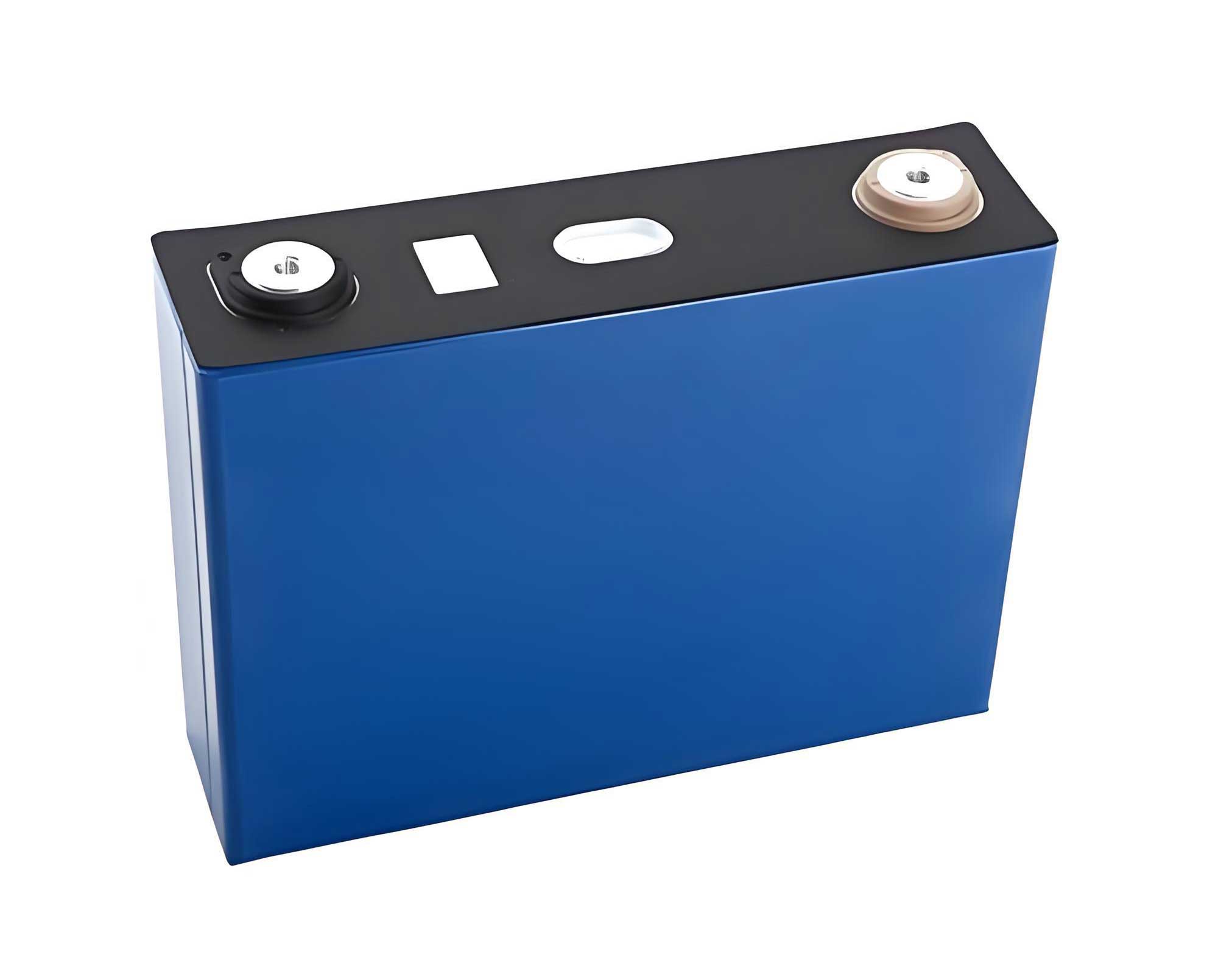
The rapid expansion of the new energy vehicle (NEV) industry has precipitated a corresponding surge in the production of power batteries. Among various chemistries, the lithium iron phosphate (LiFePO4) battery has garnered significant market share due to its advantages in cycle life, cost-effectiveness, and safety. However, after a typical service life of 3-5 years in electric vehicles, a LiFePO4 battery’s capacity typically degrades to approximately 80% of its initial value, rendering it unsuitable for the demanding duty cycles of vehicle propulsion. This marks the point of retirement for the first life of a power battery. Given the first wave of NEVs has now been in operation for over five years, a massive influx of retired LiFePO4 batteries is imminent. These batteries, while inadequate for vehicles, retain considerable residual capacity suitable for less demanding secondary applications, a process known as cascade or second-life utilization, commonly in energy storage systems. Ultimately, when these batteries reach their end-of-life even from second-use, responsible recycling is crucial to recover valuable materials and mitigate environmental hazards.
To holistically assess the environmental implications of managing retired LiFePO4 batteries, from production to final recycling, the Life Cycle Assessment (LCA) methodology, standardized by ISO 14040 and 14044, is the most appropriate tool. This study conducts a cradle-to-grave LCA for LiFePO4 batteries, specifically comparing two distinct utilization pathways: a direct application scenario and a cascade utilization scenario. The objective is to quantify the environmental footprint of each pathway, identify environmental hotspots across the life cycle stages, and evaluate the potential environmental benefits offered by extending battery life through cascade use in communication base station (CBS) energy storage.
1. Methodology and System Definition
1.1 Goal, Scope, and Functional Unit
The primary goal of this study is to evaluate and compare the lifecycle environmental impacts of utilizing LiFePO4 battery packs for energy storage in communication base stations via two distinct routes. The functional unit (FU) is defined as “the provision of 1 GWh of total usable energy capacity from LiFePO4 battery packs used for CBS energy storage, over a system lifetime of 800 charge-discharge cycles.” This FU ensures a fair comparison between a new battery used directly and a retired vehicle battery used secondarily for the same application.
1.2 System Boundaries and Scenarios
Two main utilization scenarios are constructed, as illustrated in the conceptual model below.
Scenario A: Direct Utilization Scenario
This scenario represents the conventional linear economy model for an energy storage battery.
1. Production & Manufacturing (Stage A1): This stage encompasses all processes from raw material extraction through the production of cathode (LiFePO4), anode (graphite), electrolyte, separators, and other components, to the final assembly of a new LiFePO4 battery pack designated specifically for CBS energy storage.
2. Direct CBS Application (Stage A2): The newly manufactured battery is installed and used directly as a backup power source in a communication base station until it completes 800 cycles, at which point its capacity is deemed insufficient for continued reliable service.
3. End-of-Life Recycling (Stage A3): The spent battery is collected and processed through a recycling facility to recover materials, primarily focusing on lithium recovery in this study.
Scenario B: Cascade Utilization Scenario
This scenario models a circular economy approach, where a battery serves first in an EV and then in a less demanding stationary storage application.
1. Production & Manufacturing (Stage B1): Identical in process to Stage A1, but the output is a LiFePO4 battery pack manufactured for electric vehicle (EV) propulsion.
2. First Life in EV (Excluded from main boundary): The battery is used in an electric vehicle. The environmental burdens of this use phase are considered part of the vehicle’s life cycle and are excluded from the system boundary of this FU, which is focused on the CBS storage service.
3. Testing & Sorting (Stage B2): Upon retirement from the EV (typically at ~70-80% residual capacity), the battery undergoes testing, disassembly, and reassembly to create a viable second-life battery pack for CBS use.
4. Cascade CBS Application (Stage B3): The reconditioned second-life LiFePO4 battery is used in the communication base station, providing the required 1 GWh of energy over 800 cycles.
5. End-of-Life Recycling (Stage B4): After its second life, the battery is recycled, analogous to Stage A3.
A critical aspect of modeling the cascade scenario is handling the shared burden of the production and recycling stages between the first (EV) and second (CBS) lives. To avoid arbitrary allocation, many studies use a 50/50 partitioning method. In this study, we apply allocation factors. The environmental burden from the production stage (B1) is allocated between the EV life and the CBS life using an allocation factor $\alpha$ (0 ≤ α ≤ 1). Similarly, the burden/benefit of the recycling stage (B4) is allocated using a factor $\beta$ (0 ≤ β ≤ 1). For a baseline comparison, we adopt the common “50/50 allocation”, setting $\alpha = \beta = 0.5$. Transportation phases are omitted due to data variability and their typically minor contribution relative to core processes.
1.3 Life Cycle Inventory (LCI)
The Life Cycle Inventory involves compiling the inputs (energy, materials) and outputs (emissions, wastes) for each stage within the system boundary. The data for manufacturing, testing, and recycling stages are derived from industry surveys and literature. The key inventory for the CBS application stage is calculated based on the operational parameters of a typical base station.
The total electricity demand for charging the LiFePO4 battery system over its life is a major inventory item. It is calculated based on the required battery capacity, system efficiencies, and capacity fade.
First, the required battery capacity $Q_r$ (Ah) for the CBS, accounting for efficiencies, is given by:
$$ Q_r = \frac{K \times I \times T}{[\eta \times (1 + \alpha \times (t_1 – 25))] \times E_T \times E_R} $$
where $K$ is the safety factor (1.25), $I$ is the average discharge current (41.67 A), $T$ is the required backup duration (3 h), $\eta$ is the discharge capacity coefficient (1), $\alpha$ is the temperature coefficient (0.006 /°C), $t_1$ is the minimum ambient temperature (5 °C), $E_T$ is the energy conversion efficiency (0.85), and $E_R$ is the transmission efficiency (0.90).
The total charging energy from the grid $E_{charge}$ (kWh) over the life cycle is:
$$ E_{charge} = Q_r \times U \times DoD \times l_c $$
where $U$ is the battery pack voltage (48 V), $DoD$ is the depth of discharge (0.60), and $l_c$ is the cycle life (800 cycles).
Capacity fade during cycling is modeled using a semi-empirical formula to estimate energy loss per cycle $\xi_n$ (%):
$$ \xi_n = A \times \exp\left(-\frac{E_a}{R \times t_2}\right) \times n^z $$
with $A=0.1825$, $E_a/R = 1324.65$ K, $t_2 = 298$ K, $z=0.5878$, and $n$ as the cycle number. The total energy loss $E_{loss}$ due to inefficiencies and fade over $l_c$ cycles is:
$$ E_{loss} = \sum_{n=1}^{l_c} [ Q_r \times U \times DoD \times \xi_n \times (1 – E_T \times E_R) ] $$
Finally, the net energy supplied to the CBS $E_{CBS}$ is:
$$ E_{CBS} = E_{charge} – E_{loss} $$
For the FU of 1 GWh, $E_{CBS}$ is set to 1 GWh, and the above equations are solved iteratively to obtain the corresponding $E_{charge}$ which forms the key electricity input for the inventory.
The inventory tables below summarize the key material and energy inputs for 1 GWh of CBS service for both scenarios. Note the differences in the manufacturing phase inputs due to the different battery states (new vs. second-life).
| Stage | Input Item | Unit | Amount | Source/Note |
|---|---|---|---|---|
| A1: Production | LiFePO4 (cathode) | tonnes | 3048.4 | Industry data |
| Graphite (anode) | tonnes | 1374.4 | Literature | |
| Electrolyte | tonnes | 1230.0 | Literature | |
| Copper Foil | tonnes | 681.8 | Literature | |
| Aluminum Foil | tonnes | 280.8 | Literature | |
| Separator | tonnes | 540.0 | Literature | |
| Polyvinylidene Fluoride (Binder) | tonnes | 25.5 | Literature | |
| N-Methyl-2-pyrrolidone (Solvent) | tonnes | 792.0 | Literature | |
| Natural Gas | m³ | 32,650 | Industry data | |
| Steam | tonnes | 46,272 | Literature | |
| Electricity | MWh | 56,389 | Industry data | |
| Water | m³ | 38,598 | Industry data | |
| A2: CBS Use | Grid Electricity (for charging) | MWh | ~1,180,000* | Calculated |
| A3: Recycling | Electricity | MWh | 505 | Industry data |
| Hydrochloric Acid | tonnes | 0.383 | Literature | |
| Sodium Hydroxide | tonnes | 0.040 | Literature | |
| Water | m³ | 0.054 | Industry data | |
| Output: Recovered Lithium (as LiCl) | tonnes | -0.0755 | (Credit) Industry data | |
| *Calculated value based on the model to deliver net 1 GWh to CBS. | ||||
| Stage | Input Item | Unit | Amount | Source/Note |
|---|---|---|---|---|
| B1: Production (50%) | LiFePO4 (cathode) | tonnes | 1968.75 | Industry data |
| Graphite (anode) | tonnes | 1108.125 | Literature | |
| Electrolyte | tonnes | 1540.625 | Literature | |
| Copper Foil | tonnes | 696.875 | Literature | |
| Aluminum Foil | tonnes | 375.0 | Literature | |
| Separator | tonnes | 260.9375 | Literature | |
| N-Methyl-2-pyrrolidone | tonnes | 2343.75 | Literature | |
| Steam | tonnes | 5400 | Literature | |
| Electricity | MWh | 15,000 | Industry data | |
| Water | m³ | 5714.56 | Industry data | |
| B2: Testing & Sorting | Electricity | MWh | 6,033 | Industry data |
| Steel (for new casing, etc.) | tonnes | ~11.9 | Estimated | |
| Copper (wires, connectors) | tonnes | ~83.0 | Estimated | |
| B3: CBS Use | Grid Electricity (for charging) | MWh | ~1,270,000* | Calculated |
| B4: Recycling (50%) | Electricity | MWh | 253 | 50% of A3 value |
| Hydrochloric Acid | tonnes | 0.191 | 50% of A3 value | |
| Sodium Hydroxide | tonnes | 0.020 | 50% of A3 value | |
| Water | m³ | 0.027 | 50% of A3 value | |
| Output: Recovered Lithium (as LiCl) | tonnes | -0.0378 | (Credit) 50% of A3 value | |
| *Higher than Scenario A due to starting from a lower initial capacity (70%), requiring more frequent charging to deliver the same total energy. | ||||
1.4 Impact Assessment and Environmental Indicators
The Life Cycle Impact Assessment (LCIA) is conducted using the ReCiPe 2016 (Hierarchist perspective) methodology, which provides results at both midpoint and endpoint levels. The following midpoint impact categories are selected for detailed analysis to understand specific environmental pressures:
- Global Warming Potential (GWP) [kg CO₂ eq]
- Fine Particulate Matter Formation (PMFP) [kg PM2.5 eq]
- Terrestrial Acidification (AP) [kg SO₂ eq]
- Freshwater Eutrophication (FEP) [kg P eq]
- Marine Eutrophication (MEP) [kg N eq]
- Human Carcinogenic Toxicity (HTPc) [kg 1,4-DCB eq]
- Human Non-carcinogenic Toxicity (HTPnc) [kg 1,4-DCB eq]
- Freshwater Ecotoxicity (FETP) [kg 1,4-DCB eq]
- Mineral Resource Scarcity (SOP) [kg Cu eq]
- Fossil Resource Scarcity (FFP) [kg oil eq]
These midpoint indicators are also aggregated into three endpoint damage categories: Damage to Human Health (HH), Damage to Ecosystem Diversity (ED), and Damage to Resource Availability (RA). The characterization results for each stage and scenario are calculated using the formula:
For Direct Scenario: $$ I_{n}^{FU} = P_n + U_n + E_n $$
For Cascade Scenario: $$ I_{n}^{‘FU} = \alpha P’_n + R’_n + U’_n + \beta E’_n $$
where $I_n$ is the impact score for category $n$, and $P, R, U, E$ represent the impacts from Production, Testing & Sorting (R), CBS Use, and End-of-life stages, respectively.
2. Results and Analysis
2.1 Environmental Impact Profile of Each Scenario
The LCIA results reveal the contribution of each life cycle stage to the total environmental impact. The CBS energy storage use phase is the dominant environmental hotspot in both scenarios, contributing 58.25% and 64.03% of the total aggregated (single score) impact for the direct and cascade scenarios, respectively. This is primarily due to the massive quantity of grid electricity required for charging over 800 cycles. Given China’s current electricity mix, which is heavily reliant on coal-fired power generation, this phase is responsible for the majority of greenhouse gas emissions, particulate matter formation, and acidification impacts.
The production and manufacturing phase is the second most significant contributor, accounting for 41.58% of the impact in the direct scenario and 27.36% in the cascade scenario. The complex supply chain for a LiFePO4 battery, involving energy-intensive material production (e.g., cathode material synthesis, graphite processing, foil rolling), leads to substantial burdens in categories like mineral resource depletion, freshwater eutrophication, and human toxicity.
The recycling stage shows a nuanced result. While recovering lithium provides a credit (negative impact) in terms of resource scarcity (SOP), the chemical and energy inputs for the hydrometallurgical recycling process itself generate positive environmental loads, particularly in toxicity-related categories. Consequently, the net environmental contribution of the recycling stage is small but positive (0.18% and 0.14% for direct and cascade, respectively), indicating that the environmental benefits of resource recovery are largely offset by the impacts of the recycling operations under the current process model.
| Impact Category | Unit | Direct Utilization Scenario | Cascade Utilization Scenario | ||
|---|---|---|---|---|---|
| Total | % from Use Phase | Total | % from Use Phase | ||
| Global Warming (GWP) | kg CO₂ eq | 7.72E+08 | 71.1% | 6.58E+08 | 83.4% |
| Fossil Resource Scarcity (FFP) | kg oil eq | 2.45E+08 | 67.3% | 2.11E+08 | 81.7% |
| Mineral Resource Scarcity (SOP) | kg Cu eq | 1.12E+06 | 33.1%* | 1.04E+06 | 30.0%* |
| Freshwater Eutrophication (FEP) | kg P eq | 1.45E+03 | 6.8% | 8.26E+02 | 8.5% |
| Freshwater Ecotoxicity (FETP) | kg 1,4-DCB | 2.35E+07 | 6.6% | 1.44E+07 | 7.7% |
| *Note: For SOP, the Use Phase contribution is negative due to recycling credits, meaning recycling reduces net resource depletion. The percentage shown is the magnitude of the credit relative to the total positive impact from other stages. | |||||
2.2 Comparative Analysis: Direct vs. Cascade Utilization
Comparing the two scenarios globally, the cascade utilization of a retired LiFePO4 battery for CBS storage demonstrates a clear environmental advantage over using a new, purpose-built LiFePO4 battery. The total aggregated environmental impact (ReCiPe single score) of the cascade scenario is approximately 9.03% lower than that of the direct scenario (32.93 vs. 36.20 million points). This advantage stems primarily from avoiding a significant portion of the burdens associated with manufacturing a brand-new battery for stationary storage. While the cascade scenario’s use phase has a slightly higher electricity consumption (due to starting from a lower initial capacity), and includes the additional testing/sorting stage, these are outweighed by the avoided production impacts.
The environmental benefits of cascade use are most pronounced for impact categories closely tied to material production and refining, such as Freshwater Eutrophication (FEP, -43.1%), Freshwater Ecotoxicity (FETP, -38.9%), and Human Carcinogenic Toxicity (HTPc, -35.4%). The advantage is smaller but still evident for global warming (-14.8%) and fossil resource depletion (-13.9%).
2.3 Contribution Analysis for Key Indicators
Resource Consumption (SOP): The majority of mineral resource depletion (primarily copper, iron, lithium, phosphate rock) occurs in the production stage. Recycling provides a substantial credit for lithium, reducing the net SOP impact. In the cascade scenario, the testing stage also contributes to copper and iron consumption due to component replacement.
Energy Consumption (FFP & embodied in GWP): The total primary energy demand mirrors the overall impact trend. The CBS use phase is the largest energy consumer (67.3% and 81.7% of FFP for direct and cascade, respectively), followed by the production stage. The near-zero net contribution from recycling highlights that the energy credit from recovered materials almost fully offsets the process energy.
Greenhouse Gas Emissions (GWP): CO₂ emissions from electricity generation during the CBS use phase dominate the GWP profile (72-84% contribution). CH₄ emissions are more significant in the production phase, linked to upstream material processes and natural gas use. The cascade scenario shows lower overall GWP, demonstrating that extending the life of a LiFePO4 battery avoids the carbon footprint of manufacturing a new one, even when accounting for the marginally higher use-phase electricity.
3. Discussion and Conclusions
This life cycle assessment provides a quantitative environmental comparison between two management pathways for LiFePO4 battery packs used in communication base station energy storage. The findings strongly support the environmental rationale for promoting the cascade utilization of retired electric vehicle LiFePO4 batteries.
The results indicate that for the defined functional unit, utilizing a second-life LiFePO4 battery reduces the total lifecycle environmental impact by approximately 9% compared to deploying a new, purpose-built LiFePO4 battery. The dominant environmental hotspot across all scenarios is the operational phase, driven by the carbon and emission-intensive grid electricity used for charging. This underscores that the overall environmental benefit of battery energy storage—whether using new or second-life LiFePO4 batteries—is inextricably linked to the decarbonization of the electricity grid.
The production phase of the LiFePO4 battery is the second major contributor, with significant impacts related to resource depletion and toxicity. Therefore, strategies to improve material efficiency, adopt cleaner production technologies, and increase the use of recycled materials in new batteries are critical for reducing the upstream footprint.
The analysis of the recycling stage reveals a critical insight: with current hydrometallurgical processes focused on lithium recovery, the net environmental benefit is minimal because the impacts of the recycling operations themselves counteract the resource savings. This highlights the need for developing more energy-efficient and environmentally benign recycling technologies that can recover a broader spectrum of materials (like graphite and electrolytes) with lower ancillary input.
Limitations and Future Work: This study relies on specific operational parameters and industry-average data. Key assumptions include a 100% success rate in sorting for cascade use (no rejected packs) and the use of a 50/50 allocation method. Future work should explore sensitivity to these assumptions, incorporate more granular data on battery degradation in second-life, and evaluate different recycling technologies (e.g., direct recycling). Furthermore, integrating economic assessment (Life Cycle Costing) would provide a more comprehensive sustainability perspective for decision-makers.
In conclusion, cascade utilization represents a environmentally preferable strategy for managing retired LiFePO4 batteries, aligning with circular economy principles. To maximize the benefits, policy and industry efforts should focus on: 1) establishing robust standards and infrastructure for battery collection, testing, and repurposing; 2) accelerating the greening of the power grid; and 3) investing in advanced recycling technologies to close the material loop more efficiently. The LiFePO4 battery, through extended service life, can play a significant role in a more sustainable energy system.