
Solid-state batteries replace the flammable liquid electrolyte of conventional lithium-ion cells with a solid ion conductor. The promise is not only safety: a solid electrolyte can, in principle, enable a lithium-metal anode and a more compact cell design. The difficulty is that the electrolyte must conduct lithium ions quickly, remain chemically stable against both electrodes, and survive processing without losing lithium or forming insulating secondary phases. Garnet-type \(\mathrm{Li_7La_3Zr_2O_{12}}\) (LLZO) is one of the few oxides that combines useful room-temperature conductivity with good stability against lithium metal. Its performance, however, is determined as much by sintering and doping as by the nominal composition.
The central design problem is that the fast-conducting cubic phase of LLZO is metastable at room temperature. Long high-temperature sintering drives lithium loss and the formation of \(\mathrm{La_2Zr_2O_7}\), an impurity that blocks lithium transport. A fast heating method can limit lithium loss, but it does not necessarily stabilize the cubic phase. Doping can stabilize the cubic phase, but it does not necessarily produce a dense, low-porosity pellet. The useful strategy is therefore to separate the two tasks: use volumetric heating to control lithium retention and microstructure, and use co-doping to control phase stability and lithium-site chemistry.
Why LLZO Needs Both Doping and a Fast Sintering Route
Garnet-type LLZO was first reported in 2007 with a room-temperature conductivity of about \(3\times10^{-4}\) S/cm. Its framework is built from \([\mathrm{LaO_8}]\) dodecahedra and \([\mathrm{ZrO_6}]\) octahedra, with lithium occupying channels within the structure. The tetragonal polymorph is thermodynamically stable at room temperature. In tetragonal LLZO, lithium is ordered over the \(8a\), \(16f\), and \(32g\) sites and is nearly fully occupied, so ion hopping requires a relatively high activation energy; the room-temperature conductivity is only about \(10^{-6}\) S/cm. The cubic polymorph has lithium disordered over the \(24d\) and \(96h\) sites with partial occupancy, forming an interconnected three-dimensional diffusion network. Its conductivity is two to three orders of magnitude higher, but the cubic phase is not the stable room-temperature form and must be stabilized by doping and processing.
The processing window is narrow. Sintering at \(900\)–\(1000\) °C for hours can volatilize lithium, shift the composition, and produce \(\mathrm{La_2Zr_2O_7}\). Conventional solid-state synthesis also heats the pellet from the outside inward, creating thermal gradients and uneven grain growth. Microwave-assisted sintering uses dielectric polarization and interfacial charging to deposit energy throughout the compact rather than conducting heat from the surface inward. The resulting volumetric heating allows faster ramp rates and much shorter dwell times.
| Stage | Conventional solid-state route | Microwave-assisted route |
|---|---|---|
| Precursor calcination | 5 °C/min to 900 °C, 6 h | 10 °C/min to 900 °C, 10 min |
| Pellet sintering | 5 °C/min to 1000 °C, 12 h | 10 °C/min to 1000 °C, 20 min |
The dwell time is shortened from 6 h to 10 min during calcination and from 12 h to 20 min during pellet sintering—about 36 times shorter at each stage. The benefit is not merely speed. Less time at high temperature suppresses lithium loss and the associated \(\mathrm{La_2Zr_2O_7}\) impurity, while volumetric heating reduces the thermal gradients that drive uneven grain growth. The stronger claim that microwave heating “eliminates” thermal stress is not necessary; the experimental evidence supports a reduction in thermal exposure and improved microstructural uniformity.
Dopant Chemistry: Gallium on Lithium Sites, Niobium on Zirconium Sites
Doping has two functions in LLZO: stabilizing the cubic phase and introducing lithium vacancies that assist ion transport. High-valence cations can substitute on either the lithium or zirconium sublattice, with charge compensation provided by a reduced lithium content. Gallium is a well-known cubic stabilizer and substitutes on the lithium site. The Ga-doped composition \(\mathrm{Li_{6.7}Ga_{0.1}La_3Zr_2O_{12}}\) contains fewer lithium ions than undoped \(\mathrm{Li_7La_3Zr_2O_{12}}\), so the higher charge of \(\mathrm{Ga^{3+}}\) is compensated by lithium vacancies. Niobium substitutes on the zirconium site. The composition \(\mathrm{Li_{6.7}La_3Zr_{1.7}Nb_{0.3}O_{12}}\) likewise has reduced lithium content to compensate for \(\mathrm{Nb^{5+}}\) replacing \(\mathrm{Zr^{4+}}\).
Neither single dopant is sufficient on its own. Under the reported microwave conditions, Ga-only LLZO still shows tetragonal splitting in X-ray diffraction, indicating that a tetragonal phase remains. Nb-only LLZO forms a cubic phase, but its pellet has larger intergrain pores and lower ionic conductivity and critical current density than the co-doped material. The Ga–Nb co-doped composition \(\mathrm{Li_{6.4}Ga_{0.1}La_3Zr_{1.7}Nb_{0.3}O_{12}}\) combines the two substitutions and yields a cubic, dense pellet. The conductivity gain over Ga-only LLZO is modest, but the increase in critical current density is substantial. That difference points to microstructure and dendrite resistance rather than bulk ion transport alone.
Phase and Microstructure: Impurity Control Is Not the Same as Cubic Stabilization
The undoped comparison isolates the effect of the sintering route. Both precursor powders show mixed tetragonal and cubic character. After pellet sintering, the conventional route produces LLZO with \(\mathrm{La_2Zr_2O_7}\) impurity peaks at \(2\theta=28.68^\circ\), \(33.27^\circ\), \(47.64^\circ\), and \(56.55^\circ\) (PDF 75-0346). The microwave route produces LLZO reflections without detectable \(\mathrm{La_2Zr_2O_7}\). This is direct evidence that the shorter thermal exposure suppresses the lithium-loss pathway that generates the impurity.
Impurity-free LLZO, however, is not the same as cubic LLZO. The Ga-only sample still shows tetragonal splitting, whereas Nb-only and Ga–Nb co-doped samples show cubic reflections. Cubic stabilization therefore comes from the dopant chemistry, not from microwave heating alone. The processing route controls lithium retention and microstructure; the dopants control phase stability and vacancy chemistry.
Scanning electron microscopy shows that the microwave-sintered undoped pellet has smaller grains and fewer pores than the conventionally sintered pellet. The single-doped Ga and Nb pellets contain larger intergrain pores, while the Ga–Nb co-doped pellet is dense with small, uniformly distributed grains. Energy-dispersive X-ray mapping shows Ga, Nb, La, and Zr distributed uniformly across the co-doped pellet at the micron scale. This supports homogeneous dopant incorporation, although it does not by itself prove atomic-site occupancy or local bonding.
Ionic Conductivity and Critical Current Density
Ionic conductivity was measured by electrochemical impedance spectroscopy with silver paste as a blocking electrode over \(0.1\) Hz to \(10^6\) Hz at an amplitude of \(5\) mV. The conductivity was calculated from the electrolyte resistance as
$$\sigma=\frac{L}{S R}$$
where \(L\) is the pellet thickness, \(S\) is the electrode–electrolyte contact area, and \(R\) is the electrolyte resistance. The pellets were \(0.34\) cm thick with a contact area of \(1.326\) cm². The critical current density (CCD) was measured with symmetric lithium cells under stepwise current polarization, using \(50\) μA/cm² steps and \(30\) min at each step. All measurements were made at room temperature.
| Composition | Route | Phase by XRD | \(\sigma\) (S/cm) | CCD (μA/cm²) |
|---|---|---|---|---|
| Undoped \(\mathrm{Li_7La_3Zr_2O_{12}}\) | Conventional | LLZO + \(\mathrm{La_2Zr_2O_7}\) | \(4.6\times10^{-4}\) | 450 |
| Undoped \(\mathrm{Li_7La_3Zr_2O_{12}}\) | Microwave | LLZO; no \(\mathrm{La_2Zr_2O_7}\) detected | \(8.62\times10^{-4}\) | 1100 |
| Ga-doped \(\mathrm{Li_{6.7}Ga_{0.1}La_3Zr_2O_{12}}\) | Microwave | LLZO with tetragonal splitting | \(1.8\times10^{-3}\) | 900 |
| Nb-doped \(\mathrm{Li_{6.7}La_3Zr_{1.7}Nb_{0.3}O_{12}}\) | Microwave | Cubic LLZO | \(1.45\times10^{-3}\) | 600 |
| Ga–Nb co-doped \(\mathrm{Li_{6.4}Ga_{0.1}La_3Zr_{1.7}Nb_{0.3}O_{12}}\) | Microwave | Cubic LLZO | \(1.94\times10^{-3}\) | 1450 |
The microwave route raises the conductivity of undoped LLZO from \(4.6\times10^{-4}\) to \(8.62\times10^{-4}\) S/cm and the CCD from 450 to 1100 μA/cm². Doping produces a further increase. The Ga–Nb co-doped pellet reaches \(1.94\times10^{-3}\) S/cm and 1450 μA/cm², the highest values among the compositions compared. Ga-only LLZO is close in conductivity at \(1.8\times10^{-3}\) S/cm but reaches only 900 μA/cm². This is the clearest demonstration that conductivity and dendrite tolerance are not the same property. A high bulk ion conductivity can coexist with a microstructure that allows lithium penetration through pores and grain boundaries.
The Nb-only pellet is cubic but has lower conductivity and CCD than the co-doped pellet, showing that phase stabilization alone is insufficient. Density, grain size, and grain-boundary resistance also matter. The co-doped pellet combines the cubic phase with the densest microstructure, which is consistent with its lowest electrolyte resistance and highest CCD. CCD values are engineering metrics rather than material constants; they depend on stack pressure, surface finish, and cell geometry, so the ranking within one study is more meaningful than the absolute numbers.
Solid-State Cell Cycling with a Lithium-Metal Anode
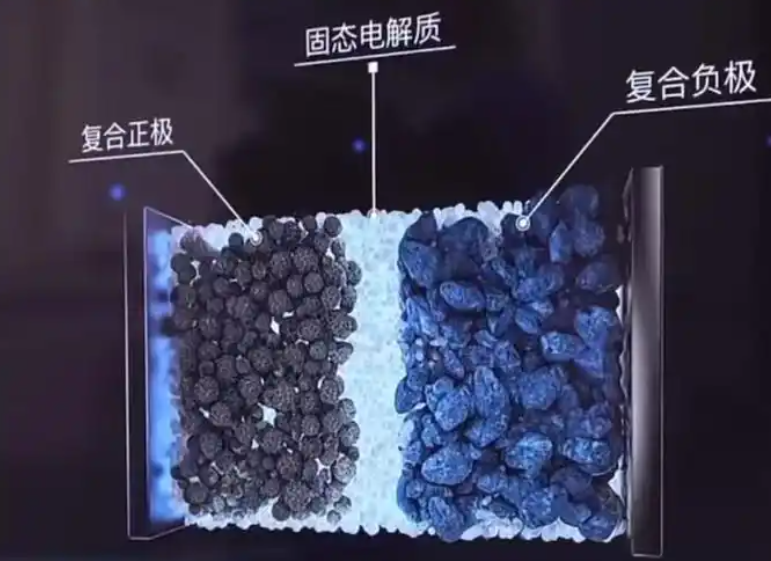
The co-doped electrolyte was tested in a \(\mathrm{Li}|(\mathrm{Ga,Nb})$-LLZO$|\mathrm{LiFePO_4}\) solid-state cell. Lithium iron phosphate (\(\mathrm{LiFePO_4}\), LFP) has a theoretical specific capacity of 170 mAh/g, and the cells were cycled between 2.5 and 3.7 V at room temperature. At 0.2C, the initial discharge capacity was 144.6 mAh/g, about 85% of the LFP theoretical value. After 100 cycles, 99.6% of the initial capacity remained. At 0.5C, the initial capacity was 132.3 mAh/g, about 78% of the theoretical value, and 98.8% remained after 350 cycles. Coulombic efficiency stayed near 100% in both tests.
| Rate | Initial discharge capacity (mAh/g) | Cycles | Capacity retention | Final capacity (mAh/g, calculated) | Coulombic efficiency |
|---|---|---|---|---|---|
| 0.2C | 144.6 | 100 | 99.6% | 144.0 | ~100% |
| 0.5C | 132.3 | 350 | 98.8% | 130.7 | ~100% |
The average capacity fade is below 0.005% per cycle at both rates. Stable Coulombic efficiency and the absence of short-circuit signatures indicate that the electrolyte–electrode interfaces remained stable under these conditions. The result is a meaningful demonstration of a solid-state battery with a lithium-metal anode and an LFP cathode, but it is not a high-power or high-voltage test. The data cover two low-to-moderate rates and 100–350 cycles, not the full operating envelope of a practical cell.
What the Data Support—and What They Do Not
The evidence is strongest for the phase and microstructure claims. X-ray diffraction directly identifies the \(\mathrm{La_2Zr_2O_7}\) impurity in the conventionally sintered pellet and its absence in the microwave-sintered pellet. It also distinguishes the tetragonal splitting of Ga-only LLZO from the cubic reflections of Nb-only and Ga–Nb co-doped LLZO. Scanning electron microscopy supports the density and grain-size comparisons, and elemental mapping supports micron-scale homogeneity of the dopants.
Some conclusions are indirect. The absence of \(\mathrm{La_2Zr_2O_7}\) is evidence that lithium loss was suppressed, but direct lithium quantification is not presented. Elemental maps show uniform distribution at the micron scale; they do not resolve atomic substitution or local coordination. The conductivity is an average pellet property extracted from impedance spectroscopy, not a single-crystal or grain-boundary-specific value. The CCD depends on the symmetric-cell setup, and the cycling data are limited to laboratory coin cells with LFP cathodes.
The reported pellets are small, about 0.20 g and 13 mm in diameter, and the electrolyte thickness used for conductivity is 0.34 cm. These are bulk pellets, not thin supported electrolytes. Large-area fabrication, thin-electrolyte processing, high-voltage cathode compatibility, stack pressure, and long-term cycling remain outside the reported scope. The shorter microwave dwell time plausibly reduces the energy budget per batch, but whether that translates into lower manufacturing cost depends on equipment, throughput, and yield.
Design Rules for Garnet Solid-State Batteries
The useful lesson is that phase stability, lithium retention, and microstructure are separate but coupled targets. Fast volumetric heating buys lithium retention and more uniform sintering. Co-doping buys cubic phase stability and controlled lithium-site vacancies. Densification buys dendrite tolerance. No single lever delivers all three. The Ga-only result is particularly instructive: it has high conductivity but a lower CCD, showing that a good impedance number cannot substitute for a mechanically robust microstructure.
For garnet-based solid-state batteries, the next bottlenecks are interfacial resistance, cathode compatibility, and scalable thin-electrolyte manufacturing. The Ga–Nb co-doped LLZO pellet provides a useful benchmark: \(1.94\times10^{-3}\) S/cm, 1450 μA/cm², and stable LFP cycling with a lithium-metal anode. More broadly, it shows that a processing route can be as important as a composition. Microwave-assisted sintering and Ga–Nb co-doping address different failure modes of LLZO, and their combination is what makes the electrolyte simultaneously cubic, dense, and electrochemically stable.