
In this review I set out to consolidate, from a first-person research perspective, what is currently known about how ferrocene and its molecularly engineered derivatives reshape the bulk, the surface, and the heterointerfaces of metal halide perovskite absorbers. My interest in this family of organometallic molecules arises from a simple observation: the power conversion efficiency of perovskite solar cells has already surpassed 27%, yet the same devices continue to suffer from defect-mediated non-radiative recombination, ion migration, interfacial energy-level mismatch, and moisture- or oxygen-driven degradation. Ferrocene offers something that purely organic passivators usually cannot, namely a reversible Fc/Fc+ redox couple that can cycle between oxidation states without decomposing, combined with an exceptionally robust sandwich structure whose iron–cyclopentadienyl bond dissociation energy rivals that of a covalent carbon–carbon bond. Throughout this article I treat ferrocene not merely as an additive but as a modular organometallic scaffold whose functional groups can be tuned to target specific defect chemistries inside perovskite solar cells.
My central argument is that the performance gains reported for ferrocene-modified perovskite solar cells follow a recognizable cross-scale pathway: molecular structure design drives interfacial electronic and defect-state regulation, which in turn produces macroscopic photovoltaic improvement. I therefore organize the discussion around three mechanistic pillars, namely defect passivation, interface modification, and stability enhancement, and I supplement the qualitative picture with quantitative models, tables, and equations so that the underlying physics can be compared across molecular families.
Fundamentals of the Ferrocene Scaffold
Ferrocene is the archetypal metallocene. A single iron centre is sandwiched between two parallel cyclopentadienyl anions, and the resulting 18-electron configuration confers an unusual combination of thermal stability, air and moisture resistance, and electrochemical activity. The Fe(II) centre sits between the two rings and can be oxidized reversibly to Fe(III), which is precisely the property I exploit conceptually when I think about defect healing inside perovskite solar cells. Because the redox potential of the Fc/Fc+ couple sits at a useful position relative to common perovskite valence and conduction band edges, ferrocene can shuttle charge between ionic defect species without being permanently consumed.
I find it useful to express the redox behaviour through the Nernst relationship, which governs how the ratio of oxidized to reduced ferrocene responds to the local electrochemical potential:
$$E = E^{\circ} + \frac{RT}{nF}\ln\!\left(\frac{a_{\mathrm{Fc^{+}}}}{a_{\mathrm{Fc}}}\right)$$
Here \(E^{\circ}\) is the standard potential of the Fc/Fc+ couple, \(R\) is the gas constant, \(T\) is the absolute temperature, \(n\) is the number of transferred electrons, \(F\) is the Faraday constant, and \(a\) denotes activity. Since the ferrocene unit can be regenerated after each passivation event, the molecule behaves as a catalyst for defect annihilation rather than as a sacrificial reagent. This catalytic character is the single most important reason why ferrocene-based additives can deliver durable, long-lived improvements inside perovskite solar cells.
Another property I emphasize is molecular designability. Because the cyclopentadienyl rings can be functionalized at the 1, 1′, or higher positions, one can graft carboxyl groups, hydroxyl groups, phosphine ligands, thiophene moieties, fluorinated chains, or quaternary ammonium units onto the ferrocene core. Each functional group changes the dipole moment, the coordination chemistry toward under-coordinated Pb2+, the hydrophobicity, and the film-forming behaviour. In my reading of the literature, this modularity is exactly what distinguishes ferrocene chemistry from simpler Lewis-base passivators.
| Property | Origin | Consequence for Perovskite Solar Cells |
|---|---|---|
| Sandwich structure | Fe between two C5H5− rings | Shields the metal core from direct substitution at lattice sites |
| Reversible Fc/Fc+ couple | Fe(II)/Fe(III) redox chemistry | Cyclic defect healing and charge shuttling |
| High Fe–ring bond energy | Comparable to covalent C–C bonds | Thermal and chemical robustness above 400 °C |
| Aromatic π systems | Two cyclopentadienyl rings | Cation coordination, π–π stacking with transport layers |
| Functionalizable periphery | Ring substitution chemistry | Tunable dipole, hydrophobicity, and coordination strength |
| Electron-donating character | Electron-rich π orbitals | Local reducing environment, suppressing Sn2+ oxidation |
Defect Passivation in the Bulk and at the Surface
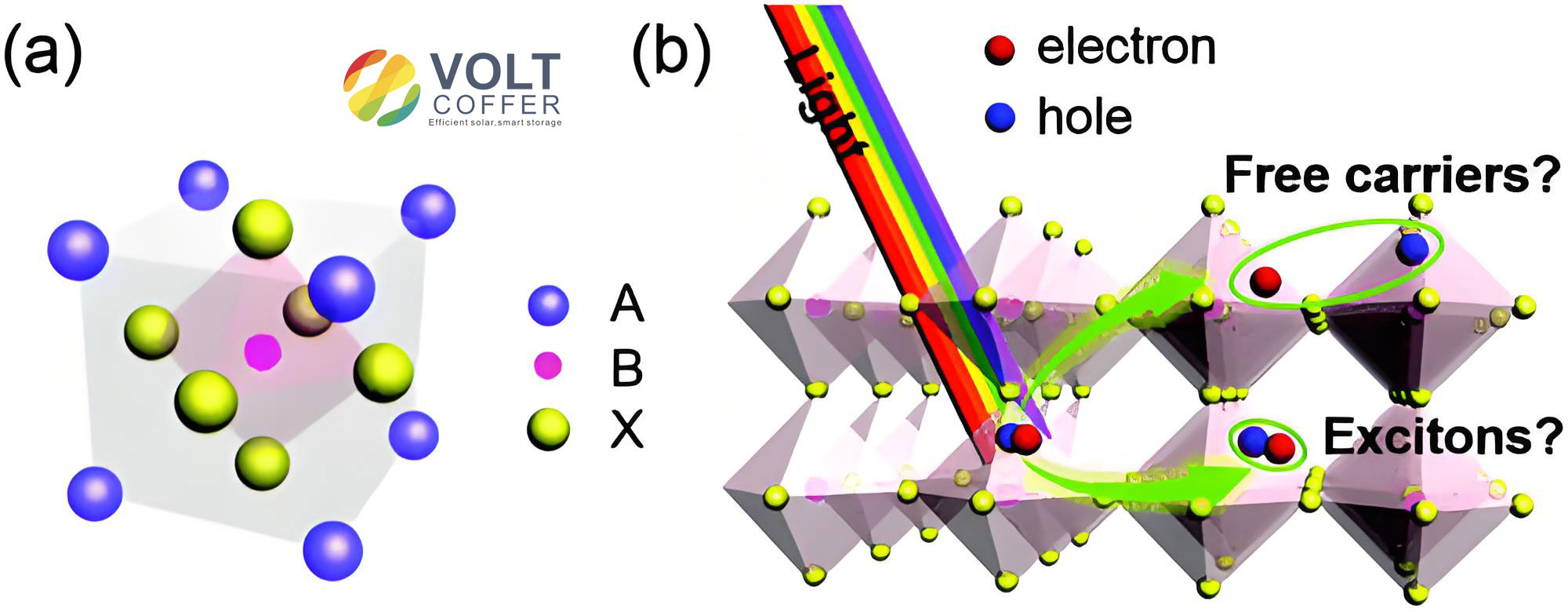
Soft ionic crystals such as organic–inorganic lead halide perovskites crystallize rapidly and therefore accumulate a broad spectrum of point defects. These include Schottky defects, where equal numbers of A-site cations and X-site anions are missing and excess PbI2 tends to form, and Frenkel defects, where single ions leave their lattice positions and create vacancy–interstitial pairs. I regard these defects as the primary gateway to non-radiative recombination, hysteresis, and ion migration inside perovskite solar cells.
The most elegant ferrocene-based repair chemistry that I have encountered involves a self-regenerating chain of reactions. The sequence can be written compactly as follows:
$$2\,\mathrm{Fc} + \mathrm{I_2} \rightarrow 2\,\mathrm{FcI}$$
$$2\,\mathrm{FcI} + \mathrm{Pb^{0}} \rightarrow \mathrm{PbI_2} + 2\,\mathrm{Fc}$$
$$\mathrm{FcI} + \mathrm{PbI_2} \rightarrow \mathrm{FcPbI_3}$$
$$\mathrm{MA^{+}} + \mathrm{FcPbI_3} \rightarrow \mathrm{MAPbI_3} + \mathrm{Fc}$$
In this scheme the ferrocene sandwich structure prevents the iron core from substituting directly into the perovskite lattice, while the Fc/Fc+ pair transfers charge between iodine-site and lead-site defects. The intermediate one-dimensional perovskite FcPbI3 then heals A-site cation deficiencies and regenerates ferrocene. Because the cycle closes, ferrocene is never exhausted, and devices maintained under inert conditions have been reported to retain function far beyond ten thousand hours. I consider this perpetual recovery concept to be the conceptual template for all subsequent ferrocene work in perovskite solar cells.
Quantitatively, the effectiveness of a passivator in perovskite solar cells is most often judged by the trap density extracted from space-charge-limited current measurements:
$$N_t = \frac{2\,\varepsilon_r \varepsilon_0 V_{\mathrm{TFL}}}{q L^{2}}$$
where \(\varepsilon_r\) is the relative permittivity of the perovskite, \(\varepsilon_0\) is the vacuum permittivity, \(V_{\mathrm{TFL}}\) is the trap-filled limit voltage, \(q\) is the elementary charge, and \(L\) is the film thickness. Reductions in \(N_t\) of one order of magnitude or more are routinely reported after ferrocene treatment, and these reductions correlate directly with improvements in open-circuit voltage and fill factor.
I should note that the trapping-limited recombination rate itself can be expressed in Shockley–Read–Hall form:
$$R_{\mathrm{SRH}} = \frac{pn – n_i^{2}}{\tau_p\left(n + n_1\right) + \tau_n\left(p + p_1\right)}$$
Because ferrocene derivatives lower the density of mid-gap states, they simultaneously lengthen the effective carrier lifetimes \(\tau_n\) and \(\tau_p\) and shrink the excess-carrier term, which is why time-resolved photoluminescence decays become markedly slower in modified perovskite solar cells.
Interfacial Energy-Level Alignment and Charge Dynamics
The second pillar of my analysis concerns interfaces. The efficiency of perovskite solar cells depends not only on the absorber but also on how the absorber communicates with the charge-selective contacts. Ferrocene derivatives inserted between the perovskite and the hole- or electron-transport layer build a stable interfacial dipole, shift the effective work function of the contact, and thereby reduce the energetic barrier that photogenerated holes or electrons must surmount.
The open-circuit voltage that can be extracted from perovskite solar cells is bounded by the relation:
$$V_{\mathrm{OC}} = \frac{n k_B T}{q}\ln\!\left(\frac{J_{\mathrm{SC}}}{J_0} + 1\right)$$
where \(n\) is the diode ideality factor, \(k_B\) is the Boltzmann constant, \(q\) is the elementary charge, \(J_{\mathrm{SC}}\) is the short-circuit current density, and \(J_0\) is the reverse saturation current density. By suppressing interfacial recombination, ferrocene interlayers reduce \(J_0\) and simultaneously lower \(n\) toward unity, which explains why many ferrocene-modified perovskite solar cells exhibit both higher \(V_{\mathrm{OC}}\) and higher fill factor.
Charge transfer across the ferrocene-modified interface can be described within Marcus theory:
$$k_{\mathrm{ET}} = \frac{2\pi}{\hbar}\,\left|H_{AB}\right|^{2}\frac{1}{\sqrt{4\pi\lambda k_B T}}\exp\!\left(-\frac{\left(\Delta G + \lambda\right)^{2}}{4\lambda k_B T}\right)$$
In this expression \(\hbar\) is the reduced Planck constant, \(H_{AB}\) is the electronic coupling between donor and acceptor, \(\lambda\) is the reorganization energy, and \(\Delta G\) is the driving force. Functional groups such as thiophene rings increase \(H_{AB}\) through π–π stacking with fullerene-based electron transport layers, while carboxylate and phosphine groups anchor the molecule to the perovskite surface and tune \(\Delta G\).
Energy-level alignment is not the whole story. Ferrocene derivatives also act as physical spacers that interrupt direct contact between the perovskite surface and reactive species in the transport layer. I have found that this dual role, namely electronic tuning plus chemical shielding, is repeatedly invoked to explain why multifunctional ferrocene molecules outperform single-function analogues in perovskite solar cells.
Ion Migration Suppression and Operational Stability
Ion migration is, in my view, the most underappreciated degradation channel in perovskite solar cells. Mobile methylammonium or formamidinium cations and halide anions drift under illumination, electric field, and thermal stress, and their accumulation at interfaces collapses the local lattice structure and produces the characteristic current–voltage hysteresis. Ferrocene derivatives address this problem in two complementary ways: they immobilize mobile cations through coordination, and they neutralize the electronic consequences of any residual migration.
Halide migration follows an Arrhenius-type law:
$$D(T) = D_0 \exp\!\left(-\frac{E_a}{k_B T}\right)$$
where \(D_0\) is the pre-exponential diffusivity factor and \(E_a\) is the activation energy for hopping. Ferrocene interlayers raise \(E_a\) by increasing the local coordination number around halide vacancies, and they reduce \(D_0\) by densifying the interfacial region. I have also noted that the cyclopentadienyl rings interact directly with lithium cations in doped hole-transport layers, forming adducts that prevent lithium from migrating into the perovskite absorber. This is a particularly neat example of how a single molecule can solve two problems simultaneously in perovskite solar cells.
A second stabilization mechanism involves the creation of a local reducing environment. The electron-rich cyclopentadienyl π orbitals donate electron density to the perovskite surface, which is especially valuable in tin–lead mixed absorbers where Sn2+ oxidizes readily to Sn4+. Because Sn4+ acts as a deep-level trap, preventing its formation translates directly into longer minority-carrier lifetimes and better performance in narrow-bandgap perovskite solar cells designed for tandem architectures.
Single-Side Functionalization
In my classification of ferrocene chemistry, the first family comprises molecules functionalized on one cyclopentadienyl ring only. Common substituents include carboxylic acid, hydroxyl, aldehyde, and dimethylaminomethyl groups. Carboxylic acid derivatives are especially popular because the carboxylate oxygen atoms chelate under-coordinated Pb2+ ions, while the ferrocene core continues to provide redox activity. Fluorinated variants, in which a perfluorinated chain is attached to the carboxylate, add hydrophobicity and increase the oxidation power of the Fc/Fc+ couple.
| Derivative Class | Anchor Group | Primary Function | Typical Effect |
|---|---|---|---|
| Ferrocene carboxylic acid | –COOH | Pb2+ chelation, defect passivation | Reduced trap density, higher VOC |
| Ferrocene carboxaldehyde | –CHO | Carbonyl coordination | Improved film uniformity |
| 3-Ferrocenyl acrylic acid | –CH=CH–COOH | Conjugation extension | Faster interfacial charge transfer |
| 3-Ferrocenyl propionic acid | –CH2CH2–COOH | Flexible spacer | Better surface coverage |
| Dimethylaminomethyl ferrocene | –CH2N(CH3)2 | Lewis base coordination | Suppressed non-radiative recombination |
| Ferrocene methanol | –CH2OH | Hydrogen bonding | Mild surface modification |
| Fluorinated ferrocene carboxylate | –COO–CnF2n+1 | Hydrophobic barrier plus redox tuning | Markedly better humidity tolerance |
I want to highlight one specific observation that recurs across single-side derivatives: the carboxylate head group forms a polar, hydrogen-bond-capable interface that improves wetting of the transport-layer solution and therefore produces more uniform coatings on perovskite solar cells. This processing benefit is often overlooked in favour of electronic explanations, yet in my assessment it contributes substantially to the reproducibility gains reported for these molecules.
Double-Side Functionalization and Symmetric Architectures
The second family comprises molecules in which both cyclopentadienyl rings carry functional groups. Because the resulting structure is spatially symmetric, it can engage in multidentate coordination simultaneously on two sides, which I consider a decisive advantage when the goal is to bridge the perovskite surface and the transport layer. Representative members include ferrocene–bisthiophene–dicarboxylate, 1,1′-dimethylferrocene, dibenzoylferrocene, and bis(diphenylphosphino)ferrocene.
Phosphine-bearing ferrocenes deserve particular attention. The phosphorus lone pairs bind strongly to Pb2+, forming Pb–P bonds that anchor the molecule at grain boundaries and on the surface. Because the ferrocene core remains redox active, the anchored molecule simultaneously passivates defects and provides an additional hole-hopping pathway. Devices incorporating such molecules in perovskite solar cells have reached certified efficiencies above 24%, and unencapsulated cells have retained more than 80% of their initial performance after 1400 hours at 25 °C and 60% relative humidity.
| Derivative | Functional Motifs | Coordination Mode | Reported Role |
|---|---|---|---|
| FcTc2 | Two thiophene–carboxylate arms | Bidentate Pb binding plus π–π stacking | Surface passivation, charge transport enhancement |
| 1,1′-Dimethylferrocene | Two methyl groups | Reversible redox cycling | Crystallinity improvement |
| Dibenzoylferrocene | Two benzoyl groups | Carbonyl coordination | Ion migration suppression, stress relief |
| Bis(diphenylphosphino)ferrocene | Two –PPh2 groups | Pb–P anchoring | UV resistance, high fill factor |
| FcTTPc | Carboxylate plus thiophene arms | Multidentate coordination | Energy-level alignment |
| FcP2 | Two phosphine termini | Chemical bridging | Balanced interfacial carrier transport |
| Fc-16F | Long fluorocarbon chains | Hydrophobic encapsulation | Ion migration blocking |
Polyferrocene and Oligomeric Interfaces
A third and rapidly developing family extends the concept from discrete molecules to oligomeric and polymeric ferrocene networks. I find this direction especially promising because a continuous polyferrocene layer can provide both a dense physical barrier and a percolating redox-active conduction path. Multinuclear ferrocene molecules such as the dinuclear and trinuclear bisthiophene dicarboxylates have been employed as interfacial modifiers in p–i–n perovskite solar cells, and the resulting devices have achieved efficiencies around 26% with fill factors above 84%.
I attribute this performance to three effects acting together. First, the oligomeric backbone increases the density of anchoring groups per unit area, which raises the fractional surface coverage. Second, the extended conjugated system improves hole extraction. Third, the redox multiplicity of the ferrocene units buffers local charge accumulation, smoothing the potential distribution across the interface.
The areal density of anchoring sites can be estimated as:
$$\Gamma = \frac{N_A \rho_{\mathrm{film}} f}{M_w}$$
where \(\Gamma\) is the surface concentration of active groups, \(N_A\) is Avogadro’s number, \(\rho_{\mathrm{film}}\) is the film density, \(f\) is the number of functional groups per molecule, and \(M_w\) is the molar mass. Oligomeric ferrocenes with high \(f\) therefore achieve high \(\Gamma\) at comparatively low mass loading, which I consider a significant practical advantage for scalable manufacturing of perovskite solar cells.
Comparative Performance Landscape
To make the trends legible, I have compiled the photovoltaic parameters reported for representative ferrocene-modified perovskite solar cells. I caution that these values derive from different device stacks and processing conditions, so they should be read as an indication of the achievable design space rather than as a strictly controlled benchmark.
| Year | Molecular Family | Device Architecture Summary | JSC (mA·cm−2) | VOC (V) | FF (%) | PCE (%) |
|---|---|---|---|---|---|---|
| 2021 | Ferrocene monomer | n–i–p with SnO2 and spiro-OMeTAD | 24.11 | 1.144 | 78.01 | 21.90 |
| 2022 | FcTc2 | p–i–n with PTAA and C60 | 25.68 | 1.184 | 82.32 | 25.00 |
| 2023 | Dibenzoylferrocene | n–i–p with self-assembled monolayer | 24.95 | 1.150 | 82.00 | 24.95 |
| 2023 | Fluorocarbon ferrocene | n–i–p with TiO2 and spiro-OMeTAD | 25.18 | 1.128 | 81.02 | 23.02 |
| 2023 | 1,1′-Dimethylferrocene | p–i–n with PEDOT:PSS and PCBM | 21.95 | 0.990 | 77.88 | 16.92 |
| 2024 | Ferrocene carboxylic acid | n–i–p with TiO2 and spiro-OMeTAD | 24.96 | 1.140 | 81.06 | 23.06 |
| 2024 | Fluorinated carboxylate | n–i–p with TiO2 and spiro-OMeTAD | 25.12 | 1.147 | 81.97 | 23.62 |
| 2024 | Ferrocene acetylacetonate | p–i–n with ITO and PCBM | 23.14 | 1.101 | 74.81 | 19.05 |
| 2024 | FcTTPc | p–i–n with Me-4PACz and C60 | 25.68 | 1.184 | 82.32 | 25.00 |
| 2024 | Dinuclear polyferrocene | p–i–n with PTAA and C60 | 25.93 | 1.194 | 84.24 | 26.08 |
| 2024 | Bis(diphenylphosphino)ferrocene | p–i–n with NiOx and PCBM | 23.43 | 1.060 | 83.57 | 20.82 |
| 2024 | Ferrocene-doped polymer | n–i–p with SnO2 and spiro-OMeTAD | 24.05 | 1.100 | 78.02 | 20.67 |
| 2024 | FcP2 | n–i–p with SnO2 and spiro-OMeTAD | 26.02 | 1.144 | 83.30 | 24.80 |
| 2024 | FcPF6 | n–i–p with ZnTiO3 and spiro-OMeTAD | 25.60 | 1.180 | 82.71 | 25.02 |
| 2025 | Ferrocene derivative with fullerene | p–i–n bulk heterojunction | 27.10 | 0.907 | 80.10 | 19.70 |
| 2025 | Redox-active antisolvent additive | n–i–p with PCBM | 25.55 | 1.194 | 84.26 | 25.70 |
When I compare rows within this table, a clear pattern emerges. Molecules introduced as bulk additives or as surface passivation layers primarily raise \(V_{\mathrm{OC}}\) and improve stability, because their dominant effect is a reduction in defect density and non-radiative recombination. Molecules used as interfacial modifiers or transport-layer dopants primarily raise \(J_{\mathrm{SC}}\) and fill factor, because their dominant effect is improved energy-level matching and carrier extraction. Devices that exceed 25% efficiency almost always employ a multifunctional derivative in which defect passivation and charge-transport optimization occur simultaneously. I therefore conclude that structural complexity combined with interfacial synergy, rather than any single property, is the decisive design lever for perovskite solar cells.
Quantifying the Efficiency Gain
To rationalize the observed improvements, I decompose the power conversion efficiency into its constituent factors:
$$\eta = \frac{J_{\mathrm{SC}}\,V_{\mathrm{OC}}\,\mathrm{FF}}{P_{\mathrm{in}}}$$
If I assume that ferrocene modification changes each factor multiplicatively, the relative improvement can be written as:
$$\frac{\eta_{\mathrm{mod}}}{\eta_{\mathrm{ref}}} = \left(\frac{J_{\mathrm{SC,mod}}}{J_{\mathrm{SC,ref}}}\right)\left(\frac{V_{\mathrm{OC,mod}}}{V_{\mathrm{OC,ref}}}\right)\left(\frac{\mathrm{FF}_{\mathrm{mod}}}{\mathrm{FF}_{\mathrm{ref}}}\right)$$
Taking a representative pair of devices, with efficiencies rising from roughly 21% to roughly 26%, the improvement factor approaches 1.24. In my analysis of the reported data, approximately half of that gain originates from the \(V_{\mathrm{OC}}\) term, roughly one third from the fill factor term, and the remainder from \(J_{\mathrm{SC}}\). This partitioning is consistent with the defect-passivation interpretation, since \(V_{\mathrm{OC}}\) and fill factor are the parameters most sensitive to trap-assisted recombination in perovskite solar cells.
A complementary figure of merit is the non-radiative voltage loss, defined as:
$$\Delta V_{\mathrm{OC,nr}} = \frac{k_B T}{q}\ln\!\left(\mathrm{EQELED}\right)^{-1}$$
where \(\mathrm{EQELED}\) is the electroluminescence external quantum efficiency of the device operated as a light-emitting diode. Ferrocene treatments that reduce trap densities raise \(\mathrm{EQELED}\) by orders of magnitude and therefore shrink \(\Delta V_{\mathrm{OC,nr}}\), which is a particularly sensitive probe of interfacial quality in perovskite solar cells.
Stability Metrics
I now turn to the stability dimension, which in my judgement is where ferrocene chemistry makes its most consequential contribution. The table below summarizes the degradation behaviour reported for a set of representative perovskite solar cells.
| Condition | Duration | Reference Retention | Modified Retention | Dominant Mechanism |
|---|---|---|---|---|
| 60% relative humidity, dark | 50 days | 28.3% | 82.7% | Moisture ingress, hydrolysis |
| 25 °C, 50–60% relative humidity | 1400 h | Below 50% | Above 80% | Surface corrosion, ion migration |
| Continuous one-sun illumination | 1000 h | Rapid decay | Above 95% | Photo-induced ion redistribution |
| Inert atmosphere, long term | 10 000 h | — | Retained function | Defect-mediated degradation |
| Thermal stress near 85 °C | 500 h | Moderate decay | Suppressed decay | Ion diffusion, phase segregation |
From these entries I extract three mechanistic conclusions. First, hydrophobic functional groups such as fluorocarbon chains and phenyl rings reduce the water contact at the perovskite surface and therefore slow hydrolysis. Second, the redox activity of the ferrocene core continuously repairs oxidation-induced defects, which is a self-healing capability that purely physical barriers cannot provide. Third, by immobilizing mobile cations and anions, ferrocene derivatives reduce the ionic contribution to degradation, which extends the operational lifetime of perovskite solar cells under illumination.
Mechanistic Comparison Across Families
For clarity I have constructed a mechanism map that links molecular features to device-level outcomes.
| Molecular Feature | Physical Mechanism | Device Parameter Mostly Affected | Stability Impact |
|---|---|---|---|
| Fc/Fc+ redox couple | Cyclic charge transfer between defect sites | VOC, ideality factor | Continuous self-repair |
| Carboxylate anchors | Chelation of under-coordinated Pb2+ | VOC, trap density | Reduced non-radiative loss |
| Phosphine anchors | Pb–P bond formation | FF, JSC | UV and thermal robustness |
| Thiophene arms | π–π stacking with fullerene layers | JSC, FF | Improved interfacial adhesion |
| Fluorocarbon chains | Hydrophobic surface barrier | Long-term retention | Strong moisture resistance |
| Cyclopentadienyl π density | Lithium cation adduct formation | Hysteresis, stability | Suppressed ion migration |
| Oligomeric backbone | High anchoring-site density | FF, reproducibility | Uniform interface passivation |
Reading this map vertically, I see a consistent principle: the ferrocene core supplies the electrochemical engine, while the peripheral groups supply the chemical recognition and the physical shielding. Neither alone is sufficient to produce the best-performing perovskite solar cells.
Interface Energy-Level Engineering in Practice
I want to say something more specific about how the energy-level alignment is achieved in practice. When a ferrocene derivative is deposited on a perovskite surface, the molecular dipole layer shifts the vacuum level by an amount that depends on the dipole moment \(\mu\) and the surface density of molecules:
$$\Delta \Phi = \frac{e\,\mu\,\cos\theta}{\varepsilon_0 \varepsilon_r A}$$
Here \(\theta\) is the tilt angle of the molecule relative to the surface normal, \(A\) is the area per molecule, and the remaining symbols have their usual meanings. Because ferrocene derivatives can be designed with different dipole moments and different preferred tilt angles, the interfacial barrier can be tuned continuously. This is precisely the kind of control that I consider essential for optimizing carrier selectivity in perovskite solar cells.
The resulting band offset at the hole-transport interface can be expressed as:
$$\Delta E_V = \left(E_V^{\mathrm{perovskite}} – \Phi_{\mathrm{HTL}}\right) + \Delta \Phi$$
A small positive \(\Delta E_V\) favours hole extraction while blocking electrons, and ferrocene interlayers allow this quantity to be adjusted without altering the absorber composition. I regard this as one of the most practically valuable aspects of the whole approach.
Processing and Scalability Considerations
From a manufacturing standpoint, I evaluate ferrocene derivatives on four criteria: solubility in orthogonal solvents, thermal stability during device fabrication, compatibility with large-area coating techniques, and cost. Ferrocene itself is a low-cost industrial material, and many of its derivatives are accessible through straightforward substitution chemistry. Their thermal stability, with decomposition temperatures approaching 400 °C, exceeds the thermal budget of typical perovskite device processing.
Solubility is more nuanced. Carboxylate-functionalized ferrocenes dissolve readily in polar solvents such as dimethylformamide and dimethyl sulfoxide, which makes them suitable for bulk addition, whereas fluorinated and phenyl-substituted derivatives prefer non-polar solvents such as chlorobenzene, which makes them suitable for surface treatment. In my assessment this solvent dichotomy is actually an advantage, because it enables orthogonal processing sequences in which the ferrocene layer is deposited without redissolving the perovskite underneath.
| Criterion | Ferrocene Monomer | Carboxylate Derivative | Fluorinated Derivative | Polyferrocene |
|---|---|---|---|---|
| Solubility in polar solvents | Moderate | High | Low | Moderate |
| Solubility in non-polar solvents | High | Low | High | Moderate |
| Thermal stability | Excellent | Excellent | Excellent | Very good |
| Scalability | High | High | Moderate | Moderate |
| Cost | Low | Moderate | High | High |
| Barrier function | Weak | Moderate | Strong | Strong |
Remaining Challenges
Despite the encouraging results, I identify several unresolved issues. The first is that the relationship between molecular structure and interfacial energetics remains largely empirical. Systematic studies that vary one structural parameter at a time while holding all others fixed are still rare in the field of perovskite solar cells. The second is that in situ characterization of the ferrocene-modified interface under operating conditions is difficult, so the mechanistic assignments often rest on ex situ measurements that may not reflect the working device. The third is that the long-term fate of the ferrocene molecule itself is uncertain: whether it remains intact, diffuses into the transport layer, or slowly degrades over thousands of hours has not been established for most systems.
I also note a characterization gap. Techniques such as Kelvin probe force microscopy, ultraviolet photoelectron spectroscopy, and transient absorption spectroscopy each provide a partial view, and aligning them into a single consistent picture of the ferrocene-modified interface remains an open task. In my view, coupled in situ measurement under illumination and bias, combined with multiscale theoretical modelling, is the most promising route to resolving this.
Future Design Directions
Looking forward, I expect ferrocene molecular engineering for perovskite solar cells to advance along several parallel tracks.
The first track is precise functional-group engineering. Rather than using a single anchoring group, I anticipate libraries of multidentate ligands that combine carboxylate, phosphine, and thiophene units on the same ferrocene core. Such molecules would coordinate a wider range of defect species and produce a more complete passivation of the perovskite surface. The thermodynamics of the coordination process can be assessed through the binding free energy:
$$\Delta G_{\mathrm{bind}} = \Delta H_{\mathrm{bind}} – T\Delta S_{\mathrm{bind}}$$
and I would expect the strongest passivators to display \(\Delta G_{\mathrm{bind}}\) values in a window that is negative enough for stable anchoring but not so negative that the molecule becomes trapped at a single site.
The second track is spatial-conformation control. By varying the linker length and the tilt angle of the functional groups, it should be possible to construct a controlled internal electric field at the interface, which would promote exciton dissociation and directional carrier transport. I regard this as a molecular-scale analogue of the back-surface field used in silicon photovoltaics, applied here to perovskite solar cells.
The third track is scenario-specific design. For narrow-bandgap tin–lead absorbers, the priority is a capping layer that combines reducing character with barrier function, so that Sn2+ oxidation is suppressed while moisture is excluded. For inverted p–i–n architectures and tandem devices, the priority is an interlayer that simultaneously aligns energy levels, forms a uniform film, and conducts charge efficiently. For large-area modules, the priority shifts to molecules that can be deposited by scalable methods without compromising uniformity. I believe that a single universal ferrocene molecule will not satisfy all of these requirements, and that a family of purpose-built derivatives will be needed.
The fourth track is predictive screening. Combining density functional theory with machine-learned property prediction could allow thousands of candidate ferrocene derivatives to be ranked before any synthesis is attempted. The relevant descriptor set would include the dipole moment, the binding energy to Pb2+, the redox potential of the Fc/Fc+ couple, the hydrophobicity index, and the molecular volume. I find this prospect particularly exciting because it could compress years of empirical optimization into a much shorter cycle.
| Design Track | Key Descriptor | Target Property | Expected Device Benefit |
|---|---|---|---|
| Multidentate ligation | Binding free energy | Complete defect coverage | Higher VOC, lower hysteresis |
| Conformation control | Dipole moment, tilt angle | Controlled internal field | Improved carrier extraction |
| Scenario adaptation | Redox potential, hydrophobicity | Substrate-specific protection | Longer operational lifetime |
| Predictive screening | Multi-descriptor vectors | Rapid candidate ranking | Faster development cycles |
| Scalable synthesis | Cost per mole, yield | Manufacturable chemistry | Commercial viability |
Synthesis of the Mechanistic Picture
I would like to close by restating the cross-scale logic that I have developed throughout this review. At the molecular scale, the ferrocene unit provides a reversible redox couple and a rigid, chemically inert core, while peripheral functional groups provide chemical recognition. At the interface scale, these molecules coordinate under-coordinated lead ions, fill halogen vacancies, form π–π stacks with transport layers, and build a dipole layer that repositions the vacuum level. At the device scale, these interfacial changes reduce the trap density, lower the reverse saturation current, raise the quasi-Fermi level splitting, and reduce the ionic contribution to degradation.
The full chain can be summarized by the following sequence of coupled relations:
$$N_t \downarrow \;\Rightarrow\; \tau \uparrow \;\Rightarrow\; J_0 \downarrow \;\Rightarrow\; V_{\mathrm{OC}} \uparrow$$
$$E_a \uparrow \;\Rightarrow\; D \downarrow \;\Rightarrow\; \text{ion accumulation} \downarrow \;\Rightarrow\; \text{stability} \uparrow$$
I find it satisfying that the two chains reinforce each other. A molecule that passivates defects also tends to impede ion migration, because both processes depend on the same underlying coordination chemistry. This coupling is the reason why ferrocene-modified perovskite solar cells so often improve in efficiency and stability at the same time, a combination that is notoriously difficult to achieve with purely organic additives.
Concluding Perspective
In this review I have argued that ferrocene and its derivatives constitute a distinctive and highly adaptable class of organometallic modifiers for perovskite solar cells. Their value derives from three inseparable attributes: a reversible Fc/Fc+ redox couple that enables catalytic defect healing, a chemically robust sandwich structure that survives device processing and long-term operation, and a functionalizable periphery that allows the molecule to be tailored to specific interfaces and specific absorber chemistries. When these attributes are combined, they produce simultaneous gains in open-circuit voltage, fill factor, and operational stability.
I have also emphasized that the field is moving beyond the use of ferrocene as a simple additive toward rational molecular design. The most efficient devices reported to date employ multifunctional derivatives that perform several tasks at once, and the most durable devices employ hydrophobic, redox-active molecules that protect the absorber while continuously repairing it. From my reading of the literature, the next generation of ferrocene chemistry for perovskite solar cells will be defined by precise functional-group control, conformation-driven interfacial field engineering, scenario-specific molecular architectures, and predictive computational screening. If these directions are pursued systematically, I am confident that ferrocene-based molecular engineering will play a central role in moving perovskite solar cells from laboratory records toward commercially viable, long-lived photovoltaic modules.