
I approach the problem of hole transport in a perovskite solar cell from a practical standpoint: a perovskite solar cell can absorb light and generate charge carriers with remarkable efficiency, but it cannot deliver stable power unless electrons and holes are extracted selectively, rapidly, and without corrosive side reactions. In my view, the hole transport material is not a passive spacer. It is an active electrochemical and structural component that controls interfacial recombination, ion migration, moisture ingress, and long-term operational reliability. Among the many hole transport materials explored for perovskite solar cells, Spiro-OMeTAD remains the benchmark because its energy levels, solubility, and film-forming behavior fit n-i-p perovskite solar cell architectures extremely well. However, its pristine electrical conductivity is too low for high-performance devices, and the classical doping package that raises conductivity also introduces a new set of degradation pathways. I therefore focus this article on chemical doping control strategies for Spiro-OMeTAD in perovskite solar cells, with emphasis on mechanisms, traditional systems, third-component additives, lithium replacement, TBP replacement, and fully alternative dopants.
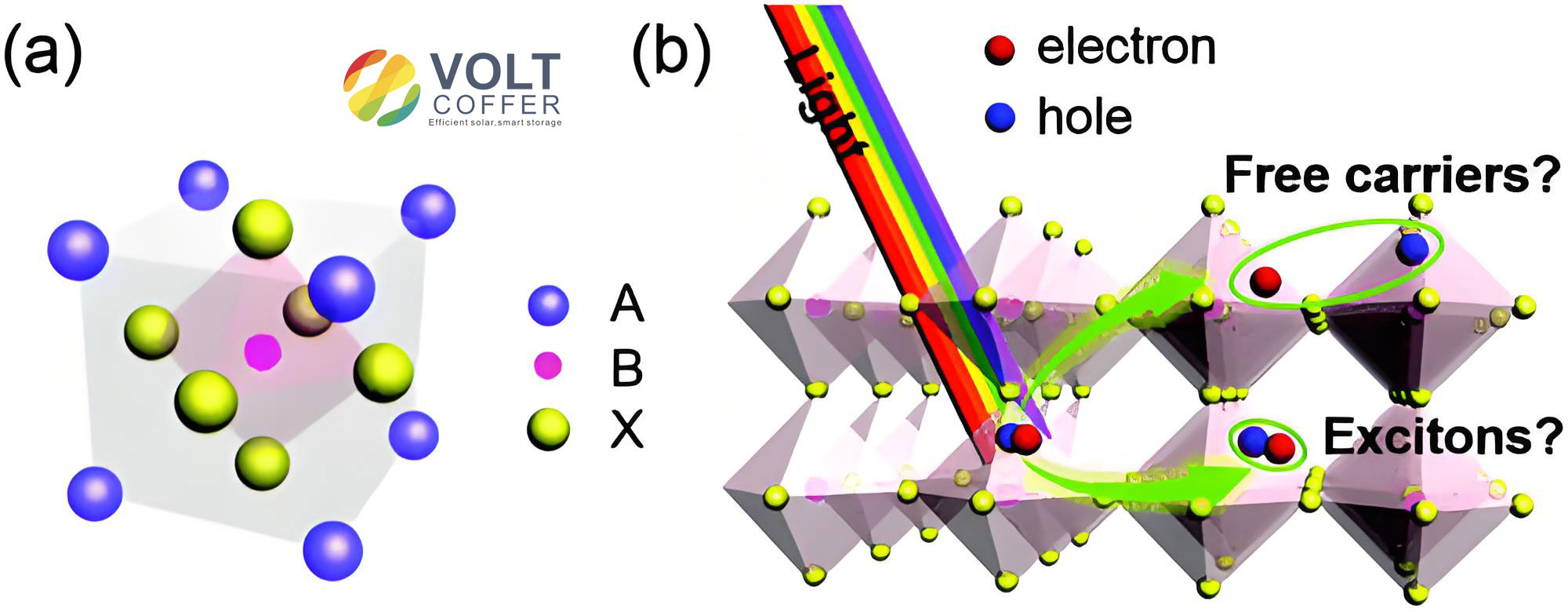
1. The Hole Transport Function in a Perovskite Solar Cell
I treat the hole transport layer in a perovskite solar cell as a selective contact. A selective contact must do several things at once: extract photogenerated holes from the perovskite absorber, block electrons from reaching the back contact, minimize interfacial traps, and protect the perovskite from the external environment. The photovoltaic figure of merit is governed by the familiar relationship:
$$ \mathrm{PCE}=\frac{J_{\mathrm{sc}}V_{\mathrm{oc}}\mathrm{FF}}{P_{\mathrm{in}}} $$
Here, \(J_{\mathrm{sc}}\) is the short-circuit current density, \(V_{\mathrm{oc}}\) is the open-circuit voltage, \(\mathrm{FF}\) is the fill factor, and \(P_{\mathrm{in}}\) is the incident optical power density. In a perovskite solar cell, the hole transport layer influences all three of these quantities. Poor hole extraction reduces \(J_{\mathrm{sc}}\); interfacial recombination and energy-level mismatch reduce \(V_{\mathrm{oc}}\); and high series resistance or unbalanced transport reduces \(\mathrm{FF}\). Therefore, doping is not merely a conductivity adjustment. It is an interfacial and thermodynamic engineering problem.
| Function in a perovskite solar cell | Physical or chemical requirement | Device-level consequence if unmet |
|---|---|---|
| Hole extraction | HOMO close to perovskite valence band | Low \(J_{\mathrm{sc}}\), interfacial recombination |
| Electron blocking | LUMO well above perovskite conduction band | Reduced \(V_{\mathrm{oc}}\), leakage current |
| Charge transport | High hole mobility and conductivity | High series resistance, low \(\mathrm{FF}\) |
| Interface passivation | Defect coordination, no corrosive reaction | Trap-assisted recombination |
| Barrier protection | Hydrophobicity, compact film, thermal stability | Moisture and oxygen degradation |
| Ion management | Low ion migration, stable dopant residues | Hysteresis, irreversible degradation |
I emphasize the phrase perovskite solar cell throughout this discussion because the material requirements are not identical to those of organic photovoltaics or organic light-emitting diodes. A perovskite solar cell contains a soft ionic lattice, volatile organic cations, halide defects, and mobile ionic species. Any dopant added to Spiro-OMeTAD can migrate, hydrate, oxidize, or coordinate with the perovskite surface. The same dopant that improves conductivity can shorten the life of a perovskite solar cell.
2. Why Spiro-OMeTAD Became a Benchmark
I view Spiro-OMeTAD as a molecular compromise. Its central spiro carbon connects two orthogonal fluorene-based aromatic arms, preventing strong intermolecular \(\pi\)-\(\pi\) stacking and favoring amorphous film formation. The methoxy-substituted diarylamine groups tune the ionization potential and provide good hole extraction from many perovskite absorbers. The result is a material that dissolves in common organic solvents, forms uniform films by spin coating, and aligns its highest occupied molecular orbital with the valence band of a typical perovskite solar cell absorber.
| Property of Spiro-OMeTAD | Typical value or behavior | Implication for a perovskite solar cell |
|---|---|---|
| HOMO level | about \(-5.22\ \mathrm{eV}\) | Good hole extraction from perovskite |
| LUMO level | about \(-2.05\ \mathrm{eV}\) | Electron blocking |
| Optical gap | about \(3.17\ \mathrm{eV}\) | Negligible parasitic absorption |
| Pristine hole mobility | about \(10^{-4}\ \mathrm{cm^2\,V^{-1}\,s^{-1}}\) | Transport is too slow without doping |
| Pristine conductivity | about \(10^{-5}\ \mathrm{S\,cm^{-1}}\) | High series resistance |
| Glass transition temperature | about \(125\ ^\circ\mathrm{C}\) | Moderate thermal stability |
| Melting point | about \(248\ ^\circ\mathrm{C}\) | Thermal processing possible below decomposition |
The electrical limitation can be expressed simply. For a p-type organic semiconductor, the conductivity is:
$$ \sigma = q p \mu_p $$
where \(q\) is the elementary charge, \(p\) is the hole density, and \(\mu_p\) is the hole mobility. Pristine Spiro-OMeTAD has both low \(p\) and moderate \(\mu_p\). Doping increases \(p\) by creating radical cations, but it can also disorder the film, introduce ionic species, and accelerate degradation. The mobility itself depends on the density of states and hopping sites:
$$ \mu = \frac{\sigma}{q p} $$
Thus, I cannot solve the Spiro-OMeTAD problem by increasing conductivity alone. I must increase \(p\) while preserving \(\mu\), morphology, energy alignment, and chemical compatibility with the perovskite solar cell.
3. Inherent Limitations of Pristine and Conventionally Doped Spiro-OMeTAD
I identify three inherent limitations. First, the spiro architecture suppresses crystallization but also suppresses close molecular packing, so charge transport occurs through a disordered hopping network. Second, the methoxy-diarylamine substituents improve energy-level matching but add steric bulk, further limiting intermolecular overlap. Third, the material itself is not sufficiently conductive, so it requires oxidative doping. Once doped with the standard lithium salt and pyridine derivative, the film becomes hygroscopic and ionically active.
| Limitation | Origin | Consequence in a perovskite solar cell |
|---|---|---|
| Low intrinsic hole mobility | Amorphous packing, orthogonal spiro core | High series resistance, lower \(\mathrm{FF}\) |
| Low intrinsic conductivity | Low carrier density | Need for strong p-type doping |
| Moisture sensitivity after doping | LiTFSI hydration and ionic solvation | Perovskite decomposition, contact degradation |
| Volatility of TBP | High vapor pressure and moderate boiling point | Pinholes, film collapse, dopant redistribution |
| Ion migration | Mobile \(\mathrm{Li^+}\) and halide species | Hysteresis, nonradiative recombination |
| Slow oxidation reproducibility | Dependence on oxygen and humidity | Batch-to-batch variation |
I therefore regard the central challenge as a coupled electrochemical and morphological problem. A doped Spiro-OMeTAD film in a perovskite solar cell must be conductive, hydrophobic, thermally stable, and chemically inert. The classical dopant package is efficient but not innocent.
4. General Doping Mechanisms in Spiro-OMeTAD
I describe p-type doping of Spiro-OMeTAD as an electron-transfer reaction. A dopant with sufficient oxidizing power removes an electron from the neutral molecule and generates a radical cation:
$$ \mathrm{Spiro\text{-}OMeTAD} \rightarrow \mathrm{Spiro\text{-}OMeTAD^{\bullet+}} + e^- $$
More generally, the reaction can be written as:
$$ \mathrm{Spiro\text{-}OMeTAD} + \mathrm{Ox} \rightleftharpoons \mathrm{Spiro\text{-}OMeTAD^{\bullet+}} + \mathrm{Red} $$
The radical cation acts as a mobile hole polaron. Its concentration increases the hole density \(p\), shifting the Fermi level toward the HOMO and improving hole conduction. The thermodynamic driving force is related to the difference in oxidation potentials:
$$ \Delta G = -nF\left(E_{\mathrm{ox}}^{\mathrm{dopant}} – E_{\mathrm{ox}}^{\mathrm{Spiro}}\right) $$
A dopant with a more positive oxidation potential can oxidize Spiro-OMeTAD more strongly. However, an overly strong oxidant may create instability, side reactions, or uncontrolled doping. The doping efficiency can be defined as:
$$ \eta_d = \frac{[\mathrm{Spiro^{\bullet+}}]}{[\mathrm{Spiro}]_0} $$
Ideal doping increases \(\eta_d\) at low dopant loading, avoids mobile ionic residues, and preserves film morphology. The dopant should also passivate perovskite interfacial defects and improve energy alignment. In my assessment, the best modern dopants act as multifunctional additives rather than simple oxidants.
| Desired dopant property | Reason | Risk if violated |
|---|---|---|
| Strong but controlled oxidizing power | Generates Spiro radical cations | Over-oxidation or side reactions |
| Low volatility | Prevents film collapse | Pinholes and dopant loss |
| Low ion mobility | Suppresses migration into perovskite | Hysteresis and degradation |
| Hydrophobic character | Reduces water uptake | Moisture-driven decomposition |
| Lewis base or acid sites | Passivates perovskite defects | Trap-assisted recombination |
| Good solubility in processing solvent | Uniform film formation | Phase separation and aggregates |
| Thermal stability | Withstands device operation | Morphological collapse |
5. The Classical LiTFSI and TBP System
I now turn to the classical system because every alternative strategy is understood against its successes and failures. LiTFSI and TBP work together in the presence of oxygen to oxidatively dope Spiro-OMeTAD. The simplified oxygen-mediated doping sequence is:
$$ \mathrm{Spiro\text{-}OMeTAD} + \mathrm{O_2} \rightleftharpoons \mathrm{Spiro\text{-}OMeTAD^{\bullet+}} + \mathrm{O_2^{\bullet-}} $$
$$ \mathrm{Spiro\text{-}OMeTAD^{\bullet+}} + \mathrm{O_2^{\bullet-}} + \mathrm{LiTFSI} \rightarrow \mathrm{Spiro\text{-}OMeTAD^{\bullet+}TFSI^-} + \mathrm{Li_xO_y} $$
LiTFSI provides \(\mathrm{Li^+}\) and the weakly coordinating \(\mathrm{TFSI^-}\) anion. The anion stabilizes the radical cation, while the lithium cation can interact with TBP. TBP coordinates \(\mathrm{Li^+}\), weakens ion pairing, improves salt dissolution, and hinders aggregation:
$$ \mathrm{Li^+} + n\mathrm{TBP} \rightleftharpoons [\mathrm{Li(TBP)}_n]^+ $$
This coordination is beneficial during film formation, but it also creates a reservoir of mobile lithium and a volatile organic base. In a perovskite solar cell, residual TBP can coordinate with \(\mathrm{Pb^{2+}}\) and iodide species, while hydrated lithium can migrate through the transport layer and into the perovskite. The same chemistry that improves conductivity also weakens long-term stability.
| Component | Primary role | Benefit for Spiro-OMeTAD | Failure mode in a perovskite solar cell |
|---|---|---|---|
| LiTFSI | Oxidative p-type dopant source | Generates radical cations, improves conductivity | Strong hygroscopicity, \(\mathrm{Li^+}\) migration |
| TBP | Coordination and solubilization additive | Dissolves LiTFSI, controls morphology | Volatility, perovskite etching, de-doping |
| Oxygen | Electron acceptor | Enables oxidation | Uncontrolled doping, reproducibility problems |
| Moisture | Unintended participant | Can assist salt dissolution | Hydration, corrosion, degradation |
I express the moisture problem in a simplified hydration equilibrium:
$$ \mathrm{Li^+} + \mathrm{H_2O} \rightleftharpoons [\mathrm{Li(H_2O)}_n]^+ $$
The hydrated complex increases ionic conductivity in an unwanted way, modifies the local dielectric environment, and can transport water toward the perovskite interface. I therefore do not treat LiTFSI and TBP as neutral additives. They are reactive components in a perovskite solar cell.
6. Third-Component Stabilization of the LiTFSI and TBP System
I find the third-component strategy attractive because it does not abandon the efficient LiTFSI and TBP chemistry immediately. Instead, it adds a molecule that coordinates lithium, suppresses TBP volatilization, accelerates oxidation, or passivates the perovskite interface. The general chelation reaction is:
$$ \mathrm{Li^+} + L \rightleftharpoons [\mathrm{LiL}]^+ $$
If the ligand has multiple coordinating sites, it can immobilize lithium and reduce its diffusion. If the ligand also has Lewis basic groups, it can passivate undercoordinated lead or halide defects at the perovskite surface. If it participates in redox chemistry, it can shorten the oxidation time. I summarize representative third-component strategies in the following table.
| Additive motif | Key chemical action | Effect on Spiro-OMeTAD | Reported device outcome |
|---|---|---|---|
| Azide-based bifunctional molecule | Chelates \(\mathrm{Li^+}\), dipole interaction with TBP | Suppresses pinholes, accelerates oxidation | Improved uniformity and hole extraction |
| Organic molten salt with amine and trifluoroacetate groups | Hydrogen bonding with TBP, anion exchange with LiTFSI | Reduces TBP volatilization and Li migration | PCE up to 25.80%, good damp-heat stability |
| EDOT with iodine oxidant | In situ polymerization to PEDOT, Li coordination | Forms composite hole transport network | PCE 24.79%, reduced Spiro usage |
| Triallyl isocyanurate | Carbonyl coordination to \(\mathrm{Li^+}\), \(\mathrm{Pb^{2+}}\) passivation | Lowers TBP demand, suppresses salt aggregation | Carbon-based PCE 20.63%, Ag-based PCE 24.21% |
The EDOT route is especially instructive. I can write the oxidative polymerization as:
$$ n\mathrm{EDOT} \xrightarrow{\mathrm{I_2}} \mathrm{PEDOT} $$
The iodine oxidant also drives Spiro-OMeTAD oxidation, and the reduced iodide can fill halide vacancies. The resulting PEDOT and oxidized Spiro-OMeTAD form a composite transport network through \(\pi\)-\(\pi\) interactions. I regard this as a combined doping, morphology, and interface-passivation strategy. The third component is not merely a stabilizer; it changes the transport physics of the perovskite solar cell.
I also note that the third-component approach still leaves LiTFSI in the film in many cases. If the additive only slows lithium migration but does not remove lithium, the long-term risk remains. Therefore, I see third-component stabilization as an important bridge between classical doping and fully lithium-free systems.
7. Replacing Lithium Ions
I next consider lithium replacement because mobile \(\mathrm{Li^+}\) is one of the most persistent sources of instability in Spiro-OMeTAD-based perovskite solar cells. The goal is to generate Spiro radical cations without introducing a small, highly mobile, hygroscopic cation. Several strategies have been developed, including photoinduced charge separation, superoxide generation, proton-mediated oxidation, and multivalent cation modulation.
One approach uses a metal-pyridine complex to induce charge separation under illumination. The simplified reactions are:
$$ \mathrm{Spiro\text{-}OMeTAD} \xrightarrow{h\nu} \mathrm{Spiro\text{-}OMeTAD^{\bullet+}} + e^- $$
$$ \mathrm{Spiro\text{-}OMeTAD} + e^- \rightarrow \mathrm{Spiro\text{-}OMeTAD^{\bullet-}} $$
A small amount of oxygen or another mild oxidant can remove the excess electron from the reduced species, preserving the radical cation. This strategy avoids the long air-oxidation step and reduces uncontrolled oxidation. I find it attractive because the doping process can be completed quickly in an inert atmosphere, which improves reproducibility.
Another lithium-free route uses a variable-valence salt to generate superoxide in situ:
$$ \mathrm{Eu^{2+}} + \mathrm{O_2} \rightarrow \mathrm{Eu^{3+}} + \mathrm{O_2^{\bullet-}} $$
$$ \mathrm{Spiro\text{-}OMeTAD} + \mathrm{O_2^{\bullet-}} \rightarrow \mathrm{Spiro\text{-}OMeTAD^{\bullet+}} + \mathrm{O_2^{2-}} $$
After reaction, the metal-containing byproducts can be removed by filtration, leaving a doped Spiro-OMeTAD solution without lithium. The resulting film can show higher conductivity than the conventional system and a higher glass transition temperature. This is a clear example of decoupling the doping step from the final film composition.
Proton-mediated photo-oxidation is another lithium-free concept. A tetrafluoroborate or imide salt can participate in light-driven redox chemistry, and solvent engineering can reduce the amount of volatile base. A simplified proton-coupled oxidation can be written as:
$$ \mathrm{Spiro\text{-}OMeTAD} + \mathrm{H^+} \xrightarrow{h\nu} \mathrm{Spiro\text{-}OMeTAD^{\bullet+}} + \frac{1}{2}\mathrm{H_2} $$
I do not treat this equation as a complete mechanistic description, but it captures the idea that photon energy can replace thermal air oxidation. The practical benefit is faster and more controllable doping.
Multivalent cation modulation is a more subtle strategy. I can view the metal cation as a symmetry-breaking agent and an oxidation mediator. The radius and charge density of the cation influence ion pairing, TFSI dissociation, and the local electrostatic field around Spiro-OMeTAD. A simplified doping reaction is:
$$ \mathrm{Spiro\text{-}OMeTAD} + \mathrm{M^{n+}} \rightarrow \mathrm{Spiro\text{-}OMeTAD^{\bullet+}} + \mathrm{M^{(n-1)+}} $$
In practice, a mixture of cations can tune both oxidation level and hole mobility. I summarize representative lithium-replacement strategies below.
| Strategy | Doping route | Main advantage | Remaining challenge |
|---|---|---|---|
| Photoinduced charge separation with metal-pyridine complex | Light-driven generation of radical cation | Fast doping, no long air aging | Requires controlled illumination and oxygen traces |
| Variable-valence salt and superoxide | In situ \(\mathrm{O_2^{\bullet-}}\) generation | Lithium-free, high conductivity | Byproduct removal and solution stability |
| Proton-mediated photo-oxidation | Light-driven proton-coupled redox | Avoids lithium and excessive TBP | Scale-up uniformity and solvent selection |
| Multivalent cation co-doping | Cation-\(\pi\) and ion-pair modulation | Tunable mobility and oxidation | Optimization of cation ratio |
| Paramagnetic rare-earth cation | Spin-spin interaction with radical cation | Additional charge transport channel | Cost and mechanistic complexity |
I believe lithium replacement is one of the most promising directions for a durable perovskite solar cell. It directly addresses ion migration and moisture uptake. However, a lithium-free dopant must still dissolve well, oxidize Spiro-OMeTAD efficiently, and leave no harmful residue. The best examples combine fast doping with a purification step or a nonmobile cation.
8. Replacing TBP
I now consider TBP replacement. TBP is useful because it coordinates \(\mathrm{Li^+}\), improves salt solubility, and moderates film formation. It is harmful because it is volatile, basic, and capable of interacting with the perovskite. Replacing TBP requires a molecule that can solvate or coordinate the dopant without destroying the perovskite interface.
A carbonate such as ethylene carbonate can coordinate lithium through its carbonyl group:
$$ \mathrm{Li^+} + \mathrm{EC} \rightleftharpoons [\mathrm{Li(EC)}]^+ $$
This coordination improves LiTFSI solubility and releases more free \(\mathrm{TFSI^-}\) to stabilize Spiro radical cations. Because ethylene carbonate has a high boiling point and low volatility, it remains in the film and reduces pinhole formation. The device can retain a high glass transition temperature and show improved damp-heat stability. I consider this a conservative but effective replacement because it keeps the lithium salt while removing TBP.
Crown ethers offer a more specific approach. A crown ether can encapsulate lithium:
$$ \mathrm{Li^+} + 12\text{-crown-4} \rightleftharpoons [\mathrm{Li(12\text{-}crown\text{-}4)}]^+ $$
The host-guest complex increases salt solubility, suppresses lithium migration, and can enable doping even without oxygen in some pathways. The calibration of radical cation concentration can be performed by optical absorption, which allows quantitative comparison of doping efficiency. I regard this as a useful mechanistic tool as well as a practical strategy.
Quantum dots provide a nanoscale solid-state doping route. A copper-based redox center can oxidize Spiro-OMeTAD:
$$ \mathrm{Cu^{2+}} + \mathrm{Spiro\text{-}OMeTAD} \rightarrow \mathrm{Cu^+} + \mathrm{Spiro\text{-}OMeTAD^{\bullet+}} $$
A shell can anchor lithium or passivate defects, and the nanoparticle can be retained in the film. This creates a composite hole transport layer with improved uniformity and reduced volatile dopant content. I find the quantum-dot approach attractive because it combines doping, passivation, and morphological control in one component.
Nickel oxide nanoparticles are another TBP replacement strategy. The redox couple can oxidize Spiro-OMeTAD:
$$ \mathrm{Ni^{2+}} \rightarrow \mathrm{Ni^{3+}} + e^- $$
$$ \mathrm{Spiro\text{-}OMeTAD} \rightarrow \mathrm{Spiro\text{-}OMeTAD^{\bullet+}} + e^- $$
In one design, ligand-modified nickel oxide nanoparticles remain in the film, improve energy alignment, and shorten the oxidation time from days to seconds. In another design, micrometer-scale nickel oxide powder acts as a heterogeneous catalyst and is removed by filtration after doping. The latter approach leaves a clean Spiro-OMeTAD solution with no residual lithium or TBP. I see this as a powerful route to a stable perovskite solar cell because it removes both mobile ions and volatile additives.
| TBP replacement | Coordination or redox role | Film and device effect | Stability impact |
|---|---|---|---|
| Ethylene carbonate | Carbonyl coordination to \(\mathrm{Li^+}\) | Better LiTFSI solubility, no TBP volatility | Improved damp-heat stability |
| 12-crown-4 | Host-guest encapsulation of \(\mathrm{Li^+}\) | Higher salt solubility, quantified doping | Suppressed lithium migration |
| Quantum dots | Redox-active \(\mathrm{Cu^{2+}/Cu^+}\) centers | Nanoscale solid-state doping | Reduced volatile dopant and defect density |
| Nickel oxide nanoparticles | \(\mathrm{Ni^{2+}/Ni^{3+}}\) redox mediation | Fast oxidation, retained or removable catalyst | Strong moisture and thermal stability |
9. Fully Alternative Dopants Without LiTFSI and TBP
I am most optimistic about fully alternative dopants when they are designed as multifunctional molecules. These dopants must oxidize Spiro-OMeTAD, stabilize the radical cation, passivate the perovskite interface, and remain immobile. Several chemical families meet these criteria.
An organic salt with a large noncoordinating anion can act as a strong electron acceptor. The cation oxidizes Spiro-OMeTAD:
$$ \mathrm{Ph_2I^+} + \mathrm{Spiro\text{-}OMeTAD} \rightarrow \mathrm{Ph_2I^{\bullet}} + \mathrm{Spiro\text{-}OMeTAD^{\bullet+}} $$
The large fluorinated anion then stabilizes the radical cation:
$$ \mathrm{Spiro\text{-}OMeTAD^{\bullet+}} + \mathrm{B(C_6F_5)_4^-} \rightarrow \mathrm{Spiro\text{-}OMeTAD^{\bullet+}B(C_6F_5)_4^-} $$
Because the anion is large, weakly coordinating, and hydrophobic, it can suppress ion migration and moisture uptake. The oxidized product may also passivate perovskite defects through Lewis acid-base interactions. I regard this as a clear example of a single dopant replacing both LiTFSI and TBP.
Ferrocenium-based dopants are also attractive because their redox potential can be tuned by molecular substitution:
$$ \mathrm{FcBr_2^+} + \mathrm{Spiro\text{-}OMeTAD} \rightarrow \mathrm{FcBr_2} + \mathrm{Spiro\text{-}OMeTAD^{\bullet+}} $$
The neutral ferrocene product does not easily reduce the oxidized Spiro-OMeTAD, so the doped state is stable. Very low dopant loading can generate a high radical cation fraction. This reduces the amount of foreign material in the film and minimizes ion migration. I find the ferrocenium route especially elegant because it avoids both lithium and volatile base.
Radical doping with a preformed Spiro dimer radical is another advanced concept. The preformed radical can undergo a disproportionation reaction with neutral Spiro-OMeTAD:
$$ \mathrm{Spiro_2^{\bullet+}} + \mathrm{Spiro} \rightleftharpoons 2\mathrm{Spiro^{\bullet+}} $$
An ionic salt can then modulate the Fermi level without significantly changing conductivity. This decouples conductivity and work function, which is difficult in conventional doping. For a perovskite solar cell, this decoupling can improve both charge extraction and \(V_{\mathrm{oc}}\).
Star-shaped boron-containing dopants can combine strong oxidation with defect passivation. A simplified oxidation reaction is:
$$ \mathrm{B\text{-}based\ oxidant} + \mathrm{Spiro\text{-}OMeTAD} \rightarrow \mathrm{B\text{-}based\ reductant} + \mathrm{Spiro\text{-}OMeTAD^{\bullet+}} $$
The boron center can coordinate to undercoordinated lead, while fluorinated aryl groups can compensate halide vacancies. The molecule can also increase the glass transition temperature and make the film hydrophobic. I see this as a model for future dopants because it addresses the perovskite interface and the hole transport layer simultaneously.
| Alternative dopant family | Oxidation mechanism | Additional function | Device benefit |
|---|---|---|---|
| Organic cation with large fluorinated anion | Direct electron transfer from Spiro-OMeTAD | Hydrophobic stabilization, defect passivation | High PCE and long shelf stability |
| Ferrocenium derivative | Tunable redox potential | No reverse reaction, low loading | Very high radical fraction, large-area module potential |
| Preformed radical dimer | Disproportionation | Decoupled conductivity and work function | No post-oxidation, certified high PCE |
| Boron-oxane fluorinated dopant | Lewis acid oxidation | Passivates \(\mathrm{Pb^{2+}}\) and iodide defects | High PCE, improved thermal and moisture stability |
10. Comparative Design Principles
I can now compare the strategies using a common set of design principles. The most important principle is that doping should increase hole density without introducing mobile ions or volatile species. The second principle is that the dopant should passivate the perovskite interface. The third principle is that the doped film should remain amorphous, compact, and hydrophobic. The fourth principle is that the doping reaction should be fast, controllable, and reproducible.
I express the ion migration problem as a drift-diffusion equation:
$$ J_{\mathrm{ion}} = -D_{\mathrm{ion}}\nabla c + \frac{D_{\mathrm{ion}} z e c}{k_B T}E $$
Here, \(D_{\mathrm{ion}}\) is the ion diffusion coefficient, \(c\) is the ion concentration, \(z\) is the charge number, and \(E\) is the electric field. Small cations such as \(\mathrm{Li^+}\) have high \(D_{\mathrm{ion}}\) and can move under device operation. Large, immobile dopant ions reduce \(D_{\mathrm{ion}}\) and improve stability. Temperature accelerates degradation according to an Arrhenius relationship:
$$ k = A \exp\left(-\frac{E_a}{k_B T}\right) $$
A high activation barrier \(E_a\) for ion migration or chemical decomposition is desirable. A high glass transition temperature also helps because it reduces polymer-like segmental motion and morphological collapse. Surface hydrophobicity can be described by the contact angle:
$$ \theta = \arccos\left(\frac{\gamma_{sv}-\gamma_{sl}}{\gamma_{lv}}\right) $$
A larger contact angle indicates weaker interaction with water and better moisture resistance. I use these equations as guiding principles when I evaluate dopants for a perovskite solar cell.
| Strategy | Conductivity improvement | Ion migration risk | Moisture risk | Interface passivation | Scalability outlook |
|---|---|---|---|---|---|
| Classical LiTFSI and TBP | High | High | High | Low to moderate | Established but stability-limited |
| Third-component stabilization | High | Moderate | Moderate | Moderate to high | Good bridge strategy |
| Lithium replacement | Moderate to high | Low | Moderate | Moderate | Promising |
| TBP replacement | Moderate to high | Moderate | Low to moderate | Moderate to high | Promising |
| Fully alternative dopants | High | Low | Low | High | Most promising for commercialization |
11. Representative Performance and Stability Landscape
I summarize reported performance trends in a comparative table. I avoid attributing these results to individual authors and instead focus on the chemistry and the device metrics. The numbers show that alternative doping can match or exceed the classical system while improving stability. In my view, the most important comparison is not the initial efficiency alone but the efficiency retention under heat, humidity, and illumination.
| Doping approach | Representative PCE | Stability observation | Key mechanistic advantage |
|---|---|---|---|
| Classical LiTFSI and TBP | 22% to 25% | Limited by moisture and ion migration | Efficient oxidation |
| Organic molten salt additive | 25.80% | 500 h at 55 °C and 55% RH with 4% loss | Suppresses TBP volatilization and Li migration |
| EDOT and iodine composite | 24.79% | 2000 h at 25 °C and 35% RH with 92% retention | Composite PEDOT/Spiro network |
| Triallyl isocyanurate | 24.21% for Ag-based device | Improved morphology and reduced salt aggregation | Li coordination and lead passivation |
| Photoinduced charge separation | 24.13% | Fast inert-atmosphere doping | Avoids long air aging |
| Superoxide-generating salt | High conductivity | Lithium-free film after filtration | Fast pre-oxidation |
| Multivalent cation co-doping | 24.20% | 800 h in air with 90% retention | Tunable oxidation and mobility |
| Ethylene carbonate replacing TBP | 25.56%, certified 25.51% | 1000 h at 85 °C and 85% RH with 85% retention | Nonvolatile Li coordination |
| Crown ether and LiTFSI | Enhanced doping efficiency | Suppressed Li migration | Host-guest complexation |
| Quantum dot dopant | 26.34% certified | 2000 h under illumination with over 90% retention | Nanoscale redox doping and passivation |
| Oil-modified NiOx nanoparticles | 24.20% | 800 h under humidity, heat, or light | Fast oxidation and energy alignment |
| Removable NiOx powder | 25.24% | 1000 h at 85 °C and 85% RH with 95% retention | No residual Li or TBP |
| Hydrophobic organic salt | 23.03% | 1100 h under illumination with 96% to 97% retention | Large cation and fluorinated anion |
| Ionic-modulated radical doping | 25.1%, certified 25.0% | No post-oxidation | Decoupled conductivity and work function |
| Iodonium salt with fluorinated borate | 24.97% rigid, 23.15% flexible | 3000 h at about 60% RH with 90.7% retention | Strong oxidant and hydrophobic anion |
| Boron-oxane dopant | 25.57%, certified 25.01% | 1000 h under ISOS-L-2 with 94% retention | Dual defect passivation |
| Ferrocenium dopant | 26.13%, module 22.21% | 1000 h at maximum power with 95% retention | Tunable redox potential, no reverse reaction |
I draw three conclusions from this landscape. First, the highest efficiencies are no longer limited to the classical LiTFSI and TBP system. Second, the most stable devices tend to use dopants that are nonvolatile, hydrophobic, and resistant to ion migration. Third, the best dopants often passivate the perovskite interface, which means that the hole transport layer and the perovskite absorber are engineered together rather than separately.
12. Mechanistic Synthesis
I synthesize the mechanisms into a unified picture. In a perovskite solar cell, Spiro-OMeTAD must be oxidized to create radical cations. The oxidation can be driven by oxygen, a strong organic oxidant, a metal redox couple, a photoinduced charge-transfer complex, or a preformed radical. The counteranion must stabilize the radical cation without migrating. The film must remain amorphous and compact. The dopant should also interact with the perovskite surface to passivate defects and align energy levels.
The effective hole conductivity can be written as:
$$ \sigma_{\mathrm{eff}} = q p \mu_p + \sigma_{\mathrm{ionic}} $$
I want to maximize the electronic term \(q p \mu_p\) and minimize the ionic term \(\sigma_{\mathrm{ionic}}\). Conventional LiTFSI and TBP increase both terms, which improves initial performance but harms long-term stability. Alternative dopants aim to increase the electronic term while suppressing the ionic term. This is the central design rule I use when comparing systems.
The interfacial recombination rate can be expressed as:
$$ R_{\mathrm{rec}} = k_{\mathrm{rec}} n p $$
where \(n\) and \(p\) are electron and hole densities and \(k_{\mathrm{rec}}\) depends on trap density and interface quality. Passivating dopants reduce \(k_{\mathrm{rec}}\), increasing \(V_{\mathrm{oc}}\) and improving the performance of the perovskite solar cell. A hydrophobic dopant reduces water ingress, which slows the formation of degradation products and preserves the perovskite lattice.
The energy-level alignment condition can be written as:
$$ E_{\mathrm{HOMO}}^{\mathrm{HTM}} \approx E_{\mathrm{VB}}^{\mathrm{perovskite}} – \Delta E $$
where \(\Delta E\) is a small offset that provides a driving force for hole extraction without excessive energy loss. Dopants that increase the work function and shift the HOMO closer to the valence band can improve hole extraction. However, too large an offset can create a barrier or increase recombination. The optimal alignment is therefore a balance.
| Mechanistic target | Mathematical descriptor | Doping strategy that helps |
|---|---|---|
| Increase hole density | \(p\) in \(\sigma = q p \mu_p\) | Strong but controlled oxidant |
| Preserve mobility | \(\mu_p\) | Avoid disorder, use composite networks |
| Suppress ionic conductivity | \(\sigma_{\mathrm{ionic}}\) | Large immobile ions, no LiTFSI |
| Reduce recombination | \(k_{\mathrm{rec}}\) | Lewis acid-base passivation |
| Improve moisture resistance | Contact angle \(\theta\) | Fluorinated or hydrophobic dopants |
| Improve thermal stability | \(T_g\) and \(E_a\) | High \(T_g\) dopants, strong bonds |
| Improve reproducibility | \(\eta_d\) | Fast, oxygen-independent doping |
13. Outlook for Doping Control in Perovskite Solar Cells
I see several future directions. First, dopants should be designed to act at multiple length scales. They should oxidize Spiro-OMeTAD at the molecular scale, passivate defects at the interface, and improve film morphology at the mesoscale. Second, lithium and volatile base should be eliminated or immobilized. Even if a lithium salt is used during processing, it should be removed or trapped before device operation. Third, dopant loading should be minimized. A low loading reduces foreign material, optical loss, and ion migration. Fourth, the doping reaction should be fast and independent of ambient oxygen. This will improve reproducibility for large-area perovskite solar cell manufacturing.
I also expect more attention to be paid to the counteranion. The anion is not a spectator. A large, weakly coordinating, hydrophobic anion can stabilize the radical cation, reduce ion pairing, and prevent moisture ingress. A small, hydrophilic anion can do the opposite. In my view, anion engineering is as important as cation engineering in Spiro-OMeTAD doping.
Another promising direction is the use of redox-active nanoparticles and quantum dots. These materials can dope Spiro-OMeTAD without dissolving ionic species into the film. They can also passivate defects and improve energy alignment. If the nanoparticles are removed after doping, the final film can be nearly free of foreign ions. If they remain, they must be designed to be stable and nonreactive. Both routes are viable for a perovskite solar cell.
I also anticipate greater use of operando characterization. To understand doping in a working perovskite solar cell, I need to observe radical cation concentration, ion distribution, film morphology, and interfacial chemistry under illumination and thermal stress. Optical absorption, transient spectroscopy, photoelectron spectroscopy, and ion-depth profiling can provide complementary information. Mechanistic models should include both electronic and ionic contributions to conductivity.
Finally, I emphasize that doping control is not only a materials chemistry problem. It is a device engineering problem. The dopant must be compatible with the perovskite deposition process, the solvent system, the annealing temperature, and the back-contact metallization. A dopant that works in a small spin-coated device may fail in a large-area module because of coating nonuniformity, drying dynamics, or thermal gradients. Scale-up requires robust doping chemistry and forgiving processing windows.
14. Conclusion
I conclude that Spiro-OMeTAD remains a central hole transport material for high-efficiency perovskite solar cells because its energy levels, solubility, and film formation are difficult to match. However, its pristine conductivity is insufficient, and the classical LiTFSI and TBP doping system introduces moisture sensitivity, ion migration, and volatility. Third-component additives can stabilize the classical system by coordinating lithium, suppressing TBP loss, and passivating interfaces. Lithium replacement can remove the most mobile cation and improve thermal stability. TBP replacement can eliminate a volatile base and reduce perovskite degradation. Fully alternative dopants can replace both LiTFSI and TBP while simultaneously oxidizing Spiro-OMeTAD, stabilizing the radical cation, and passivating the perovskite interface.
In my assessment, the most successful future dopants for Spiro-OMeTAD in a perovskite solar cell will be multifunctional, nonvolatile, hydrophobic, and ionically immobile. They will generate radical cations efficiently, preserve high hole mobility, and leave no harmful residue. They will be compatible with scalable coating and will provide reproducible doping without long ambient oxidation. By controlling the electronic and ionic contributions to conductivity separately, I believe the field can achieve both high power conversion efficiency and long operational lifetime. The doping strategy is therefore not a minor formulation detail; it is a decisive factor in the industrialization of the perovskite solar cell.