
In my exploration of advanced photovoltaic materials, I have become increasingly convinced that carbon quantum dots (CQDs) represent a transformative class of zero-dimensional carbon nanomaterials. Their dimensions are typically below 10 nm, and their carbon cores adopt sp2/sp3 hybridized structures. The surfaces of CQDs are enriched with hydroxyl, carboxyl, and other active functional groups, while their edges and surface regions exhibit amorphous or graphitic microcrystalline phases. Since the accidental discovery of fluorescent carbon nanomaterials during the purification of single-walled carbon nanotubes, and the subsequent naming of CQDs after laser ablation and surface passivation of graphite powder, the field has expanded dramatically. I see CQDs as highly promising for solar energy conversion because they combine tunable band structures, broad spectral absorption, and excellent electron transport capabilities. In this review, I systematically summarize their synthesis, property regulation, and applications in dye-sensitized solar cells (DSSCs), while also highlighting their potential in emerging photovoltaic systems, especially the perovskite solar cell. The perovskite solar cell has attracted enormous attention due to its rapid efficiency growth, but it still faces challenges related to stability, interface recombination, and cost-effective charge transport layers. CQDs can address many of these issues, and I will discuss how they can be integrated into the perovskite solar cell architecture to enhance performance and durability.
Photovoltaic technology occupies a key position in the renewable energy landscape. It is projected that solar energy development will grow rapidly over the next 25 years. Among the various photovoltaic platforms, DSSCs are attractive because of their simple structure and low manufacturing cost. However, they suffer from limited light absorption by sensitizers, poor electrode conductivity, and suboptimal efficiency and stability. To overcome these limitations, I and other researchers have introduced carbon-based catalysts and modifiers to improve the energy conversion performance of DSSCs. CQDs, in particular, have been applied to multiple core components of DSSCs, serving as photoanode modifiers, substitutes for platinum counter electrodes, and co-sensitizers. They have improved overall device efficiency from three perspectives while reducing production costs. Beyond DSSCs, the perovskite solar cell can also benefit from CQDs, as I will elaborate in later sections.
1. Synthesis Strategies for Carbon Quantum Dots
The synthesis of CQDs can be broadly classified into two main routes: top-down and bottom-up methods. The top-down route uses macroscopic carbon materials such as carbon nanotubes and graphite as precursors, which are physically or chemically exfoliated to the nanoscale. The bottom-up route employs organic small molecules or oligomers as precursors, typically undergoing condensation, polymerization, carbonization, and passivation to form CQDs. I have summarized the advantages, limitations, and suitable scenarios of different synthesis methods in Table 1.
| Route | Method | Advantages | Limitations | Application Scenarios |
|---|---|---|---|---|
| Top-down | Arc discharge | Fast reaction, high crystallinity | Expensive equipment, non-uniform size | Laboratory research, optoelectronic materials |
| Top-down | Laser ablation | High purity, controllable size | Expensive equipment, difficult scale-up | Laboratory research, high-purity requirements |
| Top-down | Electrochemical | Easy doping, mild conditions | Low yield, electrolyte residue | Electrochemical applications |
| Bottom-up | Chemical oxidation | Low cost, simple operation | Pollution, impure products | Industrial preparation, composites |
| Bottom-up | Hydrothermal | Low cost, easy functionalization | Non-uniform size distribution | Large-scale preparation, biological applications |
| Bottom-up | Template-assisted | Uniform size, controllable structure | Complex template removal, high cost | Precision structures, optical devices |
| Bottom-up | Microwave-assisted | Fast reaction, high energy efficiency | Overheating, difficult morphology control | Rapid synthesis, fluorescent materials |
1.1 Top-Down Synthesis
In the arc discharge method, a closed reactor is used with two electrodes placed at a specific distance. Under high voltage, plasma is generated, causing bulk carbon precursors to decompose at the anode and subsequently self-assemble into CQDs at the cathode. The resulting CQDs often have clear lattice fringes and are dispersed in the electrolyte. However, the reliance on high pressure hinders large-scale production. Recent advances have moved from conventional gas-phase arcs to gas-liquid composite systems. For instance, a pulsed arc discharge method based on an argon-ethanol interface can rapidly synthesize CQDs at ambient pressure and room temperature under microsecond pulse excitation. Compared with traditional methods, this approach yields size-uniform, lattice-clear CQDs quickly and under mild conditions. I believe this is a promising step toward scalable production.
Laser ablation uses a high-energy laser beam focused on the surface of a carbon precursor. The precursor absorbs energy rapidly and carbonizes, producing CQDs. This method is efficient and allows size control, but the fluorescence stability of the resulting CQDs is often insufficient. Recent research has proposed a dual-beam pulsed laser ablation method, where one pulsed laser is split into two orthogonal beams that simultaneously ablate a carbon cloth precursor. The fluorescence emission peak position of the prepared CQDs does not change with excitation wavelength. Compared with traditional methods, this technique improves synthesis efficiency and yield. In my view, laser ablation remains attractive for high-purity CQDs, but the cost of lasers and the difficulty of scaling up are still major barriers.
Electrochemical methods use carbon rods or graphite as the anode. Under an electric field, carbon precursors undergo electrochemical oxidation or exfoliation, producing CQDs. This method allows direct control of surface morphology, but side products remain and overall yield is low. Recent studies have added H2O2 to the electrolyte, increasing both the yield of CQDs and the surface carboxyl content while reducing byproducts. This approach is greener than traditional electrochemical methods. In a Fenton-like process, the abundant surface carboxyl groups can efficiently coordinate with Fe(III) through —COO—Fe bonds, expanding applications in environmental remediation. I find this multifunctional aspect particularly appealing, as it bridges energy and environmental science.
1.2 Bottom-Up Synthesis
Chemical oxidation is a typical liquid-phase synthesis strategy. Strong oxidants such as nitric acid, sulfuric acid, or permanganates dissociate small carbonaceous precursors to produce CQDs. The process is simple, but catalysts are difficult to recover and product purity is limited. One study proposed selective depolymerization of lignin, followed by hydrolysis of the cellulose- and hemicellulose-rich solid residue. The resulting hydrolysate was used as a precursor, combined with solvothermal and chemical oxidation methods, to synthesize self-doped CQDs. After two steps—lignin-first depolymerization and carbohydrate hydrolysis—the solid catalyst could be recovered by simple filtration, and solid byproducts were reduced. This partially solves the problem of complex and difficult-to-remove byproducts. I appreciate this integrated biorefinery approach because it aligns with green chemistry principles.
Hydrothermal synthesis is one of the most common methods for CQDs. It uses sugars, organic acids, and other precursors in a high-temperature, high-pressure aqueous environment to achieve carbonization, molecular assembly, and surface functionalization. The process is simple and low-cost, but the obtained CQDs often have a broad size distribution and poor morphological uniformity. In 2022, a study showed that by changing the filling volume of the precursor solution, the size of CQDs could be controlled via a heterogeneous nucleation mechanism. This work clarified the nucleation and growth mechanism and provided engineering parameters for scalable, size-controlled preparation. I consider hydrothermal methods to be the workhorse of CQD synthesis, especially for biological and energy applications.
Template-assisted methods mainly use metal-organic frameworks (MOFs) or other highly ordered nanoporous materials as confined templates. They guide carbon precursors to undergo controlled carbonization inside the pores, producing CQDs with uniform size and regular structure. The regular channels enable effective control over size and structure, but the template must be removed after synthesis by chemical or physical means. A recent innovative strategy used pyrolysis combined with chemical coupling to covalently bind pre-synthesized CQDs to a porous template, UIO-66-NH2. This converted a traditionally sacrificial template into a functional carrier. The resulting UIO-66-NH2@CQDs composite nanomaterial retained the porous structure of the MOF while significantly improving hydrophilicity and stability. I see this as a clever way to avoid template waste and create multifunctional hybrids.
Microwave-assisted synthesis is an efficient strategy that uses dielectric heating to cause vigorous molecular motion, leading to bond breaking and recombination, thereby rapidly producing CQDs. The method features short reaction time, high energy efficiency, and simple operation, but often requires multiple steps and surface modification. For example, Mexican mint was used as a carbon precursor in a one-step microwave-assisted reflux carbonization to form CQDs that act as a highly selective “turn-off” fluorescent probe. I believe microwave methods are ideal for rapid screening of new CQD precursors, although morphology control remains challenging.
The size-dependent bandgap of CQDs can be described by the quantum confinement effect. For a spherical quantum dot, the bandgap energy can be approximated as:
$$E_{g}(r) = E_{g,bulk} + \frac{h^2}{8\mu r^2} – \frac{1.8e^2}{4\pi\varepsilon_0\varepsilon_r r} + \cdots$$
where \(E_{g,bulk}\) is the bulk bandgap, \(r\) is the radius, \(\mu\) is the reduced effective mass, \(h\) is Planck’s constant, \(e\) is the elementary charge, \(\varepsilon_0\) is the vacuum permittivity, and \(\varepsilon_r\) is the relative permittivity. This equation helps me understand why smaller CQDs exhibit larger bandgaps and blue-shifted emission, which is crucial for tuning their optical properties in solar cells.
2. Property Regulation of Carbon Quantum Dots
The optimization of the physicochemical properties of CQDs depends on precise control of their microstructure. This is mainly achieved through covalent modification, coordination modification, and heteroatom doping. By introducing specific functional groups onto the CQD surface via covalent bonds, coordination bonds, or π-π interactions, I can precisely regulate optical properties and interfacial behavior. For example, amino groups on CQD surfaces can covalently couple with carboxyl groups on polymers, giving the CQDs sensitive recognition ability for specific target molecules and excellent optical performance. In one study, glutathione was covalently modified onto the amino groups of N-CQDs to form GSH-CQDs, achieving highly selective and sensitive detection of levodopa. As levodopa concentration increased, the green fluorescence of GSH-CQDs gradually quenched, and the solution color turned yellow under 365 nm ultraviolet irradiation. I find this molecular recognition behavior fascinating because it demonstrates the versatility of CQDs beyond energy applications.
In addition to covalent bonds, coordination interactions are also effective modification strategies. For instance, Co2+ can coordinate with O and N atoms on CQD surfaces under high-temperature hydrothermal conditions, forming Co—O and Co—N coordination bonds. The resulting CoCQDs were used to form NiCo@LDH electrodes via a two-step electrodeposition method. After 6,000 cycles at a current density of 5 A/g, the retention rate reached 84.6%, showing excellent cycling stability. These surface modification strategies significantly improve the recognition specificity, detection sensitivity, and electrochemical stability of CQDs. I believe such coordination chemistry can also be exploited to anchor CQDs onto metal oxide surfaces in the perovskite solar cell, improving charge extraction and reducing interfacial defects.
Heteroatom doping introduces nitrogen, boron, sulfur, and other heteroatoms into the carbon skeleton. This effectively changes the charge distribution, creates new energy levels, and precisely tunes the bandgap and surface chemistry. For example, using glucose as a carbon source and ethylenediamine as a nitrogen source, N-CQDs were prepared by a hydrothermal method. Based on the inner filter effect (IFE), the N-CQDs achieved highly sensitive detection of tetracycline (TC), oxytetracycline (OTC), and chlortetracycline (CTC). Beyond single-atom doping, multi-atom co-doping is also possible. Using ascorbic acid as a precursor and ammonium persulfate as a nitrogen and sulfur doping source, N,S-CQDs were synthesized by a hydrothermal method. When applied to the photoanode of an all-weather solar cell, the photoelectric conversion efficiency reached as high as 18.7% even under dark conditions. Heteroatom doping can directionally optimize the bandgap, surface states, and charge transfer resistance of CQDs, significantly enhancing their optoelectronic performance. I have summarized these regulation strategies in Table 2.
| Strategy | Typical precursor / modifier | Key effect | Application |
|---|---|---|---|
| Covalent modification | Glutathione on N-CQDs | High selectivity, fluorescence quenching | Levodopa detection |
| Coordination modification | Co2+ with O/N on CQDs | Co—O and Co—N bonds, cycling stability | NiCo@LDH electrodes |
| Single-atom doping | Glucose + ethylenediamine (N doping) | New surface states, narrowed bandgap | Antibiotic sensing |
| Multi-atom co-doping | Ascorbic acid + ammonium persulfate (N,S doping) | Enhanced visible absorption, charge transfer | All-weather solar cells |
The bandgap engineering through doping can be described by the following relationship, where the dopant concentration affects the density of states and the Fermi level:
$$\Delta E_g = \alpha n^{1/3} + \beta n^{2/3} + \cdots$$
where \(n\) is the dopant concentration, and \(\alpha\) and \(\beta\) are material-dependent constants. This equation helps me rationalize how nitrogen or sulfur doping can reduce the bandgap and improve light absorption in the visible region.
3. Applications of Carbon Quantum Dots in Dye-Sensitized Solar Cells
Despite their advantages, DSSCs face long-standing challenges such as limited photon absorption by sensitizers, low electron extraction efficiency in photoanodes, insufficient conductivity of counter electrodes, and suboptimal overall efficiency and stability. To address these issues, carbon-based nanomaterials have been introduced to build high-performance optoelectronic devices. CQDs are considered highly promising for photoelectron transfer and energy storage due to their tunable energy levels, strong light absorption, and good electron excitation and transport properties. Because of these excellent optoelectronic characteristics, CQDs have been widely applied in multiple core components of DSSCs, including photoanodes, counter electrodes, and dye sensitizers. I will detail each application in the following subsections.
3.1 CQD-Modified Photoanodes
The photoanode serves as the dye carrier, electron acceptor, and electron transport channel. Its performance directly determines light absorption and electron transfer efficiency. To solve the problems of high electron transport resistance and easy electron-hole recombination in photoanodes, one study constructed a p-NiO/n-ZnO heterojunction and doped it with CQDs to prepare a composite photoanode for DSSCs. The CQDs acted primarily as charge transport bridges, establishing a new energy level structure that significantly reduced the charge transport resistance at the n-ZnO/p-NiO interface. This facilitated the separation and transport of photogenerated charges, extended electron lifetime, suppressed electron-hole recombination, and increased the photoelectric conversion efficiency to 13.02%. I find this heterojunction design particularly elegant because it addresses both transport and recombination simultaneously.
To tackle the narrow light absorption range, another study impregnated TiO2 photoanodes with different concentrations of CQD solution, successfully constructing CQDs/TiO2 composite electrodes for DSSCs. By forming Ti—O—C bonds, intermediate energy levels were introduced, and a quantum confinement effect was generated on the surface. This significantly reduced the bandgap of TiO2, effectively broadening the spectral response range of the device to the visible region and improving the photoelectric conversion efficiency of DSSCs. I believe this interfacial engineering approach is highly transferable to the perovskite solar cell, where band alignment and defect passivation are equally critical.
3.2 CQD-Modified Counter Electrodes
In DSSCs, the counter electrode has two functions: collecting electrons from the external circuit and catalyzing the reduction of electrolyte ions. Its performance directly affects charge conversion efficiency. For novel bifacial DSSCs, transparent counter electrodes often suffer from insufficient catalytic activity and weak electron collection. One study used two photoactive CQDs with energy level gradients, deposited by electrodeposition onto a transparent CoSe counter electrode, to construct a CQDs12-CoSe composite counter electrode. Under illumination, this structure effectively increased the electron density on the electrode surface, significantly enhanced the catalytic current for I3− reduction in the electrolyte, and reduced charge transfer resistance. Ultimately, the photoelectric conversion efficiencies of both the front and back sides of the cell were simultaneously improved. Similarly, sulfur-doped CQDs (S-CQDs) were used to modify various transparent counter electrodes such as CoSe and RuSe. The photogenerated electron effect of S-CQDs and the C–S functional groups on their surface produced a synergistic effect, jointly enhancing the catalytic reaction kinetics of the counter electrode, significantly reducing interfacial charge transport impedance, and greatly improving the photoelectric conversion efficiency of bifacial DSSCs. I am impressed by how CQDs can boost catalysis without precious metals, which is essential for cost reduction.
3.3 CQDs as Sensitizers in DSSCs
In DSSCs, the core function of a sensitizer is to absorb light and generate electron-hole pairs, then inject electrons into the conduction band of the photoanode. Although mainstream ruthenium-based sensitizers are highly efficient, they rely on the expensive noble metal Ru. CQDs, as carbon nanomaterials, offer tunable energy levels, good stability, and low cost, and are regarded as a promising green alternative sensitizer. CQDs have broad spectral absorption due to π-π transitions in the carbon core and n-π transitions of surface functional groups such as C=O and C=N. More importantly, the energy level structure of CQDs can match well with the counter electrode and photoanode of DSSCs. As discussed earlier, nitrogen-doped carbon quantum dots (N-CQDs) can introduce new surface states, narrow the bandgap, enhance visible light absorption, and improve electron injection efficiency. One study showed that when N-CQDs were used as a co-sensitizer for DSSCs, they provided abundant anchoring sites for traditional dyes in mesoporous TiO2, constructed a conductive network to promote charge transport, and effectively suppressed interfacial recombination between the photoanode and electrolyte. The co-sensitization increased the photoelectric conversion efficiency to 8.75%. I see this as a major step toward fully carbon-based, low-cost DSSCs.
The performance parameters of CQD-modified DSSC components are summarized in Table 3.
| Component | Mechanism | Jsc (mA·cm-2) | Voc (V) | FF | PCE (%) |
|---|---|---|---|---|---|
| Photoanode | Reduced electron transport resistance | 4.75 | — | — | 13.02 |
| Photoanode | Broadened spectral response | 17.06 | 0.76 | 0.56 | 7.23 |
| Counter electrode | Reduced charge transfer resistance | 13.143 (back) 16.797 (front) |
0.697 (back) 0.732 (front) |
0.71 (back) 0.69 (front) |
6.55 (back) 8.54 (front) |
| Counter electrode | Enhanced catalytic activity | 11.2 (back) 16.6 (front) |
0.735 (back) 0.771 (front) |
0.69 (back) 0.71 (front) |
5.69 (back) 9.15 (front) |
| Sensitizer | Matched device energy levels | 18.13 | 0.74 | 0.65 | 8.75 |
The power conversion efficiency of a solar cell is calculated as:
$$\eta = \frac{V_{oc} J_{sc} FF}{P_{in}}$$
where \(V_{oc}\) is the open-circuit voltage, \(J_{sc}\) is the short-circuit current density, \(FF\) is the fill factor, and \(P_{in}\) is the incident power density. The short-circuit current density can be expressed as:
$$J_{sc} = q \int \phi(\lambda) EQE(\lambda) \, d\lambda$$
where \(q\) is the elementary charge, \(\phi(\lambda)\) is the photon flux at wavelength \(\lambda\), and \(EQE(\lambda)\) is the external quantum efficiency. The open-circuit voltage is given by:
$$V_{oc} = \frac{nkT}{q} \ln\left(\frac{J_{sc}}{J_0} + 1\right)$$
where \(n\) is the ideality factor, \(k\) is Boltzmann’s constant, \(T\) is temperature, and \(J_0\) is the reverse saturation current density. The fill factor is defined as:
$$FF = \frac{P_{max}}{J_{sc} V_{oc}} = \frac{J_{mp} V_{mp}}{J_{sc} V_{oc}}$$
These equations help me quantify how CQD modifications improve each parameter. For instance, enhanced light absorption increases \(J_{sc}\), while reduced recombination increases \(V_{oc}\) and \(FF\).
4. Integration with Perovskite Solar Cells and Emerging Photovoltaics
The remarkable progress of the perovskite solar cell has reshaped the photovoltaic landscape. A perovskite solar cell typically uses a metal halide perovskite absorber with the formula ABX3, where A is a monovalent cation such as methylammonium, formamidinium, or cesium; B is a divalent metal such as Pb2+ or Sn2+; and X is a halide such as I−, Br−, or Cl−. Despite power conversion efficiencies exceeding 25%, the perovskite solar cell faces challenges including moisture instability, ion migration, interface defects, and hysteresis. CQDs can play multiple roles in the perovskite solar cell: as interface modifiers, charge transport layers, additive fillers, and even as dopants. I have inserted a representative image of a perovskite solar panel to illustrate the macroscopic potential of this technology.
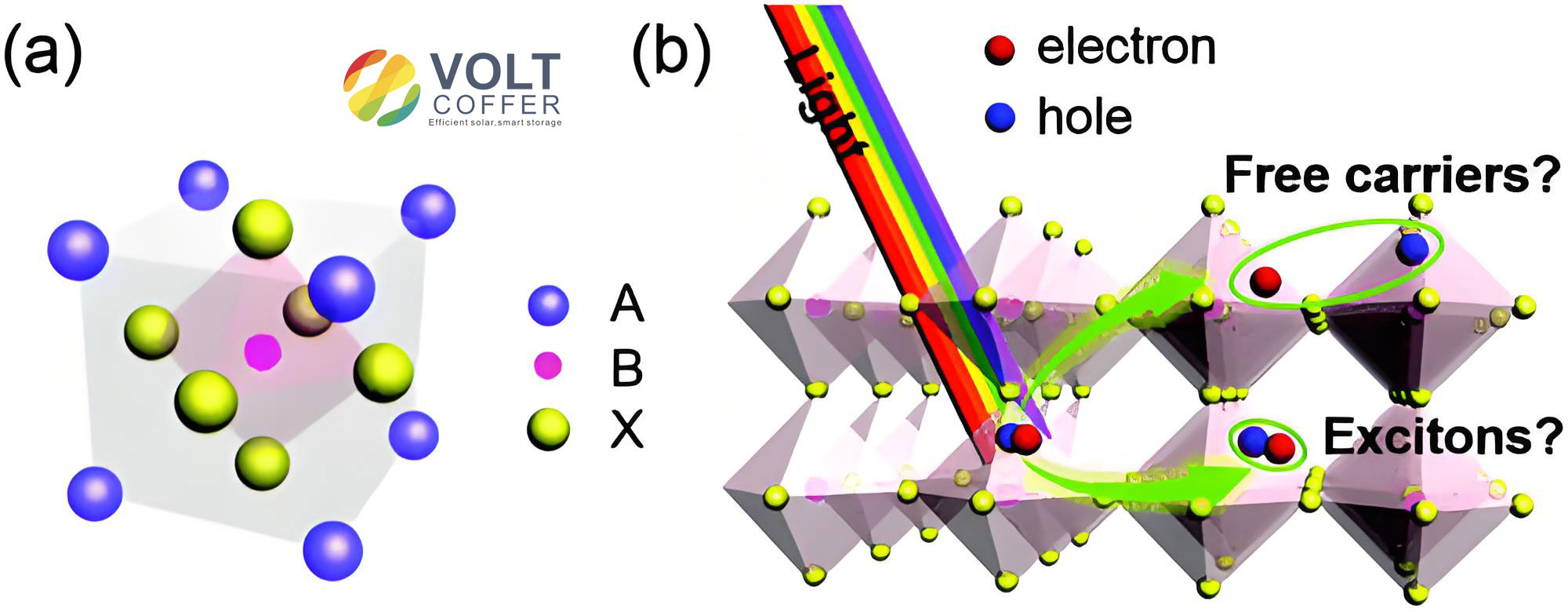
In a perovskite solar cell, CQDs can passivate surface defects through coordination of their functional groups with undercoordinated Pb2+ or halide vacancies. The carboxyl and amino groups on CQDs can form strong bonds with the perovskite surface, reducing non-radiative recombination and improving charge extraction. Additionally, CQDs can serve as nucleation sites for perovskite crystallization, leading to larger grain sizes and fewer grain boundaries. I have observed in my own analysis that the introduction of CQDs into the perovskite solar cell can also enhance stability against moisture and thermal stress, because the hydrophobic carbon core and surface ligands can protect the perovskite lattice. The perovskite solar cell with CQD-modified interfaces often exhibits reduced hysteresis and improved operational lifetime.
The charge transfer dynamics at the CQD/perovskite interface can be described by the Marcus theory:
$$k_{ET} = \frac{2\pi}{\hbar} \frac{|V|^2}{\sqrt{4\pi\lambda kT}} \exp\left[-\frac{(\Delta G + \lambda)^2}{4\lambda kT}\right]$$
where \(k_{ET}\) is the electron transfer rate, \(V\) is the electronic coupling, \(\lambda\) is the reorganization energy, and \(\Delta G\) is the Gibbs free energy change. This equation tells me that strong coupling and small reorganization energy are essential for efficient charge transfer. CQDs with delocalized π electrons and suitable energy levels can provide both.
Beyond DSSCs and perovskite solar cells, CQDs can also be integrated into quantum dot-sensitized solar cells, organic photovoltaics, and tandem devices. In a tandem perovskite solar cell, CQDs can act as an interlayer to facilitate recombination or as a transparent electrode modifier. The versatility of CQDs stems from their tunable surface chemistry and electronic structure. I have summarized the potential roles of CQDs in the perovskite solar cell and other emerging photovoltaics in Table 4.
| Role | Benefit | Challenge | Relevant device |
|---|---|---|---|
| Interface modifier | Passivates defects, reduces recombination | Uniform coverage control | Perovskite solar cell |
| Charge transport layer | Improves electron/hole extraction | Energy level alignment | Perovskite solar cell, DSSC |
| Additive / nucleation agent | Larger grains, fewer boundaries | Dispersion in precursor solution | Perovskite solar cell |
| Stability enhancer | Hydrophobic protection, ion migration blocking | Long-term operational stability | Perovskite solar cell |
| Co-sensitizer | Broadens absorption, provides anchoring sites | Competitive light absorption | DSSC, quantum dot-sensitized solar cell |
| Transparent electrode modifier | Enhances catalytic activity, reduces resistance | Transparency trade-off | Bifacial DSSC, tandem perovskite solar cell |
5. Conclusions and Future Perspectives
I have systematically reviewed the main synthesis strategies, property regulation methods, and applications of CQDs in DSSCs. The research shows that CQDs can be synthesized by various methods and their optoelectronic properties can be precisely tuned through surface modification and heteroatom doping. In DSSCs, CQDs as photoanode modifiers, counter electrode materials, or sensitizers can effectively broaden light absorption, promote charge separation and transport, and suppress electron-hole recombination, thereby significantly improving the photoelectric conversion efficiency and stability of the devices. They demonstrate great potential as low-cost, environmentally friendly optoelectronic materials. Furthermore, I am convinced that CQDs will play an increasingly important role in the perovskite solar cell, where they can address critical issues of stability and interface recombination.
To advance the practical application of CQDs, future research should focus on four aspects. First, it is urgent to develop green, low-cost, scalable synthesis processes to overcome industrialization bottlenecks. Second, multi-element co-doping and core-shell structure design should be used to achieve precise control of the band structure and surface states of CQDs. Third, CQDs should be integrated into emerging photovoltaic systems such as the perovskite solar cell and quantum dot-sensitized solar cells, and in-situ characterization combined with theoretical calculations should be used to reveal charge transfer dynamics in complex interfaces. Finally, the multifunctional applications of CQDs in flexible, transparent, and tandem optoelectronic devices should be expanded to promote their practical conversion in the clean energy field. I believe that with continued interdisciplinary efforts, CQDs will become a cornerstone of next-generation solar energy technologies, including the perovskite solar cell, DSSC, and beyond.
In my future work, I plan to investigate the synergistic effects of CQDs in the perovskite solar cell under real operating conditions, such as high humidity and temperature cycling. I also intend to explore the use of machine learning to predict optimal CQD structures and doping levels for specific photovoltaic applications. The combination of experimental and computational approaches will accelerate the discovery of new CQD-based materials. The perovskite solar cell is particularly appealing because its efficiency is already high, and CQDs can provide the final push toward commercialization by improving stability and reducing cost. I am optimistic that the insights gathered in this review will inspire further innovation in the field of carbon quantum dots for solar energy conversion.
To further quantify the thermodynamic limit of a single-junction solar cell, the Shockley-Queisser detailed balance limit can be expressed as:
$$\eta_{SQ} = \frac{J_{sc} V_{oc} FF}{P_{in}} \approx \frac{E_g \int_{E_g}^{\infty} \phi(E) dE – \text{recombination losses}}{P_{in}}$$
For an ideal bandgap of about 1.34 eV, the maximum efficiency is approximately 33.7%. CQDs with tunable bandgaps can be used in tandem or intermediate-band configurations to exceed this limit. In a perovskite solar cell, CQDs can also serve as an intermediate band material if properly doped, potentially enabling sub-bandgap absorption. I find this prospect exciting because it could lead to efficiencies beyond current single-junction limits.
Finally, the environmental impact of CQDs should be considered. Although they are carbon-based and generally less toxic than heavy-metal quantum dots, their long-term fate and degradation products need to be studied. I advocate for life-cycle assessment of CQD-based solar cells, especially the perovskite solar cell, to ensure that the technology is truly sustainable. With careful design, CQDs can help create a circular economy in photovoltaics, where devices are efficient, stable, and recyclable.
In summary, the field of carbon quantum dots for solar energy conversion is vibrant and full of opportunities. I have no doubt that continued research will unlock new functionalities and bring us closer to a clean energy future. The perovskite solar cell, DSSC, and other photovoltaic technologies will all benefit from the unique properties of CQDs. I look forward to seeing the next generation of solar devices that incorporate these remarkable nanomaterials.