
I approach the rise of the solid state cell as the central strategic question for any resource-rich industrial region that wants to convert geology into advanced manufacturing. In my first-person assessment, the solid state cell is not simply another battery chemistry. It is a platform technology that can reshape material demand, manufacturing architecture, supply-chain geography, and regional competitiveness at the same time. I see a global market that is entering a critical industrialization window. I expect the solid state cell market to exceed 200 billion yuan by 2030, with a recent five-year compound growth rate near 68 percent. For me, this means the solid state cell is both an opportunity and a test of execution capacity.
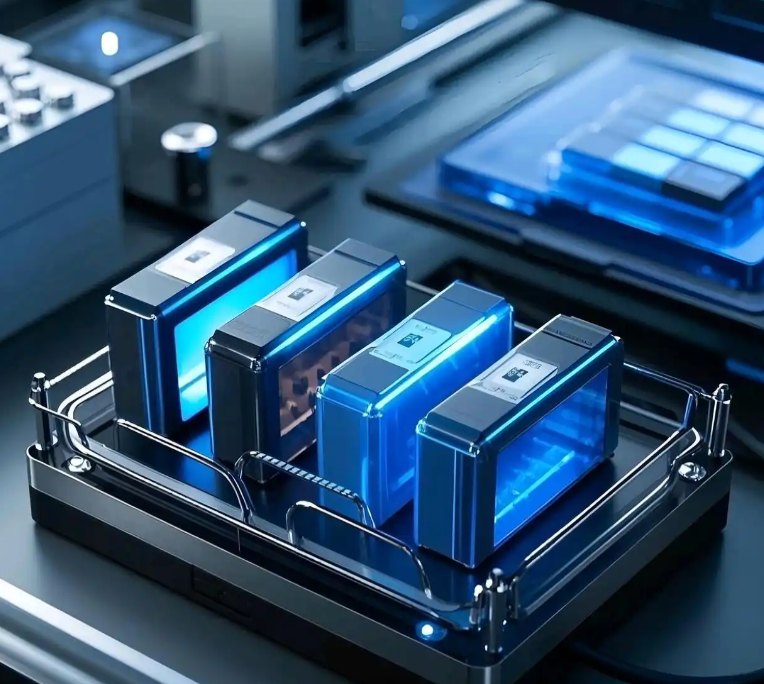
I use a simple growth identity to frame the solid state cell market opportunity. If I denote the initial market value as \(V_0\), the terminal value as \(V_t\), the number of years as \(n\), and the compound annual growth rate as \(g\), then I can express the relationship as:
$$V_t = V_0(1+g)^n$$
I also use the standard compound annual growth rate formula to compare the solid state cell with other advanced energy technologies:
$$CAGR = \left(\frac{V_t}{V_0}\right)^{\frac{1}{n}} – 1$$
When I apply this logic to the solid state cell, I find that the growth rate is not the only issue. The more important issue is whether a region can build a complete solid state cell ecosystem before the technology matures. I see five opportunity pillars: policy alignment, mineral endowment, industrial base, innovation capacity, and digital infrastructure. I summarize my initial assessment in Table 1.
| Opportunity Pillar | My Interpretation for the Solid State Cell | Strategic Consequence |
|---|---|---|
| Policy alignment | The solid state cell is treated as a priority research and industrialization direction, and supporting materials are classified as encouraged industrial activities. | I can use policy incentives to reduce early-stage investment risk in solid state cell materials and pilot lines. |
| Mineral endowment | The province holds leading reserves of manganese, phosphate, and bauxite, with associated lithium and gallium potential. | I can anchor solid state cell cathode, electrolyte, and precursor supply chains in local resource conversion. |
| Industrial base | Existing cathode, precursor, and electrolyte capacity creates a platform for solid state cell upgrading. | I do not need to start from zero; I need to redirect existing material competence toward solid state cell interfaces. |
| Innovation capacity | Industry-academia alliances, pilot lines, and new energy material research platforms are emerging. | I can compress the learning curve for solid state cell synthesis and scale-up. |
| Digital infrastructure | Large-scale data resources can support process control, quality prediction, and digital twins. | I can improve solid state cell yield and manufacturing consistency through data-driven optimization. |
I begin with policy because the solid state cell is still pre-paradigmatic in manufacturing. National plans call for accelerated research and industrialization, while provincial plans connect the solid state cell to new energy materials, pilot production, and logistics infrastructure. In my view, the strongest policy position is not a single subsidy. It is a coordinated package that links research, pilot testing, first-of-a-kind production, and market demonstration. I summarize the policy logic in Table 2.
| Policy Layer | Instrument I Would Prioritize | Why It Matters for the Solid State Cell |
|---|---|---|
| National research direction | Key solid state cell research programs and material classification | Signals long-term commitment and attracts private capital to solid state cell projects. |
| Provincial planning | Solid state cell inclusion in industrial development plans | Coordinates land, energy, finance, and talent around solid state cell clusters. |
| Pilot production | Semi-solid and solid state cell pilot lines | Validates process stability before mass production of the solid state cell. |
| Material support | Encouraged status for solid state cell materials | Reduces permitting friction and improves access to industrial funds. |
| Logistics and industrial parks | Solid state cell production and logistics bases | Lowers coordination costs across the solid state cell value chain. |
I then turn to mineral endowment. I see the province as a material-rich platform for the solid state cell, especially for manganese-based cathodes, phosphate-based materials, aluminum-based current collectors and lightweight components, fluorine chemistry, and associated lithium and gallium. In my reading, the key is not simply extraction. The key is conversion into battery-grade compounds, then into solid state cell materials, then into cells and systems. I summarize the mineral foundation in Table 3.
| Resource | Endowment Position I Observe | Role in the Solid State Cell | My Conversion Priority |
|---|---|---|---|
| Manganese | Leading national reserves, with large resource blocks and a strong manganese chemical base. | Manganese-based cathodes, manganese-rich solid state cell chemistries, and precursor stabilization. | Move from manganese ore and electrolytic manganese to high-purity manganese sulfate, manganese-based cathode active material, and solid state cell cathode pilots. |
| Phosphate | Top-tier national reserves and a mature phosphorus chemical industry. | Phosphate-based cathodes, phosphorus-containing electrolytes, and solid state cell interface additives. | Upgrade phosphoric acid and phosphate salts into battery-grade iron phosphate, manganese iron phosphate, and solid state cell electrolyte intermediates. |
| Bauxite | Top-tier national reserves, with associated gallium extraction already scaled. | Aluminum current collectors, lightweight housings, and gallium-containing materials. | Link alumina refining to high-purity aluminum foils and gallium recovery for solid state cell supply chains. |
| Fluorite and fluorine chemistry | Associated lithium resources have been publicly registered, with a substantial ore base and lithium oxide content. | Lithium salts, fluoride electrolytes, and solid state cell electrolyte precursors. | Develop integrated fluorine-lithium chemistry for solid state cell electrolytes and lithium metal protection. |
| Associated lithium | Resources are present mainly as associated minerals, requiring further scaled development. | Lithium metal anodes, lithium salts, and solid state cell electrolyte compositions. | Accelerate beneficiation, extraction, and battery-grade lithium conversion for solid state cell use. |
| Gallium | Associated gallium recovery has reached industrial scale. | Advanced alloys, semiconductors, and specialized solid state cell interface materials. | Preserve gallium as a strategic by-product for high-value solid state cell and power electronics applications. |
I use a resource value-addition formula to guide my thinking. If \(R_i\) is the recoverable resource quantity, \(\eta_i\) is the conversion efficiency into battery-grade material, and \(P_i\) is the value per unit at the solid state cell material stage, then the total value added I can capture is:
$$VA = \sum_i R_i \eta_i P_i$$
I interpret this equation as a warning. A large \(R_i\) without high \(\eta_i\) and high \(P_i\) remains a low-value export. For the solid state cell, I want to increase \(\eta_i\) through refining and synthesis, and increase \(P_i\) through qualification, purity, and integration into solid state cell designs. This is how I convert resource endowment into solid state cell industrial advantage.
I now assess the existing industrial base. I see a cluster pattern that already accounts for more than 80 percent of relevant industrial output. In cathode materials, annual capacity for lithium iron phosphate and ternary cathode materials has reached 562,000 tonnes and 171,000 tonnes respectively. Ternary precursor capacity holds a leading global market share. In electrolytes, an integrated chain from wet-process associated hydrofluoric acid to phosphorus pentafluoride to lithium hexafluorophosphate has been established. A new functional materials cluster has also been recognized as a national strategic emerging industry cluster. I summarize this base in Table 4.
| Value Chain Segment | Existing Position I Observe | Solid State Cell Upgrade Direction | My Assessment |
|---|---|---|---|
| Lithium iron phosphate cathode | Large annual capacity and mature manufacturing experience. | Phosphate-based solid state cell cathodes, manganese iron phosphate, and interface coatings. | I can use existing cathode competence as a bridge into solid state cell cathodes. |
| Ternary cathode | Substantial annual capacity and high-nickel capability. | High-nickel solid state cell cathodes with stable interfaces. | I see a direct route from ternary materials to high-energy solid state cell designs. |
| Ternary precursor | Leading global share and strong process integration. | Precursors for high-nickel and manganese-rich solid state cell cathodes. | I can leverage precursor control to reduce solid state cell cathode variability. |
| Electrolyte | Integrated fluorine and lithium salt chain. | Sulfide, oxide, and polymer solid state cell electrolytes. | I need to move from liquid electrolyte strength to solid state cell electrolyte innovation. |
| Industrial cluster | High concentration of related material firms and supporting services. | Solid state cell pilot lines, shared testing, and system integration. | I can use cluster density to lower the cost of solid state cell experimentation. |
| Logistics and parks | Production and logistics bases are being developed. | Dedicated solid state cell material and cell manufacturing zones. | I would prioritize shared utilities, safety systems, and dry-room infrastructure for solid state cell production. |
I measure industrial concentration with a Herfindahl-Hirschman style index to understand whether the solid state cell cluster is balanced or overly dependent on a few firms. If \(s_i\) is the share of segment \(i\), then:
$$HHI = \sum_{i=1}^{N} s_i^2$$
I interpret a rising HHI in solid state cell materials as a sign of cluster strength, but I also watch for overconcentration. I want a solid state cell ecosystem with many specialized suppliers, not a single-point dependency. In my view, the existing base gives the province a credible entry point, but the missing middle is still significant: cell design, electrode stacking, bipolar packaging, thermal management, battery management systems, and complete solid state cell validation.
I now examine the innovation system. I see alliances among material firms, battery producers, universities, and research institutes. I see efforts to create national-level platforms and to cooperate with external laboratories. I also see pilot lines for solid state cell materials. The digital sector can provide simulation, machine vision, and predictive maintenance. I summarize the innovation architecture in Table 5.
| Innovation Actor | Function in the Solid State Cell Ecosystem | Capability I Want to Strengthen | Metric I Would Track |
|---|---|---|---|
| Material enterprises | Scale synthesis of cathodes, precursors, electrolytes, and additives. | Battery-grade purity, batch consistency, and solid state cell compatibility. | Yield, impurity concentration, and solid state cell cycle retention. |
| Battery producers | Cell design, stacking, packaging, and system integration. | Solid state cell pilot capacity and design-for-manufacturing capability. | Energy density, interfacial resistance, and formation yield. |
| Universities and research institutes | Fundamental studies of solid state cell interfaces, ion transport, and degradation. | Publication quality, patent strength, and translation speed. | Patent families, pilot demonstrations, and licensed technologies. |
| Provincial innovation center | Shared facilities, testing standards, and cross-firm projects. | Open-access solid state cell characterization and failure analysis. | Number of shared projects and industrial users. |
| Digital service providers | Digital twins, process analytics, and quality prediction. | Data-driven solid state cell manufacturing control. | Defect rate reduction and OEE improvement. |
| Financial and policy institutions | Risk sharing, grants, and first-of-a-kind financing. | Long-horizon capital for solid state cell scale-up. | Cost of capital and leverage ratio for solid state cell projects. |
I use an innovation translation ratio to evaluate whether research becomes industrial solid state cell value. If \(P\) is the number of solid state cell patents or publications, \(D\) is the number of demonstrations, and \(T\) is the number of technologies transferred to production, then I can define a simple translation index:
$$TI = \frac{D + T}{P}$$
I want this index to rise over time. For me, a solid state cell patent that never enters a pilot line is not yet an industrial asset. The province already has the beginnings of a solid state cell innovation system, but I believe it must become more integrated. The gap is not only funding. The gap is a shared roadmap, common test protocols, and a clear pathway from laboratory coin cells to large-format solid state cell prototypes.
I now turn to the technical bottlenecks. I see two dominant problems. First, solid-solid contact resistance between the solid state cell electrolyte and electrode is high. Laboratory cycle life often remains below 1,000 cycles, while liquid electrolyte cells routinely exceed 2,000 cycles. Second, lithium metal anodes can form dendrites during fast charging, creating short-circuit risk. The province still lacks autonomous breakthroughs in solid state cell electrolyte synthesis, interface modification, and dendrite suppression. I summarize the bottleneck structure in Table 6.
| Bottleneck | Physical or Chemical Cause | Consequence for the Solid State Cell | Metric I Would Use | My Proposed Attack Direction |
|---|---|---|---|---|
| High interfacial resistance | Poor solid-solid contact, space-charge layers, and chemical incompatibility. | Low power density and rapid heat generation in the solid state cell. | Interfacial resistance \(R_{\text{int}}\) and area-specific resistance. | Coatings, compliant interlayers, sintering control, and stack pressure optimization. |
| Lithium dendrite growth | Non-uniform lithium deposition and mechanical stress at the anode-electrolyte interface. | Short circuits, safety risk, and limited fast charging of the solid state cell. | Critical current density and time to short circuit. | Surface engineering, alloy anodes, 3D hosts, and pressure management. |
| Low ionic conductivity | Limited ion transport in solid electrolytes at room temperature. | Reduced rate capability and low practical energy density for the solid state cell. | Ionic conductivity \(\sigma\). | Sulfide, oxide, halide, and composite electrolyte design. |
| Chemical and electrochemical instability | Side reactions between electrolyte and electrode materials. | Capacity fade and impedance growth in the solid state cell. | Coulombic efficiency and cycle retention. | Protective coatings and thermodynamically matched interfaces. |
| Manufacturing defects | Cracks, voids, delamination, and inconsistent densification. | Low yield and poor consistency of solid state cell production. | Porosity, crack density, and formation yield. | Dry-room processes, roll-to-roll casting, isostatic pressing, and inline inspection. |
| Scale-up mismatch | Laboratory parameters do not translate directly to large-format solid state cell lines. | Long learning curve and high initial cost. | Pilot-to-mass-production yield ratio. | Digital twins, design of experiments, and shared pilot infrastructure. |
I express ionic conductivity in the solid state cell as:
$$\sigma = \frac{L}{R_b A}$$
where \(L\) is the electrolyte thickness, \(A\) is the active area, and \(R_b\) is the bulk resistance. I express interfacial resistance as the difference between total resistance and bulk resistance:
$$R_{\text{int}} = R_{\text{total}} – R_{\text{bulk}}$$
I express cycle-life degradation with a flexible empirical model:
$$Q_n = Q_0(1 – \alpha n^\beta)$$
where \(Q_n\) is capacity after \(n\) cycles, \(Q_0\) is initial capacity, and \(\alpha\) and \(\beta\) are degradation parameters. For the solid state cell, I want \(\alpha\) to be small and \(\beta\) to remain close to one, which indicates gradual rather than accelerating fade. I also consider the risk of lithium dendrites through a simplified proportionality:
$$P_{\text{dendrite}} \propto \frac{J}{J_{\text{crit}}}$$
where \(J\) is the operating current density and \(J_{\text{crit}}\) is the critical current density. My strategic conclusion is straightforward: I must raise \(J_{\text{crit}}\) through materials and interface engineering while lowering \(J\) during fast-charge events through thermal and electrochemical control. This is how I would reduce the solid state cell safety penalty.
I also see a market transition. The new energy vehicle market is entering a stock-game phase. In 2024, capacity utilization was about 76 percent, and market penetration exceeded 50 percent. Growth is slower and more competitive. Because the solid state cell initially depends on vehicle applications, slower vehicle demand growth could constrain scale-up. I therefore argue that the solid state cell must diversify into energy storage, low-altitude economy, consumer electronics, electric tools, and specialty mobility. I summarize application diversification in Table 7.
| Application Segment | Requirement | Fit with the Solid State Cell | My Timing View |
|---|---|---|---|
| New energy vehicles | High energy density, safety, fast charging, and long cycle life. | Strong long-term fit, but qualification cycles are long. | I would use vehicle demonstration for the solid state cell after pilot maturity. |
| Energy storage | Low cost, long cycle life, and high safety. | Solid state cell safety and thermal stability are attractive. | I would prioritize stationary storage for early solid state cell deployment. |
| Low-altitude economy | High specific energy and power, lightweight design. | Solid state cell can enable longer endurance and safer operation. | I see this as a premium early market for the solid state cell. |
| Consumer electronics | Thin form factor, high energy density, and safety. | Solid state cell suits compact premium devices. | I would use consumer electronics to validate small solid state cell formats. |
| Electric tools | High power, durability, and fast charging. | Solid state cell can improve safety and power density. | I would treat this as a bridge market for solid state cell modules. |
| Specialty and aerospace | Extreme safety, wide temperature range, and reliability. | Solid state cell offers a strong value proposition. | I would pursue niche high-value solid state cell contracts. |
I use a logistic adoption curve to think about solid state cell market entry:
$$S(t) = \frac{1}{1 + e^{-k(t – t_0)}}$$
where \(S(t)\) is the share of a segment adopting the solid state cell, \(k\) is the adoption speed, and \(t_0\) is the inflection point. My goal is to move \(t_0\) earlier by demonstrating solid state cell performance in real operating conditions. I also want to increase \(k\) by standardizing testing and reducing customer uncertainty.
I now assess resource and supply-chain risks. Lithium resources are mainly associated minerals, and scaled development still requires breakthroughs. Domestic lithium import dependence exceeds 70 percent. Cobalt and nickel import dependence exceeds 90 percent. Solid state cell electrolytes also require zirconium, lanthanum, and other metals, while domestic zirconium reserves are only about 0.7 percent of the global total and mainly imported. I summarize the risk profile in Table 8.
| Material | Import Dependence I Observe | Solid State Cell Relevance | Risk Level | Mitigation I Would Pursue |
|---|---|---|---|---|
| Lithium | Above 70 percent | Anode, electrolyte salt, and lithium metal. | High | Associated lithium development, recycling, and long-term supply contracts. |
| Cobalt | Above 90 percent | High-nickel ternary cathodes for solid state cell applications. | Very high | Low-cobalt chemistries, substitution, and urban mining. |
| Nickel | Above 90 percent | High-energy solid state cell cathodes. | Very high | Manganese-rich cathodes, recycling, and diversified sourcing. |
| Zirconium | High import reliance | Oxide solid state cell electrolytes and coatings. | High | Material substitution, thrifting, and international partnerships. |
| Lanthanum | Concentrated supply | Oxide solid state cell electrolytes and interface phases. | Medium to high | Recycling, alloy design, and reduced rare-earth content. |
| Fluorine intermediates | Domestic strength but tight processing | Lithium salts and solid state cell electrolyte precursors. | Medium | Integrated fluorine chemistry and environmental control. |
I define a supply risk index for the solid state cell as:
$$RI = \sum_j w_j \frac{I_j}{D_j}$$
where \(I_j\) is import dependence for material \(j\), \(D_j\) is domestic production capacity, and \(w_j\) is the material weight in a solid state cell design. I want to reduce \(RI\) by increasing domestic processing, diversifying imports, and designing solid state cell chemistries with lower critical-material intensity. In my view, the province should not treat resource security as a separate issue from solid state cell innovation. They are the same problem seen from different angles.
I now present my strategic recommendations. My first recommendation is to build solid state cell material clusters around existing resource advantages. I would strengthen manganese-based cathode materials, support a national demonstration zone for manganese-based solid state cell materials, and expand high-nickel ternary capacity. I would improve phosphate-based supporting materials, increase manganese iron phosphate capacity, and connect phosphate chemistry precisely to solid state cell demand. I would address the lithium shortfall by accelerating associated lithium development. I would also build electrolyte material research on existing fluorine chemistry and localize sulfide, oxide, and polymer solid state cell electrolytes. Table 9 summarizes my material cluster priorities.
| Material Cluster | My Priority Action | Solid State Cell Linkage | Expected Outcome |
|---|---|---|---|
| Manganese-based cathode cluster | Expand high-purity manganese salts and manganese-based cathode active materials. | Low-cost, high-safety solid state cell cathodes. | A domestic solid state cell cathode advantage. |
| Phosphate-based material cluster | Upgrade lithium iron phosphate and manganese iron phosphate capacity. | Phosphate cathodes and interface additives for the solid state cell. | Better cost-performance balance for mass-market solid state cell products. |
| High-nickel ternary cluster | Scale high-nickel cathodes and stable precursor synthesis. | High-energy solid state cell cathodes for premium applications. | Higher energy density and stronger global market position. |
| Lithium conversion cluster | Develop associated lithium resources and battery-grade lithium compounds. | Lithium metal anodes and solid state cell electrolytes. | Reduced import exposure for the solid state cell supply chain. |
| Fluorine-lithium electrolyte cluster | Expand from liquid electrolyte salts to solid state cell electrolyte precursors. | Sulfide, oxide, halide, and composite solid state cell electrolytes. | A differentiated solid state cell electrolyte capability. |
| Recycling cluster | Release large-scale battery recycling capacity and recover lithium, cobalt, nickel, and manganese. | Closed-loop solid state cell material supply. | Lower life-cycle cost and improved resource security. |
My second recommendation is to strengthen technology attack through a collaborative innovation system. I would establish a provincial solid state cell technology program focused on solid state cell electrolyte synthesis, interface modification, and lithium dendrite suppression. I would build pilot and industrialization platforms, including a solid state cell industrial park and a manganese-based solid state cell material pilot base. I would deepen industry-academia integration through a solid state cell industry innovation alliance. I would also improve incentives for technology transfer so that solid state cell breakthroughs are commercialized locally. Table 10 presents my technology agenda.
| Technology Area | Research Target | Pilot Target | Industrial Target | Metric I Would Track |
|---|---|---|---|---|
| Solid state cell electrolyte synthesis | High ionic conductivity and electrochemical stability. | Kilogram-scale synthesis with consistent purity. | Ton-scale production for solid state cell pilot lines. | Conductivity, impurity level, and batch yield. |
| Interface modification | Low-resistance and stable electrode-electrolyte interfaces. | Coating and interlayer processes on large electrodes. | Scalable interface engineering for solid state cell stacks. | Interfacial resistance and cycle retention. |
| Lithium dendrite suppression | High critical current density and safe lithium plating. | Anode hosts and pressure control in prototype solid state cell cells. | Fast-charge solid state cell modules. | Critical current density and short-circuit rate. |
| Cathode compatibility | Stable high-voltage and high-capacity cathodes. | Coated manganese, phosphate, and ternary cathodes. | Qualified cathode supply for solid state cell production. | Capacity, voltage fade, and gas generation. |
| Manufacturing process | Dry-room, lamination, sintering, and stacking control. | Pilot line yield improvement. | Large-format solid state cell manufacturing. | Yield, OEE, and defect density. |
| Testing and standards | Reproducible solid state cell test protocols. | Shared testing center and failure database. | Participation in national and international standards. | Round-robin test consistency. |
My third recommendation is to optimize industrial layout. I propose a one-core, two-belt structure. The core would focus on cell manufacturing, system integration, and industrialization. One belt would focus on manganese-based materials. The other would focus on phosphate-based materials and electrolytes. I would accelerate auxiliary material projects, encourage automotive component firms to extend into solid state cell supporting systems, and support demonstration applications in energy storage, drones, and electric tools. I would also cultivate leading firms and attract global solid state cell leaders to establish regional headquarters and production bases. Table 11 summarizes my proposed layout.
| Layout Element | Primary Focus | Solid State Cell Activity | Infrastructure I Would Build |
|---|---|---|---|
| Core zone | Cell manufacturing and system integration. | Solid state cell pilot lines, module assembly, battery management systems, and testing. | Dry rooms, clean power, hazardous material handling, and shared metrology. |
| Manganese belt | Manganese-based cathode and precursor materials. | Manganese-rich solid state cell cathodes and precursor synthesis. | Material pilot base, wastewater treatment, and logistics corridors. |
| Phosphate and electrolyte belt | Phosphate materials and solid state cell electrolytes. | Manganese iron phosphate, lithium salts, sulfide and oxide electrolytes. | Chemical safety systems, fluorine handling, and advanced analytical labs. |
| Auxiliary materials | Separators, binders, conductive additives, and packaging. | Solid state cell-compatible auxiliary materials. | Qualification lines and supplier development programs. |
| Recycling network | End-of-life battery collection and material recovery. | Closed-loop lithium, cobalt, nickel, and manganese for solid state cell production. | Collection centers, dismantling lines, and hydrometallurgical recovery. |
My fourth recommendation is to improve the support system. I would issue dedicated solid state cell industrial policies and provide targeted support in land, tax, and financing. Under a resource-refining strategy, I would allocate mining rights scientifically and create a resource development coordination mechanism. I would build a green circular system, accelerate end-of-life battery recycling, release large recycling capacity, and promote lithium, cobalt, nickel, and manganese circulation. I would strengthen financial support and talent development, encourage tailored financial products, and add solid state cell-related majors at local universities. Table 12 presents my support instruments.
| Support Area | Instrument | Solid State Cell Objective | Implementation Logic |
|---|---|---|---|
| Industrial policy | Dedicated solid state cell development policy. | Reduce early-stage uncertainty. | Combine grants, tax incentives, and regulatory fast lanes. |
| Land and energy | Priority allocation for solid state cell pilot and production projects. | Speed up solid state cell construction. | Coordinate industrial parks with power and utility planning. |
| Mining rights | Scientific allocation and coordinated development. | Secure upstream materials for the solid state cell. | Link resource permits to local processing and environmental standards. |
| Finance | Targeted credit, funds, and risk-sharing products. | Finance solid state cell scale-up. | Use first-of-a-kind guarantees and equipment leasing. |
| Recycling | Large-scale battery recycling capacity. | Create a circular solid state cell material loop. | Set recovery targets and trace material flows. |
| Talent | New academic programs and industrial training. | Supply solid state cell engineers and technicians. | Pair universities with pilot lines and production bases. |
My fifth recommendation is to deepen regional cooperation and integrate into the national and global solid state cell landscape. I would strengthen cooperation with leading regions, accept solid state cell industrial transfer, and promote technical collaboration and capacity coordination with advanced areas. I would actively participate in solid state cell standard setting and use manganese and phosphate advantages to increase industry voice. I would encourage firms to join international technical exchanges and build a solid state cell development highland that faces the whole country and radiates toward the southwest. Table 13 summarizes my cooperation matrix.
| Cooperation Direction | Partner Type | Solid State Cell Focus | My Expected Benefit |
|---|---|---|---|
| Eastern coastal clusters | Advanced battery and material firms. | Solid state cell joint development and capacity transfer. | Faster access to markets and design capabilities. |
| Southern innovation corridors | Research institutes and startups. | Solid state cell electrolyte and interface technologies. | Access to frontier solid state cell intellectual property. |
| National standards bodies | Standardization committees and testing centers. | Solid state cell safety, performance, and recycling standards. | Stronger voice in solid state cell rule-making. |
| International partners | Equipment, materials, and automotive firms. | Solid state cell pilot equipment and global certification. | Technology learning and export market access. |
| Recycling networks | Collection and recovery firms. | Closed-loop materials for the solid state cell. | Lower life-cycle cost and improved supply security. |
I now propose a quantitative roadmap. I would phase the solid state cell program into four stages: foundation, pilot, scale-up, and leadership. In the foundation stage, I would map resources, standards, and supply chains for the solid state cell. In the pilot stage, I would validate solid state cell materials and small-format cells. In the scale-up stage, I would build large-format solid state cell lines and qualify customers. In the leadership stage, I would expand solid state cell exports, standards influence, and recycling loops. Table 14 presents my phased roadmap.
| Phase | Primary Goal | Solid State Cell Milestones | Indicators I Would Watch |
|---|---|---|---|
| Foundation | Build resource, policy, and standards baseline. | Solid state cell material inventory, test protocols, and roadmap. | Resource conversion rate and pilot project count. |
| Pilot | Validate materials and interfaces. | Solid state cell coin cells, single-layer cells, and material pilot lines. | Ionic conductivity, interfacial resistance, and cycle life. |
| Scale-up | Move to large-format solid state cell production. | Solid state cell pilot lines, module integration, and customer qualification. | Yield, energy density, and cost per kilowatt-hour. |
| Leadership | Build export and standards influence. | Solid state cell supply chains, recycling loops, and global partnerships. | Market share, patent quality, and recycling rate. |
I use a capacity buildout formula to estimate the investment required for solid state cell scale-up:
$$CAPEX = \sum_i Q_i c_i$$
where \(Q_i\) is the capacity of segment \(i\) and \(c_i\) is the unit capital cost. I also use a learning-curve formula to project solid state cell cost decline:
$$C_t = C_0 N_t^{-\lambda}$$
where \(C_t\) is unit cost at cumulative production \(N_t\), \(C_0\) is initial cost, and \(\lambda\) is the learning elasticity. I believe the solid state cell will follow a learning curve only if pilot lines generate data, standardize processes, and share lessons. Without that, cost reduction will be slower and the solid state cell will remain a premium niche product.
I also evaluate energy density with a simple relation:
$$E = \frac{V Q}{m}$$
where \(E\) is specific energy, \(V\) is average voltage, \(Q\) is capacity, and \(m\) is mass. For the solid state cell, I want to increase \(V\) and \(Q\) while reducing inactive mass. This requires thinner electrolytes, high-capacity cathodes, lithium metal anodes, and lightweight packaging. I summarize my key performance indicators in Table 15.
| KPI | Why It Matters for the Solid State Cell | Near-Term Target I Would Set | Long-Term Target I Would Set |
|---|---|---|---|
| Ionic conductivity | Controls rate capability and power. | Above \(10^{-3}\) S/cm at room temperature for selected electrolytes. | Above \(10^{-2}\) S/cm with stable interfaces. |
| Interfacial resistance | Controls efficiency and heat. | Below 50 ohm cm² for pilot solid state cell cells. | Below 10 ohm cm² for production solid state cell cells. |
| Cycle life | Determines economic viability. | Above 1,000 cycles with 80 percent retention. | Above 2,000 cycles with 80 percent retention. |
| Energy density | Determines application reach. | 300 Wh/kg at cell level. | 400 Wh/kg and above at cell level. |
| Fast-charge capability | Determines user acceptance. | 80 percent charge in 30 minutes. | 80 percent charge in 15 minutes without dendrite risk. |
| Yield | Determines cost and supply. | Pilot yield above 70 percent. | Mass-production yield above 90 percent. |
| Recycling rate | Determines sustainability. | Recover lithium, cobalt, nickel, and manganese at scale. | Closed-loop solid state cell material circulation above 90 percent. |
I recognize that risk management is essential. The solid state cell transition could be delayed by technical bottlenecks, supply shocks, market slowdowns, or policy changes. I would manage these risks through diversification, staged investment, international cooperation, and strong recycling. Table 16 presents my risk register.
| Risk | Probability I Assign | Impact on the Solid State Cell | Mitigation |
|---|---|---|---|
| Interface failure | High | Poor cycle life and safety. | Parallel research on coatings, interlayers, and stack pressure. |
| Lithium supply shortage | Medium to high | Higher cost and delayed solid state cell scale-up. | Associated lithium development, recycling, and contracts. |
| Cobalt and nickel volatility | High | Cathode cost uncertainty for the solid state cell. | Manganese-rich and phosphate-based chemistries. |
| Slow vehicle demand | Medium | Lower initial solid state cell volume. | Energy storage, low-altitude, and consumer electronics. |
| Manufacturing yield | High | High cost and limited supply. | Digital twins, pilot data, and shared testing. |
| Standards fragmentation | Medium | Higher certification cost for the solid state cell. | Early engagement in standards and round-robin testing. |
| Environmental compliance | Medium | Project delays in chemical processing. | Green chemistry, closed loops, and strict monitoring. |
I also use a simple return-on-investment expression to evaluate solid state cell projects:
$$ROI = \frac{\Delta R – \Delta C}{I}$$
where \(\Delta R\) is incremental revenue from solid state cell products, \(\Delta C\) is incremental cost, and \(I\) is investment. I would apply this at the project level, not only at the regional level. A solid state cell pilot line can be strategically valuable even when its initial ROI is modest, but that logic must be bounded by clear milestones and exit options. I would not allow an open-ended solid state cell subsidy program without technical gates.
My final assessment is that the solid state cell is entering a decisive window. I see a province with strong mineral resources, an existing material industrial base, emerging innovation platforms, and supportive policy. I also see serious bottlenecks: solid state cell interface resistance, dendrite growth, critical material dependence, missing midstream cell manufacturing, and a vehicle market that is no longer growing as quickly as before. I believe the correct response is not to wait for a perfect solid state cell. The correct response is to build a staged solid state cell ecosystem that starts with materials, moves through pilot cells, and scales into modules and systems.
I would organize my action around five commitments. First, I would convert manganese, phosphate, aluminum, fluorine, and associated lithium into qualified solid state cell materials. Second, I would create a shared solid state cell innovation platform with common testing, pilot lines, and data systems. Third, I would build a one-core, two-belt industrial layout that connects material belts to cell manufacturing and recycling. Fourth, I would establish financial, talent, and regulatory support that is tied to solid state cell performance milestones. Fifth, I would integrate into national and global solid state cell networks so that local firms learn faster than they could alone.
In my view, the solid state cell is not only a battery technology. It is a new industrial logic. It rewards regions that can combine resource conversion, advanced synthesis, precision manufacturing, digital process control, and circular material flows. If I can align those capabilities, the province can move from resource endowment to solid state cell material leadership, then to solid state cell manufacturing, and eventually to solid state cell standards and market influence. If I fail to align them, the province will remain a supplier of upstream materials to solid state cell producers elsewhere. The choice is strategic, and I believe the window is still open. I would act now, with discipline, milestones, and a clear first-person commitment to building the solid state cell ecosystem from the ground up.