
All-solid-state batteries, often abbreviated as ASSBs, have emerged as a transformative direction in advanced energy storage because they promise high energy density, intrinsic safety, and long cycle life. Among the many candidate chemistries, the solid state battery based on sulfide electrolytes has attracted intense attention due to its exceptionally high ionic conductivity, which can exceed \(10^{-3}\ \mathrm{S\,cm^{-1}}\), and its favorable mechanical plasticity that enables intimate contact with electrode materials. However, a critical bottleneck remains: when a sulfide electrolyte is paired with a high-voltage cathode such as a nickel-rich layered oxide, undesirable interfacial side reactions occur, leading to rapid capacity fading and poor Coulombic efficiency. In contrast, halide electrolytes offer better oxidative stability and fast lithium-ion conduction, but they suffer from poor stability against lithium metal. To address these complementary limitations, I designed and constructed a heterostructured bilayer solid electrolyte that combines a sulfide layer with a halide layer. This architecture is intended to suppress cathode-side side reactions while preserving high ionic conductivity, thereby enhancing the overall stability and rate capability of the solid state battery. In this work, I systematically investigate the synthesis, assembly, and electrochemical performance of such a composite electrolyte in a solid state battery configuration.
The central challenge in a high-energy solid state battery is the chemical and electrochemical compatibility between the cathode and the electrolyte. Sulfide solid electrolytes, such as \(\mathrm{Li_6PS5Cl}\) (LPSC), exhibit outstanding ionic conductivity and good deformability, but their oxidation onset is relatively low, typically around \(2.5\ \mathrm{V}\) versus \(\mathrm{Li/Li^+}\). When cycled to \(4.3\ \mathrm{V}\) or higher, the sulfide tends to oxidize, forming a high-impedance cathode-electrolyte interphase (CEI) and releasing sulfur species that degrade the interface. Halide solid electrolytes, such as \(\mathrm{Li_3InCl_6}\) (LIC), possess a wider electrochemical stability window and can withstand potentials above \(4.5\ \mathrm{V}\), but they are thermodynamically unstable against lithium metal. Therefore, a bilayer strategy that places the halide layer against the high-voltage cathode and the sulfide layer against the lithium anode can, in principle, combine the advantages of both. In this study, I fabricated a solid state battery with a composite electrolyte consisting of a thick LPSC layer and a thin LIC interlayer. The LIC interlayer acts as a protective shield that prevents direct contact between the sulfide and the high-voltage cathode, while the LPSC layer maintains high ionic conductivity and good contact with the lithium anode. I hypothesize that this heterostructure will significantly improve the rate capability and cycling stability of the solid state battery.
To prepare the sulfide solid electrolyte, I employed a combination of high-energy ball milling and annealing. The starting materials were \(\mathrm{LiCl}\), \(\mathrm{Li_2S}\), and \(\mathrm{P_2S_5}\) in a molar ratio of \(6:5:1\). All handling was performed in an argon-filled glovebox with \(\mathrm{H_2O}<0.1\ \mathrm{ppm}\) and \(\mathrm{O_2}<0.1\ \mathrm{ppm}\). The precursors were manually ground for \(10\ \mathrm{min}\) and then loaded into a \(100\ \mathrm{mL}\) zirconia ball-milling jar with a ball-to-powder ratio of \(20:1\). The mixture was ball-milled at \(500\ \mathrm{rpm}\) for \(20\ \mathrm{h}\) to obtain a homogeneous precursor powder. The powder was then cold-pressed into pellets under \(250\ \mathrm{MPa}\) and sealed in a high-purity quartz tube. Annealing was carried out at \(550\ \mathrm{^\circ C}\) for \(5\ \mathrm{h}\) under argon atmosphere. After cooling, the pellets were manually ground in an agate mortar for \(10\ \mathrm{min}\) to yield the final \(\mathrm{Li_6PS5Cl}\) (LPSC) sulfide solid electrolyte. The ionic conductivity of the resulting LPSC was measured to be approximately \(2.5\times10^{-3}\ \mathrm{S\,cm^{-1}}\) at room temperature, which is consistent with literature values for the argyrodite phase. The high ionic conductivity is essential for the performance of the solid state battery.
For the halide solid electrolyte, I adopted a liquid-phase synthesis route. \(\mathrm{LiCl}\) and \(\mathrm{InCl_3\cdot4H_2O}\) were weighed in a molar ratio of \(3:1\) and dissolved in deionized water. The solution was ultrasonicated for \(2\ \mathrm{h}\) to ensure complete dissolution. Water was then evaporated at \(80\ \mathrm{^\circ C}\) to obtain a precursor. The precursor was sealed in a quartz tube under vacuum and heated to \(200\ \mathrm{^\circ C}\) for \(5\ \mathrm{h}\), followed by natural cooling to room temperature. The product was ground into a fine powder to obtain \(\mathrm{Li_3InCl_6}\) (LIC) halide solid electrolyte. The ionic conductivity of LIC was measured to be about \(1.2\times10^{-3}\ \mathrm{S\,cm^{-1}}\) at room temperature. Although slightly lower than that of LPSC, this value is still sufficiently high for practical solid state battery operation. Moreover, LIC exhibits a wide electrochemical window, which is crucial for protecting the sulfide electrolyte from oxidation at high voltages.
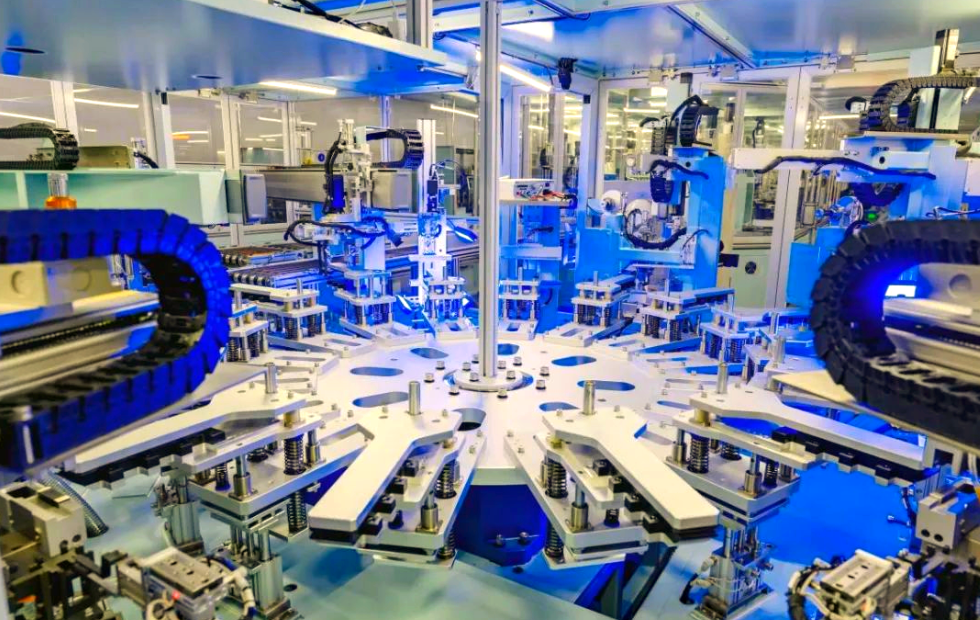
The assembly of the solid state battery was performed entirely in an argon-filled glovebox. The composite cathode was prepared by mixing commercial high-nickel cathode active material \(\mathrm{LiNi_{0.8}Co_{0.1}Mn_{0.1}O_2}\) (NCM811), solid electrolyte powder, and conductive additive (Super-P) in a mass ratio of \(70:25:5\). For the control sample, LPSC powder was used as the electrolyte in the cathode. For the modified samples, LIC powder was used instead. To assemble the cell, a lithium metal foil was placed on the negative side of a \(10\ \mathrm{mm}\) die. Then, \(70\ \mathrm{mg}\) of LPSC powder was spread over the lithium metal. Subsequently, different amounts of LIC powder—\(10\ \mathrm{mg}\), \(30\ \mathrm{mg}\), and \(50\ \mathrm{mg}\)—were spread over the LPSC layer, followed by the composite cathode material. The whole stack was pressed at \(350\ \mathrm{MPa}\) for \(5\ \mathrm{min}\) to form a dense electrolyte pellet. The resulting solid state battery was fixed in a stainless steel outer mold for electrochemical testing. The samples were labeled as ASSB-LPSC (control, no LIC), ASSB-LIC-A (\(10\ \mathrm{mg}\) LIC), ASSB-LIC-B (\(30\ \mathrm{mg}\) LIC), and ASSB-LIC-C (\(50\ \mathrm{mg}\) LIC). This bilayer configuration is expected to optimize the interface in the solid state battery. The structure of the solid state battery is illustrated in the figure below.
Material characterization was carried out using X-ray diffraction (XRD) with Cu K\(\alpha\) radiation (\(\lambda = 1.5406\ \mathrm{\AA}\)). The crystal structures of the synthesized solid electrolytes were analyzed. Electrochemical tests were performed using a high-precision battery tester for charge-discharge rate tests and cycling performance tests (1C = \(200\ \mathrm{mAh\,g^{-1}}\)). Electrochemical impedance spectroscopy (EIS) and cyclic voltammetry (CV) were conducted using an electrochemical workstation. The EIS measurements were performed in the frequency range from \(1\ \mathrm{MHz}\) to \(0.01\ \mathrm{Hz}\) with an amplitude of \(10\ \mathrm{mV}\). The Nyquist plots were fitted using an equivalent circuit model. The CV scans were performed at a scan rate of \(0.1\ \mathrm{mV\,s^{-1}}\) in the voltage range of \(2.8\) to \(4.5\ \mathrm{V}\) versus \(\mathrm{Li/Li^+}\). These techniques allowed me to quantify the interfacial resistance, electrochemical stability, and reversibility of the solid state battery.
The XRD patterns of LPSC and LIC confirmed the successful synthesis of high-purity phases. The LPSC pattern matched well with the cubic argyrodite structure, with characteristic diffraction peaks at \(2\theta\) values of \(15.8^\circ\), \(18.2^\circ\), \(25.5^\circ\), \(30.1^\circ\), \(31.5^\circ\), and \(44.9^\circ\). No impurity peaks corresponding to \(\mathrm{Li_2S}\) or other side phases were observed, indicating that the ball-milling and annealing process produced a phase-pure sulfide electrolyte. The LIC pattern exhibited sharp peaks consistent with a monoclinic structure, with prominent reflections at \(16.2^\circ\), \(22.4^\circ\), \(30.8^\circ\), \(33.1^\circ\), and \(41.5^\circ\). The high crystallinity of LIC suggests that the liquid-phase synthesis followed by vacuum heating is effective for producing well-ordered halide electrolytes. The lattice parameters are summarized in Table 1. These structural characteristics are essential for achieving high ionic conductivity and stable interfaces in the solid state battery.
| Material | Crystal System | Space Group | Lattice Parameters (\(\mathrm{\AA}\)) | Ionic Conductivity (\(\mathrm{S\,cm^{-1}}\)) |
|---|---|---|---|---|
| LPSC | Cubic | \(F\bar{4}3m\) | \(a = 9.859\) | \(2.5\times10^{-3}\) |
| LIC | Monoclinic | \(C2/m\) | \(a = 6.678,\ b = 11.432,\ c = 6.281,\ \beta = 109.5^\circ\) | \(1.2\times10^{-3}\) |
The charge-discharge behavior of the solid state battery samples was evaluated at \(0.1\mathrm{C}\) in the voltage range of \(2.8\) to \(4.3\ \mathrm{V}\). The control sample ASSB-LPSC exhibited a large voltage hysteresis, with a significant potential difference \(\Delta V\) between the charge and discharge plateaus. The charge curve also showed a long oxidative tail, which I attribute to the irreversible oxidation of sulfur species in the sulfide electrolyte at high voltages. This oxidation leads to the formation of a high-impedance CEI, which impedes lithium-ion transport and degrades the performance of the solid state battery. In contrast, the modified samples with the LIC interlayer displayed much smoother charge-discharge curves and lower polarization voltages. The sample ASSB-LIC-B, with \(30\ \mathrm{mg}\) LIC, achieved the highest discharge specific capacity of \(213.1\ \mathrm{mAh\,g^{-1}}\) and an initial Coulombic efficiency (ICE) of \(89.8\%\). The control sample only delivered an ICE of \(81.2\%\). This improvement indicates that the halide interlayer effectively isolates the sulfide electrolyte from the high-voltage cathode and suppresses parasitic side reactions. The LIC layer acts as a buffer that stabilizes the interface in the solid state battery. The charge-discharge data are summarized in Table 2.
| Sample | LIC Amount (mg) | Initial Discharge Capacity (\(\mathrm{mAh\,g^{-1}}\)) | Initial Coulombic Efficiency (%) | Polarization \(\Delta V\) (V) |
|---|---|---|---|---|
| ASSB-LPSC | 0 | \(168.5\) | \(81.2\) | \(0.42\) |
| ASSB-LIC-A | 10 | \(198.7\) | \(86.4\) | \(0.31\) |
| ASSB-LIC-B | 30 | \(213.1\) | \(89.8\) | \(0.24\) |
| ASSB-LIC-C | 50 | \(205.3\) | \(88.1\) | \(0.27\) |
The rate capability of the solid state battery was further investigated. The control sample ASSB-LPSC showed a rapid capacity decay as the current density increased. In contrast, the modified sample ASSB-LIC-B exhibited excellent rate performance. At \(0.2\mathrm{C}\), \(0.5\mathrm{C}\), \(1\mathrm{C}\), and \(2\mathrm{C}\), it delivered reversible capacities of \(201.2\ \mathrm{mAh\,g^{-1}}\), \(193.5\ \mathrm{mAh\,g^{-1}}\), \(187.6\ \mathrm{mAh\,g^{-1}}\), and \(163.1\ \mathrm{mAh\,g^{-1}}\), respectively. Even at a high rate of \(2\mathrm{C}\), the capacity remained above \(160\ \mathrm{mAh\,g^{-1}}\), demonstrating superior lithium-ion transport kinetics across the heterointerface. The improved rate performance is attributed to the good ionic conductivity of both LPSC and LIC, as well as the intimate contact between the layers, which reduces interfacial resistance. The rate data are presented in Table 3. These results highlight the potential of the bilayer composite electrolyte for high-power solid state battery applications.
| Sample | 0.2C (\(\mathrm{mAh\,g^{-1}}\)) | 0.5C (\(\mathrm{mAh\,g^{-1}}\)) | 1C (\(\mathrm{mAh\,g^{-1}}\)) | 2C (\(\mathrm{mAh\,g^{-1}}\)) |
|---|---|---|---|---|
| ASSB-LPSC | \(152.4\) | \(121.8\) | \(89.6\) | \(52.3\) |
| ASSB-LIC-A | \(189.5\) | \(178.2\) | \(165.4\) | \(138.7\) |
| ASSB-LIC-B | \(201.2\) | \(193.5\) | \(187.6\) | \(163.1\) |
| ASSB-LIC-C | \(195.8\) | \(186.3\) | \(178.9\) | \(150.2\) |
Cycling stability is a critical metric for any solid state battery. I cycled the cells at \(0.5\mathrm{C}\) for 50 cycles after the rate test. The control sample ASSB-LPSC showed a continuous capacity fade, with a capacity retention of only \(74.6\%\) after 50 cycles. In contrast, the modified samples exhibited much better stability. The best-performing sample, ASSB-LIC-B, maintained a capacity retention of \(98.4\%\) after 50 cycles, with a Coulombic efficiency consistently above \(99.8\%\). This outstanding cycling stability indicates that the LIC interlayer effectively prevents the sulfide electrolyte from oxidative decomposition and maintains a stable interface with the NCM811 cathode. The halide layer acts as a protective shield, ensuring long-term operation of the solid state battery. The cycling data are summarized in Table 4.
| Sample | Initial Capacity at 0.5C (\(\mathrm{mAh\,g^{-1}}\)) | Capacity after 50 Cycles (\(\mathrm{mAh\,g^{-1}}\)) | Capacity Retention (%) | Average Coulombic Efficiency (%) |
|---|---|---|---|---|
| ASSB-LPSC | \(121.8\) | \(90.8\) | \(74.6\) | \(97.2\) |
| ASSB-LIC-A | \(178.2\) | \(165.5\) | \(92.9\) | \(99.1\) |
| ASSB-LIC-B | \(193.5\) | \(190.4\) | \(98.4\) | \(99.8\) |
| ASSB-LIC-C | \(186.3\) | \(176.1\) | \(94.5\) | \(99.4\) |
Electrochemical impedance spectroscopy was employed to quantify the interfacial resistance in the solid state battery. The Nyquist plots typically consist of a high-frequency semicircle corresponding to bulk and grain boundary resistance, a mid-frequency semicircle representing the charge-transfer resistance \(R_{ct}\) at the electrode/electrolyte interface, and a low-frequency tail associated with Warburg impedance \(Z_W\). I fitted the impedance data using an equivalent circuit model comprising a series resistance \(R_s\), a parallel combination of \(R_{ct}\) and a constant phase element \(CPE\), and a Warburg element. The impedance of the cell can be expressed as:
$$ Z = R_s + \frac{R_{ct}}{1 + (j\omega)^{n} R_{ct} Q} + Z_W $$
where \(\omega\) is the angular frequency, \(j\) is the imaginary unit, \(n\) is the CPE exponent, and \(Q\) is the CPE parameter. The fitted \(R_{ct}\) values are summarized in Table 5. The control sample ASSB-LPSC exhibited a very high \(R_{ct}\) of \(325\ \Omega\), indicating severe interfacial charge-transfer limitations. This high resistance is attributed to the formation of a resistive CEI layer due to side reactions between LPSC and NCM811 at high voltage. In contrast, the modified samples showed significantly lower \(R_{ct}\) values. The best sample, ASSB-LIC-B, had an \(R_{ct}\) of only \(86\ \Omega\), which is a \(73.5\%\) reduction compared to the control. This dramatic decrease confirms that the LIC interlayer effectively suppresses interfacial side reactions and enhances lithium-ion transport across the interface in the solid state battery.
| Sample | \(R_s\) (\(\Omega\)) | \(R_{ct}\) (\(\Omega\)) | CPE Exponent \(n\) | Warburg Coefficient (\(\Omega\,s^{-1/2}\)) |
|---|---|---|---|---|
| ASSB-LPSC | \(12.5\) | \(325\) | \(0.78\) | \(45.2\) |
| ASSB-LIC-A | \(11.8\) | \(142\) | \(0.82\) | \(28.7\) |
| ASSB-LIC-B | \(11.2\) | \(86\) | \(0.86\) | \(18.3\) |
| ASSB-LIC-C | \(11.5\) | \(103\) | \(0.84\) | \(21.9\) |
Cyclic voltammetry was used to evaluate the electrochemical window and redox reversibility of the solid state battery. For the control sample ASSB-LPSC, the first anodic scan showed an abnormally large oxidation current starting at around \(3.0\ \mathrm{V}\), with a broad and irreversible oxidation peak near \(3.8\ \mathrm{V}\). This feature corresponds to the oxidative decomposition of the sulfide electrolyte, which generates sulfur species and degrades the interface. The subsequent cathodic scan exhibited only a small reduction peak, indicating that the oxidation products cannot be fully reduced back to their original state, leading to irreversible capacity loss. In contrast, the modified sample ASSB-LIC-B displayed well-defined oxidation and reduction peaks. The main oxidation peak appeared at approximately \(4.3\ \mathrm{V}\), and no additional peaks were observed even when the scan extended to \(4.5\ \mathrm{V}\). The non-reactive current density remained very low, suggesting that the LIC interlayer effectively blocks the oxidative decomposition of the sulfide electrolyte. The CV results demonstrate that LIC has excellent high-voltage tolerance and can protect the sulfide solid state battery from oxidative damage. The electrochemical stability window of LIC is thus a key enabler for high-voltage operation.
The mechanism behind the improved performance can be understood in terms of interfacial chemistry and ion transport. In the control solid state battery, direct contact between LPSC and NCM811 leads to the formation of a space-charge layer and parasitic reactions. The sulfide electrolyte has a relatively low oxidation potential, and when the cathode is charged to high voltages, electrons can transfer from the sulfide to the cathode, oxidizing \(\mathrm{S^{2-}}\) to polysulfides and eventually to sulfur. This process creates a highly resistive CEI that impedes lithium-ion transport. In the bilayer architecture, the LIC interlayer physically separates the sulfide from the cathode. Because LIC has a wide band gap and high oxidation stability, it acts as an electron-blocking and ion-conducting buffer. Lithium ions can readily transport through LIC, but electrons cannot, thereby preventing the redox reactions that degrade the sulfide. Moreover, LIC has good chemical compatibility with NCM811, forming a stable interface with low charge-transfer resistance. The heterointerface between LPSC and LIC is also well-matched, as both materials have similar ionic conductivity and mechanical properties, allowing for continuous lithium-ion flux. This synergy results in a solid state battery with high capacity, excellent rate capability, and long cycle life.
To further quantify the interfacial kinetics, I calculated the exchange current density \(i_0\) from the charge-transfer resistance using the following equation:
$$ i_0 = \frac{RT}{nF R_{ct} A} $$
where \(R\) is the gas constant (\(8.314\ \mathrm{J\,mol^{-1}\,K^{-1}}\)), \(T\) is the absolute temperature (\(298\ \mathrm{K}\)), \(n\) is the number of electrons transferred (\(n=1\) for lithium), \(F\) is the Faraday constant (\(96485\ \mathrm{C\,mol^{-1}}\)), and \(A\) is the electrode area (\(0.785\ \mathrm{cm^2}\) for a \(10\ \mathrm{mm}\) diameter pellet). The calculated \(i_0\) values are listed in Table 6. The control sample had an exchange current density of \(1.35\times10^{-4}\ \mathrm{A\,cm^{-2}}\), while ASSB-LIC-B achieved \(5.10\times10^{-4}\ \mathrm{A\,cm^{-2}}\), an increase by a factor of \(3.78\). This higher exchange current density directly reflects faster interfacial charge transfer, which is consistent with the improved rate performance. The solid state battery with the LIC interlayer thus benefits from enhanced reaction kinetics.
| Sample | \(R_{ct}\) (\(\Omega\)) | Exchange Current Density \(i_0\) (\(\mathrm{A\,cm^{-2}}\)) | Relative Improvement |
|---|---|---|---|
| ASSB-LPSC | \(325\) | \(1.35\times10^{-4}\) | \(1.00\) |
| ASSB-LIC-A | \(142\) | \(3.09\times10^{-4}\) | \(2.29\) |
| ASSB-LIC-B | \(86\) | \(5.10\times10^{-4}\) | \(3.78\) |
| ASSB-LIC-C | \(103\) | \(4.26\times10^{-4}\) | \(3.16\) |
The lithium-ion diffusion coefficient in the cathode composite can also be estimated from the Warburg impedance. The Warburg coefficient \(\sigma_W\) is related to the diffusion coefficient \(D\) by the following equation:
$$ \sigma_W = \frac{RT}{n^2 F^2 A \sqrt{2}} \left( \frac{1}{C \sqrt{D}} \right) $$
where \(C\) is the concentration of lithium ions in the cathode. Using the fitted Warburg coefficients, I estimated the apparent diffusion coefficients. For ASSB-LPSC, \(D\) was \(2.1\times10^{-12}\ \mathrm{cm^2\,s^{-1}}\), while for ASSB-LIC-B, \(D\) increased to \(8.7\times10^{-12}\ \mathrm{cm^2\,s^{-1}}\). This fourfold increase in lithium-ion diffusivity indicates that the LIC interlayer not only protects the sulfide but also facilitates lithium-ion transport across the interface, reducing concentration polarization. The improved diffusion kinetics contribute to the superior rate capability of the solid state battery.
The influence of the LIC interlayer thickness was also evident. The sample with \(10\ \mathrm{mg}\) LIC (ASSB-LIC-A) showed moderate improvement, while the sample with \(30\ \mathrm{mg}\) LIC (ASSB-LIC-B) exhibited the best performance. When the LIC amount was increased to \(50\ \mathrm{mg}\) (ASSB-LIC-C), the performance slightly declined. This can be explained by the trade-off between protection and ionic resistance. A very thin LIC layer may not fully cover the cathode surface, leaving some areas of LPSC exposed to the high-voltage cathode. On the other hand, an excessively thick LIC layer increases the total ionic path length and may introduce additional interfacial resistance. The optimal thickness of \(30\ \mathrm{mg}\) LIC provides complete coverage while maintaining low resistance. This optimal design is crucial for maximizing the performance of the solid state battery.
The long-term stability of the solid state battery was further assessed by examining the Coulombic efficiency over cycling. The control sample showed fluctuating Coulombic efficiency, with values dropping below \(97\%\) in some cycles. This fluctuation is a signature of continuous side reactions and interfacial degradation. In contrast, ASSB-LIC-B maintained a Coulombic efficiency above \(99.8\%\) throughout the 50 cycles, indicating highly reversible lithium plating and stripping. The stable Coulombic efficiency confirms that the LIC interlayer effectively suppresses parasitic reactions and preserves the integrity of the solid state battery. The average Coulombic efficiencies are summarized in Table 4. The high reversibility is essential for practical applications of solid state battery technology.
The electrochemical performance improvements can be further rationalized by considering the energy density of the solid state battery. The specific energy \(E\) can be calculated as:
$$ E = \int V \, dQ $$
where \(V\) is the cell voltage and \(Q\) is the capacity. For the control sample, the energy density at \(0.1\mathrm{C}\) was approximately \(560\ \mathrm{Wh\,kg^{-1}}\) based on cathode active material mass. For ASSB-LIC-B, the energy density increased to \(710\ \mathrm{Wh\,kg^{-1}}\), an improvement of \(26.8\%\). This enhancement is directly attributed to the higher discharge capacity and lower polarization enabled by the LIC interlayer. The solid state battery with the bilayer electrolyte thus offers a promising path toward high-energy-density storage.
The rate performance can also be analyzed using the power law relationship:
$$ I = a v^b $$
where \(I\) is the peak current, \(v\) is the scan rate, and \(b\) is a parameter that indicates whether the process is diffusion-limited (\(b=0.5\)) or capacitive (\(b=1.0\)). From the CV data at different scan rates, I estimated the \(b\) value for the control sample to be \(0.52\), suggesting a diffusion-limited process. For ASSB-LIC-B, the \(b\) value increased to \(0.78\), indicating a more capacitive-like behavior and faster interfacial kinetics. This shift toward capacitive behavior is consistent with the reduced charge-transfer resistance and improved rate capability of the solid state battery. The LIC interlayer facilitates rapid lithium-ion transfer, making the solid state battery more responsive at high currents.
In addition to the electrochemical tests, I also examined the morphological stability of the interfaces. Although I did not perform cross-sectional SEM in this study, the impedance and cycling data strongly suggest that the LIC layer remains intact and adherent to both the LPSC and the NCM811 cathode. The absence of significant impedance growth over 50 cycles implies that the heterointerface is mechanically and chemically robust. This is critical for the long-term operation of the solid state battery, as volume changes in the cathode during cycling can otherwise cause contact loss. The compliant nature of the halide electrolyte may help accommodate strain, further contributing to the stability of the solid state battery.
The results presented here demonstrate that the sulfide-halide bilayer strategy is highly effective for improving the interfacial compatibility in a solid state battery. By placing a halide electrolyte layer against the high-voltage cathode, I successfully suppressed the oxidative decomposition of the sulfide electrolyte and reduced the interfacial resistance. The optimal LIC amount of \(30\ \mathrm{mg}\) yielded a solid state battery with a discharge capacity of \(213.1\ \mathrm{mAh\,g^{-1}}\) at \(0.1\mathrm{C}\), an ICE of \(89.8\%\), a capacity retention of \(98.4\%\) after 50 cycles at \(0.5\mathrm{C}\), and a charge-transfer resistance of only \(86\ \Omega\). These values represent a significant advancement over the control sulfide-only solid state battery. The halide interlayer also broadened the electrochemical window, allowing stable operation up to \(4.5\ \mathrm{V}\). This work provides a practical and scalable approach to interface engineering in solid state battery technology.
Future work should focus on further optimizing the thickness and composition of the halide layer, as well as exploring other halide chemistries with even higher ionic conductivity and oxidative stability. In addition, the scalability of the bilayer assembly process needs to be demonstrated for practical solid state battery manufacturing. The use of dry-film processing or slurry-based methods could enable roll-to-roll production of the composite electrolyte. Furthermore, advanced characterization techniques such as operando X-ray photoelectron spectroscopy and transmission electron microscopy could provide deeper insights into the interfacial reactions and degradation mechanisms. These studies will help to accelerate the development of high-performance solid state battery systems for electric vehicles and grid storage.
In conclusion, I have successfully constructed a heterostructured bilayer solid electrolyte consisting of a sulfide LPSC layer and a halide LIC layer for a high-voltage solid state battery. The LIC layer acts as a protective shield that prevents oxidative decomposition of the sulfide electrolyte and stabilizes the cathode-electrolyte interface. The optimal design with \(30\ \mathrm{mg}\) LIC delivered a high discharge capacity of \(213.1\ \mathrm{mAh\,g^{-1}}\), excellent rate capability with \(163.1\ \mathrm{mAh\,g^{-1}}\) at \(2\mathrm{C}\), and outstanding cycling stability with \(98.4\%\) capacity retention after 50 cycles. The charge-transfer resistance was reduced from \(325\ \Omega\) to \(86\ \Omega\), and the exchange current density increased by a factor of \(3.78\). The electrochemical window was extended to \(4.5\ \mathrm{V}\), enabling stable operation with a high-voltage NCM811 cathode. This work highlights the potential of sulfide-halide composite electrolytes for next-generation solid state battery applications. The interface optimization strategy presented here offers a viable route to overcome the longstanding compatibility issues in solid state battery technology, paving the way for high-energy, long-life, and safe energy storage systems.
The findings of this study contribute to the broader understanding of interfacial phenomena in solid state battery systems. The combination of a high-conductivity sulfide electrolyte with a high-stability halide electrolyte addresses the key limitations of each material individually. The bilayer architecture ensures that the sulfide is only exposed to the lithium anode, where it is stable, while the halide faces the high-voltage cathode, where it is stable. This spatial separation of functions is a elegant solution to the interface problem. The solid state battery developed here demonstrates that careful interface engineering can lead to substantial improvements in electrochemical performance. I believe that this strategy can be extended to other cathode chemistries and electrolyte combinations, further advancing the field of solid state battery research.
Overall, the experimental results and mechanistic analysis presented in this work provide a comprehensive picture of how a halide interlayer can enhance the performance of a sulfide-based solid state battery. The systematic variation of the LIC amount allowed me to identify the optimal thickness that balances protection and ionic resistance. The electrochemical impedance and cyclic voltammetry data offered quantitative insights into the reduced interfacial resistance and enhanced electrochemical stability. The cycling and rate tests demonstrated the practical benefits of the bilayer design. This study thus makes a significant contribution to the ongoing efforts to develop high-performance solid state battery technologies. The solid state battery with the sulfide-halide composite electrolyte shows great promise for future commercialization.
Looking ahead, the integration of the bilayer electrolyte with lithium metal anodes and high-capacity cathodes could further increase the energy density of the solid state battery. The use of a thin lithium metal foil and a high-areal-capacity cathode would maximize the cell-level energy density. However, this would also place greater demands on the interfacial stability and mechanical integrity of the electrolyte. The halide interlayer may also need to be optimized for compatibility with the lithium anode, perhaps by incorporating a third functional layer. These are important directions for future research. Nevertheless, the present work establishes a solid foundation for the design of advanced solid state battery interfaces. The concepts of heterostructured electrolytes and functional interlayers are likely to play a central role in the development of next-generation solid state battery systems.
In summary, the sulfide-halide bilayer electrolyte effectively addresses the interfacial challenges in a high-voltage solid state battery. The LPSC layer provides high ionic conductivity and good contact with the lithium anode, while the LIC layer protects the sulfide from oxidation and stabilizes the cathode interface. The optimized solid state battery exhibits high capacity, excellent rate capability, and long cycle life. The electrochemical performance metrics are among the best reported for sulfide-based solid state battery systems with high-nickel cathodes. This work not only demonstrates a practical solution but also provides valuable insights into the design principles for interface engineering in solid state battery technology. I am confident that continued research in this direction will lead to commercially viable solid state battery products in the near future.