
As a researcher deeply involved in the field of energy storage, I have witnessed the rapid expansion of battery energy storage systems in recent years. The global installed capacity of new energy storage has reached 91.3 GW by the end of 2023, with lithium-ion batteries dominating the market. However, the safe and reliable operation of these systems critically depends on accurate state estimation, particularly State of Charge (SOC) and State of Health (SOH). In this review, I will systematically examine the performance degradation mechanisms of batteries, modeling approaches, state estimation methods, data acquisition techniques, lightweight BMS implementations, and propose a federated learning framework for intelligent state estimation of battery energy storage systems. The entire discussion is based on my understanding of the latest research and practical experiences in this area.
Throughout this article, I will emphasize the importance of achieving high-precision, real-time, and privacy-preserving state estimation for battery energy storage systems. By integrating multi‑scale data from both external sensors and internal in‑situ/ex‑situ characterizations, and by leveraging edge‑cloud collaboration with federated learning, it is possible to significantly enhance the technical and economic performance of battery energy storage systems in diverse application scenarios such as grid peak shaving, frequency regulation, and renewable energy integration.
1. Battery Performance Degradation Mechanism
Understanding the root causes of capacity fade is fundamental for modeling and state estimation of battery energy storage systems. I have summarized the key intrinsic and extrinsic factors that lead to performance degradation.
1.1 Intrinsic Factors
- Active lithium loss: This is the primary cause of capacity decline. During the formation cycle, electrolyte decomposition generates a solid electrolyte interphase (SEI) film. Continuous SEI growth consumes active lithium irreversibly.
- Structural evolution of electrode materials: Repeated lithiation/delithiation induces phase transitions, particle cracking, and loss of ionic conductivity.
- Increase in internal resistance: Surface passivation, electrolyte decomposition, and contact loss between electrode particles raise the ohmic and polarization resistances.
- Dissolution of metal ions: Transition metal ions (e.g., Mn, Co) dissolve from the cathode into the electrolyte, poisoning the anode and accelerating degradation.
1.2 Extrinsic Factors
- Temperature: The optimal operating range is 15–35 °C. High temperature accelerates SEI decomposition and electrolyte oxidation; low temperature promotes lithium plating and dendrite growth.
- Charge/discharge rate: High C‑rates cause large overpotentials, leading to lithium plating and particle cracking.
- Depth of discharge (DOD): Wide cycling windows (e.g., 0–100% SOC) cause more severe structural degradation than partial cycling.
- Overcharge/overdischarge: Overcharge leads to electrolyte decomposition and gas evolution; overdischarge corrodes copper current collectors, introducing impurities into the electrolyte.
The following table summarizes the key degradation factors and their impacts on battery energy storage systems.
| Factor | Mechanism | Impact on Battery Energy Storage Systems |
|---|---|---|
| Active lithium loss | SEI formation and repair | Capacity fade (primary) |
| Structural evolution | Phase change, lattice distortion | Loss of active material, increased impedance |
| Internal resistance rise | SEI thickening, contact degradation | Power capability reduction |
| Metal dissolution | Mn, Co dissolution from cathode | Accelerated aging, safety risks |
| High temperature | Electrolyte decomposition | Accelerated SEI growth, safety hazard |
| Low temperature | Lithium plating | Capacity loss, dendrite short circuit |
| Overcharge/overdischarge | Gas evolution, Cu corrosion | Irreversible capacity loss, failure |
From the above analysis, it is clear that the state estimation of battery energy storage systems must incorporate both intrinsic and extrinsic factors to achieve reliable and robust results.
2. Battery Modeling Approaches
Accurate models are the backbone of SOC and SOH estimation. I classify battery modeling into three major categories, as shown in the table below.
| Model Type | Examples | Advantages | Disadvantages | Application in Battery Energy Storage Systems |
|---|---|---|---|---|
| Electrochemical model | Single particle model, P2D model, Shepherd model | Clear physical meaning, high accuracy | High computational cost, many parameters | Scientific research, offline analysis |
| Equivalent circuit model (ECM) | Rint, Thevenin, PNGV, 2nd‑order RC | Simple structure, easy parameter identification | Cannot capture internal electrochemistry | Real‑time BMS, embedded systems |
| Data‑driven model | Neural network, support vector machine, LSTM | Flexible, adapts to diverse conditions | Requires large datasets, less interpretable | System‑level, cloud‑based estimation |
For large‑scale battery energy storage systems, data‑driven models are particularly attractive because they avoid the complexity of modeling every individual cell and can capture system‑level behavior directly from operational data.
3. State Definition and Estimation
3.1 Definitions of SOC and SOH
I use the following widely accepted definitions:
$$\text{SOC} = \frac{Q_t}{C_t}$$
where \(Q_t\) is the remaining capacity and \(C_t\) is the current maximum available capacity.
For SOH, two definitions exist:
Absolute: \(\displaystyle \text{SOH} = \frac{C_t}{C_n}\)
Relative (capacity based): \(\displaystyle \text{SOH} = \frac{C_t – C_{\text{end}}}{C_n – C_{\text{end}}}\)
Relative (resistance based): \(\displaystyle \text{SOH} = \frac{R_{\text{end}} – R_t}{R_{\text{end}} – R_n}\)
The relationship between SOC and SOH is evident:
For absolute SOH: \(\displaystyle \text{SOC} = \frac{Q_t}{C_n \cdot \text{SOH}}\)
For relative SOH: \(\displaystyle \text{SOC} = \frac{Q_t}{(C_n – C_{\text{end}})\text{SOH} + C_{\text{end}}}\)
3.2 State Estimation Methods
I have organized the major methods for SOC and SOH estimation in the following table.
| Method Category | Specific Technique | SOC | SOH | Remarks |
|---|---|---|---|---|
| Experimental | Open‑circuit voltage (OCV) + Coulomb counting | Yes | Yes (capacity test) | Offline, requires rest periods |
| Experimental | Differential voltage / incremental capacity (DV/IC) | – | Yes | High accuracy at low C‑rates |
| Physical model | Extended Kalman filter (EKF) on 2nd‑order RC | Yes | Joint | Real‑time capable |
| Physical model | Unscented particle filter (UPF) on electrochemical model | Yes | Yes | High complexity |
| Data‑driven | Feedforward neural network (FNN) | Yes | Yes | Requires training data |
| Data‑driven | Long‑short term memory (LSTM) network | Yes | Yes | Better with temporal dependencies |
| System‑level (ECM) | Statistics + minimum cell model for pack | Yes (pack) | – | “Barrel effect” assumption |
| System‑level (data) | Federated learning (proposed) | Yes (edge) | Yes (cloud) | Privacy‑preserving, collaborative |
In my experience, for battery energy storage systems operating in the field, data‑driven methods combined with model‑based filters offer the best trade‑off between accuracy and computational efficiency. However, the growing scale and distributed nature of these systems call for innovative approaches such as federated learning.
4. Battery Data Acquisition
High‑quality data is essential for both model calibration and real‑time state estimation. While conventional sensors provide voltage, current, and temperature, internal battery state information requires advanced characterization techniques. I summarize the most relevant in‑situ and ex‑situ methods below.
- Scanning electron microscopy (SEM): Observes morphological changes of electrodes (cracking, lithium plating).
- X‑ray diffraction (XRD): Monitors phase transitions and lattice parameter evolution in real time.
- X‑ray photoelectron spectroscopy (XPS): Provides chemical state information of electrode surface species.
- Inductively coupled plasma (ICP): Quantifies metal dissolution into electrolyte.
- Electrochemical impedance spectroscopy (EIS): Measures internal resistance components correlated with SEI growth and contact loss.
These techniques enable me to correlate macroscopic performance degradation with microscopic physical and chemical changes. For example, combining XRD and SEM can reveal the relationship between capacity fade and particle cracking in battery energy storage systems.
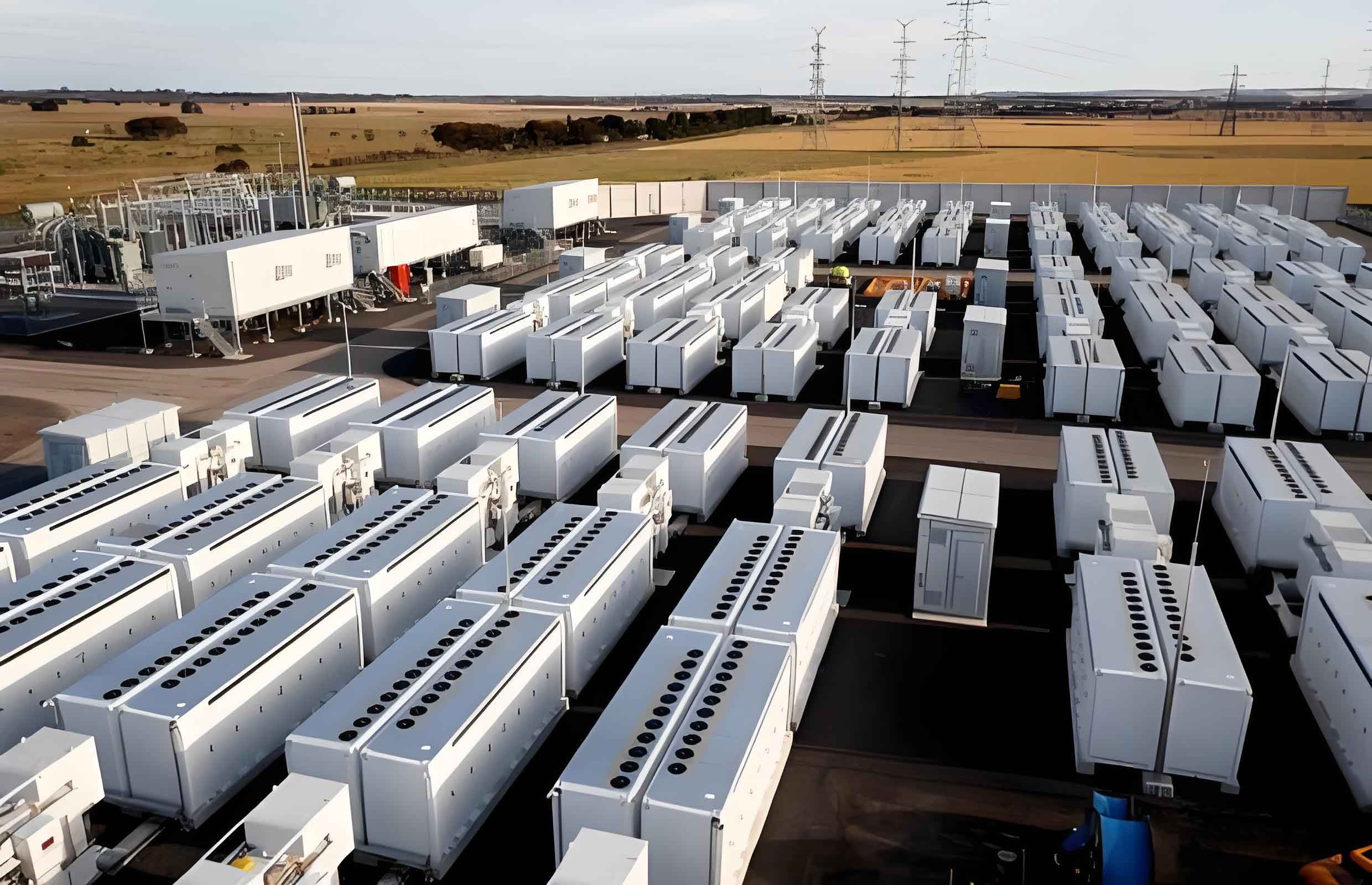
By integrating such characterization data with operational sensor data, we can build more comprehensive models for battery energy storage systems.
5. Lightweight BMS Modeling
For real‑time deployment in battery energy storage systems, the state estimation algorithm must be implemented on embedded hardware with limited resources. I have reviewed three major development platforms and their applicability.
| Platform | Advantages | Disadvantages | Typical Use in Battery Energy Storage Systems |
|---|---|---|---|
| DSP (e.g., TMS320F28034) | Mature ecosystem, real‑time fixed‑point arithmetic | Limited parallel processing, memory constraints | Simple SOC estimation (Coulomb counting, EKF) |
| ARM (e.g., STM32) | Low power, rich peripherals, large developer community | Lower DSP performance | Mid‑range BMS with state‑machine control |
| FPGA | High parallelism, low latency, reconfigurable | Higher cost, steep learning curve for algorithm design | Deep learning inference for SOC/SOH |
Given the increasing adoption of deep neural networks for accurate state estimation, FPGA‑based accelerators have become a promising solution. The following table lists several representative FPGA implementations.
| Works | Algorithm | Key Technique | Performance |
|---|---|---|---|
| [77] | Improved Coulomb counting | FPGA BMS | Real‑time SOC |
| [78] | Dual EKF | System‑in‑the‑loop | Microsecond‑level SOC |
| [79] | BP neural network | FPGA accelerator | Accurate SOC/SOH |
| [80] | CNN | Reusable layer cores | Low latency |
| [81] | Sparse CNN | Dataflow & parallel accelerator | Reduced resource usage |
| [82] | LSTM | Low‑rank matrix approximation | Weight compression |
| [83] | CNN + LSTM | Structured pruning + memory optimization | High throughput |
From my perspective, FPGA‑based lightweight modeling is key to enabling advanced data‑driven state estimation on the edge for battery energy storage systems, where real‑time control and low power consumption are critical.
6. Federated State Estimation for Battery Energy Storage Systems
Large‑scale battery energy storage systems are often distributed across multiple sites, owned by different stakeholders, and generate massive amounts of data. Traditional centralized learning faces challenges of data privacy, communication bandwidth, and legal barriers. I propose a federated learning framework that allows each local BMS to estimate SOC in real time using a lightweight model, while a cloud server aggregates knowledge to estimate SOH without accessing raw data.
6.1 Framework Overview
The proposed scheme consists of the following steps:
- Local data acquisition: Each battery energy storage system collects voltage, current, temperature (external) and optionally internal characterization data (e.g., EIS).
- Lightweight edge model: An FPGA‑based deep learning model (e.g., pruned LSTM) runs locally to estimate SOC in real time. The model is trained offline and fine‑tuned locally.
- Encrypted gradient upload: After a training cycle, only model gradients (or parameters) are encrypted and sent to the cloud, rather than raw data. This preserves privacy.
- Cloud aggregation: The cloud server aggregates gradients from multiple battery energy storage systems using a federated averaging algorithm. It also trains a global SOH prediction model using a larger dataset across all participating systems.
- Model distribution: The updated global model is sent back to the edge to improve local SOC estimation. The cloud’s SOH estimate can also be used to calibrate the local SOC, and vice versa, creating a virtuous cycle.
The mathematical formulation of the local SOC estimation at time \(k\) can be expressed as:
$$\widehat{\text{SOC}}_k = f_\theta(x_k, \widehat{\text{SOC}}_{k-1})$$
where \(f_\theta\) is the neural network parameterized by \(\theta\), and \(x_k\) includes voltage, current, and temperature measurements.
The global SOH model is trained to minimize the following loss over all \(N\) participating systems:
$$\mathcal{L} = \frac{1}{N} \sum_{i=1}^N \mathcal{L}_i(\theta_g)$$
where \(\mathcal{L}_i\) is the local loss (e.g., mean squared error between predicted and actual capacity), and \(\theta_g\) are the global parameters.
6.2 Advantages of Federated Learning
- Privacy preservation: Raw data never leaves the local BMS; only model updates are shared.
- Cross‑site collaboration: Knowledge from different battery energy storage systems with varying operating conditions can be combined without exposing sensitive information.
- Scalability: The framework easily scales to hundreds or thousands of systems.
- Handling heterogeneous data: Federated learning algorithms like FedProx can handle non‑IID distributions across sites.
I believe this federated approach will become a cornerstone for future intelligent operation and maintenance of battery energy storage systems, enabling adaptive and accurate state estimation while complying with data governance regulations.
7. Conclusion and Future Outlook
In this review, I have systematically analyzed the key aspects of state estimation for battery energy storage systems, from degradation mechanisms to advanced federated learning frameworks. The main conclusions are:
- Active lithium loss is the primary cause of capacity fade, but external factors like temperature and charge/discharge rates significantly accelerate degradation.
- Data‑driven models, especially deep neural networks, offer superior flexibility and accuracy for system‑level state estimation, but their computational demands require lightweight FPGA‑based implementations for real‑time edge deployment.
- In‑situ/ex‑situ characterization techniques provide invaluable internal state data that can be used to enhance model accuracy and interpretability.
- Federated learning enables collaborative SOH estimation across multiple battery energy storage systems without compromising data privacy, and it naturally supports the joint estimation of SOC (locally) and SOH (globally).
Future research directions should focus on:
- Robust federated algorithms: Developing Byzantine‑resistant aggregation methods to handle malicious or faulty edge nodes.
- Online adaptation: Incorporating continual learning so that local models adapt to changing operating conditions without catastrophic forgetting.
- Uncertainty quantification: Providing confidence intervals for SOC and SOH estimates to improve decision‑making in grid applications.
- Hardware‑software co‑design: Optimizing FPGA‑based neural network accelerators specifically for the unique data patterns (time‑series with long dependency) of battery energy storage systems.
By advancing these areas, we can significantly enhance the economic viability, safety, and reliability of battery energy storage systems, accelerating the global energy transition towards a sustainable future.