
In my research, I have focused on developing an advanced control strategy for battery energy storage systems (BESS) within islanded DC microgrids. The primary challenge I addressed is the inconsistency in State of Charge (SOC) and capacity among individual battery energy storage units, which leads to slow equalization speeds and poor current distribution accuracy. I proposed a novel droop control method that integrates the SOC difference into the droop coefficient using an inverse tangent nested power function. Furthermore, I optimized a variable acceleration factor that dynamically adjusts based on the SOC difference, significantly enhancing the equalization speed. To ensure precise current sharing and maintain DC bus voltage stability, I incorporated virtual voltage and bus voltage compensation techniques. My proposed strategy is validated through comprehensive simulations, demonstrating its effectiveness for battery energy storage systems with varying capacities.
1. Introduction and Problem Statement
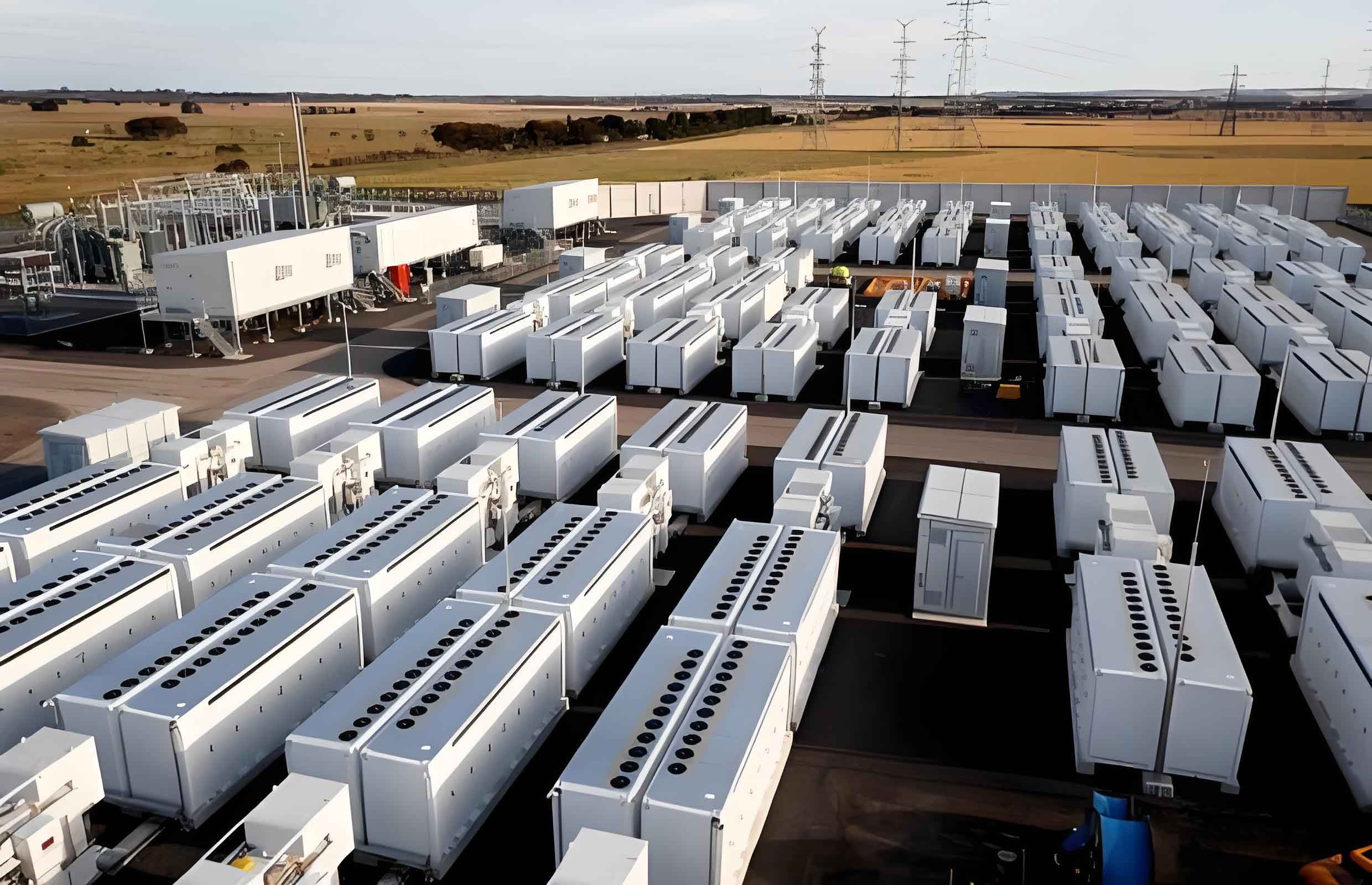
The increasing integration of renewable energy sources, such as solar and wind power, has made microgrids a focal point of research. However, the intermittent and random nature of these sources poses stability challenges for islanded microgrids. To mitigate this, I rely on distributed battery energy storage systems (BESS) to maintain voltage and power stability. While BESS offer advantages like low transmission loss and flexible installation, a critical issue I observed is the inconsistency among battery units, particularly in their SOC and capacity. This inconsistency prevents the units from sharing power effectively, causing them to reach their charge/discharge limits at different times, which can ultimately lead to system collapse. My work aims to solve the problems of slow SOC equalization and low current distribution accuracy. Many existing strategies, such as those using power or exponential functions for SOC-based droop control, either fail to limit the droop coefficient range, causing instability, or overlook the impact of line impedance on current sharing accuracy. My proposed strategy addresses these gaps by combining the benefits of inverse tangent and power functions with an optimized variable acceleration factor and compensation loops.
2. Proposed Control Strategy for Battery Energy Storage Systems
My control strategy is built upon an improved droop control framework, specifically designed for battery energy storage systems. The core innovation lies in how I dynamically adjust the droop coefficient based on the SOC of each battery unit.
2.1 Improved SOC-Based Droop Control
I define the droop coefficient for the i-th battery energy storage unit as follows. This formulation ensures the coefficient remains within a bounded range, preventing system instability.
$$
R_i = \begin{cases} R_0 + \frac{R_0}{\frac{\pi}{2}} \arctan\left[p(S_{OCi}^n – S_{OCA}^n)\right], & i_{oi} < 0 \text{ (charging)} \\ R_0 + \frac{R_0}{\frac{\pi}{2}} \arctan\left[-p(S_{OCi}^n – S_{OCA}^n)\right], & i_{oi} > 0 \text{ (discharging)} \end{cases}
$$
Here, $R_0$ is the initial droop coefficient, $SOC_i$ is the SOC of the i-th unit, and $SOC_A$ is the average SOC of all units. The tuning factors $n$ and $p$ control the equalization speed. I determined $n=2$ to be optimal based on my analysis. The value of $p$ is the subject of my optimization.
2.2 SOC Calculation and Capacity Compensation
I estimate the SOC using the ampere-hour integration method:
$$
SOC_i = SOC_i(0) – \int \frac{i_{oi}}{C_{ei}} dt
$$
To eliminate the influence of different battery capacities on the SOC equalization speed, I modified the droop coefficient further:
$$
R’_i = \frac{C_{e\max}}{C_{ei}} R_i
$$
This modification ensures that the rate of change of SOC for each unit becomes independent of its capacity, as shown below:
$$
\dot{SOC}_i = -\frac{u_{dcrefi} – u^*_{dc}}{C_{e\max} R_i}
$$
This is a crucial step for battery energy storage systems with heterogeneous capacities.
2.3 Optimized Variable Acceleration Factor
A major contribution of my work is the optimization of the acceleration factor $p$. In previous studies, $p$ was either fixed or changed in discrete steps, leading to power oscillations. I designed $p$ to be a continuous function of the SOC difference, $\Delta SOC$, which improves the equalization speed without causing abrupt power changes.
$$
p = \begin{cases} -1000[\Delta SOC – (\Delta SOC_0 – 0.1)] + 185, & \Delta SOC_0 – 0.01 < \Delta SOC \leq \Delta SOC_0 \\ 95, & 0 \leq \Delta SOC \leq \Delta SOC_0 – 0.01 \end{cases}
$$
In this function, $\Delta SOC_0$ is the initial difference between the maximum and minimum SOC values among the battery units. This linear relationship ensures that the equalization effort is high when the SOC disparity is large, and it gradually decreases to a constant value as the units approach equilibrium.
2.4 Virtual Voltage and Bus Voltage Compensation
To achieve accurate current sharing and mitigate voltage deviations, I introduced two compensation terms into the voltage reference equation:
$$
u_{dcrefi} = u^*_{dc} – R_i i_{oi} + \Delta u_{i1} + \Delta u_{i2}
$$
The first term, $\Delta u_{i1}$, is a virtual voltage compensation. It uses a PI controller to equalize the virtual voltage drop across all battery energy storage units, ensuring that the output current is inversely proportional to the droop coefficient.
$$
\Delta u_{i1} = G_1(s)(u_{avg} – u_i)
$$
The second term, $\Delta u_{i2}$, is a DC bus voltage compensation. Another PI controller adjusts the reference to maintain the average bus voltage at its nominal value.
$$
\Delta u_{i2} = G_2(s)(u^*_{dc} – u_{dcavg})
$$
I use a dynamic consensus algorithm to estimate the average SOC ($SOC_A$), average virtual voltage ($u_{avg}$), and average bus voltage ($u_{dcavg}$) without requiring a central controller. The algorithm is:
$$
X_{iavg}(k+1) = X_i(k) + \epsilon \sum_{j \in N} \theta_{ij}(k+1)
$$
$$
\theta_{ij}(k+1) = \theta_{ij}(k) + \alpha_{ij}[X_{javg}(k) – X_{iavg}(k)]
$$
3. Key Performance Indicators and Comparison for Battery Storage
I have summarized the core performance aspects of my proposed strategy for battery energy storage systems below.
| Objective | Problem Addressed | My Proposed Solution | Key Performance Improvement |
|---|---|---|---|
| SOC Equalization | Units reach charge/discharge limits at different times; slow convergence. | Adaptive droop coefficient using nested arctan/power function; optimized variable acceleration factor. | Significantly reduced equalization time (e.g., from >100s with fixed p to ~53s in a 2-unit test). Smooth power variation without oscillations. |
| Current Distribution | Line impedance mismatch causes inaccurate current sharing; output power not proportional to capacity. | Virtual voltage compensation loop ($\Delta u_{i1}$) to equalize virtual voltage drops across units. | Output current is precisely proportional to unit capacity (e.g., 2:2:1 for 3, 3, 1.5 Ah units in a 3-unit test). |
| Bus Voltage Stability | Droop control inherently causes a voltage drop at the DC bus. | DC bus voltage compensation loop ($\Delta u_{i2}$) using a PI controller. | Nominal bus voltage is restored and maintained within acceptable limits (e.g., 60V in the test system). |
4. Simulation Validation and Analysis
I built simulation models in MATLAB/Simulink to validate my control strategy for battery energy storage systems. I present results from two key experiments.
4.1 Comparison of Fixed vs. Optimized Variable Acceleration Factor
I simulated two identical battery energy storage units with initial SOCs of 53% and 48%. I first used a fixed acceleration factor, $p=85$, and then my optimized variable factor. The comparison is shown in the table below.
| Metric | Fixed Acceleration Factor (p=85) | Optimized Variable Acceleration Factor |
|---|---|---|
| Response Time (s) | 49.56 | 51.85 |
| SOC Equalization Time (s) | >100.00 | 52.66 |
| Current Convergence Time (s) | >100.00 | 52.66 |
With the fixed factor, the SOC difference was still not zero after 100 seconds. In contrast, my optimized variable factor led to full SOC equalization and current convergence in 52.66 seconds, demonstrating a reduction in equalization time of approximately 50%. The optimized $p$ value increased linearly from a base value as the SOC difference decreased, ensuring a rapid yet smooth approach to equilibrium. The droop coefficient for both units remained within the safe range of $[0, 2R_0]$ throughout the process.
4.2 Performance with Heterogeneous Battery Capacities
To prove the scalability and robustness of my strategy, I simulated a system with three battery energy storage units. Their initial SOCs were 55%, 52%, and 50%, and their capacities were 3 Ah, 3 Ah, and 1.5 Ah, respectively. The results confirmed the strategy’s effectiveness. The SOC of all three units equalized rapidly despite their different capacities, demonstrating that the capacity compensation ($R’_i$) was working correctly. Furthermore, the output currents were precisely shared in a 2:2:1 ratio, which is the exact inverse of their capacity ratio (1/3 : 1/3 : 1/1.5). This high precision was achieved thanks to the virtual voltage compensation loop, which mitigated the impact of the line impedances (Rline1 and Rline2). The DC bus voltage compensation loop also maintained the bus voltage close to its nominal 60V value, ensuring stable operation of the entire microgrid.
5. Conclusion
In my research, I have developed and validated a novel control strategy for battery energy storage systems in islanded DC microgrids. My work directly addresses the critical challenges of SOC equalization and current distribution precision.
- Improved SOC Equalization: I proposed an improved droop control strategy using an inverse tangent nested power function. This keeps the droop coefficient within a safe range. Crucially, my optimization of the variable acceleration factor, $p$, creates a smooth, continuous function of the SOC difference. This leads to a significant reduction in SOC equalization time—by approximately 50% in my tests—compared to using a fixed factor, without causing power oscillations.
- Precise Current and Voltage Regulation: By adding virtual voltage and bus voltage compensation loops, my strategy effectively eliminates the current and voltage errors caused by virtual and line impedances. This ensures that the output current of each battery energy storage unit is shared precisely according to its capacity, and the DC bus voltage is maintained at its nominal level.
- Robustness and Future Directions: My simulation results confirm the strategy’s effectiveness and scalability across different configurations, including battery energy storage systems with varying unit capacities. The strategy is based on U-I droop control, making it suitable for practical DC microgrid applications. Looking forward, my work will focus on incorporating other battery state indicators, such as State of Health (SOH), to further refine the control of battery energy storage systems for enhanced longevity and reliability.