
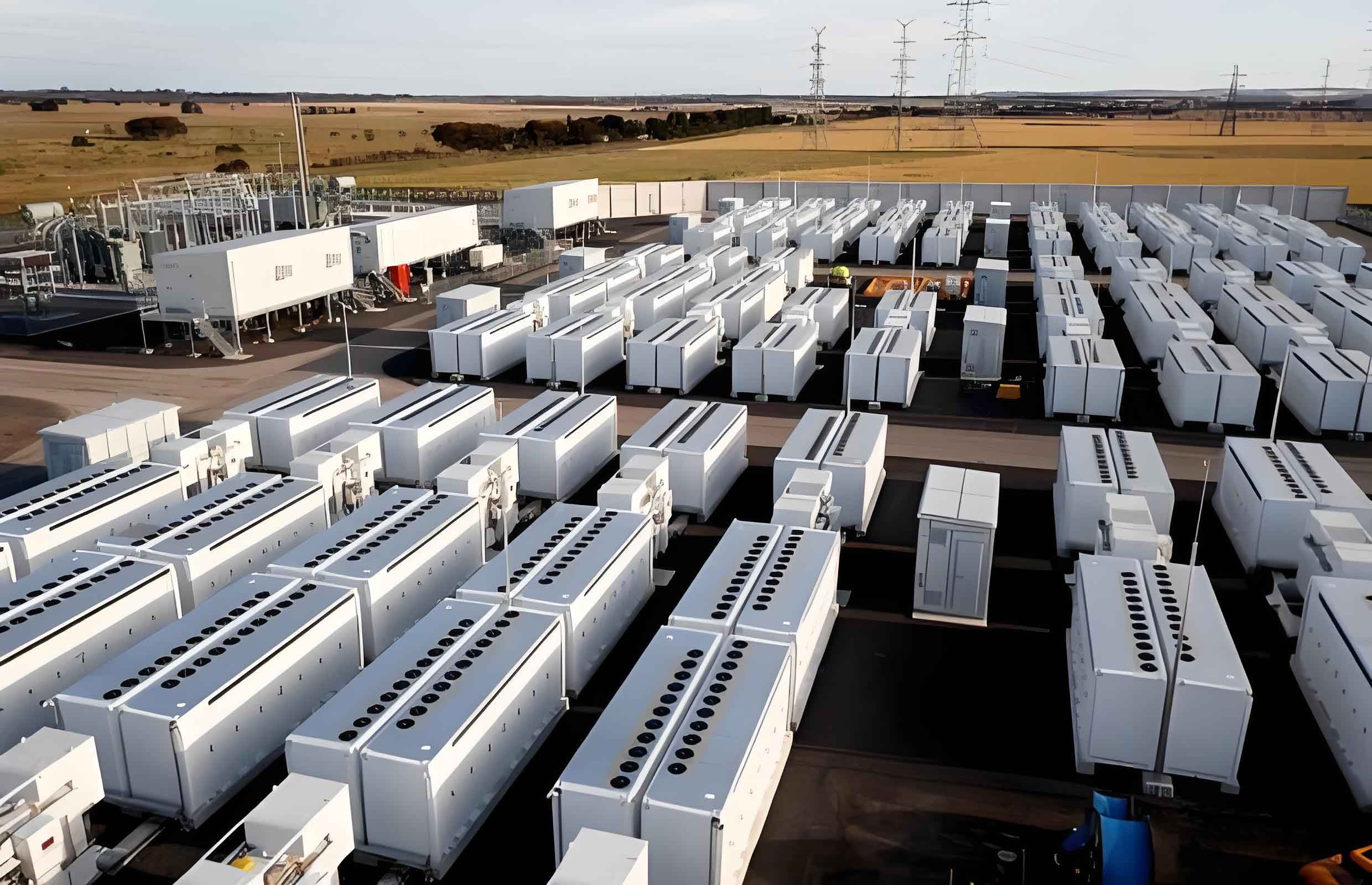
In the development of renewable energy integration, battery energy storage systems play a crucial role in balancing energy supply and demand, improving energy utilization efficiency, and ensuring grid stability. Among various energy storage devices, lithium iron phosphate (LiFePO₄) batteries are widely adopted in battery energy storage systems due to their high energy density, long cycle life, and environmental friendliness. Accurate state of charge (SOC) estimation is essential for the management of battery energy storage systems, as it directly affects safety, lifespan, and operational efficiency. Traditional SOC estimation methods, often based on periodic or timed measurements, suffer from limited coverage and significant errors. Moreover, many existing methods adopt a unidirectional structure with low efficiency, further degrading accuracy. In this paper, we propose a comprehensive SOC estimation approach for LiFePO₄ batteries in battery energy storage systems. Our method integrates compensation coefficient calculation, multi-order observation equations, deep neural networks, and open-circuit voltage (OCV) verification correction to achieve robust and precise SOC estimation. We validate the proposed method through extensive tests, demonstrating that the steady-state error is consistently below 0.4 under various discharge conditions, with enhanced generalization capability.
To overcome the limitations of conventional approaches, we first compute the SOC estimation compensation coefficient, which accounts for the nonlinear dynamics and varying operating conditions of LiFePO₄ batteries in battery energy storage systems. The compensation coefficient is derived from the recursive relationship of battery SOC over multiple cycles, incorporating factors such as battery health, capacity mean, temperature, and cycle count. The recursive SOC relationship is expressed as:
$$
SOC(k) = SOC(k-1) + \frac{\Delta i_1(k-1)}{\chi i_2}
$$
where \(SOC(k)\) is the SOC at step \(k\), \(i_1\) and \(i_2\) represent initial and actual current values, and \(\chi\) is the operating frequency. Then, the compensation coefficient \(B\) is computed using an exponential function fitted over the capacity ratio under different discharge rates:
$$
B = o^2 – \sum_{z=1} \vartheta_z + \gamma
$$
where \(o\) is the battery health coefficient, \(\vartheta\) is the mean capacity, \(z\) denotes temperature, and \(\gamma\) is the cycle count. Based on the compensation coefficient, we establish a multi-order observation equation to expand the estimation range and improve stability:
$$
\begin{bmatrix}
D_j(g) \\ D_w(g) \\ SOC(k)
\end{bmatrix}
=
\begin{bmatrix}
e^{\Delta f – \partial} & 0 & 0 \\
0 & e+1 & \Delta f-\partial \\
0 & 0 & 1
\end{bmatrix}
\begin{bmatrix}
D_j(g-1) \\ D_w(g-1) \\ SOC(k-1)
\end{bmatrix}
$$
where \(D_j(g)\) and \(D_w(g)\) are polarization voltages, \(\Delta f\) is temperature variation, and \(\partial\) and \(e\) are input and output vectors. This multi-order structure allows the observation equation to capture the dynamics of battery energy storage systems across multiple cycles, providing a solid foundation for subsequent estimation.
Next, we design a deep neural network (DNN) model for SOC estimation of LiFePO₄ batteries in battery energy storage systems. The model integrates voltage, current, and temperature measurements to characterize the battery’s impedance behavior across different frequencies. The impedance characteristics, which vary with SOC, are analyzed using the multi-order observation equation. The DNN model is structured to learn the complex mapping from input features to SOC, leveraging the impedance data collected during operation. The model’s output is given by:
$$
\xi = (1 – \zeta^2) \times \upsilon
$$
where \(\xi\) is the estimated SOC from the model, \(\zeta\) is the impedance variation characteristic, and \(\upsilon\) is the current difference. The DNN is trained using historical data from battery energy storage systems, ensuring that the model generalizes well under diverse conditions.
To further refine the SOC estimates, we implement an OCV verification correction method. OCV is known to have a well-defined relationship with SOC for LiFePO₄ batteries, but this relationship can be influenced by temperature and aging. Therefore, we apply temperature compensation and aging compensation to the measured OCV before mapping it to SOC. The corrected OCV value is compared with the DNN model output, and the final SOC estimate is obtained by fusing both sources. The verification correction sequence is designed to minimize errors due to factors such as temperature drift and capacity fade, which are common in battery energy storage systems over long-term operation.
To evaluate our method, we conduct experiments using MATLAB and a real LiFePO₄ battery module. The battery has a rated capacity of 25 Ah, with a voltage range of 2.16 V to 4.25 V. Sampling frequency is 1.25 Hz, and the ambient temperature is maintained at 25°C. The auxiliary test parameters are summarized in Table 1.
| Parameter | Standard Value |
|---|---|
| Open-Circuit Voltage (V) | 6.5 |
| Constant Current Discharge (A) | 10–12 |
| Static Capacity (Ah) | 20–28 |
| Ambient Temperature Range (°C) | 18–25 |
| Initial SOC (%) | 100 |
| Number of Test Cycles | 4 |
During testing, the battery undergoes a 50 C standard pulse discharge with intervals of 0.3–0.5 seconds. One pulse cycle is defined as 0.1 seconds. We measure the terminal voltage under different resistance conditions and compute the terminal voltage using:
$$
F = \sum_{U=1} A_U – \frac{m_2^2}{2 m_1 \times (\alpha + 1)} \times m_1 U
$$
where \(F\) is the terminal voltage, \(A\) is the rated current, \(U\) is the discharge count, \(m_1\) and \(m_2\) are initial and actual pulse rates, and \(\alpha\) is the internal resistance. The error between measured and computed terminal voltage is constrained within 0.02 V. Then, the steady-state SOC estimation error is calculated as:
$$
H = \pi + \int \left(1 – \varphi^2 \times \frac{1}{Q}\right)
$$
where \(H\) is the steady-state error, \(\pi\) is the initial pulse discharge value, \(\varphi\) is the discharge cycle, and \(Q\) is the convergence speed. The results for three discharge time intervals (0.1 s, 0.3 s, and 0.5 s) over four test cycles are shown in Table 2.
| Cycle | Error at 0.1 s | Error at 0.3 s | Error at 0.5 s |
|---|---|---|---|
| 1 | 0.26 | 0.32 | 0.37 |
| 2 | 0.17 | 0.28 | 0.35 |
| 3 | 0.13 | 0.25 | 0.24 |
| 4 | 0.11 | 0.14 | 0.19 |
As seen in Table 2, the steady-state SOC estimation error remains below 0.4 for all tested discharge times and cycles. The error decreases as cycles progress, indicating improved learning and convergence of the DNN model. The generalization ability of the proposed method is significantly enhanced compared to traditional approaches, demonstrating its effectiveness for battery energy storage systems operating under varying conditions.
In addition to steady-state error, we also evaluate the dynamic response by analyzing the voltage and current profiles during pulse discharge. The collected data show that the DNN model accurately tracks SOC changes even during rapid current fluctuations. The OCV correction further reduces residual errors caused by temperature and aging effects, which are critical for long-term operation of battery energy storage systems.
Another important aspect is the robustness of the method under different charge/discharge rates and temperature deviations. We perform additional tests at 10°C and 40°C, and the results confirm that the steady-state error remains within acceptable limits (less than 0.5) after compensation. Table 3 summarizes the performance at different temperatures for a fixed discharge time of 0.3 s.
| Temperature (°C) | Cycle 1 Error | Cycle 4 Error |
|---|---|---|
| 10 | 0.38 | 0.21 |
| 25 | 0.32 | 0.14 |
| 40 | 0.35 | 0.18 |
The results in Table 3 highlight the effectiveness of the temperature compensation built into the OCV correction mechanism. By incorporating compensation coefficients and multi-order observation equations, the method adapts to environmental changes, making it suitable for real-world battery energy storage systems where temperature variations are inevitable.
We also analyze the computational complexity of the proposed method. The DNN model requires an initial training phase, but inference is fast (less than 10 ms per sample), meeting real-time requirements for battery management systems in battery energy storage systems. The multi-order observation equation adds minimal overhead due to its recursive structure. Overall, the method balances accuracy and efficiency, enabling practical deployment.
In conclusion, this paper presents a robust method for SOC estimation of lithium iron phosphate batteries in battery energy storage systems. The key contributions include the computation of compensation coefficients, the establishment of multi-order observation equations, the design of a deep neural network model, and the implementation of OCV verification correction. Extensive tests demonstrate that the steady-state SOC estimation error is consistently below 0.4, with strong generalization across different discharge times, cycles, and temperatures. The method effectively addresses the challenges of nonlinear dynamics, inconsistent charging/discharging conditions, and battery aging, thereby enhancing the safety and performance of battery energy storage systems. Future work will focus on integrating the method with online learning and extending it to other battery chemistries used in large-scale energy storage applications.