
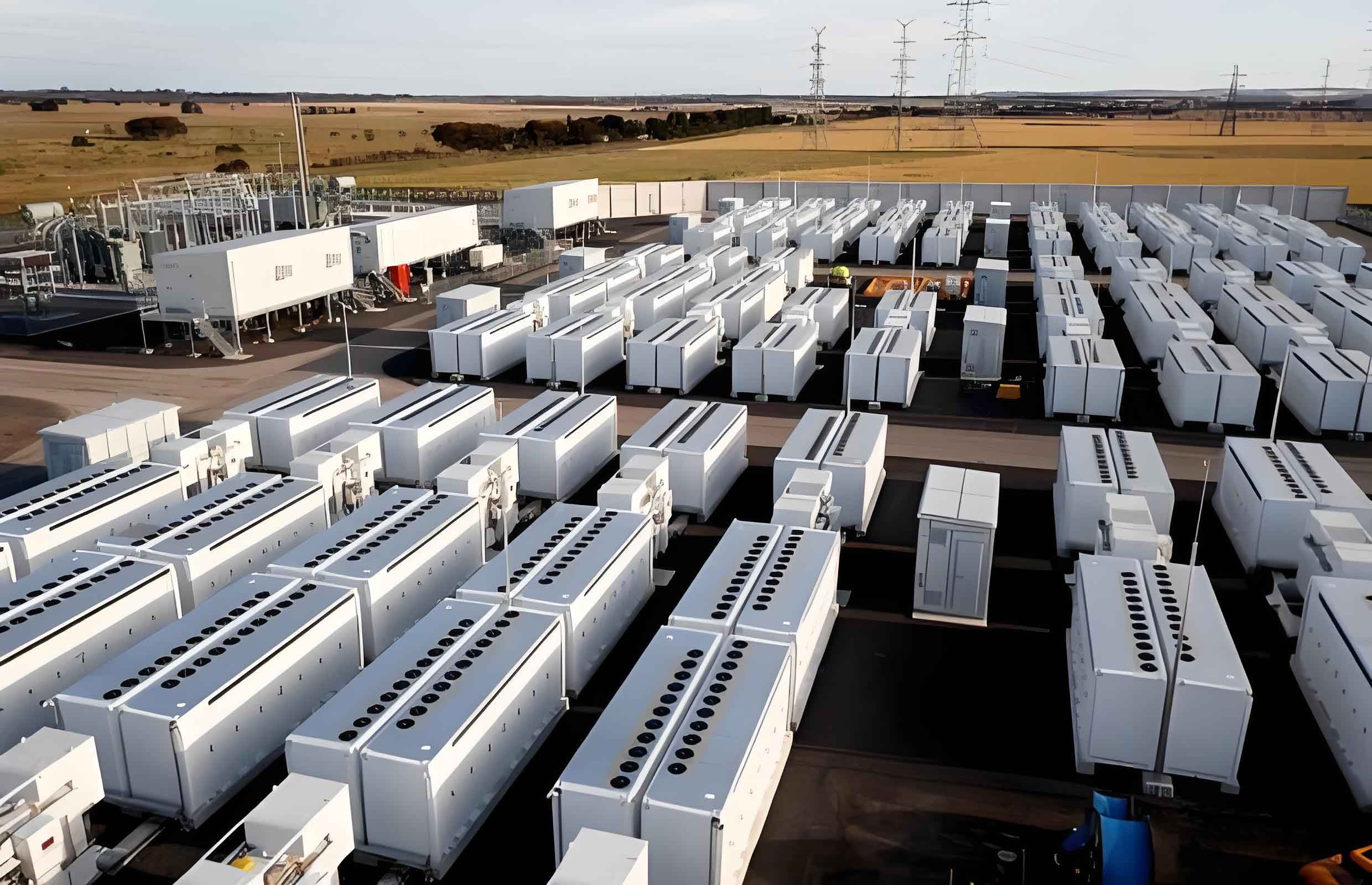
Battery energy storage systems (BESS) are critical for smoothing renewable energy output, enhancing power system flexibility, and addressing peak-demand scenarios. They play a pivotal role in promoting renewable energy development, thereby mitigating the dual pressures of environmental pollution and energy scarcity. Among various BESS technologies, lithium-ion batteries dominate the market due to their high energy density. Emerging technologies such as vanadium redox flow batteries (VRFBs) offer high safety, while liquid metal batteries (LMBs) provide ultra-long cycle life, making them promising for grid-scale storage. Modeling and state estimation of these battery energy storage systems are essential to improve performance, ensure safety, and optimize maintenance. This paper provides a comprehensive review of modeling and state estimation for lithium-ion batteries, VRFBs, and LMBs. We introduce the overall framework of state estimation for BESS, covering experiment-based, model-based, and data-driven methods. We then summarize the definitions of state of charge (SOC), state of health (SOH), and remaining useful life (RUL). Subsequently, we detail the working principles, model construction, state estimation, and battery management processes for each battery chemistry. Finally, we present a horizontal comparison of the main characteristics of these BESS technologies to provide insights for their selection and future development.
1. Framework for State Estimation of Battery Energy Storage Systems
The state estimation framework for BESS is illustrated conceptually. The technology utilizes a battery management system (BMS) to monitor and collect key parameters (voltage, current, temperature) in real time. Using various estimation methods, the BMS obtains state parameters such as SOC, SOH, and RUL, providing detailed internal information about the battery. Comprehensive state estimation not only detects potential issues and enables predictive maintenance but also supports BMS design, reliable power system operation, and smart grid integration.
The main state estimation methods are classified into three categories:
| Method | Description | Advantages | Disadvantages |
|---|---|---|---|
| Experiment-based | Directly calculate state parameters using measured data (e.g., Coulomb counting, open-circuit voltage). | Simple, easy to implement. | Low accuracy, sensitive to instrumentation and environment. |
| Model-based | Build electrochemical or equivalent circuit models, identify parameters, and use filters/observers to estimate states. | High accuracy, good generalization. | Complex modeling and computation. |
| Data-driven | Use neural networks, Gaussian processes, etc., to learn nonlinear mapping from experimental data to states. | Simple computation, high accuracy with sufficient data. | Requires large datasets, poor interpretability, immature for some chemistries. |
Key state parameters defined as:
- State of Charge (SOC): Ratio of remaining capacity Qt to total available capacity Q0:
$$k_{\text{SOC}} = \frac{Q_t}{Q_0}$$ - State of Health (SOH): Degree of degradation relative to initial condition. Common definitions:
$$k_{\text{SOH}} = \frac{Q_{m0}}{Q_{mn}} \quad \text{or} \quad k_{\text{SOH}} = \frac{R_E – R_n}{R_E – R_N}$$
where Qm0 is current maximum discharge capacity, Qmn is initial maximum capacity, Rn is current resistance, RN is initial resistance, RE is end-of-life resistance. Typically, EOL is reached when capacity drops to 80% or resistance doubles. - Remaining Useful Life (RUL): Number of cycles from current state to EOL.
2. Lithium-Ion Batteries
2.1 Working Principle
Lithium-ion batteries (LIBs) consist of a positive electrode (e.g., LiCoO2, LiFePO4), a negative electrode (graphite), electrolyte, and a separator. During charging, Li+ ions deintercalate from the cathode, migrate through the electrolyte, and intercalate into the anode. The reverse occurs during discharge. For LiFePO4, the overall reaction is:
$$\text{Li}_{1-x}\text{FePO}_4 + \text{Li}_x\text{C}_6 \rightleftharpoons \text{LiFePO}_4 + 6\text{C}$$
2.2 Models for LIBs
2.2.1 Electrochemical Models
Electrochemical models (EMs) describe internal physicochemical processes using partial differential equations (PDEs). The pseudo two-dimensional (P2D) model is the most detailed, accounting for solid and liquid phase diffusion, charge conservation, and reaction kinetics. The single particle model (SPM) simplifies each electrode to a single spherical particle, improving computational efficiency. The enhanced single particle model (ESPM) incorporates electrolyte dynamics, balancing accuracy and speed.
2.2.2 Equivalent Circuit Models
Equivalent circuit models (ECMs) use resistors, capacitors, and voltage sources to simulate battery behavior. Common ECM types:
| Model Type | Circuit Description | Advantages | Disadvantages |
|---|---|---|---|
| Rint model | Ideal voltage source + series resistor. | Simplest, few parameters. | Low accuracy, ignores nonlinearities. |
| Thevenin (1st-order RC) | Adds one RC network to capture polarization. | Simple, captures dynamic response. | Limited accuracy. |
| PNGV model | Adds capacitor for OCV change due to current accumulation. | Better dynamic performance. | Higher complexity. |
| nth-order RC | Multiple RC networks for higher fidelity. | High accuracy. | High computational cost. |
2.3 State Estimation for LIBs
2.3.1 SOC Estimation
Experiment-based methods include lookup tables (OCV-SOC relationship) and Coulomb counting. Coulomb counting suffers from accumulated errors and capacity aging. Enhanced Coulomb counting introduces correction factors for charge, discharge, and self-discharge modes.
Model-based methods rely on Kalman filters (KF) and observers. The extended Kalman filter (EKF) linearizes the nonlinear system via first-order Taylor expansion. The state-space representation is:
$$\begin{aligned}
x_k &= f(x_{k-1}, u_{k-1}) + w_k \\
y_k &= g(x_k, u_k) + v_k
\end{aligned}$$
Linearization yields:
$$\begin{aligned}
f(x_k, u_k) &\approx f(\hat{x}_k, u_k) + \left.\frac{\partial f}{\partial x}\right|_{\hat{x}_k}(x_k – \hat{x}_k) \\
g(x_k, u_k) &\approx g(\hat{x}_k, u_k) + \left.\frac{\partial g}{\partial x}\right|_{\hat{x}_k}(x_k – \hat{x}_k)
\end{aligned}$$
Variants such as unscented Kalman filter (UKF), adaptive EKF (AEKF), and strong tracking EKF (STEKF) address specific limitations:
| Algorithm | Advantages | Disadvantages |
|---|---|---|
| EKF | Simple, applicable to mild nonlinearities. | Sensitive to initial SOC, linear error, not for high-dimensional systems. |
| UKF | Avoids linearization, ensures covariance positive definiteness. | Difficult to tune, risk of divergence in high dimensions. |
| AEKF | Adapts noise covariances, robust. | Tuning complexity, sensitive to initial conditions. |
| STEKF | Strong tracking, fast convergence. | High computational load. |
Particle filter (PF) and its variants handle non-Gaussian noise. Data-driven methods (e.g., 1D-CNN, LSTM, GPR) map voltage, current, temperature to SOC directly.
2.3.2 SOH Estimation
Experiment-based SOH uses direct capacity or resistance measurements. Model-based methods estimate ohmic resistance or cyclable lithium-ion count via EKF. For example, AUKF estimates ohmic resistance from a 2nd-order RC model, then computes SOH. Data-driven methods extract health indicators (HI) from incremental capacity (IC) or differential voltage (DV) curves. Features such as peak intervals show strong correlation with SOH and are fed into LSTM or CNN models.
2.3.3 RUL Prediction
RUL is predicted using model-based approaches (e.g., PF combined with aging models) or data-driven methods. Feature prediction extracts HI from early cycles (e.g., IC curve features) and predicts RUL directly. Capacity trajectory prediction models capacity degradation over cycles (e.g., using EMD-LSTM-RVM hybrid) and extrapolates to the EOL threshold.
3. Vanadium Redox Flow Batteries
3.1 Working Principle
Vanadium redox flow batteries (VRFBs) store energy in liquid electrolytes containing vanadium ions in different oxidation states (V2+/V3+ on the negative side, VO2+/VO2+ on the positive side). Electrolytes are circulated through a cell stack where electrochemical reactions occur. The half-cell reactions are:
Positive: $$\text{VO}^{2+} + \text{H}_2\text{O} – e^- \rightleftharpoons \text{VO}_2^+ + 2\text{H}^+$$
Negative: $$\text{V}^{3+} + e^- \rightleftharpoons \text{V}^{2+}$$
Overall: $$\text{VO}^{2+} + \text{H}_2\text{O} + \text{V}^{3+} \rightleftharpoons \text{VO}_2^+ + \text{V}^{2+} + 2\text{H}^+$$
3.2 Models for VRFBs
3.2.1 Electrochemical Models
VRFB EMs include zero-dimensional (0D), one-dimensional (1D), two-dimensional (2D), and three-dimensional (3D) models. 0D models treat the cell as a continuously stirred tank reactor (CSTR) and are suitable for system-level simulation. Higher-dimensional models capture spatial gradients but are computationally intensive. A dynamic plug flow reactor model better represents large-scale systems.
3.2.2 Equivalent Circuit Models
Specific ECMs for VRFBs incorporate pump losses, parasitic resistances, and variable internal resistance. A widely used equivalent loss model includes:
- Controlled voltage source for stack voltage
- Controlled current source for pump loss
- Parasitic resistor for standby losses
- Internal resistors for kinetic, ohmic, and mass transport losses
- Capacitor for transient behavior
3.3 State Estimation for VRFBs
3.3.1 SOC Estimation
Experiment-based methods for VRFB SOC include spectroscopic methods (UV-Vis, IR, NMR) that measure absorbance of vanadium species. These are promising for in-situ monitoring but require careful calibration due to side reactions. Other methods measure electrolyte conductivity, viscosity, or vanadium ion concentrations via potentiometric titration.
Model-based methods use ECMs with EKF, AEKF, UKF, or sliding mode observers. For example, a hybrid EKF-PF approach improves accuracy. Electro-thermal coupled models also enhance robustness.
Data-driven methods include 1D-CNN to map current, flow rate, and voltage to SOC; BP neural networks optimized with Levenberg-Marquardt or Bayesian algorithms; and probabilistic neural networks to classify capacity loss levels.
3.3.2 SOH Estimation
Capacity fading in VRFBs is mainly caused by vanadium ion crossover and water imbalance. SOH estimation often couples SOC estimation: after obtaining SOC via model, capacity loss is computed using Coulomb counting over a known SOC interval:
$$k_{\text{SOH}} = \frac{\int_{t_1}^{t_2} I(t) dt}{k_{\text{SOC}}(t_2) – k_{\text{SOC}}(t_1)}$$
RLS online parameter identification combined with EKF enables real-time capacity monitoring. Joint SOC/SOH estimation frameworks decouple or simultaneously estimate both parameters.
4. Liquid Metal Batteries
4.1 Working Principle
Liquid metal batteries (LMBs) consist of three self-segregating liquid layers: a low-density alkali or alkaline-earth metal anode (e.g., Li, Na), a molten salt electrolyte (e.g., LiCl-KCl), and a high-density metal or alloy cathode (e.g., Bi, Pb, Sb). During discharge, the anode metal oxidizes, the cations dissolve in the electrolyte, and alloy with the cathode metal. The reverse occurs during charging. The general reaction is:
$$\text{A} + \text{B} \rightleftharpoons \text{A(in B)}$$
where A is the active anode metal and B is the cathode metal.
4.2 Models for LMBs
4.2.1 Electrochemical Models
1D models describe electrode diffusion and interfacial reactions, validated with <5% error. 2D and 3D models incorporate gravity, convection, and solutal buoyancy. Fractional-order models based on Padé approximation simplify diffusion equations. However, electrolyte transport in molten salts is complex; most models treat the electrolyte layer as a pure ohmic resistor, ignoring concentration gradients. More advanced models consider boundary layer effects or employ finite element analysis.
4.2.2 Equivalent Circuit Models
LMBs exhibit different impedance spectra from LIBs due to their liquid structure. A fractional-order ECM with two constant phase elements (CPE) and an inductance has been proposed, achieving <5% voltage error. Considering temperature dependence, a dual polarization model with separate RC networks for charge and discharge concentration polarization is used, keeping relative voltage error within ±0.03 V.
4.3 State Estimation for LMBs
4.3.1 SOC Estimation
LMB SOC estimation relies on model-based approaches: EKF, UKF, adaptive KF, and dual fuzzy adaptive EKF (DFAEKF) are applied to 1st- or 2nd-order ECMs. The DFAEKF method jointly estimates SOC and model parameters (e.g., ohmic resistance), showing high accuracy and robustness. Root mean square error as low as 2.25×10⁻³ has been reported.
4.3.2 SOH Estimation and RUL Prediction
Given the ultra-long cycle life of LMBs (expected >20 years), aging studies require accelerated testing. A hybrid data-driven method (EMD-GPR-RVM) decomposes capacity degradation into intrinsic mode functions (capturing capacity regeneration) and residual (capturing overall fading). Gaussian process regression predicts the IMFs, and relevance vector machine predicts the residual, enabling accurate RUL prediction.
4.4 Multi-Level Management of LMBs
LMBs have low cell voltage and high operating temperatures, making balancing and thermal management critical. Cell sorting based on static and dynamic characteristics improves consistency. A two-stage hybrid active balancing circuit using inductors and transformers maintains voltage and SOC balance. Thermal management controllers with multi-input single-output architecture optimize heating uniformity while minimizing energy consumption. A 2D axisymmetric multiphysics model evaluates thermal behavior under external short-circuit conditions, showing how discharge rate and SOC affect temperature distribution.
5. Comparative Analysis and Outlook
We summarize the key characteristics of the three battery energy storage systems (BESS) technologies:
| Characteristic | Lithium-Ion | Vanadium Redox Flow | Liquid Metal |
|---|---|---|---|
| Safety | Risk of fire/explosion under abuse. | High safety (non-flammable aqueous electrolyte). | High safety (molten salt, no flammable organics). |
| Cycle Life | 500–2000 cycles (varies with chemistry). | 10,000–15,000 cycles. | >20 years projected. |
| Energy Density | 150–250 Wh/kg (high). | 15–25 Wh/L (low). | 70–150 Wh/L (moderate). |
| Cost | Moderate (raw materials expensive). | High (vanadium cost). | Low (abundant materials, no separator). |
| Sustainability | Recycling challenging; pollution concerns. | Electrolyte recyclable. | Materials recyclable; low environmental impact. |
| Main Applications | Portable devices, EVs, grid storage. | Large-scale stationary storage. | Grid-scale long-duration storage. |
| Future Directions | New materials, safer electrolytes, solid-state. | Cost reduction, improved membranes. | Lower operating temperature, corrosion resistance. |
For state estimation methods:
- Experiment-based methods are simple but limited in accuracy; suitable for low-precision applications.
- Model-based methods offer high accuracy but require computational resources; ideal for BMS with adequate processing power.
- Data-driven methods show great promise but need large datasets and lack physical interpretability. Future work should combine multi-sensor information (e.g., internal strain, temperature gradients) with physics-informed machine learning to create hybrid models that improve both accuracy and robustness.
6. Conclusion
Battery energy storage systems are indispensable for integrating renewable energy and ensuring grid stability. This paper reviewed the modeling and state estimation of three major BESS technologies: lithium-ion, vanadium redox flow, and liquid metal batteries. We presented their working principles, model types (electrochemical and equivalent circuit), and state estimation approaches for SOC, SOH, and RUL. A comparative analysis highlighted the trade-offs among safety, cycle life, energy density, and cost. The state-of-the-art estimation methods include experiment-based (simple but low accuracy), model-based (accurate but computationally intensive), and data-driven (promising but data-hungry). Looking ahead, advanced sensing techniques coupled with physics-informed data-driven models will enable more reliable and intelligent management of future battery energy storage systems, accelerating the transition to a sustainable energy future.