
With the increasing penetration of renewable energy sources, the role of a battery energy storage system (BESS) in grid stability and economic operation has become indispensable. However, conventional dispatching models often neglect the thermal dynamics within batteries, leading to inaccurate assessments of performance degradation, accelerated aging, and even thermal runaway risks. In this work, we propose a comprehensive optimization framework for a stand-alone battery energy storage system that explicitly accounts for electro-thermal coupling. Our approach integrates a Thevenin equivalent circuit with a lumped-parameter thermal model to capture the dynamic interplay between current, voltage, and temperature. Based on the Arrhenius degradation mechanism, we introduce temperature-driven lifetime constraints and formulate a multi-objective optimization problem that simultaneously minimizes operating cost, temperature rise, and capacity loss. An improved NSGA-III algorithm is employed to solve the resulting nonlinear constrained problem. Simulation results based on a 100-kW/200-kWh lithium iron phosphate (LFP) battery energy storage system demonstrate that our strategy reduces operating cost by 8.3% and suppresses maximum temperature rise by 3.7°C compared to a traditional cost-minimization approach, while extending calendar life. Sensitivity and robustness analyses further confirm the applicability of the proposed method under varying ambient temperatures, initial state-of-charge (SOC), and load disturbances.
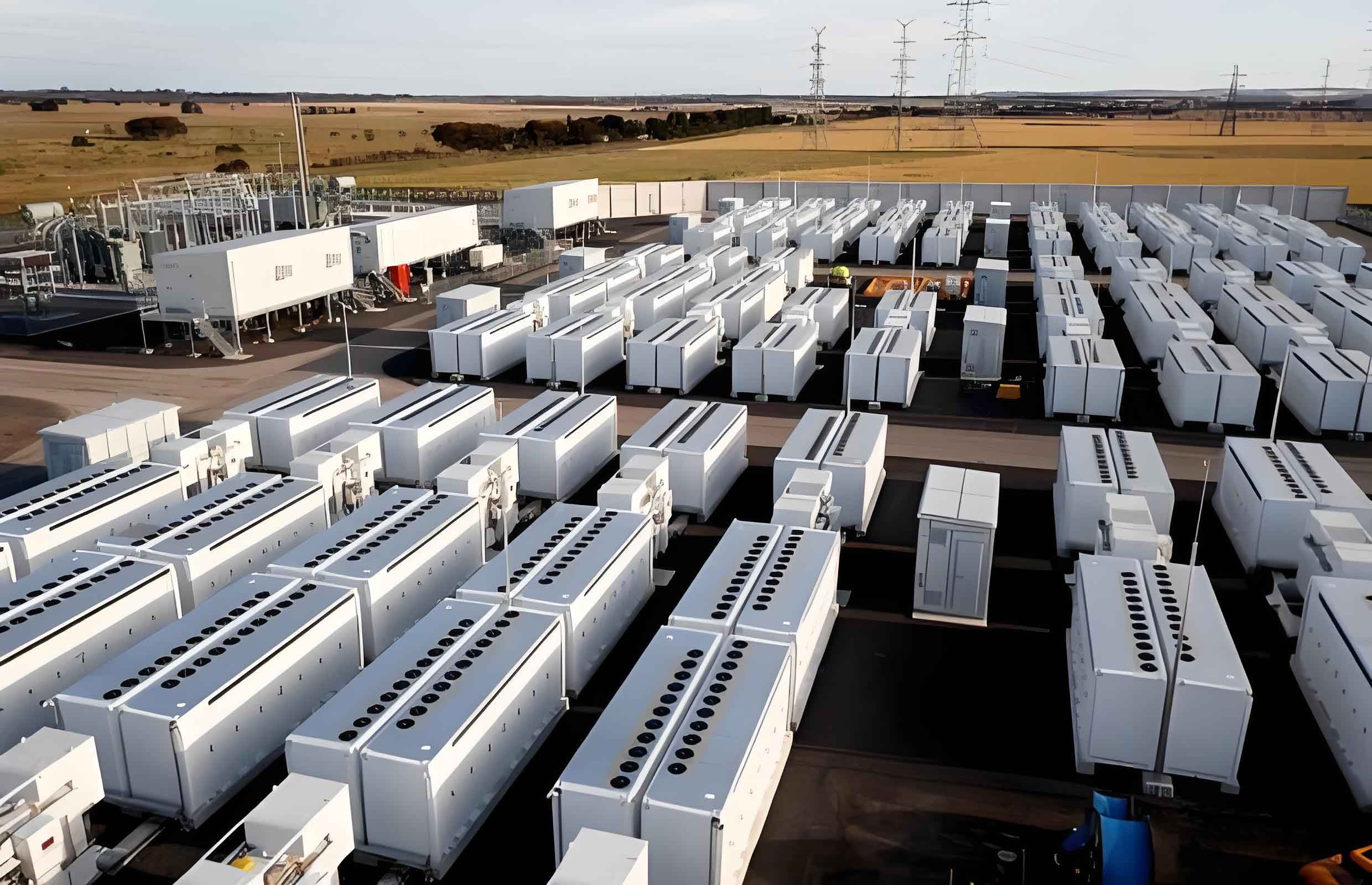
This paper is organized as follows. Section 1 presents the thermal-electrical coupled model of the battery energy storage system. Section 2 derives temperature-driven performance constraints. Section 3 formulates the multi-objective optimization model and describes the improved NSGA-III solver. Section 4 details simulation setup and results, with comparative analysis and an embedded figure. Section 5 discusses parameter sensitivity and robustness. Section 6 concludes the work.
1. Thermal-Electrical Coupled Modeling of Battery Energy Storage System
To accurately characterize the mutual influence between thermal and electrical behaviors during the operation of a battery energy storage system, we construct a coupled model combining the Thevenin equivalent circuit with the lumped-parameter thermal model. This joint model captures the dynamic relationships among current, temperature, and terminal voltage.
1.1 Electrical Submodel
The electrical submodel adopts a first-order RC model, also known as the Thevenin model. It consists of an open-circuit voltage \(U_{\text{oc}}(SOC)\), an ohmic internal resistance \(R_0\), a polarization resistance \(R_1\), and a polarization capacitance \(C_1\). The battery terminal voltage \(U_{\text{bat}}\) is expressed as:
\[
U_{\text{bat}}(t) = U_{\text{oc}}(SOC(t)) – I(t)R_0 – V_p(t) \tag{1}
\]
\[
\frac{dV_p(t)}{dt} = \frac{I(t)}{C_1} – \frac{V_p(t)}{R_1 C_1} \tag{2}
\]
where \(I(t)\) is the battery current (positive for discharge, negative for charge), and \(V_p(t)\) is the polarization voltage. The open-circuit voltage \(U_{\text{oc}}\) is a function of the state of charge \(SOC(t)\), which evolves according to:
\[
\frac{dSOC(t)}{dt} = -\frac{I(t)}{C_{\text{rated}}} \tag{3}
\]
with \(C_{\text{rated}}\) being the rated capacity. The parameters \(R_0\), \(R_1\), and \(C_1\) are inherently temperature-dependent, which provides the first coupling link between electrical and thermal domains.
1.2 Thermal Submodel
The thermal model employs a lumped-capacitance approach, assuming uniform temperature distribution across the battery cell. The internal heat generation power \(Q_{\text{gen}}\) is:
\[
Q_{\text{gen}}(t) = I^2(t) \times (R_0 + R_1) \tag{4}
\]
The temperature variation is governed by the differential equation:
\[
\frac{dT(t)}{dt} = \frac{Q_{\text{gen}}(t)}{C_{\text{th}}} – \frac{T(t) – T_{\text{amb}}(t)}{R_{\text{th}} C_{\text{th}}} \tag{5}
\]
where \(T(t)\) is the battery temperature, \(T_{\text{amb}}(t)\) is the ambient temperature, \(C_{\text{th}}\) is the thermal capacitance, and \(R_{\text{th}}\) is the thermal resistance accounting for forced air cooling. The current \(I(t)\) simultaneously drives voltage dynamics and heat generation, while the temperature \(T(t)\) inversely affects the electrical parameters (\(R_0\), \(R_1\), and \(U_{\text{oc}}\)) through empirical look-up tables. This closed-loop coupling is essential for realistic simulation of a battery energy storage system.
1.3 Parameter Identification
The model parameters are identified based on experimental data from a Pylontech US2000C LFP cell. The key parameters are summarized in Table 1.
| Parameter | Symbol | Value | Unit |
|---|---|---|---|
| Ohmic resistance at 25°C | \(R_0\) | 0.012 | \(\Omega\) |
| Polarization resistance at 25°C | \(R_1\) | 0.008 | \(\Omega\) |
| Polarization capacitance | \(C_1\) | 3000 | F |
| Thermal capacitance | \(C_{\text{th}}\) | 200 | J/K |
| Thermal resistance (forced air) | \(R_{\text{th}}\) | 0.05 | K/W |
| Rated capacity | \(C_{\text{rated}}\) | 200 | kWh |
| Activation energy for aging | \(E_a\) | 30,000 | J/mol |
2. Temperature-Driven Performance Constraints
To ensure safe and durable operation of the battery energy storage system, we introduce a set of performance constraints derived from the Arrhenius degradation mechanism. The aging rate \(k(T)\) is given by:
\[
k(T) = A \exp\left(-\frac{E_a}{R T}\right) \tag{6}
\]
where \(A\) is the frequency factor, \(E_a\) is the activation energy, \(R\) is the universal gas constant, and \(T\) is the absolute temperature in Kelvin. The incremental lifetime loss \(\Delta L(t)\) over a time step \(\Delta t\) is:
\[
\Delta L(t) = k(T(t)) \cdot f(\text{DOD}(t)) \cdot \Delta t \tag{7}
\]
where \(f(\text{DOD})\) is a nonlinear function of depth of discharge, typically modeled as a polynomial. The cumulative loss is constrained by a budget over the project horizon.
Thermal safety constraints include absolute temperature limits:
\[
T_{\min} < T(t) \leq T_{\max}, \quad T_{\min}=278.15\,\text{K} \;(5^\circ\text{C}),\; T_{\max}=318.15\,\text{K}\;(45^\circ\text{C}) \tag{8}
\]
and a temperature slew rate limit to prevent thermal shock:
\[
\left|\frac{dT(t)}{dt}\right| \leq \Delta T_{\text{rate}} \approx 1\,^\circ\text{C}/\text{min} \tag{9}
\]
Furthermore, the usable capacity is dynamically adjusted by a temperature efficiency factor \(\eta_T(T)\):
\[
C_{\text{usable}}(t) = C_{\text{rated}} \times \eta_T(T(t)) \tag{10}
\]
where \(\eta_T(T)\) varies between 0.8 and 1.0, with reduced efficiency at both low and high temperatures. These constraints are directly embedded into the optimization model of the battery energy storage system.
3. Multi-Objective Optimization Model and Solution Algorithm
3.1 Objective Functions
We formulate a multi-objective optimization problem that balances three conflicting goals for the battery energy storage system operation over a 24-hour horizon with a 10-minute time step.
Objective 1: Minimize operating cost
\[
J_1 = \sum_{t=1}^{N} \left[ P_{\text{grid}}(t) \pi(t) \Delta t + |P_{\text{bat}}(t)| c_{\text{om}} \Delta t \right] \tag{11}
\]
where \(P_{\text{grid}}(t)\) is the power exchanged with the grid (positive for buying, negative for selling), \(\pi(t)\) is the time-of-use electricity price, \(P_{\text{bat}}(t)\) is the battery charging/discharging power, and \(c_{\text{om}}\) is the operation and maintenance cost per unit energy.
Objective 2: Minimize temperature rise
\[
J_2 = \sum_{t=1}^{N} \left| \frac{dT(t)}{dt} \right| \Delta t \tag{12}
\]
This objective penalizes rapid temperature changes, thereby smoothing thermal transients.
Objective 3: Minimize lifetime loss
\[
J_3 = \sum_{t=1}^{N} \Delta L(t) \tag{13}
\]
where \(\Delta L(t)\) is defined by Equation (7).
3.2 Constraints
The optimization is subject to the thermal-electrical coupled dynamics (Equations 1–5) and the following operational limits:
\[
\begin{aligned}
&\text{SOC}_{\min} \leq SOC(t) \leq \text{SOC}_{\max} \\
&P_{\text{bat,min}} \leq P_{\text{bat}}(t) \leq P_{\text{bat,max}} \\
&T_{\min} \leq T(t) \leq T_{\max} \\
&\left|\frac{dT(t)}{dt}\right| \leq \Delta T_{\text{rate}} \\
&\text{Power balance: } P_{\text{grid}}(t) + P_{\text{bat}}(t) = P_{\text{load}}(t) \\
&\text{Initial and terminal SOC: } SOC(0) = SOC_0, \; SOC(N) = SOC_f
\end{aligned} \tag{14}
\]
3.3 Solution via Improved NSGA-III
To efficiently solve the nonlinear multi-objective problem, we adopt an improved version of the NSGA-III algorithm. Key enhancements include:
- Adaptive crowding distance adjustment: dynamically adjusts the niche-preservation operator to maintain population diversity under varying constraint severity.
- Elite retention strategy: preserves top non-dominated solutions across generations.
- Penalty-function constraint handling: converts infeasible solutions into feasible ones by penalizing violations of the temperature-rate and SOC limits.
The algorithm is implemented in MATLAB, with the thermal-electrical model solved in GAMS/CPLEX as a subproblem during fitness evaluation. The master-slave coordination ensures that the Pareto front of optimal trade-offs is obtained. Table 2 lists the NSGA-III parameters used.
| Parameter | Value |
|---|---|
| Population size | 100 |
| Number of generations | 200 |
| Crossover probability | 0.9 |
| Mutation probability | 0.1 |
| Reference directions | \(H = 10\) (Das–Dennis method) |
4. Simulation and Validation
4.1 Simulation Setup
We construct a simulation platform for a stand-alone battery energy storage system with rated power 100 kW and capacity 200 kWh. The electrical and thermal parameters are derived from the Pylontech US2000C cell as described in Table 1. Ambient temperature data is taken from a typical summer day in a city, and the time-of-use electricity tariff is based on a 2022 provincial schedule. The dispatch horizon is 24 hours with 10-minute intervals. Initial SOC is set to 50% unless otherwise stated.
4.2 Comparative Analysis
We compare our proposed multi-objective strategy (labeled “Thermal-aware”) with the traditional single-objective method that minimizes only operating cost (labeled “Cost-only”). The Pareto front from our strategy is used to select a solution with balanced weights (\(\lambda_1=0.5\), \(\lambda_2=0.3\), \(\lambda_3=0.2\) via fuzzy satisfaction). Results are summarized in Table 3.
| Metric | Cost-only | Thermal-aware | Improvement |
|---|---|---|---|
| Total operating cost ($) | 1,025 | 940 | -8.3% |
| Maximum temperature rise (°C) | 44.2 | 40.5 | -3.7°C |
| Average temperature (°C) | 37.5 | 34.8 | -2.7°C |
| Lifetime loss over one day (%) | 0.035 | 0.028 | -20% |
| Peak temperature rate (°C/min) | 1.2 | 0.9 | — |
The thermal-aware strategy reduces operating cost by 8.3% while lowering the maximum temperature by 3.7°C. This is achieved because temperature constraints prevent aggressive charging/discharging during high-electricity-price periods that would otherwise overheat the battery. The temperature profile is also smoother, confirming the effectiveness of the slew-rate constraint.
4.3 Trade-off Analysis under Different Weight Sets
To demonstrate the Pareto front, we simulate three distinct weighting scenarios: (a) cost priority (\(\lambda_1=0.8\), \(\lambda_2=0.1\), \(\lambda_3=0.1\)), (b) balanced (\(\lambda_1=0.5\), \(\lambda_2=0.3\), \(\lambda_3=0.2\)), and (c) life priority (\(\lambda_1=0.2\), \(\lambda_2=0.2\), \(\lambda_3=0.6\)). The resulting performance is given in Table 4.
| Weight Scenario | Cost ($) | Max Temp Rise (°C) | Lifetime Loss (%) |
|---|---|---|---|
| Cost priority | 920 | 43.5 | 0.040 |
| Balanced | 940 | 40.5 | 0.028 |
| Life priority | 998 | 38.2 | 0.021 |
When lifetime is prioritized, the temperature is lower but cost increases by about 8.5% compared to the cost-priority case. The trade-off highlights the necessity of a multi-objective framework for a battery energy storage system that must balance economic revenue with safety and longevity.
5. Sensitivity and Robustness Analysis
5.1 Sensitivity to Ambient Temperature
We vary the ambient temperature profile by shifting its mean by ±5°C. The balanced-weight solution is re-evaluated, as shown in Table 5.
| Ambient Temperature Scenario | Max Temp (°C) | Cost ($) | Lifetime Loss (%) |
|---|---|---|---|
| Nominal (baseline) | 40.5 | 940 | 0.028 |
| +5°C (hotter) | 43.2 | 987 | 0.036 |
| -5°C (cooler) | 37.0 | 953 | 0.024 |
Under hotter conditions, the system reaches a maximum temperature of 43.2°C, still within the 45°C safety limit, but requires higher cost due to reduced efficiency and more frequent thermal constraint activation. The model demonstrates adaptive thermal control.
5.2 Robustness to Initial SOC and SOC Limits
We test the algorithm under three initial SOC levels (30%, 50%, 80%) and two different SOC operation windows (20–90% vs. 40–80%). The robust performance is summarized in Table 6.
| Initial SOC (%) | SOC Limits (%) | Cost ($) | Max Temp (°C) | Lifetime Loss (%) |
|---|---|---|---|---|
| 30 | 20–90 | 970 | 40.8 | 0.030 |
| 50 | 20–90 | 940 | 40.5 | 0.028 |
| 80 | 20–90 | 942 | 38.1 | 0.025 |
| 50 | 40–80 | 955 | 41.2 | 0.029 |
The strategy performs consistently across all scenarios. The cost varies within 3% and temperature remains below 41.2°C even under restrictive SOC boundaries. This confirms that our multi-objective optimization framework is robust for practical deployment of a battery energy storage system.
6. Conclusion
We have presented a novel dispatching optimization strategy for a stand-alone battery energy storage system that explicitly considers thermal effects. By integrating a Thevenin electrical model with a lumped-capacitance thermal model, we capture the electro-thermal coupling dynamics. Arrhenius-based lifetime constraints and temperature limits are embedded into a multi-objective optimization model, which is solved by an improved NSGA-III algorithm. Simulation results on a 100-kW/200-kWh LFP battery energy storage system show a reduction of 8.3% in operating cost and 3.7°C in peak temperature rise compared to a conventional cost-only dispatch. The trade-off analysis reveals that a balanced weight set provides a favorable compromise among cost, temperature, and lifetime. Sensitivity and robustness tests under varying ambient temperatures, initial SOC levels, and SOC constraints demonstrate the adaptability and resilience of the proposed approach. Future work will extend the framework to consider degradation-aware predictive control and integration with renewable generation forecasting.