
Our research team has dedicated substantial effort to developing a comprehensive framework for evaluating the operational reliability of electric power systems that incorporate battery energy storage systems (BESS). The rapid advancement of renewable energy integration has made energy storage cells indispensable due to their fast response and exceptional regulation capabilities. However, as the penetration of energy storage cells continues to grow, their inherent failure characteristics—particularly thermal runaway and multi-dimensional performance degradation—pose significant challenges to accurate reliability assessment. In this paper, we present a novel methodology that explicitly accounts for these failure modes within the power system reliability evaluation framework.
The motivation for our work stems from a critical observation: existing reliability assessment methods often treat energy storage cells as ideal devices with constant performance parameters, neglecting the progressive deterioration of their operational capabilities over time. This oversight can lead to overly optimistic reliability projections, potentially compromising system security. Our approach addresses this gap by integrating both thermal runaway failure probabilities and multi-dimensional performance degradation models into a unified reliability evaluation framework.
Modeling of Energy Storage Cell Failure Characteristics
Energy storage cell failures manifest in two primary forms: thermal runaway failures and performance degradation failures. Thermal runaway represents a catastrophic failure mode where the energy storage cell experiences uncontrolled temperature rise due to internal chemical reactions or external physical disturbances, potentially leading to fire or explosion. Performance degradation, on the other hand, involves the gradual deterioration of key operational parameters such as capacity, voltage characteristics, and charge-discharge efficiency over the lifecycle of the energy storage cell.
Thermal Runaway Failure Model
We developed a thermal runaway early warning model based on unsupervised learning with reconstruction error calculation. The model utilizes real-time monitoring data from the Battery Management System (BMS), including voltage, current, state of charge (SOC), and temperature. By training a neural network to reconstruct normal operating states, we can detect anomalies when the reconstruction error exceeds a predefined threshold. The thermal runaway failure probability is calculated through an ensemble learning approach that aggregates predictions from multiple neural network models.
The thermal runaway failure coefficient \( R_{Tr} \) is defined as:
\[
R_{Tr} = \begin{cases}
0, & P_{thermal} > \delta \\
1, & P_{thermal} \leq \delta
\end{cases}
\]
where \( P_{thermal} \) represents the thermal runaway probability and \( \delta \) is the threshold value. When \( R_{Tr} = 0 \), the energy storage cell is considered completely incapacitated due to thermal runaway.
Multi-Dimensional Performance Degradation Model
For performance degradation, we consider two critical dimensions: voltage characteristic degradation and capacity degradation. Using the universal generating function (UGF) methodology, we construct probability models for both dimensions. The voltage characteristics and capacity of the energy storage cell are partitioned into discrete performance states, with each state representing a specific degradation level.
The universal generating function for voltage characteristics is expressed as:
\[
u_d(z) = \sum_{e_d = 1}^{L_v} p_{d,e_d} z^{e_d}
\]
The universal generating function for capacity is expressed as:
\[
u_Q(z) = \sum_{e_Q = 1}^{L_Q} p_{Q,e_Q} z^{e_Q}
\]
where \( L_v \) and \( L_Q \) represent the number of performance levels for voltage and capacity respectively, and \( p_{d,e_d} \) and \( p_{Q,e_Q} \) denote the probabilities associated with each performance level.
From these models, we derive the degradation coefficients:
\[
R_Q = Pr(e_Q \leq \gamma_Q) = \sum_{e_Q \leq \gamma_Q} p_{Q,e_Q}
\]
\[
R_d = Pr(e_d \leq \gamma_d) = \sum_{e_d \leq \gamma_d} p_{d,e_d}
\]
where \( \gamma_Q \) and \( \gamma_d \) are the minimum acceptable performance thresholds for capacity and voltage characteristics respectively.
Comprehensive Reliability Coefficient
The comprehensive reliability of an energy storage cell, denoted as \( R’_S \), integrates both thermal runaway and multi-dimensional performance degradation effects:
\[
R’_S = R_{Tr} R_Q R_d
\]
This coefficient captures the combined impact of all failure modes on the available output power of the energy storage cell. Table 1 summarizes the different failure types and their corresponding coefficients.
| Failure Type | Parameter Affected | Coefficient | Range |
|---|---|---|---|
| Thermal Runaway | Complete output capability | \( R_{Tr} \) | 0 or 1 |
| Capacity Degradation | Available energy storage | \( R_Q \) | [0, 1] |
| Voltage Characteristic Degradation | Output power quality | \( R_d \) | [0, 1] |
Available Output Power Model Considering Energy Storage Cell Failures
The available output power of an energy storage cell is constrained by its operational limits, which are modified by the comprehensive reliability coefficient. Under normal operating conditions, the charging and discharging power constraints are:
\[
0 \leq P_{d,t} \leq P_{d,max}
\]
\[
0 \leq P_{c,t} \leq P_{c,max}
\]
where \( P_{d,t} \) and \( P_{c,t} \) are the discharging and charging power at time \( t \), and \( P_{d,max} \) and \( P_{c,max} \) are the maximum rated discharging and charging power respectively.
The energy storage capacity constraint is:
\[
E_{B,t} = E_{B,t-1} + (\eta_c P_{c,t} – P_{d,t} / \eta_d) \Delta t
\]
\[
E_{B,min} \leq E_{B,t} \leq E_{B,max}
\]
where \( E_{B,t} \) is the stored energy, \( \eta_c \) and \( \eta_d \) are charging and discharging efficiencies, and \( E_{B,max} \) and \( E_{B,min} \) are the maximum and minimum stored energy limits.
When considering energy storage cell failures, these constraints are modified using the comprehensive reliability coefficient:
\[
0 \leq P_{d,t} \leq R’_S P_{d,max}
\]
\[
0 \leq P_{c,t} \leq R’_S P_{c,max}
\]
\[
E_{B,min} \leq E_{B,t} \leq R’_S E_{B,max}
\]
These modified constraints ensure that the available output power of the energy storage cell accurately reflects its current health status, accounting for both thermal runaway and performance degradation effects.
Power System Operational Reliability Assessment Methodology
Reliability Indices
We employ two fundamental reliability indices for evaluating power system performance: Loss of Load Probability (LOLP) and Expected Demand Not Supplied (EDNS). These indices are defined as:
\[
R_{LOLP} = \sum_{x \in G} P(x)
\]
\[
R_{EDNS} = \sum_{x \in G} P(x) C_e(x)
\]
where \( P(x) \) is the probability of system state \( x \), \( G \) is the set of states with load curtailment, and \( C_e(x) \) is the load curtailment amount in state \( x \). Table 2 provides a summary of these reliability indices.
| Index | Symbol | Definition | Unit |
|---|---|---|---|
| Loss of Load Probability | \( R_{LOLP} \) | Probability that available generation is insufficient to meet load | % |
| Expected Demand Not Supplied | \( R_{EDNS} \) | Expected amount of load curtailment due to supply deficiency | MW |
Load Curtailment Optimization Model
We formulate a load curtailment optimization model that explicitly accounts for energy storage cell failures. The objective function minimizes the weighted sum of load curtailment, wind curtailment, and solar curtailment:
\[
\min F = \sum_{i=1}^{N_{ld}} \sum_{t=1}^{T} \lambda_{ld,i} C_{e,i,t} \Delta t + \sum_{k=1}^{N_w} \sum_{t=1}^{T} \lambda_{w,k} \Delta P_{W,k,t} \Delta t + \sum_{r=1}^{N_s} \sum_{t=1}^{T} \lambda_{s,i} \Delta P_{S,r,t} \Delta t
\]
The optimization is subject to the following constraints:
Power balance constraint:
\[
\sum_{m=1}^{N_g} P_{F,m,t} + \sum_{k=1}^{N_w} P_{Wmax,k,t} + \sum_{r=1}^{N_s} P_{Smax,r,t} + \sum_{j=1}^{N_b} P_{d,j,t} + \sum_{i=1}^{N_{ld}} C_{e,i,t} = \sum_{i=1}^{N_{ld}} P_{load,i,t} + \sum_{j=1}^{N_b} P_{c,j,t} + \sum_{k=1}^{N_w} \Delta P_{W,k,t} + \sum_{r=1}^{N_s} \Delta P_{S,r,t}
\]
Line flow constraint:
\[
P_{l,min} \leq P_{l,t} \leq P_{l,max}
\]
Ramping constraint:
\[
r_{m,down} \leq P_{F,m,t} – P_{F,m,t-1} \leq r_{m,up}
\]
Load curtailment constraint:
\[
0 \leq C_{e,i,t} \leq P_{load,i,t}
\]
Wind and solar curtailment constraints:
\[
0 \leq \Delta P_{W,k,t} \leq P_{Wmax,k,t}
\]
\[
0 \leq \Delta P_{S,r,t} \leq P_{Smax,r,t}
\]
Energy storage cell operational constraints with failure consideration:
\[
0 \leq P_{d,j,t} \leq R’_{S,j} P_{d,max,j}
\]
\[
0 \leq P_{c,j,t} \leq R’_{S,j} P_{c,max,j}
\]
\[
P_{c,j,t} P_{d,j,t} = 0
\]
\[
E_{B,j,t} = E_{B,j,t-1} + (\eta_{c,j} P_{c,j,t} – P_{d,j,t} / \eta_{d,j}) \Delta t
\]
\[
E_{B,j,min} \leq E_{B,j,t} \leq R’_{S,j} E_{B,j,max}
\]
Monte Carlo Simulation-Based Reliability Assessment
We employ a sequential Monte Carlo simulation approach to evaluate the reliability of power systems incorporating energy storage cells with failure characteristics. The assessment procedure consists of the following steps:
Step 1: Input system component data including generators, transmission lines, transformers, loads, wind farms, solar plants, and energy storage cells.
Step 2: Establish the available output power model for each energy storage cell based on its current comprehensive reliability coefficient.
Step 3: Sample system component states, load profiles, wind power output, and solar power output using the Monte Carlo method.
Step 4: Perform topological analysis and power flow calculation to identify any constraint violations.
Step 5: If violations exist, solve the load curtailment optimization model to determine minimum load shedding and compute reliability indices.
Step 6: Check convergence criteria (coefficient of variation \( \mu \leq 0.01 \) or maximum iterations \( K > 30,000 \)).
The convergence criterion is expressed as:
\[
\mu = \frac{\sigma}{\sqrt{K} \cdot \bar{X}} \leq 0.01
\]
where \( \sigma \) is the standard deviation of the reliability index, \( K \) is the number of samples, and \( \bar{X} \) is the mean value.
Case Study and Results Analysis
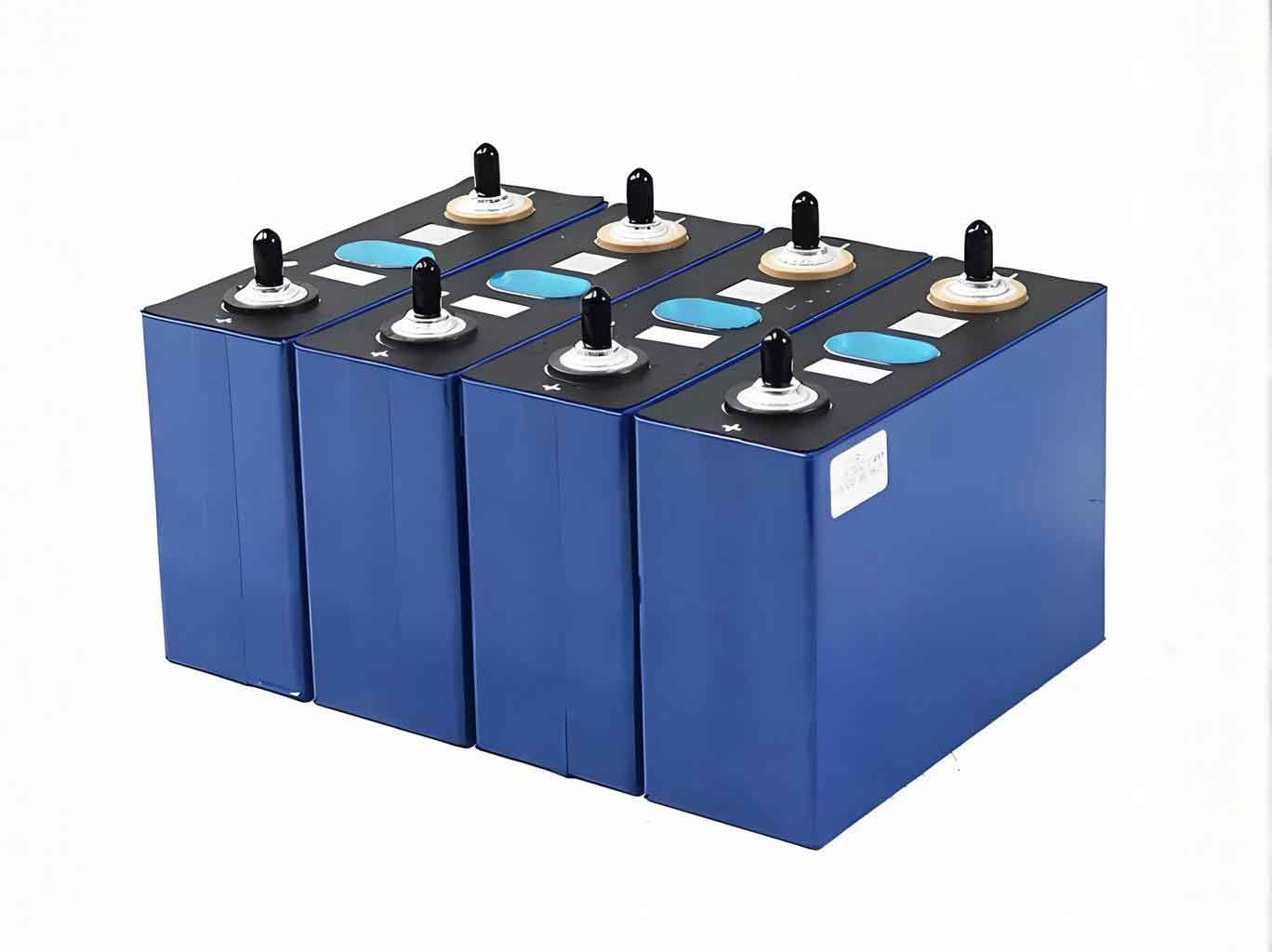
We conducted extensive simulations on a modified IEEE RTS-79 test system to validate our proposed methodology. The system was augmented with wind farms at load nodes 2, 5, 9, and 15 (each 100 MW capacity), solar plants at nodes 1, 3, 7, and 19 (each 100 MW capacity), and energy storage cells at nodes 1, 2, 3, 5, 7, 9, 15, 18, and 19 (each 100 MWh capacity).
Impact of Energy Storage Cell Failures on System Reliability
We compared three scenarios to quantify the impact of energy storage cell failures on power system reliability:
Scenario 1: System without energy storage cells.
Scenario 2: System with energy storage cells, ignoring their failure characteristics.
Scenario 3: System with energy storage cells, considering their failure characteristics.
Table 3 presents the reliability assessment results for these three scenarios.
| Scenario | EDNS (MW) | LOLP (%) | Change in EDNS (MW) | Change in LOLP (%) |
|---|---|---|---|---|
| 1: Without BESS | 15.1903 | 0.0866 | – | – |
| 2: With BESS (ideal) | 13.7812 | 0.0804 | -1.4091 | -0.0062 |
| 3: With BESS (failure considered) | 14.5468 | 0.0839 | -0.6435 | -0.0027 |
The results clearly demonstrate that while energy storage cells improve system reliability, failure to account for their degradation leads to overestimation of reliability benefits. When failure characteristics are considered, the actual reliability improvement is approximately half of what would be expected from ideal energy storage cells.
Effect of Energy Storage Cell Capacity on Reliability
We investigated how the capacity of energy storage cells affects system reliability under failure conditions. The comprehensive reliability coefficient reduces the effective capacity, and we analyzed the relationship between rated capacity and system EDNS.
| BESS Capacity (MWh) | EDNS (MW) | Change from Baseline |
|---|---|---|
| 100 | 15.2064 | +0.6665 |
| 200 | 14.5399 | 0 |
| 400 | 14.2187 | -0.3212 |
| 600 | 14.0876 | -0.4523 |
| 800 | 14.0215 | -0.5184 |
| 1000 | 14.0158 | -0.5241 |
| 1500 | 14.0102 | -0.5297 |
Our analysis reveals that when the energy storage cell capacity exceeds 800 MWh, the capacity degradation has minimal impact on system reliability. However, when capacity is below 700 MWh, the failure-induced capacity reduction significantly affects reliability, with EDNS increasing substantially as capacity decreases.
Effect of Charge-Discharge Power Rating on Reliability
We examined the influence of maximum charge-discharge power ratings on system reliability. The power rating limits the rate at which energy can be exchanged with the grid, and failure-induced degradation reduces this capability.
| Power Rating (MW) | EDNS (MW) | Change from Maximum Rating |
|---|---|---|
| 100 | 14.0123 | 0 |
| 80 | 14.0156 | +0.0033 |
| 70 | 14.0891 | +0.0768 |
| 60 | 14.3125 | +0.3002 |
| 50 | 14.7258 | +0.7135 |
| 40 | 15.1289 | +1.1166 |
| 20 | 15.8903 | +1.8780 |
| 10 | 16.4521 | +2.4398 |
The results indicate that when the charge-discharge power rating is above 70 MW, the power degradation from energy storage cell failures has negligible impact on system reliability. However, when the rating falls below 70 MW, the reliability impact becomes increasingly severe, with EDNS rising sharply as power capability decreases.
Impact of Operating Temperature on Energy Storage Cell Reliability
Operating temperature significantly influences the degradation rate of energy storage cells. We evaluated system reliability under three temperature conditions: 15°C, 25°C, and 35°C.
| Temperature (°C) | EDNS (MW) | LOLP (%) | Comprehensive Reliability Coefficient \( R’_S \) |
|---|---|---|---|
| 15 | 14.1831 | 0.0816 | 0.92 |
| 25 | 14.5468 | 0.0839 | 0.85 |
| 35 | 15.2717 | 0.0897 | 0.73 |
The results demonstrate that higher operating temperatures accelerate the degradation of energy storage cells, leading to reduced reliability. The comprehensive reliability coefficient decreases from 0.92 at 15°C to 0.73 at 35°C, resulting in a 1.0866 MW increase in EDNS and a 0.0081 increase in LOLP. This highlights the importance of maintaining appropriate operating temperatures for energy storage cells to preserve system reliability.
Discussion of Key Findings
Our comprehensive analysis yields several important insights regarding the impact of energy storage cell failures on power system operational reliability:
1. Critical Capacity Threshold: There exists a critical capacity threshold for energy storage cells, above which the capacity degradation due to failures has minimal impact on system reliability. This threshold is approximately 800 MWh for the IEEE RTS-79 system. Below this threshold, capacity degradation significantly compromises reliability.
2. Power Rating Sensitivity: Similarly, a critical power rating threshold exists around 70 MW for the studied system. When the charge-discharge power rating exceeds this threshold, power degradation from failures has negligible reliability impact. Below this threshold, the reliability impact becomes increasingly severe.
3. Temperature Dependence: Operating temperature is a critical factor influencing energy storage cell degradation. Lower temperatures preserve the health of energy storage cells and maintain higher system reliability. Each 10°C increase in operating temperature results in approximately 7-10% reduction in the comprehensive reliability coefficient.
4. Failure Awareness Importance: Our results unequivocally demonstrate that ignoring energy storage cell failures leads to overestimation of reliability benefits by approximately 50-60%. This overestimation could result in inadequate system planning and compromised security margins.
5. Performance Degradation vs. Thermal Runaway: While thermal runaway failures are catastrophic and result in complete loss of an energy storage cell, performance degradation is more gradual but affects all cells continuously. The combined effect, captured by our comprehensive reliability coefficient \( R’_S \), provides a holistic measure of energy storage cell health.
Mathematical Framework for Energy Storage Cell Reliability Integration
To fully capture the impact of energy storage cell failures on power system reliability, we developed a unified mathematical framework that integrates the failure models into the operational constraints. The key equations governing this integration are summarized below.
Comprehensive Reliability Coefficient for energy storage cell \( j \):
\[
R’_{S,j} = R_{Tr,j} \cdot R_{Q,j} \cdot R_{d,j}
\]
Modified power constraints:
\[
0 \leq P_{d,j,t} \leq R’_{S,j} \cdot P_{d,max,j}
\]
\[
0 \leq P_{c,j,t} \leq R’_{S,j} \cdot P_{c,max,j}
\]
Modified energy constraints:
\[
E_{B,j,min} \leq E_{B,j,t} \leq R’_{S,j} \cdot E_{B,j,max}
\]
State transition for energy storage cell \( j \):
\[
E_{B,j,t} = E_{B,j,t-1} + \left( \eta_{c,j} P_{c,j,t} – \frac{P_{d,j,t}}{\eta_{d,j}} \right) \Delta t
\]
Objective function for reliability assessment:
\[
\min F = \sum_{i=1}^{N_{ld}} \sum_{t=1}^{T} \lambda_{ld,i} C_{e,i,t} \Delta t + \sum_{k=1}^{N_w} \sum_{t=1}^{T} \lambda_{w,k} \Delta P_{W,k,t} \Delta t + \sum_{r=1}^{N_s} \sum_{t=1}^{T} \lambda_{s,i} \Delta P_{S,r,t} \Delta t
\]
Table 7 summarizes the key parameters and variables used in our model.
| Symbol | Description | Unit |
|---|---|---|
| \( R’_{S,j} \) | Comprehensive reliability coefficient for energy storage cell \( j \) | p.u. |
| \( P_{d,j,t} \) | Discharging power of energy storage cell \( j \) at time \( t \) | MW |
| \( P_{c,j,t} \) | Charging power of energy storage cell \( j \) at time \( t \) | MW |
| \( E_{B,j,t} \) | Stored energy in energy storage cell \( j \) at time \( t \) | MWh |
| \( \eta_{c,j} \) | Charging efficiency of energy storage cell \( j \) | p.u. |
| \( \eta_{d,j} \) | Discharging efficiency of energy storage cell \( j \) | p.u. |
| \( C_{e,i,t} \) | Load curtailment at node \( i \) at time \( t \) | MW |
| \( \Delta P_{W,k,t} \) | Wind curtailment at wind farm \( k \) at time \( t \) | MW |
| \( \Delta P_{S,r,t} \) | Solar curtailment at solar plant \( r \) at time \( t \) | MW |
Practical Implications and Recommendations
Based on our extensive analysis, we offer the following practical recommendations for system operators and planners:
1. Incorporate Energy Storage Cell Health Monitoring: Power system operators should integrate real-time health monitoring of energy storage cells into their operational decision-making processes. The comprehensive reliability coefficient \( R’_S \) can serve as a key performance indicator for energy storage cell health.
2. Establish Critical Thresholds: For each power system configuration, system planners should identify critical capacity and power rating thresholds for energy storage cells. Operating above these thresholds provides a buffer against failure-induced degradation.
3. Temperature Management: Maintaining optimal operating temperatures for energy storage cells is crucial for preserving their reliability and, consequently, system reliability. Thermal management systems should be designed to keep energy storage cells within their optimal temperature range.
4. Degradation-Aware Scheduling: The scheduling and dispatch of energy storage cells should account for their degradation state. Energy storage cells with higher comprehensive reliability coefficients should be prioritized for critical applications.
5. Regular Reliability Reassessment: Power system reliability should be reassessed periodically as energy storage cells degrade over time. Our methodology provides a framework for incorporating the evolving health status of energy storage cells into reliability evaluations.
Conclusion
In this work, we have developed a comprehensive methodology for assessing power system operational reliability that explicitly accounts for the failure characteristics of energy storage cells. Our approach integrates both thermal runaway failures and multi-dimensional performance degradation into a unified framework, providing a realistic assessment of the reliability contribution of energy storage cells.
The key contributions of our research include:
1. Comprehensive Failure Modeling: We established a multi-dimensional performance degradation probability model using the universal generating function and combined it with thermal runaway failure probabilities to derive a comprehensive reliability coefficient for energy storage cells.
2. Modified Operational Constraints: We reformulated the operational constraints of energy storage cells to reflect their degradation state, ensuring that the available output power accurately represents their current health status.
3. Reliability Assessment Framework: We developed a Monte Carlo simulation-based framework that integrates energy storage cell failures into power system reliability evaluation, enabling accurate quantification of their impact on system reliability indices.
4. Quantitative Insights: Through extensive case studies on the IEEE RTS-79 system, we demonstrated that ignoring energy storage cell failures can lead to approximately 50-60% overestimation of reliability benefits. We also identified critical capacity and power rating thresholds and quantified the impact of operating temperature on system reliability.
Our findings underscore the importance of considering energy storage cell failures in power system reliability assessment. As the penetration of energy storage cells continues to grow, accurate modeling of their degradation and failure characteristics becomes increasingly critical for ensuring the reliable operation of modern power systems. Future work will focus on extending our methodology to incorporate more sophisticated degradation models and exploring the interaction between energy storage cell aging and system operational patterns.