
In the context of the global energy transition, the large-scale integration of renewable energy sources such as wind and solar power has posed severe challenges to the frequency stability of power systems. I have observed that traditional frequency regulation resources, including thermal and hydro units, often suffer from slow response times and limited regulation accuracy. Battery energy storage, with its high control precision and fast response speed, has emerged as an effective solution for participating in grid frequency regulation. In this paper, I focus on the role of large-scale battery energy storage in secondary frequency regulation, with particular emphasis on the energy storage cell as the fundamental building block. I first introduce the structure of a battery energy storage system, then analyze the basic principles of storage participating in grid frequency regulation. Subsequently, I review the current research status of control strategies for storage in secondary frequency regulation. Finally, I provide an outlook on the future development of large-scale storage for secondary frequency regulation. Throughout this article, I aim to highlight the pivotal role of the energy storage cell in enabling efficient and reliable frequency support.
Introduction
The push for energy structure transformation and green, low-carbon development has become a global hotspot. Large-scale utilization of renewable energy, represented by wind and solar power, is a key means to achieve sustainable development. However, the intermittent and fluctuating nature of renewable generation leads to an imbalance between supply and demand, which significantly impacts the frequency stability of power systems. I recognize that with the increasing penetration of renewables, traditional thermal and hydro units are no longer adequate to meet the frequency regulation demands due to their inherent limitations such as slow ramp rates, low control precision, and insufficient regulation capacity. In contrast, battery energy storage systems, particularly those based on advanced energy storage cell technologies, offer flexible and fast power response capabilities. By redistributing energy over time, these systems can effectively smooth power fluctuations and maintain grid frequency within acceptable limits. Therefore, the construction of large-scale battery energy storage stations for secondary frequency regulation and the improvement of ancillary service markets have received considerable attention. I believe that in-depth research on the participation of energy storage cell based systems in grid frequency regulation is of great theoretical significance and practical engineering value.
Basic Structure of Battery Energy Storage System
A battery energy storage system (BESS) is a system capable of storing and releasing electrical energy. It is composed of modular battery energy storage units (hereafter referred to as storage units). The equivalent topology of a typical storage unit is shown in the following figure:
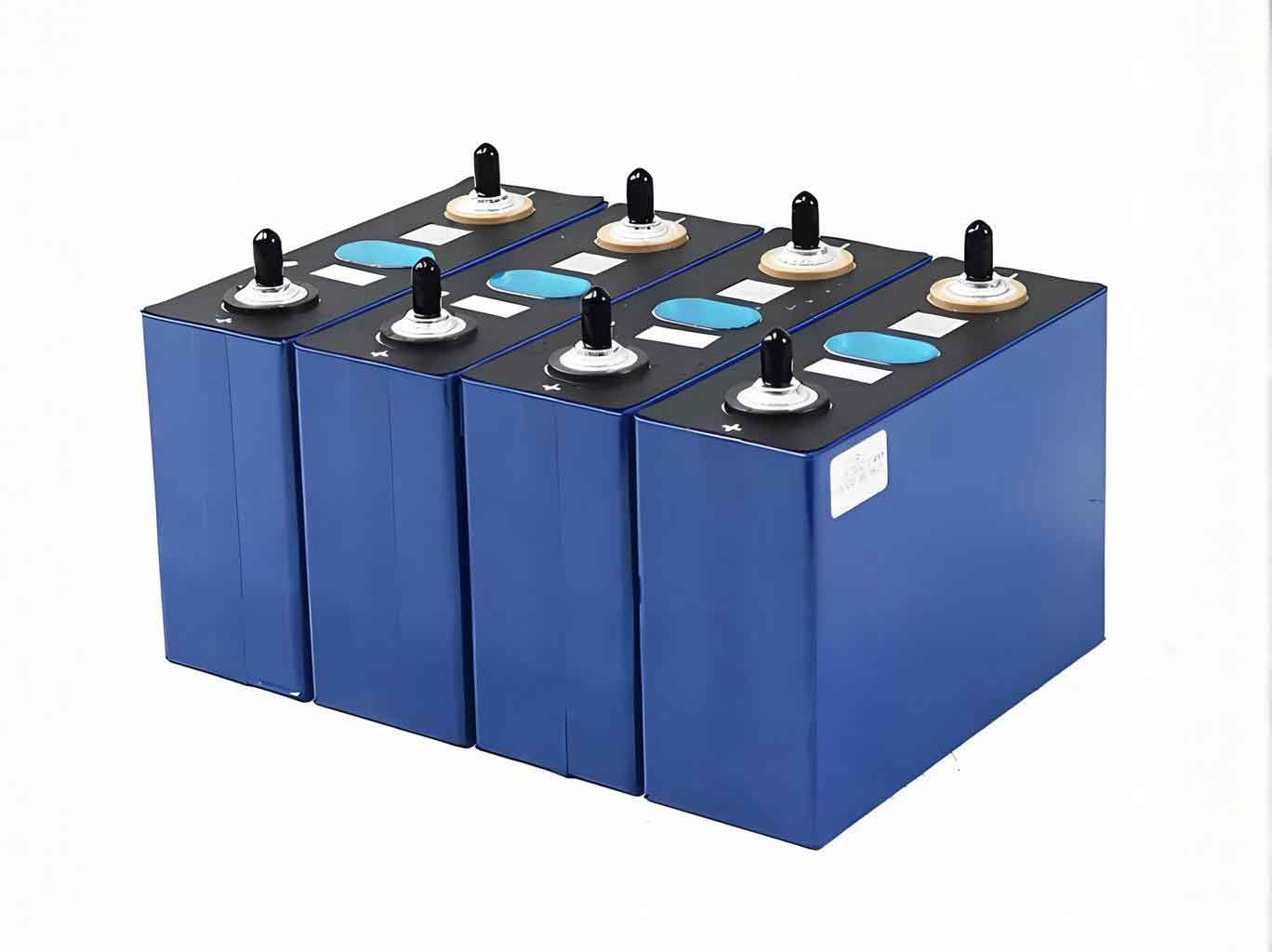
A storage unit usually consists of a battery system (BS), a battery management system (BMS), a power conversion system (PCS), and a filtering stage. When the storage unit is used for grid frequency regulation, a dedicated frequency regulation service controller is also included. The battery system serves as the energy carrier, responsible for storing and releasing electrical energy through electrochemical reactions. The PCS, acting as the core component of the BESS, controls the bidirectional power flow between the energy storage cell and the grid. The BMS monitors the status of the energy storage cell to ensure safe operation and achieve internal cell balancing. The frequency regulation service controller generates specific control signals for the storage unit to respond to system frequency deviations.
To meet different grid power demands, the capacity of storage stations needs to reach the megawatt (MW) or even tens of megawatts level, forming a large-scale storage system. Currently, capacity expansion is mainly achieved at the system level by connecting multiple storage units in parallel. A typical topology of a large-scale BESS is summarized in the table below:
| Topology Type | Description | Advantages | Disadvantages |
|---|---|---|---|
| Centralized Inverter Topology | Multiple energy storage cell strings are connected to a common DC bus and then to a single large inverter. | Simple structure, low cost for large-scale systems. | Single point of failure, poor redundancy. |
| String Inverter Topology | Each energy storage cell string has its own inverter; multiple inverters are connected in parallel on the AC side. | Improved redundancy, easier maintenance. | Higher cost, control complexity increases. |
| Modular Multi-level Converter (MMC) Topology | Each energy storage cell is integrated into a sub-module of an MMC; high voltage levels can be achieved. | Excellent harmonic performance, scalable to high voltages. | Complex control, higher component count. |
Basic Principle of Energy Storage Participating in Secondary Frequency Regulation
In modern power systems, secondary frequency regulation is typically accomplished by Automatic Generation Control (AGC). When an energy storage cell participates in this process, it responds to the AGC commands issued by the dispatch center by adjusting its output power reference value Pref. The power exchange between the PCS and the grid is governed by the following fundamental principle. Consider a simplified model of the DC/AC converter module for phase A: the converter AC-side voltage fundamental vector is Ua∠δ, the grid voltage fundamental vector is Ea∠0, and the current vector is Ia∠φ. The vector relationship can be written as:
$$ \mathbf{U}_a = \mathbf{E}_a + j\omega L \mathbf{I}_a $$
From this, the active and reactive power exchanged between the PCS and the grid can be derived as:
$$ P = \frac{E_a U_a}{X} \sin \delta $$
$$ Q = \frac{E_a U_a}{X} \cos \delta – \frac{E_a^2}{X} $$
Here, X = ωL is the equivalent reactance. By adjusting the amplitude Ua and phase angle δ of the output voltage, the energy storage cell can precisely control the power flow to or from the grid, thereby following the AGC power commands and stabilizing the system frequency. This control principle is fundamental to the operation of any energy storage cell used in secondary frequency regulation.
I emphasize that the fast response of the energy storage cell enables it to track the AGC signal with high accuracy, overcoming the limitations of conventional generators. The following table summarizes the key parameters of typical energy storage cell technologies for frequency regulation:
| Parameter | Lithium-ion energy storage cell | Lead-acid energy storage cell | Flow Battery (energy storage cell) |
|---|---|---|---|
| Response Time (ms) | 20-100 | 100-500 | 100-500 |
| Cycle Life (cycles) | 3000-10000 | 500-1500 | 10000+ |
| Energy Density (Wh/kg) | 100-250 | 30-50 | 15-40 |
| Power Density (W/kg) | 1000-5000 | 200-500 | 50-150 |
| Self-discharge (%/month) | 2-5 | 5-15 | Very low |
Current Research Status of Control Strategies
In the field of secondary frequency regulation control with battery energy storage, significant progress has been made. I have reviewed the literature and classified the research into two main categories: coordinated control between storage and conventional units, and optimization control strategies for storage itself.
Coordinated Control Between Energy Storage and Conventional Units
Early approaches proposed static allocation of AGC signals between storage and units based on a pre-agreed proportional ratio. However, this method neglects the dynamic variations in the actual available capacity of energy storage cell. To address this, some researchers have considered the State of Charge (SOC) of storage and developed a dynamic allocation method for maximum available frequency regulation capacity based on the Area Control Error (ACE) signal. For instance, one approach dynamically adjusts the participation factor of the energy storage cell based on its SOC. Another interesting strategy is power decomposition: the frequency regulation demand signal is decomposed into high-frequency and low-frequency components. The energy storage cell takes the rapidly changing high-frequency part due to its fast response, while the conventional units handle the trending low-frequency component. This effectively leverages the technical advantages of the energy storage cell. Furthermore, by establishing loss functions for both units and storage, and using distributed control algorithms, researchers have achieved reasonable allocation of regulation resources among different sources. I note that these coordinated strategies are crucial for integrating large-scale energy storage cell systems into existing AGC frameworks.
The following table summarizes some representative coordination strategies:
| Study | Approach | Key Feature | Advantage |
|---|---|---|---|
| Strategy A (Static Proportion) | Predetermined fixed ratio for AGC signal allocation | Simple implementation | Does not consider SOC dynamics |
| Strategy B (Dynamic ACE-based) | Allocate based on maximum available capacity considering SOC | Adaptive to storage state | Improved utilization of energy storage cell |
| Strategy C (Power Decomposition) | Decompose AGC signal into high/low frequency components | Exploits fast response of energy storage cell | Reduces wear on conventional units |
| Strategy D (Distributed Optimization) | Use loss functions and distributed control | Optimal overall cost | Requires communication and computation |
Optimization Control Strategies for Energy Storage in Secondary Frequency Regulation
The core conflict in storage control is balancing the power regulation requirement with the need to maintain SOC within a safe range. To resolve this, fuzzy control has been applied to adjust the output of the energy storage cell based on both frequency deviation and SOC. Simulation results show that fuzzy control outperforms traditional PI control in terms of frequency regulation performance. Another approach incorporates SOC into the control law, using fuzzy logic to smooth the power output of the energy storage cell in real time, thus preventing overcharging or deep discharging. More advanced methods involve comprehensive sensing of grid and energy storage cell states, and using logistic regression functions to construct an adaptive output law for secondary frequency regulation. This method not only regulates frequency but also considers SOC recovery and maintenance. I find that such adaptive strategies are essential for the sustained operation of energy storage cell systems in grid frequency support.
I present a comparative table of these optimization strategies below:
| Control Strategy | Input Variables | Method | Outcome |
|---|---|---|---|
| Fuzzy PI Control | Frequency deviation, SOC | Fuzzy logic to adjust PI gains | Faster response, reduced overshoot |
| Fuzzy SOC-based Smoothing | Frequency deviation, SOC, time derivative | Fuzzy rules for power reference modification | Smooth power output, SOC maintained within limits |
| Logistic Regression Adaptive Output | Grid frequency, SOC, rate of change | Logistic function determines output magnitude | Adaptive regulation capacity, SOC recovery |
| Model Predictive Control (MPC) | Future frequency trajectory, SOC forecast | Optimize over prediction horizon | Optimal performance, high computational load |
Future Outlook and Conclusion
Looking ahead, with the construction of new-type energy systems, balancing energy supply security and power system transformation will be a key challenge. I believe that energy storage cell systems, especially large-scale battery storage stations, will play an indispensable role in secondary frequency regulation. The significant economic and environmental benefits of energy storage cell participation are evident. As battery technology advances and costs decline, the utilization of large-scale energy storage cell stations for power system frequency regulation will become increasingly valuable. Future research directions may include: (1) advanced multi-agent control for hundreds of energy storage cell units; (2) integration of energy storage cell with renewable energy forecasting for preemptive frequency support; (3) market mechanisms that properly value the fast response capability of energy storage cell; (4) degradation-aware control strategies that extend the lifetime of energy storage cell while providing regulation services. In conclusion, I am convinced that the energy storage cell will be a cornerstone of future grid frequency stability, and I look forward to further innovations in this field.