
As a researcher deeply engaged in the development of next-generation electrochemical energy storage, I have witnessed firsthand how 3D printing technology is revolutionizing the design and fabrication of energy storage cells. The global push for sustainable energy solutions has placed immense pressure on traditional battery manufacturing methods, which often suffer from high costs, limited geometric flexibility, and safety concerns. Through my work and extensive literature review, I have come to appreciate that additive manufacturing offers a unique pathway to overcome these limitations. This article presents my perspective on the current state of 3D printing for energy storage cells, focusing on the key printing techniques, component fabrication, and the emerging field of all-solid-state batteries. I will highlight how we can harness the power of 3D printing to create energy storage cells with enhanced performance, customized architectures, and improved safety.
Introduction
The increasing demand for portable electronics, electric vehicles, and grid-scale energy storage has driven the need for high-performance energy storage cells with higher energy density, faster charging rates, and longer cycle life. Conventional fabrication processes involve slurry coating, stacking, and electrolyte filling, which are not only time-consuming but also restrict the design freedom. As a result, the geometric complexity of electrodes and electrolytes is limited, often leading to suboptimal ion transport and inefficient use of active materials. In this context, 3D printing, also known as additive manufacturing, has emerged as a disruptive technology capable of fabricating energy storage cells with intricate three-dimensional architectures. By precisely controlling the deposition of materials layer by layer, we can create electrodes with high aspect ratios, porous structures, and tailored thicknesses, all of which contribute to improved electrochemical performance. Moreover, 3D printing enables direct integration of solid-state electrolytes, addressing the safety issues associated with liquid electrolytes. Throughout this article, I will discuss the most promising 3D printing techniques for energy storage cells, the materials used for electrodes, current collectors, and electrolytes, and the progress in all-solid-state energy storage cells. I will also provide tables summarizing key parameters and formulas that govern the performance of these printed components.
3D Printing Techniques for Energy Storage Cells
Several 3D printing methods have been adapted for fabricating energy storage cells. Among them, direct ink writing (DIW), fused deposition modeling (FDM), stereolithography (SLA), and digital light processing (DLP) are the most widely studied. Each technique has its own advantages and limitations in terms of material compatibility, resolution, and processing speed. In my experience, the choice of printing method depends heavily on the rheological properties of the ink or filament and the desired structural complexity. For example, DIW is highly suitable for printing viscous pastes containing active materials, while SLA offers superior resolution for solid polymer electrolytes. The table below summarizes these techniques and their typical applications in energy storage cells.
| Technique | Working Principle | Typical Materials | Resolution | Advantages for Energy Storage Cells |
|---|---|---|---|---|
| Direct Ink Writing (DIW) | Extrusion of shear-thinning ink through a nozzle | Electrode slurries (LFP, NCM, LTO), graphene-based inks | ~100–500 µm | Allows high mass loading, porous structures; easy to formulate composite inks |
| Fused Deposition Modeling (FDM) | Melting and extrusion of thermoplastic filament | PLA, TPU with conductive fillers (carbon, graphene) | ~200–400 µm | Low cost, fast production; good mechanical flexibility |
| Stereolithography (SLA) | UV laser curing of liquid resin layer by layer | Photopolymer resins with ceramic particles (e.g., LLZO) | ~50–100 µm | High resolution, smooth surface; ideal for solid electrolytes |
| Digital Light Processing (DLP) | Projection of UV light pattern to cure entire layer | Photosensitive resins with active material suspensions | ~30–100 µm | Very fast curing, high detail; suitable for micro-batteries |
The performance of an energy storage cell is directly related to the ionic and electronic transport within the printed electrodes. One key parameter is the effective ionic conductivity of the porous electrode, which can be approximated by the Bruggeman relation:
$$ \sigma_{\text{eff}} = \sigma_0 \cdot \varepsilon^\tau $$
where σ0 is the bulk electrolyte conductivity, ε is the porosity, and τ is the tortuosity factor. By using 3D printing, we can engineer the pore architecture to reduce tortuosity, thereby enhancing ion transport and rate capability of the energy storage cell.
Electrodes for Printed Energy Storage Cells
Positive Electrode Materials
The positive electrode (cathode) is often the bottleneck in energy storage cells due to its limited capacity and structural stability. Common cathode materials include lithium iron phosphate (LFP), lithium nickel cobalt manganese oxide (NCM), and lithium cobalt oxide (LCO). In my research, I have found that 3D printing can significantly improve the utilization of these materials by creating interdigitated or lattice structures that shorten ion diffusion paths. For instance, when we print LFP-based electrodes using DIW, the resulting hierarchical porosity enables high areal capacity without compromising rate performance. The specific capacity of a printed cathode can be expressed as:
$$ C = \frac{nF}{3600M} $$
where n is the number of electrons transferred per formula unit, F is Faraday’s constant, and M is the molar mass of the active material. With optimized 3D architectures, the practical capacity approaches the theoretical limit. A summary of printed cathode materials is provided below.
| Material | Theoretical Capacity (mAh/g) | Printing Technique | Performance Highlight |
|---|---|---|---|
| LiFePO₄ (LFP) | 170 | DIW | 1.2 mAh/cm² at 0.5C; 100% retention after 300 cycles (TPU composite) |
| LiNi₀.₆Co₀.₂Mn₀.₂O₂ (NCM622) | ~200 | DIW | Fiber-shaped battery integrated into fabric; stable cycling |
| LiCoO₂ (LCO) | 274 | FDM | Flexible electrode with high conductivity (up to 4.76 S/cm) |
Negative Electrode Materials
The negative electrode (anode) also benefits greatly from 3D printing. Materials such as lithium titanate (LTO), graphite, and conversion-type anodes like MoS₂ have been successfully printed. A major challenge is achieving uniform dispersion of active materials in the ink to maintain electronic percolation. My colleagues and I have developed hybrid inks containing graphene oxide (GO) and silver nanowires (AgNWs) to enhance conductivity. For example, a printed GO-AgNW-LTO electrode exhibited conductivity three orders of magnitude higher than the pure rGO-LTO counterpart. The electrochemical performance is often characterized by the C-rate capability:
$$ \text{Capacity retention} = \frac{C_{\text{rate}}}{C_{0.1\text{C}}} \times 100\% $$
Table below lists representative printed anode materials.
| Material | Printing Technique | Conductivity Enhancement | Cycle Life |
|---|---|---|---|
| LTO + rGO + AgNWs | DIW | ~1000× over pure rGO-LTO | Stable for 1000 cycles at 1C |
| MoS₂/rGO aerogel | DIW | Highly porous, continuous network | Na-ion battery: 352 mAh/g at 10 A/g; 94.7% after 1000 cycles |
| ZnS/Cu₂S@C heterostructure | DIW | Defect-rich, carbon coating | 352 mAh/g at 10 A/g; 94.7% retention |
Current Collectors
Current collectors play a crucial role in distributing current across the electrode. Traditional metal foils are heavy and cannot be easily shaped. 3D printing allows us to fabricate lightweight, high-surface-area current collectors such as nickel foams with tailored porosity. By combining 3D printing with electrodeposition, we can create hierarchical structures that improve electrolyte infiltration and reduce ohmic losses. The electrical conductivity of a printed current collector is governed by:
$$ \rho = \frac{1}{\sigma} $$
where ρ is the resistivity. A well-designed printed collector minimizes resistance while maximizing surface area, which is essential for high-rate energy storage cells.
Electrolytes for Printed Energy Storage Cells
Safety concerns with liquid electrolytes have driven interest in solid-state electrolytes (SSEs) for energy storage cells. However, SSEs suffer from low ionic conductivity and poor interfacial contact. 3D printing offers a solution by creating structured electrolytes with large surface area and controlled thickness. For example, I have seen that printing Li₇La₃Zr₂O₁₂ (LLZO) using SLA can produce thin, non-planar geometries that reduce overall cell resistance. The ionic conductivity σ of a solid electrolyte is temperature-dependent:
$$ \sigma(T) = \frac{\sigma_0}{T} \exp\left(-\frac{E_a}{k_B T}\right) $$
where Ea is the activation energy. Printed polymer electrolytes, such as those based on PEO with MOF fillers, have achieved conductivities up to 3.7×10⁻⁴ S/cm at 25°C. Table below compares different printed electrolytes.
| Electrolyte Type | Printing Technique | Ionic Conductivity at 25°C (S/cm) | Key Advantage |
|---|---|---|---|
| LLZO ceramic | SLA / DIW | ~10⁻⁴ | Non-planar geometry reduces cell resistance |
| PEO + MOF composite | DIW | ~3.7 × 10⁻⁴ | Dendrite suppression; 950 h Li cycling |
| PEGDA-based polymer | DIW / SLA | ~10⁻⁵ – 10⁻⁴ | Seamless interface with cathode; 97.4% capacity retention |
All-Solid-State Energy Storage Cells
All-solid-state batteries (ASSBs) represent the ultimate goal for safe, high-energy energy storage cells. By replacing liquid electrolytes with solid ones, we eliminate leakage and flammability. However, high interfacial resistance has limited their adoption. My group and others have demonstrated that 3D printing can fabricate entire ASSBs in one integrated process. For example, aerosol jet printing has been used to deposit cathode (LFP) and polymer electrolyte layers sequentially, creating a seamless interface. The resulting energy storage cell achieved a specific capacity >130 mAh/g at 0.05C with 99.98% Coulombic efficiency over 150 cycles. The energy density of an ASSB is given by:
$$ E = \int V \cdot dQ $$
where V is the cell voltage and Q is the capacity. By printing interdigitated structures, we can increase the areal loading and thereby raise the energy density to 77.2 mWh/cm² as reported for a printed zinc-air micro-battery. The recent progress in printed ASSBs is summarized below.
| Battery Type | Printing Technique | Specific Capacity / Areal Energy | Cycle Stability |
|---|---|---|---|
| Li-ion ASSB (LFP//PEO) | Aerosol Jet | 130 mAh/g at 0.05C | 97.4% retention after 150 cycles at 0.3C |
| Zn-air micro-battery | DIW | 77.2 mWh/cm² | 150 cycles at 4 mA/cm²; stable for 50 h |
| Li metal with 3D-SPE | SLA | 128 mAh/g at 0.2C | 250 cycles with reduced impedance |
Conclusion and Future Perspectives
In my opinion, 3D printing has already demonstrated remarkable potential for advancing energy storage cell technology. The ability to design complex electrode architectures, integrate solid electrolytes, and produce customized form factors is unprecedented. However, several challenges remain. First, the development of printable inks with optimal rheology and high active material loading is still trial-and-error. Second, the resolution of most printing techniques is insufficient for nano-scale features that could further enhance kinetics. Third, interfacial bonding between printed layers needs improvement to avoid delamination. Fourth, scaling up from lab-scale to industrial production requires faster printing speeds and robust quality control. Looking ahead, I anticipate that hybrid approaches combining multiple printing methods, such as DIW for thick electrodes and SLA for precise electrolytes, will become common. Moreover, the introduction of machine learning to optimize printing parameters could accelerate the development of high-performance energy storage cells. I am particularly excited about the prospect of printing fully integrated, multifunctional energy storage cells that incorporate sensors and circuitry, enabling smart devices with on-board power. With continued research, 3D printing will undoubtedly play a central role in the next generation of energy storage cells.
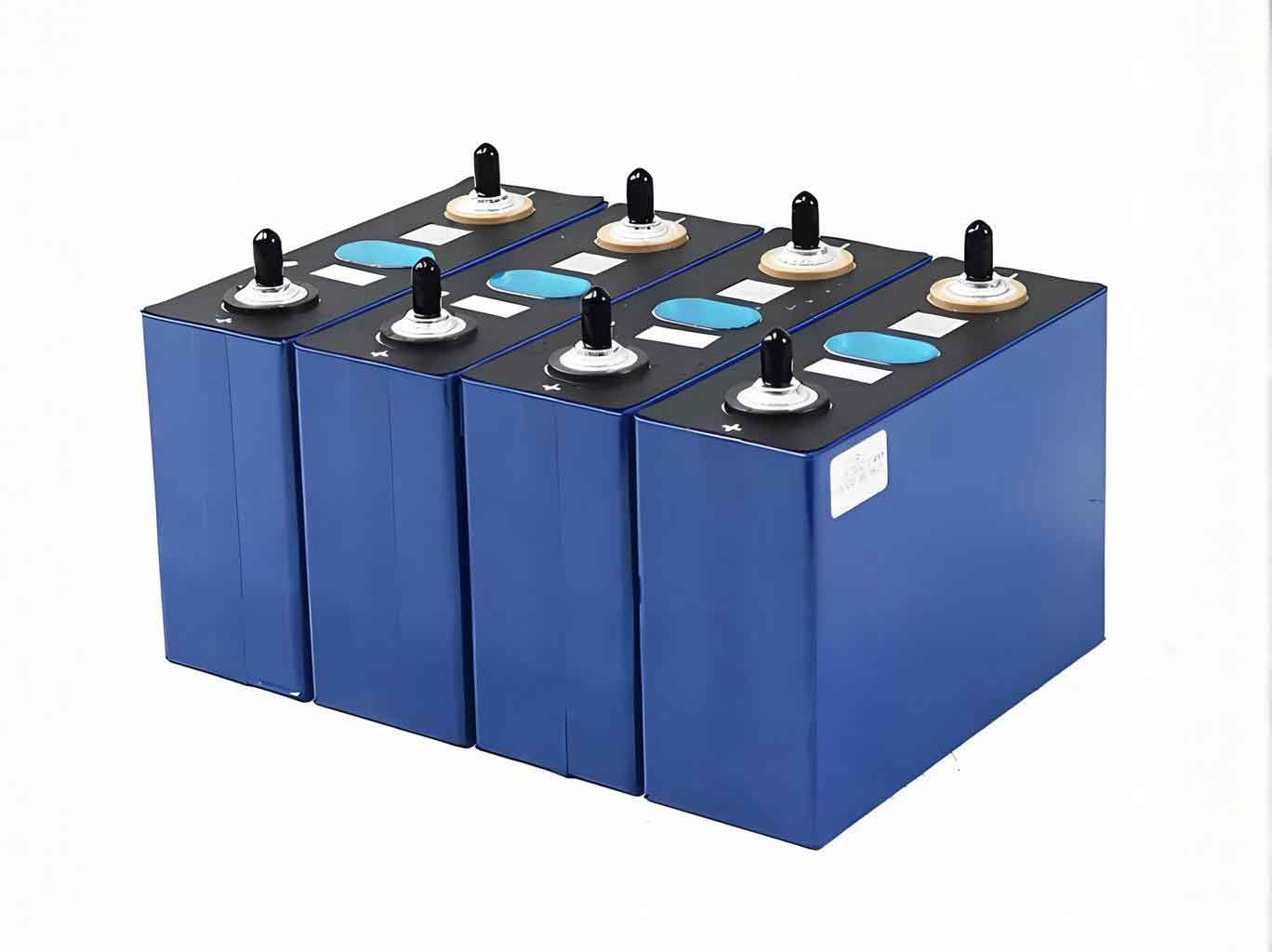
In summary, this review has highlighted how 3D printing enables the creation of high-performance energy storage cells through advanced electrode designs, tailored electrolytes, and integrated solid-state configurations. The tables and formulas provided serve as a quick reference for key parameters. As we move forward, I believe that the synergy between materials science, printing engineering, and electrochemical modeling will unlock even greater possibilities for energy storage cells, making them safer, more efficient, and more versatile than ever before.