
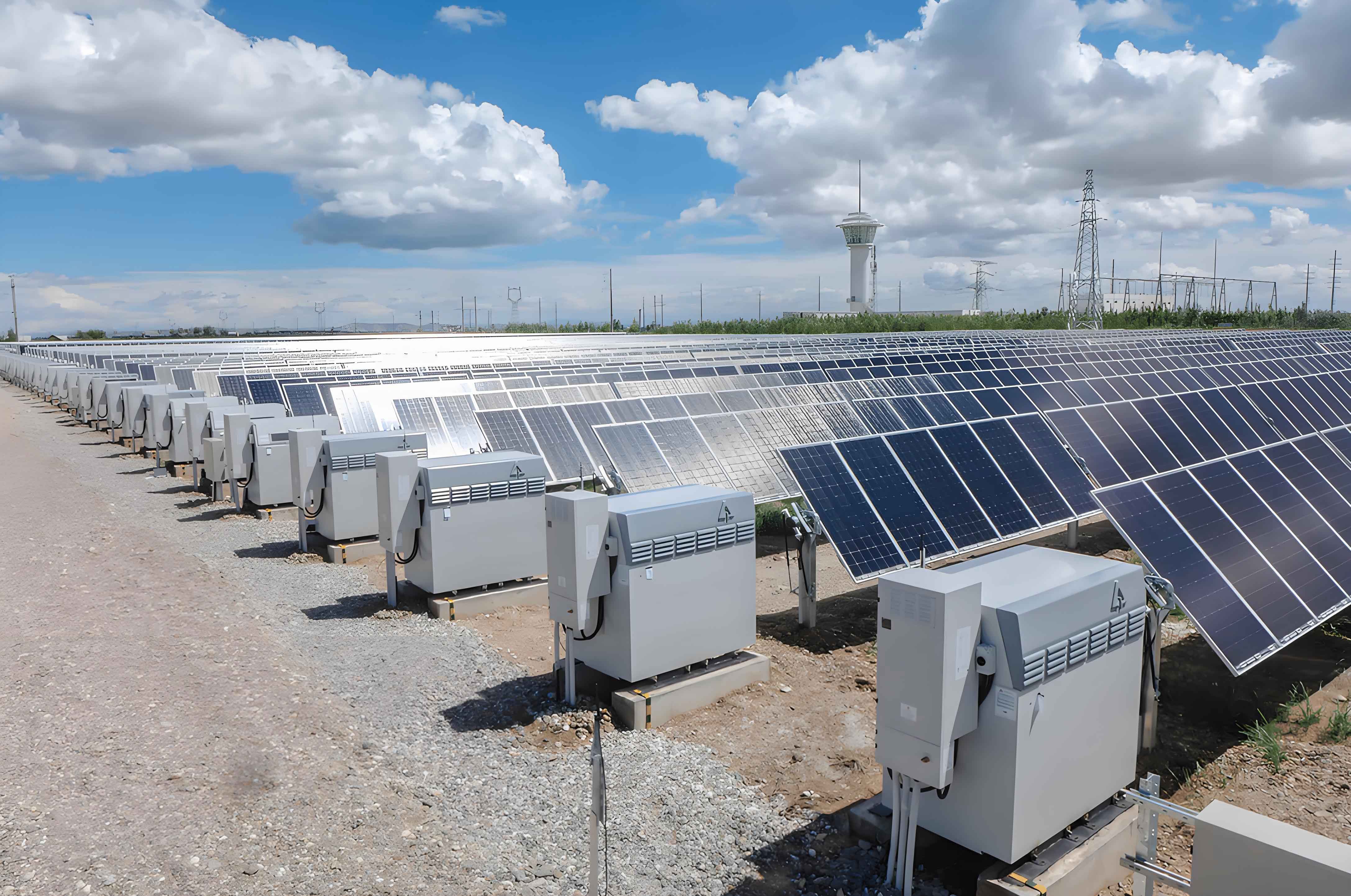
In the context of rapid modern industrial economic development, the demand for energy has undergone significant changes. However, the inherent mismatch between energy production and consumption is an objective reality. Therefore, it is necessary to create favorable conditions for the advancement of energy storage technologies. Energy storage technology refers to the entire process in which energy is stored in alternative forms and can be recovered in a short period when there is a demand for energy. This technology is widely applied across various industrial and economic sectors, particularly in grid dispatching, renewable energy integration, smart homes, and electric vehicles. In this article, I will discuss the reliability analysis of energy storage battery units from both internal and external perspectives, elaborate on the specific application practices of energy storage technology in power systems, transportation, and industrial production, and present a comprehensive study on the reliability enhancement of energy storage battery cells. Furthermore, I will explore the integrated technology trends of industrial energy storage power supply systems.
1. Factors Influencing the Reliability of Energy Storage Charging Stations
1.1 External Influencing Factors
The reliability of an energy storage charging station is first affected by external environmental and infrastructural conditions. The key external factors are summarized in the table below.
| Factor Category | Specific Factor | Impact Description |
|---|---|---|
| Power Supply | Grid stability | Only with continuous and stable power supply can the charging station provide reliable charging services for electric vehicles. Fluctuations in power supply may cause charging interruptions or excessively slow charging rates. |
| Environment & Weather | Temperature (high/low), humidity, dryness | Extreme temperatures affect the electrochemical performance of energy storage battery cells, leading to capacity degradation or safety risks. Humidity and dryness also impact the insulation and corrosion of charging equipment. |
| External Infrastructure | Grid frequency and voltage regulation | Variations in grid frequency and voltage can stress the power electronics inside the charging station, reducing the overall system reliability. |
1.2 Internal Influencing Factors
Internal factors are directly related to the design, operation, and maintenance of the charging station and its energy storage battery components. The following table outlines the primary internal factors.
| Internal Factor | Key Aspects | Reliability Impact |
|---|---|---|
| Charging Equipment | Charging piles, charging guns, connectors | Regular inspection and maintenance are required to prevent wear, overheating, and contact failure. Faulty equipment directly compromises the energy storage battery charging process. |
| Communication Network | Data exchange between electric vehicles, charging station, and grid | A reliable communication network ensures proper load management and billing. Network delays or failures can lead to suboptimal charging strategies and affect the longevity of the energy storage battery. |
| Safety Management | Fire detection, thermal runaway prevention, emergency shutdown | Robust safety management protects both users and equipment. For energy storage battery systems, thermal runaway is a significant risk that must be mitigated through monitoring and control. |
| Inspection & Maintenance | Hydrogen detection, insulation testing, regular calibration | Periodic inspection of hydrogen accumulation (for some battery chemistries) and insulation integrity is critical. Poor maintenance accelerates degradation of the energy storage battery pack. |
| Personnel Competence | Operator knowledge, skill level, training | Qualified personnel are essential for proper operation and troubleshooting. Inadequate expertise can lead to incorrect handling of energy storage battery systems, causing premature failure. |
2. Application Practices of Energy Storage Technology in Industrial Economic Sectors
2.1 Application in Power Systems
Energy storage technology plays a pivotal role in modern power systems. The primary applications are:
- Load Balancing: By storing electrical energy during off-peak periods and releasing it during peak demand, energy storage battery systems help flatten the load curve. This reduces the need for peaking power plants and lowers overall operational costs.
- System Stability and Reliability: In the event of grid faults or adverse weather conditions, energy storage battery units can provide emergency backup power within milliseconds, preventing blackouts and ensuring grid resilience.
- Efficiency Improvement: Transmission and distribution lines inherently have resistive losses. By installing energy storage battery systems at strategic points (e.g., substations), the stored energy can be used locally, reducing transmission losses and improving the overall efficiency of the power system.
The energy balance equation for a generic grid-connected energy storage battery system can be expressed as:
$$ E_{\text{stored}}(t) = E_{\text{charge}}(t) – E_{\text{discharge}}(t) – E_{\text{loss}}(t) $$
where \(E_{\text{charge}}\) is the energy absorbed during charging, \(E_{\text{discharge}}\) is the energy released, and \(E_{\text{loss}}\) accounts for self-discharge, conversion losses, and thermal dissipation. The round-trip efficiency \(\eta_{\text{RTE}}\) is given by:
$$ \eta_{\text{RTE}} = \frac{\int_{0}^{T} P_{\text{discharge}}(t) dt}{\int_{0}^{T} P_{\text{charge}}(t) dt} \times 100\% $$
2.2 Application in Transportation
The transportation sector has seen a rapid adoption of energy storage battery technology, particularly in electric vehicles (EVs), hybrid electric vehicles (HEVs), and public transit systems. The table below summarizes the key application areas and their features.
| Application | Energy Storage Battery Type | Advantages | Challenges Addressed by Storage |
|---|---|---|---|
| Electric Vehicles (EVs) | Lithium-ion (Li-ion), LiFePO₄ | Zero tailpipe emissions, low noise, high energy efficiency | Range anxiety, long charging time – energy storage battery systems with fast-charging capability and higher energy density help mitigate these issues. |
| Hybrid Electric Vehicles (HEVs) | Ni-MH, Li-ion | Combined use of internal combustion engine and electric motor; reduced fuel consumption and emissions | Regenerative braking energy captured and stored in the energy storage battery for later use. |
| Public Transit (e-buses, trams) | LFP, LTO (lithium titanate) | Reduced operating costs, lower noise, environmental benefits | Opportunity charging at stops; energy storage battery buffers allow catenary-free operation on short sections. |
The power required for an electric vehicle during acceleration can be modeled using:
$$ P_{\text{motor}} = F_{\text{tractive}} \cdot v = \left( m a + \frac{1}{2} \rho C_d A_f v^2 + m g \sin\theta + \mu_r m g \cos\theta \right) v $$
where \(m\) is vehicle mass, \(a\) is acceleration, \(\rho\) is air density, \(C_d\) is drag coefficient, \(A_f\) is frontal area, \(v\) is velocity, \(\theta\) is road grade, and \(\mu_r\) is rolling resistance coefficient. The energy storage battery must supply this power along with auxiliary loads.
2.3 Application in Industrial Production
In industrial manufacturing, energy storage battery systems are used for:
- Peak Shaving: Factories often face high demand charges during peak hours. By using an energy storage battery to supply power during these times, the grid draw is reduced, lowering electricity costs.
- Backup Power: Critical manufacturing processes require uninterrupted power. An energy storage battery system provides seamless transition during grid outages, preventing production losses.
- Renewable Integration: Many industrial plants install solar photovoltaic (PV) or wind turbines. Energy storage battery systems store excess renewable generation for later use, increasing self-consumption and reducing reliance on the grid.
- Power Quality Improvement: Sensitive industrial equipment (e.g., CNC machines, semiconductor fabrication tools) is susceptible to voltage sags and transients. Energy storage battery systems with power electronics can actively filter harmonics and provide voltage support.
The cost savings from peak shaving can be quantified using:
$$ \Delta C = C_{\text{demand, without storage}} – C_{\text{demand, with storage}} = D_{\text{peak, original}} \cdot R_{\text{demand}} – (D_{\text{peak, reduced}} \cdot R_{\text{demand}} + C_{\text{O&M, storage}}) $$
where \(D_{\text{peak}}\) is the peak demand in kW, \(R_{\text{demand}}\) is the demand charge rate, and \(C_{\text{O&M}}\) is the operation and maintenance cost of the energy storage battery system.
3. Reliability Enhancement of Energy Storage Battery Units
3.1 Structure of an Energy Storage Battery Unit
An energy storage battery unit typically consists of:
- Battery cells (arranged in series/parallel modules)
- Battery Management System (BMS) – monitors voltage, current, temperature, state of charge (SoC), and state of health (SoH)
- Power Conversion System (PCS) – interfaces the battery with the grid or load
- Energy Management System (EMS) – optimizes charging/discharging schedules
- Wiring, connectors, and busbars – ensure electrical interconnection
For reliability analysis, we focus on the insulation and partial discharge (PD) characteristics of the energy storage battery module.
3.2 Insulation Withstand and Partial Discharge
Insulation withstand voltage testing evaluates the ability of the energy storage battery system to endure high voltage without breakdown. The test voltage \(V_{\text{test}}\) is typically a multiple of the nominal system voltage. Partial discharge (PD) is a localized electrical discharge that only partially bridges the insulation between conductors. PD can be a precursor to complete insulation failure and is therefore a critical indicator.
The relationship between partial discharge inception voltage (PDIV) and the electric field intensity \(E\) in a defect region is given by:
$$ V_{\text{PDIV}} = E_{\text{critical}} \cdot d $$
where \(d\) is the thickness of the insulation or the gap distance in the defect, and \(E_{\text{critical}}\) is the critical field strength for the insulation material. For an energy storage battery module, the presence of sharp edges on busbars or poor insulation wraps can lower the PDIV, increasing the risk of failure.
3.3 Experimental Verification of Voltage Stacking Effect
When performing insulation or withstand tests on a series-connected energy storage battery module, a phenomenon called “voltage stacking” occurs. Each individual cell contributes its voltage to the overall potential between the test point and ground. Consequently, a point inside the module may experience a higher stress than the test voltage applied externally.
Consider a module with \(n\) cells in series, each with voltage \(V_{\text{cell}}\). If an insulation test voltage \(V_{\text{test}}\) is applied between the module’s positive terminal and ground, then the voltage at the \(k\)-th cell (counting from the negative end) relative to ground is:
$$ V_{k,\text{ground}} = V_{\text{test}} + k \cdot V_{\text{cell}} \quad \text{(for positive terminal test)} $$
Similarly, for a negative terminal test, the voltage at the \(k\)-th cell from the positive end is:
$$ V_{k,\text{ground}} = V_{\text{test}} + (n – k + 1) \cdot V_{\text{cell}} $$
This stacking effect means that the insulation between a cell and the module enclosure must withstand a voltage higher than \(V_{\text{test}}\). Experimental measurements confirm that for a typical 16-cell lithium iron phosphate (LFP) module with \(V_{\text{cell}} = 3.2\text{ V}\) and \(V_{\text{test}}=500\text{ V}\), the maximum stress on an intermediate cell enclosure can be as high as \(500 + 8 \times 3.2 = 525.6\text{ V}\). In my experiments, the difference between the first and the \(a\)-th cell (where \(a\) is distant from the test terminal) matched the sum of the voltage differences of the intervening cells, validating the stacking effect.
3.4 Test Results and Analysis
I conducted systematic experiments on a complete energy storage battery unit (including battery cells, wire harnesses, and BMS) using a DC insulation tester and a DC withstand voltage tester. The results are summarized below.
| Test Condition | Wire Harness Insulation Quality | Measured Insulation Resistance @ 500V | Withstand Voltage (DC) before Breakdown | Partial Discharge Inception (if any) |
|---|---|---|---|---|
| 1. Intact insulation, no defects | Perfect (fully wrapped, no sharp edges) | > 5 GΩ | > 7.4 kV | No PD up to 5 kV (limit of equipment) |
| 2. Slight defect in harness (exposed conductor 2mm) | Compromised | 1.2 GΩ | 3.2 kV | PD observed at 2.8 kV |
| 3. Severe defect (multiple nicks, close to enclosure) | Poor | 0.4 GΩ | 1.9 kV | PD at 1.5 kV, flashover at 2.1 kV |
Key findings:
- For a defect-free energy storage battery unit, the insulation withstand voltage exceeded 7.4 kV DC, which is well above the typical requirement of 3.8 kV for a 400V system. This demonstrates adequate design margin.
- When the wire harness insulation was compromised, the withstand voltage dropped significantly. Partial discharge began at a lower voltage, often near the defect location. In the worst case, the BMS circuit board was damaged due to tracking across the surface of the PCB.
- The voltage stacking effect exacerbates the electric field at points farthest from the test terminal. Therefore, ensuring uniform insulation quality along the entire energy storage battery module is critical.
To improve reliability, I recommend:
- Using high-quality insulation materials with corona resistance for wire harnesses.
- Adding additional insulation layers (e.g., silicone sleeving) at potential high-stress points.
- Implementing a PD monitoring system as part of the BMS for early detection of insulation degradation.
4. Trends in Industrial Energy Storage Power Supply System Integration
The global energy storage market is projected to reach $66 billion by 2030, driven by the rapid expansion of renewable energy and electric vehicles. Future developments in energy storage battery technology will focus on the following areas:
- Cost Reduction and Scalability: Continued decline in the levelized cost of storage (LCOS) will enable broader deployment. The LCOS formula is:
$$ \text{LCOS} = \frac{\text{Total life cycle cost}}{\text{Total energy discharged over life}} = \frac{C_{\text{capital}} + C_{\text{O&M}} + C_{\text{charging}}}{\sum_{t=1}^{T} E_{\text{dis}}(t) \cdot (1-d)^{-t}} $$
where \(C_{\text{capital}}\) is initial investment, \(C_{\text{O&M}}\) is operation and maintenance cost, \(C_{\text{charging}}\) is energy purchase cost, \(E_{\text{dis}}(t)\) is discharged energy in year \(t\), and \(d\) is discount rate.
- Higher Energy Density and Efficiency: Research into solid-state batteries, lithium-sulfur, and sodium-ion chemistries aims to achieve energy densities above 500 Wh/kg at the cell level. The specific energy \(E_s\) is:
$$ E_s = \frac{\text{Nominal energy (Wh)}}{\text{Mass (kg)}} $$
Higher \(E_s\) means lighter energy storage battery packs for the same capacity, crucial for electric vehicles and portable applications.
- Integration with Other Technologies: Energy storage battery systems will be increasingly coupled with hydrogen storage (power-to-gas), supercapacitors, and flywheels to create hybrid energy storage solutions. The hybrid system’s power and energy capabilities can be optimized:
$$ P_{\text{hybrid}}(t) = P_{\text{battery}}(t) + P_{\text{supercap}}(t) $$
where the battery provides long-duration energy, and supercapacitors handle high-power transients.
- Enhanced Safety: Future energy storage battery systems will incorporate advanced thermal management (e.g., phase change materials, liquid cooling), fault-tolerant BMS architectures, and intrinsic safety designs (e.g., solid electrolytes that are non-flammable).
The following table summarizes the major technology trends for energy storage battery integration in industrial applications.
| Trend | Description | Impact on Energy Storage Battery Reliability |
|---|---|---|
| Modular & Scalable Architecture | Standardized battery modules that can be connected in series/parallel to form systems from kWh to MWh | Simplifies manufacturing, reduces defects, and allows hot-swapping of faulty modules |
| Digital Twin & AI-powered BMS | Real-time simulation and machine learning for SoC/SoH estimation, predictive maintenance | Early detection of anomalies (e.g., cell imbalance, insulation degradation) improves long-term reliability |
| Wireless Monitoring & Communication | Eliminates physical wiring for cell voltage and temperature sensing | Reduces points of failure, minimizes insulation issues caused by wire harness defects |
| Advanced Insulation Materials | Nanocomposite dielectrics, self-healing polymers | Higher PDIV, better thermal stability, and longer life under high voltage stress |
| Integrated Safety Certification | Compliance with UL 1973, IEC 62619, UN 38.3 for transportation | Ensures rigorous testing for abuse tolerance (crush, overcharge, thermal runaway) |
5. Conclusion
Through my comprehensive analysis and experimental investigation, I have demonstrated that the reliability of energy storage battery units is influenced by both external factors (grid quality, environment) and internal factors (insulation integrity, partial discharge, voltage stacking). The practical applications of energy storage technology in power systems, transportation, and industrial production underscore its critical role in modern energy management. The experimental results on insulation withstand and partial discharge show that maintaining the quality of wire harness insulation is paramount to achieving the designed insulation performance. The voltage stacking effect must be accounted for during system design to ensure that all components experience voltages within their rated limits.
Looking ahead, industrial energy storage power supply systems will trend toward higher integration, digital intelligence, and enhanced safety. By continuously improving the reliability of energy storage battery cells and modules, we can ensure that these systems deliver sustainable, cost-effective, and safe energy storage solutions for the global energy transition.