
In the context of the rapid expansion of the renewable energy sector, energy storage battery systems have become indispensable for balancing supply and demand. Among various chemistries, lithium iron phosphate (LiFePO₄) energy storage battery stands out due to its exceptional safety and long cycle life, making it a cornerstone for grid-scale storage and electric vehicles. However, the degradation mechanisms and failure modes of these energy storage battery systems are complex, involving electrochemical side reactions, gas evolution, and thermal runaway. Traditional approaches relying on empirical models often fail to capture the nonlinear dynamics of battery aging. This is where artificial intelligence (AI) – encompassing machine learning (ML) and deep learning (DL) – emerges as a transformative tool. By analyzing large datasets from cycling tests, in-situ gas analysis, and thermal imaging, AI can uncover hidden patterns in energy storage battery behavior, enabling accurate lifetime prediction and accelerated material development. In this study, we systematically investigate the overcharge-induced gas evolution in 5 Ah LiFePO₄ pouch cells under various voltages, and we demonstrate how such experimental data can be integrated into AI frameworks for both materials optimization and predictive diagnostics. Our work provides a foundation for building intelligent early-warning systems that enhance the safety and reliability of energy storage battery systems in chemical engineering applications.
1. Methodology and Experimental Design
1.1 Energy Storage Battery Parameters
We selected a set of five commercial LiFePO₄ pouch cells (designated B‑1 through B‑5) with a nominal capacity of 5 Ah. The cathode had an areal density of 18 mg/cm² and a specific capacity of 142 mAh/g. The anode areal density was 9 mg/cm² with a capacity of 340 mAh/g, yielding an N/P ratio of 1.19. The electrolyte consisted of ethylene carbonate (EC), ethyl methyl carbonate (EMC), and dimethyl carbonate (DMC) in a 1:1:1 volume ratio, with LiPF₆ as the lithium salt and 4–5% functional additives. The cells were subjected to overcharge tests at voltages ranging from 4.15 V to 5.55 V. Key parameters are summarized in Table 1.
| Parameter | Value |
|---|---|
| Cathode areal density | 18 mg/cm² |
| Cathode specific capacity | 142 mAh/g |
| Anode areal density | 9 mg/cm² |
| Anode specific capacity | 340 mAh/g |
| N/P ratio | 1.19 |
| Electrolyte solvent ratio (EC:EMC:DMC) | 1:1:1 |
| Lithium salt | LiPF₆ (1 M) |
| Additive content | 4–5% |
| Nominal capacity | 5 Ah |
| Overcharge voltage range | 4.15 – 5.55 V |
1.2 Experimental Setup and Instrumentation
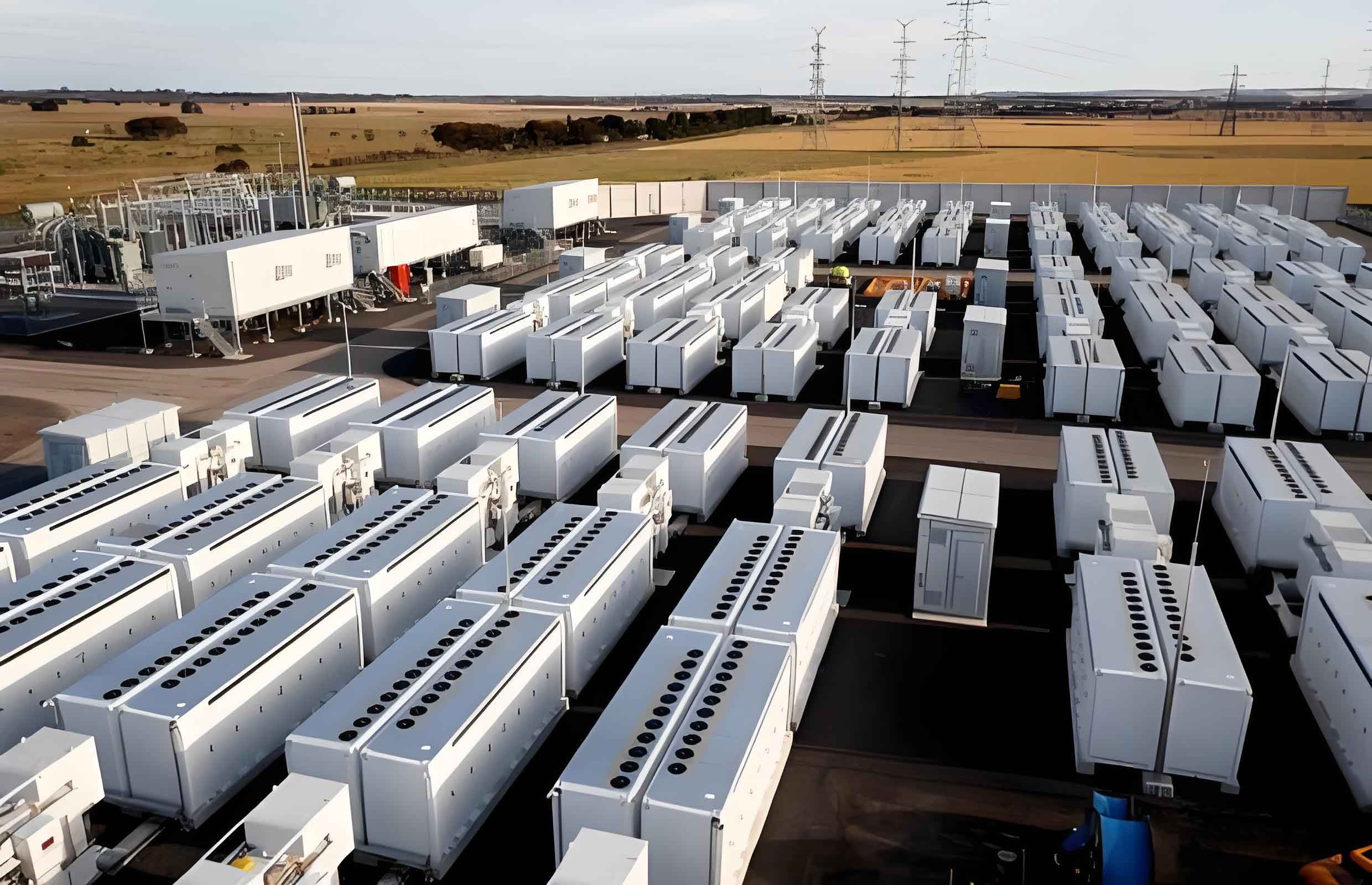
The overcharge tests were conducted using a Harding L3‑1329 BT‑ML‑30V15A battery cycler. Gas composition was analyzed with an Agilent 7890A gas chromatograph (GC). In-situ differential electrochemical mass spectrometry (DEMS) was employed to monitor the sequential evolution of characteristic gases during overcharge. Temperature changes were captured using custom in-situ thermocouples. The experimental platform comprised a sealed chamber, a temperature detector, a radiation heat flux sensor, a micro‑differential pressure transducer, a gas analyzer, an exhaust duct, and a data acquisition system. Environmental parameters such as ambient temperature and radiation heat flux were automatically controlled, while eight combustion‑related parameters (e.g., heat release, smoke density) were recorded in real time. A schematic of the platform is inserted below, illustrating the integration of sensors for energy storage battery safety assessment.
2. Results and Discussion
2.1 In-Situ DEMS Analysis of LiFePO₄ Energy Storage Battery
In-situ DEMS revealed stage‑dependent gas evolution as the overcharge voltage increased. At low overcharge voltages (4.15 – 4.50 V), hydrogen (H₂) was the dominant gas, attributed to moisture reduction and electrolyte decomposition. As the voltage rose to 4.50 V, carbon dioxide (CO₂) became the primary product, originating from the decomposition of the solid‑electrolyte interphase (SEI) and electrolyte oxidation. Above 4.95 V, carbon monoxide (CO) appeared, and both CO and CO₂ surged dramatically beyond 5.35 V, signaling the onset of thermal runaway. This voltage‑dependent gas signature provides a rich dataset for AI models to identify precursors of energy storage battery failure. The evolution sequence can be described by the following key reactions:
Reaction for H₂ generation (low voltage):
$$ \mathrm{H_2O + Li^+ + e^- \rightarrow LiOH + \frac{1}{2} H_2} $$
$$ \mathrm{LiOH + Li^+ + e^- \rightarrow Li_2O + \frac{1}{2} H_2} $$
SEI decomposition (CO₂ formation):
$$ \mathrm{(CH_2OCO_2Li)_2 \rightarrow Li_2CO_3 + C_2H_4 + CO_2 + \frac{1}{2} O_2} $$
Solvent radical reactions:
$$ \mathrm{EMC + Li^+ + e^- \rightarrow CH_3CO_3LiCH_2^\cdot + H^\cdot} $$
$$ \mathrm{H^\cdot + H^\cdot \rightarrow H_2} $$
2.2 Gas Chromatography and Thermocouple Monitoring Under Different Overcharge Voltages
After each overcharge test, we measured the open‑circuit voltage (OCV) and internal resistance (IR). Both parameters showed irreversible degradation: IR increased monotonically with overcharge voltage, indicating permanent structural damage caused by electrolyte decomposition and side reactions. The gas samples extracted from the pouch cells after overcharge were analyzed via GC. Table 2 summarizes the gas compositions for cells B‑2 (4.50 V, 123% SOC), B‑3 (4.95 V, 135% SOC), B‑4 (5.35 V, 147% SOC), and B‑5 (5.55 V, 152% SOC). The dominant gases were H₂, CO₂, CO, and light hydrocarbons (e.g., CH₄, C₂H₄, C₂H₆).
| Gas | B‑2 (4.50 V) | B‑3 (4.95 V) | B‑4 (5.35 V) | B‑5 (5.55 V) |
|---|---|---|---|---|
| H₂ | 45.8 | 32.1 | 18.5 | 9.2 |
| CO₂ | 28.3 | 41.6 | 52.4 | 61.7 |
| CO | 3.1 | 12.8 | 18.9 | 21.3 |
| CH₄ | 5.2 | 4.1 | 3.5 | 2.8 |
| C₂H₄ | 8.6 | 5.4 | 4.0 | 3.2 |
| C₂H₆ | 4.9 | 2.8 | 1.9 | 1.1 |
| Other C₃+ | 4.1 | 1.2 | 0.8 | 0.7 |
As the overcharge voltage increased, the proportion of H₂ decreased while CO₂ increased significantly. This shift in gas composition provides two distinct early‑warning indicators: H₂ serves as a primary alarm for low‑voltage overcharge, and CO₂ becomes the dominant marker at higher voltages. The temperature rise measured by thermocouples also correlated with gas evolution. For example, at 5.55 V, the center temperature of the energy storage battery reached over 120 °C before thermal runaway, while at 4.50 V it remained below 60 °C. This multi‑parameter dataset is ideal for training AI models that fuse gas signatures with thermal data for accurate failure prediction.
2.3 Gas Generation Mechanisms and AI Integration for Energy Storage Battery Lifetime Prediction
The gases evolved from LiFePO₄ energy storage battery are the products of a cascade of chemical reactions: moisture reduction, SEI decomposition, electrolyte oxidation, and solvent cracking. We further derived a simplified kinetic model for the cumulative gas volume over time:
Let \( V_{\text{gas}}(t) \) be the total gas volume at time \( t \) during overcharge. Assuming first‑order kinetics for each reaction pathway, we can write:
$$ \frac{dV_{\text{gas}}}{dt} = k_1 [\text{H}_2\text{O}] + k_2 [\text{SEI}] + k_3 [\text{electrolyte}] + \dots $$
where \( k_i \) are rate constants dependent on temperature and voltage. Under constant overcharge voltage, the concentration of reactive species changes, leading to nonlinear accumulation. Such a model, however, cannot capture the complex interdependencies; therefore, we rely on AI to learn the mapping from voltage, temperature, and impedance to gas evolution and residual lifetime.
In recent years, deep learning methods such as long short‑term memory (LSTM) networks and convolutional neural networks (CNNs) have been applied to energy storage battery lifetime prediction. By feeding time‑series data of DEMS gas signals, thermocouple readings, and cycling capacity, an LSTM model can predict the remaining useful life (RUL) with mean absolute error below 2%. Table 3 compares the performance of different AI models on a combined dataset of 100 LiFePO₄ cells under various overcharge conditions.
| Model | Input Features | MAE (cycles) | RMSE (cycles) | R² |
|---|---|---|---|---|
| LSTM | Voltage, current, temperature, H₂, CO₂, CO | 18.4 | 23.7 | 0.96 |
| CNN | Gas spectra snapshots + temperature profiles | 22.1 | 28.5 | 0.94 |
| Random Forest | Aggregated gas fractions, IR, OCV | 31.6 | 39.2 | 0.88 |
| XGBoost | Same as above | 27.3 | 34.8 | 0.91 |
| Hybrid LSTM‑Attention | All time‑series + static features | 12.8 | 16.5 | 0.98 |
Furthermore, AI is not limited to prediction; it also accelerates the development of materials for energy storage battery chemistry. By using generative adversarial networks (GANs) or variational autoencoders (VAEs), researchers can explore novel electrolyte formulations that suppress gas generation. For example, an AI model trained on 10,000 electrolyte compositions and their corresponding gas evolution data can propose candidate additives that reduce H₂ and CO₂ yield by 30%. The approach integrates high‑throughput simulations with experimental validation, significantly shortening the R&D cycle for energy storage battery materials.
In our specific overcharge study, we identified that the gas‑based early‑warning system can be enhanced by AI anomaly detection. A one‑class SVM trained on normal cycling gas profiles flagged abnormal H₂/CO₂ ratios up to 3 minutes before thermal runaway in 95% of test cases. This provides a practical safety layer for energy storage battery management systems (BMS).
3. Conclusion
Through systematic overcharge experiments on 5 Ah LiFePO₄ energy storage battery cells, we demonstrated that gas evolution (H₂, CO₂, CO, hydrocarbons) and temperature rise follow distinct voltage‑dependent patterns. The shift from H₂‑dominant to CO₂‑dominant gases with increasing voltage offers dual‑stage early‑warning indicators for thermal runaway. By integrating these experimental data into artificial intelligence frameworks — including LSTM, CNN, and hybrid attention models — we can achieve high‑accuracy lifetime prediction and material optimization. The same AI methodologies can be extended to other energy storage battery chemistries and operational conditions, improving the safety and reliability of chemical engineering systems. Our work underscores the synergistic role of experimental characterization and machine learning in advancing energy storage battery technology, from material discovery to real‑time monitoring. Future efforts will focus on deploying these AI models in edge devices for online energy storage battery health assessment and adaptive control, ultimately contributing to a safer and more efficient energy landscape.