
The global transformation of energy landscapes and the ambitious goal of carbon neutrality have placed high-efficiency, safe, and sustainable energy storage technologies at the core of the evolving energy system. Among various candidates, the lithium-ion energy storage battery has become ubiquitous in consumer electronics, electric vehicles, and grid regulation. However, conventional liquid-electrolyte batteries face safety risks, while all-solid-state batteries struggle with interfacial issues and manufacturing complexity. The semi-solid energy storage battery emerges as a promising hybrid solution, combining the high ionic conductivity of liquid electrolytes with the structural stability of solid electrolytes. In this article, I aim to explore the theoretical foundations, performance advantages, technical challenges, and optimization strategies of semi-solid energy storage batteries, providing insights for future energy transition and storage system improvement.
Theoretical Foundations of Semi-Solid Energy Storage Battery
Structure and Working Principle
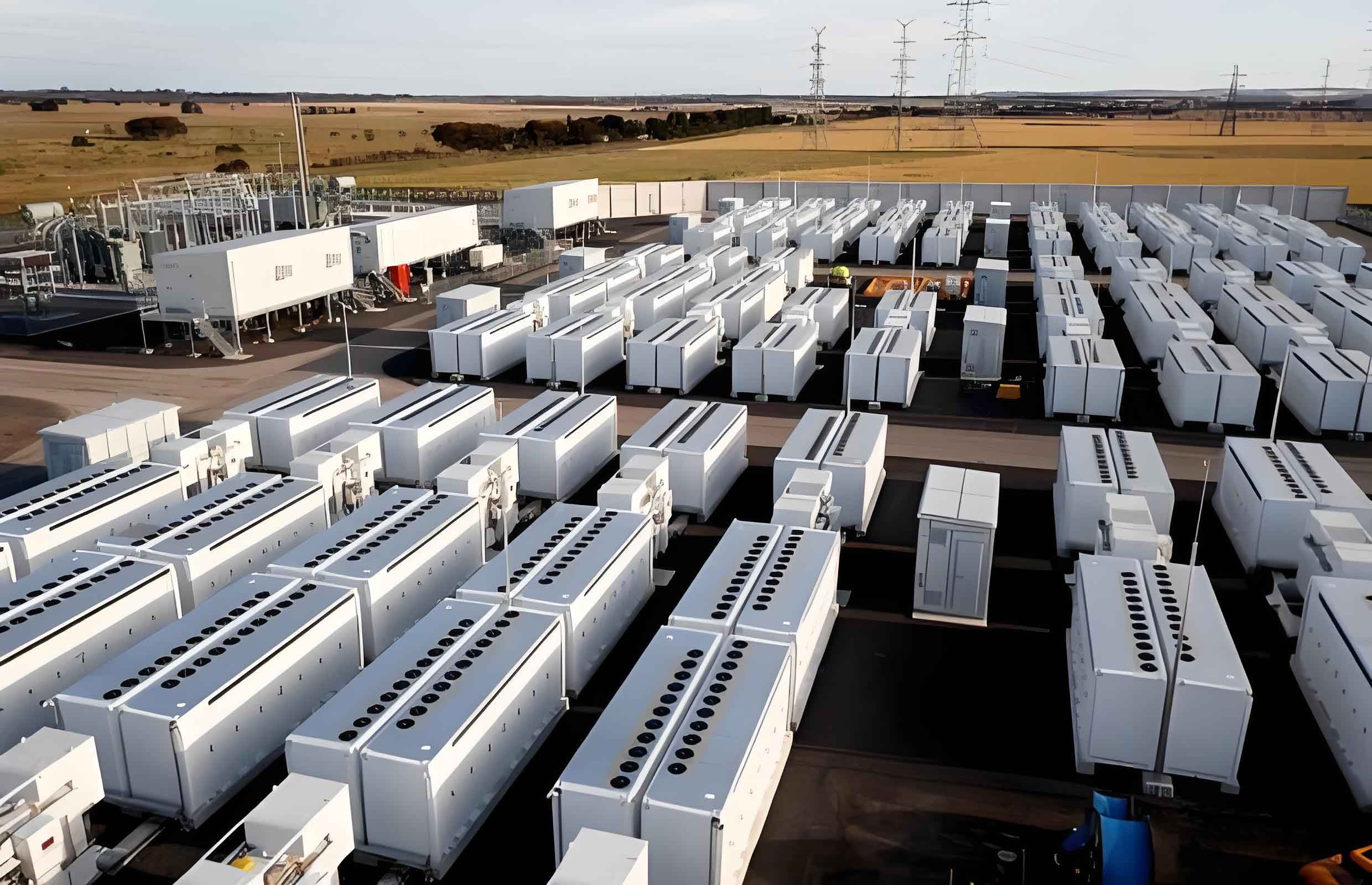
The semi-solid energy storage battery is a novel electrochemical device characterized by the use of electrode suspensions. These suspensions consist of active materials, conductive additives, and electrolyte, stored in separate reservoirs and continuously pumped into the reaction chamber. During charging, ions migrate directionally through an ion-selective membrane while electrons travel through an external circuit, enabling energy storage. During discharging, the migration of ions and electrons reverses, releasing energy. The ion-selective membrane plays a critical role in separating the two electrolytes, preventing cross-contamination and maintaining electrochemical stability. This cyclic flow and bidirectional migration mechanism significantly enhances the reversibility of electrode reactions and the overall energy efficiency of the energy storage battery.
Performance Advantages
Compared to traditional liquid lithium-ion batteries and all-solid-state batteries, the semi-solid energy storage battery offers several key advantages. First, its energy density is higher due to the rapid ion conduction provided by the liquid phase, allowing full utilization of electrode active materials. Second, the introduction of a solid electrolyte reduces the risk of electrolyte leakage and thermal runaway, while suppressing dendrite growth and mitigating explosion or fire hazards. Third, the semi-solid system effectively alleviates electrode volume expansion and structural collapse during cycling, maintaining interfacial stability and enhancing durability. Fourth, semi-solid batteries exhibit excellent environmental adaptability, operating stably across a wide temperature range, making them suitable for complex applications. Finally, the manufacturing process of semi-solid batteries is compatible with existing liquid battery production lines, providing a smooth technological transition toward all-solid-state systems.
To quantitatively illustrate the performance improvements, I present a comparison table below:
| Parameter | Liquid Li-ion Battery | Semi-Solid Li-ion Battery | All-Solid-State Battery |
|---|---|---|---|
| Energy Density (Wh/kg) | 200–250 | 250–350 | 300–500 |
| Safety (Leakage/Thermal Runaway) | Moderate risk | Low risk | Very low risk |
| Cycle Life (cycles) | 500–1000 | 1000–2000 | 2000–5000 |
| Temperature Range (°C) | -20 to 60 | -30 to 80 | -40 to 100 |
| Manufacturing Complexity | Low | Moderate | High |
The theoretical energy density of a semi-solid energy storage battery can be expressed as:
$$ E = \frac{1}{M} \int_{Q_{\text{min}}}^{Q_{\text{max}}} V(q) \, dq $$
where \( E \) is the specific energy, \( M \) is the total mass of active materials and electrolyte, \( V(q) \) is the cell voltage as a function of capacity \( q \), and \( Q_{\text{min}} \), \( Q_{\text{max}} \) are the lower and upper limits of capacity. This integral highlights the importance of voltage plateau and capacity utilization in determining overall energy density.
Types of Semi-Solid Energy Storage Batteries
Lithium-Ion Based Semi-Solid Battery
Among semi-solid systems, the lithium-ion type is the most mature and widely studied. Conventional lithium-ion batteries use solid electrodes, whereas semi-solid lithium-ion batteries employ suspensions containing active particles that undergo electrochemical reactions in the electrolyte environment. This design effectively addresses the limitations of ion and electron transport paths in solid electrodes, improving material utilization and energy density. Furthermore, the flowable nature of the suspension enables scalability similar to flow batteries, allowing flexible adjustment of storage capacity for large-scale applications. The semi-solid lithium-ion energy storage battery also demonstrates enhanced safety through the ion-selective membrane and optimized flow dynamics, mitigating risks such as electrolyte flammability and dendrite-induced short circuits.
Lithium-Sulfur Based Semi-Solid Battery
The lithium‑sulfur battery is considered a promising future system due to its high theoretical specific energy of 2,600 Wh/kg. However, conventional Li‑S batteries suffer from the insulating nature of sulfur and the dissolution/migration of polysulfides, leading to capacity fade and short cycle life. By formulating sulfur-based materials with conductive additives into a semi-solid suspension, conductivity is significantly improved, and the flow of the slurry reduces uncontrolled polysulfide diffusion. Moreover, the semi‑solid Li‑S energy storage battery can be scaled up by employing large electrolyte reservoirs, making it suitable for long‑duration energy storage. This type is particularly applicable for renewable energy integration, grid peak shaving, and off‑grid power supply in remote areas, owing to its high energy density and potential cost advantage.
Zinc-Based Semi-Solid Battery
Zinc‑based semi‑solid batteries have attracted growing attention due to the abundance, low cost, and environmental friendliness of zinc. Compared to lithium systems, zinc batteries offer higher safety—they are less prone to thermal runaway—and a suitable electrochemical potential for large‑scale storage. In a semi‑solid design, researchers typically employ a zinc negative electrode combined with a suspension of redox‑active materials to achieve efficient ion migration and electron transport. This system combines the scalability of flow batteries with the energy density of solid‑state batteries, showing promise in renewable energy grid integration, peak shaving, and emergency power. Additionally, zinc‑based systems excel in environmental tolerance and raw material availability, aligning with green and sustainable development goals.
| Feature | Li-ion Semi-Solid | Li-S Semi-Solid | Zn Semi-Solid |
|---|---|---|---|
| Theoretical Energy Density (Wh/kg) | 250–350 | Up to 2600 | 200–400 |
| Cost | Moderate | Low (sulfur is cheap) | Very low |
| Safety | High | Moderate (polysulfide shuttle risk) | Very high |
| Cycle Life | 1000–2000 | 200–500 | 500–1000 |
| Scalability | Good | Good (reservoir design) | Excellent |
Technical Challenges in Semi-Solid Energy Storage Battery Development
Electrode Material and Suspension Stability
One of the core challenges of the semi-solid energy storage battery lies in the composition and stability of the electrode suspension. The suspension, containing active materials, conductive additives, and electrolyte, must remain homogeneous over long cycling. However, active particles tend to sediment, agglomerate, or form uneven interfaces, leading to capacity fade and increased internal resistance. Different active materials exhibit varying physicochemical properties, and some may undergo side reactions with the electrolyte in the semi‑solid environment, exacerbating stratification and precipitation. Building a stable conductive network is also difficult; uneven distribution of conductive additives reduces electron transport efficiency and creates localized high‑impedance zones. Temperature variations further affect viscosity and flowability: high temperatures accelerate solvent evaporation, while low temperatures increase viscosity and pump load.
Ion Conduction and Interfacial Impedance
Ion conduction efficiency and electrode–electrolyte interfacial impedance are another set of critical issues. In the semi‑solid battery, ions migrate primarily between the suspension and the ion‑selective membrane. The conduction efficiency depends on electrolyte concentration, viscosity, and the surface properties of active materials. Particle sedimentation or agglomeration not only blocks ion channels but also creates local concentration gradients, causing voltage fluctuations and capacity loss during charge/discharge. Moreover, the solid–liquid interface between the electrode and electrolyte exhibits impedance, especially under high‑rate conditions, where polarization effects degrade kinetic performance. Limited liquid content in the semi‑solid system makes electrolyte wettability and diffusivity particularly important. To reduce interfacial impedance and improve ion mobility, further research is needed in interface engineering, ion‑channel design, and electrolyte formulation optimization.
System Integration and Cycle Management
When deployed practically, the semi-solid energy storage battery faces challenges in system integration and cycle management. Unlike conventional solid or liquid batteries, the semi‑solid system requires efficient circulation of electrode suspensions between reservoirs, pumps, and the reaction chamber, demanding high precision in system design and control. The design of circulation pumps and piping must ensure uniform flow rates and low energy consumption, avoiding localized fast or slow flows that cause deposition, stratification, or clogging. Meanwhile, the battery management system (BMS) must achieve fine‑grained monitoring of temperature, flow rate, and state of charge (SOC) to prevent local overcharge, over‑discharge, or thermal runaway. The complexity of system integration also increases manufacturing and maintenance costs; the reliability of pumps, electronics, and piping directly affects battery lifespan and operational safety.
Optimization Strategies for Semi-Solid Energy Storage Battery Technology
Enhancing Electrode Material and Suspension Stability
Optimizing Conductive Additive and Electrolyte Ratio. To improve performance, the first step is to optimize the ratio of conductive additives and electrolyte in the electrode suspension. Conductive additives enhance electron transport, while the electrolyte affects ion migration and suspension stability. By optimizing the particle size, morphology, and dispersion uniformity of conductive additives, the conductive network connectivity can be enhanced, reducing internal electronic impedance. Simultaneously, optimizing solvent type and concentration regulates ion solubility and migration rate, lowering internal impedance and improving cycle efficiency. In practice, different ratios can be designed and screened through experiments combined with numerical simulations to determine the optimal formulation that achieves high stability and high conductivity, thereby enhancing capacity retention and cycle life of the semi‑solid energy storage battery.
Improving Suspension Dispersion and Circulation Process. The uniformity and cyclic stability of the suspension directly affect battery performance. By improving dispersion techniques—such as ultrasonic vibration, high‑shear mixing, and moderate addition of surfactants—aggregation and sedimentation of active particles can be effectively prevented, ensuring uniform distribution during cycling. Furthermore, optimizing the circulation path and flow rate of the suspension reduces local non‑uniformity that leads to deposition of active materials, thus lowering local impedance and capacity fade. Introducing intelligent flow control devices and pressure regulation systems ensures stable flow under varying temperature and load conditions, enhancing overall reliability and cycling performance. These process improvements enable the semi‑solid energy storage battery to maintain high energy efficiency and stability during long‑term operation, providing technical support for large‑scale applications.
Reducing Ion Conduction and Interfacial Impedance
Enhancing Electrolyte Ionic Conductivity. Ionic conductivity is a key factor determining the performance of a semi‑solid energy storage battery. Improving electrolyte ionic conductivity can significantly reduce interfacial impedance and enhance charge/discharge efficiency. Specific methods include optimizing the solvent system, adding salts with high ionic mobility, and controlling the solvent‑to‑salt ratio to form a highly conductive and chemically stable electrolyte. Temperature, concentration, and viscosity can also be tuned to further promote ion migration. In practice, molecular dynamics simulations combined with electrochemical testing can be used to screen and optimize different electrolyte systems, obtaining formulations that offer both high conductivity and electrochemical stability. A high‑conductivity electrolyte not only raises the power density of the semi‑solid energy storage battery but also extends its cycle life, ensuring reliable operation of the energy storage system.
Introducing Interfacial Additives and Coatings. Interfacial impedance is another major constraint. To reduce the electrode/electrolyte interface impedance, interfacial additives or functional coatings can be applied on the electrode surface. These materials form a stable interfacial film, improving the ion transport pathway from the electrolyte to the electrode while suppressing side reactions. Additives can enhance interfacial affinity and ionic conductivity through chemical modification or composite materials. Coatings can be made of highly conductive, corrosion‑resistant materials such as fluorides, oxides, or polymer thin films to reinforce interfacial stability. Combining interface engineering design with electrochemical testing can effectively reduce interfacial impedance, improve performance under high‑rate charge/discharge conditions, and prolong cycle life, providing reliable technical support for practical applications of the semi‑solid energy storage battery.
Optimizing System Integration and Cycle Management
Designing Efficient Suspension Circulation Systems. The performance of the semi‑solid energy storage battery largely depends on the circulation efficiency of the suspension. Designing an efficient circulation system ensures that the positive and negative electrode suspensions flow uniformly between reservoirs and the reaction chamber, preventing deposition of active materials or local concentration gradients. By optimizing pump structure, flow channel design, and pressure control, flow resistance can be reduced, stable flow rate maintained, and energy consumption minimized. Introducing adjustable flow valves and bidirectional flow control systems enables real‑time adjustment of suspension flow according to battery operating status and load demand, achieving dynamic management. An efficient circulation system not only boosts power output and energy density but also improves long‑cycle performance, laying the foundation for large‑scale energy storage and grid regulation applications of the semi‑solid energy storage battery.
Establishing Intelligent Monitoring and Energy Management Systems. As the semi‑solid energy storage battery moves toward large‑scale deployment, building intelligent monitoring and energy management systems becomes crucial. By real‑time monitoring of key parameters—such as suspension temperature, voltage, current, and flow rate—combined with data analysis and predictive models, dynamic assessment and regulation of battery operating status can be achieved. The intelligent system can automatically optimize charge/discharge strategies, balance capacity differences among battery units, and promptly alert abnormal conditions, reducing operational risks. Meanwhile, incorporating energy management algorithms enables efficient scheduling and life optimization of the battery. This not only enhances the safety and reliability of the semi‑solid energy storage battery but also provides sustainable and stable technical support for energy storage systems in complex grid environments.
| Challenge | Optimization Strategy | Key Techniques |
|---|---|---|
| Electrode material & suspension stability | Optimize conductive additive & electrolyte ratio; improve dispersion & circulation process | Particle size control, surfactant addition, ultrasonic dispersion, intelligent flow control |
| Ion conduction & interfacial impedance | Enhance electrolyte ionic conductivity; introduce interfacial additives & coatings | Solvent optimization, salt selection, molecular dynamics simulation, functional coatings |
| System integration & cycle management | Design efficient circulation system; establish intelligent monitoring & energy management | Pump & flow channel design, real‑time parameter monitoring, predictive algorithms |
Conclusion
In summary, the semi-solid energy storage battery, as a novel technology that combines the advantages of both liquid and solid electrolytes, demonstrates significant benefits in energy density, safety, cycle life, and environmental adaptability. It provides viable solutions for electric transportation, large‑scale energy storage, and distributed energy systems. In this article, I have systematically examined the theoretical foundations, structural features, and working mechanisms of semi‑solid batteries. To address key technical challenges—such as electrode suspension stability, ion conduction efficiency, and system cycle management—I have proposed optimization measures including conductive additive and electrolyte ratio optimization, dispersion and circulation process improvement, interface engineering design, and intelligent management system construction. These strategies are expected to enhance the performance and reliability of semi‑solid energy storage batteries, accelerating their deployment in the ongoing global energy transition.