
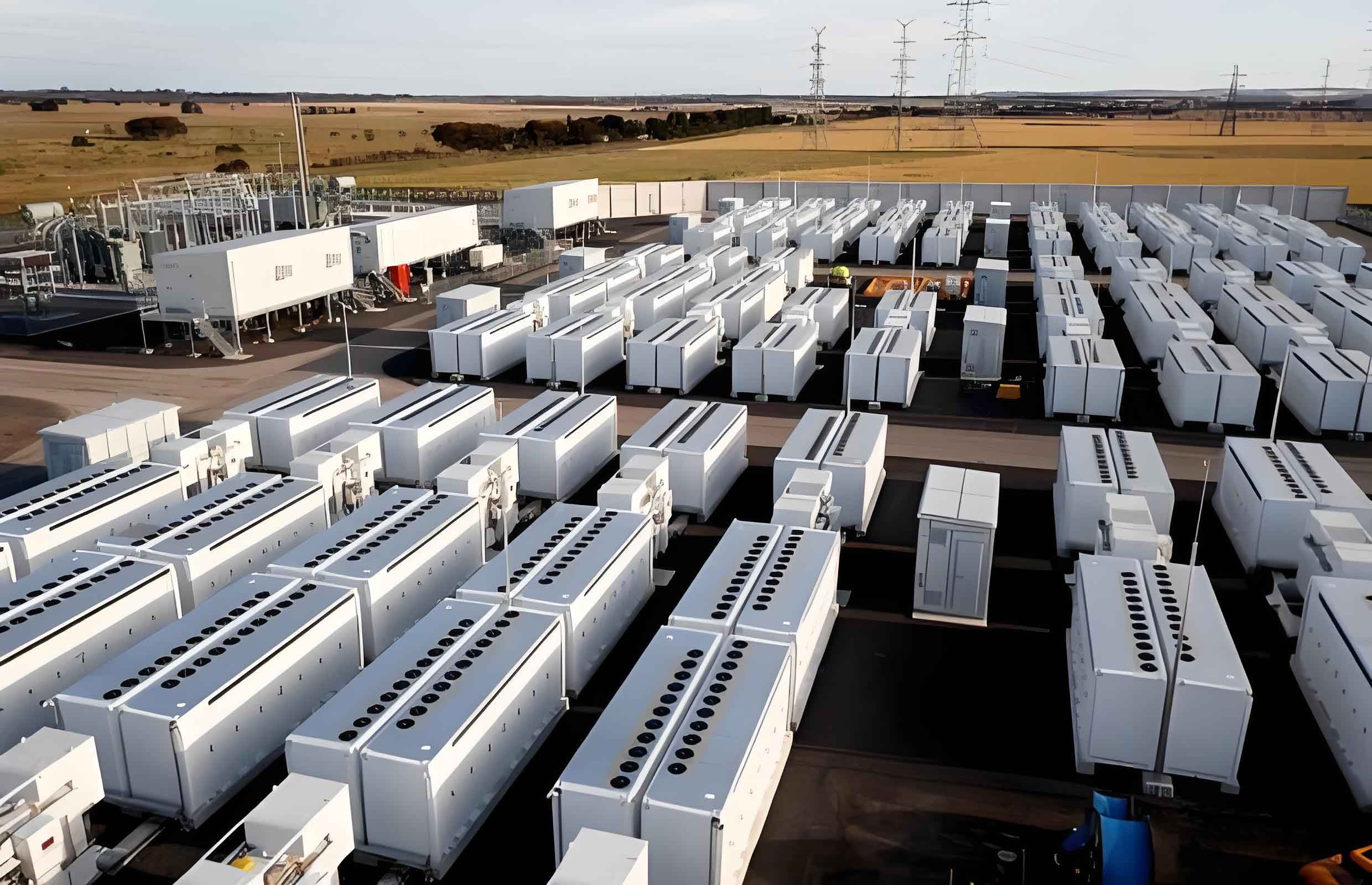
Energy storage technologies are broadly categorized into mechanical, electrochemical, electromagnetic, and phase-change types. Among these, electrochemical storage, particularly battery energy storage, has experienced rapid growth. This category includes lithium-ion battery energy storage, lead-acid battery storage, and flow battery storage. Lithium-ion battery energy storage is currently the most widely adopted due to its excellent cycling characteristics, fast response times, and high system efficiency. However, as the capacity of individual energy storage battery cells increases, thermal management has become a critical challenge. When large numbers of cells operate together, the heat generated far exceeds the capability of conventional air-cooling systems. Therefore, developing advanced thermal management technologies for electrochemical energy storage systems is an urgent priority.
Lithium-ion batteries are the dominant technology in both power and consumer battery applications. Their thermal management has long been a focus of research. Early systems relied on natural air convection, which suffered from high noise and poor temperature uniformity. To overcome these limitations, liquid cooling methods were invented, including cold-plate liquid cooling and immersion liquid cooling. Cold-plate cooling is relatively mature and provides good performance, but it is prone to leakage, posing safety risks. Immersion liquid cooling, where the entire battery pack is submerged in an insulating coolant, offers direct contact with no dead zones, efficient heat transfer, and enhanced safety. However, the requirements for the coolant are stringent. For instance, high-insulation transformer oil has been studied as an immersion coolant, yielding a 32.4% reduction in maximum temperature and a 75.3% reduction in temperature difference compared to natural air cooling.
Given that immersion liquid cooling for electrochemical energy storage is still in its early stages, and no authoritative standards or mature commercial products exist, the potential market for such coolants is considerable—over ten thousand tons annually. Developing a mineral-based immersion coolant for electrochemical energy storage systems is therefore strategically important for achieving independent core technology, supporting industrial transformation, and generating substantial social and economic benefits.
Technical Specification Development
In the absence of existing product standards for immersion coolants for electrochemical energy storage, we established provisional quality control targets based on the intended operating environment and conditions. These specifications can be tailored to user requirements. The key technical indices are summarized in Table 1.
| Test Item | Specification Limit | Test Method |
|---|---|---|
| Kinematic viscosity (40 °C) / (mm2·s–1) | 9–11 | GB/T 265 |
| Kinematic viscosity (100 °C) / (mm2·s–1) | Report | GB/T 265 |
| Viscosity index | Report | GB/T 1995 |
| Flash point (open cup) / °C | ≥160 | GB/T 3536 |
| Pour point / °C | ≤ –50 | GB/T 3535 |
| Acid value (as KOH) / (mg·g–1) | ≤0.02 | NB/SH/T 0836 |
| Water content / (μg·g–1) | ≤30 | SH/T 0207 |
| Breakdown voltage / kV | ≥50 | GB/T 507 |
| Rotating bomb oxidation test (140 °C) / min | ≥400 | SH/T 0193 |
| Evaporation loss (50 °C, 168 h) / (mass fraction %) | ≤0.5 | In-house method |
| Acute skin irritation/corrosion | Non-irritating | GB/T 21604 |
| Median lethal dose (LD50) / (μg·g–1) | >2000 | OECD 423 |
The production process for the immersion coolant is illustrated in the flowchart. High-quality crude oil from the Karamay oilfield in Xinjiang is selected. Appropriate petroleum fractions are chosen and processed using molecular refining technology to obtain hydrocarbon components with suitable carbon numbers and boiling ranges. An additive system is then identified to formulate a novel immersion coolant with excellent heat transfer, electrical insulation, and compatibility with internal materials of the energy storage system.
Coolant Product Development
Base Oil Selection
To meet the demanding requirements of the EBC160 coolant, we screened available lubricant base oils. Key properties such as viscosity, flash point, and pour point were evaluated. Four candidate base oil fractions were examined; the data are presented in Table 2.
| Property | Fraction 1 | Fraction 2 | Fraction 3 | Fraction 4 | Test Method |
|---|---|---|---|---|---|
| Kinematic viscosity (40 °C) / (mm2·s–1) | 10.75 | 9.25 | 7.18 | 9.08 | GB/T 265 |
| Flash point (open cup) / °C | 172 | 168 | 150 | 158 | GB/T 3536 |
| Density (20 °C) / (kg·m–3) | 830.8 | 850.5 | 881.9 | 864.8 | SH/T 0604 |
| Pour point / °C | –64 | –63 | –56 | –62 | GB/T 3535 |
| Acid value (as KOH) / (mg·g–1) | 0.01 | 0.01 | 0.01 | 0.01 | GB/T 7304 |
To achieve uniqueness and broader applicability, we blended different fractions to form the base oil for the EBC160 coolant.
Antioxidant Evaluation
Antioxidants improve oxidation stability and prolong service life. Based on experience with transformer oils, we selected 2,6-di-tert-butyl-4-methylphenol (T501) as the antioxidant. Rotating bomb oxidation test (RBOT) results at different concentrations are given in Table 3.
| Sample ID | Antioxidant Content / % | RBOT Time / min |
|---|---|---|
| 0# | 0 | 61 |
| 1# | 0.1 | 304 |
| 2# | 0.2 | 441 |
| 3# | 0.3 | 504 |
| 4# | 0.4 | 508 |
| 5# | 0.5 | 515 |
The RBOT time increases with antioxidant content up to 0.3%, after which the improvement plateaus. Beyond 0.4%, the effect becomes marginal due to pro-oxidant effects. Considering both performance and cost, we selected 0.4% T501 as the optimal concentration.
Coolant Product Quality Analysis
The final formulated coolant, designated EBC160, was evaluated against the specifications. The typical data are presented in Table 4.
| Test Item | Specification Limit | EBC160 | Test Method |
|---|---|---|---|
| Kinematic viscosity (40 °C) / (mm2·s–1) | 9–11 | 9.36 | GB/T 265 |
| Kinematic viscosity (100 °C) / (mm2·s–1) | Report | 2.31 | GB/T 265 |
| Flash point (open cup) / °C | ≥160 | 166 | GB/T 3536 |
| Pour point / °C | ≤ –50 | –69 | GB/T 3535 |
| Acid value (as KOH) / (mg·g–1) | ≤0.02 | 0.01 | NB/SH/T 0836 |
| Water content / (μg·g–1) | ≤30 | 21 | SH/T 0207 |
| Breakdown voltage / kV | ≥50 | 62 | GB/T 507 |
| Rotating bomb oxidation test (140 °C) / min | ≥400 | 540 | SH/T 0193 |
| Evaporation loss (50 °C, 168 h) / (%) | ≤0.5 | 0.08 | In-house method |
| Acute skin irritation/corrosion | Non-irritating | Non-irritating | GB/T 21604 |
| LD50 / (μg·g–1) | >2000 | >2000 | OECD 423 |
All measured values met or exceeded the specifications, confirming the success of the formulation.
Material Compatibility Evaluation
We collected all metal and non-metal materials that come into direct contact with the coolant inside the energy storage battery system. Compatibility tests were conducted at (85 ± 1) °C for 336 h. The list of materials is given in Table 5.
| No. | Material |
|---|---|
| NO.1 | Sampling lines, fishbone brackets, connectors, connection wires, PET film, etc. |
| NO.2 | Positive/negative electrode lugs, top patch, top cover plastic parts, aluminum casing, etc. |
| NO.3 | Positive/negative electrode sheets, terminals, explosion-proof valves, blue adhesive, separator, etc. |
After aging, the materials were removed, cleaned with petroleum ether, dried, and weighed. The coolant was analyzed for key properties. The results are summarized in Table 6 (mass change) and Table 7 (coolant properties).
| No. | Material | Mass before test / g | Mass after test / g | Mass change / % |
|---|---|---|---|---|
| 1 | Fishbone bracket | 20.5265 | 20.5347 | 0.04 |
| 2 | Sampling line | 4.3545 | 4.3615 | 0.16 |
| 3 | Green connector | 1.3286 | 1.3288 | 0.00 |
| 4 | White connector | 1.1258 | 1.1262 | 0.04 |
| 5 | PET film | 2.0694 | 2.0587 | –0.52 |
| 6 | Temperature sampling line | 1.8850 | 1.8058 | –4.20 |
| 7 | Blue adhesive | 0.3622 | 0.3618 | –0.02 |
| 8 | Blue film | 0.5966 | 0.5988 | 0.11 |
| 9 | Separator | 0.2240 | 0.2245 | 0.22 |
| 10 | Explosion-proof valve | 0.0256 | 0.0257 | 0.39 |
| 11 | Top patch | 1.5787 | 1.5802 | 0.09 |
| 12 | Top cover plastic part | 4.2115 | 4.2213 | 0.23 |
| 13 | Positive electrode terminal | 1.6842 | 1.6840 | –0.01 |
| 14 | Positive electrode lug | 3.4385 | 3.4387 | 0.06 |
| 15 | Negative electrode lug | 7.3506 | 7.3500 | –0.01 |
| Sample | Water content / (μg·g–1) | Acid value (KOH) / (mg·g–1) | Dielectric loss factor (25 °C) | Dielectric constant (25 °C) | Breakdown voltage / kV |
|---|---|---|---|---|---|
| Blank | 22.7 | 0.006 | 0.00006 | 2.13 | 64.8 |
| 1 (fishbone) | 23.9 | 0.005 | 0.00005 | 2.11 | 63.5 |
| 2 (sampling line) | 22.2 | 0.006 | 0.00006 | 2.12 | 61.8 |
| 3 (green connector) | 21.8 | 0.006 | 0.00006 | 2.11 | 63.5 |
| 4 (PET film) | 22.4 | 0.006 | 0.00003 | 2.12 | 65.2 |
| 5 (white connector) | 23.1 | 0.007 | 0.00006 | 2.13 | 67.3 |
| 6 (temp. sampling) | 20.3 | 0.006 | 0.00005 | 2.12 | 64.6 |
| 7 (blue adhesive) | 22.2 | 0.006 | 0.00008 | 2.12 | 61.7 |
| 8 (blue film) | 21.8 | 0.006 | 0.00008 | 2.12 | 60.3 |
| 9 (separator) | 22.9 | 0.006 | 0.00009 | 2.13 | 63.1 |
| 10 (explosion valve) | 23.9 | 0.006 | 0.00007 | 2.12 | 68.1 |
| 11 (top patch) | 23.5 | 0.006 | 0.00006 | 2.11 | 64.3 |
| 12 (top cover) | 23.1 | 0.005 | 0.00005 | 2.11 | 65.3 |
| 13 (positive terminal) | 24.3 | 0.006 | 0.00006 | 2.11 | 64.9 |
| 14 (positive lug) | 24.0 | 0.006 | 0.00006 | 2.13 | 66.8 |
| 15 (negative lug) | 24.8 | 0.006 | 0.00005 | 2.12 | 64.7 |
The mass changes were minimal, and the coolant properties remained essentially unchanged. These results demonstrate excellent compatibility between the developed coolant and all tested materials.
Safety Performance Evaluation of the Coolant
One critical concern for energy storage batteries is thermal runaway (TR), which can be triggered by internal short circuits due to physical damage. In a TR event, large amounts of heat and gas are generated, potentially leading to smoke, flame, or explosion. To evaluate the safety performance of the immersion coolant, we conducted nail penetration tests comparing a lithium-ion battery in air and one fully immersed in the coolant. The thermal behavior was recorded.
The energy released during a short circuit can be approximated by the joule heating formula:
$$ Q = I^2 R t $$
where \(Q\) is the heat generated, \(I\) is the short-circuit current, \(R\) is the internal resistance, and \(t\) is the duration. In the air test, the battery surface temperature exceeded 400 °C, causing electrolyte ignition and explosion. In contrast, when the energy storage battery was immersed in the coolant, the heat was rapidly absorbed. The peak surface temperature of the battery reached only 280 °C, while the coolant temperature rose to only 48 °C. The coolant also acted as a flame suppressant, immediately extinguishing any sparks. White smoke observed was due to evaporation of low-boiling organic solvents in the electrolyte, not combustion. These results confirm that the immersion cooling solution can prevent thermal runaway propagation, fundamentally addressing the worldwide safety challenge of fire and explosion in energy storage batteries.
Conclusion
Through systematic research, we have successfully developed a novel immersion oil-based coolant for energy storage battery systems. The coolant exhibits outstanding oxidation stability, electrical insulation, and compatibility with all contact materials inside the energy storage system. Safety tests, including nail penetration, demonstrate that immersion liquid cooling can effectively suppress thermal runaway and prevent fire or explosion. This technology is poised to become the mainstream thermal management solution for future energy storage battery systems.