
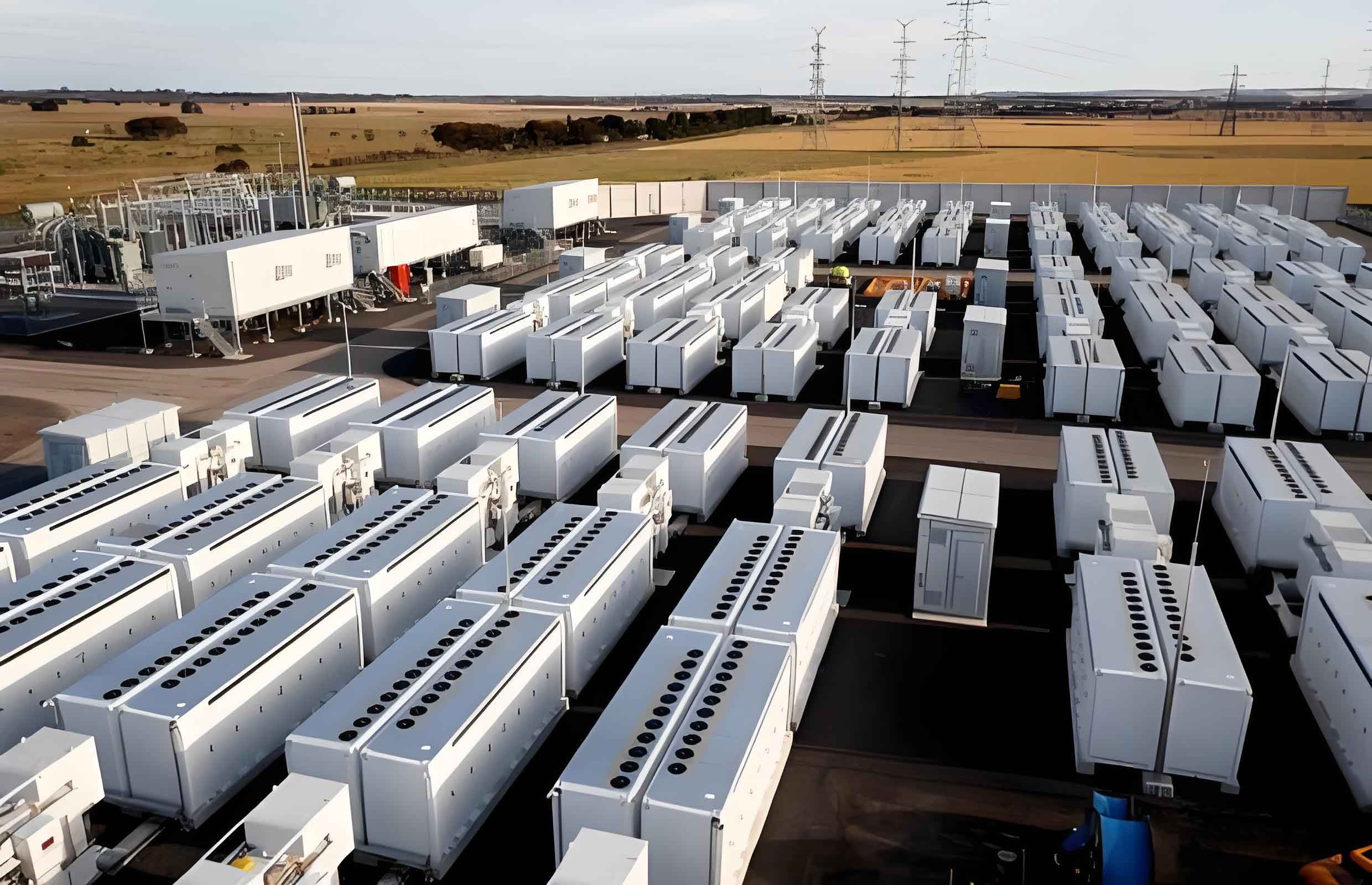
In the context of the global “dual-carbon” strategy, electrochemical energy storage technology has undergone a transformative evolution from technical validation to large-scale deployment. As a core enabler of flexible regulation in modern power systems, the energy storage battery has become the predominant technological pathway, with lithium-ion batteries commanding over 90% of the market share. According to data from the National Energy Administration, China’s new energy storage installed capacity surged by more than 260% year-on-year in 2023, and projections from the China Energy Storage Alliance indicate that the cumulative installed capacity of new energy storage could reach 313.9 GW by 2030, with a compound annual growth rate of 37.1% from 2024 to 2030. The energy storage battery cabin module serves as the fundamental storage unit in electrochemical energy storage stations, and with the rapid expansion of this industry, the number of such facilities continues to grow. Typically constructed using containerized designs, these cabins house hundreds of battery modules, each comprising dozens of lithium-ion cells. However, the safety of energy storage battery systems has emerged as a critical bottleneck constraining the widespread adoption of energy storage stations, with thermal runaway representing the core scientific challenge underlying battery safety concerns.
From November 2017 to September 2024, electrochemical energy storage station accidents have been reported in ten countries, including South Korea, the United States, and China. A notable incident was the fire and explosion at a solar-storage-charging integrated project in Fengtai District, Beijing, in 2021, which originated from a chain disaster of “gas explosion-fire spread” triggered by thermal runaway in a prefabricated lithium-ion energy storage battery cabin. The fundamental contradiction lies in the fact that the physicochemical characteristics of lithium-ion batteries have overturned conventional fire safety paradigms — traditional oxygen-dependent suffocation灭火手段 fail because the internal chain reactions within batteries generate heat continuously without requiring external oxygen. Against this backdrop, standardization has become a core lever for resolving these contradictions. By constructing a comprehensive technical standard system covering fire hazard classification, extinguishing media selection, and the entire chain of detection, extinguishment, and suppression, standardization can drive the industry from “experience-driven” to “standard-led” practices, reduce redundant research and development investments, and provide risk assessment bases for stakeholders such as grid operators and financial insurers.
This article systematically analyzes the fire evolution mechanisms and challenges faced by fire-fighting systems for electrochemical energy storage battery cabins, reviews the current state of national and local standards in China, and proposes optimization pathways based on multi-parameter integrated fire prevention and control technology, system-level fire safety performance verification, and full-lifecycle management mechanisms.
Fire Characteristics and Fire-Fighting Challenges of Energy Storage Battery Cabins
Chain Reaction Mechanism of Thermal Runaway
The fire triggered by thermal runaway in lithium-ion energy storage battery systems is fundamentally a multi-field coupled chain disaster involving electrochemical, thermal, and gas dynamics, the evolution pathway of which transcends conventional fire-fighting theoretical frameworks. When a battery experiences internal short circuits due to overcharging, mechanical damage, or high ambient temperatures, the solid electrolyte interface film decomposes, initiating a cascade of reactions: the electrolyte decomposes to produce flammable gases (H₂, CO, C₂H₄, etc.) and toxic gases (HF), the cathode material releases oxygen to intensify combustion, and the anode reacts with the electrolyte to release substantial thermal energy, forming a self-accelerating cycle. Within a battery module, the thermal runaway cell transfers heat to adjacent normal cells through conduction, radiation, and convection pathways, inducing thermal runaway propagation and resulting in large-scale combustion.
The thermal runaway process can be mathematically described by an energy balance equation that captures the interplay between heat generation and dissipation:
$$ \rho C_p \frac{\partial T}{\partial t} = \nabla \cdot (k \nabla T) + \dot{Q}_{gen} – \dot{Q}_{loss} $$
where ρ represents the density of the energy storage battery cell material, Cp is the specific heat capacity, T is the temperature, k is the thermal conductivity, and the heat generation term encompasses multiple contributing factors:
$$ \dot{Q}_{gen} = \dot{Q}_{SEI} + \dot{Q}_{anode} + \dot{Q}_{cathode} + \dot{Q}_{electrolyte} + \dot{Q}_{joule} $$
Each term represents the heat released from specific decomposition or reaction processes: SEI film decomposition, anode-electrolyte reaction, cathode decomposition, electrolyte combustion, and Joule heating from internal short circuits. The self-accelerating nature of thermal runaway becomes evident when the heat generation rate exceeds the heat dissipation capability of the energy storage battery system.
The thermal runaway propagation velocity within a battery module can be characterized by:
$$ v_{TR} = \frac{\Delta x}{\tau_{TR}} = \frac{\Delta x}{\frac{\rho C_p \Delta T_{cr}}{k \cdot \nabla^2 T + \dot{Q}_{gen}}} $$
where Δx represents the spacing between adjacent cells, τTR is the characteristic time for thermal runaway propagation, and ΔTcr is the critical temperature rise required to trigger thermal runaway in adjacent cells.
Such fires exhibit three complex characteristics. First, deep-seated combustion: the internal chain reactions within the battery maintain temperatures above 800°C without requiring external oxygen, rendering traditional suffocation-based fire suppression ineffective. Second, high re-ignition risk: residual heat from thermal runaway continues to elevate battery temperature, potentially triggering secondary thermal runaway even after visible flames are extinguished. Third, explosion chain reactions: flammable gases mix with oxygen in the confined cabin space, forming explosive atmospheres that can detonate upon contact with electrical sparks or hot surfaces. In the 2024 Gateway energy storage station accident in California, USA, three consecutive explosions occurred within 12 minutes of thermal runaway initiation, shattering building windows within a 200-meter radius.
Challenges in Fire-Fighting System Design
The aforementioned fire characteristics pose systemic challenges to existing fire-fighting technology systems, manifested as the following contradictions:
Conflict Between Early Warning Requirements and Weak Feature Signals
Monitoring early warning signals emitted during battery faults can effectively reduce fire probability. Common early warning technologies for electrochemical energy storage battery systems include surface defect detection and monitoring of characteristic signals such as gas emissions, temperature changes, and voltage variations. However, the characteristic signals generated during the early stages of thermal runaway are extremely微弱. From a gas perspective, the concentrations of characteristic gases such as H₂ and CO released during early stages are very low, making accurate identification and differentiation difficult for monitoring equipment. Existing gas sensors may lack sufficient sensitivity for precise detection. In temperature monitoring, significant temperature differences inside and outside the battery, combined with the difficulty of detecting module-level temperatures, result in significant limitations and hysteresis. Additionally, sound signals during early stages are weak and easily masked by operational noise from surrounding equipment. This conflict between signal weakness and early warning requirements makes it challenging for traditional warning technologies to issue timely and accurate alarms during the early stages of lithium-ion battery thermal runaway.
Mismatch Between Extinguishing Medium Effectiveness and Thermal Runaway Persistence
The essence of lithium-ion battery thermal runaway is a continuously heat-releasing, self-oxygenating chain reaction with high re-ignition potential. The combustion process can produce jet fire phenomena, and accumulated flammable gases may even present explosion risks. Consequently, conventional extinguishing media and methods cannot adequately address this behavior. For lithium-ion battery thermal runaway fires, there is an urgent need to develop an extinguishing agent that is inexpensive, non-toxic, highly efficient, has excellent cooling capability, low electrical conductivity, and can prevent re-ignition. Generally, extinguishing agents with high heat capacity can cool batteries more effectively, while high-viscosity agents are often limited in effectiveness due to difficulty penetrating burning modules. Gas extinguishing agents such as Halon, heptafluoropropane (HFC-227ea), carbon dioxide (CO₂), and perfluorohexanone (FK-5-1-12) help preserve the integrity of battery systems but have limited cooling effects on batteries and may produce harmful gases during extinguishment. Dry powder and aerosol extinguishing agents are non-conductive but have low heat capacity and can contaminate battery systems. Water-based extinguishing agents demonstrate relatively comprehensive performance in terms of high wettability, low viscosity, high heat capacity, environmental friendliness, and good smoke absorption capability. High heat capacity water-based suppressants can cool batteries and reduce re-ignition probability. However, issues such as large water consumption (extinguishing a 15 kWh module fire with water mist may require tons of water) and potential short-circuit risks (including high-voltage electric shock hazards) necessitate further validation of their applicability.
The effectiveness of different extinguishing media can be quantified using a performance index that considers multiple factors:
$$ \eta_{ext} = \frac{C_p \cdot \Delta T_{cool} \cdot m_{agent} \cdot \epsilon_{pen}}{V_{module} \cdot \rho_{battery} \cdot \Delta H_{comb}} $$
where Cp is the specific heat capacity of the extinguishing agent, ΔTcool represents the temperature reduction achieved, magent is the mass of agent applied, εpen is the penetration efficiency into the battery module, Vmodule is the module volume, ρbattery is the battery density, and ΔHcomb is the heat of combustion of the energy storage battery materials.
| Extinguishing Medium | Cooling Capacity (kJ/kg·K) | Electrical Conductivity | Penetration Efficiency | Re-ignition Prevention | Environmental Impact | System Cost |
|---|---|---|---|---|---|---|
| HFC-227ea (FM-200) | Low (~0.8) | Very Low | High (gas) | Poor | High GWP | High |
| CO₂ | Low (~0.6) | Very Low | High (gas) | Poor | Moderate | Moderate |
| Perfluorohexanone (Novec 1230) | Low (~0.9) | Very Low | High (gas) | Poor | Low | High |
| Dry Powder (ABC) | Moderate (~1.2) | Low | Moderate | Moderate | Moderate | Low |
| Aerosol | Low (~1.0) | Low | High | Poor | Low | Low |
| Water Mist | High (~4.2) | High (risk) | Moderate | Good | Very Low | Moderate |
| Compressed Air Foam | High (~3.5) | Moderate | Good | Excellent | Low | Moderate |
Lack of Integrated Fire-Fighting System Effectiveness Validation
In current engineering practice, designing “cell-module-cabin” level fire suppression systems within energy storage battery containers is a common technical approach. However, most fire protection system designs exhibit a “component-heavy, system-light” tendency, with insufficient attention paid to the integrated performance of the entire fire suppression system. There exist technical deficiencies such as low integration levels and poor compatibility among fire protection components for lithium-ion energy storage battery systems. Due to the high cost of full-scale cabin fire tests for lithium-ion batteries, the effectiveness of most integrated fire suppression systems has not been validated through full-scale physical fire tests, leading to a disconnect between standards and practical technology. Although the “Twenty-five Key Requirements for Preventing Electric Power Production Accidents (2023 Edition)” emphasizes that fire suppression systems should undergo module-level testing validation, existing tests predominantly focus on extinguishing agent effectiveness, lacking integrated testing of detector accuracy and response time. Therefore, there is an urgent need to conduct device-level testing of fire protection equipment for lithium-ion battery systems, using standardized test models to verify key performance indicators of fire protection components such as extinguishing agents and devices.
Current Status and Progress of Fire-Fighting System Standards for Energy Storage Battery Cabins
National Standard System: Technical Breakthroughs and Implementation Gaps
China began formulating standards for electrochemical energy storage in 2010, and since 2014, multiple national and industry standardization technical committees for energy storage have been established, leading to rapid development of electrochemical energy storage standardization. In 2023, the Standardization Administration of China and the National Energy Administration jointly issued the “Guidelines for the Construction of New Energy Storage Standard Systems.” In 2024, the Ministry of Industry and Information Technology, Ministry of Ecology and Environment, Ministry of Emergency Management, and Standardization Administration jointly issued the “Guidelines for the Construction of the National Lithium Battery Industry Standard System (2024 Edition),” providing a framework for building a new energy storage standard system that adapts to technological innovation trends, meets industrial development needs, and aligns with international advanced levels.
Overall, China’s electrochemical energy storage fire protection standard system is undergoing a critical transformation from “basic framework establishment” to “technical detail implementation.” However, given that electrochemical energy storage fire safety involves multiple regulatory authorities with cross-disciplinary characteristics, different standards fall under different technical committees:
| Standard Number | Standard Name | Responsible Committee | Key Fire Protection Provisions | Limitations |
|---|---|---|---|---|
| GB 51048-2014 | Design Code for Electrochemical Energy Storage Stations | MOHURD | Fire water supply, extinguishing facilities, building fire protection, fire detection and alarm | Limited fire-specific clauses; classifies Li-ion batteries as “Class E” fire risk, leading to inadequate fire separation and explosion venting requirements |
| GB/T 42288-2022 | Safety Code for Electrochemical Energy Storage Stations | SAC/TC 550 | Requires combustible gas detectors, heat detectors, smoke detectors; automatic fire suppression systems with module-level protection | Design parameters reference GB 51048, which may not adequately address Li-ion battery fire characteristics |
| GB/T 44026-2024 | Technical Specification for Prefabricated Cabin Lithium-ion Battery Energy Storage Systems | SAC/TC 550 | Requires automatic fire alarm and extinguishing systems for prefabricated cabin energy storage systems | Extinguishing medium and minimum protection unit requirements reference GB/T 42288 |
| GB 40165-2021 | Safety Technical Specification for Lithium-ion Batteries and Battery Packs for Stationary Electronic Equipment | MIIT | Batteries must not ignite or explode under drop, impact, crush, or thermal abuse conditions | Focuses on cell-level safety, not system-level fire protection |
| GB/T 36276-2023 | Lithium-ion Batteries for Electric Energy Storage | SAC/TC 550 | Specifies thermal safety performance in terms of adiabatic temperature rise, thermal runaway performance, thermal runaway propagation, and alarm/protection functions | Module-level thermal runaway propagation criteria may not fully represent cabin-level scenarios |
| GB 44240-2024 | Safety Requirements for Lithium Batteries and Battery Packs for Electrical Energy Storage Systems | MIIT | Batteries must not ignite or explode under impact, crush, nail penetration, thermal abuse, drop, or thermal runaway conditions; no thermal propagation between cells | Battery-level safety requirements; system-level integration aspects not covered |
At the energy storage station level, GB 51048-2014 primarily focuses on functional design of energy storage systems, with limited technical content on fire protection. Its classification of lithium battery fire hazards as “Class E” leads to fire separation requirements (2-hour fire resistance rating) and explosion venting requirements (no mandatory independent system) that are significantly below actual fire risk levels. In response to growing safety concerns and deeper understanding of lithium battery thermal runaway fire characteristics, MOHURD has initiated the revision of GB 51048 to address ambiguous and gaps in technical content. Meanwhile, SAC/TC 113 is organizing the revision of the national standard “General Technical Requirements for Fire Monitoring and Early Warning Systems of Electrochemical Energy Storage Stations,” which is currently in the approval stage.
At the energy storage battery cabin level, GB/T 42288-2022 specifies that battery rooms/cabins should be equipped with combustible gas detectors, heat detectors, smoke detectors, and other fire detectors, with each battery module potentially configured with individual detectors. Battery rooms/cabins should be equipped with automatic fire suppression systems, and the minimum protection unit for lithium-ion battery rooms/cabins should preferably be at the battery module level, with each module potentially configured with individual extinguishing medium nozzles or fire detection tubing. Design parameters such as extinguishing system discharge intensity and nozzle spacing should comply with GB 51048. The extinguishing medium should have good insulation properties and cooling capability, and the automatic fire extinguishing system should satisfy requirements for extinguishing fires and continuously suppressing re-ignition.
GB/T 44026-2024 applies to the design, manufacturing, testing, inspection, operation, maintenance, and repair of prefabricated cabin energy storage systems with rated power not less than 100 kW and rated energy not less than 200 kWh. It requires that prefabricated cabin energy storage systems be equipped with automatic fire alarm systems and automatic fire extinguishing systems, with extinguishing medium and minimum protection unit conforming to GB/T 42288.
At the energy storage battery cell level, the focus is on enhancing intrinsic safety. GB 40165-2021 specifies that batteries must not ignite or explode under conditions such as drop, impact/crush, thermal abuse, etc. GB/T 36276-2023 specifies the thermal safety performance of batteries in four aspects: adiabatic temperature rise characteristics, thermal runaway performance, thermal runaway propagation performance, and alarm and protection functions. GB 44240-2024 specifies that batteries must not ignite or explode under conditions such as impact, crush, shallow nail penetration, thermal abuse, drop, and thermal runaway tests. After thermal propagation in battery pack systems, no thermal propagation should occur between cells, and there should be no external flames or rupture of the battery pack system casing.
The energy balance during thermal runaway propagation in an energy storage battery module can be expressed as:
$$ \frac{dE_{sys}}{dt} = \sum_{i=1}^{N} \left[ \dot{Q}_{gen,i} – \dot{Q}_{cool,i} – \dot{Q}_{diss,i} \right] $$
where the system energy Esys encompasses the thermal and chemical energy stored in the battery module. The critical condition for thermal runaway propagation from cell i to adjacent cell j can be quantified by:
$$ \Delta T_{ij} = \frac{\dot{Q}_{gen,i} \cdot \tau_{cond}}{m_j \cdot C_{p,j}} \geq \Delta T_{cr} $$
where τcond is the characteristic time for heat conduction between cells, mj and Cp,j are the mass and specific heat of the adjacent cell, and ΔTcr is the critical temperature rise required to initiate thermal runaway.
Pioneering Explorations in Local Standards
Local standards have emerged as innovative testbeds to fill gaps in national specifications. Several provincial and municipal standards have introduced more stringent requirements specifically addressing the unique fire risks of energy storage battery systems:
| Standard Number | Standard Name | Jurisdiction | Key Innovations |
|---|---|---|---|
| DB11/T 1893-2021 | Code for Construction and Operation of Electric Energy Storage Systems | Beijing | Reclassifies Li-ion battery fire hazard as “Class A/B” instead of “Class E”, requiring enhanced fire separation and suppression measures |
| DB32/T 4682-2024 | Technical Code for Fire Protection of Prefabricated Cabin Lithium Iron Phosphate Battery Energy Storage Stations | Jiangsu | Requires module-level fixed automatic fire suppression systems verified by physical fire tests using accredited testing agencies; specifies extinguishing system type, flow rate, and pressure parameters |
| DB63/T 2286-2024 | Requirements for Fire Protection Facilities of Electrochemical Energy Storage Stations | Qinghai | Mandates cooling, explosion suppression, and fire extinguishing functions in automatic fire suppression systems; requires module-level battery physical fire test validation |
| DB35/T 2145-2023 | Technical Regulations for Fire Risk Assessment of Electrochemical Energy Storage Systems | Fujian | Establishes a fire risk evaluation system for Li-ion battery energy storage systems covering intrinsic safety, fire protection facilities, and daily management |
| DB61/T 1757-2023 | Specification for Safety Risk Assessment of Electrochemical Energy Storage Stations | Shaanxi | Defines four risk levels from high to low; assessment covers site selection, battery systems, fire protection systems, and emergency management |
| DB4403/T 539-2024 | Specification for Safety Assessment of Lithium-ion Battery Energy Storage Systems | Shenzhen | Comprehensive assessment of management systems and all subsystems including storage batteries, power conversion systems, metering, cables, monitoring, HVAC, and fire protection |
These local standards represent significant advancements in addressing the specific fire protection needs of energy storage battery systems. The Jiangsu and Qinghai standards are particularly noteworthy for requiring module-level physical fire test validation of fire suppression systems, which directly addresses the critical gap in system-level performance verification identified earlier. The Beijing standard’s reclassification of lithium battery fire hazard from “Class E” to “Class A/B” represents a fundamental shift in risk perception that has cascading effects on fire separation, ventilation, and suppression requirements.
The fire risk index for an energy storage battery system can be formulated as a multi-parameter function incorporating hazard classification, suppression effectiveness, and detection reliability:
$$ R_{fire} = \sum_{i=1}^{M} w_i \cdot \left[ \alpha_i \cdot H_i + \beta_i \cdot (1 – S_i) + \gamma_i \cdot (1 – D_i) \right] $$
where wi represents the weight of different risk factors, Hi is the hazard level, Si is the suppression effectiveness, Di is the detection reliability, and αi, βi, γi are coefficients that reflect the relative importance of each parameter for the specific energy storage battery configuration.
Optimization Pathways for Energy Storage Battery Cabin Fire Standard Construction
Accelerating Standardization of New Energy Fire Prevention and Control Technologies
Given the unique fire characteristics of electrochemical energy storage battery cabins, there is an urgent need to conduct in-depth research on fire control technologies. Specifically, refined and scenario-specific standard test models should be established that cover different battery chemistries (e.g., lithium iron phosphate, lithium nickel manganese cobalt oxide), environmental conditions (high temperature, high humidity), and failure modes (overcharging, mechanical damage). These models would enable quantitative evaluation of fire suppression system response effectiveness under real-world scenarios. Research on the performance evaluation of new extinguishing media and their delivery systems should be strengthened, with clear definitions of application scopes, determination of extinguishing agent concentration thresholds, and key technical parameters of fire suppression systems. The layout of fire extinguishing equipment within battery cabins should be optimized accordingly. Common technological achievements, such as multi-parameter fusion detection technologies combining deformation, gas emission, electrical signals, and thermal signals, as well as extinguishing medium discharge strategies, should be rapidly transformed into standardized outcomes.
The detection reliability for an energy storage battery thermal runaway event can be expressed through a multi-sensor fusion probability:
$$ P_{det} = 1 – \prod_{k=1}^{K} \left(1 – P_{k}\right) $$
where Pk represents the detection probability of the k-th sensor type (gas, temperature, smoke, electrical, acoustic), and K is the total number of independent detection modalities employed. The fusion detection approach significantly improves early warning capability:
$$ \Delta t_{warning} = \min_{k} (t_{k,threshold}) – t_{initiation} $$
where tk,threshold is the time at which the k-th sensor reaches its detection threshold, and tinitiation is the actual time of thermal runaway initiation. The multi-parameter fusion approach minimizes the detection time Δtwarning, providing critical additional time for system response.
| Detection Technology | Detection Parameter | Response Time | Sensitivity | False Alarm Rate | Maturity Level |
|---|---|---|---|---|---|
| Gas Detection (H₂, CO) | Gas concentration | 5-30 seconds | Moderate (ppm level) | Moderate | High (commercial) |
| Temperature Detection | Surface temperature | 30-120 seconds | Low (℃ level) | Low | High (commercial) |
| Smoke Detection | Particulate concentration | 10-60 seconds | Moderate | High | High (commercial) |
| Voltage Monitoring (BMS) | Cell voltage deviation | 1-10 seconds | High (mV level) | Low | High (commercial) |
| Acoustic Emission | Ultrasonic signals | 0.1-5 seconds | High | Moderate | Medium (emerging) |
| Electrochemical Impedance | Internal impedance change | 1-60 seconds | Very High | Low | Low (R&D stage) |
| Multi-parameter Fusion | Combined signals | 1-15 seconds | Very High | Very Low | Medium (prototype) |
Accelerating the Construction of Physical Fire Test Validation Systems
Currently, research has been conducted globally on the combustion kinetics mechanisms, early monitoring and early warning technologies, and suppression effectiveness of extinguishing media for lithium-ion battery thermal runaway. Significant understanding has been achieved regarding combustion characteristics and fire-fighting tactics and strategies. However, in engineering applications, the overall fire suppression effectiveness of a fire-fighting system is highly dependent on the coordinated response capability of subsystems (detection, alarm, suppression) and energy storage battery cabin layout (battery module spacing, ventilation system configuration). China currently lacks standards for system-level fire safety performance validation and authoritative technical evaluation specifications. Therefore, scientifically designed fire-fighting system test models need to be established for lithium battery fire simulation testing. This will provide technical support for testing fire prevention and control devices and comprehensively evaluating the effectiveness of fire safety technologies, thereby providing standardized technical bases for practical applications.
The system-level fire suppression effectiveness can be quantified through an integrated performance metric:
$$ \eta_{sys} = \eta_{det} \cdot \eta_{alg} \cdot \eta_{ext} \cdot \eta_{sup} $$
where ηdet represents detection system performance (sensitivity, response time), ηalg represents alarm and decision algorithm effectiveness, ηext represents extinguishing medium deployment efficiency, and ηsup represents suppression and re-ignition prevention capability. Each component must be validated through standardized test protocols:
$$ \eta_{det} = \frac{\sum_{i=1}^{N_t} \delta_{i,det}}{N_t} \cdot \exp\left(-\frac{t_{det}}{t_{cr}}\right) $$
where δi,det is a binary indicator of successful detection for test scenario i, Nt is the total number of test scenarios, tdet is the detection time, and tcr is the critical time window for effective intervention before thermal runaway propagation becomes uncontrollable.
Standardized battery module-level fire test protocols should incorporate the following parameters:
| Parameter Category | Parameter | Test Range | Measurement Method |
|---|---|---|---|
| Thermal Runaway Initiation | Heating rate | 0.1-10°C/min | Thermocouple arrays |
| Overcharge voltage | 4.2-6.0 V per cell | Voltage monitoring | |
| Nail penetration depth | 5-20 mm | Displacement sensor | |
| Ambient temperature | 25-60°C | Environmental chamber control | |
| Fire Response Metrics | Detection time | 0-300 seconds | Multi-sensor data fusion |
| Extinguishment time | 0-600 seconds | Video analysis + temperature | |
| Peak temperature | 200-1000°C | Thermocouple + IR camera | |
| Gas concentration (H₂, CO, HF) | 0-10000 ppm | Gas chromatograph | |
| Suppression Effectiveness | Temperature reduction rate | 0-100°C/min | Thermocouple arrays |
| Re-ignition occurrence | Yes/No | Visual + thermal monitoring | |
| Thermal propagation to adjacent modules | Yes/No | Temperature monitoring |
The critical time for fire suppression system intervention can be determined from the thermal runaway propagation dynamics:
$$ t_{intervention} \leq \frac{\Delta x_{module} \cdot \rho_{battery} \cdot C_p \cdot \Delta T_{cr}}{\dot{Q}_{gen,max} – \dot{Q}_{cool}} $$
where Δxmodule is the characteristic spacing between battery modules, ρbattery is the effective density of the battery module, Cp is the specific heat, ΔTcr is the critical temperature rise for thermal runaway propagation, and the denominator represents the net heat generation rate after accounting for cooling from the fire suppression system.
Comprehensive Full-Lifecycle Fire Safety Management System
The fire safety of electrochemical energy storage battery cabins requires the establishment of a closed-loop management system covering the entire chain from “design-construction-operation-decommissioning.” At the design stage, a fire risk assessment mechanism should be implemented to quantify core parameters such as thermal runaway propagation probability and flammable gas explosion limits. Fire safety engineering design including fire compartmentation, layout planning, safe evacuation, cabin spacing, and ventilation explosion-proof measures should be standardized to reduce fire risks at the source. During the operation stage, fire safety risk assessment and fire protection facility maintenance and management should be strengthened. Real-time monitoring of battery consistency through the Battery Management System (BMS) should be enhanced, establishing “capacity degradation-thermal runaway propensity” early warning thresholds. For second-life batteries, State of Charge (SOC) limit management should be implemented, with clearly defined graded response procedures for thermal runaway events (warning-combustion-re-ignition). Operational data should be integrated through digital twin technologies to achieve dynamic prediction of fire risks, timely detection and handling of potential fire hazards, and comprehensive assurance of fire safety for energy storage battery cabins.
The full-lifecycle fire risk can be expressed as an integrated function incorporating design, construction, operation, and decommissioning phases:
$$ R_{lifecycle} = \int_{0}^{T_{life}} \left[ R_{design}(t) + R_{construction}(t) + R_{operation}(t) + R_{decommission}(t) \right] dt $$
where Tlife represents the entire lifespan of the energy storage battery system. Each phase contributes specific risk components that evolve over time. The operational risk component can be further expressed as a function of battery degradation state:
$$ R_{operation}(t) = R_0 \cdot \exp\left( \frac{SOH(t) – SOH_0}{\lambda_{SOH}} \right) \cdot \left[ 1 + \alpha_{cycle} \cdot N_{cycle}(t) \right] $$
where SOH(t) is the State of Health at time t, SOH0 is the initial State of Health, λSOH is a degradation sensitivity parameter, Ncycle(t) is the cumulative number of charge-discharge cycles, and αcycle is a cycle-induced risk amplification factor.
The fire protection system performance throughout the lifecycle must maintain a minimum effectiveness threshold:
$$ \eta_{sys}(t) \geq \eta_{sys,min} = \frac{R_{lifecycle}(t)}{R_{acceptable}} $$
where Racceptable is the acceptable risk level determined through quantitative risk assessment. This relationship provides a rational basis for determining inspection intervals, maintenance schedules, and component replacement criteria for fire protection systems in energy storage battery installations.
| Lifecycle Phase | Key Fire Safety Activities | Standards and Specifications | Verification Methods |
|---|---|---|---|
| Design Phase | Fire risk assessment and hazard classification | GB 51048, GB/T 42288 | Quantitative risk analysis |
| Fire protection system selection and sizing | Local standards (DB32/T 4682, DB63/T 2286) | Module-level physical fire tests | |
| Layout and compartmentation design | GB 51048, building codes | Fire dynamics simulation | |
| Construction Phase | Installation quality control | Installation specifications | Inspection and testing |
| System integration and commissioning | GB/T 44026 | System-level functional testing | |
| Acceptance testing | Project-specific criteria | Full-scale fire test validation | |
| Operation Phase | Battery management and monitoring | GB/T 36276, BMS specifications | Real-time data analytics |
| Fire protection system maintenance | GB 25201, maintenance standards | Periodic functional testing | |
| Safety inspection and risk reassessment | DB61/T 1757, DB35/T 2145 | Periodic risk assessment | |
| Emergency response and drills | Emergency management plans | Simulation exercises | |
| Decommissioning Phase | Battery discharge and safe handling | Waste battery regulations | Electrical and thermal monitoring |
| System dismantling and disposal | Environmental regulations | Hazardous material management |
The integration of digital twin technology enables real-time fire risk prediction during the operation phase:
$$ \hat{R}_{fire}(t+\Delta t) = f\left( \mathbf{X}_{BMS}(t), \mathbf{X}_{FPS}(t), \mathbf{X}_{env}(t) \right) $$
where XBMS(t) represents the vector of battery management system parameters (voltage, current, temperature, state of charge, state of health), XFPS(t) represents fire protection system status parameters (detector readings, suppression system readiness), and Xenv(t) represents environmental parameters (ambient temperature, humidity, ventilation status). The function f can be implemented using machine learning algorithms trained on historical energy storage battery fire incident data and physical fire test results.
The prediction horizon Δt should be sufficiently long to allow effective intervention:
$$ \Delta t_{prediction} \geq \Delta t_{intervention} + \Delta t_{suppression} $$
where Δtintervention is the time required to activate fire suppression measures and Δtsuppression is the time required for the suppression system to control the fire. This relationship defines the minimum prediction horizon required for the digital twin system to provide meaningful early warning capability.
Conclusion
The standardization of fire-fighting systems for electrochemical energy storage battery cabins represents not only the refinement of technical systems but also a critical line of defense supporting national energy security and the realization of “dual-carbon” goals. The chain disasters triggered by lithium-ion battery thermal runaway — including deep-seated combustion, re-ignition, and explosion risks — have far exceeded the coping capacity of conventional fire-fighting frameworks. The explosive growth of the industry and the continuous operation of existing installations further amplify the urgency of safety governance.
Significant progress has been made in the standardization of fire-fighting systems for energy storage battery cabins. The continuous iteration of fire safety standards should be accelerated, with the establishment of scientifically sound standards for early fire detection and the engineering application of fire suppression systems specifically designed for thermal runaway scenarios. A comprehensive fire safety management system covering the full lifecycle should be constructed, using standards to guide technological innovation. This will provide a solid theoretical basis and practical guidance for the safe and robust development of the electrochemical energy storage industry.
The optimization pathways proposed in this study — accelerating the transformation of multi-parameter fusion fire prevention and control technologies into standards, constructing physical fire test validation systems for system-level fire safety performance, and establishing comprehensive full-lifecycle management mechanisms — provide a roadmap for upgrading standards from “general provisions” to “scenario-specific technical details.” The successful implementation of these pathways will require coordinated efforts from standardization committees, research institutions, industry stakeholders, and regulatory authorities to ensure that the evolving understanding of energy storage battery fire behavior is effectively translated into actionable technical requirements that can be consistently applied across the industry.
The mathematical frameworks developed in this study for quantifying thermal runaway propagation, fire suppression effectiveness, detection reliability, and lifecycle risk provide a rational basis for establishing performance-based standards that can accommodate the diversity of energy storage battery technologies while ensuring adequate levels of fire safety. As the industry continues to evolve with new battery chemistries, system configurations, and operational paradigms, these quantitative frameworks will facilitate the continuous updating and refinement of standards to keep pace with technological advancement.