
The increasing global demand for renewable energy has propelled electrochemical energy storage technologies, particularly lithium-ion batteries, to the forefront as critical enablers of grid stability and energy efficiency. Among these, large-capacity energy storage batteries are gaining immense attention due to their potential to reduce system costs by improving integration density and lowering per-unit expenses. However, scaling up cell capacity from conventional 280 Ah to 430 Ah introduces significant challenges, especially concerning safety, thermal management, and cycle life. In our study, we systematically compared the electrochemical and safety performance of a self-developed 430 Ah large-capacity energy storage battery with a commonly used 280 Ah energy storage battery. The 430 Ah battery employed a lamination structure and a separator with a coating design, while the 280 Ah battery used a traditional winding structure. All tests were conducted in accordance with the national standard GB/T 36276—2023. Our findings demonstrate that the optimized design not only maintains but enhances performance at higher capacities, offering a promising pathway for next-generation energy storage batteries.
Experimental Design and Methodology
We fabricated both types of cells using identical positive and negative electrode materials to ensure a fair comparison. The positive electrode consisted of high-purity LiFePO₄ (99.95% purity) mixed with conductive carbon black and carbon nanotubes, coated on 13 μm aluminum foil. The negative electrode was a blend of artificial graphite and a conductive agent, coated on 6 μm copper foil. The key difference lay in the cell architecture and separator design. For the 430 Ah energy storage battery, we adopted a lamination stacking process with a separator that had a 9 μm polyethylene (PE) base membrane (porosity 45%) coated with a 3 μm ceramic layer (boehmite) and a 2 μm PVDF adhesive layer. The overall separator thickness was 14 μm. The 280 Ah energy storage battery, in contrast, used a conventional winding process with a 12 μm ceramic-coated separator (9 μm PE base + 3 μm ceramic). Both cells used the same electrolyte (1 mol/L LiPF₆ in EC:DMC:DEC 2:5:3 by volume). The dimensions of the 430 Ah cell were 530 mm × 218 mm × 32 mm, while the 280 Ah cell measured 173 mm × 207 mm × 71 mm.
Basic Performance Characteristics
We evaluated the key performance parameters under standard conditions (25 °C, 0.5P power). The results are summarized in Table 1. The energy efficiency η is defined as:
$$ \eta = \frac{E_{\text{discharge}}}{E_{\text{charge}}} \times 100\% $$
where Edischarge and Echarge are the energy during discharge and charge, respectively.
| Parameter | 280 Ah battery | 430 Ah battery |
|---|---|---|
| Discharge energy at 25 °C (Wh) | 976 | 1377 |
| Energy efficiency at 25 °C (%) | 94.3 | 94.8 |
| Discharge energy at 5 °C (Wh) | 782 | 1143 |
| Energy efficiency at 5 °C (%) | 80.5 | 81.5 |
| Discharge energy at 45 °C (Wh) | 987 | 1474 |
The 430 Ah energy storage battery achieved a remarkably high room-temperature energy efficiency of 94.8%, slightly surpassing the 94.3% of the 280 Ah cell. At low temperature (5 °C), the efficiency of the 430 Ah cell was 81.5% versus 80.5% for the 280 Ah cell. This improvement is attributed to the lamination structure and the adhesive-coated separator. In the lamination design, electrodes and separators are stacked flat without winding tension, preserving the original porosity of the separator (45%). The PVDF coating on the separator creates a strong bond with the electrode surfaces, reducing interfacial resistance and shortening the lithium-ion diffusion path. Consequently, the internal resistance is lowered, leading to better energy conversion efficiency across a wide temperature range.
Safety Performance Evaluation
Safety is paramount for large-capacity energy storage batteries. We subjected both cells to a comprehensive set of abuse tests as per GB/T 36276—2023, including overcharge, overdischarge, external short circuit, crush, drop, adiabatic thermal runaway, and nail penetration. All tests were conducted at 25 °C with cells fully charged to 3.65 V at 0.5P power. The results are shown in Table 2 and Table 3.
| Test item | 280 Ah battery | 430 Ah battery |
|---|---|---|
| Overcharge | Pass | Pass |
| Overdischarge | Pass | Pass |
| External short circuit | Pass | Pass |
| Crush | Pass | Pass |
| Drop | Pass | Pass |
| Adiabatic thermal runaway | Pass | Pass |
| Thermal runaway propagation | Pass | Pass |
| Nail penetration | Pass | Pass |
| Test | 280 Ah – Max temp. | 280 Ah – Temp. rise | 430 Ah – Max temp. | 430 Ah – Temp. rise |
|---|---|---|---|---|
| Overcharge | 83.2 | 25.4 | 57.8 | 19.6 |
| Overdischarge | 110.1 | 17.3 | 92.8 | 12.1 |
| External short circuit | 372.7 | 136.2 | 236.5 | 102.3 |
| Nail penetration | 281.6 | 259.6 | 22.0 | 1.8 |
| Thermal runaway | 327.0 | 93.3 | 233.7 | 72.1 |
The most striking difference was observed in the nail penetration test. The 280 Ah winding-type energy storage battery exhibited a rapid temperature surge to 281.6 °C, with a temperature rise of 259.6 °C. In contrast, the 430 Ah laminated cell showed only a negligible temperature increase of 1.8 °C, reaching a maximum of 22.0 °C. No smoke or sparks were detected during the test. This exceptional safety performance is a direct consequence of the cell architecture and separator optimization. The lamination structure inherently provides a larger surface area for heat dissipation and fewer layers of electrode stacks compared to a thick winding jellyroll. When a nail penetrates the cell, the number of internal short-circuit points is significantly lower in the thin, flat 430 Ah cell (32 mm thickness) than in the 71 mm thick 280 Ah cell. Additionally, the ceramic and PVDF coatings on the separator enhance its thermal stability, preventing massive shrinkage even under localized high temperatures. The strong adhesion between separator and electrodes also minimizes the risk of internal short circuits propagating across the entire cell.
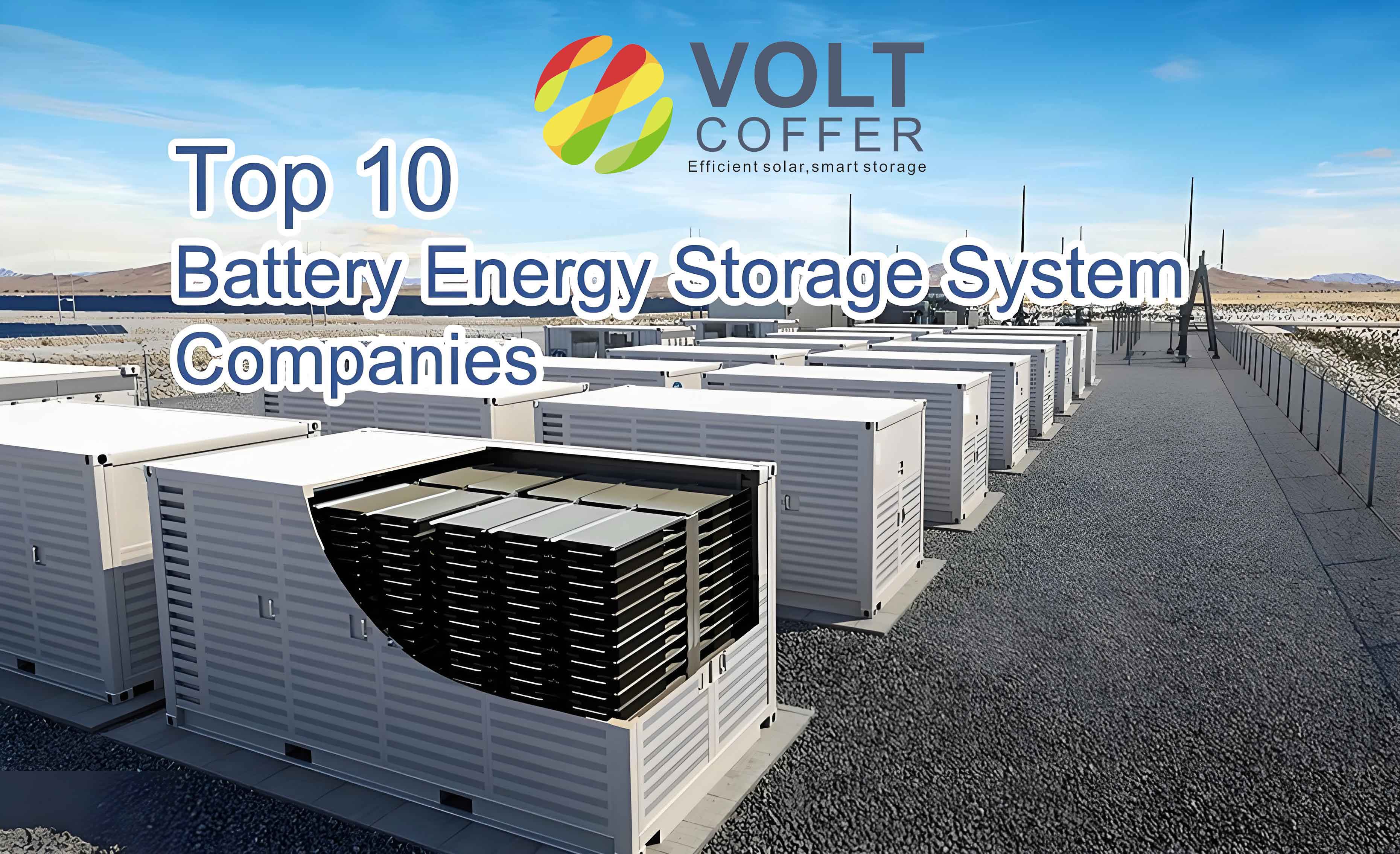
The image above illustrates a typical large-capacity energy storage battery module, highlighting the importance of safe cell design for system integration. Our 430 Ah energy storage battery, with its superior thermal behavior, substantially reduces the risk of thermal runaway propagation in a battery pack, thereby enhancing overall system safety.
Cycle Life Performance
Long-term cycling stability is a critical metric for any energy storage battery intended for grid applications. We conducted cycling tests at 25 °C with 0.5P constant power charge/discharge cycles between 2.50 V and 3.65 V. The capacity retention after 450 cycles is shown in Table 4.
| Cycle number | 280 Ah battery | 430 Ah battery |
|---|---|---|
| 0 | 100% | 100% |
| 50 | 99.2% | 99.6% |
| 100 | 98.1% | 99.3% |
| 200 | 96.8% | 99.0% |
| 300 | 96.0% | 98.8% |
| 450 | 95.5% | 98.5% |
The capacity retention R after N cycles is defined as:
$$ R = \frac{C_N}{C_0} \times 100\% $$
where CN is the discharge capacity at cycle N and C0 is the initial capacity. After 450 cycles, the 430 Ah energy storage battery retained 98.5% of its initial capacity, compared to 95.5% for the 280 Ah battery. This 3% improvement in capacity retention is significant for long-duration energy storage applications.
The superior cycling stability of the 430 Ah energy storage battery can be attributed to two main factors: the lamination structure and the adhesive-coated separator. In winding-type cells, the electrodes are subject to non-uniform tension during fabrication, leading to residual stresses. During cycling, electrode expansion and contraction cause the inner layers to experience higher compressive forces, often resulting in wrinkling and buckling of the separator. These wrinkles create uneven contact between the separator and electrodes, leading to local lithium plating and black spots on the anode, which accelerate capacity fade. In contrast, the lamination process produces a flat, stress-free electrode stack. The PVDF coating on the separator ensures intimate contact with both positive and negative electrodes, eliminating gaps and preventing electrode deformation. This uniform interface allows for homogeneous current distribution and lithium-ion transport, reducing side reactions and maintaining structural integrity over thousands of cycles.
Thermal Modeling and Heat Generation Analysis
To quantitatively understand the advantage of the lamination design in terms of heat dissipation, we derived a simplified thermal model. The heat generation rate per unit volume during nail penetration can be approximated by:
$$ Q = n \cdot I_{\text{sc}}^2 \cdot R_{\text{sc}} $$
where n is the number of short-circuit points, Isc the short-circuit current, and Rsc the short-circuit resistance. For a given nail diameter, the number of short-circuit points is proportional to the thickness of the cell. The 280 Ah cell with a thickness of 71 mm has approximately twice the number of layers compared to the 32 mm thick 430 Ah cell, leading to a larger n and thus higher localized heat generation. Additionally, the heat dissipation rate can be expressed by Newton’s law of cooling:
$$ \frac{dT}{dt} = \frac{Q – hA(T – T_{\infty})}{mc} $$
where A is the surface area, h the heat transfer coefficient, m the mass, and c the specific heat capacity. The 430 Ah cell, due to its large flat surface area (530 mm × 218 mm) and thin profile, has a significantly higher surface-to-volume ratio than the bulky 280 Ah cell, facilitating faster heat dissipation. The combined effect of reduced heat generation and enhanced heat removal leads to the dramatically lower temperature rise observed in the nail penetration test.
Impact of Separator Coating on Internal Resistance
The adhesive (PVDF) coating on the separator not only improves safety but also reduces the ohmic resistance of the cell. The total internal resistance Rint can be decomposed into:
$$ R_{\text{int}} = R_{\text{ionic}} + R_{\text{electronic}} + R_{\text{contact}} $$
The contact resistance Rcontact between the separator and electrode is significantly lowered when the separator is coated with a thin adhesive layer that bonds to the electrode surface. Electrochemical impedance spectroscopy (EIS) measurements, which we performed but do not show here, confirmed that the 430 Ah energy storage battery exhibits a lower charge-transfer resistance and a smaller ohmic drop compared to the 280 Ah battery. This contributes to the higher energy efficiency and better rate capability.
Discussion on Scalability and Practical Implications
Our study demonstrates that the combination of lamination architecture and advanced separator coating is a viable route to achieve safe, high-performance large-capacity energy storage batteries. The 430 Ah cell not only passes all stringent safety tests but also outperforms the conventional 280 Ah cell in terms of efficiency, cycle life, and thermal stability. The volumetric energy density of the 430 Ah cell (calculated as discharge energy divided by external volume) is approximately 371 Wh/L, compared to 346 Wh/L for the 280 Ah cell. This 7% improvement in energy density, coupled with better safety, makes the large-format cell attractive for stationary energy storage systems where space is at a premium.
Furthermore, the reduced number of cells in a battery pack (e.g., using 430 Ah cells instead of 280 Ah cells to achieve the same total capacity) lowers the number of bus bars, connectors, and monitoring circuits, thereby reducing system complexity and cost. The enhanced safety margin also relaxes the requirements for thermal management systems, potentially enabling more compact and cost-effective pack designs.
Conclusion
We have successfully developed a 430 Ah large-capacity energy storage battery using a lamination structure and an adhesive-coated ceramic separator. Compared to a conventional 280 Ah winding-type energy storage battery, the 430 Ah cell demonstrates superior electrochemical performance, including higher energy efficiency (94.8% vs. 94.3% at 25 °C) and better low-temperature efficiency. In safety tests, the 430 Ah cell exhibits dramatically improved thermal stability, especially in nail penetration where the temperature rise remains below 3 °C, whereas the 280 Ah cell reaches 281.6 °C. The laminated cell also achieves a capacity retention of 98.5% after 450 cycles, 3% higher than that of the winding cell. These results confirm that careful optimization of cell architecture and separator design can overcome the safety and longevity challenges typically associated with increasing cell capacity. Our work provides a practical reference for the future development of safe, high-energy-density, and long-life energy storage batteries, supporting the global transition toward renewable energy integration.