
In the context of resource scarcity and environmental pollution, I have dedicated my research to the critical field of energy storage battery testing standards. Driven by global initiatives for carbon peak and carbon neutrality, the new energy industry is flourishing. The energy storage battery sector holds vast potential but faces significant challenges, including prominent product safety issues and a notable lack of comprehensive standards. My analysis, grounded in the collection of relevant policies, regulations, and standard documents, explores industry trends and the current state of standardization. By integrating technological advancements with market demands, I aim to propose directions for refining energy storage battery testing standards, offering theoretical and practical value for the healthy and sustainable development of this pivotal industry.
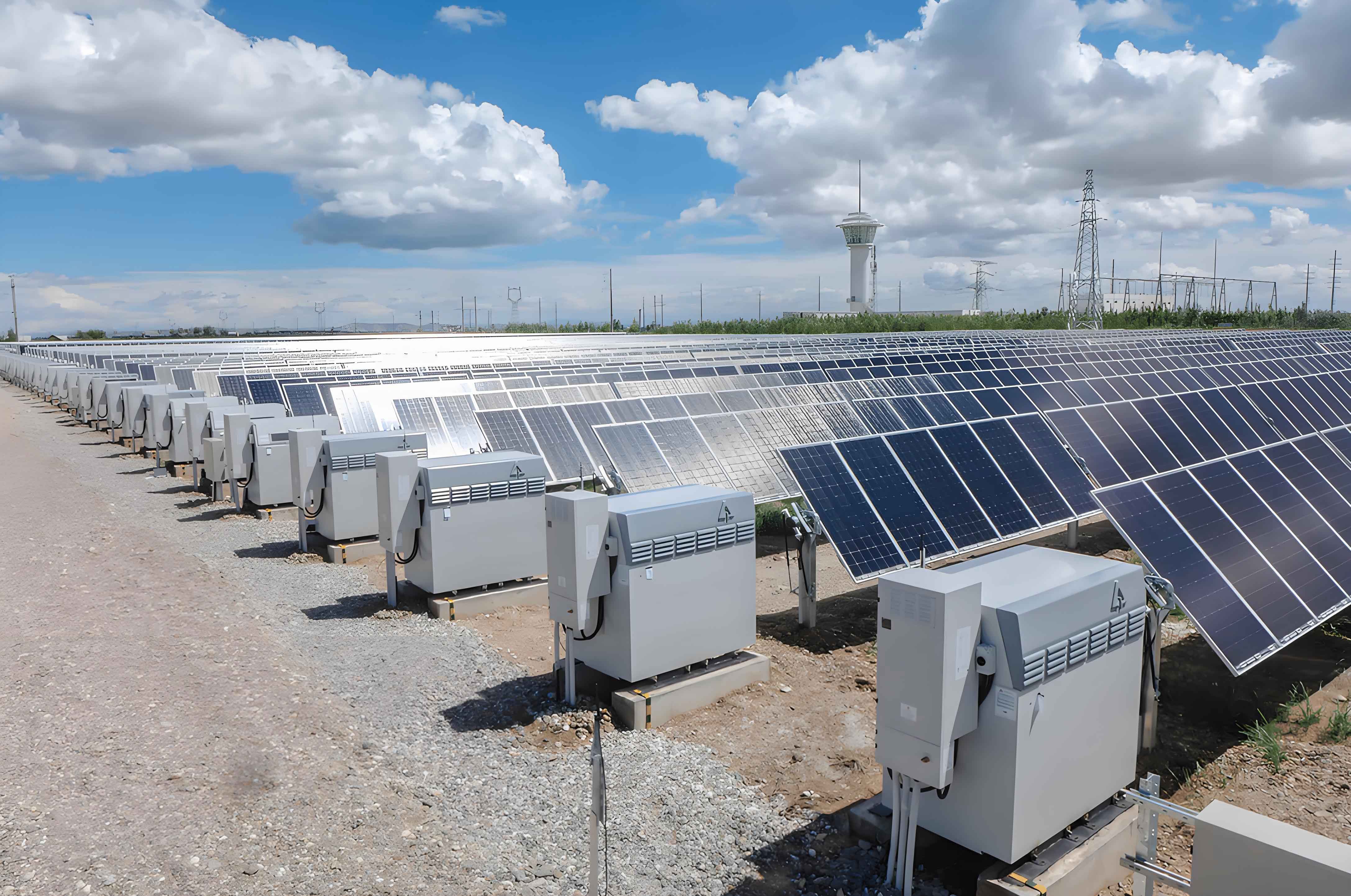
1. Research Background
The energy storage battery, as a crucial device in the energy storage domain, can convert and store energy between electrical and chemical (or physical, kinetic) forms. It plays an indispensable role in enhancing energy efficiency, promoting clean energy application, and facilitating the energy transition. In recent years, electrochemical energy storage has rapidly increased its share of the global energy storage market. Among various technologies, the lithium-ion battery dominates the market due to its superior comprehensive performance, while flow batteries and sodium-sulfur batteries also serve unique functions in specific niches. According to the “China Energy Storage Battery Industry Development White Paper (2025)”, global energy storage battery shipments reached 369.8 GWh in 2024, a year-on-year increase of 64.9%, with Chinese enterprises accounting for an overwhelming 93.5% of this volume. Unlike traditional consumer batteries, the core function of an energy storage battery is to store large amounts of energy over extended periods and undergo frequent, high-efficiency charge-discharge cycles. This capability is essential for applications such as grid peak shaving and valley filling, renewable energy integration, and emergency backup power. However, persistent issues regarding safety, cycle life, reliability, and lifecycle costs remain critical bottlenecks limiting the wider adoption of energy storage battery technology. Therefore, establishing a scientifically rigorous and comprehensive energy storage battery testing standard system is of paramount importance for ensuring product safety, enhancing performance quality, guiding technological progress, reducing application costs, and fostering fair market competition.
2. Development Trends in the Energy Storage Battery Industry
2.1 Rapid Market Expansion
The energy storage industry is experiencing vigorous growth, propelled by policy incentives and market demand. The increasing penetration of variable renewable energy sources like wind and solar has created a pressing need for grid stabilization. Electrochemical energy storage, particularly lithium-ion technology, has emerged as a key enabler due to its fast response times, high efficiency, and flexible siting. Concurrently, continuous technological advancements and economies of scale in production have significantly reduced costs, enhancing the economic viability of energy storage projects. The application landscape for energy storage batteries is also diversifying, extending from traditional grid ancillary services to include commercial and industrial (C&I) storage, residential storage, communication base stations, data centers, and electric vehicle (EV) charging infrastructure. This broad expansion is driving the energy storage battery industry into a phase of rapid, high-growth development.
2.2 Diversification of Technology Roadmaps
The technology roadmap for energy storage batteries is evolving towards greater diversification, aiming to satisfy the varied requirements of different applications regarding cost, lifespan, safety, energy density, and power characteristics. Each battery type possesses unique strengths and limitations. The table below summarizes the key characteristics of the major energy storage battery technologies under consideration.
| Technology | Strengths | Limitations / Challenges | Typical Applications |
|---|---|---|---|
| Lithium-ion (Li-ion) | High energy density, long cycle life, mature supply chain, decreasing cost. | Safety risks (thermal runaway), reliance on critical materials (Li, Co, Ni). | Grid-scale storage, C&I, residential, EVs, consumer electronics. |
| Sodium-ion (Na-ion) | Abundant sodium, low-cost potential, good low-temperature performance, safer than Li-ion. | Lower energy density & shorter cycle life compared to Li-ion; supply chain under development. | Cost-sensitive applications, stationary storage, low-speed EVs (complement to Li-ion). |
| Flow Battery (e.g., Vanadium Redox) | High safety, long cycle life (decades), independently scalable power & capacity, easy recyclability. | Low energy density, high system complexity, high upfront capital cost. | Long-duration (4-10+ hours) utility-scale storage, backup power. |
| Lead-acid / Lead-carbon | Mature technology, very low cost, well-established recycling infrastructure, excellent high-rate discharge. | Low energy density, short cycle life (esp. Lead-acid), sulfation issues in deep cycling. | Uninterruptible power supplies (UPS), off-grid PV systems, starter batteries. |
The lithium-ion battery, with its high energy density, long cycle life, mature industrial chain, and declining costs, commands the largest market share. However, concerns about its inherent safety risks, such as thermal runaway, and dependence on critical resources like lithium and cobalt, remain focal points. The sodium-ion battery, leveraging the abundance of sodium, offers a promising complementary technology for cost-sensitive or lower energy density applications. It provides improved safety and low-temperature performance but currently lags behind mature lithium-ion technology in energy density and cycle life, with its supply chain still in its infancy. Flow batteries, particularly vanadium redox flow batteries (VRFBs), offer exceptional safety, exceptionally long cycle lives (often exceeding 20 years), and the unique ability to decouple power and energy capacity. These attributes make them ideal for long-duration stationary energy storage and large-scale applications, despite their lower energy density and higher initial system complexity. Lead-acid batteries remain relevant due to their low cost and mature recycling infrastructure, but their limited cycle life and susceptibility to sulfation under deep cycling (a common mode for energy storage battery applications) are major drawbacks. The lead-carbon variant, which incorporates carbon materials into the negative electrode, significantly improves charge acceptance and extends cycle life, making it more suitable for certain hybrid storage scenarios. Other technologies like zinc-based and sodium-sulfur batteries continue to develop for specific niches, collectively forming a diverse technology landscape that drives the energy storage battery industry toward meeting an ever-wider range of needs.
3. Current Status of Energy Storage Battery Testing Standards
3.1 Testing Standards for Lithium-ion Batteries
As the dominant technology, the testing standard system for lithium-ion energy storage batteries is relatively mature and under continuous refinement.
At the international level, key standards include IEC 62619 (for industrial applications, including stationary storage) and IEC 62620 (for performance requirements of secondary lithium cells for industrial applications). IEC 63056 covers safety requirements and tests for secondary lithium batteries for power energy storage systems, including provisions for insulation, overcharge/overdischarge protection, short circuit, and reverse polarity protection. In North America, UL 1973 is widely used for evaluating the safety and performance of batteries for use in stationary storage, vehicle auxiliary power, and light electric rail applications. Nationally, in China, the standard GB/T 36276-2023 for “Lithium-ion batteries for electric energy storage” specifies requirements for appearance, dimensions, mass, electrical performance, environmental adaptability, durability, and safety performance. GB/T 43522-2023 provides guidance for manufacturing supervision, while T/CES 172-2022 details testing procedures for battery management systems (BMS) in energy storage battery stations. Although existing standards cover the primary performance and safety dimensions, continuous updates are needed to refine test methods, assess aging mechanisms, and develop system-level safety interoperability tests as technology and applications evolve.
3.2 Testing Standards for Lead-Acid / Lead-Carbon Batteries
Current testing standards for lead-acid and lead-carbon energy storage batteries largely focus on capacity retention, cycle durability, and basic safety characteristics. Internationally, IEC 61427 series covers secondary cells and batteries for renewable energy storage, while IEC 60896 series deals with stationary lead-acid batteries. In China, GB/T 22473.1-2021 specifies requirements for lead-acid batteries in photovoltaic off-grid applications, detailing test methods for key indices like capacity, consistency, sealing, charge acceptance, charge retention, water loss, and cycle life. The shortcomings of lead-acid batteries, particularly limited cycle life and sulfation under high-rate cycling, have spurred the development of lead-carbon technology. The lead-carbon battery enhances performance by incorporating activated carbon into the negative electrode, boosting charge/discharge rates, specific capacity, and cycle life. The Chinese standard GB/T 36280-2023 for “Lead-carbon batteries for electric energy storage” provides detailed specifications and test methods for this technology across dimensions such as appearance, performance, environmental adaptability, life, and safety.
3.3 Testing Standards for Flow Batteries
The scope of flow battery testing standards is progressively expanding from key materials and core components to system-level performance, safety, and reliability assessment. The IEC 62932 series outlines general requirements, performance test methods, and safety requirements for flow battery systems, serving as an important international framework. In China, the national standard GB/T 33339-2016 for “Vanadium flow battery system – Test methods” and GB/T 43512-2023 for “Reliability evaluation method for vanadium flow battery system” provide critical guidance. Furthermore, industry standards like NB/T 42133-2017 for “Technical conditions of electrolyte for vanadium flow battery” specify test methods for key components. Specific standards also exist for other types, such as NB/T 11224-2023 for electrode testing of zinc-nickel flow batteries. These collective standards form the foundational testing system for the flow battery segment.
4. Optimization Suggestions for Energy Storage Battery Testing Standards
Given the rapid innovation in energy storage battery technology and the increasing complexity of market demands and application scenarios, I believe the relevant standards must evolve continuously. They need to be updated, detailed, and extended based on the characteristics, economic profiles, and policy drivers of different storage types and their specific applications.
4.1 Deepening and Systematizing Safety Performance Standards
Safety is the non-negotiable baseline for all energy storage applications. I observe that existing safety standards require significant deepening and systematization. Future standard development should target the distinct safety risk profiles associated with different chemistries, cell formats (e.g., cylindrical, prismatic, pouch), integration levels (cell, module, rack, system), and application scenarios. It is important to differentiate safety assessment priorities for energy-type (high capacity) versus power-type (high rate) batteries. Safety criteria must span the entire lifecycle of an energy storage battery, including transport, installation, operation, maintenance, decommissioning, and recycling, with a specific emphasis on quantifying the impact of aging on safety performance. A critical area for improvement is system-level safety testing. Standards must be enhanced to comprehensively evaluate the performance, functional safety, reliability, and coordinated operation of key auxiliary systems like the Battery Management System (BMS), Thermal Management System (TMS), Energy Management System (EMS), and fire suppression systems. For example, the standards should mandate tests that simulate how a BMS failure might interact with a TMS fault to precipitate thermal runaway. Furthermore, I propose that standards bodies actively engage in international standardization activities to align domestic requirements with global best practices, accounting for the constant emergence of new chemistries and application-specific safety risks like thermal propagation. A conceptual formula for model-based safety testing could be expressed as the probability of a safe state given a set of conditions over time, though its precise form is a matter of ongoing research.
$$P(\text{Safe State} | \text{System State}, t) = 1 – \prod_{i} P(\text{Failure}_i | \text{State}, t)$$
4.2 Unifying and Accelerating Cycle Life and Reliability Testing Standards
Cycle life is a core economic indicator for any energy storage battery. Yet, as I have found, significant disparities exist in the test methods and evaluation metrics used across the industry, often resulting in prohibitively long testing cycles that slow technology adoption. I recommend that industry associations, in collaboration with accredited testing laboratories, drive the creation of a universally accepted, consolidated standard for cycle life testing. This standard should clearly define and mandate key test parameters such as charge/discharge rate (C-rate), depth of discharge (DoD), operating temperature, and end-of-life (EoL) criteria. This would establish a common benchmark for fair comparison between different technologies and products from various manufacturers. Beyond average lifespan, the standard should integrate reliability metrics like performance consistency across a population, early failure rates, and probability of failure over time. A framework based on statistical reliability engineering, such as Weibull analysis, should be incorporated. I propose a standardized approach using an accelerated aging model, often represented by a modified Arrhenius or inverse power law relationship, to allow faster prediction of cycle life under normal conditions based on stressor tests. A simple first-order model for accelerated cycle life testing is:
$$ \text{Life}_{\text{standard}} = \text{Life}_{\text{accelerated}} \times AF $$
where \(AF\) is the acceleration factor, which itself can be a function of temperature, DoD, and C-rate, \(AF = f(T, DoD, C\text{-rate})\). The development of such standardized and accelerated methods is crucial for providing a more comprehensive guarantee for the long-term stable operation of energy storage systems.
Table 2: Key Parameters for a Unified Cycle Life Testing Standard
| Parameter | Proposed Default Value(s) / Consideration | Rationale for Standardization |
|---|---|---|
| Charge / Discharge Rate (C-rate) | 0.5C / 0.5C (for energy-type) or 1C/1C (for power-type) | Ensures consistent stress and capacity utilization across tests. |
| Depth of Discharge (DoD) | 80% or 100% of rated capacity, depending on application | A key factor affecting degradation; needs to be specified for fair comparison. |
| Temperature | 25°C ± 2°C (ambient) | Standard conditions for baseline test; accelerated tests at higher T. |
| End-of-Life (EOL) Criterion | 80% of rated capacity retention (universally accepted baseline) | Provides a clear, unambiguous definition for when a battery is considered spent. |
| Cut-off Voltage | Specified by manufacturer, explicitly defined in test protocol | Prevents under-/over-discharge, which introduces uncontrolled variables. |
4.3 Comprehensive and Scenario-Specific Environmental Adaptability Standards
To ensure reliable operation across diverse climates and operational conditions, comprehensive environmental adaptability testing for an energy storage battery is non-negotiable. While existing standards cover basic elements like high/low temperature and humidity, there is a critical need to expand testing to include more aggressive and complex environmental stressors. These include salt fog (for coastal installations), sand and dust (for arid/desert regions), high altitude, mold growth, condensation, electromagnetic compatibility (EMC), vibration, and mechanical shock. I believe that testing bodies, in collaboration with standard-setting organizations, should move beyond single static stress tests. They should instead develop highly realistic, combined environmental profiles that simulate the actual service conditions of the energy storage system. For example, a test sequence might combine thermal cycling with vibration and humidity exposure, mirroring the conditions inside a battery container installed on a truck or in a non-climate-controlled building. The standard should specify the magnitude, rate, and duration of these combined stresses. This is increasingly important as energy storage batteries are deployed in increasingly remote and challenging locations to support renewable energy grids. A possible test sequence for a combined environmental test might be defined by a multi-stress function \(S(t)\):
$$ S(t) = \text{Combined}[T(t), H(t), V(t), A(t)] $$
where \(T(t)\) is the temperature profile over time, \(H(t)\) is humidity, \(V(t)\) is vibration spectrum, and \(A(t)\) is other applied stresses like salt spray or altitude pressure. This approach ensures that reliability claims are validated under more realistic and challenging conditions.
5. Conclusion
In conclusion, the energy storage battery industry is navigating a critical period of rapid expansion and technological disruption. I firmly believe that a robust, comprehensive, and forward-looking system of testing standards is the fundamental bedrock for supporting its healthy, safe, and orderly development. While a suite of international and national standards exists for mainstream energy storage battery technologies, substantial gaps remain in their systemic coherence, specificity, foresight, and international harmonization. My analysis suggests that future development of energy storage battery testing standards must be strategically focused on three key areas: First, safety performance standards must be significantly deepened and systemized to encompass the entire lifecycle and address complex system-level risks. Second, cycle life and reliability standards require unification and acceleration to enable rapid, precise, and fair performance evaluation across competing technologies. Third, environmental adaptability standards must be broadened and made more scenario-specific to guarantee robust operational performance in the wide array of challenging environments where energy storage batteries are deployed. Continuous, dedicated effort in standard development, revision, and rigorous implementation will be essential to safeguard product quality and safety, guide technological innovation, regulate market order, and ultimately empower energy storage batteries to play their transformative role in the global energy transition.