
As a researcher and engineer in the field of photovoltaic manufacturing, I have dedicated significant effort to advancing the production lines for thin film solar panels. These panels, such as cadmium telluride (CdTe) and copper indium gallium selenide (CIGS) types, represent a promising direction in solar energy due to their lower material usage, flexibility, and potential for higher theoretical efficiency—approaching 30% in some cases. The shift toward智能化工厂 under initiatives like “Industry 4.0” and “Made in China 2025” has driven the need for highly automated and intelligent systems in manufacturing. In this article, I will share my insights and solutions for designing an intelligent transmission system that serves as the backbone of thin film solar panel production lines. This system not only handles the physical movement of substrates but also integrates seamlessly with information and control networks, enabling efficient, continuous, and adaptive production.
The core challenge in thin film solar panel production lies in managing the complex workflow involving 20 to 30 process steps, including key stages like deposition, laser scribing, and encapsulation. These processes require precise handling of large, fragile glass substrates—typically ranging from 1.2 m × 0.6 m to 2 m × 1.23 m in size—with cycle times varying from tens to dozens of seconds. To meet the demands of high throughput and reliability, the transmission system must be more than just a conveyor; it must be a smart, interconnected network that adapts to real-time conditions. From my experience, this involves a holistic approach covering process layout, equipment design, and信息化-智能化 integration. I will explore each aspect in detail, using tables and formulas to summarize key concepts, and repeatedly emphasize the importance of thin film solar panels in driving sustainable energy solutions.
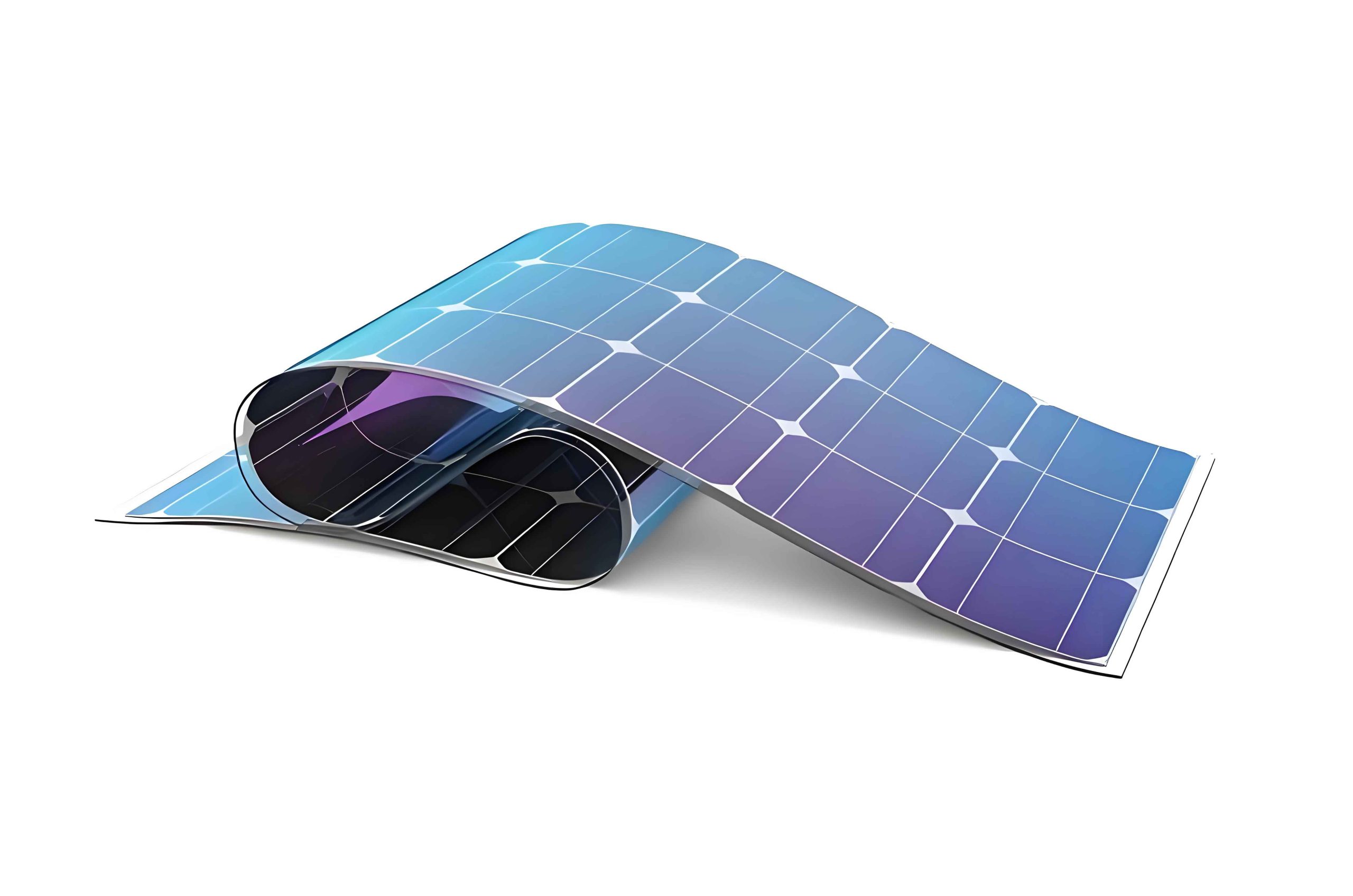
In the following sections, I will first analyze the requirements for an intelligent transmission system in thin film solar panel production, focusing on process, equipment, and信息化-智能化 needs. Then, I will present comprehensive solutions, including modular design principles, equipment specifications, and data communication frameworks. Throughout, I will incorporate tables to compare different layout strategies and formulas to quantify performance metrics, ensuring a thorough understanding of how to optimize these systems for thin film solar panel manufacturing.
Demand Analysis for Thin Film Solar Panel Production Lines
To design an effective intelligent transmission system, we must start by understanding the specific demands of thin film solar panel production. These demands span process constraints, equipment functionalities, and the overarching need for信息化 and智能化. As I have observed in various projects, each facet interplays to determine the overall efficiency and flexibility of the production line.
Process Requirements
The process layout for thin film solar panel production typically falls into two categories: linear flow lines and composite layouts. In linear flow lines, substrates move sequentially through process stations, with distributed buffers placed at critical points to ensure continuity. For example, a substrate might start at loading, undergo deposition, then laser scribing, and finally encapsulation, with buffers between stations to handle variability. In composite layouts, a central hub system coordinates the flow, allowing substrates to circulate through process loops before merging into a linear sequence for later stages. This approach is particularly useful for high-mix production of thin film solar panels, where different product types may require varied process paths.
Key process parameters include substrate size, cycle time, and cleanliness requirements. For instance, CdTe thin film solar panels can reach dimensions of 2 m × 1.23 m, while CIGS panels are often smaller at 1.2 m × 0.6 m. Cycle times range from 15 to 60 seconds, depending on the panel size and desired throughput. The production environment must maintain high cleanliness levels to prevent contamination, which affects the performance of thin film solar panels. To quantify the impact of buffer placement, consider the overall line efficiency. If each process station has an individual efficiency $ \eta_i $ (e.g., 98% uptime), the total efficiency for a line with $ n $ stations is given by:
$$ \eta_{\text{total}} = \prod_{i=1}^{n} \eta_i $$
For $ n = 25 $ stations with $ \eta_i = 0.98 $, this yields $ \eta_{\text{total}} \approx 0.98^{25} \approx 0.603 $, or 60.3%. This highlights the need for buffers to decouple stations and improve overall availability. Table 1 summarizes typical process requirements for thin film solar panel production lines.
| Parameter | Typical Value | Impact on Transmission System |
|---|---|---|
| Substrate Size | 1.2 m × 0.6 m to 2 m × 1.23 m | Determines unit length and handling mechanisms |
| Cycle Time | 15–60 seconds | Influences conveyor speed and buffer capacity |
| Cleanliness Class | High (e.g., ISO 5-7) | Requires sealed enclosures and dust prevention |
| Number of Process Steps | 20–30 | Affects layout complexity and buffer placement |
| Layout Types | Linear or Composite | Dictates flow path and control logic |
From my perspective, these process requirements dictate that the transmission system must be highly adaptable. For thin film solar panels, which often involve delicate glass substrates, the system must ensure smooth, precise movement without damage. Moreover, the need for buffers—whether distributed or centralized—is critical to mitigating downtime effects, as shown by the efficiency formula above.
Equipment Requirements
The equipment in an intelligent transmission system for thin film solar panel production must perform multiple functions beyond simple conveyance. Based on my design experience, these functions include:
- Transportation: Moving substrates between process stations with high reliability.
- Turning: Redirecting substrates at corners or to offline stations.
- Rotation: Adjusting substrate orientation (e.g., from long-edge-first to short-edge-first) to match process equipment entry requirements.
- Flipping: Inverting substrates for processes like CSS deposition, where the coating surface must face downward.
- Alignment: Precisely positioning substrates within ±1 mm for accurate hand-off or barcode reading.
- Buffering: Providing storage capacity to absorb disruptions, ranging from small in-line caches to large vertical warehouses.
Each function must be realized through modular equipment units to facilitate rapid deployment and maintenance. For example, a standard transport unit might use synchronous belts or rubber rollers, driven by servo motors for precise control. The alignment function can be achieved with pneumatic cylinders or linear actuators. To quantify buffering needs, we can model the required cache size based on equipment downtime. Suppose a process station has an average repair time $ T_r $ and the upstream section produces substrates at a rate $ R $ (panels per hour). The buffer capacity $ C $ needed to prevent downstream starvation is:
$$ C = R \times T_r $$
If $ R = 120 $ panels per hour (e.g., 30-second cycle) and $ T_r = 2 $ hours, then $ C = 240 $ panels. This calculation informs the design of buffer systems for thin film solar panel lines. Table 2 lists common equipment functions and their specifications.
| Function | Implementation | Key Specifications |
|---|---|---|
| Transportation | Belt or roller conveyors | Speed: 0.1–1 m/s, Load capacity: ≥50 kg |
| Turning | Turntables or cross conveyors | Rotation angle: 90°, Time: <5 seconds |
| Rotation | Rotary actuators | 180° rotation, Precision: ±0.5° |
| Flipping | Flip modules with suction cups | Flip time: 3–10 seconds, Safe handling |
| Alignment | Pneumatic or servo aligners | Accuracy: ±1 mm, Repeatability: ±0.2 mm |
| Buffering | Inline racks or vertical warehouses | Capacity: 10–30,000 panels, Access time: <1 min |
In my work, I have found that standardizing these functions into modular units reduces installation time and enhances reliability. For thin film solar panel production, where substrate sizes vary, the equipment must be scalable. For instance, a transport unit length $ L_u $ can be designed as:
$$ L_u = L_s + 2 \times D_{\text{buffer}} $$
where $ L_s $ is the substrate length (e.g., 2 m) and $ D_{\text{buffer}} $ is an acceleration/deceleration buffer (e.g., 0.2 m). This ensures smooth operation. The emphasis on thin film solar panels here underscores their unique handling challenges compared to traditional silicon panels.
Informatization and Intelligence Requirements
The evolution toward smart factories necessitates that transmission systems for thin film solar panel production be deeply integrated with information technologies. From my perspective, this involves two main aspects: data tracking and collection, and interaction with manufacturing execution systems (MES). For thin film solar panels, each substrate carries a unique identifier (e.g., QR code) that must be tracked throughout the process to record quality parameters and process history.
To achieve this, the transmission system requires barcode readers at each process entrance, networked controllers, and communication interfaces. The data flow must be real-time and reliable, often using industrial Ethernet protocols like PROFINET. Moreover, for intelligence, the system should support adaptive routing—where substrates are dynamically directed based on real-time equipment status or MES directives. This is crucial for thin film solar panel lines that handle multiple product variants. The information exchange can be modeled using queuing theory. For example, the average delay $ D $ in data transmission between a controller and MES can be approximated as:
$$ D = \frac{1}{\mu – \lambda} $$
where $ \lambda $ is the arrival rate of data packets and $ \mu $ is the service rate. Ensuring $ \mu > \lambda $ minimizes delays, which is vital for timely decision-making in thin film solar panel production.
Additionally, the system must comply with industry standards like SECS/GEM for semiconductor-style communication, enabling seamless MES integration. In my designs, I implement a pyramid structure: ERP at the top, MES in the middle, and equipment controllers at the base. The transmission system acts as a data hub, collecting substrate IDs, positions, and statuses, then forwarding them to MES for analysis. This allows for predictive maintenance and optimization of thin film solar panel processes. Table 3 summarizes key信息化-智能化 requirements.
| Requirement | Description | Technology Used |
|---|---|---|
| Data Tracking | Real-time substrate ID and position monitoring | Barcode readers, RFID, sensors |
| Communication Protocols | Interfacing with process equipment and MES | PROFINET, TCP/IP, SECS/GEM |
| Control Architecture | Distributed control with centralized supervision | PLC, SCADA, WMS/WCS for warehouses |
| Adaptive Routing | Dynamic path selection based on conditions | AI algorithms, real-time databases |
| Data Analytics | Processing production data for optimization | Cloud computing, machine learning |
For thin film solar panel lines, the intelligence aspect extends to energy efficiency. By optimizing conveyor speeds and buffer usage, we can reduce power consumption. A simple formula for energy savings $ E_s $ from speed control is:
$$ E_s = P_{\text{base}} \times \left(1 – \left(\frac{v_{\text{opt}}}{v_{\text{max}}}\right)^3\right) \times t $$
where $ P_{\text{base}} $ is the base power, $ v_{\text{opt}} $ is the optimized speed, $ v_{\text{max}} $ is the maximum speed, and $ t $ is operating time. This highlights how智能化 systems contribute to sustainable manufacturing of thin film solar panels.
Solutions for Intelligent Transmission Systems in Thin Film Solar Panel Production
Based on the demand analysis, I have developed comprehensive solutions for intelligent transmission systems in thin film solar panel production. These solutions address process layout, equipment design, and信息化-智能化 integration, ensuring that the system enhances productivity, flexibility, and data coherence. I will detail each solution with practical examples and quantitative insights.
Process Solutions
The process solution centers on modularity and standardization, allowing rapid configuration for different thin film solar panel lines. Whether using a linear or composite layout, the transmission system is broken into reusable units between process stations. Each unit has a defined length based on substrate size, as previously discussed. For instance, for a 2 m × 1.23 m thin film solar panel, a standard unit length of 2.4 m provides adequate space for acceleration and deceleration.
To manage disruptions, buffer systems are strategically placed. In linear layouts, I recommend distributed buffers—small in-line racks or offline carts—near each process station. In composite layouts, a central vertical warehouse serves as a hub, storing thousands of thin film solar panel substrates and coordinating flow. The buffer capacity can be optimized using economic models. Let $ C_{\text{buffer}} $ be the buffer capacity, $ C_{\text{hold}} $ the holding cost per panel per hour, and $ C_{\text{down}} $ the downtime cost per hour. The optimal capacity minimizes total cost:
$$ \min_{C_{\text{buffer}}} \left( C_{\text{hold}} \times C_{\text{buffer}} + C_{\text{down}} \times P(\text{starve} | C_{\text{buffer}}) \right) $$
where $ P(\text{starve} | C_{\text{buffer}}) $ is the probability of downstream starvation given the buffer size. For thin film solar panel lines, this often results in capacities of 100–500 panels per buffer zone.
Additionally, wait positions are incorporated before critical process equipment. The number of wait positions $ N_w $ depends on the mean time to repair (MTTR) of the downstream equipment and the cycle time $ T_c $:
$$ N_w = \left\lceil \frac{\text{MTTR}}{T_c} \right\rceil $$
If MTTR is 30 minutes and $ T_c $ is 30 seconds, then $ N_w = 60 $ positions. This ensures continuity in thin film solar panel production. Table 4 compares layout strategies for thin film solar panel lines.
| Layout Type | Advantages | Disadvantages | Best For |
|---|---|---|---|
| Linear Flow | Simple control, easy expansion | Lower efficiency without buffers | High-volume, single-product thin film solar panels |
| Composite with Hub | High flexibility, centralized buffering | Complex control, higher cost | Multi-variant thin film solar panels |
| Hybrid | Balances flexibility and simplicity | Requires careful planning | Medium-mix thin film solar panel production |
In my implementations, I use simulation software to model flow dynamics and buffer placements specifically for thin film solar panel lines. This helps validate designs before installation, reducing risks.
Equipment Solutions
The equipment solution involves designing standardized modules for each function, as outlined in Table 2. For transportation, I prefer servo-driven synchronous belts for their precision and cleanliness, crucial for thin film solar panel handling. The belt speed $ v $ is set to match the cycle time:
$$ v = \frac{L_u}{T_c} $$
where $ L_u $ is the unit length. For $ L_u = 2.4 $ m and $ T_c = 30 $ s, $ v = 0.08 $ m/s. This gentle movement prevents damage to thin film solar panel substrates.
For turning and rotation, I use motorized turntables with encoded positions to ensure accurate angular control. Flipping modules incorporate vacuum suction cups to securely invert substrates for CSS processes—a key step in thin film solar panel deposition. Alignment systems employ vision sensors or mechanical guides to achieve ±1 mm accuracy. All these modules are enclosed in sealed housings to maintain cleanliness, with quick-disconnect interfaces for maintenance.
Buffering equipment ranges from simple in-line racks to automated storage and retrieval systems (AS/RS). For small buffers (10–30 panels), I design aluminum-frame racks with belt lifts and robotic pickers. For large buffers (up to 30,000 panels), I collaborate with specialized vendors to implement vertical warehouses with WMS and WCS control. The throughput of such a warehouse can be estimated using:
$$ \text{Throughput} = \frac{N_{\text{cranes}} \times S_{\text{crane}}}{T_{\text{cycle}}} $$
where $ N_{\text{cranes}} $ is the number of stacker cranes, $ S_{\text{crane}} $ is the average storage/retrieval speed, and $ T_{\text{cycle}} $ is the cycle time per operation. For thin film solar panel lines, typical values might be $ N_{\text{cranes}} = 2 $, $ S_{\text{crane}} = 2 $ m/s, and $ T_{\text{cycle}} = 60 $ s, yielding a throughput of 120 panels per hour.
To illustrate, Table 5 provides specifications for key equipment modules in a thin film solar panel transmission system.
| Module Type | Dimensions (L×W×H) | Power Consumption | Control Interface |
|---|---|---|---|
| Transport Unit | 2.4 m × 1.5 m × 0.5 m | 0.5 kW | PROFINET, 24 V I/O |
| Turning Module | 1.5 m × 1.5 m × 0.6 m | 0.3 kW | EtherNet/IP |
| Flipping Module | 2.2 m × 1.8 m × 1.0 m | 1.0 kW | PROFINET with safety relay |
| In-line Buffer | 3.0 m × 2.0 m × 2.5 m | 1.5 kW | TCP/IP, Modbus TCP |
| Alignment Unit | 1.0 m × 1.0 m × 0.4 m | 0.2 kW | Digital I/O, serial |
These modules are designed for quick integration, reducing installation time for thin film solar panel factories. Furthermore, I implement remote I/O blocks near equipment clusters to minimize wiring and enhance modularity, as mentioned earlier. This approach has proven effective in multiple thin film solar panel projects, ensuring robust and scalable transmission systems.
Informatization and Intelligence Solutions
The信息化 and intelligence solution focuses on creating a seamless data ecosystem for thin film solar panel production. At the core, I develop a standardized communication protocol based on PROFINET for equipment-to-equipment interaction and TCP/IP for higher-level data exchange. Each transmission unit is equipped with a PLC that communicates with neighboring units and process stations using handshake signals. For example, when a substrate arrives, the unit sends a “ready” signal to the downstream station and receives an “acknowledge” before transfer. This ensures synchronized operations for thin film solar panels.
For data tracking, I install barcode readers at every process entrance. The substrate ID is read and logged into a central database via SCADA systems. The tracking algorithm uses a state machine model: each thin film solar panel substrate transitions through states like “waiting,” “in transit,” “processing,” and “buffered.” The probability of a substrate being in state $ S_i $ at time $ t $ can be modeled using Markov chains:
$$ P(S_i, t+1) = \sum_{j} P(S_j, t) \cdot T_{ji} $$
where $ T_{ji} $ is the transition probability from state $ S_j $ to $ S_i $. This helps predict flow bottlenecks in thin film solar panel lines.
Integration with MES is achieved through SECS/GEM interfaces, allowing bidirectional communication. The transmission system reports substrate IDs, positions, and timestamps to MES, which then issues commands for routing or buffer management. For intelligence, I implement machine learning algorithms to optimize conveyor speeds and buffer allocations based on historical data from thin film solar panel production. For instance, a reinforcement learning agent can learn to minimize energy use while maintaining throughput. The reward function $ R $ might be:
$$ R = \alpha \cdot \text{Throughput} – \beta \cdot \text{Energy} – \gamma \cdot \text{Downtime} $$
where $ \alpha, \beta, \gamma $ are weighting factors. Over time, this improves the efficiency of thin film solar panel manufacturing.
Additionally, for warehouse systems, I integrate WMS and WCS to manage inventory and coordinate retrievals. The WMS uses algorithms like first-in-first-out (FIFO) or priority-based sorting for thin film solar panel substrates. The system performance can be evaluated using metrics like average retrieval time $ \bar{T}_r $:
$$ \bar{T}_r = \frac{1}{N} \sum_{i=1}^{N} T_{r,i} $$
where $ T_{r,i} $ is the retrieval time for the i-th thin film solar panel. In practice, this is kept under 1 minute to avoid delays. Table 6 outlines the software components for信息化-智能化 in thin film solar panel transmission systems.
| Component | Function | Key Features |
|---|---|---|
| PLC Control Software | Real-time control of hardware modules | Modular code, fault diagnostics, PROFINET stack |
| SCADA System | Monitoring and data acquisition | HMI, historical trending, alarm management |
| MES Interface | SECS/GEM communication | Message parsing, event reporting, command execution |
| Data Analytics Platform | Processing production data | Predictive maintenance, optimization algorithms |
| WMS/WCS | Warehouse management and control | Inventory tracking, task scheduling, path optimization |
From my experience, deploying these solutions requires careful network planning. I use star-topology Ethernet switches to connect all devices, ensuring low latency for thin film solar panel data. The network bandwidth requirement $ B $ can be estimated as:
$$ B = N_{\text{devices}} \times D_{\text{packet}} \times F_{\text{update}} $$
where $ N_{\text{devices}} $ is the number of connected devices, $ D_{\text{packet}} $ is the average packet size, and $ F_{\text{update}} $ is the update frequency. For a line with 100 devices, $ D_{\text{packet}} = 1 $ kB, and $ F_{\text{update}} = 10 $ Hz, $ B \approx 8 $ Mbps, well within standard Ethernet capacities.
In summary, these信息化-智能化 solutions transform the transmission system into a smart network that not only moves thin film solar panel substrates but also provides actionable insights for continuous improvement.
Conclusion
In this article, I have shared my perspective on designing intelligent transmission systems for thin film solar panel production lines. By analyzing demands from process, equipment, and信息化-智能化 angles, and presenting detailed solutions with tables and formulas, I hope to provide a comprehensive guide for engineers and manufacturers. The key takeaway is that such systems are vital for enhancing the efficiency and flexibility of thin film solar panel manufacturing, enabling higher throughput, better quality control, and adaptive operations in smart factories.
The integration of modular equipment, strategic buffering, and advanced data communication forms the foundation of these systems. As thin film solar panel technology continues to evolve—with trends toward larger sizes and higher efficiencies—the transmission systems must also advance. Future work may involve greater use of artificial intelligence for predictive analytics and even more seamless integration with cloud-based platforms. Through continued innovation, we can further optimize the production of thin film solar panels, contributing to a sustainable energy future.
Throughout this discussion, I have emphasized the importance of thin film solar panels as a transformative technology in photovoltaics. Their unique characteristics demand specialized handling and intelligent control, which the transmission system solutions address effectively. By leveraging the approaches described here, manufacturers can build robust production lines that meet the growing market for thin film solar panels while embracing the principles of Industry 4.0.