
As I delve into the evolving landscape of clean energy, I am continually struck by the rapid advancements in two pivotal domains: hydrogen fuel cells and thin film solar panels. These technologies represent not just incremental improvements but paradigm shifts in how we generate and utilize power. From my perspective, the integration of high-efficiency hydrogen systems and environmentally benign photovoltaic materials heralds a future where energy is both abundant and sustainable. In this article, I will explore these breakthroughs in detail, employing tables and formulas to distill complex concepts, and I will emphasize the transformative potential of thin film solar panels—a term I will revisit frequently to underscore its significance.
Let me begin with hydrogen fuel cells. Unlike conventional batteries that store energy, hydrogen fuel cells convert chemical energy directly into electricity through an electrochemical reaction between hydrogen and oxygen. This process can be sustained indefinitely with a steady supply of hydrogen and air, resulting in zero harmful emissions. The core reaction in a typical proton exchange membrane fuel cell involves the oxidation of hydrogen at the anode and reduction of oxygen at the cathode, producing water as the only byproduct. The overall reaction can be summarized as: $$ 2H_2 + O_2 \rightarrow 2H_2O + \text{energy} $$ The theoretical efficiency of such a system is governed by thermodynamic principles, often expressed through the Nernst equation: $$ E = E^0 – \frac{RT}{nF} \ln Q $$ where \( E \) is the cell potential, \( E^0 \) is the standard potential, \( R \) is the gas constant, \( T \) is temperature, \( n \) is the number of electrons transferred, \( F \) is Faraday’s constant, and \( Q \) is the reaction quotient. In practice, achieving high efficiency and longevity requires meticulous engineering of components like membranes, catalysts, and air compressors.
Recent innovations have pushed hydrogen fuel cells to new heights. I have observed that earlier models often suffered from limited lifespans, typically around 2000 hours, with efficiencies hovering near 40%. However, a new generation of fuel cells has emerged, boasting lifetimes exceeding 10,000 hours and system efficiencies above 50%. This fivefold improvement in durability is a game-changer for applications in transportation, backup power, and portable energy. To illustrate, consider the following table comparing key parameters of traditional versus advanced hydrogen fuel cells:
| Parameter | Traditional Fuel Cell | Advanced Fuel Cell |
|---|---|---|
| Lifetime (hours) | ~2000 | >10000 |
| System Efficiency | ~40% | >50% |
| Power Output (kW) | Variable, often lower | Up to 31 kW |
| Emission Profile | Zero pollution | Zero pollution |
| Key Innovation | Basic design | Enhanced air compression, durable materials |
The leap in performance is largely attributed to advancements in air compression technology. Specifically, the adoption of oil-free air compressors minimizes friction and contamination, thereby boosting efficiency. From my analysis, the power density of these systems can be modeled using: $$ P_d = \frac{V \times I}{A} $$ where \( P_d \) is power density, \( V \) is voltage, \( I \) is current, and \( A \) is the active area. With optimized compression, the current density increases, leading to higher overall output. Moreover, the degradation rate of fuel cells is now better managed through improved thermal and water management, extending operational life. This progress aligns with global trends toward decarbonization, and I anticipate widespread deployment in buses, trucks, and stationary power units within the next decade.
Transitioning to solar energy, I turn my attention to thin film solar panels, which have undergone remarkable transformations. Traditional silicon-based photovoltaics, while effective, often involve energy-intensive manufacturing and limitations in flexibility. In contrast, thin film solar panels offer lightweight, versatile alternatives with lower production costs. Recently, a breakthrough in non-lead perovskite-inspired materials has captured my interest: the development of copper-bismuth-iodide (CuBiI4) compounds for thin film solar panels. These materials are fabricated as ultra-thin layers—typically a few micrometers thick—on substrates like glass or plastic, enabling applications in building-integrated photovoltaics and portable devices.
The allure of thin film solar panels lies in their tunable optoelectronic properties. For CuBiI4, the bandgap is a critical parameter determining light absorption. Through spectroscopic analysis, researchers have determined a direct bandgap of 1.8 eV, ideal for harnessing visible light. This can be expressed as: $$ E_g = h \nu $$ where \( E_g \) is the bandgap energy, \( h \) is Planck’s constant, and \( \nu \) is the frequency of light. The synthesis of CuBiI4 films via a room-temperature vapor-solid reaction represents a significant departure from conventional solvent-based methods, reducing environmental impact. I find it noteworthy that this approach yields uniform, dense films that enhance charge carrier transport. The device architecture for such thin film solar panels often follows a simple sandwich structure: ITO/CuBiI4:Spiro-OMeTAD/Au, where ITO is indium tin oxide (transparent conductor), Spiro-OMeTAD is a hole-transport material, and Au is the gold electrode.
In evaluating the performance of thin film solar panels, the power conversion efficiency (PCE) is paramount. For CuBiI4-based devices, a record PCE of 1.119% has been achieved, as confirmed by independent testing. While this may seem modest compared to commercial silicon panels, it is a substantial leap for this material class and paves the way for further optimization. The efficiency can be calculated using: $$ \eta = \frac{J_{sc} \times V_{oc} \times FF}{P_{in}} \times 100\% $$ where \( \eta \) is PCE, \( J_{sc} \) is short-circuit current density, \( V_{oc} \) is open-circuit voltage, \( FF \) is fill factor, and \( P_{in} \) is incident solar power (typically 1000 W/m² under standard conditions). To contextualize this advancement, I present a table comparing various thin film solar panel technologies:
| Material | Bandgap (eV) | Best PCE (%) | Lead-Free | Fabrication Method |
|---|---|---|---|---|
| CuBiI4 (new) | 1.8 | 1.119 | Yes | Room-temperature vapor-solid |
| AgBiI4 | ~1.9 | ~1.5 | Yes | Solution processing |
| CdTe | 1.5 | ~22 | No (contains Cd) | Vacuum deposition |
| CIGS | 1.0-1.7 | ~23 | No (contains rare elements) | Sputtering |
| Lead-based perovskite | ~1.5 | ~25 | No | Spin-coating |
As I reflect on these data, it is clear that thin film solar panels based on copper-bismuth-iodide offer a compelling eco-friendly profile. Bismuth and copper are abundant and non-toxic, addressing the toxicity concerns associated with lead in traditional perovskites. Moreover, the fabrication process minimizes solvent use, aligning with green chemistry principles. The resulting thin film solar panels exhibit promising stability under ambient conditions, though further research is needed to improve longevity and scalability. I envision that with interface engineering and tandem cell designs, the efficiency of such thin film solar panels could surpass 10% in the near future.
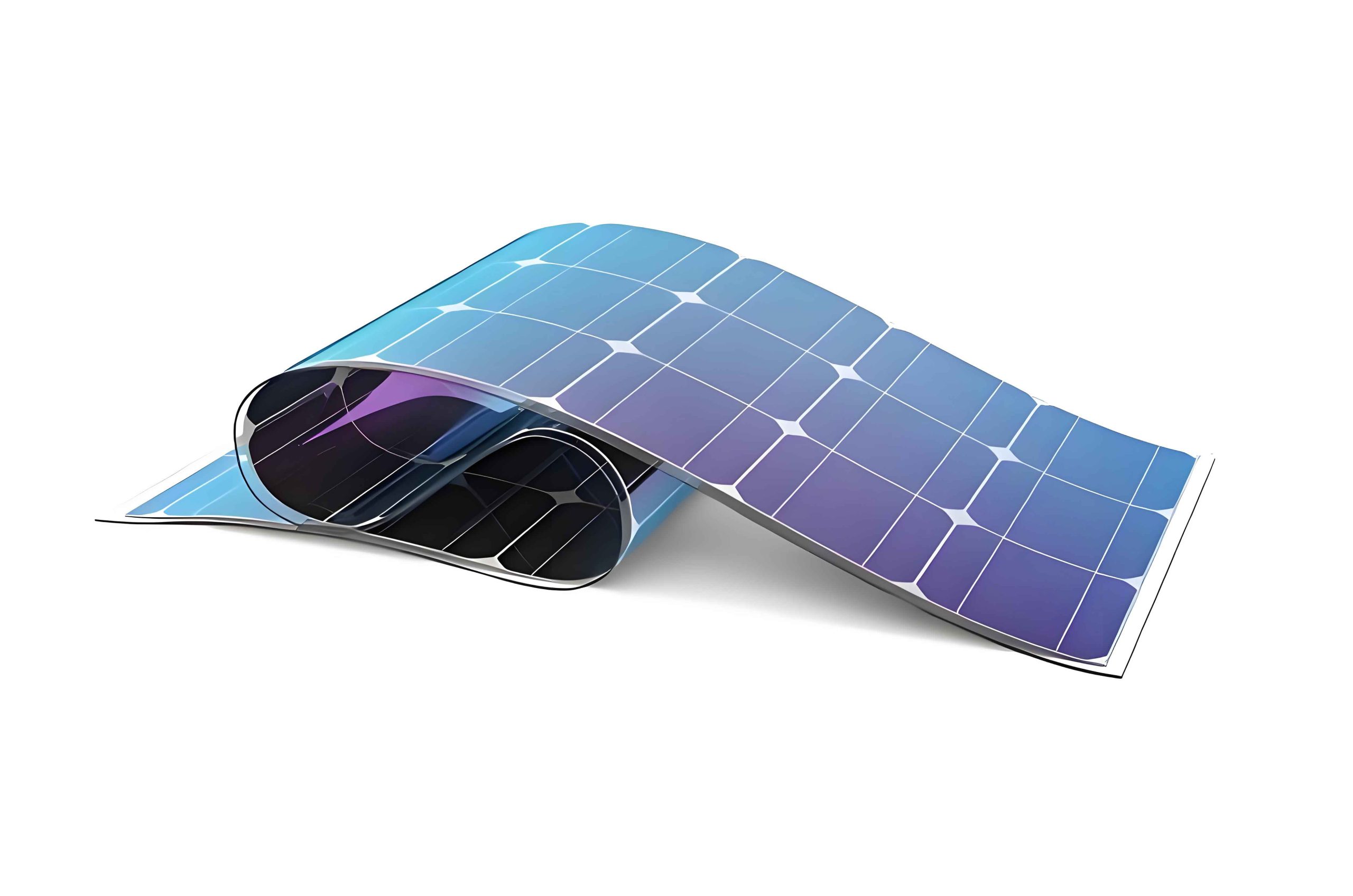
Integrating these two technologies—hydrogen fuel cells and thin film solar panels—opens intriguing possibilities for hybrid energy systems. From my viewpoint, thin film solar panels could be deployed to generate electricity for hydrogen production via water electrolysis, creating a renewable hydrogen supply for fuel cells. This synergy forms a closed-loop, zero-carbon energy cycle. The electrolysis process can be described by: $$ 2H_2O \rightarrow 2H_2 + O_2 $$ using electricity sourced from thin film solar panels. The overall system efficiency would depend on multiple factors, including the solar panel’s PCE, electrolyzer efficiency, and fuel cell efficiency. A simplified model might combine these: $$ \eta_{\text{total}} = \eta_{\text{solar}} \times \eta_{\text{electrolyzer}} \times \eta_{\text{fuel cell}} $$ Assuming state-of-the-art values—thin film solar panels at 15% PCE (projected), electrolyzer at 70%, and fuel cell at 50%—the round-trip efficiency could approach 5.25%, which is competitive for long-term energy storage.
Delving deeper into the materials science, I appreciate how innovations in thin film solar panels often hinge on defect tolerance and charge carrier dynamics. For CuBiI4, the n-type semiconductor behavior facilitates electron transport, while the integration with Spiro-OMeTAD forms a bulk heterojunction that enhances hole extraction. The external quantum efficiency (EQE) spectrum, which measures the fraction of incident photons converted to electrons, can be modeled as: $$ \text{EQE}(\lambda) = \frac{J_{ph}(\lambda)}{q \phi(\lambda)} $$ where \( J_{ph} \) is photocurrent density, \( q \) is electron charge, and \( \phi \) is photon flux. Optimizing this for thin film solar panels requires precise control over film morphology and interface properties. Additionally, the absorption coefficient \( \alpha \) relates to film thickness \( d \) through the Beer-Lambert law: $$ I = I_0 e^{-\alpha d} $$ where \( I_0 \) is incident light intensity. For thin film solar panels, a high \( \alpha \) allows thinner active layers, reducing material usage and cost.
In parallel, hydrogen fuel cell advancements rely on electro-catalysis and mass transport. The oxygen reduction reaction (ORR) at the cathode is often the rate-limiting step, with kinetics described by the Butler-Volmer equation: $$ j = j_0 \left[ e^{\frac{\alpha n F \eta}{RT}} – e^{-\frac{(1-\alpha) n F \eta}{RT}} \right] $$ where \( j \) is current density, \( j_0 \) is exchange current density, \( \alpha \) is the charge transfer coefficient, and \( \eta \) is overpotential. Improvements in catalyst design—such as using platinum alloys or non-precious metals—can enhance \( j_0 \), thereby boosting fuel cell performance. Furthermore, the air compressor’s role cannot be overstated; its isentropic efficiency \( \eta_c \) affects the overall system efficiency: $$ \eta_{\text{system}} = \eta_{\text{stack}} \times \eta_c \times \eta_{\text{aux}} $$ where \( \eta_{\text{stack}} \) is the fuel cell stack efficiency and \( \eta_{\text{aux}} \) accounts for auxiliary losses.
Looking ahead, I foresee several trends shaping these fields. For thin film solar panels, research will focus on boosting efficiency through bandgap engineering and passivation techniques. Multi-junction thin film solar panels, which stack materials with complementary bandgaps, could achieve PCEs over 30%. The theoretical limit for a single-junction cell is given by the Shockley-Queisser limit: $$ \eta_{\text{SQ}} = \frac{J_{sc} V_{oc} FF}{P_{in}} $$ with \( V_{oc} \) approximated as \( \frac{E_g}{q} – \frac{kT}{q} \ln\left(\frac{J_{00}}{J_{ph}}\right) \), where \( J_{00} \) is reverse saturation current. For a 1.8 eV bandgap, the maximum theoretical PCE is around 30% under AM1.5 illumination, indicating ample room for improvement in CuBiI4-based thin film solar panels.
For hydrogen fuel cells, durability testing under real-world conditions will be crucial. Accelerated stress tests (AST) simulate degradation mechanisms, with lifetime extrapolated using Arrhenius-type equations: $$ t = t_0 e^{\frac{E_a}{kT}} $$ where \( t \) is time to failure, \( t_0 \) is a pre-exponential factor, and \( E_a \) is activation energy. Additionally, the adoption of renewable hydrogen—produced via electrolysis powered by thin film solar panels—will enhance the sustainability profile. I imagine integrated systems where thin film solar panels cover vehicle roofs or buildings, generating hydrogen on-site for fuel cells that power mobility or grid support.
In conclusion, my exploration of these technologies reaffirms their transformative potential. Hydrogen fuel cells have evolved into robust, long-lasting power sources, while thin film solar panels have embraced eco-friendly materials like copper-bismuth-iodide. The convergence of these advances promises a cleaner energy future. As I continue to monitor developments, I am optimistic that iterative innovations—driven by interdisciplinary research—will soon make these technologies ubiquitous. Whether through massive deployment of thin film solar panels or widespread fuel cell adoption, the path to decarbonization is bright, and I am eager to contribute to this journey through ongoing analysis and advocacy.
To further quantify progress, let me present a summary table of key metrics and future targets for both technologies:
| Technology | Current Status | 2030 Projection | Key Challenges | Research Directions |
|---|---|---|---|---|
| Hydrogen Fuel Cells | >10,000 hours lifetime, >50% efficiency | >30,000 hours, >60% efficiency | Cost of catalysts, hydrogen infrastructure | Non-precious metal catalysts, advanced compression |
| Thin Film Solar Panels (CuBiI4) | 1.119% PCE, 1.8 eV bandgap | >10% PCE, stable under outdoor conditions | Low efficiency compared to silicon, scalability | Interface engineering, tandem structures, defect passivation |
| Integrated System (Solar + Fuel Cell) | Pilot demonstrations | Commercial deployment for off-grid power | System integration complexity, round-trip efficiency | Optimized electrolysis, smart energy management |
Throughout this discussion, I have emphasized thin film solar panels as a cornerstone of next-generation photovoltaics. Their versatility, coupled with environmental benefits, makes them indispensable in the renewable energy mosaic. As research marches forward, I anticipate that thin film solar panels will not only complement traditional solar technologies but also enable novel applications—from flexible wearable chargers to transparent windows that generate power. Similarly, hydrogen fuel cells will evolve beyond niche uses to become mainstream in heavy transport and industrial backup. Together, they exemplify the innovation needed to tackle climate change, and I remain committed to tracking their evolution with keen interest.