
In recent years, the advancement of thin film solar panel technology has revolutionized the renewable energy sector, with copper indium gallium selenide (CIGS) thin film solar panels standing out due to their high photoelectric conversion efficiency, flexibility, and cost-effectiveness. As an occupational health specialist, I have been involved in evaluating the potential hazards associated with such projects. This article delves into a comprehensive pre-assessment of occupational hazards for a proposed CIGS thin film solar panel manufacturing facility, focusing on identifying risks, analyzing control measures, and ensuring worker safety. The production of thin film solar panels involves complex processes that can expose workers to various chemical, physical, and ergonomic hazards, necessitating rigorous evaluation and mitigation strategies.
The manufacturing of CIGS thin film solar panels typically includes several key stages: substrate preparation, deposition of layers (such as molybdenum-silicon and CIGS), selenization, chemical bath deposition (CBD), metal-organic chemical vapor deposition (MOCVD), and final assembly. Each stage introduces specific hazards that must be managed to prevent occupational illnesses. For instance, the use of materials like indium, cadmium, and toxic gases such as hydrogen selenide and hydrogen sulfide poses significant health risks. In this analysis, I will employ engineering and risk assessment methodologies to evaluate these hazards, propose control measures, and discuss the overall feasibility of the project from an occupational health perspective.
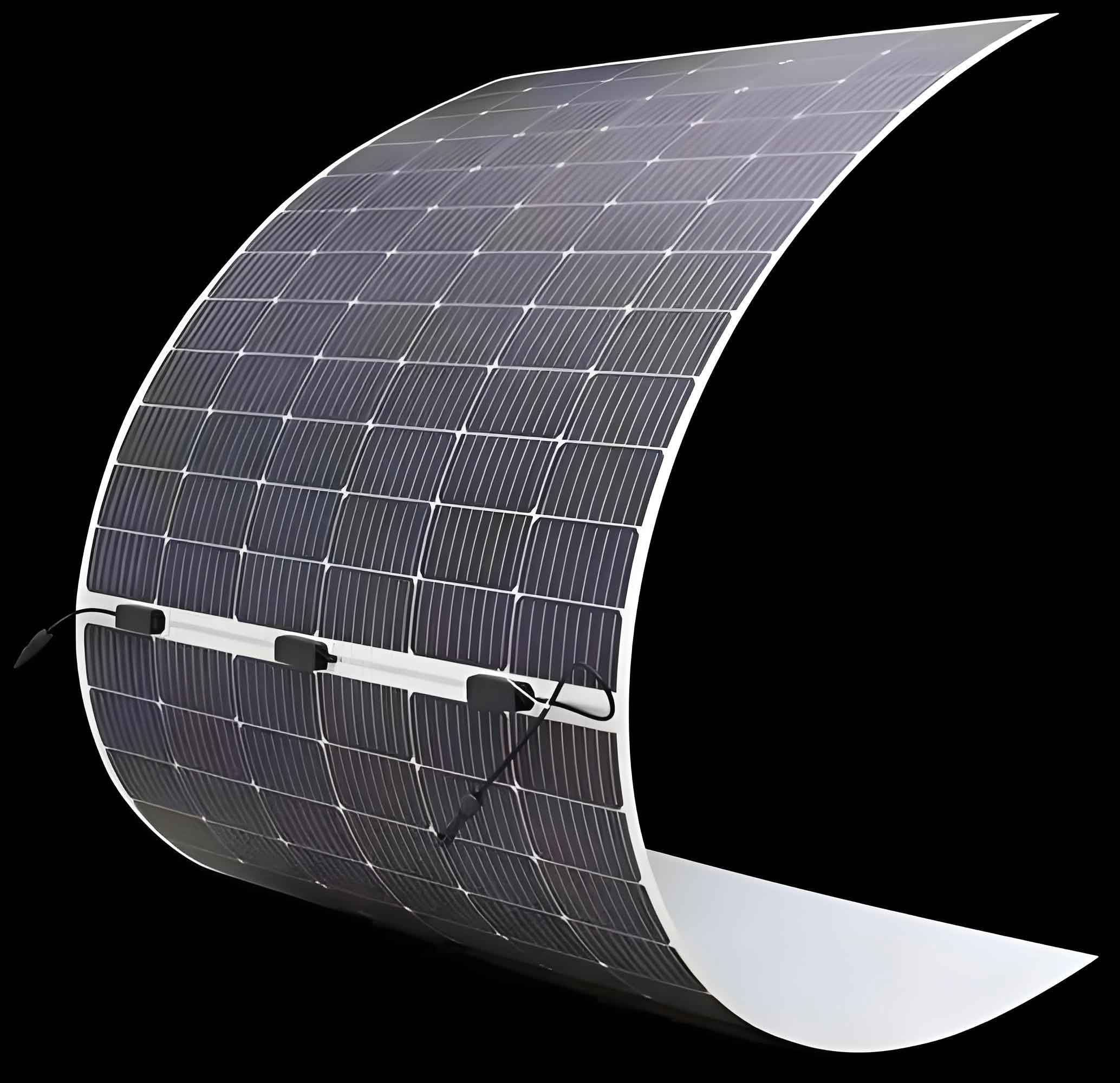
Thin film solar panels, particularly CIGS-based ones, offer advantages like lightweight design and high efficiency, but their production relies on hazardous substances. The project in question involves a planned capacity of 150 MW, utilizing advanced automation and enclosed systems to minimize exposure. However, manual tasks such as maintenance, cleaning, and material handling still present risks. I will begin by outlining the raw materials and processes, followed by a detailed hazard identification and risk analysis using tables and formulas. The goal is to provide a thorough understanding of how to safeguard workers while supporting the growth of thin film solar panel industries.
The primary raw materials for CIGS thin film solar panel production include back-plane glass, sputtering targets (e.g., molybdenum, indium, copper-gallium), gases (e.g., hydrogen selenide, hydrogen sulfide, diborane), and chemicals like ammonia, cadmium sulfate, and thiourea. These materials are stored in dedicated areas such as chemical warehouses and gas cylinder rooms. The table below summarizes key materials, their annual usage, and handling methods, highlighting potential exposure points during transport and storage.
| Material Name | Annual Usage | Packaging | Storage Location |
|---|---|---|---|
| Molybdenum Targets | 5.184 t | Wooden Cases | Material Warehouse |
| Indium Targets | 5.338 t | Wooden Cases | Material Warehouse |
| Hydrogen Selenide | 18.47 L (cylinders) | Steel Cylinders | Gas Cylinder Room |
| Hydrogen Sulfide | 4.176 L (cylinders) | Steel Cylinders | Gas Cylinder Room |
| Ammonia Solution | 108 t | 200 L Drums | Chemical Warehouse |
| Cadmium Sulfate | 11.124 t | 200 L Drums | Chemical Warehouse |
| Diborane (in nitrogen) | 2.91 kg | Cylinders | Gas Cylinder Room |
The production workflow for CIGS thin film solar panels involves sequential steps that integrate physical and chemical processes. Key operations include: back-glass cleaning, optical inspection, Mo-Si deposition via sputtering, P1 laser scribing, post-P1 cleaning, Cu-In-Ga deposition, X-ray fluorescence analysis, post-selenization, CBD coating, CBD cleaning, wiping, P2 scribing, MOCVD coating, encapsulation, EVA lamination, front-glass cleaning, glue filling, assembly, light curing, high-voltage testing, X-ray inspection, and packaging. Each step may release hazards into the work environment, especially during equipment malfunctions or maintenance activities.
Chemical reactions are central to the formation of the thin film solar panel layers. For example, during selenization, hydrogen selenide and hydrogen sulfide react with the deposited metals to form CIGS compounds. The reactions can be represented as:
$$ \text{CuGa}_x\text{In}_{1-x} + 2\text{H}_2\text{Se} \rightarrow \text{CuGa}_x\text{In}_{1-x}\text{Se}_2 + 2\text{H}_2 \uparrow $$
$$ \text{CuGa}_x\text{In}_{1-x}\text{Se}_2 + 2\text{H}_2\text{S} \rightarrow \text{Cu(Ga}_x\text{In}_{1-x})(\text{Se}_y\text{S}_{1-y}) + 2\text{H}_2 \uparrow $$
In the CBD process, cadmium sulfate and thiourea react in an ammonia solution to deposit cadmium sulfide layers:
$$ \text{Cd(NH}_3)_4^{2+} + \text{S} + \text{C(NH}_2)_2 + 2\text{OH}^- \rightarrow \text{CdS} + \text{CH}_2\text{N}_2 + 4\text{NH}_3 + 2\text{H}_2\text{O} $$
For MOCVD, diethylzinc and water vapor form zinc oxide, with diborane as a doping agent:
$$ (\text{C}_2\text{H}_5)_2\text{Zn} + \text{H}_2\text{O} \rightarrow \text{ZnO} + 2\text{C}_2\text{H}_6 \uparrow $$
$$ \text{B}_2\text{H}_6 + 3\text{H}_2\text{O} \rightarrow \text{B}_2\text{O}_3 + 6\text{H}_2 \uparrow $$
These reactions highlight the generation of toxic by-products, such as ammonia and hydrogen, which necessitate effective ventilation and gas handling systems in thin film solar panel factories.
Identifying occupational hazards is crucial for protecting workers in thin film solar panel manufacturing. Based on process analysis, the main hazards include chemical exposures (e.g., molybdenum compounds, indium compounds, copper fume, cadmium compounds, ammonia, hydrogen selenide, hydrogen sulfide, diborane), physical agents (noise, high temperature, laser radiation, X-rays), and ergonomic risks. The table below lists these hazards by work area, along with occupational exposure limits (OELs) as per standard guidelines, to prioritize control measures.
| Work Area | Primary Tasks | Hazardous Factors | OEL (mg/m³ or as noted) |
|---|---|---|---|
| MO Sputtering Section | Equipment monitoring | Molybdenum compounds, noise | 6 mg/m³ |
| CIG Sputtering Section | Process inspection | Indium compounds, copper fume, gallium compounds, noise | 0.1 mg/m³ (In), 0.2 mg/m³ (Cu) |
| Selenization Zone | System checks | Hydrogen selenide, hydrogen sulfide, high temperature, noise | 0.15 mg/m³ (H₂Se), 10 mg/m³ (H₂S) |
| CBD Coating Area | Bath maintenance | Ammonia, thiourea, cadmium compounds, high temperature, noise | 20 mg/m³ (NH₃), 0.01 mg/m³ (Cd) |
| MOCVD Section | Gas handling | Diborane, ethane, boron oxides, zinc oxide, noise, high temperature | 0.1 ppm (B₂H₆) |
| Welding Station | Lead attachment | Indium fume, noise | 0.1 mg/m³ (In) |
| Wastewater Treatment | Chemical dosing | Hydrogen sulfide, ammonia, noise, high temperature | |
| X-ray Inspection | Quality control | X-ray radiation | 5 mSv/year (effective dose) |
To assess the risk levels, I apply a quantitative risk assessment model that combines exposure estimates with hazard severity. The risk index (RI) can be calculated using the formula:
$$ RI = \frac{E}{OEL} \times S $$
where \( E \) is the estimated exposure concentration, \( OEL \) is the occupational exposure limit, and \( S \) is a severity factor based on toxicity data (e.g., \( S = 5 \) for high-toxicity substances like cadmium). For instance, if exposure to indium compounds is estimated at 0.05 mg/m³ against an OEL of 0.1 mg/m³, and \( S = 4 \) for moderate toxicity, then:
$$ RI = \frac{0.05}{0.1} \times 4 = 2 $$
This indicates a moderate risk that requires control measures. The table below summarizes risk assessments for key chemicals in thin film solar panel production, incorporating factors like usage frequency and existing controls.
| Chemical Agent | Estimated Exposure (E, mg/m³) | OEL (mg/m³) | Severity Factor (S) | Risk Index (RI) | Risk Level |
|---|---|---|---|---|---|
| Ammonia | 5 | 20 | 3 | 0.75 | Low |
| Hydrogen Selenide | 0.1 | 0.15 | 5 | 3.33 | Moderate |
| Indium Compounds | 0.05 | 0.1 | 4 | 2.0 | Moderate |
| Cadmium Compounds | 0.005 | 0.01 | 5 | 2.5 | Moderate |
| Copper Fume | 0.1 | 0.2 | 2 | 1.0 | Low |
| Diborane | 0.02 ppm | 0.1 ppm | 5 | 1.0 | Low |
Engineering controls are vital for minimizing hazards in thin film solar panel manufacturing. The proposed project includes enclosed systems for sputtering and deposition, local exhaust ventilation for dust and fume capture, and gas scrubbing systems for toxic emissions. For example, selenium and sulfide gases from selenization are treated with dry absorption units, while CBD exhausts pass through water and acid scrubbers. Noise control involves selecting low-noise equipment, installing acoustic enclosures, and using vibration dampers. The table below outlines major control measures by process stage.
| Process Stage | Main Hazards | Control Measures | Efficiency Estimate |
|---|---|---|---|
| Sputtering Deposition | Metal fumes, particulates | Closed chambers, HEPA filtration, alkaline scrubbers | 95% reduction |
| Laser Scribing | Metal dust, laser radiation | Local exhaust, interlocks, protective enclosures | 90% reduction |
| Selenization | H₂Se, H₂S, heat | Gas tight ovens, dry absorbers, cooling vents | 98% reduction |
| CBD Coating | Ammonia, cadmium vapors | Fume hoods, dual-stage scrubbers, automated dosing | 97% reduction |
| MOCVD | Diborane, organic vapors | Thermal oxidizers, water scrubbers, gas detectors | 99% reduction |
| Welding | Indium fume | Smoke extractors, negative pressure booths | 85% reduction |
| General Areas | Noise, temperature | HVAC systems, acoustic panels, insulation | Comfort levels maintained |
Ventilation design plays a key role in controlling airborne contaminants. For thin film solar panel production facilities, the air exchange rate can be calculated using:
$$ Q = \frac{V \times ACH}{60} $$
where \( Q \) is the airflow rate in m³/s, \( V \) is the room volume in m³, and \( ACH \) is the air changes per hour. For critical areas like gas cylinder rooms, an ACH of 12 is recommended to handle accidental releases. In cleanrooms for thin film solar panel assembly, laminar flow systems ensure particle control while providing fresh air at rates above 40 m³/h per person.
Emergency preparedness is essential for handling incidents involving high-toxicity materials in thin film solar panel plants. The proposed project includes gas detection alarms for hydrogen selenide, hydrogen sulfide, ammonia, and diborane, linked to automatic ventilation triggers. Emergency shower and eyewash stations are placed near chemical handling areas, and evacuation routes are marked with directional signs. The risk of acute exposure can be modeled using release scenarios, such as a gas leak, where the concentration over time is given by:
$$ C(t) = C_0 \cdot e^{-kt} $$
Here, \( C(t) \) is the concentration at time \( t \), \( C_0 \) is the initial release concentration, and \( k \) is the decay constant dependent on ventilation and adsorption. For example, with a hydrogen selenide leak, rapid alarm activation and exhaust systems can reduce \( k \) to limit exposure below harmful levels.
Personal protective equipment (PPE) serves as a last line of defense. Workers in thin film solar panel production are provided with respirators (e.g., for metal fumes and gases), hearing protection, heat-resistant gloves, and laser safety goggles. The selection follows a hazard-based hierarchy, with regular training on proper use. Maintenance of PPE efficiency involves fit-testing and replacement schedules, which can be optimized using wear-out models:
$$ E_{PPE} = E_0 \cdot (1 – \alpha)^n $$
where \( E_{PPE} \) is the remaining effectiveness after \( n \) uses, \( E_0 \) is the initial efficiency, and \( \alpha \) is the degradation rate per use. For instance, respirator cartridges for cadmium may require replacement every 40 hours based on such calculations.
Health surveillance and management systems are integral to long-term safety in thin film solar panel industries. The project plan includes baseline medical exams, periodic monitoring for specific agents (e.g., lung function tests for indium exposure), and record-keeping of incident reports. Statistical analysis of health data can identify trends, using formulas like the standardized incidence ratio (SIR):
$$ SIR = \frac{O}{E} $$
where \( O \) is the observed number of health cases, and \( E \) is the expected number based on reference rates. For a workforce of 200 in a thin film solar panel factory, tracking SIR for respiratory issues can gauge control effectiveness.
In discussing broader implications, the thin film solar panel sector faces challenges in balancing innovation with occupational safety. Advanced materials like indium and cadmium, while enhancing panel efficiency, pose chronic health risks such as pulmonary fibrosis or kidney damage. Automation reduces direct exposure but introduces new hazards like robotic injuries. Therefore, a dynamic risk assessment approach is needed, incorporating real-time monitoring and adaptive controls. The lifecycle of thin film solar panels—from raw material extraction to disposal—also adds environmental health dimensions, requiring extended producer responsibility.
To conclude, this pre-assessment indicates that the CIGS thin film solar panel project presents significant but manageable occupational hazards. With robust engineering controls, emergency plans, and proactive health management, risks can be reduced to acceptable levels. The integration of safety into design phases, as highlighted here, is crucial for sustainable growth in the thin film solar panel industry. Future efforts should focus on substituting less toxic materials and enhancing closed-loop systems to further protect workers while advancing renewable energy goals.