
The construction sector stands as one of the primary consumers of energy globally, accounting for a significant portion of societal energy use and associated carbon emissions. The transition from energy-consuming urban landscapes to energy-efficient, and even energy-producing, built environments is therefore a critical imperative for sustainable development. This paradigm shift necessitates moving beyond passive energy-saving measures, such as enhanced insulation, towards the active generation of clean energy directly at the point of use. Among renewable solutions, photovoltaic (PV) systems offer the most direct method of harnessing solar energy. In this context, thin film solar panel technology emerges as a particularly promising candidate for deep integration with architectural design, enabling buildings to transform from passive structures into active power generators. This article explores the innovative pathway of thin film solar panel building-integrated photovoltaics (BIPV), examining its technological advantages, practical application through a detailed case analysis, performance quantification, existing challenges, and future trajectories towards intelligent, sustainable cities.
The core innovation lies in the material science behind thin film solar panel technologies, particularly Copper Indium Gallium Selenide (CIGS). Unlike conventional crystalline silicon panels, CIGS cells are fabricated by depositing micrometer-thick layers of photovoltaic material onto substrates like glass or flexible metal. This process bestows unique characteristics highly conducive to architectural integration. A key advantage is the superior spectral response. The bandgap of CIGS can be tuned between approximately 1.04 and 1.7 eV, allowing the thin film solar panel to absorb a broader range of the solar spectrum, including a substantial portion of infrared light (wavelengths from ~300 nm to 1200 nm). This translates to higher energy yield during diffuse light conditions and over the course of a full day. The theoretical maximum power output of a thin film solar panel under standard test conditions (STC) is governed by:
$$P_{max} = A \cdot \int_{300nm}^{1200nm} SR(\lambda) \cdot I_{AM1.5}(\lambda) \, d\lambda \cdot FF \cdot V_{oc}$$
Where \(A\) is the area, \(SR(\lambda)\) is the spectral responsivity, \(I_{AM1.5}(\lambda)\) is the solar spectral irradiance under AM1.5 conditions, \(FF\) is the fill factor, and \(V_{oc}\) is the open-circuit voltage. The broader spectral absorption of CIGS directly enhances the integral term. Furthermore, thin film solar panel modules exhibit minimal light-induced degradation (LID), ensuring long-term stability with degradation rates often certified below 0.5% per year. Their monolithic interconnection structure and high shading tolerance significantly mitigate hotspot effects, enhancing safety and reliability in complex urban environments where partial shading is inevitable.
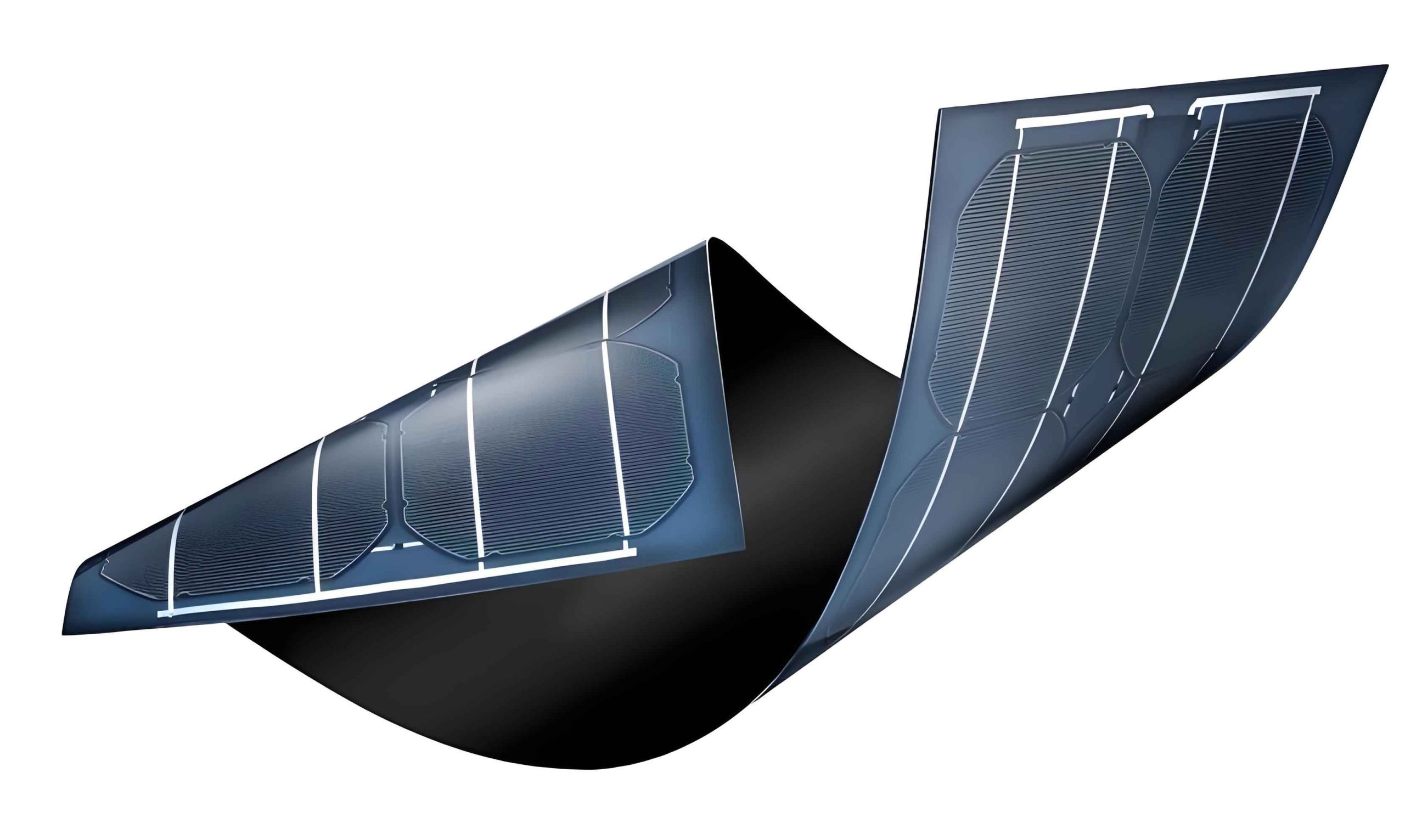
Product diversification is another strength. thin film solar panel technology manifests in two primary forms: rigid glass-based modules and flexible, lightweight substrates. Glass-based thin film solar panel products can be fabricated as semi-transparent units for skylights and facades, opaque spandrels with various colors or stone-like finishes, and even as roofing tiles. Flexible thin film solar panel rolls, on the other hand, conform seamlessly to curved or irregular building surfaces, such as tensile membrane structures and lightweight metal roofs, unlocking new architectural possibilities. This adaptability allows the thin film solar panel to respect and enhance urban aesthetics while performing its energy-generating function.
The practical realization of these principles is exemplified in the design and execution of a pioneering office building project in a southern Chinese city. This 18-story structure was conceived as a “vertical power plant,” with its facade designed as an alternating pattern of clear glazing and opaque, power-generating cladding. The non-transparent sections feature an innovative active double-skin facade system integrating CIGS-based thin film solar panel modules. The outer skin consists of the photovoltaic laminate, while an inner skin provides the primary weather and thermal barrier. A ventilated cavity between the two skins acts as a thermal buffer. During summer, natural stack effect ventilation draws heat away from the back of the thin film solar panel, reducing cooling loads. In winter, dampers can be closed to trap solar heat gain within the cavity, contributing to passive heating. This design synergizes energy generation with dynamic building physics control.
The electrical design of such a thin film solar panel BIPV system requires meticulous planning. For the case study building, approximately 2,500 custom-sized CIGS glass laminates, each rated at 135 Wp, were installed, resulting in a total system capacity of roughly 312 kWp. The system operates under a “self-consumption with grid feed-in” principle. Electrically, the laminates are arranged in vertical strings, considering the building’s fenestration pattern. Each string’s DC output is fed into dedicated, building-mounted string inverters. A critical aspect of thin film solar panel system design in buildings is minimizing DC cable runs for safety and efficiency. Here, a peripheral cable routing system connects inverters to a centralized AC combiner box, finally interfacing with the building’s low-voltage distribution grid at 400V AC. The overall system efficiency (\( \eta_{sys} \)) from incident light to AC output is a product of several factors:
$$ \eta_{sys} = \eta_{module} \cdot (1 – L_{wiring}) \cdot \eta_{inv} \cdot (1 – L_{mismatch}) \cdot f(Temp, Soiling) $$
Where \( \eta_{module} \) is the thin film solar panel module efficiency, \( L_{wiring} \) is DC wiring loss, \( \eta_{inv} \) is inverter efficiency, \( L_{mismatch} \) accounts for losses due to electrical mismatch between modules, and \( f(Temp, Soiling) \) is a derating factor for operating temperature and soiling. Field measurements from the project indicated a system performance ratio (PR) exceeding 82%, validating the design.
A cornerstone of modern thin film solar panel BIPV is its integration with intelligent building management systems (BMS). The energy generation data from each inverter, alongside a network of indoor environmental sensors (monitoring temperature, humidity, CO2, PM2.5, illuminance, etc.), is fed into a cloud-based analytics platform. This platform performs real-time monitoring, data aggregation, predictive analytics, and fault detection. It enables a holistic view of the building’s energy flows and environmental quality, allowing for optimized control strategies. For instance, correlating thin film solar panel output forecasts with building occupancy schedules can pre-emptively adjust HVAC setpoints or schedule high-energy tasks for periods of peak solar generation, maximizing self-consumption. This transforms the thin film solar panel system from a mere appendage into the heart of a smart, responsive building energy ecosystem.
A quantitative performance assessment is essential. The table below summarizes key metrics from the operational phase of the case study building, comparing actual yield against theoretical models and broader benchmarks.
| Performance Indicator | Value / Description | Notes |
|---|---|---|
| Total Installed Capacity | 312 kWp | CIGS thin film solar panel laminates |
| Annual Estimated Yield (Modeled) | ~210,000 kWh | Based on local irradiation (~5000 MJ/m²/yr) |
| Measured Yield (118-day period) | 44,000 kWh | Extrapolated annual yield aligns with model |
| System Performance Ratio (PR) | >82% | Indicates low system losses |
| Building Façade Area Covered | 23% | Percentage of total curtain wall area |
| Key Architectural Function | Active Double-Skin Spandrel | Provides insulation, weather barrier, and power |
To contextualize the value proposition of thin film solar panel BIPV, a comparative analysis against conventional crystalline silicon (c-Si) in building applications is useful.
| Parameter | Thin Film Solar Panel (CIGS) | Crystalline Silicon (c-Si) Panel |
|---|---|---|
| Building Integration Aesthetics | Excellent. Uniform appearance, color options, semi-transparency, flexible forms. | Limited. Standard blue/black checkered pattern, rigid, opaque. |
| Spectral Response & Low-Light Performance | Superior. Broader absorption, better yield in diffuse/dawn/dusk light. | Good, but narrower spectral range. |
| Temperature Coefficient | ~ -0.3 to -0.4 %/°C (better). | ~ -0.4 to -0.5 %/°C. |
| Shading Tolerance | High. Monolithic design minimizes power loss from partial shading. | Low. Bypass diodes help, but significant string-level losses occur. |
| Weight & Structural Load | Lower. Especially for flexible substrates; glass laminates comparable to architectural glass. | Higher. Rigid frames and glass add significant weight. |
| Embodied Energy / Energy Payback Time (EPBT) | Low (~0.7-1.5 years). | Moderate (~1.5-2.5 years). |
The path to widespread adoption of thin film solar panel BIPV is not without obstacles. First, the levelized cost of energy (LCOE), while decreasing, remains higher than utility-scale PV or standard c-Si add-on systems. The LCOE is calculated as:
$$ LCOE = \frac{\sum_{t=1}^{n} \frac{I_t + M_t}{(1+r)^t}}{\sum_{t=1}^{n} \frac{E_t}{(1+r)^t}} $$
Where \(I_t\) is investment cost in year \(t\), \(M_t\) is operations and maintenance cost, \(E_t\) is energy produced, \(r\) is the discount rate, and \(n\) is system lifetime. For BIPV, the \(I_t\) includes both the material cost of the thin film solar panel and its premium as a multifunctional building component. Second, thermal management in insulated, building-integrated applications is a critical engineering challenge. While field data from the double-skin facade showed lower operating temperatures than theoretical models predicted (peaking around 57°C for the cell), more research is needed to characterize thermal behavior across diverse climate zones and facade configurations. Third, standardization of products, installation details, and building codes is still evolving, posing hurdles for architects and contractors. Finally, the long-term durability and maintenance protocols for thin film solar panel facades, including repair and replacement strategies, require further field validation and industry-wide guidelines.
Addressing these challenges requires a multi-faceted innovation strategy. Cost reduction will be driven by economies of scale, advances in deposition techniques (like co-evaporation or sputtering), and the use of alternative, less expensive substrate materials. Thermal management solutions include purpose-designed ventilation pathways, phase-change materials (PCMs) integrated behind the thin film solar panel to absorb excess heat, and active cooling loops for waste heat recovery. The future also lies in system-level innovation, particularly the synergy between thin film solar panel DC generation and DC-powered building appliances (lighting, HVAC, electronics). A DC microgrid architecture can eliminate multiple AC-DC conversion losses, improving overall system efficiency by 5-10%:
$$ \eta_{DC-microgrid} = \eta_{PV} \cdot \eta_{MPPT} \cdot \eta_{DC-DC} \cdot \eta_{load} $$
$$ \eta_{AC-grid} = \eta_{PV} \cdot \eta_{MPPT} \cdot \eta_{inv} \cdot \eta_{rectifier (in load)} \cdot \eta_{load} $$
Where \( \eta_{DC-DC} \) > \( \eta_{inv} \cdot \eta_{rectifier} \). Furthermore, the integration of thin film solar panel systems with IoT platforms and blockchain technology could enable peer-to-peer energy trading within urban districts, creating resilient, decentralized energy communities.
The potential environmental impact of large-scale thin film solar panel BIPV adoption is substantial. Consider a hypothetical urban district where 50% of new commercial building facades integrate thin film solar panel technology.
| Impact Metric | Calculation Basis | Estimated Annual Benefit (per 1 million m² façade) |
|---|---|---|
| Clean Electricity Generation | Avg. yield: 80-100 kWh/m²/yr (façade area) | 80,000 – 100,000 MWh |
| CO2 Emissions Avoided | Grid emission factor: 0.5 kg CO2/kWh | 40,000 – 50,000 tonnes CO2 |
| Reduced Building Operational Energy | Additional insulation & thermal buffer effect | 5-15% reduction in HVAC load |
| Resource Conservation (vs. conventional cladding) | Multifunctional element replaces separate cladding + PV system | Reduced raw material use (Al, steel, etc.) |
The roadmap for thin film solar panel technology in green construction is clear and compelling. In the near term (1-3 years), the focus must be on driving down costs through manufacturing innovations and expanding the library of standardized, pre-certified BIPV products (curtain wall units, rainscreen cladding, roof tiles). Mid-term (3-7 years) development should prioritize the creation of intelligent, hybrid systems combining thin film solar panel with energy storage, DC building distribution, and advanced model predictive control (MPC) algorithms for optimized energy flow. Long-term (7+ years), the vision is the ubiquitous “solar envelope,” where the entire building skin is an adaptive, energy-harvesting membrane. This membrane, composed of interconnected thin film solar panel systems, would dynamically manage solar heat gain, daylighting, electricity production, and even atmospheric water harvesting, fully blurring the line between the building and a living, responsive organism.
| Development Phase | Key Focus Areas | Expected Outcome |
|---|---|---|
| Near-Term (1-3 yrs) | Cost Reduction, Product Standardization, Code Development. | BIPV becomes cost-competitive with conventional cladding + separate PV. Wider architect/contractor acceptance. |
| Mid-Term (3-7 yrs) | Hybrid Systems, DC Integration, Smart Controls, Advanced Thermal Management. | Buildings as proactive nodes in smart grids. Significant improvement in net-zero energy feasibility. |
| Long-Term (7+ yrs) | Multifunctional Adaptive Skins, New Material Science (Perovskite hybrids), Urban-Scale Energy Networks. | The “Active Building Skin” paradigm is standard. Cities function as decentralized, resilient power networks. |
In conclusion, the integration of thin film solar panel technology into the built environment represents a transformative convergence of energy science, materials engineering, and architectural design. By enabling buildings to generate clean power seamlessly as part of their envelope, this technology addresses the dual challenges of energy sustainability and urban aesthetic harmony. The case study and analysis presented demonstrate not only its technical viability and performance but also the critical importance of holistic design—integrating energy generation, building physics, and intelligent management from the outset. While challenges related to cost, thermal behavior, and industry standardization persist, the continuous trajectory of innovation in thin film solar panel efficiency, manufacturing, and system integration is rapidly forging solutions. As the world moves decisively towards a decarbonized future, thin film solar panel building integration stands out as a pivotal strategy to redefine our urban landscapes, turning every building into a pillar of a smart, sustainable, and energy-resilient city.