
As a researcher deeply engaged in the development of next-generation photovoltaic technologies, I find the field of thin film solar panels to be one of the most dynamic and promising areas. Among these, Cu2ZnSn(S,Se)4 (CZTSSe) based thin film solar panels have captured significant attention due to their potential for high efficiency, cost-effectiveness, and environmental sustainability. The unique properties of CZTSSe, such as its high absorption coefficient and tunable band gap, make it an ideal candidate for large-scale deployment in applications ranging from building-integrated photovoltaics to flexible electronics. However, despite over a decade of intensive research, the power conversion efficiency of CZTSSe thin film solar panels remains notably lower than that of their counterparts like CIGS or CdTe. The primary bottleneck lies in the substantial open-circuit voltage (VOC) deficit, which severely limits the overall device performance. In this comprehensive discussion, I will delve into the innovative strategy of monovalent metal substitution—specifically using Ag+ and Li+ ions—as a pivotal approach to mitigate this voltage loss and propel the efficiency of CZTSSe thin film solar panels closer to their theoretical limits.
The fundamental challenge with CZTSSe absorbers is rooted in their complex defect chemistry. The similar ionic radii of Cu+ and Zn2+ lead to a high probability of cation disorder, primarily manifesting as CuZn anti-site defects. These defects, while providing the necessary p-type conductivity, also introduce band tailing—a phenomenon where localized states extend into the band gap, effectively narrowing it and increasing non-radiative recombination. This band tailing is a major contributor to the VOC deficit. Furthermore, defect complexes like [SnZn + 2CuZn] have low formation energies and act as deep-level traps, exacerbating carrier recombination. My work, along with that of many colleagues in the community, has focused on understanding and engineering the absorber’s electronic structure to suppress these detrimental effects. The substitution of Cu+ with other monovalent cations presents a compelling solution, as it directly addresses the origin of Cu-Zn disorder.
From a theoretical standpoint, density functional theory (DFT) calculations have been instrumental in guiding our experimental efforts. For Ag substitution, forming (Cu1-xAgx)2ZnSn(S,Se)4 (CAZTSSe), the key findings are profound. The stable phase remains kesterite, but the formation energy for AgZn anti-site defects is significantly higher than that for CuZn. This simple change in energetics can drastically reduce the concentration of the primary defect responsible for band tailing. The electronic structure modification is equally important. Ag 4d orbitals lie deeper than Cu 3d orbitals, leading to a downward shift of the valence band maximum (VBM) upon substitution. Consequently, the band gap (Eg) widens, which can be described by the alloy equation:
$$E_g(x) = (1-x)E_{g,\text{CZTSSe}} + xE_{g,\text{AZTSSe}} – bx(1-x)$$
where b is the bowing parameter (approximately 0.24 for Ag alloys). This tunability of Eg is a powerful tool for bandgap engineering in thin film solar panels. For Li substitution, the scenario is different. Li+ has a smaller ionic radius but a higher propensity for diffusion and loss during processing. Theoretical studies suggest Li preferentially occupies the Cu 2a Wyckoff site, and its incorporation can lead to a phase transition from kesterite to wurtz-kesterite at high concentrations. The band gap also increases, but primarily due to an upward shift of the conduction band minimum (CBM). A summary of key theoretical parameters for monovalent substitution is provided in Table 1.
| Substituting Ion | Primary Effect on Structure | Band Gap Trend | Key Defect Formation Energy Change |
|---|---|---|---|
| Ag+ | Lattice expansion (a, c increase); stabilizes kesterite order | Increases (VBM down) | AgZn formation energy >> CuZn |
| Li+ | Lattice expansion; phase change at high x | Increases (CBM up) | LiCu substitution energy low, but Li loss is high |
Transitioning from theory to practice, the synthesis of high-quality substituted absorbers is paramount. For fabricating these advanced thin film solar panels, both vacuum-based and non-vacuum (solution-based) methods have been employed. In my laboratory, we have extensive experience with solution processing due to its scalability and cost advantages. A common approach involves preparing a precursor ink containing metal salts (e.g., acetates or chlorides), chalcogen sources (thiourea or selenourea), and a solvent like dimethyl sulfoxide (DMSO) or a hydrazine-free amine-thiol mixture. The ink is deposited via spin-coating or blade-coating to form a precursor film, which is then annealed in a sulfur/selenium atmosphere at temperatures typically between 450°C and 600°C. The incorporation of Ag or Li is achieved by adding silver nitrate or lithium salts to the precursor solution. However, a critical issue with Li is its severe loss during the spin-coating and annealing stages, often resulting in a final concentration orders of magnitude lower than the nominal value. This has been a major hurdle in realizing high Li-substitution ratios. In contrast, Ag incorporation is more efficient, with the final composition closely matching the precursor ratio.
The impact of monovalent substitution on the crystallization kinetics and final microstructure of the thin film solar panel absorber is dramatic. Ag acts as a fluxing agent during the selenization/sulfurization process. It forms low-temperature liquid phases such as Sn-Ag-Cu alloys or Ag-Se compounds, which enhance mass transport and promote the growth of large, compact grains. This effect allows high-quality crystallization at lower temperatures (often below 500°C), which is a significant advantage for developing thin film solar panels on flexible, low-temperature substrates like polyimide. Li, similar to other alkali metals, can form Li-Se liquid phases that also facilitate grain growth. The reduction in processing temperature also mitigates the volatility of SnS(e), minimizing the formation of detrimental voids and secondary phases. The evolution of grain structure often transitions from a bi-layer (small grains near the back contact and large grains on top) to a more desirable mono-layer of large, through-columnar grains, which improves carrier collection. The following equation conceptually represents the enhanced grain growth rate (G) in the presence of a liquid flux (L):
$$G \propto \frac{D_L C_L}{\Delta T}$$
where DL is the diffusion coefficient in the liquid, CL is the concentration of soluble species, and ΔT is the undercooling. The presence of Ag or Li increases DLCL, leading to faster and more complete crystallization.
Perhaps the most critical aspect of monovalent substitution is its effect on the electronic quality of the absorber, particularly on band tailing and interface recombination. Characterization techniques like admittance spectroscopy (AS) and deep-level transient spectroscopy (DLTS) have been essential in my research. For Ag-substituted devices, AS measurements consistently show a reduction in the signature capacitance step associated with the defect distribution near the junction. The defect density of states (NT) profile, derived from AS, reveals a significant suppression of shallow defect states as the Ag content increases. This is direct evidence of mitigated band tailing. The Urbach energy (EU), extracted from the sub-bandgap region of the external quantum efficiency (EQE) spectrum, serves as a quantitative metric for band tailing. It is observed that EU decreases with optimal Ag substitution. For instance, in one of our studies, EU reduced from ~28 meV for pure CZTSSe to ~22 meV for (Cu0.9Ag0.1)2ZnSnSe4. This reduction directly correlates with a decrease in VOC deficit. The VOC deficit is often quantified by the parameter χ, defined as the ratio of the measured VOC to the theoretical Shockley-Queisser (SQ) limit VOC for a given bandgap:
$$\chi = \frac{V_{OC}}{V_{OC}^{SQ}} \quad \text{where} \quad V_{OC}^{SQ} = \frac{E_g}{q} – \frac{kT}{q}\ln\left(\frac{J_{00}}{J_L}\right)$$
A higher χ indicates lower non-radiative losses. The performance of state-of-the-art monovalent-substituted thin film solar panels is summarized in Table 2.
| Substitution Type (x) | Fabrication Method | Best PCE (%) | VOC (mV) | Band Gap Eg (eV) | χ Parameter (%) | Key Improvement |
|---|---|---|---|---|---|---|
| None (Baseline) | Hydrazine Solution | 12.6 | 513 | ~1.13 | 57.9 | Reference |
| Ag (x=0.03) | Amine-Thiol Solution | 10.4 | 448 | ~1.14 | 53.8 | Reduced band tailing |
| Ag (x=0.10) | Co-evaporation | 10.2 | 423 | ~1.20 | 52.4 | Improved grain growth |
| Ag Gradient (5-30-5%) | Amine-Thiol Solution | 11.2 | 464 | ~1.15 (min) | 56.5 | V-type band grading |
| Li (x~0.07) | DMSO Solution | 12.3 | 531 | ~1.20 | 58.7 | Lowest VOC deficit |
Beyond bulk defects, the heterojunction interface between the p-type absorber and the n-type buffer layer (typically CdS) is another critical area. Monovalent substitution can influence the band alignment. The widened bandgap of CAZTSSe, due to a lowered VBM, can create a more favorable “spike-like” conduction band offset (CBO) with CdS, which helps repel electrons from the interface and reduce interface recombination. However, if the bandgap increases too much, a “cliff-like” CBO may form, which is detrimental. Therefore, precise control of the substitution ratio is key to optimizing the interface for thin film solar panels. Temperature-dependent VOC measurements reveal that the activation energy for recombination (EA) approaches the absorber bandgap value for optimally substituted devices, indicating a shift from interface-dominated to bulk-dominated (and ideally, radiative-limited) recombination.
An exciting development is the use of bandgap grading, inspired by high-efficiency CIGS thin film solar panels. By creating a spatial gradient in the Ag content (e.g., high at the front/back and low in the middle), a V-shaped bandgap profile can be engineered within the absorber. This profile creates a quasi-electric field that aids in carrier separation and collection, while the front high-gap region reduces interface recombination with the buffer layer. The efficiency of 11.2% achieved with this architecture is a testament to the power of monovalent substitution for advanced device design in thin film solar panels.
While partial substitution has yielded promising results, complete substitution of Cu by Ag to form Ag2ZnSn(S,Se)4 (AZTSSe) opens a different pathway. DFT calculations predict AZTSSe to be a nearly intrinsic or weakly n-type semiconductor due to the high formation energy of acceptor defects. This has led to its exploration as an n-type absorber in a p-i-n structure or even as a CdS-alternative buffer layer. Early-stage devices with an FTO/AZTSe/MoO3/ITO structure have shown efficiencies around 5%, but they often exhibit light-soaking effects and hysteresis, likely due to ionic migration of Ag+. This area requires further investigation to understand and harness the properties of fully substituted materials for novel thin film solar panel architectures.
Looking forward, the potential of monovalent substitution for advancing CZTSSe thin film solar panels is immense, yet several bottlenecks must be addressed. For Ag substitution, the primary trade-off is between defect suppression and carrier concentration. As Ag content increases, the material becomes more intrinsic, which can lead to series resistance issues and reduced fill factor. Furthermore, at high Ag levels, SnZn deep-level defects may become more prominent, limiting further VOC gains. For Li substitution, the formidable challenge is incorporation efficiency. Novel synthesis routes—such as electrochemical deposition, atomic layer deposition, or modified solution processes with complexing agents that reduce Li volatility—are urgently needed to achieve higher and more controllable Li substitution ratios. Another promising direction is the combination of monovalent substitution with other cation substitutions (e.g., Cd2+ for Zn2+ or Ge4+ for Sn4+) to synergistically address different defect types.
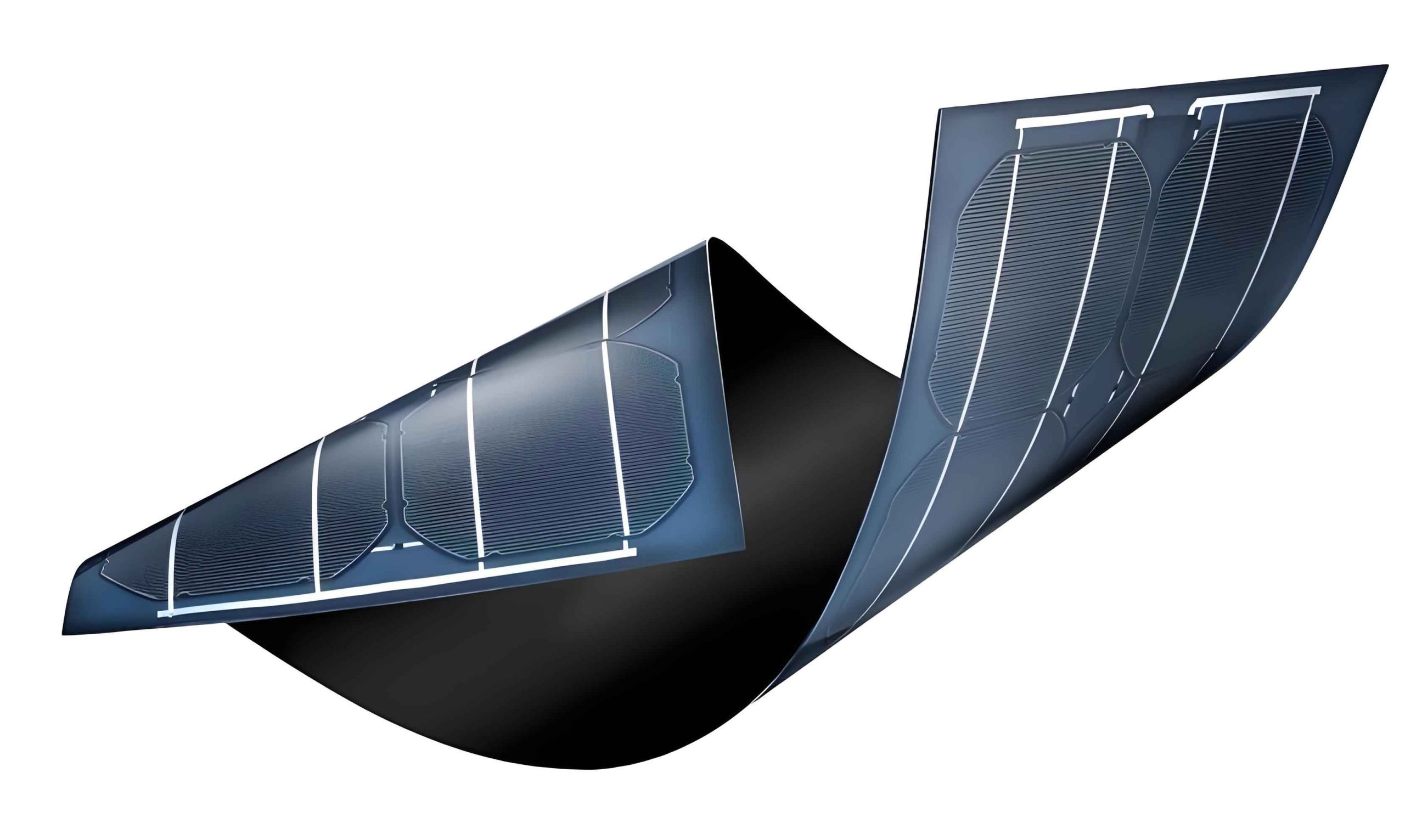
The low processing temperature enabled by Ag substitution is a game-changer for flexible thin film solar panels. By reducing the selenization temperature to below 450°C, it becomes feasible to use polyimide or other polymer substrates in roll-to-roll manufacturing, dramatically expanding the application scope of CZTSSe technology. This aligns perfectly with the global trend towards lightweight, portable, and building-integrated photovoltaics.
In conclusion, monovalent metal substitution stands as a cornerstone strategy for unlocking the full potential of CZTSSe thin film solar panels. Through a combination of theoretical insight and experimental innovation, we have demonstrated that Ag and Li incorporation can effectively suppress cation disorder, reduce band tailing, modify band alignment, and enable advanced device structures like bandgap grading. These improvements directly tackle the root causes of the VOC deficit. While challenges in precise compositional control, defect balance, and Li incorporation persist, the continuous refinement of substitution techniques and a deeper fundamental understanding of the underlying defect physics will undoubtedly lead to further breakthroughs. The journey to develop high-efficiency, low-cost, and environmentally benign thin film solar panels is a collective endeavor, and monovalent substitution in CZTSSe represents a vital and vibrant pathway forward in this mission. The future of thin film solar panels hinges on such material innovations, and I am optimistic that the strategies discussed here will play a crucial role in their commercial realization and widespread adoption.