
As the global demand for energy continues to rise, traditional fossil fuels are increasingly inadequate in meeting both environmental and sustainability goals. This has spurred intense interest in renewable energy sources, with solar power standing out as one of the cleanest and most abundant options. Among various photovoltaic technologies, thin film solar panels have gained significant attention due to their potential for low-cost, high-efficiency energy conversion. In particular, copper indium gallium selenide (CIGS) thin film solar panels represent a promising third-generation photovoltaic technology, offering advantages such as high absorption coefficients, tunable bandgaps, and excellent stability. The absorber layer in these thin film solar panels is critical, as it directly influences photoconversion efficiency and overall device performance. Electrochemical deposition, or electrodeposition, has emerged as a viable method for fabricating CIGS absorber layers, owing to its cost-effectiveness, simplicity, and scalability. In this article, I will explore the current research status and future trends in electrodeposited CIGS thin film solar panel absorber layers, focusing on aqueous and non-aqueous solution systems, while incorporating tables and formulas to summarize key findings.
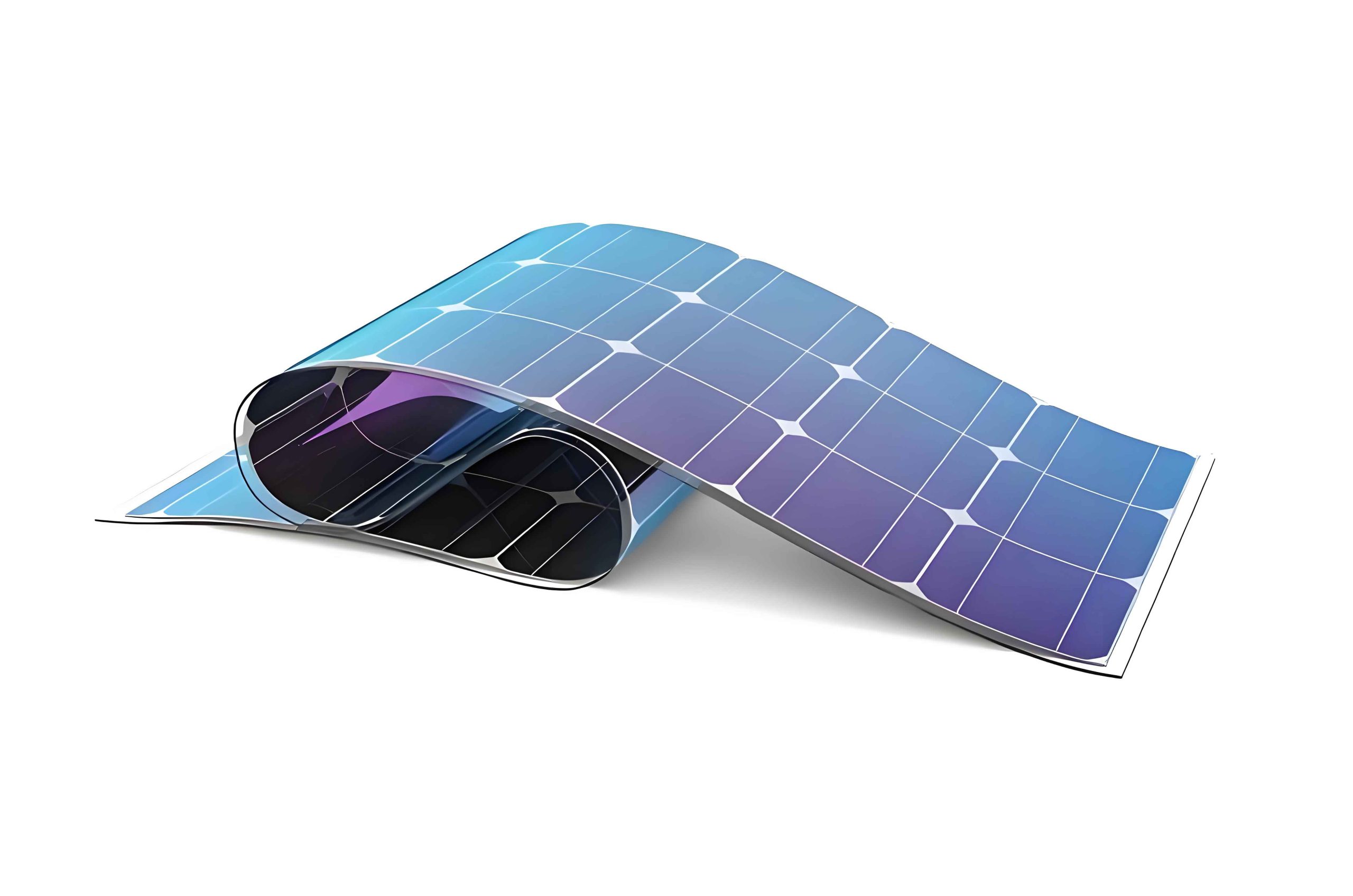
The core of CIGS thin film solar panels lies in the absorber layer, which is typically composed of a CuIn(1-x)GaxSe2 compound. By adjusting the gallium-to-indium ratio, the bandgap can be tuned from approximately 1.04 eV to 1.7 eV, optimizing light absorption for solar spectra. This tunability is a key advantage of CIGS-based thin film solar panels over other photovoltaic materials. Various fabrication methods exist, including co-evaporation, sputtering, and solution-based techniques, but electrodeposition stands out due to its non-vacuum requirements, low-temperature processing, and high material utilization. These attributes make electrodeposition an attractive route for producing cost-effective thin film solar panels on large scales. In this discussion, I will delve into the electrodeposition process, examining both aqueous and non-aqueous systems, and analyze the challenges and opportunities in advancing this technology for commercial thin film solar panel production.
Electrodeposition involves the electrochemical reduction of metal ions from an electrolyte onto a conductive substrate, forming a thin film. For CIGS absorber layers, this typically requires depositing copper, indium, gallium, and selenium simultaneously or sequentially. The process can be categorized into multi-step deposition and one-step co-deposition. In multi-step approaches, elements are deposited in layers, which may then be annealed to form the desired compound. One-step co-deposition aims to directly deposit the CIGS phase, though it often requires precise control over deposition potentials and electrolyte composition. The fundamental electrodeposition reaction for a metal ion Mn+ can be expressed as:
$$ M^{n+} + ne^- \rightarrow M $$
For CIGS, the deposition involves multiple ions, and the overall reaction is more complex, often influenced by competing reduction processes. The efficiency of thin film solar panels fabricated via electrodeposition depends heavily on the stoichiometry, morphology, and crystallinity of the absorber layer. To achieve optimal performance, researchers have explored various electrolyte systems, which I will detail in the following sections.
Aqueous Solution Systems for Electrodeposition of CIGS Absorber Layers
Aqueous electrodeposition is the most studied method due to its simplicity and the abundance of water-based electrolytes. However, it faces challenges such as hydrogen evolution, limited potential windows, and differences in reduction potentials of the constituent elements, which can lead to non-uniform films. Despite these issues, significant progress has been made in both multi-step and one-step deposition techniques for thin film solar panel applications.
Multi-Step Electrodeposition in Aqueous Systems
In multi-step electrodeposition, CIGS precursor films are formed by depositing individual elements or alloys in sequential steps. This approach allows better control over composition but may require post-deposition treatments like annealing or selenization. For instance, a common method involves first depositing a copper-indium-gallium (CIG) alloy, followed by selenium deposition or vice versa. The annealing step then promotes interdiffusion and reaction to form the CIGS phase. The deposition parameters, such as potential, current density, and pH, play crucial roles in determining film quality. A representative reaction for copper deposition in an aqueous sulfate bath is:
$$ Cu^{2+} + 2e^- \rightarrow Cu $$
Similarly, indium and gallium deposition can be represented, though their reduction potentials are more negative, making co-deposition challenging. To address this, complexing agents like citrate or EDTA are often added to shift reduction potentials closer together. Table 1 summarizes key studies on multi-step electrodeposition for CIGS thin film solar panel absorber layers.
| Study Focus | Electrolyte Composition | Deposition Steps | Post-Treatment | Key Findings |
|---|---|---|---|---|
| Optimization of Cu-In-Ga precursors | CuSO4, InCl3, GaCl3, KCl, pH adjusted with HCl | Three-step: CIG deposition, Cu deposition, Se deposition | Annealing in Se atmosphere at 550°C | Improved stoichiometry on Mo substrates; purity issues on FTO due to secondary phases |
| Effect of deposition time on morphology | Similar to above with SeO2 as Se source | Sequential deposition of Cu, In, Ga, and Se | Nitrogen annealing with Se powder | Longer deposition times increased grain size; substrate type influenced film adhesion |
| Role of complexing agents | Citrate-based baths with Cl– salts | Two-step: alloy deposition followed by selenization | Rapid thermal processing | Enhanced film uniformity and reduced cracking for thin film solar panels |
From these studies, it is evident that multi-step electrodeposition can yield CIGS films with reasonable properties, but the need for high-temperature post-treatment and potential impurity phases remain drawbacks. The performance of resulting thin film solar panels often hinges on the annealing conditions, which can affect grain growth and interface quality.
One-Step Co-Deposition in Aqueous Systems
One-step co-deposition aims to directly electrodeposit CIGS films in a single bath, simplifying the process. This requires a carefully formulated electrolyte where all ions are reduced simultaneously at a controlled potential. The challenge lies in the disparate reduction potentials: copper reduces at around +0.34 V vs. SHE, while indium and gallium reduce at more negative potentials (-0.34 V and -0.53 V, respectively). Selenium reduction from selenous acid (H2SeO3) occurs at intermediate potentials. To overcome this, additives and complexing agents are used to modulate reduction kinetics. The overall reaction for CIGS co-deposition can be approximated as:
$$ Cu^{2+} + In^{3+} + Ga^{3+} + 2H_2SeO_3 + 12e^- \rightarrow CuInGaSe_2 + 6H_2O $$
However, this is idealized; in practice, side reactions like hydrogen evolution or formation of binary selenides (e.g., Cu2Se) are common. Pioneering work in this area demonstrated that one-step electrodeposition on molybdenum substrates, followed by annealing, could achieve solar cell efficiencies over 12%. Recent advancements have focused on optimizing bath chemistry, such as using chloride-based electrolytes with lithium ions to improve conductivity and film adhesion. Table 2 highlights key parameters and outcomes from one-step co-deposition studies for thin film solar panel absorbers.
| Electrolyte Type | Key Components | Deposition Conditions | Film Characteristics | Device Efficiency |
|---|---|---|---|---|
| Chloride-based with citrate | CuCl2, InCl3, GaCl3, SeO2, LiCl, sodium citrate | Potential -0.6 to -0.8 V vs. SCE, room temperature | Near-stoichiometric CIGS, small grains | Up to 9.87% after annealing |
| Sulfate-based with complexants | CuSO4, In2(SO4)3, Ga2(SO4)3, H2SeO3, pH adjusters | Constant current mode, pH ~3 | Improved Ga incorporation, but limited adhesion | ~8% in lab-scale thin film solar panels |
| Mixed halide systems | Iodide and bromide salts to shift potentials | Pulsed electrodeposition | Enhanced morphology and reduced defects | Efficiencies under investigation |
These results indicate that one-step co-deposition is feasible for producing CIGS absorber layers, but control over composition, especially gallium content, remains problematic. The bandgap tuning essential for high-performance thin film solar panels requires precise Ga/(In+Ga) ratios, which is difficult to achieve in aqueous baths due to kinetic limitations. Moreover, film porosity and impurity incorporation can lower the efficiency of resulting thin film solar panels.
Non-Aqueous Solution Systems for Electrodeposition of CIGS Absorber Layers
To circumvent the limitations of aqueous systems, non-aqueous electrodeposition has been explored. These systems offer wider electrochemical windows, reduced hydrogen evolution, and better solubility for certain precursors. They are broadly divided into organic solvent systems and ionic liquid systems, both of which show promise for advancing thin film solar panel technology.
Organic Solvent Systems
Organic solvents such as ethylene glycol, dimethyl sulfoxide (DMSO), and ethanol provide a stable environment for electrodeposition, especially for elements like gallium that have unfavorable reduction kinetics in water. For example, ethanol-based electrolytes have been used to deposit CIGS precursor films with improved homogeneity. The deposition mechanism in organic media often involves different ion speciation and reduced water activity, which minimizes oxide formation and enhances film quality. A typical setup uses a three-electrode cell with a molybdenum working electrode, a platinum counter electrode, and a reference electrode like Ag/AgCl. The deposition of copper from a copper chloride solution in ethanol can be described as:
$$ CuCl_2 + 2e^- \rightarrow Cu + 2Cl^- $$
Recent studies have demonstrated that one-step co-deposition in ethanol with salts like CuCl2, InCl3, GaCl3, and SeO2 can yield CIGS films with favorable morphological and compositional traits. After annealing, these films exhibit p-type semiconductor behavior with bandgaps around 1.4 eV, suitable for thin film solar panels. However, challenges include solvent purity, cost, and the need for inert atmospheres to prevent moisture absorption. Table 3 compares organic solvent systems for CIGS electrodeposition.
| Solvent | Precursors Used | Advantages | Disadvantages | Film Quality for Thin Film Solar Panels |
|---|---|---|---|---|
| Ethanol | Chloride salts of Cu, In, Ga, and SeO2 | Low toxicity, easy handling | Limited conductivity, requires supporting electrolytes | Uniform films with grain sizes ~200 nm |
| Ethylene glycol | Similar chloride salts | High boiling point, stable for high-temperature deposition | Viscous, slow diffusion rates | Dense layers but often carbon-contaminated |
| DMSO | Nitrate and acetate precursors | Broad potential window, good solubility | Expensive, hygroscopic | High-purity CIGS with minimal oxides |
These organic systems enable better control over deposition parameters, potentially leading to higher efficiency thin film solar panels. However, scalability and environmental concerns related to solvent use must be addressed.
Ionic Liquid Systems
Ionic liquids (ILs) are molten salts at room temperature with unique properties such as wide electrochemical windows, high ionic conductivity, and negligible vapor pressure. These attributes make them ideal for electrodeposition of alloys and compounds like CIGS. Common ILs include imidazolium-based liquids (e.g., 1-butyl-3-methylimidazolium tetrafluoroborate, BMImBF4) and pyrrolidinium derivatives. In ILs, metal ions exist as complexes, and their reduction potentials can be tuned by adjusting the anion-cation combination. For instance, indium deposition from a Tf2N-based IL avoids chloride contamination and yields smooth films. The electrodeposition of CIGS in ILs often involves one-step processes, with reactions like:
$$ Cu^{2+} + In^{3+} + Ga^{3+} + 2Se^{4+} + 14e^- \rightarrow CuInGaSe_2 $$
Recent work has shown that mixing ILs with organic solvents like ethanol can further enhance film quality. For example, BMImBF4 mixed with ethanol has been used to co-deposit CIGS films with high crystallinity and a bandgap of 1.41 eV, ideal for thin film solar panels. The absence of water eliminates hydrogen evolution, leading to denser films. However, ILs are costly and may require purification to remove impurities that affect film stoichiometry. Table 4 summarizes key findings from IL-based electrodeposition studies.
| Ionic Liquid | Additives/Solvents | Deposition Technique | Film Properties | Potential for Thin Film Solar Panels |
|---|---|---|---|---|
| BMImBF4 | Ethanol (50:50 mix) | Potentiostatic, one-step | P-type, bandgap 1.41 eV, low defect density | High efficiency potential, but cost-prohibitive |
| BMPipTf2N | None, pure IL | Cyclic voltammetry followed by deposition | Smooth In and Ga layers, improved morphology | Good for precursor deposition, needs selenization |
| EMImTFSA | Se precursors dissolved directly | Pulsed electrodeposition | Stoichiometric CIGS without annealing | Promising for direct fabrication of thin film solar panels |
Ionic liquid systems represent a cutting-edge approach, but their commercialization for thin film solar panel production depends on reducing costs and developing recyclable ILs.
Current Research Status and Challenges
The field of electrodeposited CIGS absorber layers has advanced significantly, with reported solar cell efficiencies exceeding 15% in lab settings. However, several challenges persist that hinder widespread adoption in thin film solar panel manufacturing. Key issues include:
- Stoichiometry Control: Achieving the precise Cu/(In+Ga) and Ga/(In+Ga) ratios is critical for optimal bandgap and electronic properties. In electrodeposition, this is complicated by differing deposition efficiencies of each element. Mathematical models have been developed to predict composition based on deposition parameters. For instance, the composition x in CuIn(1-x)GaxSe2 can be related to the deposition current densities (j) of indium and gallium:
$$ x = \frac{j_{Ga}}{j_{In} + j_{Ga}} $$
where jIn and jGa are functions of potential and concentration. However, real-time control remains difficult.
- Film Morphology and Adhesion: Electrodeposited films often exhibit porosity, cracks, or poor adhesion to substrates like molybdenum or FTO. This can lead to high series resistance and reduced fill factors in thin film solar panels. Strategies to improve morphology include pulsed electrodeposition, additive engineering, and post-deposition treatments. The grain size (d) can be estimated using the Scherrer equation from X-ray diffraction data:
$$ d = \frac{K\lambda}{\beta \cos \theta} $$
where K is a constant, λ is the X-ray wavelength, β is the peak broadening, and θ is the Bragg angle. Larger grains are desirable for higher carrier mobility.
- Gallium Incorporation: As noted, gallium tends to deposit less efficiently than indium in aqueous systems, limiting bandgap tunability. In non-aqueous systems, gallium incorporation is improved, but control is still inadequate. This directly impacts the open-circuit voltage (Voc) of thin film solar panels, as Voc is proportional to bandgap (Eg):
$$ V_{oc} \approx \frac{E_g}{q} – \frac{kT}{q} \ln \left( \frac{J_{00}}{J_{sc}} \right) $$
where q is electron charge, k is Boltzmann’s constant, T is temperature, J00 is reverse saturation current density, and Jsc is short-circuit current density.
- Scalability and Cost: While electrodeposition is inherently scalable, maintaining uniformity over large areas is challenging. Continuous electrodeposition systems are under development, but issues like edge effects and bath depletion need addressing. The cost advantage of electrodeposition for thin film solar panels must be balanced against efficiency penalties compared to vacuum-based methods.
To summarize the current status, Table 5 compares the performance metrics of electrodeposited CIGS thin film solar panels from various studies.
| System Type | Best Reported Efficiency | Key Limitations | Advantages for Thin Film Solar Panels |
|---|---|---|---|
| Aqueous Multi-Step | ~12% (after annealing) | High-temperature post-treatment, impurity phases | Low cost, simple equipment |
| Aqueous One-Step | ~10% | Poor Ga incorporation, film porosity | Single-step process, reduced time |
| Organic Solvent | ~11% (preliminary) | Solvent handling, conductivity issues | Better morphology, reduced hydrogen evolution |
| Ionic Liquid | ~13% (lab-scale) | High cost, purification needs | Excellent film quality, no post-treatment |
These figures highlight that while efficiencies are promising, they still lag behind record efficiencies of over 23% for vacuum-deposited CIGS thin film solar panels. Bridging this gap is a major research focus.
Future Trends and Development Directions
Looking ahead, several trends are likely to shape the evolution of electrodeposited CIGS thin film solar panel absorber layers. These include advancements in electrolyte design, process integration, and novel characterization techniques.
- Hybrid Electrolyte Systems: Combining the benefits of aqueous and non-aqueous systems, such as using water-IL mixtures, could offer wider potential windows while maintaining cost-effectiveness. Research into deep eutectic solvents (DES) as green alternatives to ILs is also gaining traction for thin film solar panel fabrication.
- Advanced Electrodeposition Techniques: Pulse and pulse-reverse electrodeposition allow better control over nucleation and growth, leading to denser films. Additionally, electrodeposition under magnetic fields or ultrasound can enhance mass transport and reduce porosity. These methods could improve the efficiency of thin film solar panels by optimizing absorber layer morphology.
- In-Situ Monitoring and Automation: Implementing real-time sensors for composition and thickness control during electrodeposition can enable precise stoichiometry adjustment. Machine learning algorithms could optimize deposition parameters for maximum thin film solar panel performance.
- Integration with Other Thin Film Technologies: Electrodeposited CIGS layers could be combined with perovskite or organic layers in tandem solar cells to boost efficiency. The low-temperature nature of electrodeposition makes it compatible with flexible substrates, expanding applications in building-integrated thin film solar panels.
- Sustainability Focus: Developing recyclable electrolytes and reducing toxic material usage (e.g., cadmium in buffer layers) will be crucial for environmentally friendly thin film solar panel production. Electrodeposition inherently reduces waste, but further improvements in material recovery are needed.
From a theoretical perspective, future work may involve refining models for electrodeposition kinetics. The current density for an element i can be expressed using the Butler-Volmer equation:
$$ j_i = j_{0,i} \left[ \exp\left(\frac{\alpha_i n F \eta}{RT}\right) – \exp\left(-\frac{(1-\alpha_i) n F \eta}{RT}\right) \right] $$
where j0,i is exchange current density, αi is transfer coefficient, n is number of electrons, F is Faraday’s constant, η is overpotential, R is gas constant, and T is temperature. Coupling such equations for multiple ions could enable predictive design of electrolytes for thin film solar panel absorbers.
Moreover, the bandgap engineering in CIGS thin film solar panels can be optimized by correlating deposition conditions with material properties. The bandgap Eg as a function of Ga content x is given by:
$$ E_g(x) = 1.04 + 0.67x – 0.17x(1-x) $$
where x is Ga/(In+Ga) ratio. Achieving precise x values through electrodeposition will enhance the spectral response of thin film solar panels.
Conclusion
In summary, electrodeposition offers a promising route for fabricating CIGS absorber layers for thin film solar panels, with potential for low-cost, large-scale production. Aqueous systems have been extensively studied, but limitations in gallium incorporation and film quality drive interest in non-aqueous systems like organic solvents and ionic liquids. Current research focuses on overcoming stoichiometry and morphology challenges, with efficiencies approaching 13% in lab settings. Future trends point toward hybrid electrolytes, advanced deposition techniques, and integration with sustainable practices. As technology advances, electrodeposition could play a pivotal role in making thin film solar panels more accessible and efficient, contributing to the global transition to renewable energy. The continuous innovation in this field underscores the importance of interdisciplinary efforts in materials science, electrochemistry, and engineering to realize the full potential of thin film solar panels.
Throughout this discussion, I have emphasized the critical role of the absorber layer in determining the performance of thin film solar panels. By leveraging electrodeposition, we can address cost barriers while maintaining reasonable efficiencies, though further work is needed to compete with vacuum-based methods. The journey toward commercialization will require collaboration across academia and industry, with a focus on scalability, reproducibility, and environmental impact. As we move forward, the evolution of electrodeposited CIGS thin film solar panels will likely be marked by incremental improvements and breakthroughs, ultimately contributing to a sustainable energy future.